



Design the perfect vending solution for your location and customers.

Sales, inventory and alerts for your whole route, from one machine to a fleet.
Answer a few questions about your location, products and budget and get a shortlist.
Estimate revenue, payback period and margin before you buy.
Sales, setup help, warranty and parts from the VMFS USA team.
Join the VMFS newsletter and step into a thriving network dedicated to collective success.
One signup. Endless possibilities.
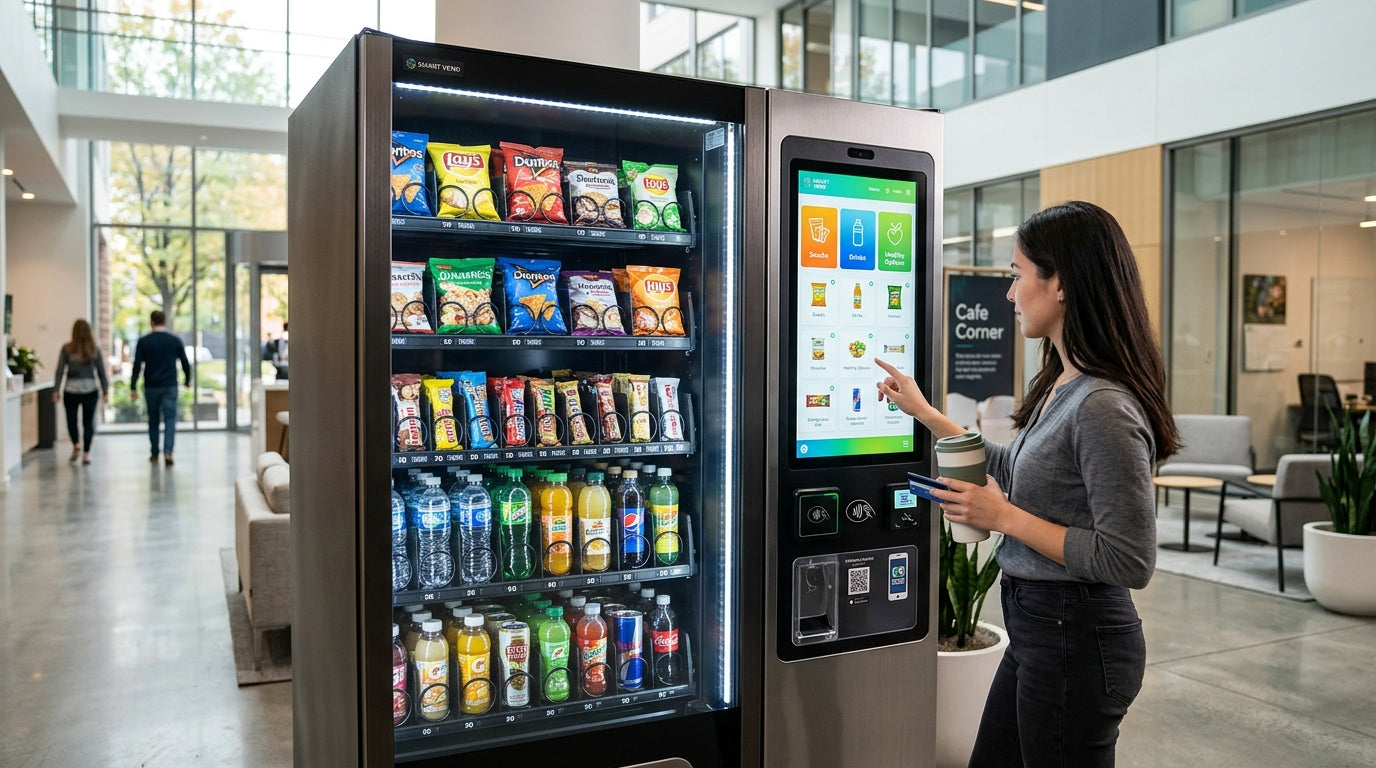
A smart combo vending machine is a single vending unit that dispenses multiple product categories, typically snacks, drinks, and sometimes frozen or hot items, while running on internet-connected technology for cashless payment, remote inventory monitoring, and real-time sales data. It exists because separate single-category machines waste floor space and force operators to service multiple units for the traffic one location could support with just one. This guide covers exactly how these machines work, what separates them from standard vending equipment, and how to choose the right configuration for your location.
Table of Contents
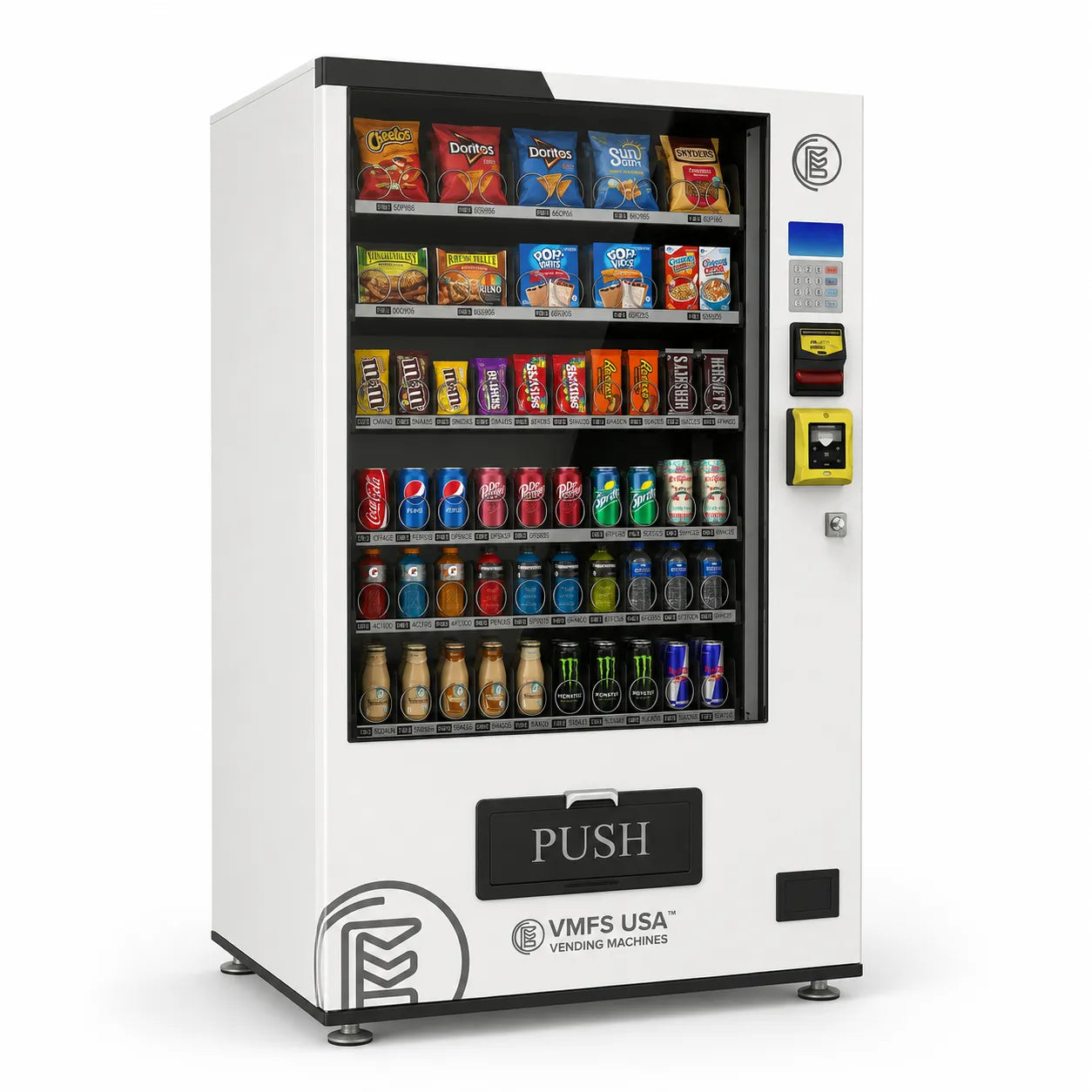
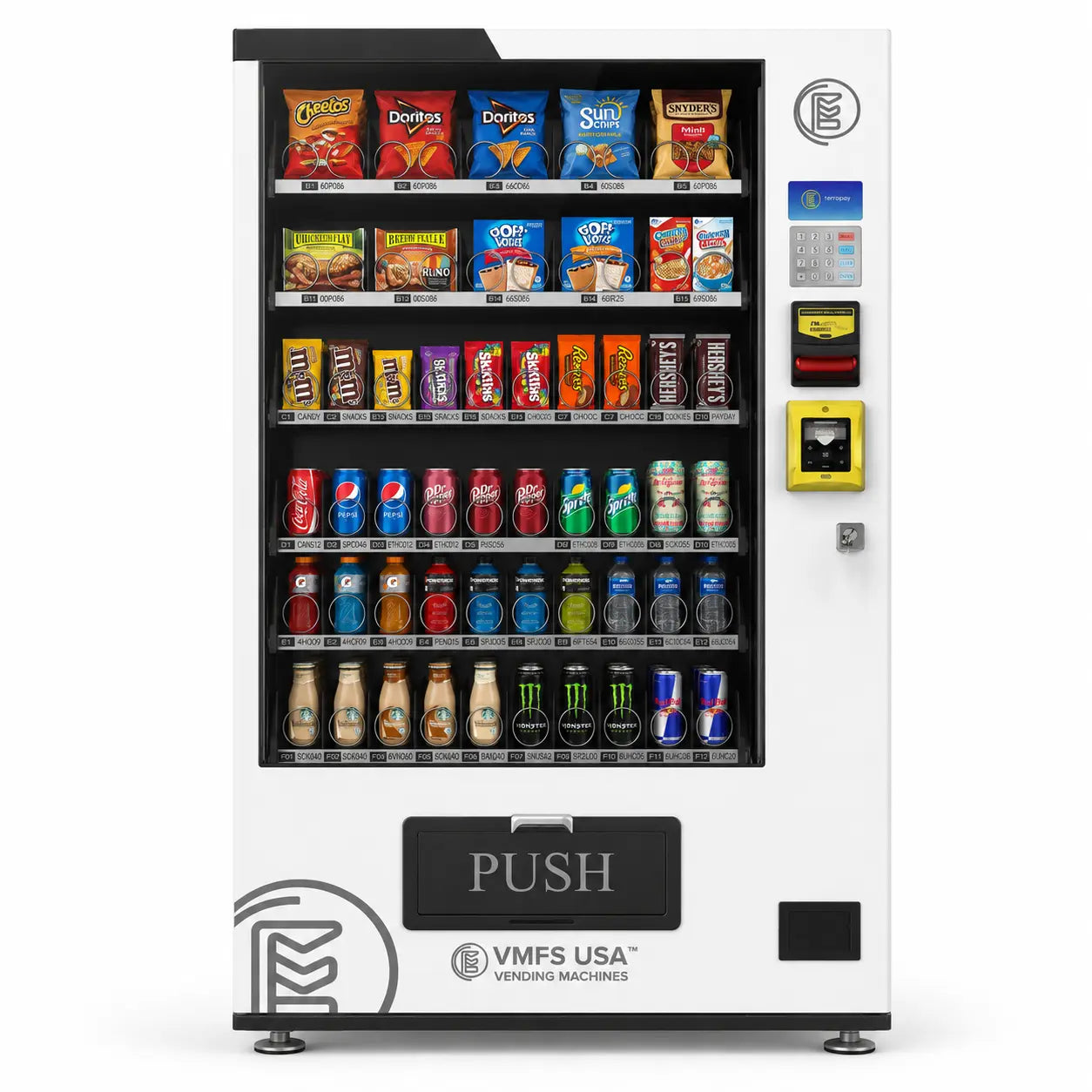
A smart combo vending machine combines two or more product categories, most commonly snacks and beverages, inside one unit with independently controlled temperature zones so refrigerated drinks and shelf-stable snacks can sit side by side without compromising either. The "smart" designation refers to built-in connectivity: cashless payment processing, remote inventory tracking, and telemetry that reports stock levels and machine health to an operator's dashboard without a physical site visit.
This combination matters because foot traffic in most locations doesn't justify two or three separate single-category machines taking up the same footprint one combo unit would need.
The machine's internal architecture separates into independently managed zones, each running its own dispensing mechanism suited to that product type, while a shared control system handles payment, selection, and inventory logic across the entire unit.
Snack compartments typically use spiral coils, while beverage sections use drop mechanisms or vertical stacking systems built for cans and bottles. Some configurations add a frozen or chilled compartment for items like ice cream or cold sandwiches, each zone maintaining its own temperature control independent of the others in the same cabinet.
Cashless payment support (tap-to-pay, mobile wallet, integrated card reader) removes the friction of exact-change purchases, which directly increases conversion on impulse buys. Remote inventory monitoring transmits slot-level stock data in real time, so operators restock based on actual depletion rather than a fixed calendar schedule. This telemetry layer is what separates a smart combo machine from a mechanically similar unit running on older, offline technology.
Combo machines vary by footprint, product mix, and added functionality like advertising displays, and choosing the right type depends heavily on available floor space and the audience walking past it.
| Machine Type | Product Mix | Footprint | Best For |
|---|---|---|---|
| Standard smart combo | Snacks + beverages | Standard, single-unit footprint | Offices, break rooms, moderate-traffic locations |
| Smart elevator/ad combo | Snacks + beverages + digital ad display | Slightly larger, includes screen module | High-visibility spots where ad revenue supplements sales |
| Slim combo | Snacks + beverages, reduced capacity | Narrow footprint for tight spaces | Hallways, small offices, space-constrained locations |
Operators comparing these directly can browse the full combo vending machine collection to see current configurations side by side before narrowing down a specific model.
Consolidating snacks and drinks into one machine cuts the floor space and electrical hookups needed compared to running separate units, which lowers both lease cost and installation complexity for a location. Remote monitoring reduces the number of wasted service visits, since operators only travel to machines that actually need restocking rather than checking every unit on a fixed schedule regardless of demand. Cashless payment support also captures purchases that a coin-and-cash-only machine would lose entirely, since a growing share of buyers simply don't carry cash.
One footprint covers multiple product categories. Remote inventory monitoring cuts wasted service visits. Cashless payment captures more impulse purchases. Higher upfront cost, offset by lower long-term servicing overhead.
Lower upfront cost per unit. Simpler mechanically, easier to service without connectivity dependency. Requires multiple machines to match a combo unit's product range, increasing total footprint and site visits.
Placement success depends on matching foot traffic and dwell time to the machine's product mix, since a combo unit performs best where people have a moment to browse both snack and drink options rather than grabbing a single item and moving on immediately. Offices, break rooms, gyms, and waiting areas consistently perform well because visitors linger long enough to consider multiple purchase categories in one stop. A detailed breakdown of the best locations for smart combo vending machines covers specific venue types and traffic benchmarks worth reviewing before committing to a site.
Many smart combo machines support exterior wraps, screen-based branding, and configurable product layouts, letting operators tailor the unit's look to a specific venue or client agreement. This is particularly relevant for machines with an integrated ad display, where the screen itself becomes a secondary branding and revenue surface. Details on wrap materials, design constraints, and installation are covered in this guide to custom wrap and branding on vending machines.
Placing a smart combo vending machine on someone else's property requires a written agreement covering liability, revenue share or lease terms, and access for restocking and maintenance, regardless of how the machine is branded or configured. Operators should also confirm local vending permit and licensing requirements before installation, since these vary by city and county. A closer look at the regulatory side is available in this overview of the law for smart combo vending machines, alongside a practical breakdown of what belongs in a smart combo vending machine placement agreement before signing with a venue.
Smart combo machines generally cost more upfront than single-category units because of the added refrigeration zones, connectivity hardware, and cashless payment infrastructure built in. That higher initial cost is typically offset over time by lower per-visit servicing costs, since one combo machine replaces the site visits that would otherwise be split across two or three separate units. Configuration also affects price directly: a slim combo model with reduced capacity generally costs less than a full-size unit with an integrated ad display.
Space availability and foot traffic should drive the decision more than brand preference or feature lists. A location with heavy daily traffic and clear sightlines benefits from a smart elevator ad vending machine, where the added display captures secondary ad revenue. A standard office or break room fits well with a core smart combo vending machine, balancing product variety against a manageable footprint. Tight hallways or space-constrained locations are better served by a slim combo vending machine, which trades some capacity for a narrower physical footprint.
Measure available floor space before choosing between standard, slim, or ad-display configurations.
Confirm tap-to-pay and mobile wallet support are included, since this directly affects conversion.
Choose a unit with telemetry to avoid wasted service visits and reduce stockouts.
Compare standard, ad-display, and slim configurations built for high-traffic and space-constrained locations alike.
Frequently Asked Questions
A smart combo vending machine is a single unit that dispenses multiple product categories, typically snacks and beverages, while running connected technology for cashless payment and remote inventory monitoring.
A regular vending machine typically dispenses one product category, while a smart combo machine handles multiple categories in one unit and adds connectivity features like remote monitoring and cashless payment.
Yes. Independently controlled temperature zones let refrigerated beverages and shelf-stable snacks sit in the same cabinet without compromising either product type.
Most modern units support tap-to-pay, mobile wallets, and integrated card readers, which increases conversion on impulse purchases compared to cash-only machines.
Remote inventory monitoring transmits real-time, slot-level stock data to an operator's dashboard, allowing restocking based on actual demand instead of a fixed calendar schedule.
Offices, break rooms, gyms, and waiting areas perform well because visitors linger long enough to consider both snack and drink categories in one stop.
Upfront cost is generally higher due to added refrigeration zones and connectivity hardware, but this is often offset by lower long-term servicing costs since one machine replaces multiple single-category units.
Yes, some configurations, like elevator/ad combo models, include an integrated digital display that generates secondary ad revenue alongside product sales.
A slim combo machine trades some product capacity for a narrower footprint, making it a strong fit for hallways, small offices, and other space-constrained locations.
Yes. A written agreement covering liability, revenue share or lease terms, and restocking access is required regardless of the venue, and should be finalized before installation.

Compartir:
Pokémon Vending Machines Restock Guide: How Often to Refill & How to Track Inventory
How Does a Smart Combo Vending Machine Work? Step-by-Step Guide