



Design the perfect vending solution for your location and customers.

Sales, inventory and alerts for your whole route, from one machine to a fleet.
Answer a few questions about your location, products and budget and get a shortlist.
Estimate revenue, payback period and margin before you buy.
Sales, setup help, warranty and parts from the VMFS USA team.
Join the VMFS newsletter and step into a thriving network dedicated to collective success.
One signup. Endless possibilities.
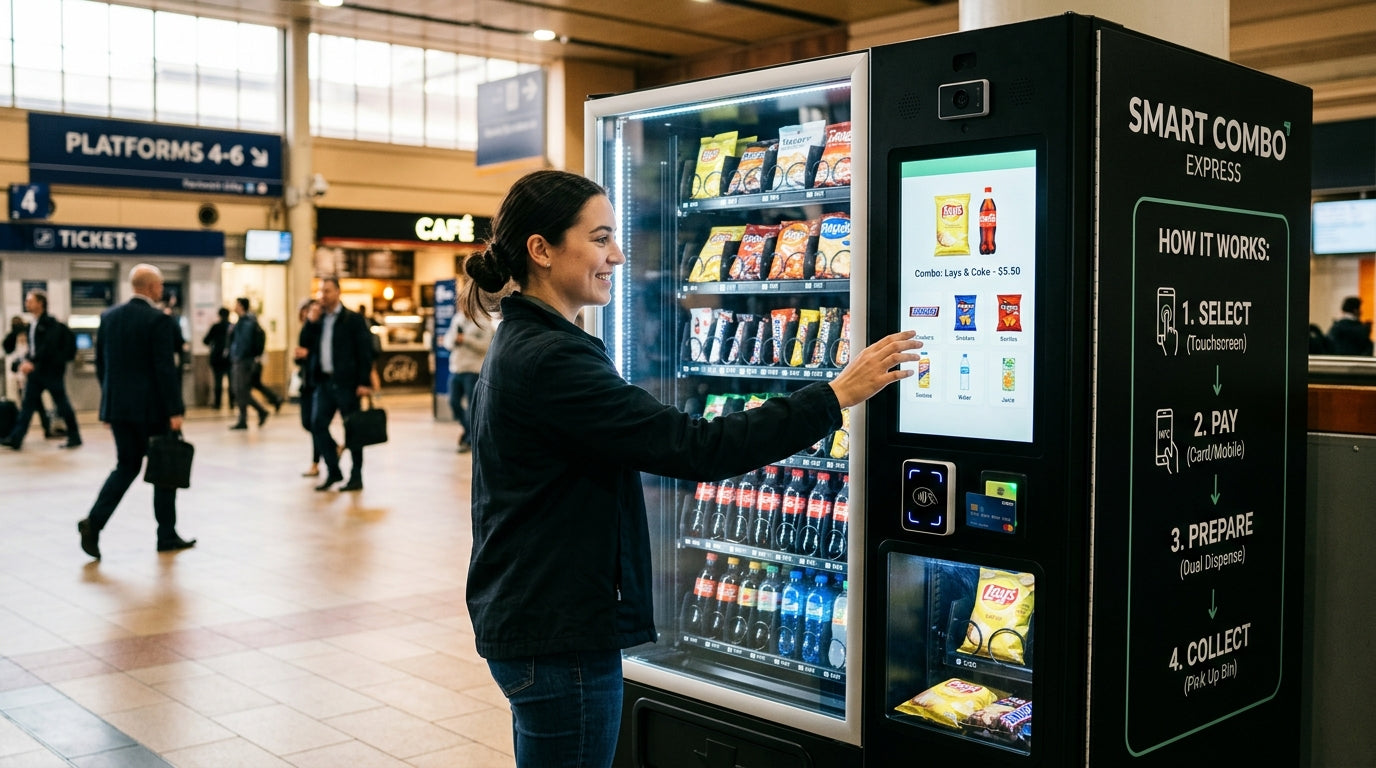
A smart combo vending machine works by combining independently controlled storage zones, product-specific dispensing mechanisms, and connected software into one unit, so a single machine can sell snacks and beverages while reporting live inventory and processing cashless payments automatically. Each zone operates on its own temperature and mechanical logic, but a shared control board ties selection, payment, and dispensing into one seamless transaction. This guide walks through every stage of that process, from the moment a customer taps their card to the moment an operator gets a low-stock alert on their phone.
Table of Contents
A smart combo vending machine is a single connected unit that dispenses multiple product categories, typically snacks and drinks, using independently managed compartments and internet-connected controls. For a full breakdown of the product category itself, see what a smart combo vending machine is; this guide focuses specifically on the mechanics behind how it operates.
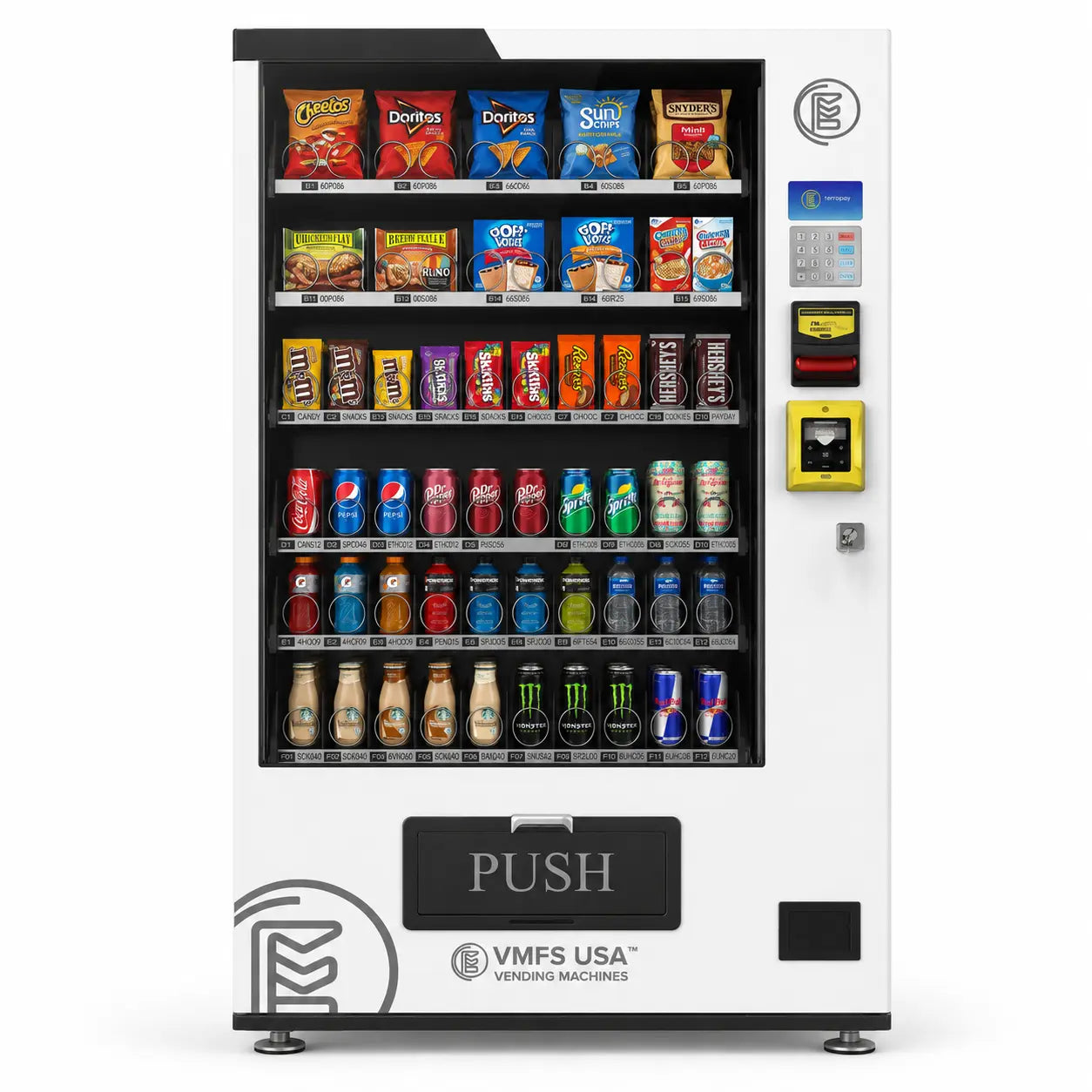
Three subsystems work together inside every smart combo machine: climate-controlled storage, category-specific dispensing hardware, and a central control board that coordinates both against live software.
Separate compartments run independent temperature control, which is what allows shelf-stable snacks and refrigerated beverages to coexist in the same cabinet without one compromising the other. The refrigerated zone maintains a consistent temperature range through its own compressor and sensor loop, isolated from the ambient snack compartment entirely.
Snack compartments typically use spiral coils that rotate to push a selected item forward until it drops. Beverage compartments more often use vertical stacking columns or drop-shelf mechanisms designed for the weight and shape of cans and bottles, since a spiral coil isn't well suited to heavier, cylindrical products. Machines with an added ad display module include a separate screen and mounting assembly that runs independently of the dispensing hardware.
A central control board receives the customer's selection, verifies payment authorization, and triggers the correct motor or mechanism for that specific slot. This same board logs the transaction, updates the internal inventory count, and pushes that data to the operator's monitoring software, which is the layer that makes the machine "smart" rather than purely mechanical.
From a customer's perspective, the entire transaction happens in seconds, but each step triggers a specific hardware and software response behind the panel.
Telemetry hardware inside the machine transmits operational data over a cellular or Wi-Fi connection, giving operators visibility into every machine in their network without a physical visit.
Each sale updates a slot-level inventory count that syncs to the operator's dashboard in real time, which is why remote-monitored machines get restocked based on actual depletion rather than a fixed calendar guess. This directly reduces the number of wasted service trips to machines that don't yet need attention.
Some systems layer sales-velocity data on top of raw inventory counts, flagging which machines are likely to sell out before their next scheduled visit based on historical demand patterns. This lets operators prioritize routes around machines actually at risk of stocking out, rather than treating every unit in the network identically.
The payment terminal communicates with a payment processor over the same connection used for telemetry, authorizing tap-to-pay, mobile wallet, or card transactions in roughly one to two seconds before releasing the dispense command. This happens because the terminal runs a standard EMV-compliant payment flow, the same underlying protocol used by point-of-sale terminals in retail stores, adapted for a self-service vending context.
| Stage | Customer Sees | Operator Sees |
|---|---|---|
| Selection | Product highlighted on screen or keypad | No action required |
| Payment | Tap-to-pay or card prompt, instant confirmation | Transaction logged in real time |
| Dispensing | Item drops into pickup bin within seconds | Slot inventory count decremented automatically |
| Inventory status | Sold-out slots marked unavailable | Low-stock alert triggers restock scheduling |
| Maintenance | Machine appears offline if malfunctioning | Diagnostic alert identifies the specific fault |
Real-time inventory visibility cuts wasted service visits. Cashless payment captures buyers without cash on hand. Diagnostic alerts flag mechanical faults before a customer encounters them.
Connectivity hardware adds upfront cost compared to offline units. A network or connectivity outage can delay telemetry reporting, though the machine typically still dispenses locally.
| Component | Function |
|---|---|
| Telemetry module | Transmits inventory and machine health data over cellular or Wi-Fi |
| Payment terminal | Processes cashless transactions via EMV-compliant protocol |
| Control board | Coordinates selection, payment authorization, and dispensing |
| Sensors | Confirm successful product delivery and monitor compartment temperature |
| Dashboard software | Aggregates data across an operator's full machine network |
Jammed spiral coils remain the most common mechanical fault, typically caused by irregularly packaged product not sized correctly for that slot, and are resolved through direct on-site adjustment during a restock visit. Connectivity drops occasionally delay telemetry syncing, though the machine's core dispensing function generally continues operating locally until the connection restores. Payment terminal errors, most often triggered by a network timeout during authorization, are usually resolved by the terminal automatically retrying the transaction before the customer even notices a delay.
Understanding the mechanics behind a smart combo machine is only part of a successful deployment; where it's placed and how that placement is documented matter just as much. A detailed breakdown of the best locations for smart combo vending machines covers venue types worth targeting, while custom wrap and branding on vending machines explains how the exterior, including any ad display hardware, can be customized without interfering with the machine's internal systems. On the compliance side, this overview of the law for smart combo vending machines and a practical guide to a smart combo vending machine placement agreement cover what operators need in place before installation.
Independent temperature control lets snacks and drinks share one cabinet safely.
Coordinates payment, dispensing, and inventory updates in a single transaction flow.
Reports stock levels and machine health to operators without a site visit.
Compare configurations built with the exact zoned storage and connectivity described above.
Frequently Asked Questions
The customer selects a product, the payment terminal authorizes the transaction, and the control board triggers the correct dispensing mechanism before logging the sale and updating inventory in real time.
Independently controlled compartments each run their own compressor and sensor loop, allowing a refrigerated beverage zone and an ambient snack zone to operate in the same cabinet without affecting each other.
Snack compartments typically use spiral coils, while beverage compartments use vertical stacking columns or drop-shelf mechanisms better suited to the weight and shape of cans and bottles.
Each sale updates a slot-level inventory count that syncs to the operator's dashboard over a cellular or Wi-Fi connection, allowing restocking decisions based on actual depletion rather than a fixed schedule.
Tap-to-pay, mobile wallet, and card transactions typically authorize in one to two seconds through a standard EMV-compliant payment flow before the dispense command is released.
The machine typically continues dispensing locally, but telemetry reporting and remote inventory updates are delayed until the connection restores.
Jams most often occur when irregularly packaged product isn't sized correctly for its assigned slot, which is typically resolved with a direct on-site adjustment during restocking.
Yes, a delivery sensor confirms successful product drop into the pickup bin before the transaction closes out, which is what triggers the final inventory update.
Some monitoring systems layer historical sales-velocity data on top of raw inventory counts, flagging machines likely to sell out before their next scheduled visit so operators can prioritize routes accordingly.
No, the screen and mounting assembly on ad-equipped models run independently of the dispensing hardware, so advertising functionality doesn't interfere with product selection or delivery.

Compartir:
What Is a Smart Combo Vending Machine? The Complete Guide
Regional Coffee Preferences: A US Coffee Vending Guide