


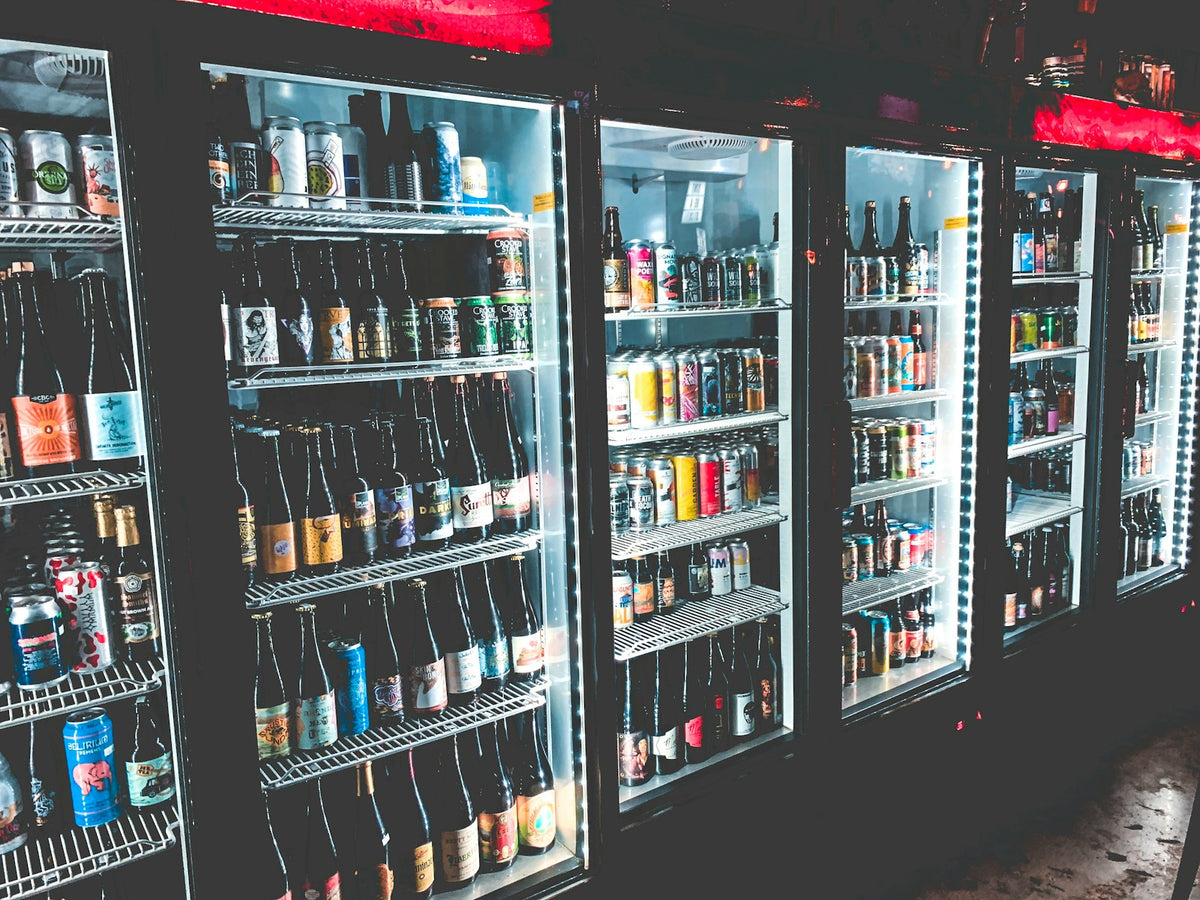


Design the perfect vending solution for your location and customers.

Join the VMFS newsletter and step into a thriving network dedicated to collective success.
One signup. Endless possibilities.
Most people buying their first vending machine start in the wrong place. They open a marketplace listing, find a cabinet that looks reasonable, and only afterward start wondering where it will go.
That order is backwards, and it is the single most expensive mistake in this business. The machine is a container. The location is the asset. Get the sequence right and a modest machine earns steadily for a decade. Get it wrong and a good machine sits in a garage.
This guide runs the whole purchase in order: what to research, which format fits which site, where to actually buy, what to inspect, and what the real cost looks like once you add everything up. When you are ready to compare formats side by side, the full range of vending machines for sale covers every category.
The short answer
Buying a vending machine means choosing between new units at roughly 4,000 to 12,000 USD and used units at roughly 1,000 to 4,000 USD, securing a location with a written placement agreement before you purchase, and matching the format to what people at that site will actually buy. Budget beyond the machine for inventory at 200 to 500 USD, freight at 150 to 900 USD, insurance, and a monthly card reader fee. Machines come from manufacturers and specialist suppliers, refurbished dealers, peer to peer marketplaces, or by buying an existing route.
A mediocre machine at an excellent site beats an excellent machine at a mediocre site every time, and it is not close. So the research comes first.
You are looking for a specific combination: steady daily foot traffic, limited food options within a short walk, and people who are stuck in the building for a stretch of time. Waiting is when vending sells.
The working rule of thumb is roughly one vend per day for every eight to ten people who regularly occupy a site. A fifty person office should produce five to six vends a day.
At an average of 2.25 USD per vend, that is around 350 USD a month gross. Run that number for every site on your list before you spend anything, because it tells you what size machine the location can justify.
What they buy matters as much as how often. The NAMA Foundation runs an industry census every two years with the research firm Technomic, and its category breakdown puts convenience services revenue at roughly snacks 33 percent, beverages 29 percent and coffee 24 percent. That is much closer to parity than the widely repeated claim that cold drinks are more than half of vending sales, which traces back to 2009 and 2010 era data.
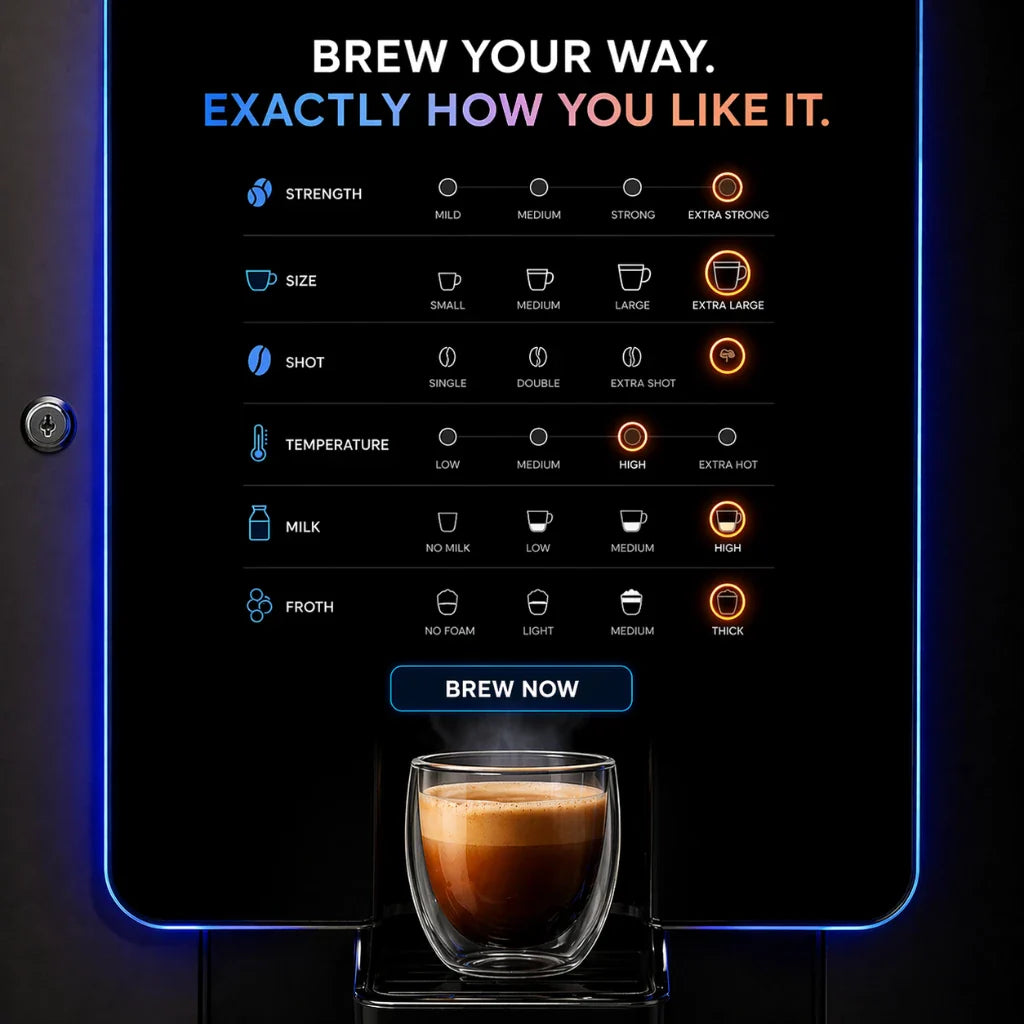
Coffee at nearly a quarter is the figure worth acting on, because most first-time buyers never consider it. If the site is an office, hotel or clinic with no staffed café, coffee vending machines address a category that a snack cabinet leaves entirely on the table, while soda and beverage vending machines cover the chilled side at far greater depth than a combo drinks column.
It is also worth going and looking at machines that already work. Use VendingFinder to locate well run units near you and study how they are merchandised and where in the room they sit.
Secure the site before you buy. A written placement agreement changes what you can negotiate on price, terms, and financing. Without one you are guessing at demand and buying on hope.
If prospecting is the part you would rather not do, vending machine placement is run as a dedicated service in the VMFS network, matching operators to sites that have already been qualified.
The wrong format in a good location still underperforms. Match the machine to what people there will actually buy and how often you can realistically service it.
| Format | Best fit | Watch out for |
|---|---|---|
| Snack vending machines | Offices, waiting rooms, workshops | Shelf stable only, so no chilled items |
| Soda and beverage vending machines | Gyms, outdoor and industrial sites | Cooling is the main failure point, needs airflow clearance |
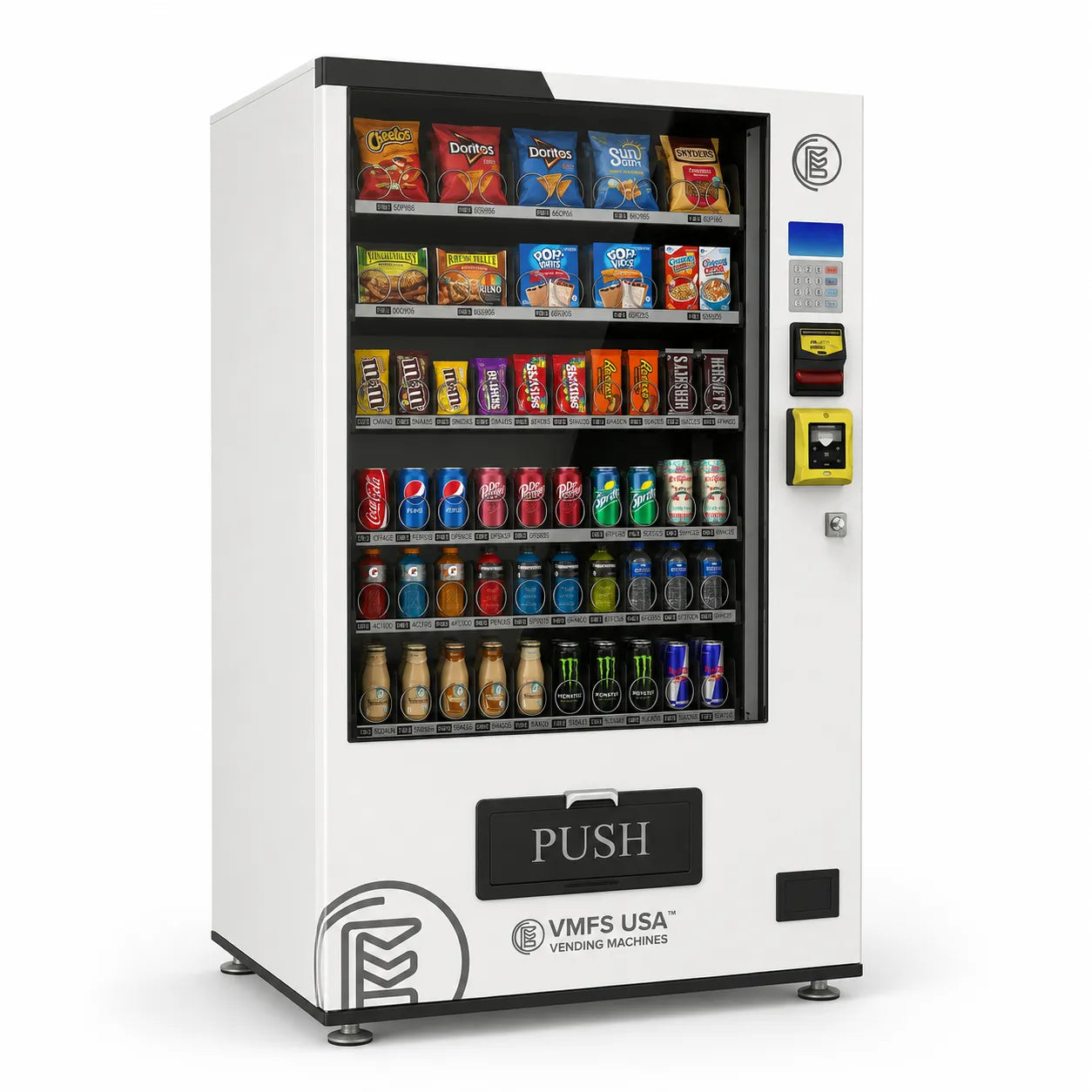
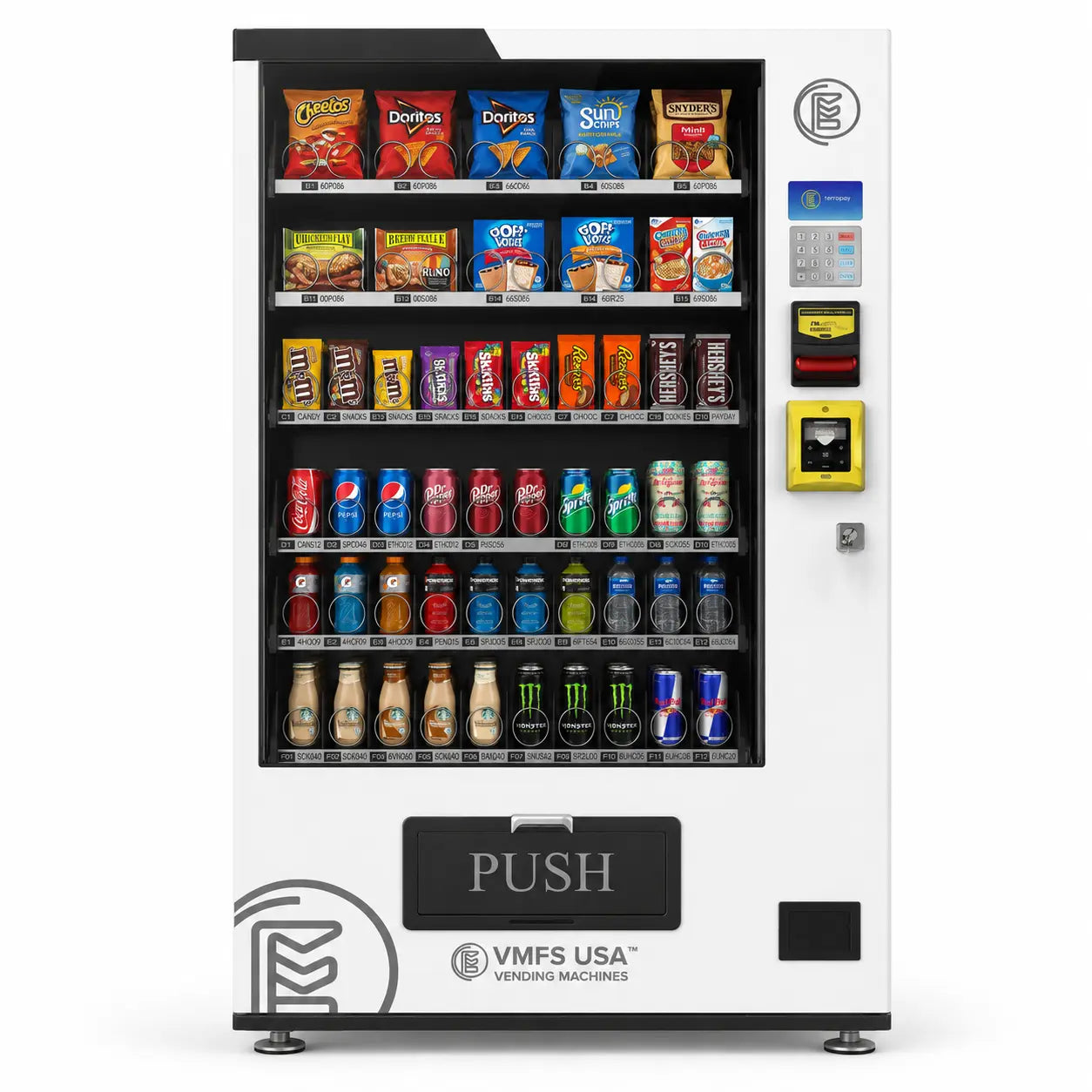
| Combo vending machines | Most offices and break rooms | Two systems in one cabinet, so more surface area to maintain |
| Coffee vending machines | Hotels, clinics, offices without a staffed break area | Needs a water source or refill routine, higher service frequency |
| Elevator vending machines | Glass bottles, electronics, premium and fragile items | Higher purchase price, slower vend cycle |
| Touch screen smart vending machines | Corporate lobbies, high footfall, promotional sites | Higher cost, but pricing and product info update centrally |
| AI grab and go vending machines | Corporate campuses, gyms, high trust environments | Highest cost, but basket size runs well above traditional vending |
Three questions settle the choice. What will people here buy, how often will they buy it, and how often can you realistically drive out to restock. A small site with a large machine ties up product capital for nothing.
For low traffic or space constrained sites, going smaller is usually the smarter opening move. Mini vending machines need less capital, less inventory, and are far easier to relocate if the first site underperforms.
Some sites rule out a floor cabinet entirely. Hotel corridors, clinic hallways and older buildings with wall runs broken up by fixtures are where wall mount vending machines win the placement outright, because a standard 35 to 40 inch cabinet physically will not go in. Measure the wall or the floor before you order, not after the truck arrives.
Environment matters just as much as footprint. A machine living on a forecourt, a loading dock or a smoking terrace needs to be built for weather and for an unstaffed exterior wall, which is what separates outdoor vending machines from an indoor unit somebody pushed under an awning and hoped for the best.
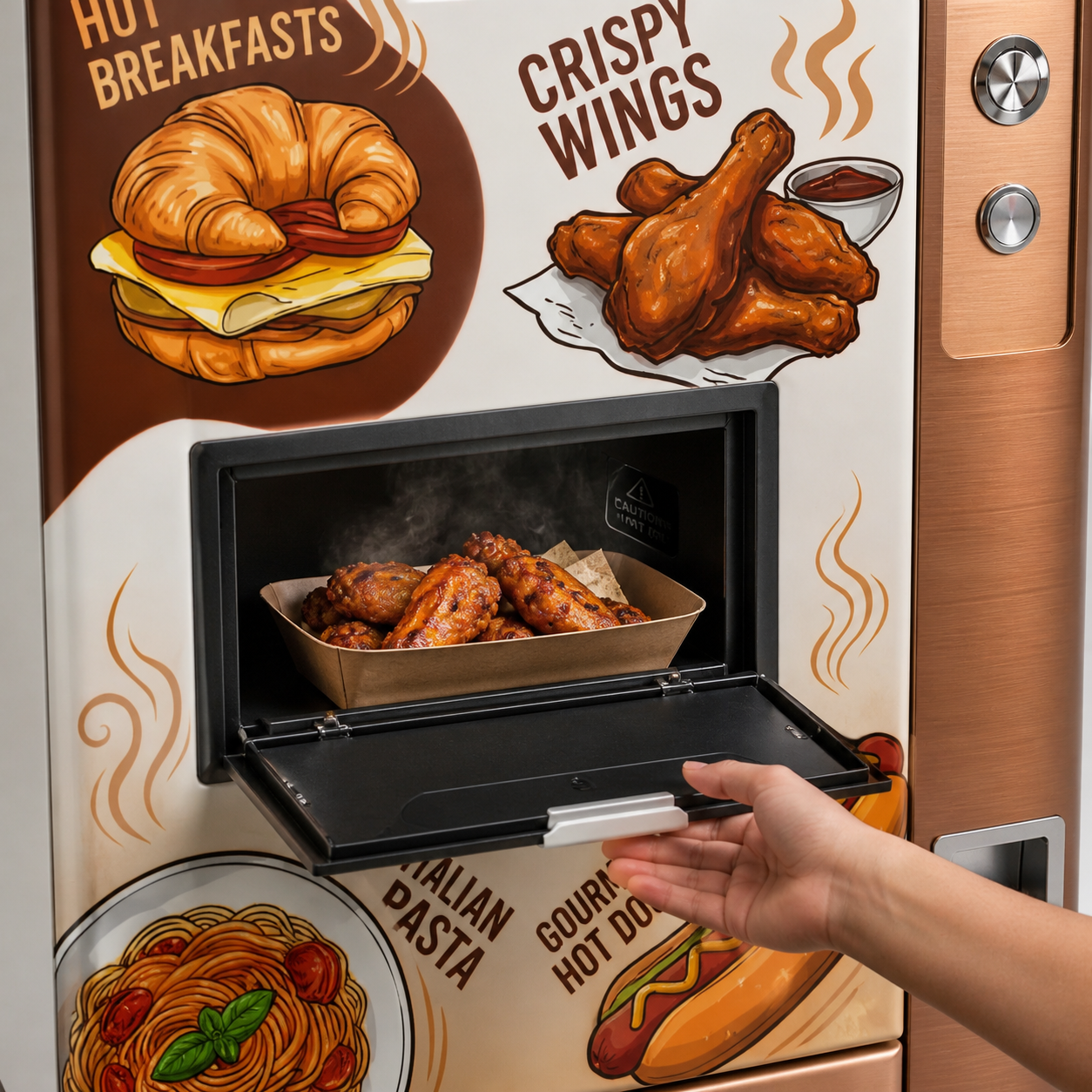
Product category can also force the decision before location does. Fresh meals, salads and sandwiches need refrigeration and short cycle rotation, which is what food vending machines are built for. Ice cream and frozen meals need sub-freezing capability no ambient cabinet can fake, so frozen vending machines are the answer rather than squeezing the category into a snack planogram and writing off the waste.
One more filter worth applying early: corporate wellness programmes, hospitals and clinics increasingly ask what share of your offering meets a recognised nutrition standard before they will sign. Buying a cabinet configured for that from the start, rather than retrofitting the product mix later, is why healthy vending machines open doors a standard snack unit does not.
This decision sets your starting budget, your maintenance load, and which locations will accept you. Both work. They just fail differently.
Not features, predictability. Every wear component starts at zero on the same day, which means you know roughly what the next three years look like.
Used works when the stakes are low. A quiet site, an informal relationship with the owner, and the ability to fix things yourself change the math entirely in its favor.
It stops working on busy sites, anywhere a multi day outage damages the relationship, and anywhere the machine needs payment acceptance the old controller cannot support.
The purchase price gap closes faster than people expect. A used combo at 2,800 USD carries an average of 1,200 to 3,000 USD in repairs across five years, plus 300 to 500 USD for a cashless retrofit and 500 to 1,200 USD in extra electricity. A new combo at 5,500 USD carries 200 to 700 USD in repairs over the same period.
By year five, the two paths land within a few hundred dollars of each other, before you count the sales lost while a machine sits dark. We break the whole comparison down with repair costs by component in our guide to used vs new vending machines.
Your source determines warranty, support, and whether anyone answers the phone when something breaks. Four routes are worth comparing.
The safest route for a first purchase. Machines are tested before shipping, payment systems are verified, warranty terms are written down, and there is someone to call.
You pay more than a marketplace listing, and what you are paying for is the absence of surprises in month two. Units in the in stock collection ship within 7 to 21 days rather than on a manufacturing lead time, which matters when a site has already agreed to a placement and is waiting on you.
These sit between new and private sale on both price and risk. A genuine refurbisher replaces worn motors, services the validator, tests the compressor, and repaints the cabinet.
The catch is that the word refurbished is not regulated. Plenty of machines sold as refurbished have only been pressure washed. Ask which specific components were replaced and ask to see the invoice for the parts.
Local listings and auctions carry the lowest prices and the highest risk. These deals can absolutely work, but only with a physical inspection.
If a seller will not let you run the machine before you pay, walk away. There is no legitimate reason to refuse, and a machine you cannot test is a machine you are buying blind.
Here you are buying revenue and relationships, not just hardware, which makes the due diligence completely different.
Missing or vague records are the warning sign. A route with clean books is worth a premium. A route without them is a set of machines with a story attached.
| Source | Price level | Warranty | Risk |
|---|---|---|---|
| Manufacturer or specialist supplier | Highest | Written and enforceable | Lowest |
| Refurbished dealer | Middle | Limited, varies widely | Moderate |
| Peer to peer marketplace | Lowest | None, sold as is | Highest |
| Existing route | Varies by revenue | Rarely any | Depends entirely on the records |
This applies to any machine you have not bought new. Work the whole list. A single failure is a negotiating point, three or more means walk.
This is where used purchases most often go wrong, and it is not about convenience. A machine that cannot take cards is invisible to a growing share of the people walking past it.
On a new build like the smart combo vending machine, payment hardware is specified at the point of order to suit the site, which sidesteps the compatibility problem entirely rather than working around it. Where cashless is the whole requirement and the site carries no cash at all, buying from the vending machines with card readers range removes the retrofit question before it arises.
Budget for consumables either way. Vend motors, door gaskets and validators are wear items rather than failures, and keeping a handful of common vending machine parts and accessories in the car turns a dead machine into a ten minute fix instead of a call out and a week of lost sales.
The purchase price is usually around 60 to 70 percent of what you actually spend to get one machine earning. Budget for the rest or it will surprise you in week three.
| Cost | Typical range | Notes |
|---|---|---|
| Used machine | 1,000 to 4,000 USD | Wide swing by age, format, and refrigeration |
| Refurbished machine | 2,500 to 5,500 USD | Verify what was actually replaced |
| New standard combo | 4,000 to 7,000 USD | Bill acceptor and coin mech configuration |
| New touch screen or smart | 6,000 to 12,000 USD | Large display, telemetry ready |
| Specialty (elevator, frozen, AI) | 8,000 to 20,000 USD and up | Format specific |
| Freight and placement | 150 to 900 USD | Liftgate delivery for a 600 to 800 lb cabinet |
| First product fill | 200 to 500 USD | Buy at club stores, not retail |
| Liability insurance | 30 to 60 USD per month | Many sites ask for the certificate before signing |
| Card reader | 7.95 to 9.99 USD per month | Plus 5 to 6 percent of card sales in processing |
| Business registration and permits | 50 to 600 USD | Varies by state and product category |
For a full breakdown of machine pricing by type and where the money actually goes, our guide to vending machine cost covers it in detail. If you want to model your own site, the ROI calculator handles the payback arithmetic.
Financing does not make a machine cheaper. It changes which machine you can justify, which is a different and more useful thing.
A monthly payment on reliable new equipment often lands close to what an aging machine costs in unplanned repairs, except one number is predictable and the other arrives the day the compressor dies. Vending machine financing is available through registered outside partners, and it preserves working capital for product inventory, which is what actually generates revenue.
Warranty terms are worth reading properly rather than skimming, because they differ enormously by source.
VMFS machines carry a one year parts warranty, with ongoing parts availability and support for new operators. Used machines from private sellers almost never carry anything, which is fine on a quiet site and a real exposure on a busy one.
This is the layer most first time buyers underestimate. Snacks and packaged drinks are usually straightforward. Refrigerated, fresh, or age restricted products bring health department involvement, additional permits, and sometimes inspection.
Getting it wrong after a machine is installed costs far more than getting it right beforehand. VAdviced covers vending compliance and licensing as a paid service in the network if you would rather not work through the state by state rules yourself.
Once you are past two or three placements, driving out to find out what sold stops being viable. Machines that report their own sales remove the guesswork, and VMFS Cloud provides that remote visibility as a subscription at 7.99 USD a month. It is optional and machines run fine without it.
Run this before money changes hands. If any line is unresolved, the purchase is premature.
Gross sales at a moderate site commonly land between 250 and 600 USD a month. After cost of goods at 40 to 55 percent, site commission at 10 to 25 percent where it applies, and cashless processing, net profit typically runs 80 to 180 USD per machine per month. The business works through repetition across many machines rather than through any single unit, which is why route quality and service discipline matter more than picking a clever product mix. On category mix, NAMA Foundation census data puts convenience services revenue at roughly snacks 33 percent, beverages 29 percent and coffee 24 percent, so a machine ignoring coffee entirely is leaving a quarter of the addressable category unserved.
Not strictly. Many operators start as sole proprietors with one or two machines. An LLC separates personal assets from business liability, makes it easier to open a business bank account and sign placement agreements in the company name, and many commercial sites will ask you to be a registered entity before they sign anything. If you plan to go past a few machines, it is usually worth doing from the start. Speak to a legal or tax professional about what fits your situation.
It depends on profit per machine, not machine count. At 100 USD net per machine per month you would need roughly 84 machines. At 200 USD, roughly 42. Operators who focus on premium locations and higher value formats reach the same income with far fewer units, which is why the real target is profit per machine rather than total machines placed.
Always. You need written approval from the property owner or manager covering where the machine sits, who services it, how commission or rent is handled, access times, who pays for electricity, and how either side can end the agreement. A one or two page location agreement covers it. Some cities also require a business license or vending permit on top of the site agreement.
New for busy sites, corporate locations, and anywhere downtime damages the relationship. Used for quiet sites, test locations, and operators who can service the machine themselves. The purchase price gap narrows significantly across five years once repairs, cashless retrofits, and energy draw are counted, so the decision is really about how much unpredictability you can absorb rather than about the sticker price.
Ask for six to twelve months of sales reports split by cash and card, repair and service logs including compressor and board history, a full location list with decision maker contacts, and copies of every placement agreement with confirmation they transfer. Then verify independently: compare the sales reports against product purchase records and bank deposits, and visit the top locations at different times of day to check the traffic yourself.
Buying a vending machine is not really a hardware decision. It is a location decision followed by a hardware decision, and reversing those two steps is what puts machines in garages.
Secure the site, estimate the demand honestly, match the format, inspect properly if you are buying used, and budget for the two thirds of the cost that is not the machine. Do that and the first purchase funds the second.
When you are ready to compare specifications and configurations, you can buy vending machines across snack, drink, combo, coffee, frozen, and specialty builds, with financing through registered outside partners and in stock units shipping within 7 to 21 days.
For the wider picture including placement, compliance, and operator support, the vending machines lineup sits alongside the full VMFS network.
Share:
Eco-Friendly Vending Machines: A Guide for Operators and Investors
Eco-Friendly Vending Machines: A Guide for Operators and Investors