


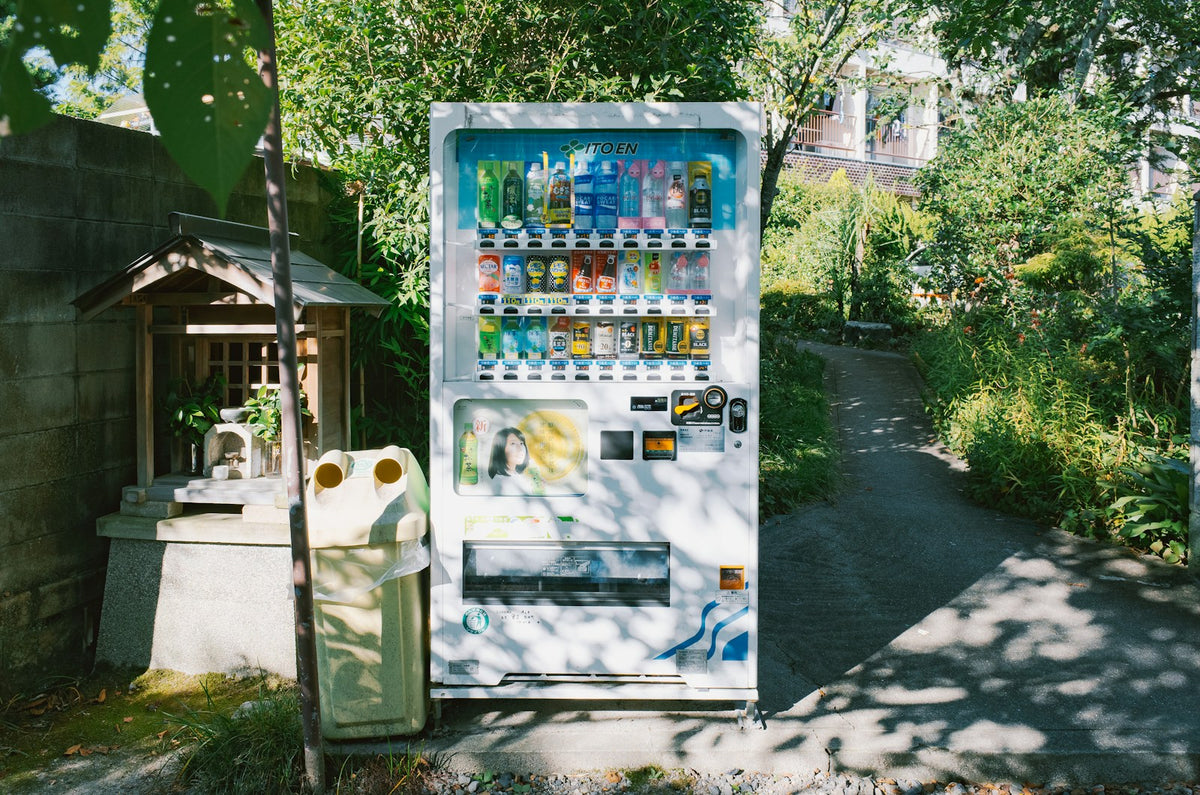


Design the perfect vending solution for your location and customers.

Join the VMFS newsletter and step into a thriving network dedicated to collective success.
One signup. Endless possibilities.
Eco-friendly vending machines use less electricity, cool with low-impact refrigerants such as R-290, and are stocked and serviced in ways that cut packaging, product and fuel waste. The biggest single gain for most operators is replacing an older refrigerated machine that averages about 400 watts, roughly 3,500 kWh a year, with a current model rated in the 1,300 to 1,460 kWh range.
This guide gives US operators the numbers behind that claim: federal DOE limits and ENERGY STAR levels, what a machine costs to power in your state, which retrofits still pay back, how refrigerant and disposal rules work, and how to describe a greener route without running into FTC green-claim rules.
A vending machine is eco-friendly when it uses measurably less electricity than the machine it replaces, cools with a low global-warming-potential refrigerant, and is run in a way that reduces packaging waste, spoiled product and unnecessary service trips. No single label covers all of that. ENERGY STAR certifies refrigerated beverage machines on energy use, the EPA's SNAP program decides which refrigerants new machines may use, and everything else comes down to how an operator stocks, services and eventually retires the equipment.
That distinction matters because the word "eco-friendly" on its own carries little weight with a facilities manager or a procurement officer. A school district, hospital or corporate campus that asks for green vending usually wants something it can verify: a daily kWh rating, a certification, a refrigerant name, a recycling arrangement. Operators who can hand over those details win the conversation. Operators who only use the adjective risk a greenwashing problem, which is covered later in this guide. The six areas below are where real environmental gains come from on a route of vending machines.
Energy use
Rated daily kWh well under the federal limit, plus a low power mode that is actually switched on.
Refrigerant
Low-GWP gases such as R-290, R-600a or CO2 instead of HFC-134a and other high-GWP blends.
Lighting and controls
LED product lighting, scheduled dimming and controls that relax cooling when nobody is buying.
Packaging and product mix
Cans and recyclable packs that sell, a recycling bin beside the machine and near-zero expired stock.
Route and service
Telemetry-driven restocking that removes wasted trips and catches cooling failures before product spoils.
End of life
Refurbishing what still runs, and recovering refrigerant before anything is scrapped.
The rest of this guide takes each area in turn, starting with the one that has the largest dollar impact for most routes: electricity.
A current full-size refrigerated vending machine uses roughly 3 to 4.4 kWh a day, or about 1,100 to 1,600 kWh a year, while an older refrigerated machine can use more than twice that. The 3 to 4.4 kWh range comes from VMFS's own location-matching program, which also notes that snack machines use far less. Federal figures land in the same window: the Department of Energy's purchasing guidance for refrigerated beverage vending machines shows a 30 cubic foot ENERGY STAR machine at 3.71 kWh a day, or 1,354 kWh a year.
Older equipment is a different story. A 2010 North Carolina vending machine energy fact sheet, sponsored by the state energy office and the US Department of Energy, put a typical refrigerated vending machine at about 400 watts on average. Running around the clock, that works out to roughly 3,500 kWh a year. The same sheet put a non-refrigerated snack machine at almost 100 watts, mostly lighting and controls. The gap between those two eras is the most useful number in this article: replacing a legacy cold-drink machine cuts its power use by more than half, while choosing between two current models changes it by a few percent.
Cost depends on where the machine sits. The US Energy Information Administration's Electric Power Monthly reported an average commercial electricity price of 14.53 cents per kWh for July 2026, with Texas at 8.47 cents and California at 30.56 cents; state averages ran from 8.22 cents in North Dakota to 43.63 cents in Hawaii. The table applies the national, Texas and California prices to the energy figures above.
| Machine | Annual energy | US average (14.53¢) | Texas (8.47¢) | California (30.56¢) |
|---|---|---|---|---|
| Older refrigerated machine (about 400 W average) | ~3,504 kWh | ~$509 | ~$297 | ~$1,071 |
| New Class A, 30 ft³, at the federal maximum (3.99 kWh/day) | ~1,456 kWh | ~$212 | ~$123 | ~$445 |
| ENERGY STAR Class A, 30 ft³ (3.71 kWh/day) | 1,354 kWh | ~$197 | ~$115 | ~$414 |
| Best available Class A, 30 ft³ (3.23 kWh/day) | ~1,179 kWh | ~$171 | ~$100 | ~$360 |
| Seaga Prosper (VMFS product page estimate) | ~1,314 kWh | ~$191 | ~$111 | ~$402 |
| Non-refrigerated snack machine (about 100 W) | ~876 kWh | ~$127 | ~$74 | ~$268 |
The federal rows multiply the daily limit by 365 days. Dollar figures multiply annual kWh by the EIA July 2026 commercial average for the nation or state, and leave out demand charges, taxes and fees, so treat them as estimates rather than a bill.
Three factors push a specific machine up or down that range. Refrigeration is the largest load, so ambient temperature and door openings matter; a machine in a hot breakroom or in afternoon sun runs its compressor longer than one in an air-conditioned lobby. Lighting is the second load, and on older fluorescent-lit machines it is a big one: the North Carolina sheet estimated lights and ballasts at about 180 watts. Size is the third. DOE tells federal buyers to require properly sized machines because larger machines use more energy, a useful reminder not to place a full bank where a compact unit would sell the same volume. Hot-drink equipment follows different math; see our breakdown of coffee vending machine electricity consumption.
Every refrigerated bottled or canned beverage vending machine sold new in the US must stay under a federal maximum daily energy consumption set by the Department of Energy in 10 CFR 431.296, and ENERGY STAR certification marks machines that beat that maximum. The limit is a formula based on refrigerated volume (V, in cubic feet), and it has tightened twice: once for machines manufactured from August 31, 2012, and again for machines manufactured from January 8, 2019. Classes A and B cover machines with a refrigerated cabinet; the combination classes cover machines that pair refrigerated and non-refrigerated compartments.
| Equipment class | Made Aug 31, 2012 to Jan 7, 2019 | Made on or after Jan 8, 2019 | Current limit for a 30 ft³ machine |
|---|---|---|---|
| Class A | 0.055 × V + 2.56 | 0.052 × V + 2.43 | 3.99 kWh/day |
| Class B | 0.073 × V + 3.16 | 0.052 × V + 2.20 | 3.76 kWh/day |
| Combination A | Reserved (no standard) | 0.086 × V + 2.66 | 5.24 kWh/day |
| Combination B | Reserved (no standard) | 0.111 × V + 2.04 | 5.37 kWh/day |
Run the 2019 Class A formula for a 30 cubic foot machine and you get 3.99 kWh a day. That is exactly the "less efficient" baseline in the FEMP purchasing example, where an ENERGY STAR model is capped at 3.71 kWh a day and the best available model reaches 3.23. Over a year, FEMP puts the ENERGY STAR machine at 1,354 kWh against 1,456 kWh for the baseline, an annual energy cost of $134 against $144, and a lifetime energy cost saving of $97. FEMP adds that the best available model saves up to $264 over its life.
Read those figures together with the marketing. The ENERGY STAR vending machine page says certified refrigerated beverage machines are on average 9% more efficient and save about 1,000 kWh a year, and credits low power modes plus more efficient lighting, compressors and fan motors. Against a brand-new federal-minimum machine, FEMP's example shows a gap of about 100 kWh a year. The practical reading for an operator: large savings come from retiring older stock, and between two new machines ENERGY STAR is a sound tiebreaker rather than a transformation.
Buying tip: Ask any supplier for the machine's rated daily kWh and refrigerated volume, then compare it with the formula above. A figure well under the federal line is a real efficiency claim; "energy-efficient" with no number attached is not.
Note the scope. The federal standard and the ENERGY STAR vending specification, current since April 2020, cover refrigerated beverage machines. Ambient snack machines, coffee brewers and most specialty machines fall outside that program, so for those, judge efficiency by lighting type, standby controls and metered use.
The features that save the most energy are a low power mode that dims lights and relaxes cooling when nobody is buying, LED lighting, efficient compressors and fans, a tight cabinet, and a machine sized to its location. Current equipment has most of these built in; on older machines, some can be added as retrofits.
ENERGY STAR machines include a low power mode that drops the machine into low-energy lighting and/or refrigeration states during inactivity. The Seaga ENV5B, for example, has an energy-saving mode that schedules a warmer storage temperature and turns the lights off during empty hours. The catch is that these modes only save energy when they are switched on and set for the site. FEMP advises facility staff to ask the vendor to activate the best setting and to check periodically that it works, for instance by confirming the lights go off late at night or on weekends. Add that check to your vending machine maintenance routine, because a reset controller board or a service visit can quietly return a machine to 24-hour full power.
Lighting is the easiest load to cut. On fluorescent machines, the North Carolina sheet estimated lights and ballasts at roughly 180 watts and said removing them could save $136 a year at the 8.6-cent electricity price it assumed. At the July 2026 national commercial average of 14.53 cents, the same 180 watts running around the clock would cost about $229 a year. LED panels draw much less power for the same visibility and last longer, which also means fewer service calls for failed tubes. Current machines such as the ENV5B ship with LED product lighting.
For older refrigerated machines without built-in power management, an external occupancy-sensor controller can switch off the lights and cycle the compressor when the area is empty. The North Carolina sheet reported savings of 30 to 50 percent of annual electricity cost from such controllers, a controller cost of about $180 and a payback of 1.3 to 2.4 years. A 2022 NV Energy fact sheet estimated a typical refrigerated controller installation at 1,600 kWh saved a year and snack machine controls at 387 kWh. Use cycling controls on cold-drink machines only. Refrigerated food machines must hold perishable product at safe temperatures, so check your health department's rules before letting any food machine warm up.
Cabinet insulation, door gaskets and a clean condenser coil do quiet work. A torn gasket or a coil packed with dust forces the compressor to run longer, raising energy use and shortening compressor life. A slide-in, cassette-style refrigeration deck, like the one on the Seaga Prosper, is easier to service and swap, which helps a machine stay efficient for longer. Before replacing an older model, FEMP also suggests asking the distributor about retrofit kits that can bring it up to ENERGY STAR levels.
Solar-powered vending is real but niche. A refrigerated machine running continuously needs several kWh every day, so a panel array large enough to carry it, plus batteries for nights and cloudy stretches, is a sizable installation for a single machine. Solar makes the most sense at off-grid sites where running a new circuit is expensive, or for low-draw ambient machines. For most outdoor vending machines plugged into a host's existing power, efficient refrigeration and a properly set low power mode deliver savings at far lower cost.
Retrofitting an older machine
Limits of retrofitting
New refrigerated vending machines in the US now use low global-warming-potential refrigerants such as R-290 (propane) because the EPA's SNAP program for vending machines made HFC-134a and most other high-GWP refrigerants unacceptable in new vending machines as of January 1, 2019. Global warming potential (GWP) compares how much heat a gas traps with carbon dioxide, which has a GWP of 1. HFC-134a, long the standard vending refrigerant, has a GWP of 1,430; R-290 has a GWP of 3.
| Refrigerant | GWP | EPA SNAP status for new vending machines |
|---|---|---|
| HFC-134a | 1,430 | Unacceptable as of January 1, 2019 |
| R-404A | 3,920 | Unacceptable as of January 1, 2019 (retrofits from July 20, 2016) |
| R-410A | 2,090 | Unacceptable as of January 1, 2019 |
| R-513A | 630 | Acceptable |
| R-290 (propane) | 3 | Acceptable subject to use conditions |
| R-600a (isobutane) | 3 | Acceptable subject to use conditions |
| R-744 (CO2) | 1 | Acceptable |
For an operator, this matters in three ways. First, the refrigerant is a genuine, checkable environmental attribute. The ENV5B uses an EPA-rated, self-contained R-290 system, which is the kind of detail a sustainability-minded host can verify on a spec sheet. Second, R-290 is flammable, which is why the EPA lists it as acceptable only subject to use conditions and why work on the sealed system belongs with a qualified refrigeration technician. Third, a machine built before 2019 may well run on HFC-134a or another refrigerant that is no longer accepted in new equipment, which affects both its environmental profile and how it must be handled at end of life. For a closer look at the gas itself, read our guide to R-290 refrigerant.
The greenest product mix leans on packaging that actually gets recycled, keeps expired stock close to zero, and gives customers an easy place to recycle what they buy. EPA data shows why packaging choice matters: in 2018, aluminum beer and soft drink cans were recycled at 50.4 percent, while PET bottles and jars were recycled at 29.1 percent and plastics overall at 8.7 percent.
Those figures support a few practical choices. Where a location's buyers are indifferent between a can and a bottle, cans have the stronger recycling record. Snacks with minimal or recyclable packaging reduce what ends up in the trash, and locally made products cut transport distance while giving the machine a story the host can share. None of this should override sales data, though. An eco-friendly slot that never sells creates waste of its own when it expires, so use our guide to what sells best in vending machines to keep the green options in proportion.
Recycling at the machine is the other half. Some machines are built with recycling compartments, but the simpler fix is a clearly labeled can-and-bottle bin beside the machine, emptied through the host's existing recycling program. Agree in writing on who empties it. A bin that overflows does more damage to the account than no bin at all.
Product waste is where operators feel sustainability in the margin. Every expired bag of chips or out-of-date sandwich is inventory you paid for that went into a dumpster. Rotate stock first in, first out, set par levels by actual slot velocity rather than habit, and pull slow sellers before they age out. Cashless sales data and telemetry make this measurable, which leads to the next section.
Route efficiency shrinks a vending business's footprint by eliminating service trips that do not need to happen, and the tool that makes that possible is remote monitoring. A driver who visits every machine on a fixed calendar burns fuel and hours on machines that are half full, while missing the one that sold out of its best seller two days earlier.
VMFS Cloud works with every VMFS machine; plans start at $7.99 per machine per month for Basic, with Advertising Cloud at $16 (which adds remote pricing) and AI Cloud at $39.99. Stock counts update as sales come in, low-stock alerts can be set per slot, and restock lists build themselves from live slot counts, so a driver carries what each machine needs and nothing more. Temperature out-of-range alarms and offline alerts arrive by SMS or email, which helps catch a failing compressor or a tripped circuit before a full machine of product spoils.
The environmental payoff is indirect but real: fewer wasted trips, fewer spoiled loads, and less product hauled back to the warehouse. The financial payoff is the same list read in dollars. Pair telemetry with disciplined restock scheduling and tight geographic routing, and consider an electric or hybrid service vehicle when the next van is due, since route vehicles repeat the same short loops every week. For the data side in more depth, see our guide to remote monitoring.
Yes, when the machine being replaced is an older, high-draw unit; usually only modestly when the choice is between an ENERGY STAR model and a new federal-minimum one. Replacing an older refrigerated machine that averages about 400 watts (roughly 3,504 kWh a year) with an ENERGY STAR model rated at 1,354 kWh saves about 2,150 kWh a year. At the July 2026 national commercial average of 14.53 cents per kWh, that is about $312 a year per machine; at California's 30.56 cents it is about $657, and at Texas's 8.47 cents about $182.
Choosing between two new machines is a smaller decision. FEMP's figures put the annual energy cost difference between an ENERGY STAR and a federal-minimum 30 cubic foot machine at about $10, and the lifetime saving at $97. That is worth having, but it should not outweigh capacity, reliability, payment options and service support when you compare drink vending machines or combo vending machines.
In most placements the location pays for the power, not the operator. VMFS's location matching program tells hosts that the one running cost a location usually covers is the electricity, and advises putting the power arrangement in writing. That means the savings from an efficient machine land on the host's utility bill, which turns efficiency into a selling point. When you pitch a vending location, show the host the machine's rated kWh and an annual cost at their state's rate. A facilities manager weighing two operators can compare roughly $200 a year against $500 directly.
Large hosts often formalize this. ENERGY STAR notes that operators usually own the machines under multi-year contracts and encourages buyers to request ENERGY STAR machines in new requests for proposals or to ask operators to upgrade existing fleets. Schools, universities and government buildings with sustainability goals are the most likely to write that into a bid, so documented equipment can decide a contract.
Utility rebates for efficient vending equipment and controllers exist in some service areas, and FEMP points buyers to the ENERGY STAR Rebate Finder to look them up. Programs change often, so confirm before you buy rather than budgeting on a rebate. For the machine itself, equipment financing spreads the cost of replacing a legacy unit across the years in which the efficiency and reliability gains show up. For the wider business case, see are vending machines profitable and our breakdown of vending machine costs.
Replace your highest-draw cold-drink machines
Compare current beverage machines, including R-290 models with LED lighting and energy-saving modes.
Shop Drink Vending MachinesYou can describe your machines as eco-friendly only if you qualify the claim with a specific, provable benefit, because the Federal Trade Commission's Green Guides (16 CFR Part 260) say marketers should not make unqualified general environmental benefit claims. The Guides use the brand name "Eco-friendly" as an example of a claim that likely conveys far-reaching benefits on its own, and they apply to business-to-business marketing as well as consumer advertising, which covers the proposal you send a property manager.
In practice that means swapping the adjective for the attribute. "Uses R-290 refrigerant with a GWP of 3" or "rated at 3.71 kWh per day" is a claim you can support. "Eco-friendly machine" with nothing behind it is not. The Guides also expect a reasonable basis before a claim is made, so keep the spec sheet, the ENERGY STAR listing or your own metered data on file. Four specific claim types come up most often in vending:
Rule of thumb: Every green word on a machine wrap, website or proposal should trace back to a document you can hand over if a host, customer or regulator asks.
Social responsibility in vending reaches past energy and packaging to what you sell, who you buy it from, and how the business shows up in the community around each machine. These commitments are harder to measure than kWh, but they shape how hosts and customers judge an operator, and institutional accounts increasingly ask about them.
Stocking a real share of better-for-you options, and showing nutrition, allergen and calorie information clearly, helps customers choose and supports the wellness goals many hosts have adopted. Offering a range that covers gluten-free, vegan and high-protein needs widens the audience without giving up proven sellers. Our healthy vending machine snacks guide covers the nutrition standards hosts use, and healthy vending machines are built around fresher, refrigerated menus.
Buying from suppliers who can document fair labor and environmental practices, and favoring brands that publish their sourcing, lets you answer the supply-chain questions procurement teams now ask. Local producers shorten delivery distances and give a machine products customers cannot find elsewhere. Be transparent about it: if you list certifications or sourcing claims, keep the supplier paperwork, for the same reasons the Green Guides require substantiation.
Operators can sponsor local events, partner with a charity on a cause-marketing slot, or use a machine's screen for recycling and health messages instead of only ads. Cashless and app-based payment makes it possible to reward choices you want to encourage, such as a small discount on canned water or on a featured local product. Ask customers and hosts for feedback on what they would like to see; it builds goodwill and usually improves the product mix as well.
The fastest way to green a route is to measure first, fix the cheapest losses, replace the worst machines, and document results for your hosts. A full fleet replacement is rarely necessary; most of the gain sits in a handful of older refrigerated machines.
When a refrigerated machine reaches the end of its life, its refrigerant must be recovered before it is scrapped. Federal rules in 40 CFR 82.152 name vending machines as "small appliances," meaning equipment manufactured, charged and hermetically sealed in a factory with five pounds or less of refrigerant. Under the EPA's safe disposal requirements, the final person in the disposal chain, such as a scrap metal recycler or landfill owner, is responsible for ensuring refrigerant is recovered before final disposal. If you deliver a machine that has already been evacuated, expect the recycler to require a signed statement with the name and address of whoever recovered the refrigerant and the date; the EPA does not accept a sticker as verification.
A machine that still runs is often worth more refurbished than scrapped. Reselling it keeps a working cabinet in use, and our guide to buying a used vending machine explains what the next owner will check. Machines VMFS sells carry a 1-year parts warranty, which is worth weighing when you compare a refurbished unit against new Seaga vending machines or snack vending machines.
Plan a greener machine lineup
Browse American-built Seaga machines with R-290 refrigeration options, LED lighting and US-based parts support.
Browse Seaga Vending Machines
Share:
How to Buy a Vending Machine: Step-by-Step Buyer's Guide for 2026
How to Buy a Vending Machine: Step-by-Step Buyer's Guide for 2026