




Design the perfect vending solution for your location and customers.

Join the VMFS newsletter and step into a thriving network dedicated to collective success.
One signup. Endless possibilities.
The best vending machines for apartment complexes are a cashless combo machine in the lobby or leasing office, an AI grab-and-go cooler in a fob-controlled gym or clubhouse, and a laundry supply vendor in the shared laundry room, placed under a written agreement in which the operator supplies and services the machines and pays the property a commission.
This guide covers which machines fit which rooms, what drives resident demand, how deals with property managers are structured (VMFS's location-matching program places apartment buildings in its standard 5% to 15% commission tier), security and access, current VMFS models with prices, and how to pitch the property.
A cashless combo machine is the default choice for most apartment complexes, with an AI cooler added where an amenity room is access-controlled and a laundry supply machine added where a shared laundry room exists. The right mix depends on three things: how many units the property has, which common areas residents actually use every day, and whether those rooms are open to the public or locked behind a key fob.
Apartment residents buy differently from office workers. They shop at night and on weekends, they often buy a single item they forgot at the store, and they are close enough to their own kitchen that a machine has to win on convenience rather than on being the only option. That pattern rewards machines that hold a broad mix in a small footprint and accept phone and card payments without friction.
Combo vending machines put snacks and cold drinks in one cabinet, so a property with one good wall in the lobby or mail room can offer both categories without approving two machines. For an operator, one combo means one service stop, one card reader and one telemetry connection per location. VMFS's combo vending machines range from compact Seaga units to elevator-delivery models that protect glass bottles and fragile items, and the Smart Combo Vending Machine holds up to 60 adjustable selections with cloud management.
Combos suit the "forgot it at the store" purchase well: bottled water, sports drinks, chips, candy, protein bars, instant noodles and single-serve breakfast items. In smaller buildings a single combo is often the entire program.
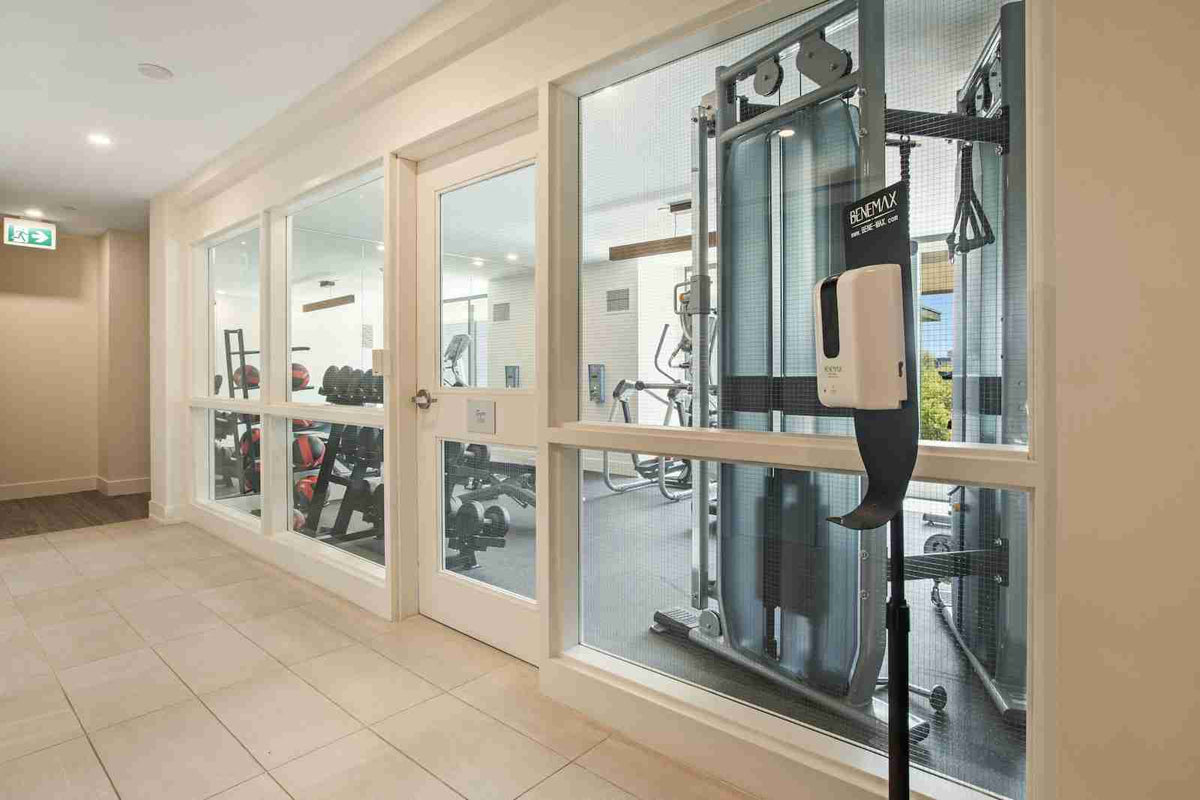
An AI grab-and-go cooler works best in a gym, clubhouse, coworking lounge or package room that only residents can enter. The resident taps a card or phone to release the door lock, takes what they want, and the cabinet bills the card when the door closes. Because shoppers can pick up and read products, coolers handle fresh and refrigerated items that coil machines handle poorly, such as salads, yogurt, sandwiches and multi-pack drinks.
A micro market takes the same idea further with open shelves, coolers and a self-checkout kiosk. Canteen describes micro markets as ideal for about 50 to 200 customers with 24/7 access, which lines up with a mid-size community's clubhouse. For a smaller property, one or two AI grab-and-go vending machines deliver most of the micro market experience with far less floor space and a locked door.
A laundry supply machine belongs in any complex with a shared laundry room, because detergent pods, dryer sheets, stain remover and laundry bags are needed at the exact moment a resident is standing at the washer. The VMFS laundry vending machine system is built for apartment laundry rooms as well as laundromats. Product mix, pricing and margins for this category are covered separately in the laundry vending supplies guide and laundry vending profit breakdown.
Personal-care and household essentials earn a slot because residents need them urgently and off-hours: toothpaste, deodorant, feminine hygiene products, phone chargers, light bulbs, batteries, basic first-aid items and over-the-counter pain relief. These can share a combo or AI cooler with food, or justify a dedicated refrigerated elevator unit such as the Pharmacy Vending Machine in large communities. Check your state's rules before stocking any medication.
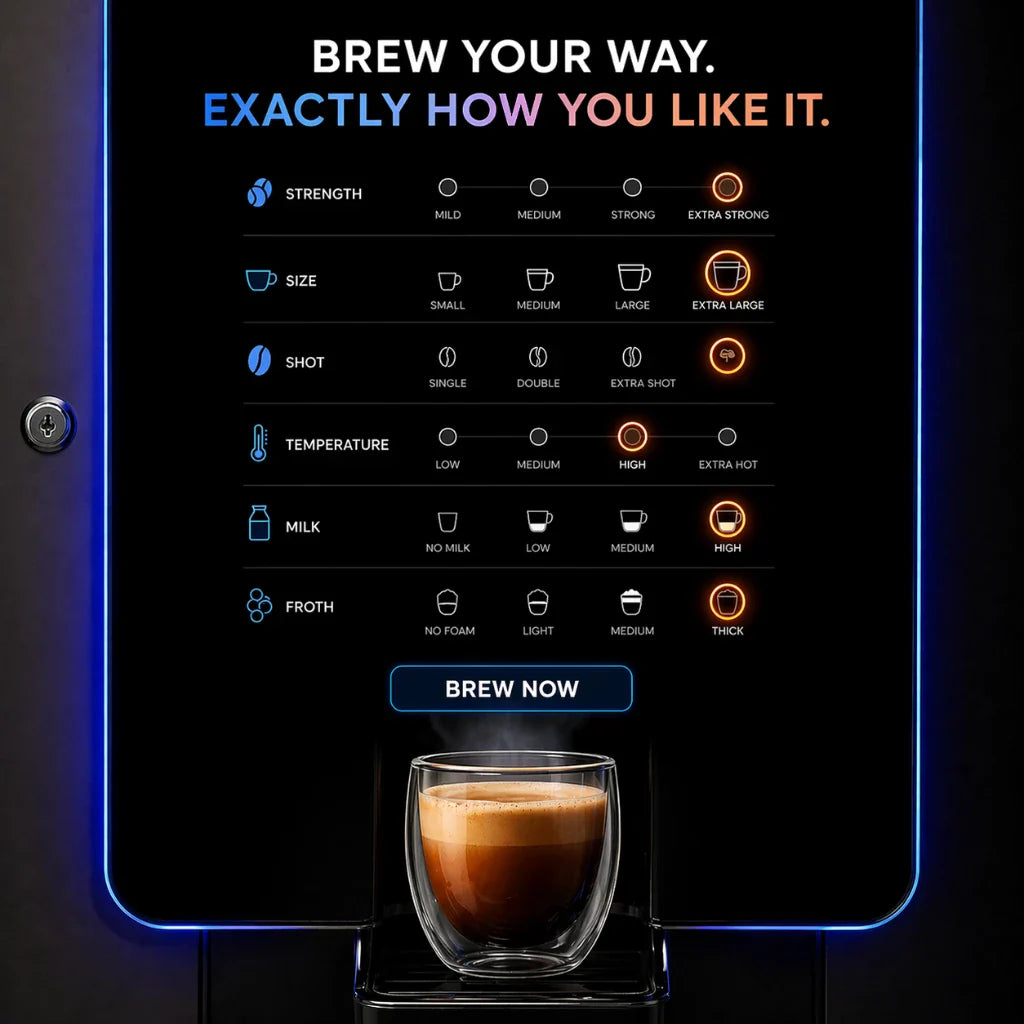
A coffee machine fits a clubhouse or coworking lounge where remote workers spend the day, and a frozen or ice cream machine fits a pool deck or family-heavy community in warm climates. Both are second machines rather than first ones: they add variety once a combo or cooler has proven the location. VMFS coffee vending machines include countertop bean-to-cup units, and frozen vending machines cover ice cream and frozen meals that busy households can take straight to the microwave.
Small building (under ~100 units)
One cashless combo or one AI cooler in the lobby, mail room or gym. Keep the menu tight and fast-moving.
Mid-size community
Combo in the lobby, AI cooler in the gym or clubhouse, laundry supply machine if laundry is shared.
Large or student housing
Multiple coolers or a micro market in the clubhouse, coffee in the study lounge, frozen near the pool.
Luxury or senior community
Branded AI cooler with fresh items and essentials; glass-front wrap that matches the interior finish.
Place machines where residents pass every day and wait for something: the lobby and mail room, the laundry room, the fitness center and the pool or clubhouse. A machine that sits in a dead-end hallway sells little no matter how good the menu is, so map the daily paths before choosing walls.
Property data supports two of those rooms in particular. Grace Hill's 2024 resident and tenant amenities report found the fitness center was the most-used amenity per day in Gatewise access data across more than 500,000 units, and that laundry rooms were the most common amenity across the HelloData properties analyzed. Heavy daily use is what turns into vends, which is why the gym and the laundry room are usually the first placements to propose after the lobby. The same report found residents were among the least satisfied with laundry facilities, so a well-stocked supply machine is an easy improvement for a manager to approve.
The laundry room has a catch. The NMHC and Grace Hill Renter Preferences Survey, based on 172,703 renters, found 93% cited an in-unit washer and dryer as important. Newer communities increasingly put machines in every unit, which empties shared laundry rooms. Confirm that the complex actually has a busy common laundry room before proposing a supply machine there.
| Area | Best machine | What sells | Watch for |
|---|---|---|---|
| Lobby / mail room | Cashless combo | Water, soda, chips, candy, breakfast items | Public access during office hours; fire egress clearance |
| Laundry room | Laundry supply machine or combo | Detergent pods, dryer sheets, snacks, drinks | Low traffic if most units have in-unit laundry |
| Fitness center | AI cooler | Water, sports and protein drinks, bars | Needs fob-controlled access for an open-door cooler |
| Pool / outdoor deck | Outdoor-rated combo or frozen | Cold drinks, ice cream, sunscreen | Seasonal sales; weatherproofing and shade |
| Clubhouse / coworking lounge | AI cooler, micro market or coffee | Coffee, fresh food, snacks, essentials | Hours the room is open; Wi-Fi or cellular signal |
| Parking garage entry | Combo | Drinks, snacks, phone chargers | Security lighting and camera coverage |
Pool decks and courtyards need equipment built for heat, rain and sun. VMFS outdoor vending machines are designed for those sites. For indoor rooms, measure doorways, elevators and the final wall before ordering; the vending machine size and dimension guide lists common footprints. Broader site scoring beyond apartments is covered in best vending locations.
Resident demand comes down to the number of occupied units, how far the nearest store is, who lives there and how easy it is to pay. A 300-unit garden community 15 minutes from a grocery store behaves very differently from a 60-unit building above a convenience store.
Size matters first. Vending Group, a national full-service provider, lists 100 or more units as its general guideline for an apartment community to qualify for full-service vending. That is one company's threshold rather than an industry rule, but it is a useful starting filter: below it, an owner-operator with a single efficient machine, or an AI cooler in the gym, is often a better fit than a full bank of machines.
Distance and hours come next. A machine competes with the resident's own pantry and with the nearest store, so it wins on the late-night, early-morning and bad-weather purchase. Communities without walkable retail, with lots of shift workers, students or remote workers, or with long winters tend to support more vends per unit.
Demographics shape the menu more than the volume. Student housing leans toward energy drinks, instant meals and snacks; family communities toward juice, kid-friendly snacks and frozen treats; luxury and senior communities toward fresh items, premium beverages and essentials. Tailor the selection to who actually lives there and rotate seasonally, with lighter drinks in summer and warm or seasonal flavors in fall. The what sells best in vending machines guide ranks categories by sell-through.
Payment is the final driver. Cantaloupe's 2026 Micropayment Trends Report found 78% of vending sales in 2025 were cashless, contactless payments made up 85% of cashless vending sales, and the average cashless ticket was $2.45 against $1.57 for cash. Residents who walk to the gym or laundry room with only a phone will not buy from a coin-and-bill machine, so a card reader is a requirement, not an upgrade. See the cashless payment system guide for reader options.
Quick demand check: Before pitching, count occupied units, note the distance to the nearest store, walk the common areas at 8 a.m. and 8 p.m., and ask the manager which rooms residents complain about. Those four facts decide the machine type and the placement better than any average.
Most apartment vending deals are free placements: the operator owns, stocks and services the machine at no cost to the property and pays a percentage of sales as commission. The alternatives are a flat monthly rent, an owner-operated model where the property buys its own machine, or a hybrid of the two.
Under a free placement, the property provides floor space, a standard outlet and a point of contact; the operator handles the machine, products, payments, repairs and restocking. Commission is the variable. NerdWallet puts the typical range at 5% to 25% of vending revenue, and United Capital Source cites the same 5% to 25% band. VMFS's own location-matching program narrows it for this property type: apartment buildings sit in its standard tier of 5% to 15% of gross sales, with high-volume sites such as multi-shift plants and campuses at 15% to 20%.
Use the property's real traffic to set the number. VMFS's example on that page is a machine selling $1,000 a month at 10% paying the location $100 a month, or $1,200 a year. The vending revenue split guide walks through how commission, product cost and processing fees divide each dollar.
Some properties prefer a fixed monthly fee because it is simple to book. Flat rent shifts all sales risk to the operator, so agree to it only after a trial period has shown what the site really sells, and make sure the rent is renegotiable if occupancy or traffic drops.
A property owner can also buy the machine and run it, or buy it and hire a local operator to stock it. This keeps 100% of the margin but adds purchasing, product sourcing, sales tax, card processing and service calls to the site team's workload. It suits owners with multiple communities and a maintenance team, and suits AI coolers well because telemetry shows what to restock without a daily walk-through. VMFS offers financing for owners who want to spread the purchase.
Free placement: advantages for the property
Free placement: limitations
Whatever the model, put it in writing before the machine arrives. VMFS's location-matching page describes the usual agreement as one page, a one-year first term that typically renews automatically, and 30 to 60 days' notice for either side to end it, with commission, payment frequency, slow-seller swaps and damage responsibility set in advance. Start from the vending machine contract template, and agree on renewal terms before signing.
Electricity is the cost managers ask about most. VMFS estimates a refrigerated machine draws roughly 3 to 4.4 kWh a day, and the U.S. Department of Energy's FEMP lists a 3.71 kWh-per-day maximum for an ENERGY STAR Class A refrigerated beverage machine, with an annual energy cost of $134 in its example. A snack-only machine draws far less. Weigh that against the commission when you present the deal.
Start with a cashless combo
Snacks and cold drinks in one footprint, with card and phone payments built in for lobbies and mail rooms.
Shop combo machinesVending machines add amenity value as a convenience feature, but no published study we found ties a vending machine directly to higher rent or better renewals, so present it to managers as a low-cost service upgrade rather than a retention guarantee. The honest case rests on what residents already say they value.
Renters consistently reward convenience they can use without leaving the property. In a Concept Community survey of more than 84,000 renters reported by Multifamily Executive in 2016, 27.24% said they had personally had problems receiving packages, and nearly 20% said they would pay an extra $5 a month for a community with package lockers. That data is dated and about lockers rather than vending, but it shows the same pattern: residents value on-site access to things they would otherwise have to go out for. A cooler of drinks and essentials next to the package room serves the same need.
The amenity case is strongest when the machine improves a room residents already use and rate poorly. The Grace Hill 2024 amenities report ranks the fitness center as the most-used amenity per day and places laundry among the least satisfying, so a cooler in the gym and a supply machine in the laundry room fix visible gaps. Managers also value that a branded AI cooler with a custom wrap looks like part of the clubhouse rather than a soda machine, which matters in Class A and luxury communities. The custom vending machine program covers wraps and finishes.
For the operator, amenity framing changes the conversation. Instead of asking for space, you are offering the community a service that the manager can list on the website and mention on tours, with zero capital cost and a monthly commission check.
Secure apartment vending starts with placement inside access-controlled, well-lit, camera-covered areas, then adds anchoring, cashless payment and remote monitoring. Each step reduces a different risk: theft, vandalism, injury and lost sales from unnoticed faults.
Access control decides which machine you can use. A locked coil or elevator machine can sit in a semi-public lobby, but an open-door AI cooler or micro market belongs in a fob-controlled gym, clubhouse or resident lounge. Cantaloupe estimates shrink at around 10% for micro markets with no theft deterrents, while most operators report 3% to 4%; its recommended deterrents are cameras with visible signage, live monitors at checkout, closed settings with access control, and remote inventory tracking.
Anchoring prevents the most serious injury risk. The U.S. Consumer Product Safety Commission reported at least 37 deaths and 113 injuries from people rocking or tilting soda vending machines between 1978 and its 1996 warning-label campaign. In a building with children and teenagers, anchor or level every heavy machine to the manufacturer's instructions and keep the tip-over warning label visible.
Accessibility should be planned at installation. The U.S. Access Board's ADA guide sets an unobstructed reach range of 15 to 48 inches for operable parts and a clear floor space of at least 30 by 48 inches in front of them, so check card reader and selection-pad heights and leave a clear approach. Touchscreen and tap-to-pay models make this easier to meet.
Product restrictions matter more in housing than in offices. Federal rule 21 CFR 1140.16 permits cigarette and smokeless tobacco vending only in facilities where the retailer ensures no one under 21 is present or permitted to enter at any time. Apartment common areas house minors and guests, so leave tobacco, nicotine and other age-restricted products out of apartment machines. For deeper hardware security, see the vending machine security guide, and confirm your coverage with the vending machine insurance guide; many property managers ask for a certificate of insurance before installation.
The VMFS models below cover every apartment placement in this guide, from a slim lobby combo to a clubhouse AI cooler. Prices are current list prices from vmfsusa.com at the time of writing; configurations with a range vary by options.
| Model | Type | Best apartment placement | Price |
|---|---|---|---|
| AI Grab & Go Cooler | AI cooler, 23.6 in wide, about 294 items | Gym, package room, small clubhouse | $2,950 |
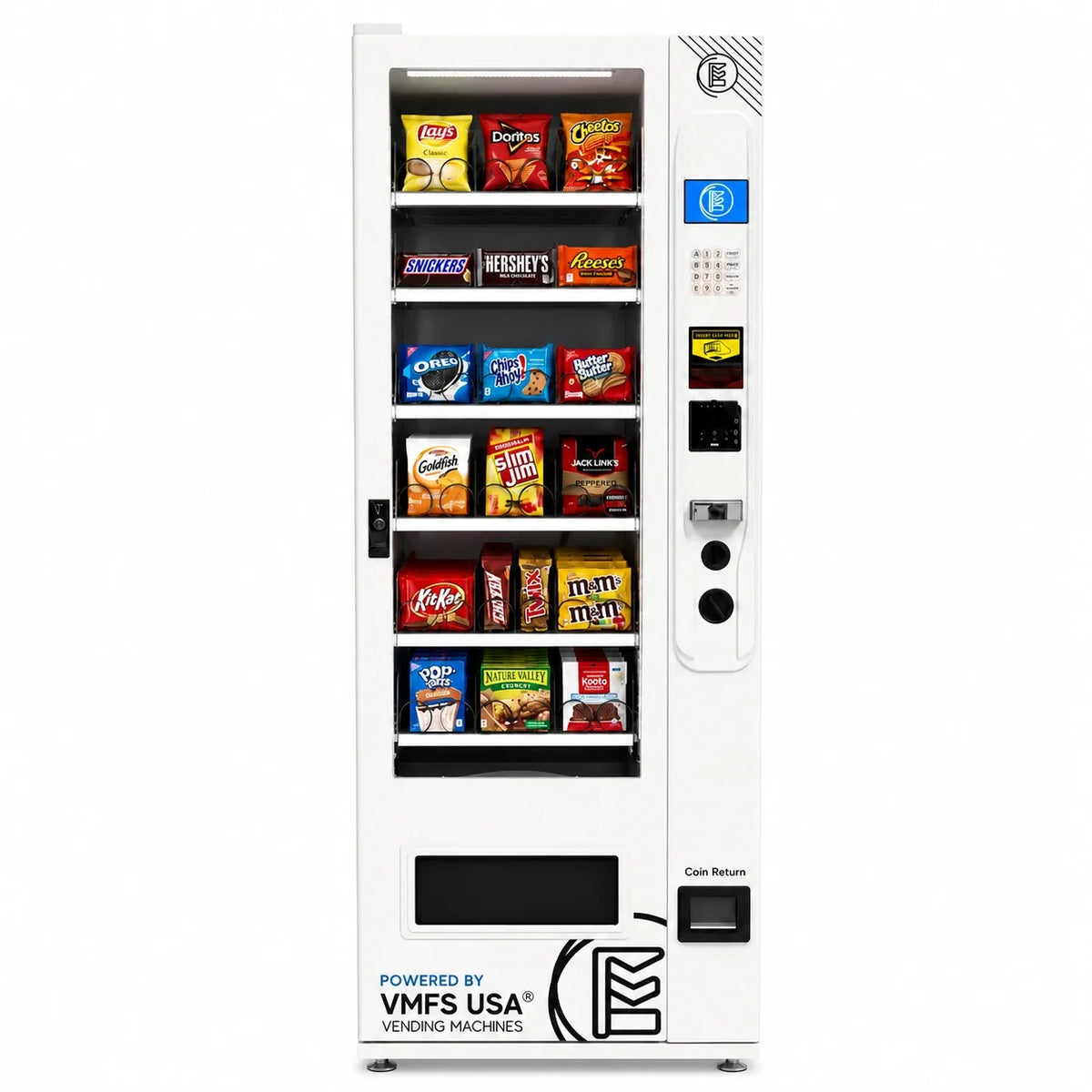
| Seaga QB2200 Snack & Soda | Compact combo | Small lobby or laundry room | $2,999 |
| Seaga SM2300 SnakMart Combo | Combo | Lobby, mail room | $3,450 |
| Slim Combo | Narrow refrigerated combo | Tight lobby or hallway alcove | $3,650–$3,950 |
| NEO PRO | AI cooler, 26.8 in wide, about 384 items | Fob-controlled gym or lounge | $3,950 |
| Smart Combo | Combo, up to 60 selections | Main lobby, high-traffic mail room | $4,650–$4,950 |
| Build Your Laundry Vending Machine | Laundry supply system | Shared laundry room | from $4,950 |
| Premium Countertop Touch Screen Coffee | Bean-to-cup coffee | Clubhouse, coworking lounge | $4,550–$4,850 |
| NEO FREEZER | AI freezer, 26.8 in wide, about 294 items | Large clubhouse, frozen meals and ice cream | $5,950 |
| Smart Outdoor Combo | Weatherproof combo | Pool deck, courtyard | $6,950 |
| Pro Combo Elevator | Elevator-delivery combo | Lobby with glass bottles or fragile items | $8,650–$11,950 |
| Frozen Ice Cream | Frozen | Pool area, family communities | $9,950 |
| Pharmacy Vending Machine | Refrigerated elevator, OTC essentials | Large or senior communities | $14,275 |
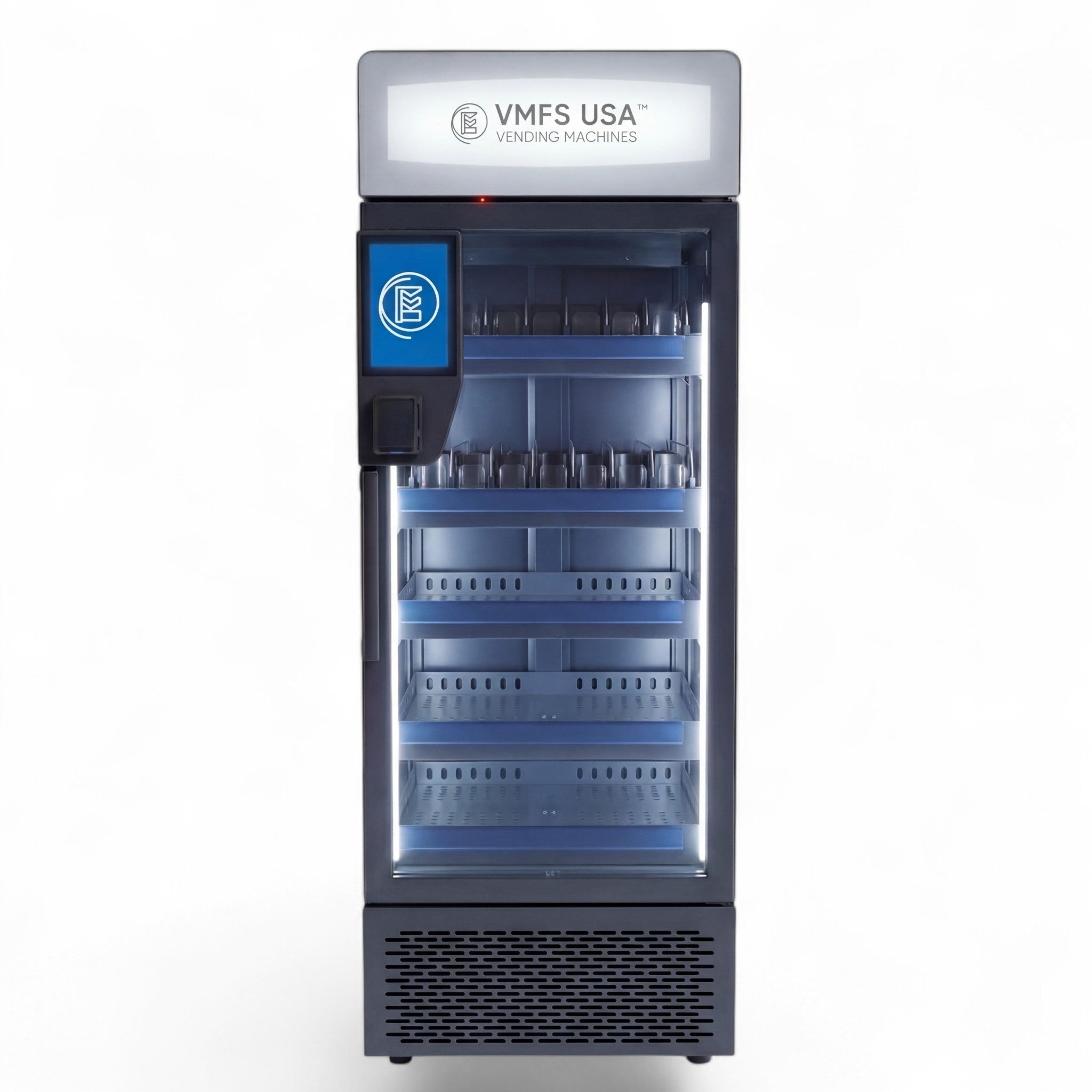
The AI Grab & Go Cooler deserves a closer look for apartments. At 23.6 inches wide with 16.1 cubic feet across six adjustable trays, it fits rooms a full-size machine never gets approved into, and built-in 4G and Wi-Fi report sales and stock to VMFS Cloud. If you are weighing coolers against coil machines, the explainer on how AI vending machines work covers the trade-offs.
Pitch a property manager with a one-page proposal that names the room, the machine, the menu, the commission and the service schedule, and ask for a 90-day trial rather than a long commitment. Managers approve offers that cost them nothing, solve a resident complaint and are easy to undo.
Start with the right person. In a managed community, the on-site community or property manager usually forwards vending requests to a regional manager or the owner; in smaller buildings the owner decides directly. Visit in person during office hours, have photos of the exact machine you plan to install, and know the room you want before you walk in.
Build the proposal around their goals. Lead with resident convenience and the specific gap you will fix, such as an empty gym cooler or a laundry room with nothing for sale. Then state the commission in writing, the restock frequency, how refunds are handled, the insurance you carry, and how the machine will be removed if the trial does not work. Offer a monthly sales summary from telemetry so the manager sees exactly what residents bought; that report becomes the evidence for adding a second machine.
The full process, including prospecting, scripts, follow-up timing and objection handling, is in how to scout and pitch a vending machine location. If you would rather be matched with properties that have already asked for vending, VPlaced runs a verified placement network that lists multifamily and residential sites, and property owners can use VMFS location matching to request an operator.
Service an apartment account on a schedule set by telemetry rather than a fixed day, stock to the residents' habits, and review the menu every quarter. Residential sales are spikier than office sales, with evening and weekend peaks, so a machine that looks fine on Monday can be empty by Saturday.
Remote monitoring is what makes small residential sites profitable. A connected machine reports sell-through by item and alerts you to faults, so you can skip a visit when stock is healthy and come early when a best-seller runs low. Use a planogram to set facings by sales velocity, and build routes with the restock scheduling guide so apartment stops cluster with nearby offices and gyms.
Menu habits differ by room. Gym coolers move water, electrolyte drinks and protein, so pull ideas from the gym vending guide. Lobby combos sell a mix of indulgent and better-for-you items; healthy vending snacks lists products that meet common nutrition standards. Label nutrition clearly and rotate seasonal items to keep regulars interested.
Simple promotions work well in residential settings because the same people shop the machine every week. A snack-and-drink bundle price or a featured new item on the screen can lift basket size; set those offers from your own sales data rather than guesswork. Finally, give residents a way to request products, such as a QR code on the machine that links to a short form, and share the most-requested items with the manager. It costs nothing and shows the property that the machine is a managed amenity, not a box in the corner.
Get matched with an apartment location
Property owners can request a fully serviced machine, and operators can find sites that want vending.
Explore location matching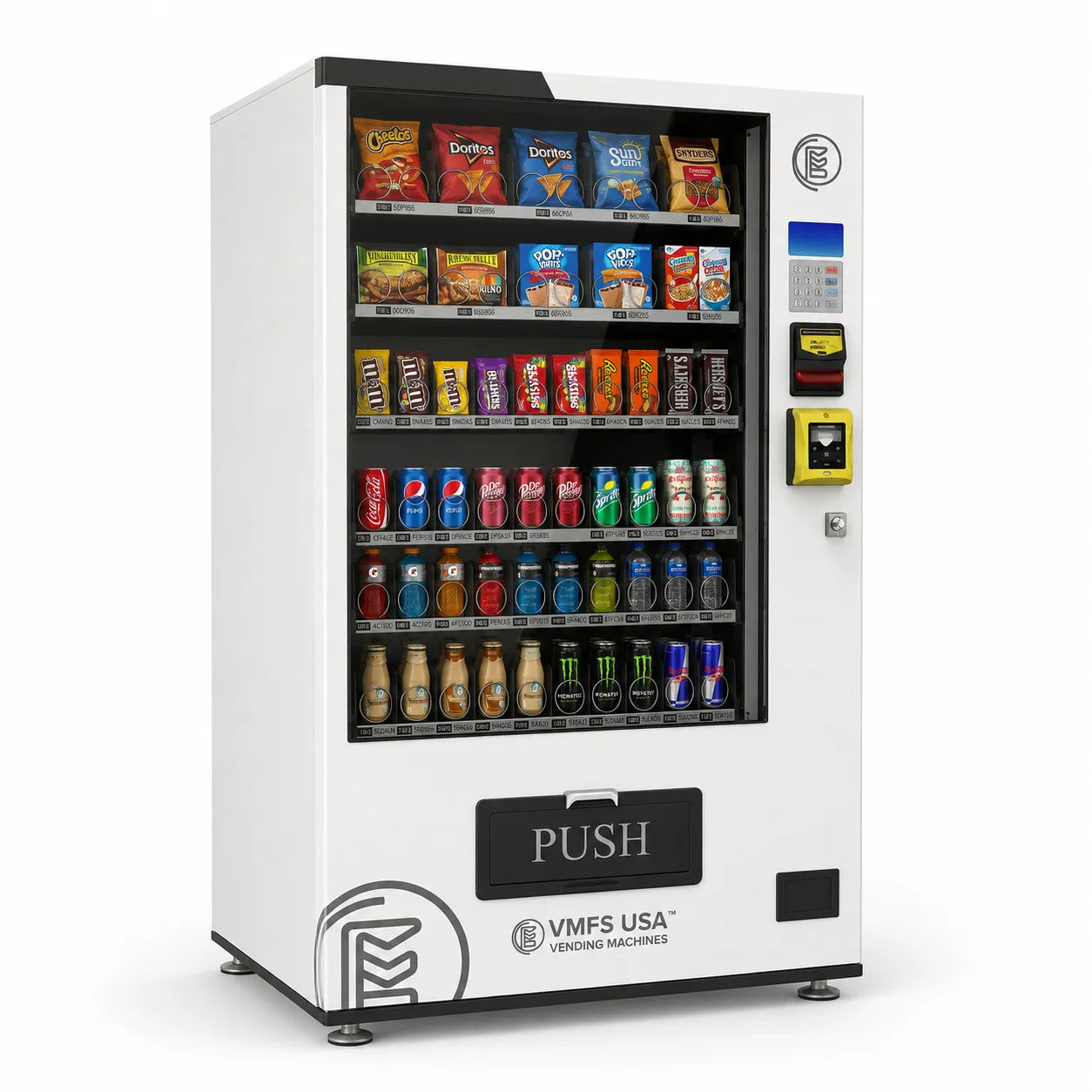
Share:
Guía de tamaños y dimensiones de las máquinas expendedoras: Cómo elegir el tamaño adecuado para tu ubicación
Outdoor Vending Machines Best Features and Top Models - Detailed Guide