




Design the perfect vending solution for your location and customers.

Join the VMFS newsletter and step into a thriving network dedicated to collective success.
One signup. Endless possibilities.
A micro market is an unattended, self-service store set up inside a workplace or other closed location, with open shelves, glass-door coolers and freezers, and a self-checkout kiosk where shoppers scan their items and pay by card, phone or a prepaid account. No cashier works on site.
Micro markets are the fastest-growing format in convenience services. NAMA's industry census estimates that micro market revenue rose from $2.0 billion in 2020 to $5.4 billion in 2023, across 76,250 outlets. This guide covers how a micro market works, what one costs, which sites can support it, how to control shrink and how it compares with vending.
A micro market is a small, cashierless store where customers pick products off open shelves and out of coolers, then pay at a self-checkout kiosk. The National Automatic Merchandising Association (NAMA), the US trade group for vending and convenience services, defines micro markets as unattended retail environments where consumers can pick up products, read the nutrition information and pay at a kiosk with a cashless payment system. In practice, a micro market sits between a bank of vending machines and a convenience store: it has the variety and browsing of a store with the low labor of vending.
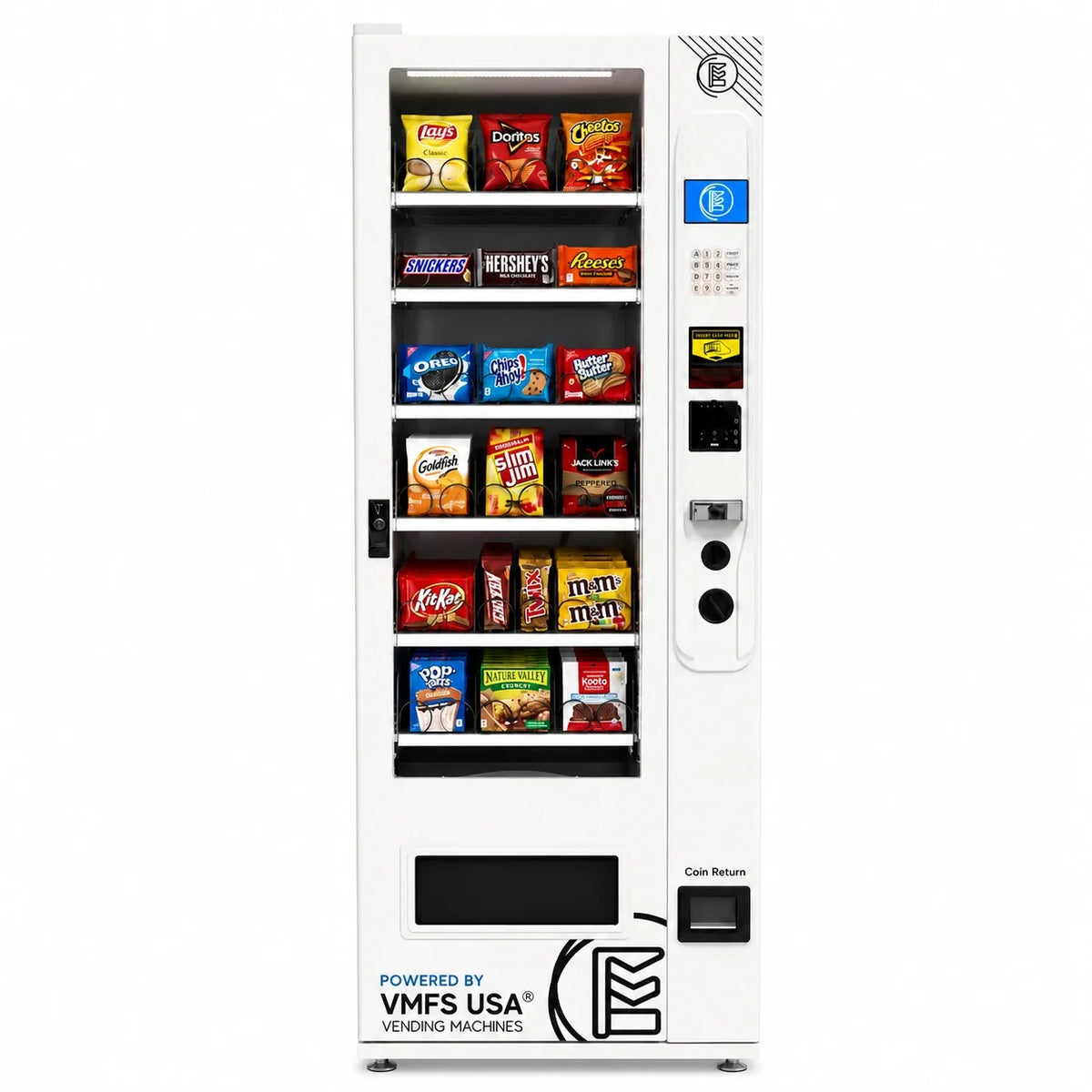
The key difference is access. A vending machine keeps each product behind glass and drops one item per transaction. In a micro market, shoppers handle the product before they buy, so the operator can sell things a spiral cannot hold: salads, sandwiches, frozen meals, fruit, full-size snacks, coffee and everyday essentials. Cantaloupe, one of the largest payment and software providers in the channel, puts a typical micro market at 150 to 400 or more SKUs, compared with 40 to 50 in a vending machine. That range is the reason the format exists, because fresh and premium items carry higher prices than a bag of chips.
Micro markets are built for closed populations rather than the general public. Office breakrooms, factory floors, distribution centers, hospital staff areas, hotel lobbies and apartment amenity rooms are typical, because the people who use the market are employees, residents or registered guests. That controlled access is what makes an open, honor-style layout workable, and, as covered below, it is also a condition many health departments place on unattended food sales.
The term is also used in other fields. In marketing, a "micro market" or niche can mean a narrow customer segment, and in real estate it can mean a small submarket of a city. In vending and unattended retail, it always means the physical self-checkout store described here. VMFS USA supplies complete systems for this format through its micro market vending program.
A micro market works in three steps for the shopper: pick the items, scan them at the kiosk, pay and leave. Behind that simple flow sit four groups of equipment and software, each with a job in sales, food safety or loss prevention.
Open racks or gondolas hold ambient snacks, candy, chips and essentials. Glass-door coolers hold drinks and fresh food, and a freezer adds ice cream and frozen meals. Refrigerated units in a micro market are not ordinary store coolers: some state rules, such as Iowa's, require refrigerated displays with self-closing doors that lock automatically when refrigeration fails. That lock protects shoppers from food that has been sitting warm and protects the operator from liability.
The kiosk is the checkout counter. It is a touchscreen terminal with a barcode scanner and a card reader, and many models also show promotions or a live camera image. NAMA's census found that 93% of micro market kiosks accept debit and credit cards, 79% accept contactless payments such as Apple Pay and Google Pay, 55% accept stored-value cards or app accounts, and 36% accept biometric payment such as fingerprint or face recognition. Stored-value accounts matter more than they look, because they let a workplace offer loyalty discounts, subsidies or payroll deduction. If you are choosing payment hardware for other machines on the same route, our guide to cashless payments for vending machines explains readers, fees and processing.
Cameras are the main theft deterrent. Most operators mount cameras over the shelves, coolers and kiosk, show a live feed where customers can see it, and post signs saying the area is monitored. Some kiosks record the shopper at checkout so the operator can match footage to an abandoned or underpaid transaction. These measures turn the honor system into a monitored system, which is what keeps shrink manageable.
Every scan becomes data. Market management software shows sales by item and by hour, stock levels, expiring fresh food and kiosk health, so the driver arrives with the right products instead of guessing. VMFS Cloud works with every VMFS machine; plans start at $7.99 per machine per month, and the dashboard tracks inventory, live sales and alerts across locations from a phone or computer. Good data also drives pre-kitting and route planning; our guide to restock scheduling and routes shows how to plan visits around it.
Micro markets are now about a fifth of the US convenience services industry and the segment growing fastest. The most complete numbers come from NAMA Foundation's 2022-2023 Industry Census, prepared by Technomic and published in February 2024, with 2023 figures as estimates.
| Metric | Micro markets | Context |
|---|---|---|
| Revenue | $2.0 billion (2020) to an estimated $5.4 billion (2023) | Total convenience services industry estimated at $26.6 billion in 2023 |
| Share of industry revenue | About 20% in 2023 | Up from 9% in 2019; vending was 68% |
| Outlets | 76,250 (2023 estimate) | Up from 43,500 in 2020 and 31,250 in 2018 |
| Operators running markets | 2,625 (2023 estimate) | Up from 2,100 in 2020 |
| Fresh and frozen share of sales | About 22% fresh or prepared food, 10% frozen | Categories a spiral vending machine rarely carries |
| Growth outlook | About 19% a year, 2023 to 2028 | The fastest of any convenience services segment in the census |
| Average transaction (2025) | $3.02 | Versus $2.01 for vending, per Cantaloupe's Micropayment Trends Report |
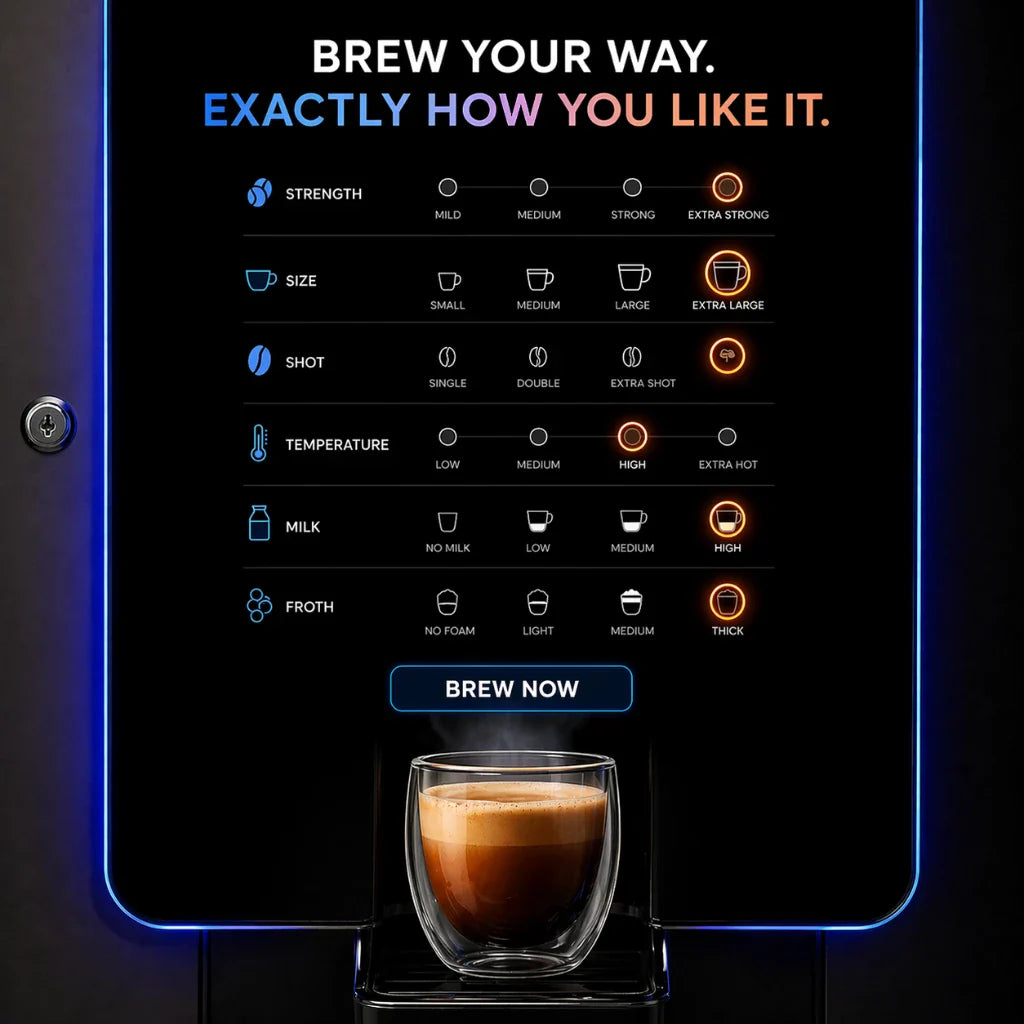
Two findings matter most for operators. First, fresh and frozen food account for roughly a third of micro market sales, which confirms that the format earns its premium through categories vending struggles with. Second, the average micro market transaction in 2025 was about 50% higher than the average vending transaction, according to Cantaloupe's 2026 report, and Cantaloupe's own buyer guide puts the typical lift at 35% to 50%. Bigger baskets on the same visit are what pay for the extra equipment. The census also found that 84% of micro market operators sell coffee in their markets, which makes office coffee machines a natural add-on to the setup.
A full-size micro market typically costs about $12,000 to $16,000 in equipment, covering shelving, two or more coolers, a self-checkout kiosk and security cameras. 365 Retail Markets, a major kiosk and software provider, estimates around $12,000 for a full-size market with a full-size kiosk, compared with about $10,000 for a bank of four vending machines (two snack, two drink). Nayax, a payments company, puts the initial investment for a micro market at around $13,000 to $16,000. Custom millwork, branded wraps, a freezer or extra coolers push the total higher.
| Cost item | What it covers | How to budget |
|---|---|---|
| Equipment | Racks or gondolas, glass-door coolers, optional freezer, kiosk, cameras | About $12,000 to $16,000 for a full-size market (365 Retail Markets, Nayax) |
| Software and kiosk service | Market management platform, kiosk connectivity, reporting | Monthly subscription; confirm contract length and early-termination terms |
| Payment processing | Card, contactless and app transactions | Percentage plus per-transaction fee; nearly every sale is cashless |
| Opening inventory | Snacks, drinks, fresh and frozen items for the first fill | Plan for a full fill plus a short-dated fresh rotation |
| Installation and site work | Delivery, electrical checks, network setup, signage | Quote per site; many locations already have outlets and Wi-Fi |
| Insurance and permits | Liability coverage, food permit where required | Varies by state and county |
Equipment is rarely the biggest risk. The placement is. A market in a site with too few people, open public access or a poor contract loses money no matter how good the kiosk is, while the same equipment in a closed, busy site pays back fast. That is why the next two sections, site requirements and shrink, matter more than the purchase price.
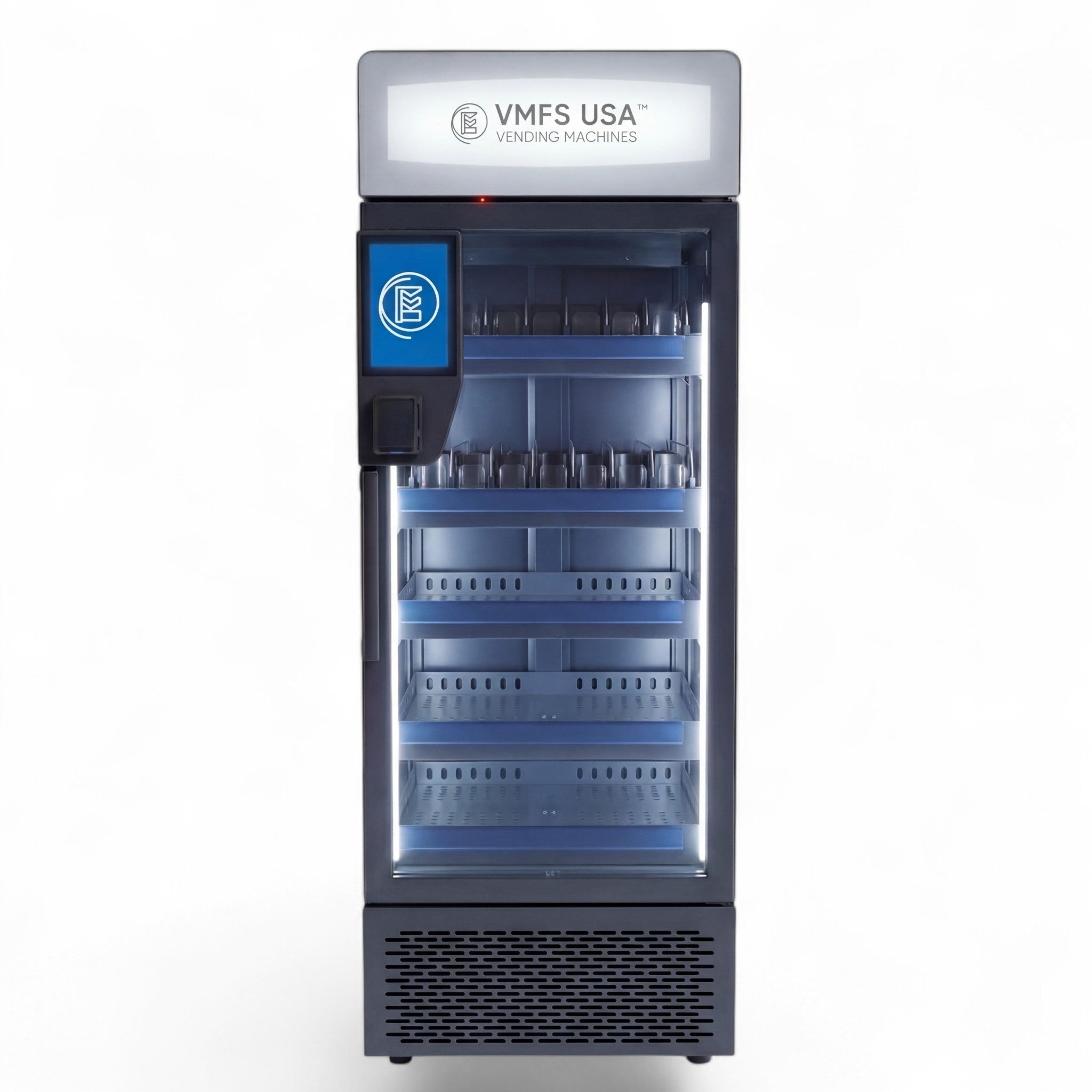
A lower-cost entry point is a single AI cooler. VMFS's AI grab-and-go vending machines combine the cooler, payment and loss prevention in one cabinet: the NEO GO AI grab and go cooler is listed at $2,950, the NEO PRO AI vending machine at $3,950 and the NEO FREEZER AI freezer vending machine at $5,950 on vmfsusa.com at the time of writing. Many operators start a smaller site with one cooler and convert to a full market when sales justify it. If you would rather spread the equipment cost, VMFS offers vending equipment financing for operators.
Design Your Micro Market
Shelving, smart coolers and a self-checkout kiosk configured to your space, with VMFS Cloud plans from $7.99 per machine per month and a 1-year parts warranty.
Plan Your Micro MarketA micro market needs enough people, a modest amount of floor space, standard power and internet, and a location the public cannot walk into. Get those four right before you talk about product mix.
There is no fixed minimum, but the industry's guidance clusters between about 50 and 250 people on site. 365 Retail Markets says the best micro markets are in locations of 250 or more people but can work with as few as 75. Cantaloupe publishes advice for making markets profitable at locations with 50 or fewer employees, and Vending Times has reported operators placing small markets at sites with as few as 40 employees. The pattern behind those numbers is simple: below roughly 75 people, a full market has to run lean, with fewer fresh items, a smaller footprint and less frequent service, while above 200 a full market with fresh food and a freezer usually makes sense. Count the people who are actually on site each day, not the headcount on payroll, and add shifts: a plant running three shifts uses a market far more than an office of the same size.
A typical micro market fits in about 100 to 150 square feet, according to equipment distributor Bernick's, depending on the workforce and how much variety you carry. The site needs standard 110-volt outlets for the coolers, freezer and kiosk, and reliable internet, because the kiosk processes payments and sends sales and inventory data in real time. Ask the facility for a dedicated outlet per cooler, confirm whether the kiosk can use a wired connection, and check that the space is not in a corridor where carts and fire exits must stay clear.
The market should sit inside the building, behind a badge, keycard or front desk, where only employees, residents or guests can reach it. Closed access lowers theft and is a condition in several state food codes, as shown in the compliance section below. A public lobby or open retail space is usually a better fit for a vending machine or an AI cooler that unlocks only after a card is authorized.
Quick site test: 75 or more people on site daily, a closed room of 100 to 150 square feet, dedicated outlets and Wi-Fi or Ethernet, existing building cameras or permission to install them, and a manager willing to enforce payment. A site that misses two of these is a vending or AI cooler site, not a market site.
The best micro market locations are closed workplaces and residences where people stay for hours and have few food options nearby. NAMA's census found that manufacturing facilities and office buildings are the most common micro market locations, and operators ranked manufacturing (68%) and hospitality (58%) as the leading opportunities.
Manufacturing and distribution
Multiple shifts, short breaks and no nearby food after dark. Heavy drink, coffee and meal demand; rugged coolers and high-capacity racks.
Office buildings and campuses
Steady weekday traffic, lunch and afternoon snack peaks, strong demand for fresh food and healthier choices.
Hospitals and healthcare
Around-the-clock staff and visitors when the cafeteria is closed. Meals, protein and lower-sugar drinks lead.
Hotels and apartments
A self-service pantry for guests and residents at any hour. Smaller footprint, premium mix, essentials alongside food.
Offices work best when the market replaces a trip outside: business parks, suburban campuses and buildings without a cafeteria. Hospitals need fresh, lighter food and high uptime; our hospital vending guide covers the staff-area and visitor-area split. Residential buildings and hotels use markets as an amenity, so appearance and essentials such as chargers and toiletries matter as much as snacks; see our guide to vending for apartment complexes for that buyer. Schools and universities can work for staff areas and residence halls, but K-12 student sales must meet USDA Smart Snacks rules, which narrows the mix.
Finding these accounts takes prospecting. Our guide on how to scout and pitch a location covers the decision-makers and the pitch. Operators can also use VMFS location matching, and the sister placement service VPlaced's micro market locations guide covers the industry verticals and placement contract benchmarks for this format.
Most micro markets that sell food need a food permit from the state or county health department, and some states have specific rules for "unattended food establishments." NAMA notes that the FDA added unattended retail to a supplement to the 2017 Food Code, which state and local agencies can adopt. Because adoption varies, check the rules with the health department in every county where you operate.
Iowa's administrative code shows what these rules look like in practice. Under rule 481-31.1(1), an unattended food establishment can operate without a person in charge on site only if it meets conditions such as these:
These conditions line up with good operating practice anyway, so building every market to them is the safe default. Our overview of vending machine permits in the United States covers sales tax, business licenses and food permits by state, and our guide on whether you need an LLC for a vending business explains why locations and banks expect a business entity. For contract and entity help, the sister service VAdviced handles legal setup for operators.
Expect some shrink in every micro market, usually a few percent of sales, and plan prices and security around it. Shrink is the gap between what should be in the market and what was paid for: theft, unscanned items, expired product and damage.
For context, the National Retail Federation's 2023 security survey put average US retail shrink at 1.6% of sales. Micro markets typically run higher. Cantaloupe reports that most micro market operators estimate shrink at 3% to 4%, cites theft rates of 2% to 4% depending on location, and estimates around 10% in markets with no theft deterrents at all. Vending Times has reported operators setting a shrink threshold below 2%, above which they ask the client to share the cost. Those numbers point to the same conclusion: the location and the controls decide shrink far more than the equipment does.
The controls that work are well established:
Expired fresh food is shrink too. Date-code every item, rotate first in, first out, and use sales data to cut slow fresh items before they spoil.
A micro market makes money from product margin on many items at a higher average ticket, minus product cost, shrink, payment and software fees, labor and any commission to the location. The model rewards volume and fresh food, because both raise revenue per service visit.
365 Retail Markets gives a worked example in which the average customer spends about $7 a month at vending machines and about $20 a month at a micro market. On its figures, a $10,000 four-machine bank breaks even in about 17 months, while a $12,000 micro market breaks even in about 7.5 months. Treat that as a vendor's model, not a forecast: your break-even depends on actual traffic, mix and shrink.
Why markets earn more
What eats the margin
Most of the upside comes from merchandising. Cantaloupe's operator interviews describe a 60/40 split between classic snacks and healthier items, and note that shoppers pay more for premium products: $2.55 for a KIND bar against $1.69 for a Snickers in that example. The same article recommends a grand-opening event with app sign-ups, targeting 30% to 40% of the population. Our operator pricing guide explains cost-plus and market pricing, and the healthy vending snacks guide covers the better-for-you rows that wellness-focused clients ask for.
Commission terms vary by deal. Some locations ask for a share of sales, while others take no commission because the market is an employee amenity, and some subsidize prices. Our breakdown of the vending revenue split shows how operators, locations and suppliers divide the money.
Choose a micro market for closed sites with enough people and space for fresh food, a vending machine for public or low-traffic sites, and an AI cooler when you want open-door shopping in a single cabinet. The three formats overlap, and many routes use all of them.
| Factor | Micro market | Vending machine | AI grab-and-go cooler |
|---|---|---|---|
| How shoppers buy | Pick from open shelves and coolers, pay at kiosk | Select a slot, item dispenses behind glass | Authorize card, open door, take items; charged automatically |
| Product range | 150 to 400+ SKUs, fresh and frozen | About 40 to 50 items | One cooler of items, including fresh |
| Best site | Closed site, roughly 75 to 250+ people | Public, outdoor or low-traffic sites | Small offices, gyms, lobbies, satellite floors |
| Typical equipment cost | About $12,000 to $16,000 | About $10,000 for a four-machine snack and drink bank | From $2,950 at VMFS |
| Theft exposure | Highest; needs cameras and closed access | Lowest; product locked | Low; door unlocks only after payment authorization |
| Space | About 100 to 150 sq ft | One machine footprint | One cooler footprint |
Vending is not obsolete. Machines still make up about two-thirds of the industry's revenue in the NAMA census, and they remain the right answer for public lobbies, outdoor spots and sites where an open market would invite theft. For a deeper side-by-side, read micro markets vs vending machines, which compares service, revenue and site fit in detail.
AI coolers have changed the small-site math. Shoppers tap a card to release the door lock, take what they want and close it, and computer vision with weight sensing charges them for what left the shelf. That gives a micro-market-style experience without a kiosk or open shelving, and the locked door keeps theft low. Our comparison of an AI vending machine vs micro market explains when one cooler beats a full market, and the guide to how AI vending machines work covers the recognition technology. A common hybrid is a full market in the main breakroom with an AI cooler on other floors or in a night-shift area.
Starting a micro market comes down to qualifying the site, choosing equipment that fits it, signing a clear contract, stocking for the population and launching with a plan. Each step reduces a specific risk.
VMFS supports two paths. Operators buying their own system can configure shelving, coolers and a kiosk through the micro market program, with VMFS Cloud plans starting at $7.99 per machine per month and a 1-year parts warranty. Location owners who want a market without owning one can request free placement, where VMFS matches the site with a vetted operator who installs, stocks and services the market at no upfront cost to the location.
Start Smaller With an AI Grab-and-Go Cooler
Open-door shopping, automatic checkout and locked-door loss prevention in a single cabinet, ideal for sites not ready for a full market.
Shop AI Grab-and-Go Coolers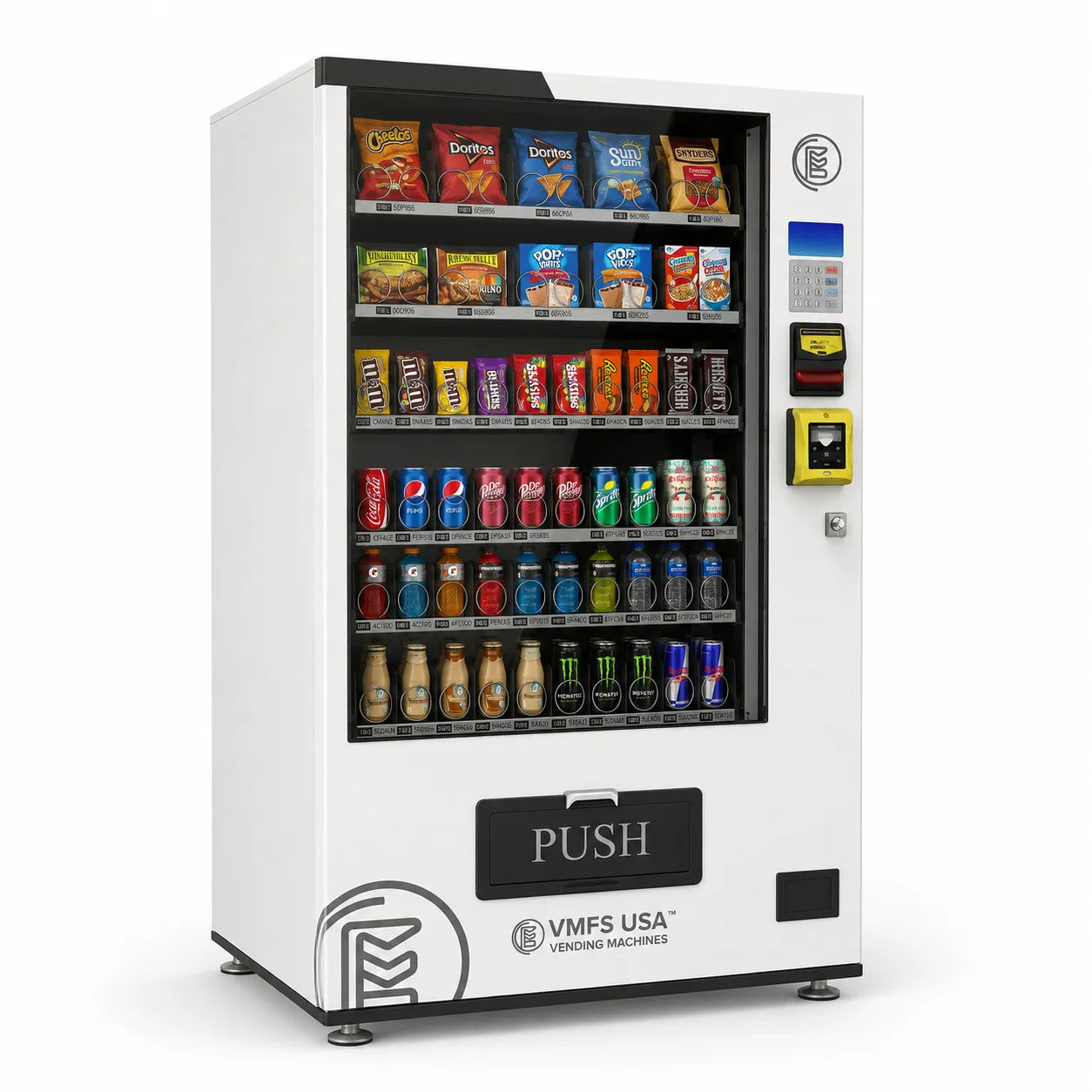
Share:
Starting a Hot Food Vending Business in 2026: Costs, Margins and Data
Hot Food From a Vending Machine: What We Saw at Venditalia 2026