



Design the perfect vending solution for your location and customers.

Sales, inventory and alerts for your whole route, from one machine to a fleet.
Answer a few questions about your location, products and budget and get a shortlist.
Estimate revenue, payback period and margin before you buy.
Sales, setup help, warranty and parts from the VMFS USA team.
Join the VMFS newsletter and step into a thriving network dedicated to collective success.
One signup. Endless possibilities.
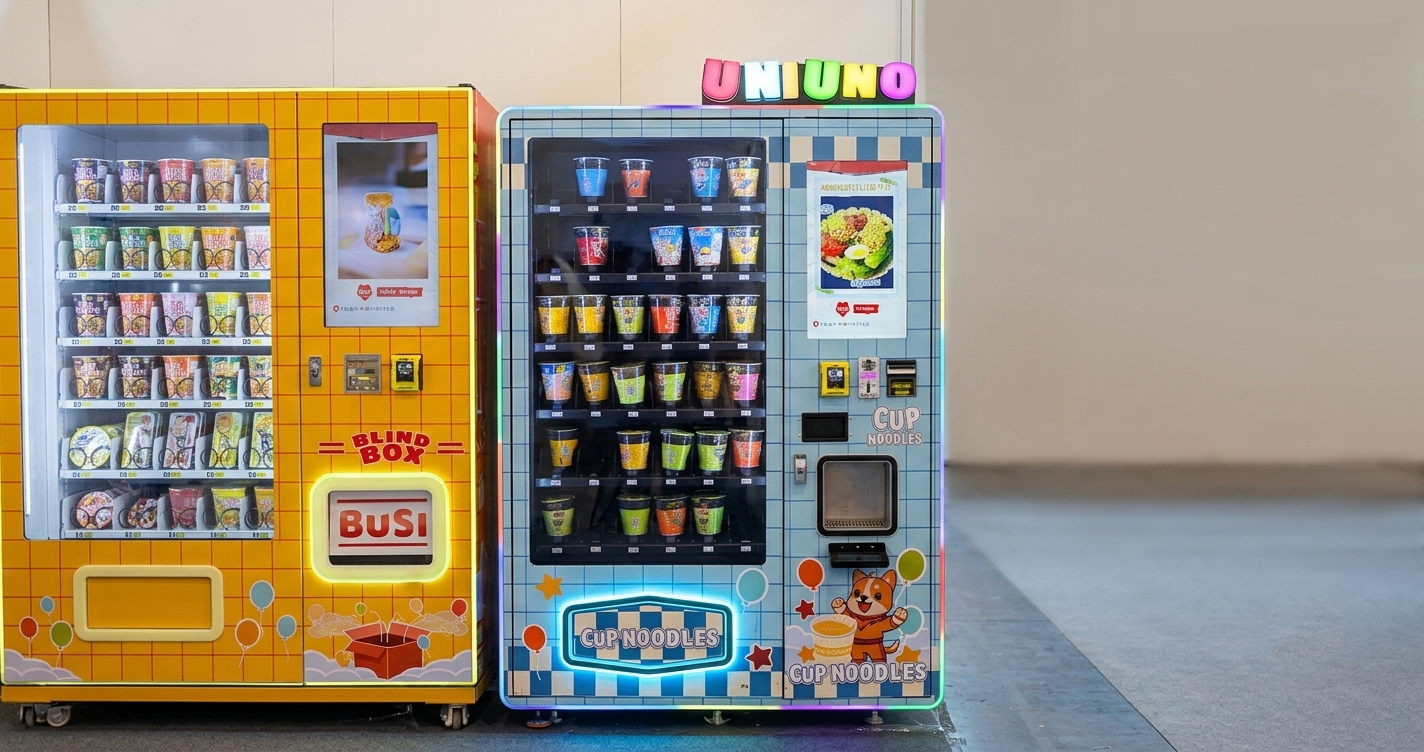
We traveled to Venditalia 2026 in Milan, one of the largest dedicated vending trade shows in the world, and came back with a clear picture of where the industry is heading. A lot of machines caught our attention over those days on the floor. But one stopped the team completely: a fully branded, fully automated Cup Noodles vending machine that dispensed hot water directly into the cup and had a steady crowd around it the entire time. This is a full breakdown of what we saw, how the machine actually works, and what it signals for food vending in the US market.

Venditalia draws manufacturers, operators, and distributors from across Europe, Asia, and the Americas. The 2026 edition was packed with smart vending concepts, cashless payment upgrades, and a clear push toward food and beverage beyond the standard snack and drink format. Walking the floor, you could feel the industry collectively moving away from simple product dispensing toward something closer to fully automated retail.
The Cup Noodles machine stood out the moment you came around the corner. The full-body wrap, the animated branding, and that RGB lighting strip running the full height of the machine gave it a presence most vending cabinets simply do not have. It was designed to attract attention, and it worked. People were stopping, reading, interacting, and pulling out their phones to photograph it. That kind of organic engagement on a trade show floor tells you something real about the concept's market appeal.
But the visual design was just the entry point. What made this machine genuinely interesting was what it was doing mechanically. This was not a machine dropping a sealed, cold product into a tray. It was preparing hot food, on demand, without a single staff member involved.
The big picture: The global hot food vending market is expanding fast. Locations that cannot justify a staffed food service point, late-night university buildings, 24-hour gyms, transit hubs, factory floors, are now viable candidates for a hot meal option that runs around the clock with zero labor cost attached.
One of the reps at the booth opened the side service panel and walked us through the internal setup, which is where things got genuinely interesting from an engineering standpoint. The system is built around a self-contained water reservoir housed at the base of the machine. That reservoir feeds into a heating unit that brings water up to temperature and holds it ready for the next order.
When a customer selects a product and completes payment, the machine retrieves the cup noodle from its shelf position, positions it under the dispensing point, and releases the correct volume of hot water directly into the cup. The lid is not sealed back down, which means the customer picks up their order and waits the standard instant noodle steep time before eating. The whole mechanical sequence from payment to delivery takes seconds.

The key operational detail here is that no external plumbing connection is needed. The reservoir is operator-refilled on a regular service schedule, the same way stock is replenished. For a venue that wants to offer hot food but cannot or does not want to deal with a plumbed-in installation, this matters a lot. It brings the placement flexibility much closer to a standard vending machine than to a commercial food service appliance.
From an operator standpoint, you are managing one additional variable compared to a standard machine: water level. But that is a predictable, low-complexity task, and the trade-off is a product category that commands a noticeably higher price per transaction than a bag of chips or a canned drink. The unit economics of hot food vending, when the machine is sited correctly, are compelling.
Walk around to the glass front of the machine and you immediately see the other thing that sets this concept apart: genuine SKU variety. The interior shelving held multiple rows of instant cup noodle products across different flavor profiles, different packaging sizes, and different price points. It was not one product in one flavor presented as a novelty. It was a real product assortment, merchandised the way you would expect from a convenience store shelf.

The shelving mechanism itself deserves attention. Cup noodles are an awkward vending format. They are round, relatively tall, and top-heavy. Getting them to dispense cleanly without tipping, jamming, or misaligning on the way to the hot water dispense point is a real engineering challenge. The mechanism here handled it well across the demo runs we observed, which suggests this is not a prototype stage concept. It has been iterated and tested.
The variety angle also has real commercial logic behind it. A single-product vending machine is a novelty. People try it once and move on. A machine with 10 to 15 SKU options across different flavor categories gives a regular visitor, a university student, a daily commuter, a reason to come back and try something different. That repeat visit behavior is what turns a vending machine into a reliable revenue location rather than a one-time attraction.
The front panel payment configuration was straightforward but worth noting because it reflects a broader shift in how the industry is thinking about accessibility. The machine carried a Nayax cashless payment terminal alongside a traditional coin slot and bill acceptor. That dual-format setup covers the full spectrum of customer payment preferences without forcing a choice between modern and accessible.
The Nayax unit handles credit and debit card, contactless NFC, and mobile wallet payments. For a US operator placing this type of machine in a university, office building, or transit location, that is the baseline payment expectation in 2026. Customers in those environments increasingly do not carry cash, and a machine that only accepts coins or bills will see lower transaction volume regardless of how good the product is.
One honest observation worth including: the Nayax terminal was displaying a "cashless out of order" message during the demo period when we were photographing it. On a live trade show floor with high foot traffic and machines running constantly, that kind of error is not uncommon. But it is a useful reminder that hardware reliability under sustained real-world conditions is what separates a show floor demo from a deployable commercial product. Any operator evaluating food vending machines needs to pressure-test uptime and service response, not just feature sets.
2026 Trend WatchThe Cup Noodles machine was one of several food-forward concepts at Venditalia 2026, but it was the most complete and commercially grounded example we saw. Looking at it as an industry signal rather than just a single product, a few clear themes emerge that we think are directly relevant to the US market.
Branded machine experiences are becoming the competitive standard. Generic vending cabinets with generic decals are losing ground to fully wrapped, purpose-built branded experiences. The Cup Noodles machine did not look like a vending machine that had a sticker applied. The branding was the machine. That level of identity investment tells you the category is being taken seriously as a retail channel, not just a convenience afterthought.
Self-contained food preparation is now viable at scale. The hot water system in this machine is not experimental. It is a production-ready component that removes the biggest barrier to hot food vending placement: the need for plumbed-in infrastructure. That unlocks a much wider range of locations than were previously feasible, and it does so without requiring a facilities renovation.
SKU depth drives repeat revenue. The move from single-product novelty machines to multi-SKU vending assortments mirrors what happened with beverage vending years ago. Operators who figured out that variety drives repeat visits built better-performing locations. The same logic applies directly to food vending in 2026.
Payment infrastructure is table stakes, not a premium feature. Any machine going into a US commercial location today that does not support contactless and mobile payments is already behind the curve. The industry has accepted this fully, and the dual cashless-plus-coin setup is becoming the default configuration rather than an upgrade option.
Venditalia 2026 confirmed something we have been watching develop for a few years: the line between a vending machine and a fully automated food service point is getting thinner every cycle. The Cup Noodles machine is one clear example of what that convergence looks like when it is executed well. We will keep sharing what we saw from the rest of the show floor over the coming weeks.
VMFS USA designs and deploys custom vending systems across the US. Whether you need a straightforward snack and drink setup or a more specialized food vending solution, we can help you put together the right system for your location and your goals.
Talk to Our Team
Share:
Micro Markets in 2026: The Complete Operator Guide
Smart Vending Machines: The 2026 Operator Guide