




Design the perfect vending solution for your location and customers.

Join the VMFS newsletter and step into a thriving network dedicated to collective success.
One signup. Endless possibilities.
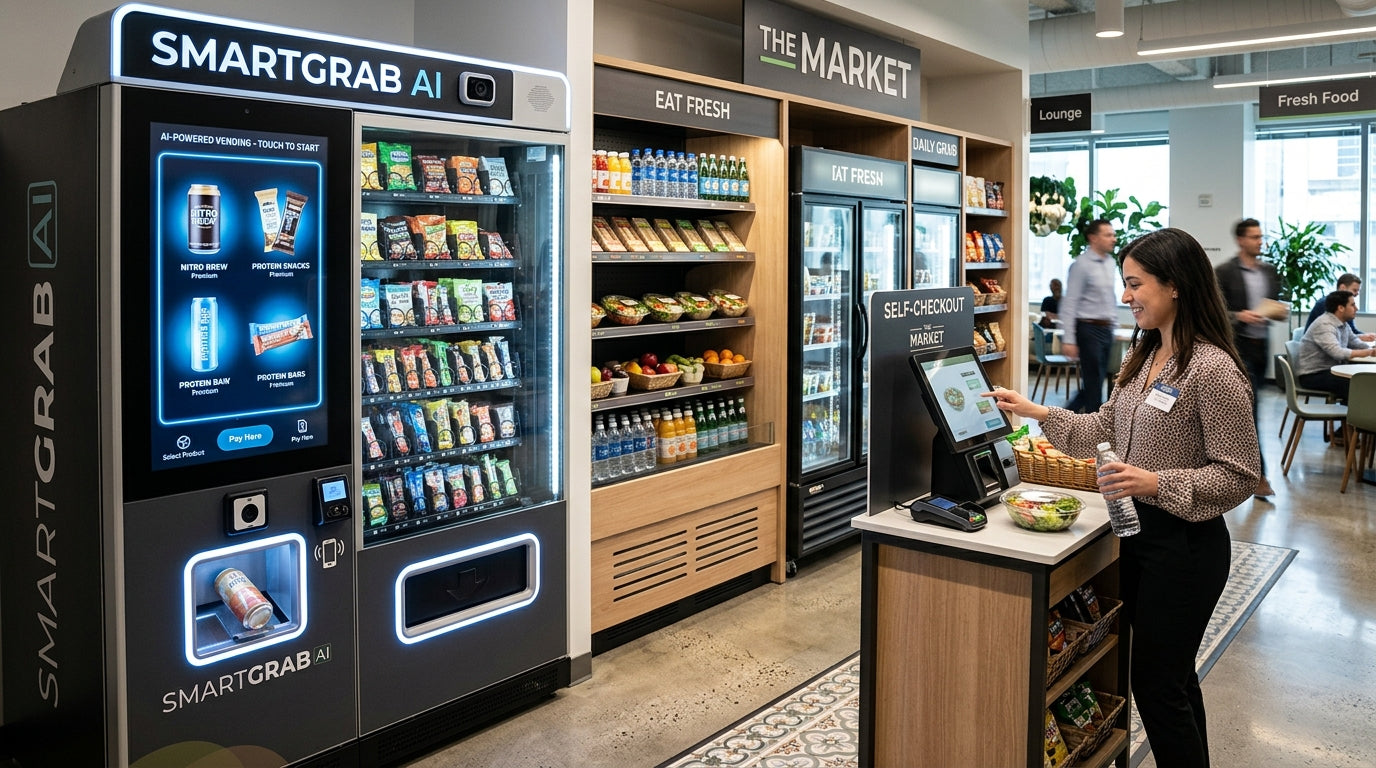
An AI vending machine is a single self-contained unit that uses computer vision or weight sensors to identify products on an open shelf, while a micro market is an open, self-checkout mini-store built from multiple fixtures — coolers, shelving, a kiosk — occupying a dedicated room or floor area. The core difference is scale: a micro market typically stocks 150 to 300 SKUs across a much larger footprint, while an AI vending machine stocks 20 to 60 SKUs within a single compact unit, which makes the choice between them largely a function of available space and expected daily headcount at the location rather than a straightforward better-or-worse comparison.
This guide breaks down the practical differences in footprint, cost, product variety, and checkout experience, and which location profile each format actually fits.
Table of Contents
An AI vending machine is a single enclosed or open-shelf unit that uses cameras, weight sensors, or RFID to identify products a customer removes, charging the linked payment method automatically without a cashier or staffed checkout. The technical mechanics behind this detection are covered in What Is an AI Vending Machine and How AI Vending Machines Work.
A micro market is an open retail space combining multiple refrigerated and ambient fixtures with a self-checkout kiosk, functioning as a small unstaffed convenience store rather than a single machine. Customers walk through the space, select items freely from open shelving, and scan or self-checkout at a central kiosk, which supports a far wider product assortment than any single vending unit but requires a dedicated room or partitioned area to install.
An AI vending machine occupies roughly the same footprint as a large refrigerator, fitting into a hallway alcove or break room corner, while a micro market requires a dedicated room, typically 150 to 400 square feet, since it's assembled from multiple separate fixtures rather than a single enclosed unit. This space requirement alone rules out micro markets for many smaller offices and residential buildings that simply don't have a room to dedicate to the format.
A micro market's open shelving supports a dramatically larger product range — fresh meals, multiple beverage brands, snacks, and often non-food items — because it isn't constrained by a single machine's shelf capacity, while an AI vending machine's SKU count is limited by its physical footprint even in a combo configuration. This variety advantage is the main reason larger offices with diverse workforce preferences often prefer a micro market once headcount justifies the space.
Micro markets generally require higher daily headcount to justify their larger upfront investment and ongoing restocking labor — typically 200 or more people with regular access — while AI vending machines can operate profitably at much lower traffic levels, making them the more flexible option for smaller or secondary locations. Location-scoring thresholds for both formats are covered in AI Vending Machine Location Data and Case Study: Finding the Sweet Spot.
The table below isolates the practical factors that most influence which format fits a given location.
| Factor | AI Vending Machine | Micro Market |
|---|---|---|
| Footprint | Single unit, small alcove | 150–400 sq ft dedicated room |
| Typical SKU count | 20–60 | 150–300+ |
| Minimum traffic threshold | Lower, flexible | Higher, typically 200+ people |
| Upfront investment | Lower | Higher |
| Installation complexity | Low, single delivery and setup | Higher, multi-fixture buildout |
An AI vending machine typically costs $3,500 to $16,000 depending on format and refrigeration, fully installed and ready to operate, while a micro market's total buildout — coolers, shelving, kiosk hardware, and installation — commonly runs $15,000 to $40,000 or more depending on room size and fixture count. This cost gap is the primary reason micro markets remain concentrated in larger offices where the higher headcount can justify the investment within a reasonable payback window, a calculation covered in AI Vending Machines: Cost and AI Vending Machine ROI.
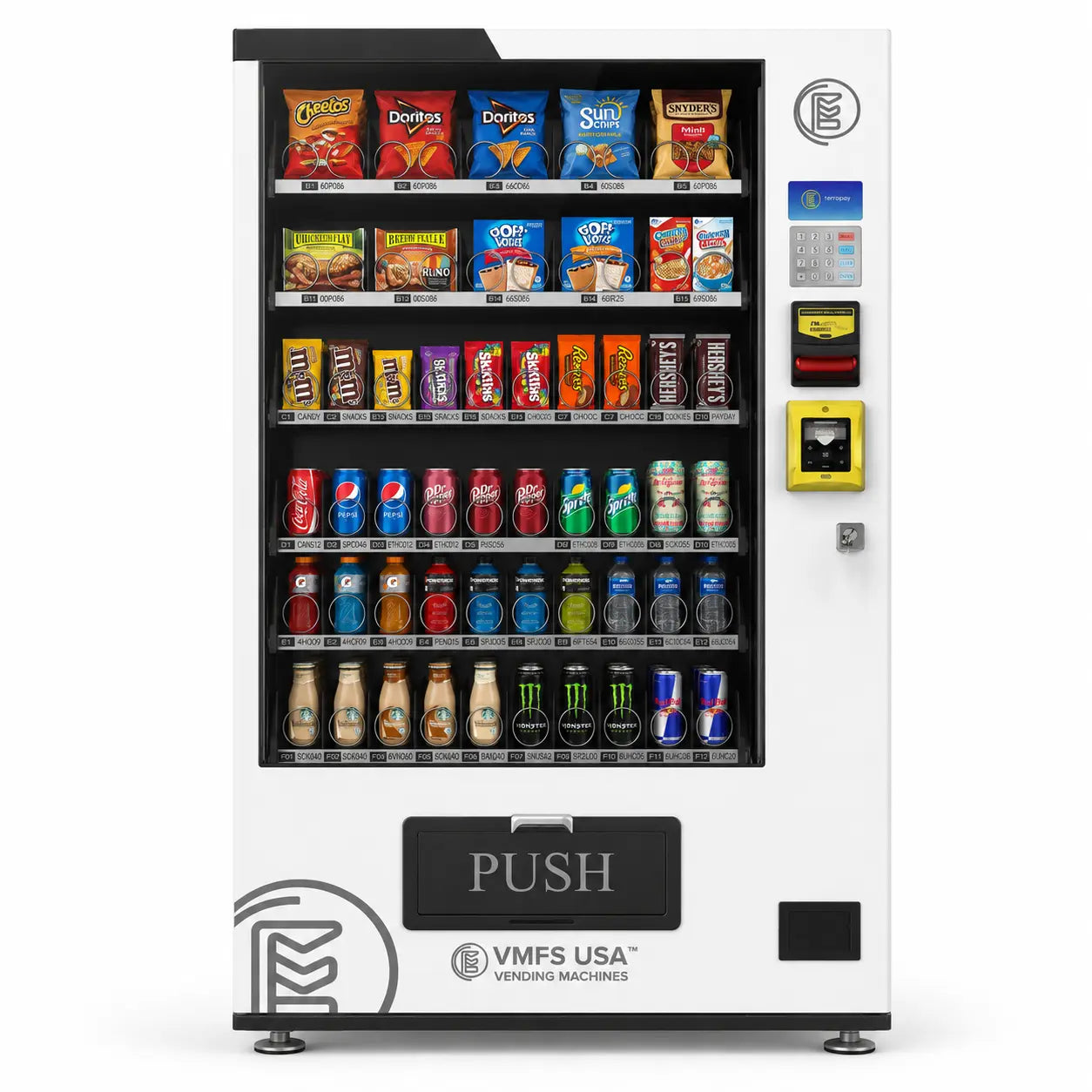
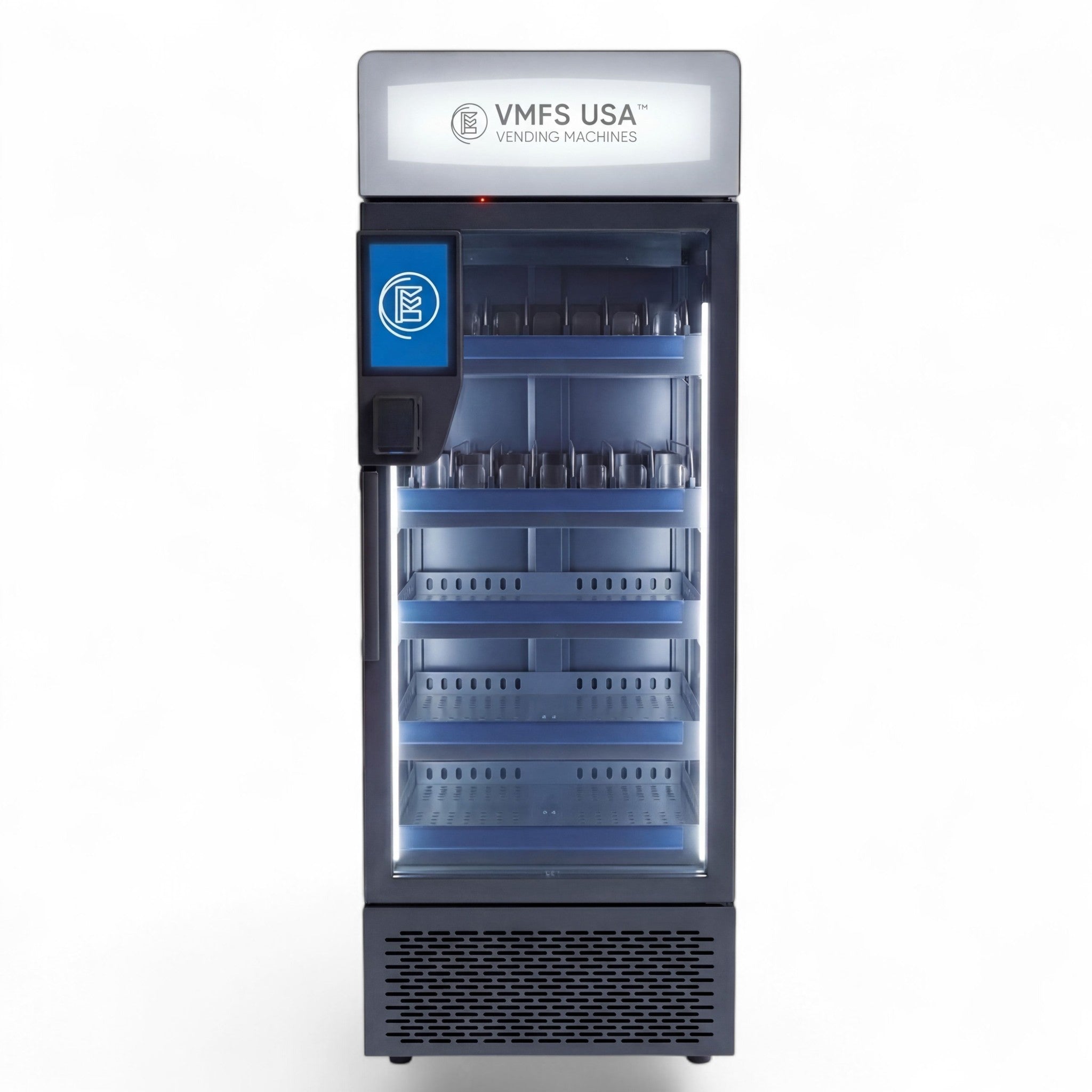
Smaller offices, gyms, residential buildings, and secondary break rooms with fewer than 150 regular daily users are typically better served by one or more AI vending machines, since the lower upfront cost and flexible placement don't require dedicating an entire room to the format. Larger corporate campuses and offices with 200 or more employees, where variety and a store-like experience meaningfully improve employee satisfaction, are where micro markets earn their higher investment — VMFS USA's AI Grab-and-Go Vending Machine collection, AI Smart Cooler Vending Machine, Smart Fridge Vending Machine, and AI Smart Cooler Combo Vending Machine cover the vending-side formats worth comparing against a micro market buildout for mid-sized locations specifically. Those sites can pair an AI unit with coffee vending machines when hot drinks are a regular request.
AI Vending Machine
Lower upfront cost and fast, single-visit installation.
Flexible placement in small spaces without a dedicated room.
Limited SKU count compared to a full micro market.
Micro Market
Much wider product variety, closer to a real convenience store.
Better fit for large offices with diverse employee preferences.
Higher upfront cost and requires a dedicated room to install.
Placing two or three specialized AI vending machines — a smart cooler, a grab-and-go snack machine — across a large office can approximate a micro market's variety at a materially lower total cost and without requiring a single dedicated room, distributing units instead across existing break areas. This approach also diversifies risk, since a single machine going offline doesn't take down the entire food service offering the way a micro market's central kiosk failure would. The trade-off is a less unified, store-like experience and slightly more restocking coordination across multiple locations within the same building, a consideration tied to the route-planning math in How Many AI Vending Machines You Need to Run a Full-Time Business.
Micro markets require more frequent restocking visits given their larger SKU count and perishable-heavy assortment, and typically need more careful loss-prevention monitoring since customers walk through open shelving before self-checkout rather than interacting with a single sealed unit. AI vending machines, by contrast, close the transaction loop directly at the point of item removal through vision or weight-sensor confirmation, which is one reason they scale more easily across a distributed multi-location route than an equivalent number of micro markets would — a structural difference explored further in Traditional vs. AI Vending Machines and Smart Vending Machine vs. AI Vending Machine.
Compare AI Vending Formats for Your Space
Explore machines built for locations that don't need a full micro market buildout.
Explore AI Vending Machines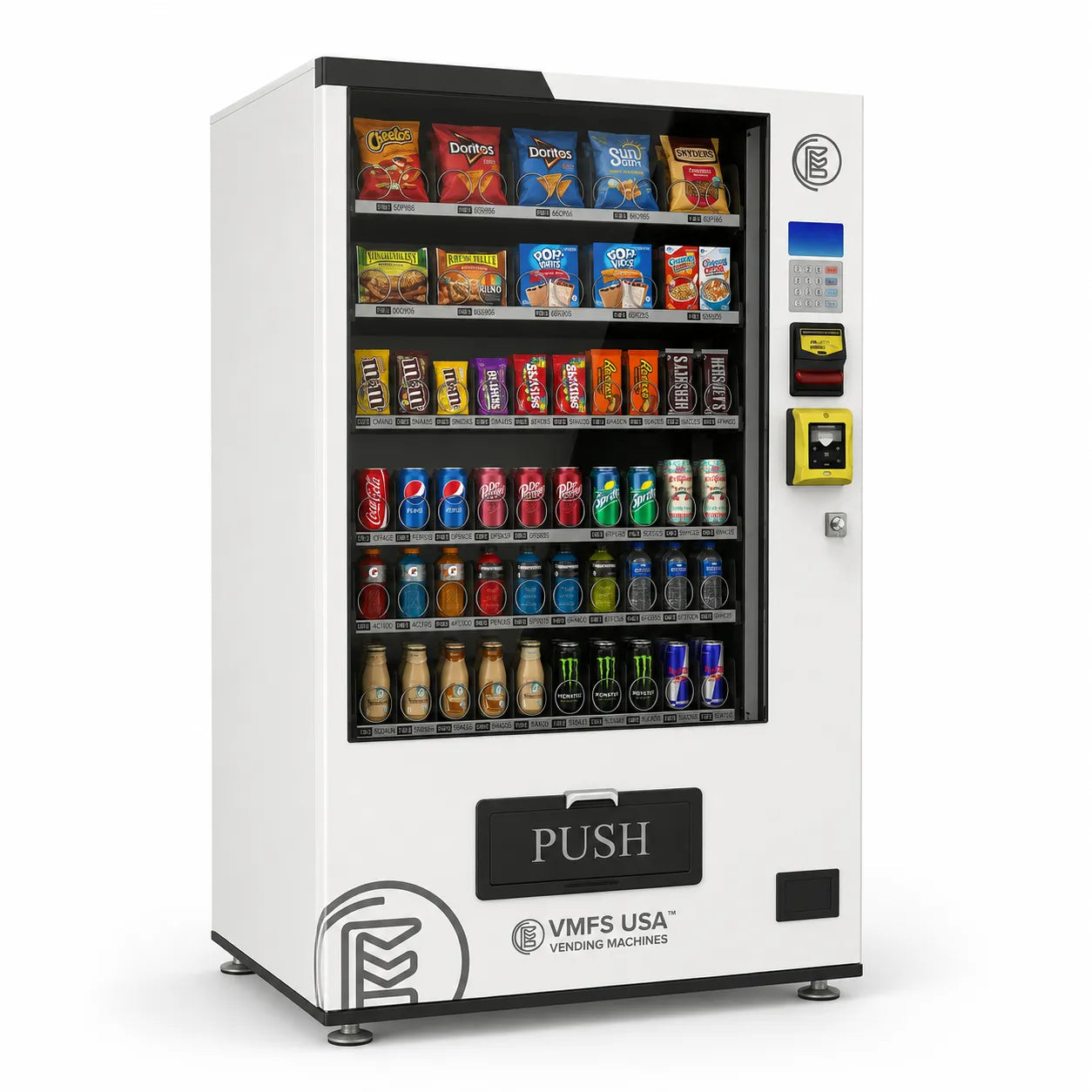
Share:
The Future of AI Vending Machines - Where the Category Is Headed
AI Vending Machine Repair Services - What to Know Before Something Breaks