


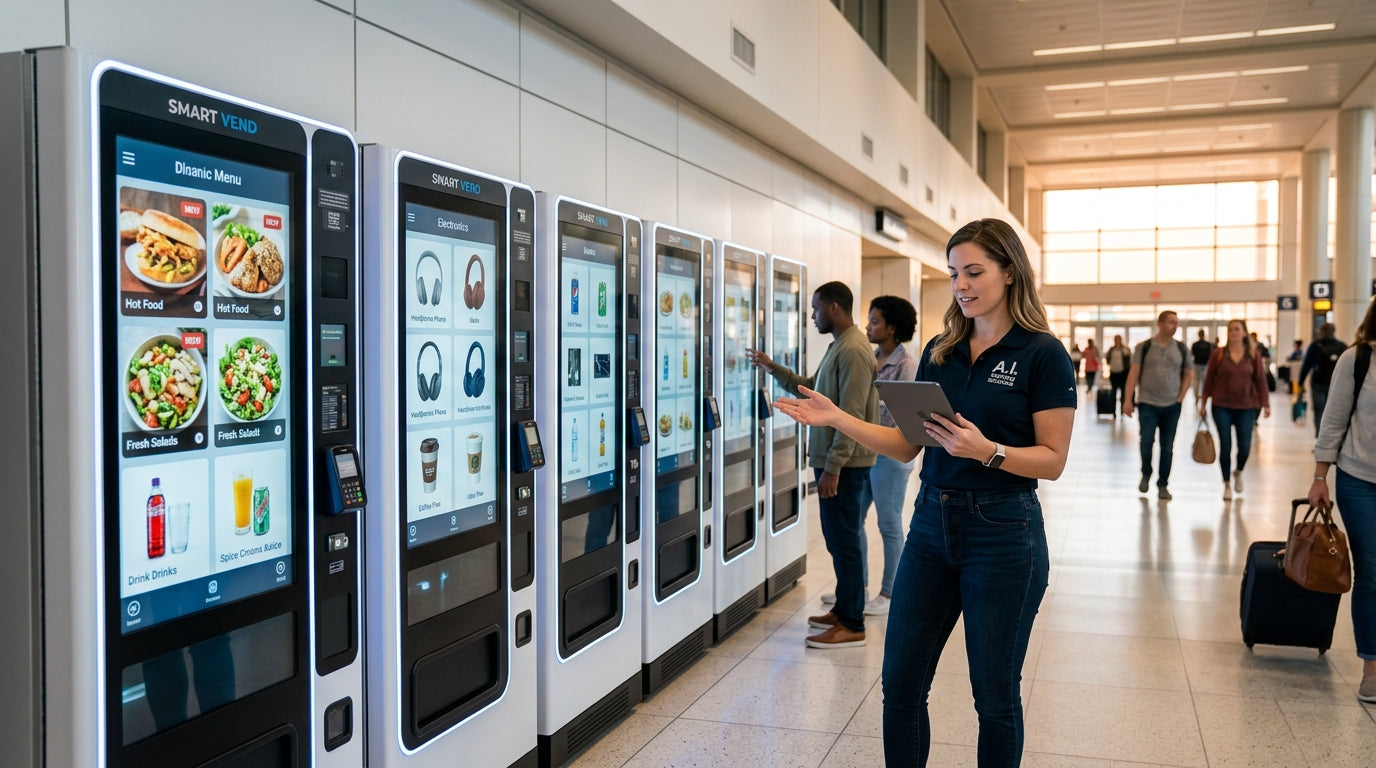


Design the perfect vending solution for your location and customers.

Join the VMFS newsletter and step into a thriving network dedicated to collective success.
One signup. Endless possibilities.
Most operators need between 10 and 20 AI vending machines to replace a full-time income, assuming average net profit of $200 to $400 per machine per month after restocking, commission, and processing costs. The exact number depends on location quality, product margin, and how much of the operation stays automated versus hands-on — a route of high-traffic office and gym placements can hit full-time income with fewer, stronger-performing units, while a route of low-traffic locations needs volume to compensate. This guide breaks down the per-machine math, the realistic timeline to reach a full-time route, and the operational thresholds where a solo operator needs to bring on help.
The answer changes based on what "full-time income" means to the operator — a target of $3,000 a month looks very different from $8,000 a month — so the calculations below work from monthly net profit per machine rather than a single fixed machine count.
Table of Contents
The number of AI vending machines needed to go full-time scales directly with net profit per unit, because total monthly income is simply machine count multiplied by average net profit per machine. At a conservative $250 net profit per machine per month, replacing a $4,000-a-month salary requires 16 machines; at a stronger $400 per machine, the same target requires 10 machines. The table below maps common income targets against three profit-per-machine scenarios.
| Monthly Income Target | Machines Needed at $200/mo Net | Machines Needed at $300/mo Net | Machines Needed at $400/mo Net |
|---|---|---|---|
| $3,000 | 15 | 10 | 8 |
| $5,000 | 25 | 17 | 13 |
| $8,000 | 40 | 27 | 20 |
These figures assume net profit after inventory, commission or lease fees, card processing, and routine maintenance — not gross vending revenue, which runs considerably higher per machine before those deductions.
A machine generating $1,200 in monthly gross sales at a 45% margin produces $540 in gross profit, but net profit drops once location commission (5% to 15% of gross), card processing fees, and restocking labor are subtracted. Operators who plan machine count around gross sales figures consistently overestimate how many units they actually need to hit a target income, because the gap between gross and net widens as commission rates rise. A full breakdown of the underlying unit economics is available in the AI Vending Machine ROI guide.
AI vending machines improve net profit per unit relative to legacy machines because real-time sales data cuts spoilage and stockouts, both of which directly erode monthly profit. A machine that runs empty for three days loses that revenue permanently, so the inventory visibility built into AI vending hardware functions as a direct lever on the profit-per-machine number that drives the entire machine-count calculation. See How AI-Powered Vending Machines Optimize Sales for the specific mechanisms.
A machine in an office with 200 daily foot traffic events outproduces one in a 40-person office by a wide margin, because vending conversion is a function of total exposure, not machine capability. Prioritizing five strong locations over fifteen mediocre ones often reaches the same income target with far less restocking overhead. Location scoring criteria are detailed in AI Vending Machine Location Data and the Case Study: Finding the Sweet Spot.
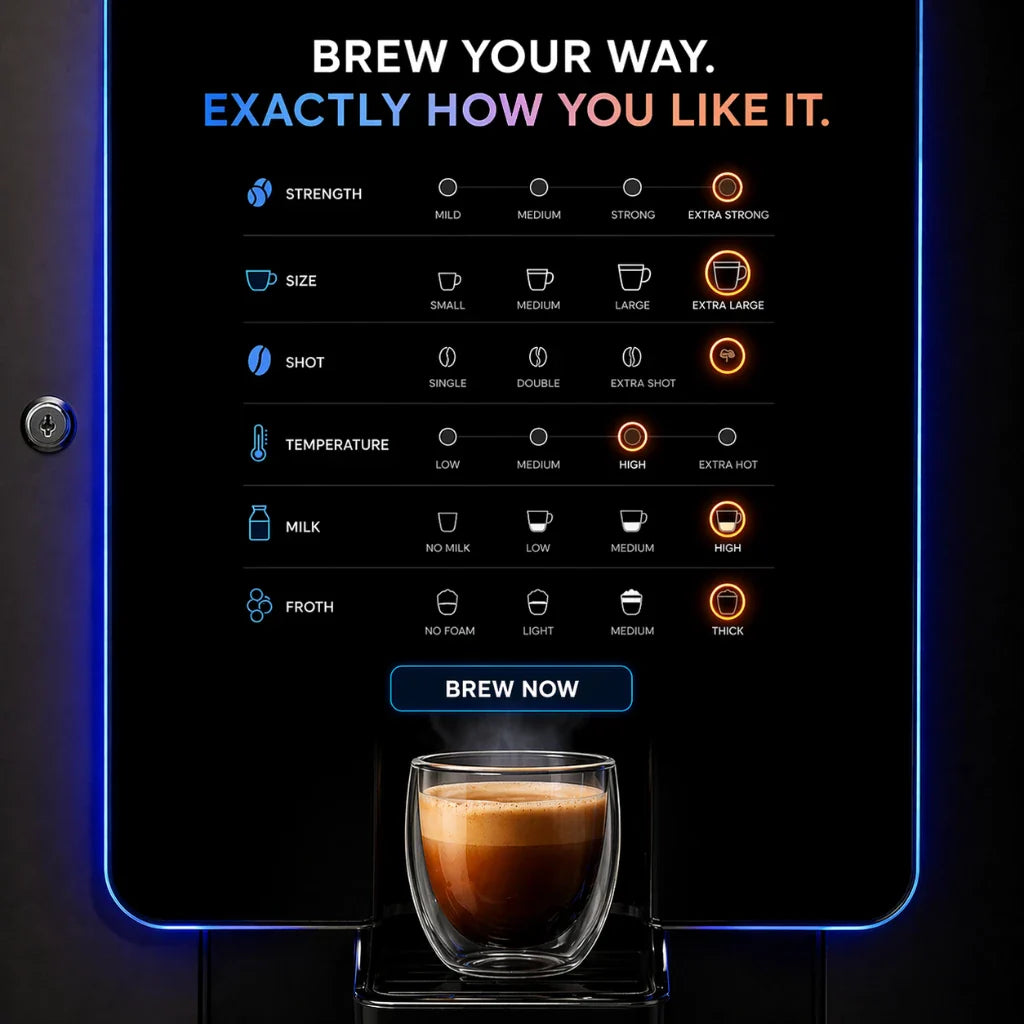
Coffee and higher-ticket refrigerated items typically carry stronger per-transaction margin than bagged snacks, which lowers the machine count needed for the same income target. Electronics vending machines flip the model entirely — fewer, higher-value transactions instead of high-frequency low-ticket sales — and belong in a different location category altogether, as covered in Electronics Vending Machines Driving AI Smart Cities & Sustainability.
A combo unit stocking both ambient and refrigerated products captures snack, drink, and cold-food demand in a single footprint, which can outperform two single-category machines placed separately once rent, commission, and service visits are factored in per location.
Operators who reinvest each machine's profit into the next placement typically add one to two machines per quarter during the first two years, since new locations require both upfront capital and time to negotiate placement agreements. A route that starts with two machines and reinvests consistently can realistically reach 12 to 15 units within 18 to 24 months, assuming each machine reaches breakeven within its first 6 to 14 months of operation — the same payback window detailed in AI Vending Machine Payback: Pre-Made vs. Custom Build.
Financing accelerates this timeline because it decouples machine acquisition from cash flow generated by existing units, letting an operator scale several machines in parallel rather than sequentially. Full startup cost figures per machine, useful for financing planning, are available in AI Vending Machines: Cost.
A solo operator using AI-driven restocking alerts rather than a fixed schedule can typically manage 10 to 15 machines before route density and drive time between locations start eating into net profit. Beyond that range, either travel time or restocking backlog forces a choice between hiring help or geographically consolidating the route.
Once a route exceeds 15 to 20 machines, part-time restocking labor usually costs less per machine than the lost sales caused by delayed restocking, because AI dashboards make it clear exactly how much revenue an empty slot is losing in real time. Operators who track this trade-off precisely tend to hire before hitting a hard operational wall rather than after.
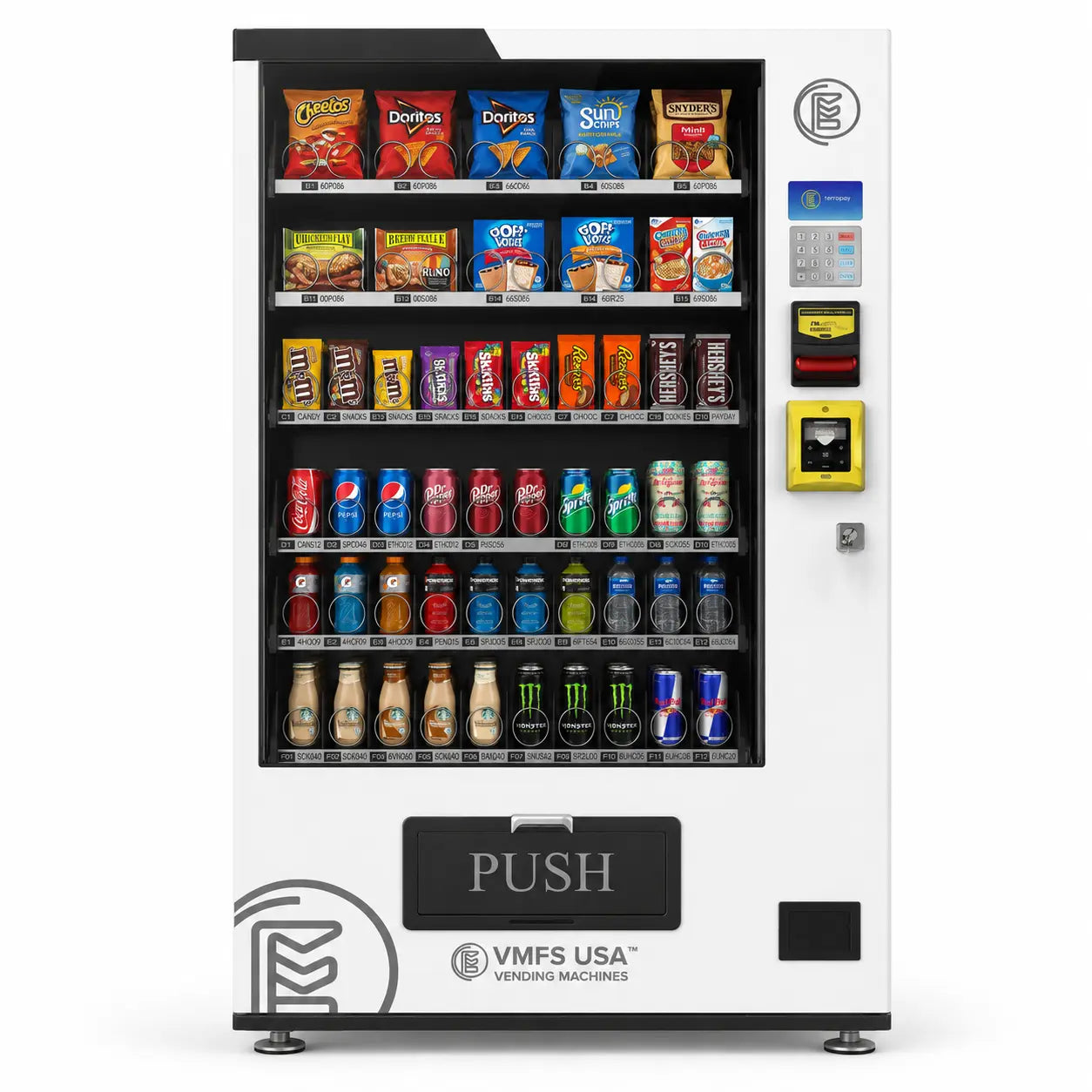
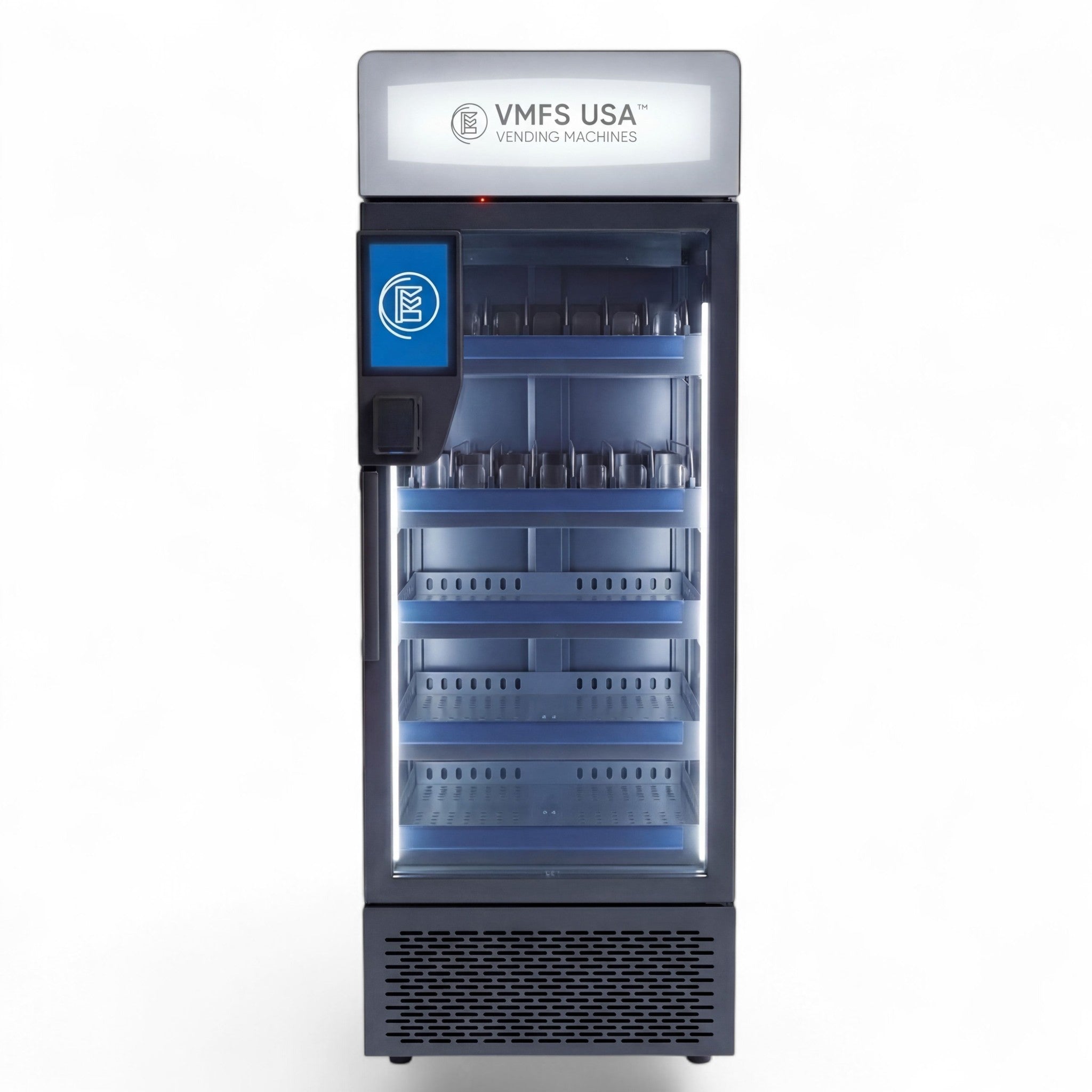
Matching machine type to location type reduces the total number of units needed to hit an income target, because a mismatched machine underperforms regardless of foot traffic. Open-shelf grab-and-go units from the AI Grab-and-Go Vending Machine collection suit fast-paced office and gym environments, while the AI Smart Cooler Vending Machine and Smart Fridge Vending Machine fit residential buildings and break rooms where perishable demand is higher. For locations that justify a single larger footprint over two separate machines, the AI Smart Cooler Combo Vending Machine consolidates ambient and refrigerated stock into one unit. A full spec comparison across formats is in the Complete Buyer's Guide 2026.
Scaling Machine Count
Diversifies location risk across more properties and traffic sources.
Reaches income targets faster if capital is available upfront.
Increases restocking travel time and coordination complexity.
Scaling Machine Quality
Fewer machines mean lower total restocking and service overhead.
Higher-traffic locations produce stronger margin per service visit.
Concentrates revenue risk in a smaller number of properties.
A route of six machines in strong locations can match the net income of fifteen machines in weak ones, because net profit per machine scales with foot traffic quality far more than with raw machine count. The comparison below illustrates the trade-off directly. For a deeper look at how AI vending changes this calculation relative to legacy machines, see Traditional vs. AI Vending Machines and Is the Upgrade Worth It.
| Approach | Machine Count | Avg. Net Profit/Machine | Monthly Restocking Visits |
|---|---|---|---|
| Few high-traffic machines | 6 | $500 | ~24 |
| Many low-traffic machines | 15 | $200 | ~45 |
Operators who size their route based on gross sales figures from a manufacturer's marketing material consistently under-forecast the machine count they actually need, because commission, processing fees, and restocking costs are rarely factored into those numbers upfront.
Chasing a specific machine count rather than a specific income target leads operators to accept marginal locations that drag down average profit per unit, which paradoxically requires acquiring even more machines to compensate. Income-per-machine, not raw unit count, is the number that should drive expansion decisions.
Card processing rates on unattended, high-frequency transactions differ from standard retail rates, and that difference compounds across a fleet of machines. Reviewing processor terms before scaling prevents a hidden cost from silently increasing the machine count needed to hit an income target — see How Card Processing Works and Why AI Machines Have Different Rates.
Public familiarity with AI-managed retail has grown rapidly following widely covered experiments in AI-run commerce, which has made cashierless, AI-monitored vending feel routine to consumers rather than novel. That shift lowers friction at new locations and can modestly reduce the machine count needed to hit an income target as adoption curves improve. See The AI Vending Machine Experiment: How Smart Retail Is Changing and What Is an AI Vending Machine and How AI Vending Machines Work for background.
Plan Your Route With the Right Machines
Match machine type to location type and hit your income target with fewer, stronger-performing units.
Explore AI Vending Machines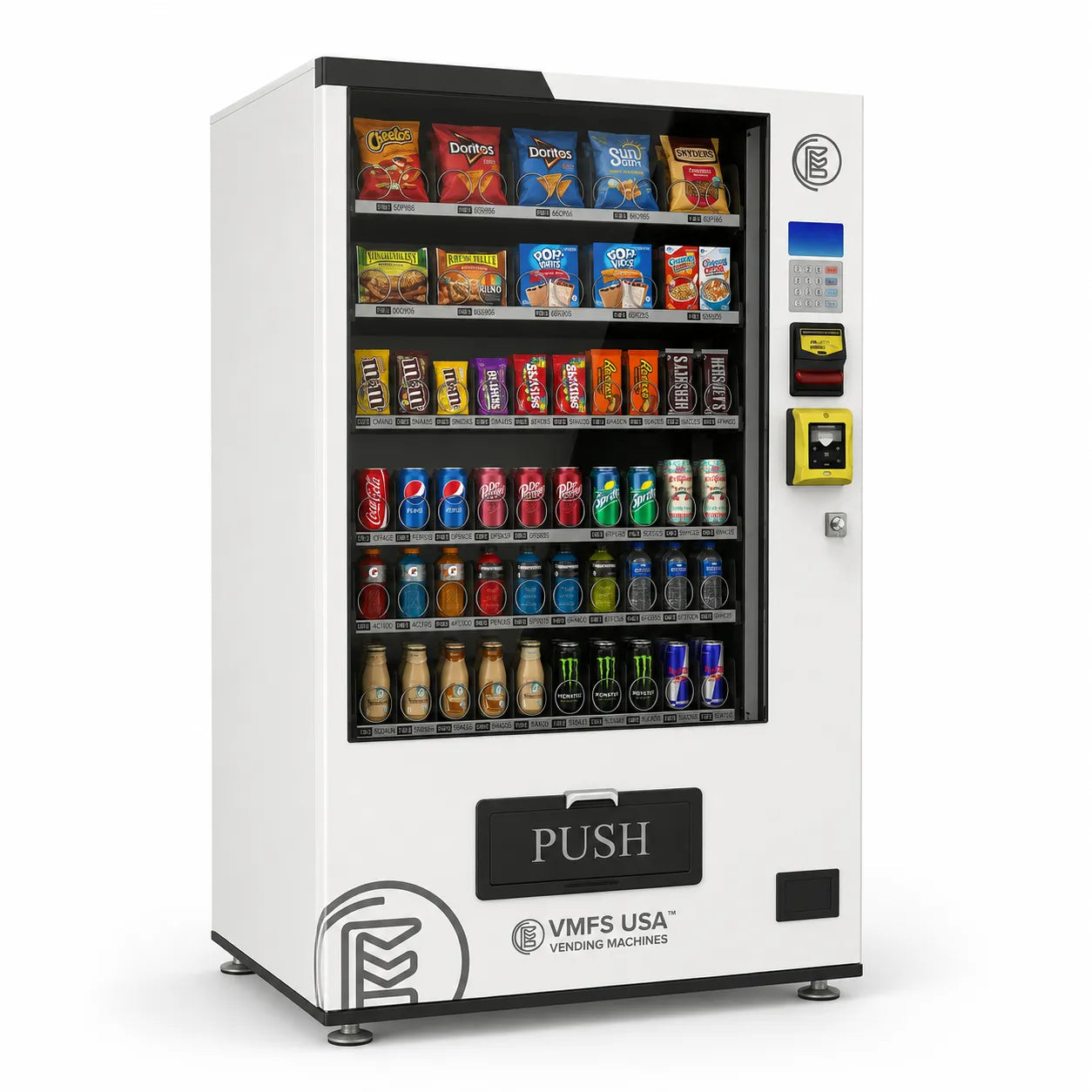
Share:
Coffee Vending Machine Electricity Consumption: A Data-Backed Guide
Why Trading Card Vending Machines Are Booming