




Design the perfect vending solution for your location and customers.

Join the VMFS newsletter and step into a thriving network dedicated to collective success.
One signup. Endless possibilities.
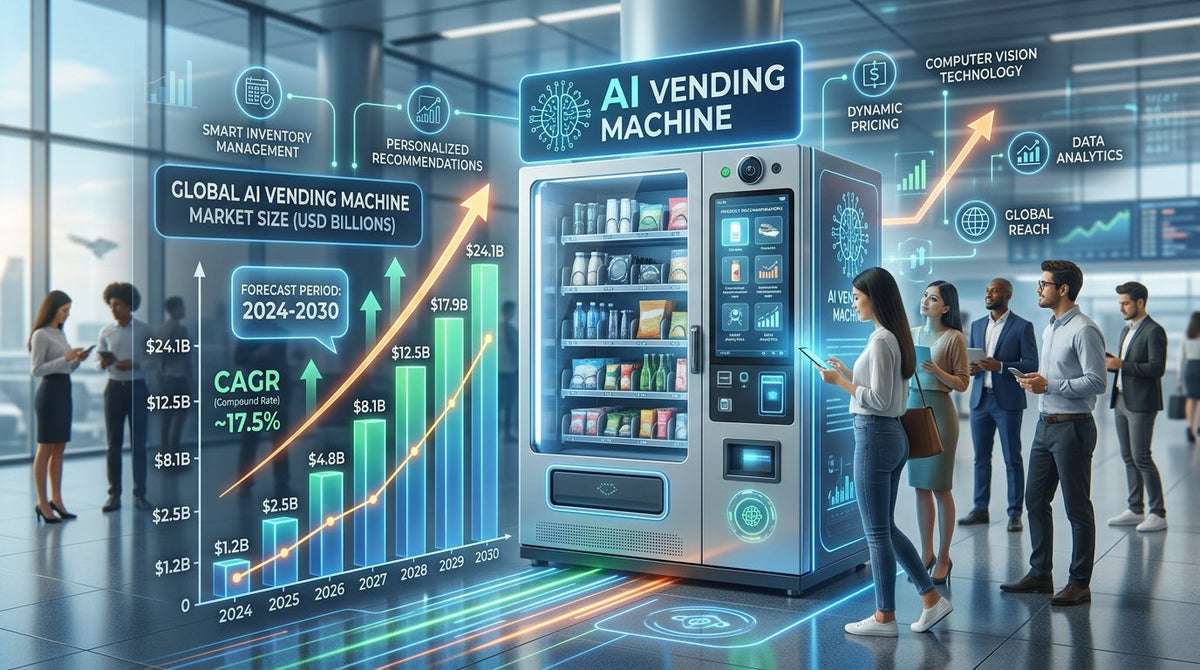
The smart vending machine market has no single agreed size: published estimates for 2026 run from about $8 billion (Research and Markets) to $19.8 billion (Future Market Insights), with forecast growth rates between 4.2% and 11.6% a year. Each figure below is attributed to its publisher, with the year and scope it covers, so you can see why the numbers differ.
This guide combines those global forecasts with US operator-side data from NAMA, Automatic Merchandiser and Cantaloupe, explains what is actually driving AI vending, lays out where the technology is heading, and shows what the numbers mean if you are buying machines in 2026.
The honest answer is that it depends on which research firm you ask, because each one measures a slightly different market. Future Market Insights values the global intelligent vending machine market at $17.73 billion in 2025 and $19.79 billion in 2026, rising to $59.29 billion by 2036 at an 11.6% compound annual growth rate (CAGR). IMARC Group puts the same category at $21.6 billion in 2025 and projects $56.8 billion by 2034, a 10.99% CAGR. Persistence Market Research sizes the smart vending machines market at $11.6 billion in 2026, reaching $21.5 billion by 2033 at 9.2% a year. Research and Markets is the outlier on the low side, valuing intelligent vending at $8 billion in 2026 and $11.1 billion by 2034, a 4.2% CAGR.
Those four reports agree on direction and disagree on scale. Every one of them expects connected, cashless and sensor-equipped machines to keep taking share, but the 2026 base ranges from $8 billion to almost $20 billion, and the long-range forecasts run from $11.1 billion to $59.3 billion. A buyer or lender who quotes one number as "the market size" without the publisher and year is quoting a single firm's model, not a consensus.
| Publisher (report) | Market as defined | Base value | Forecast | CAGR |
|---|---|---|---|---|
| Future Market Insights (May 2026) | Intelligent vending machines, global | $17.73B (2025); $19.79B (2026) | $59.29B by 2036 | 11.6% (2026–2036) |
| IMARC Group (2026–2034 report) | Intelligent vending machines, global | $21.6B (2025) | $56.8B by 2034 | 10.99% (2026–2034) |
| Persistence Market Research (2026–2033 report) | Smart vending machines, global | $11.6B (2026) | $21.5B by 2033 | 9.2% (2026–2033) |
| Research and Markets (April 2026) | Intelligent vending machines, global | $8B (2026) | $11.1B by 2034 | 4.2% (2026–2034) |
| IMARC Group (2026–2034 report) | All vending machines, global (for context) | $22.3B (2025) | $31.9B by 2034 | 3.94% (2026–2034) |
The last row is there for perspective. IMARC's estimate for the whole global vending machine market is $22.3 billion in 2025, growing 3.94% a year, while its intelligent-vending page reports $21.6 billion for the same year. Two figures from the same firm that sit that close together tell you the reports are built on different scopes and models, which is exactly why the next section matters before you rely on any of them.
Market size estimates disagree because the firms define "smart," "intelligent" and "AI" vending differently, measure different things, and start from different base years. A report that counts any machine with a card reader and telemetry as "smart" will produce a far larger number than one that counts only cabinets with item-level recognition, and none of the public summary pages publish a precise inclusion rule.
Scope is the first source of spread. Persistence describes smart vending machines in terms of NFC, contactless card readers, mobile wallets, IoT connectivity and AI-enabled remote monitoring, a definition broad enough to take in most connected, cashless machines. Research and Markets segments its intelligent vending report by free-standing versus wall-mounted cabinets and by product type, and arrives at a much smaller base. Future Market Insights segments by product type, application, technology and machine type, and states that it tracks commercially traded products and services. Whether software subscriptions, payment hardware and services are included can move a total by billions.
The unit being measured is the second source. The global publisher reports are segmented by machine type, technology and payment system, which points to equipment and related sales, while US trade figures such as the NAMA census measure operator revenue from selling snacks, drinks and fresh food. Those are different markets. A $31 billion US operator industry and a $20 billion global intelligent-machine market are not contradictory; one counts what consumers spend at machines, the other counts what is spent on the machines and their technology.
Timing is the third. Some reports quote a 2025 base year and others a 2026 estimate, and forecast horizons end anywhere from 2033 to 2036. A longer horizon at a similar growth rate produces a much larger end number, so headline forecasts should never be compared without lining up the years. The earlier version of this article, for example, reported Future Market Insights' 2025 value as a 2026 value; the table above uses the years the publisher states.
How to read a market report: Before quoting any figure, note the publisher, the base year, the forecast end year and what is counted (machines only, or machines plus software and services). Then treat the direction of growth as the reliable signal and any single dollar figure as one firm's estimate.
For a US operator, the most useful market numbers are the ones that measure what machines actually sell, and those show a large, growing industry rather than a niche. The NAMA Foundation's census with Technomic, released March 19, 2026, estimates US convenience services revenue at $31.1 billion in 2025, up from $26.6 billion in 2023, an average annual growth of 8.1%, and projects about 6.5% annual growth across all business lines. Automatic Merchandiser's 2026 State of the Industry report, published by Vending Market Watch, puts estimated 2025 revenue higher, at $40.04 billion, an 18.3% increase from $33.85 billion.
The gap between those two US figures repeats the lesson from the global reports: different surveys, different methods, different totals. NAMA's census is the industry association's benchmark; the State of the Industry report is built from an operator survey. Both point the same way, and both describe formats converging. The NAMA census notes that "the distinctions between traditional vending, smart coolers, and micro markets are becoming less rigid," and operators increasingly run more than one format.
The State of the Industry survey is the clearest signal of how fast AI-style equipment has spread on real routes. More than half of respondents now operate smart coolers, nearly one-third call them a primary operating format, and smart coolers made up 33.5% of the equipment respondents deployed, nearly matching traditional glass-front vending machines. Nearly two-thirds of respondents reported shrink below 5%, and 12.5% reported shrink above 10%, a reminder that open-door formats need good recognition and good locations to stay profitable.
78% cashless
Cantaloupe's 2026 Micropayment Trends Report found 78% of vending sales were cashless in 2025, up from 73%.
$2.45 vs $1.57
Average cashless ticket versus average cash ticket in Cantaloupe's 2025 data; the average vend overall was $2.01.
$4.49 Smart Store ticket
Cantaloupe reports Smart Stores averaged $4.49, the highest of any self-service format, with locations growing from 71 to 572.
33.5% smart coolers
Share of equipment deployed by respondents to the 2026 State of the Industry operator survey.
Payments data explains why the format shift is happening. Cantaloupe's 2026 report found contactless payments made up 85% of cashless vending sales, and the average cashless ticket of $2.45 was 59% higher than the $1.57 cash ticket. Open-door AI machines depend entirely on card or mobile pre-authorization, so the same consumer habits that pushed cashless payments into the majority also made AI vending practical. Among the global publishers, IMARC estimates North America held over 37.6% of the intelligent vending market in 2025, with the United States accounting for over 88.30% of that regional market, and Future Market Insights forecasts 10.5% annual growth for the US through 2036.
See the Machines Behind the Growth
Compare VMFS AI grab-and-go coolers, combos and smart fridges, with prices on every model.
Shop AI Vending MachinesAI vending is growing because four things matured at the same time: cashless payment, recognition technology, the economics of unstaffed retail, and public comfort with machines that run themselves. The research publishers list similar drivers, with IMARC citing AI, IoT and cashless advances plus demand for automated retail, and Persistence naming IoT and AI integration as the primary driver.
With roughly four in five vending sales already cashless in Cantaloupe's data, a machine that only works with a card or phone is no longer a limitation. That removes the main historical barrier to open-door formats, which need a payment pre-authorization before the door unlocks and a final charge once the system knows what left the shelf.
Product recognition improved by combining sensors rather than relying on one. A 2020 study published in Frontiers in Built Environment found that fusing camera data with shelf weight sensing reached up to 92.6% item identification accuracy on an 85-item test store, about half the error rate reported for self-checkout stations, while absolute weight change alone reached 68.2%. Amazon describes its Just Walk Out system the same way, using "cameras, weight sensors, and a combination of advanced AI technologies," and states that it does not use facial recognition to identify shoppers. Our guide to how AI vending machines work walks through the full transaction cycle.
Every hour a route driver spends counting coils or driving to a machine that did not need service is cost without revenue. Connected machines report stock, sales and faults in real time, which lets operators service by need instead of by calendar. That is the same remote monitoring logic that pushed telemetry into traditional routes, applied to cabinets that can also hold fresh food, higher-priced items and larger baskets.
Widely covered experiments made the idea of an AI-managed shop familiar. In Anthropic's Project Vend, run with Andon Labs and published June 27, 2025, a Claude model ran a small office store for about a month, choosing products, setting prices and handling customer requests. Anthropic reported the shop "did not succeed at making money," with losses driven by mistakes such as selling items below cost, yet concluded that "AI middle-managers are plausibly on the horizon." We cover the episode and what it means for real routes in the AI vending machine experiment.
Beverages, free-standing cabinets and North America lead most published breakdowns, but the exact shares depend on the publisher. The table lists only shares the publishers state on their public report pages; claims from the earlier version of this article that could not be traced to a publisher have been removed.
| Breakdown | Future Market Insights | IMARC Group | Persistence Market Research |
|---|---|---|---|
| Leading product type | Beverages, 44.6% | Food, about 32.0% (2025) | Beverage machines, about 42% (2025) |
| Leading application | Fast-food restaurants, 22.8% | Manufacturing, about 40.0% (2025) | Not stated |
| Leading machine type | Not stated | Free-standing, about 73.6% (2025) | Not stated |
| Payment | Cashless, 63.4% of demand (2026) | Not stated | Cashless, about 58% (2025) |
| Leading region | Not stated as a share | North America, over 37.6% (2025) | North America, about 34% (2025) |
Even the "leading category" differs: Future Market Insights and Persistence rank beverages first, while IMARC ranks food first by product dispensed and manufacturing sites first by application. That is a scoping difference again, not a contradiction, and it is a useful caution against building a product plan around one report's segment chart.
Regionally, Future Market Insights forecasts the fastest growth in China at 14.9% a year through 2036, followed by India at 13.8%, Germany at 12.7%, Brazil at 11.6%, the US at 10.5% and the UK at 9.4%. Asia-Pacific growth is often linked to mobile-payment adoption and smart-city programs, which Persistence also cites. For US operators, the practical takeaway is that the domestic market is already large and mature in payments, so growth comes from replacing and adding formats at existing locations rather than from first-time infrastructure. Placement still decides outcomes, which is why AI vending machine locations deserve more attention than any regional forecast.
The companies named most often across the publisher reports are established equipment makers: Fuji Electric, Sanden (SandenVendo), Crane, Azkoyen, Seaga, Royal Vendors, Westomatic, Evoca, Jofemar, Bianchi and FAS International. Future Market Insights describes Fuji Electric as the market leader. Research and Markets also lists payment and software companies such as Nayax, Cantaloupe and 365 Retail Markets alongside Chinese manufacturers including TCN and AUCMA, and Persistence adds newer smart-vending specialists.
The competitive split matters for buyers. Legacy manufacturers bring mechanical reliability, parts networks and a large installed base, and are adding connectivity and recognition to existing lines. Newer AI-native builders compete on open-shelf design, recognition accuracy and cloud software, and often ship faster at lower entry prices. The trade-off is usually support depth and parts availability, which is worth checking before you buy. Our list of AI vending machine manufacturers compares US suppliers on those points, and the AI vending machine software guide covers the platform side.
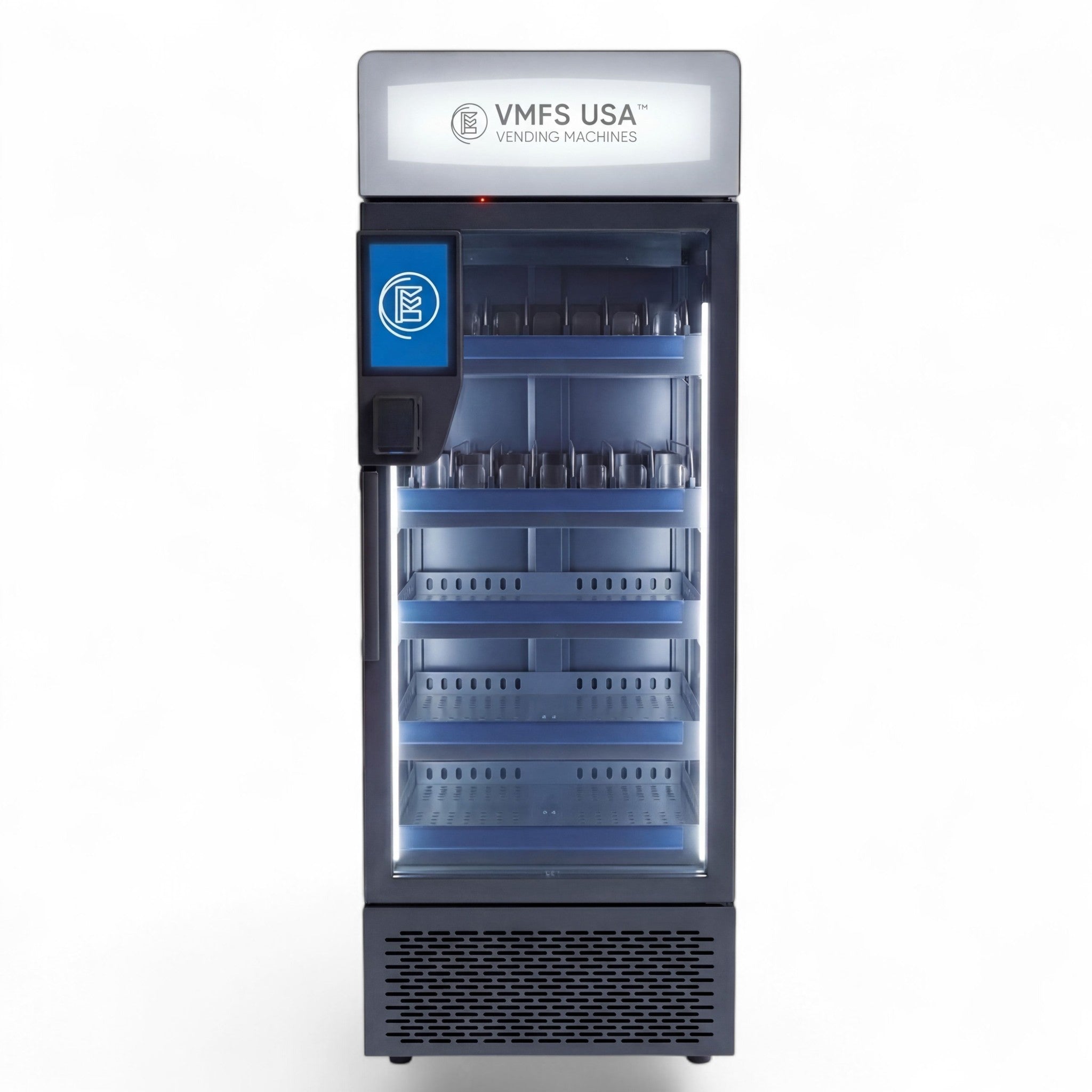
VMFS USA sits in the second group as a US supplier selling directly to operators: AI cabinets, combo and touch-screen machines, Seaga equipment, and its own cloud platform, with prices listed on its site. That model is part of the market shift the reports describe, as operators buy connected equipment and software together instead of bolting telemetry onto older machines.
The future of AI vending is more capable software running on hardware that already exists: better recognition from combined sensors, smarter pricing and restocking, and expansion into higher-value products. None of these are speculative leaps; each extends something already in current deployments. For the wider industry picture, including traditional machines and micro markets, see our outlook on the future of vending machines.
Combining computer vision with weight sensing, and in some cabinets RFID, is the clearest near-term direction because each method covers the others' blind spots, as the Frontiers results above show. More processing is also moving onto the machine itself, which shortens checkout time and keeps the cabinet selling through brief connectivity drops. The AI vending machine parts breakdown explains which components do the recognition work.
Recognition data and transaction history make recommendations and time-of-day pricing technically simple. Adoption will depend on consumer acceptance and on law. Identifying returning customers by face is the step that carries real risk in the US: Illinois' Biometric Information Privacy Act treats a scan of face geometry as a biometric identifier, requires written notice and a written release before collection, and sets liquidated damages of $1,000 per negligent violation and $5,000 per intentional or reckless violation. Persistence also flags compliance with privacy rules such as CCPA as a restraint on the market. Expect personalization tied to app accounts and loyalty IDs, not to faces.
Accurate, item-level loss prevention on an open shelf is what makes higher-priced products viable unattended. Cantaloupe's $4.49 Smart Store average ticket, more than double its $2.01 average vend, shows the basket-size upside. Electronics, personal care and specialty goods are the natural next categories, as covered in electronics vending, with regulated items following only where state rules allow.
Software-led route planning, where fleet-wide inventory data decides which machines get visited and what goes on the truck, is the near-term change. Robotic restocking remains early. AI agents that order stock and set prices are further out, and Project Vend is a useful reality check: the model handled routine tasks but made costly pricing and judgment errors, so human review stays essential. The math on how many machines one person can run is in how many AI vending machines you need.
Better inventory turnover reduces spoiled fresh food, and modern refrigeration controls cut energy use. IMARC lists energy-efficient refrigeration, LED lighting and smart energy management among the market's trends, and large property owners increasingly ask vendors about them during selection.
| Trend | Where it stands in 2026 | VMFS assessment of timing |
|---|---|---|
| Vision plus weight recognition | Shipping in current AI cabinets | Now |
| Fleet-wide, data-led route planning | Available in cloud dashboards | Now to near-term |
| Remote and time-of-day pricing | Technically available; adoption varies | Near to mid-term |
| Higher-value product categories | Growing in electronics and personal care | Mid-term, category by category |
| Face-based personalization | Legally constrained in parts of the US | Unlikely at scale |
| Robotic restocking, autonomous AI management | Experimental | Long-term |
Market data supports entering, but only on location-level economics; category growth does not make a weak placement profitable. Every forecast above expects growth, the technology is proven, and US consumers already pay cashless, yet AI cabinets cost more than basic machines and the best locations attract more competition each year. The comparison of traditional vs AI vending machines shows where each format still wins.
Reasons to enter now
Reasons for caution
Legacy machines are not disappearing. Glass-front vending still accounts for about as much deployed equipment as smart coolers in the State of the Industry survey, and it still makes sense for low-ticket snack and soda spots. The shift is in new purchases, where operators increasingly choose connected or AI equipment even for straightforward placements because remote visibility pays for itself in fewer wasted trips.
Market growth confirms the category is durable; it does not predict your returns. A 9% or 11% CAGR describes billions of dollars across thousands of operators, while your machine's results depend on foot traffic, product mix, commission terms and how often you restock. Use the forecasts as context and model each location separately, starting with our AI vending machine ROI guide.
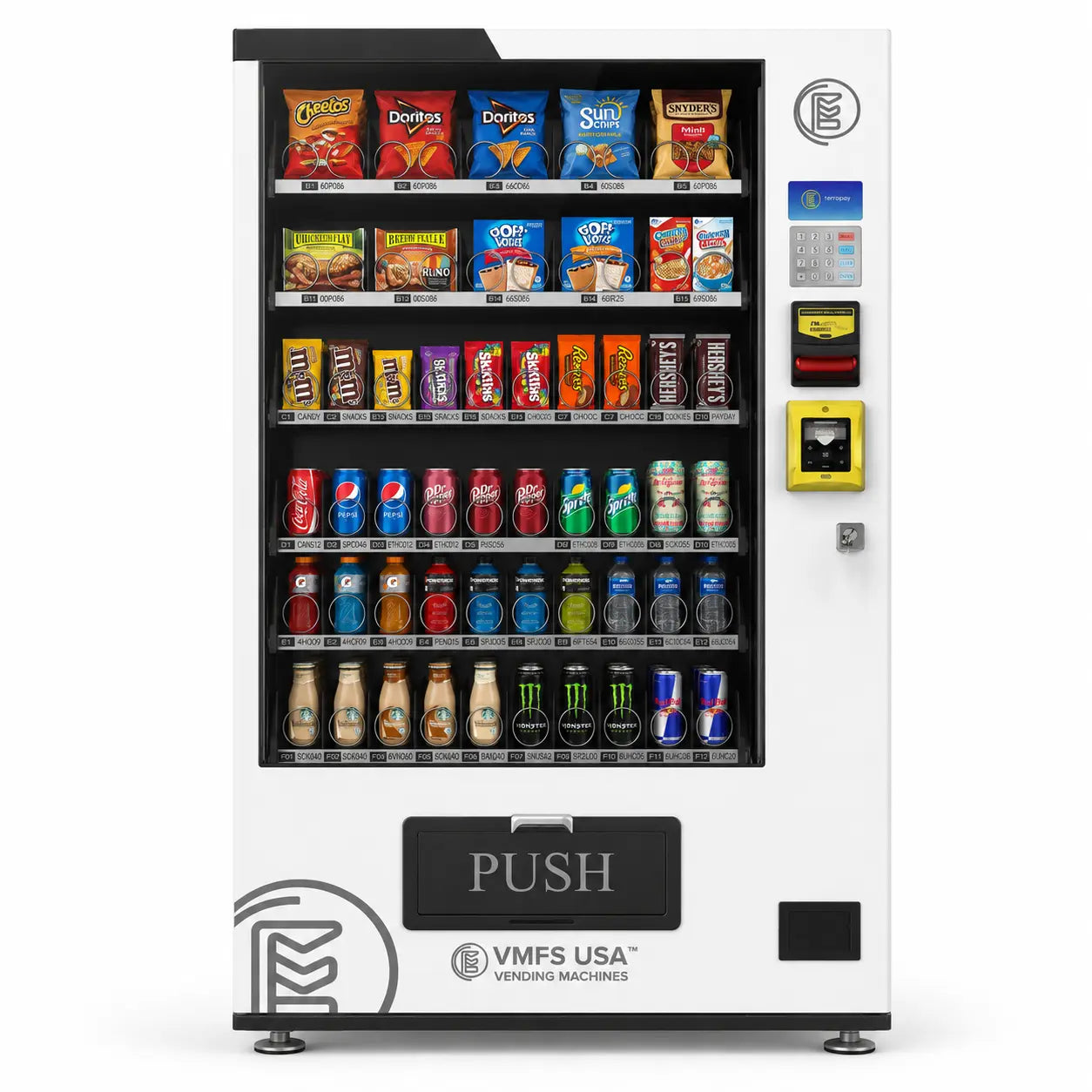
Beverages, fresh food and higher-ticket items lead the segment data, and those suit refrigerated open-door cabinets. The VMFS AI vending machines range covers that demand: the AI Grab & Go Cooler at $2,950, the AI Smart Combo at $3,950, the AI Smart Cooler at $4,950, and the AI Smart Fridge from $9,950 to $12,650 depending on configuration. Machines carry a 1-year parts warranty.
AI machines have running costs that basic machines do not. VMFS Cloud works with every VMFS machine; plans start at $7.99 per machine per month, with Advertising Cloud at $16 and AI Cloud at $39.99. The VMFS payment system page lists an AI recognition fee of $0.07 per completed transaction, plus $0.03 when weight sensors are enabled, before card processing. Build those into the per-machine model; the full picture is in our breakdown of AI vending machine cost.
Three habits position an operator to benefit from the trends above without betting on them early. Choose a platform that receives regular software updates, so new pricing and routing features arrive without new hardware. Keep clean sales and inventory data from day one, because that history is what any future forecasting or pricing feature learns from. And expand into higher-value or novel categories only after a proven format works at a location, a sequence covered in the AI vending machine buyer's guide. If a site has enough traffic for open shelves and staff-free checkout, compare the options in AI vending machine vs micro market before committing.
Run the Numbers for Your Location
Market forecasts set the context. Your location's traffic and costs decide the return.
Open the ROI Calculator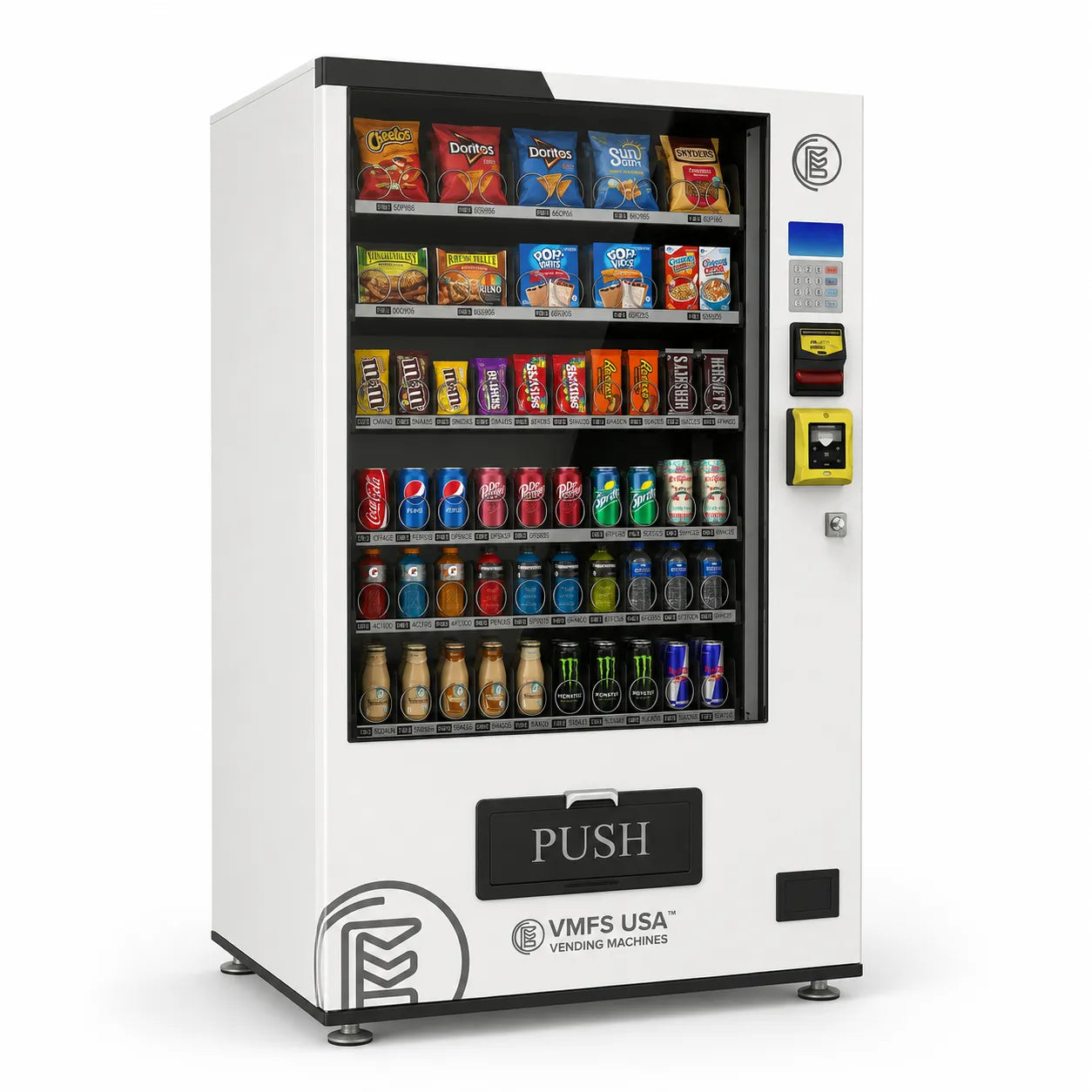
Share:
Smart Vending Machine vs. AI Vending Machine: What's the Real Difference
AI Vending Machine Parts Breakdown - Every Component Explained