


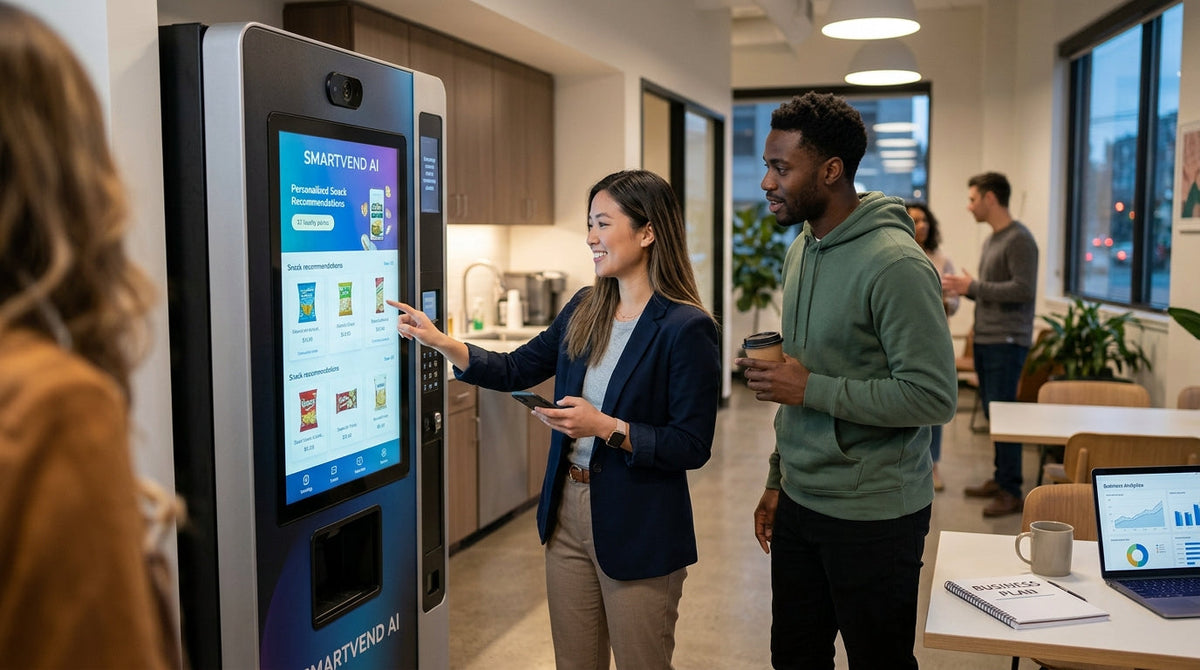


Design the perfect vending solution for your location and customers.

Join the VMFS newsletter and step into a thriving network dedicated to collective success.
One signup. Endless possibilities.
An AI vending machine business plan documents the machine acquisition strategy, target locations, financial projections, and operational model an operator will follow to reach profitability, and it serves two distinct purposes: securing financing and forcing the operator to validate assumptions before spending capital. Lenders and equipment financiers evaluate this document specifically for realistic revenue assumptions, a clear location strategy, and evidence the applicant understands per-machine unit economics — not just enthusiasm for the category. A plan built on vague projections gets rejected by financing partners just as often as it fails to actually guide the business once machines are placed.
This template breaks down every section a complete AI vending machine business plan needs, with the specific data points each section should contain and how to structure financial projections that hold up under lender scrutiny.
Table of Contents
A complete AI vending machine business plan contains seven core sections, each answering a specific question a lender, investor, or the operator themselves needs resolved before capital moves. The table below maps each section to its purpose and typical length in a finished document.
| Section | Answers | Typical Length |
|---|---|---|
| Executive summary | What is this business, in brief? | Half a page to one page |
| Market analysis | Where and why will this work? | 1–2 pages |
| Machine and product strategy | What equipment and inventory? | 1 page |
| Operations plan | Who runs day-to-day work? | 1 page |
| Financial projections | What are the numbers? | 2–3 pages with tables |
| Funding request | How much capital, spent on what? | Half a page |
| Risk assessment | What could go wrong, and then what? | Half a page |
The executive summary states the business concept, the number and type of machines planned, the target locations, and the funding amount requested, all within a single page written last even though it appears first — because it should distill conclusions the rest of the plan has already reached rather than introduce new claims. A strong summary names the specific machine format (grab-and-go, smart cooler, combo unit), the location category being targeted, and the headline financial projection, giving a reader the full shape of the business before they reach a single supporting table. Background on what distinguishes the machine category itself belongs here in brief, with detail deferred to What Is an AI Vending Machine.
This section should cite the broader intelligent vending machine market trajectory to demonstrate the operator understands category-level demand, not just a single location opportunity — data and sourcing for this is covered in AI Vending Machine Market Size. Lenders read this section to confirm the operator isn't entering a shrinking category, so citing the CAGR and growth drivers directly strengthens the plan's credibility.
Name the specific location categories being pursued — offices, gyms, residential buildings — along with the foot traffic thresholds that qualify a site as viable, since a vague "high-traffic areas" statement signals the operator hasn't actually done the site-scoring work. A detailed framework for this analysis, including traffic benchmarks, is available in AI Vending Machine Location Data and Case Study: Finding the Sweet Spot.
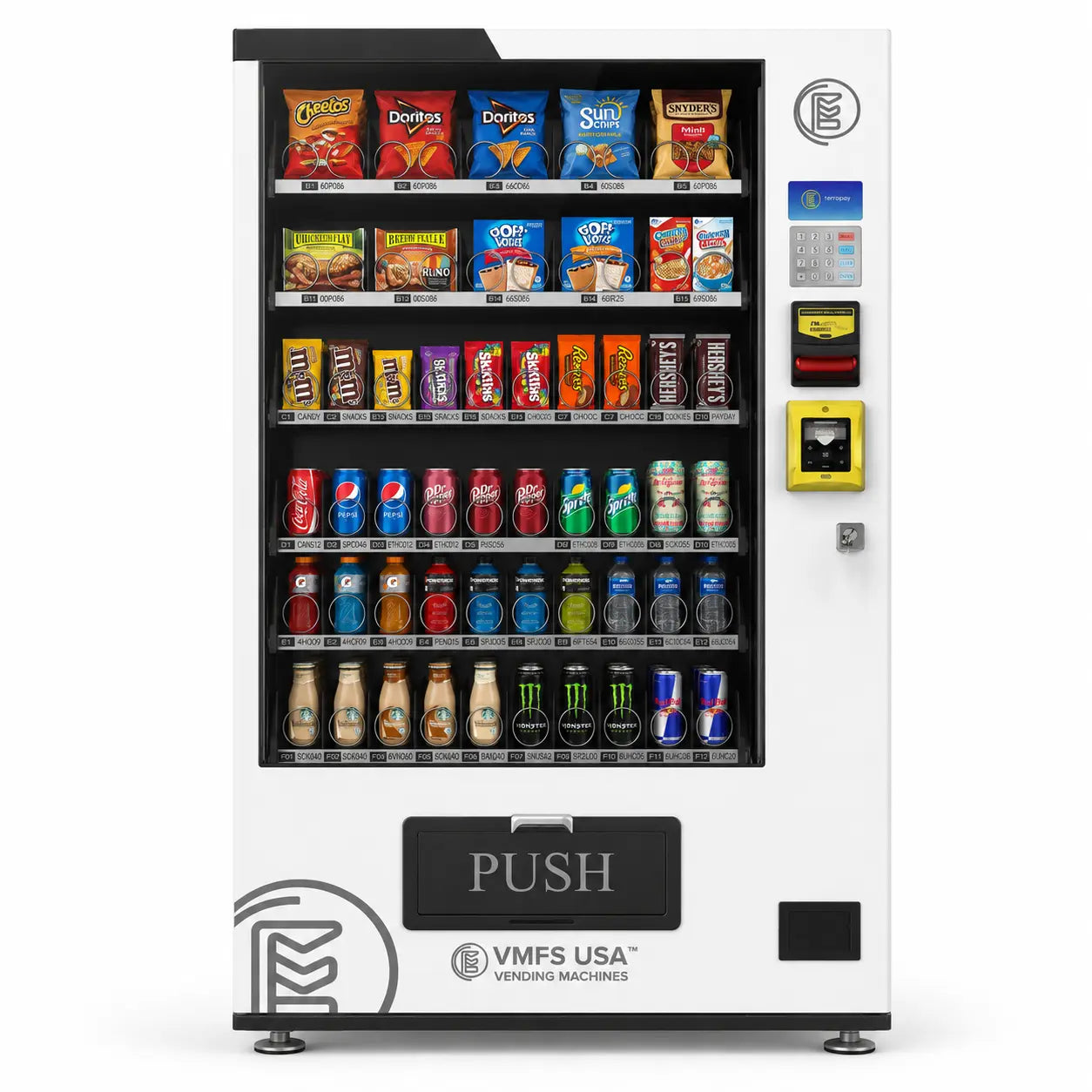
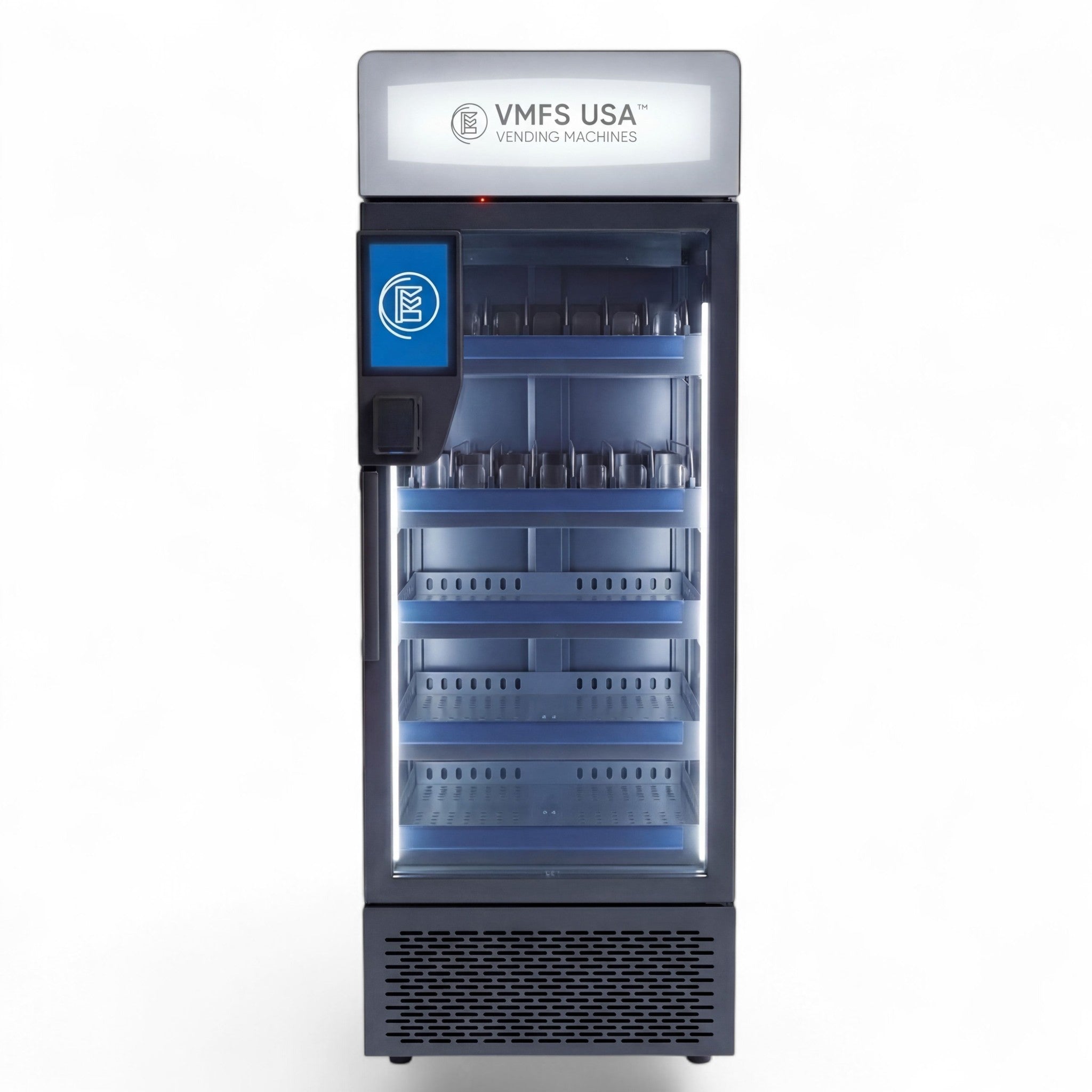
This section specifies exactly which machine formats will be deployed and why they match the target locations named in the market analysis — a combo unit for mixed-demand office settings, a smart cooler for perishable-heavy residential placements, or an open-shelf grab-and-go unit for speed-focused gym environments. VMFS USA's AI Grab-and-Go Vending Machine collection, AI Smart Cooler Vending Machine, Smart Fridge Vending Machine, and AI Smart Cooler Combo Vending Machine map directly to these use cases, and citing the specific model and spec sheet in the plan shows a financier the equipment decision is already made, not still theoretical. A full comparison across formats for building this section is in the Complete Buyer's Guide 2026.
The operations section describes who restocks machines, how frequently, and what systems flag when a visit is needed — details that demonstrate the business can actually run day to day rather than just generate a favorable spreadsheet. Because AI vending relies on remote monitoring rather than a fixed restocking schedule, this section should explain how dashboard alerts translate into restocking action, referencing the operational mechanics covered in How AI-Powered Vending Machines Optimize Sales and How AI Vending Machines Work. It should also state the point at which the plan anticipates hiring restocking help, which most operators peg to the machine count and route economics detailed in How Many AI Vending Machines You Need to Run a Full-Time Business.
Every financial projection section should open with a specific startup cost table covering machine purchase, initial inventory, licensing, insurance, and installation — not a single lump-sum estimate, since itemization is what lenders scan for first. A full itemized breakdown to draw from is in AI Vending Machines: Cost.
| Line Item | Year 1 | Notes for the Plan |
|---|---|---|
| Machine acquisition (3 units) | $18,000 – $30,000 | Cite specific model pricing |
| Gross revenue (3 machines) | $36,000 – $50,000 | Base on comparable location data |
| Commission and processing fees | 10% – 20% of gross | State assumed rate explicitly |
| Net profit (3 machines) | $7,200 – $14,400 | Show monthly and annual view |
State the specific month each machine is projected to reach breakeven, not just an aggregate business-level figure, since per-machine payback is what a financier uses to sanity-check the aggressiveness of the plan's assumptions. The underlying payback math, including pre-made versus custom-build timelines, is detailed in AI Vending Machine Payback: Pre-Made vs. Custom Build and the ROI mechanics behind it in AI Vending Machine ROI.
State the exact capital amount requested and break it into specific use-of-funds categories — machine purchase, inventory, working capital reserve — rather than a single figure, since a broken-down request signals the operator has planned spending rather than asking for a buffer against uncertainty. If financing partially rather than fully covers the machine cost, name the financing structure being pursued (lease, revenue-share, or loan) so the reader understands the full capital stack, not just the equity or cash portion.
A credible risk section names specific, plausible risks — a location terminating the placement agreement, a slower-than-projected ramp period, an equipment failure requiring service — and states a direct mitigation for each, rather than a generic disclaimer paragraph. Comparing the AI machine's risk profile against a traditional machine's is one useful frame here, covered in Traditional vs. AI Vending Machines and Is the Upgrade Worth It. Payment processing risk specific to AI-classified machines is worth a direct mention too, detailed in How Card Processing Works and Why AI Machines Have Different Rates.
Formal Business Plan
Required for most bank loans and equipment financing applications.
Forces detailed financial modeling before capital is committed.
Takes longer to produce and requires more supporting research.
Lean One-Page Plan
Faster to draft and easier to revise as the business evolves.
Sufficient for self-funded, single-machine launches with no external financing.
Rarely accepted alone by banks or equipment lenders for larger requests.
Plans that show only gross sales projections, without a clear deduction for commission, processing fees, and restocking cost, read as either naive or evasive to an experienced lender, and get flagged for revision before any funding conversation continues.
A plan built entirely around hypothetical, unnamed locations signals the operator hasn't started the actual placement negotiation process, which weakens the entire document regardless of how strong the financial modeling looks on paper. Naming at least one letter of intent or confirmed location, even if others remain in progress, materially strengthens the plan.
A plan proposing electronics or high-value vending without addressing loss prevention specifically reads as incomplete to a lender familiar with the category, since higher-value inventory carries materially different risk than snacks or beverages — a distinction covered in Electronics Vending Machines Driving AI Smart Cities & Sustainability. Terminology precision also matters — conflating "smart" and "AI" vending in a plan can undercut credibility with a technically informed reader, a distinction clarified in Smart Vending Machine vs. AI Vending Machine. Component-level detail on the equipment being financed, useful for the machine strategy section, is available in AI Vending Machine Parts Breakdown.
Build Your Equipment Section With Real Specs
Compare AI vending machine formats to finalize the machine strategy section of your plan.
Explore AI Vending Machines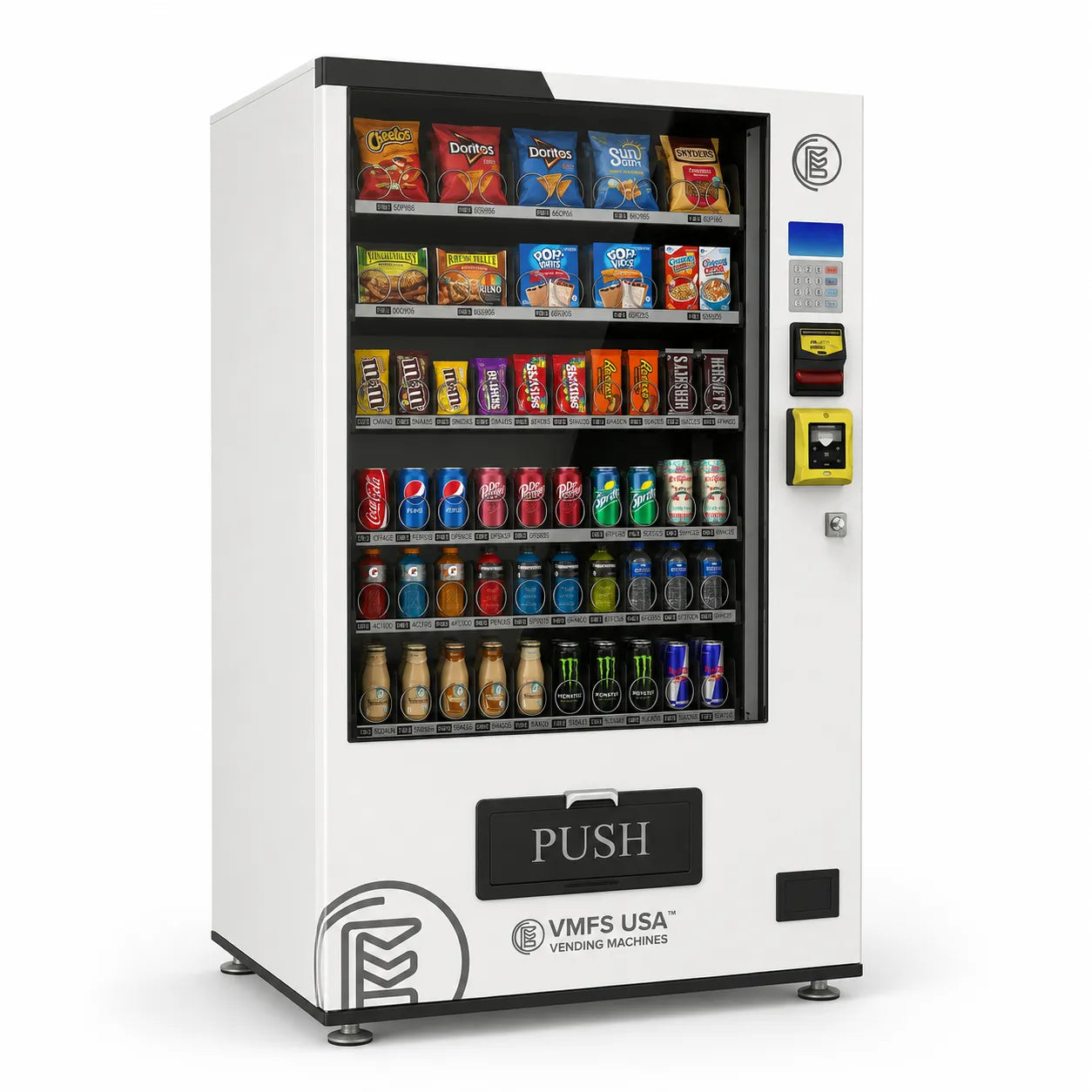
Share:
AI Vending Machine Software: How It Works and What to Look For
AI Vending Machine Placement Contract Template For Operators