




Design the perfect vending solution for your location and customers.

Join the VMFS newsletter and step into a thriving network dedicated to collective success.
One signup. Endless possibilities.
In February 2026, a single graded Pikachu card sold at auction for $16,492,000 — a Guinness World Record for any trading card ever sold. Three months earlier, The Pokémon Company International closed a fiscal year with $3.34 billion in net sales, up 29.3% year over year, more than quadrupling its revenue in five years. And across U.S. retail, the number of official trading card vending machines has grown from 65 in 2023 to nearly 1,900 today.
None of that is a coincidence. Trading cards have moved from hobby-store shelf to investable asset class faster than almost any other collectible category in modern retail history, and the infrastructure built to sell them, vending machines specifically, has had to scale just as fast to keep up. This guide breaks down the data behind that shift: the financials, the official vending expansion, the security problem driving demand toward automated retail, and a real, numbers-backed case study of what happens when a small retailer puts a single trading card vending machine in its storefront.
The Pokémon Company International's own financial filings, released annually through Japan's official corporate gazette, show a business scaling faster with each fiscal year:
| Fiscal Year (ends Feb) | Net Sales | YoY Growth | Source |
|---|---|---|---|
| FY2024 | $1.9B | +15% | PocketGamer.biz |
| FY2025 | $2.9B | +38.1% | Automaton West |
| FY2026 | $3.34B | +29.3% | Yahoo Sports / company filing |
As recently as 2021, the company's annual revenue sat around $750 million. Five years later, it has more than quadrupled — and notably, the FY2025 jump happened in a year with no major mainline video game release, driven almost entirely by physical card sales and the October 2024 launch of the mobile app Pokémon TCG Pocket, which crossed $1 billion in player spending within seven months of launch.
The physical side of the business is being pushed just as hard. The company produced 10.2 billion cards in fiscal 2024–2025 alone, pushing lifetime production past 75 billion cards. To keep pace with demand, the company is now building a 1.27-million-square-foot printing facility (full production isn't expected until late 2028) and acquired U.S. distributor Excell Brands to tighten control over allocation and pricing.
Market-size estimates for the global trading card game industry vary significantly by research firm, largely because definitions differ — some include digital/mobile spend and licensing revenue, others count only physical card sales. For editorial purposes, here's a range of recent third-party estimates:
| Research Firm | 2026 Estimate | Forecast | CAGR |
|---|---|---|---|
| Global Market Insights | $9.2B | $16.9B by 2035 | 6.9% |
| Mordor Intelligence | $15.11B | $24.36B by 2031 | 10.03% |
| MarkWide Research | $14.7B | $30.89B by 2035 | 8.6% |
| Sports card segment (Athlon Sports) | $1.3B | $2.99B by 2035 | ~9% |
Figures are third-party analyst estimates cited for context; methodologies differ across firms and are not directly comparable. What's consistent across every estimate: mid-to-high single-digit or double-digit CAGR growth through the early 2030s, with North America and Asia-Pacific identified as the two largest regional markets.
The clearest, most concrete evidence of the shift toward automated retail is the growth of The Pokémon Company International's own vending machine network, tracked independently by the hobby outlet PokeBeach:
| Period | Official Machines | States Covered |
|---|---|---|
| 2017–2023 | Never exceeded 65 | Limited pilot |
| May 2025 | 1,473 | 25 |
| May 2026 | 1,871 (+27% YoY) | 28 |
These official units — placed inside chains like Kroger, Safeway, Albertsons, and H-E-B — sell sealed product at guaranteed MSRP with cashless-only payment. But even at this scale, turnover is high: PokeBeach's tracking shows roughly 1 in 7 machines were removed or relocated in the past year alone, and demand consistently outpaces supply, particularly in the 48–72 hours after a major set release.
This combination — real demand, chronic undersupply, and a rising security cost for staffed retail — is precisely the gap independent, purpose-built vending hardware has moved into.
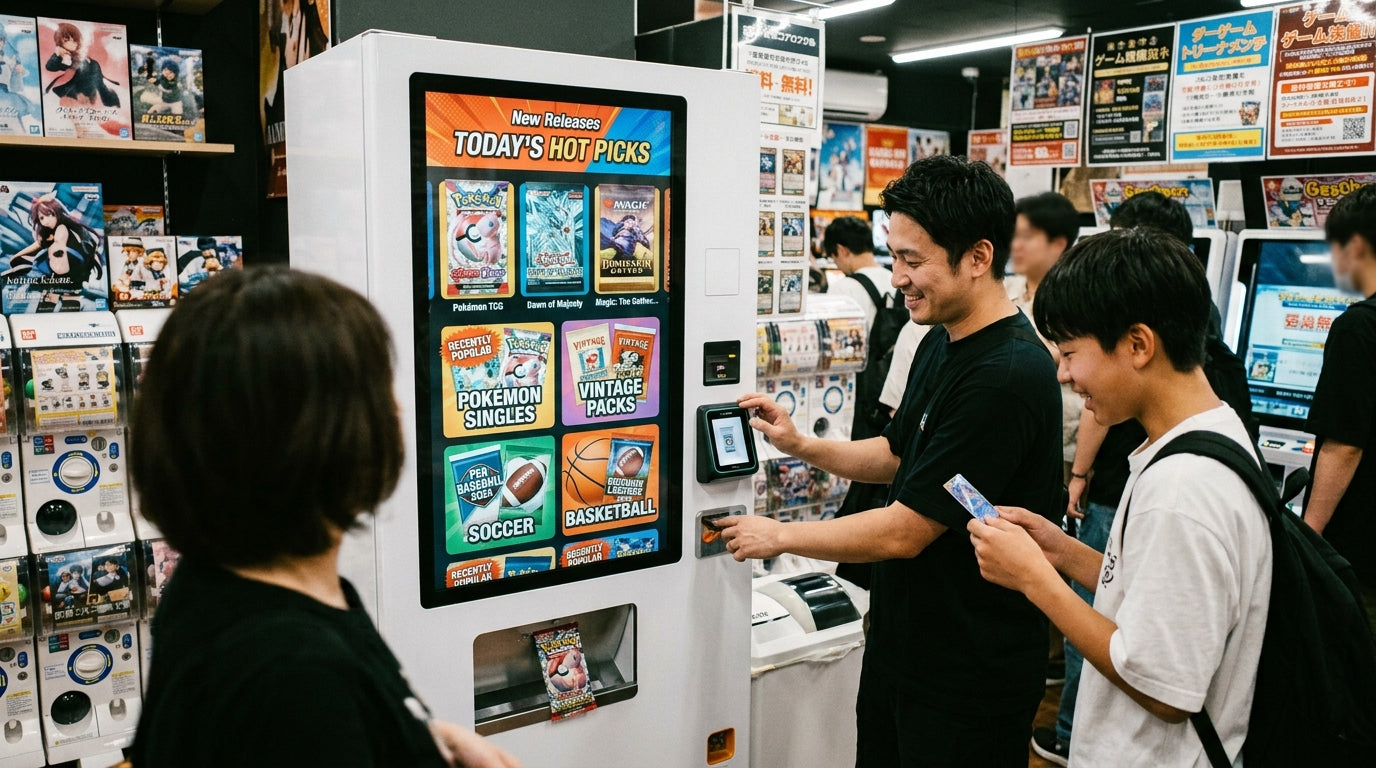
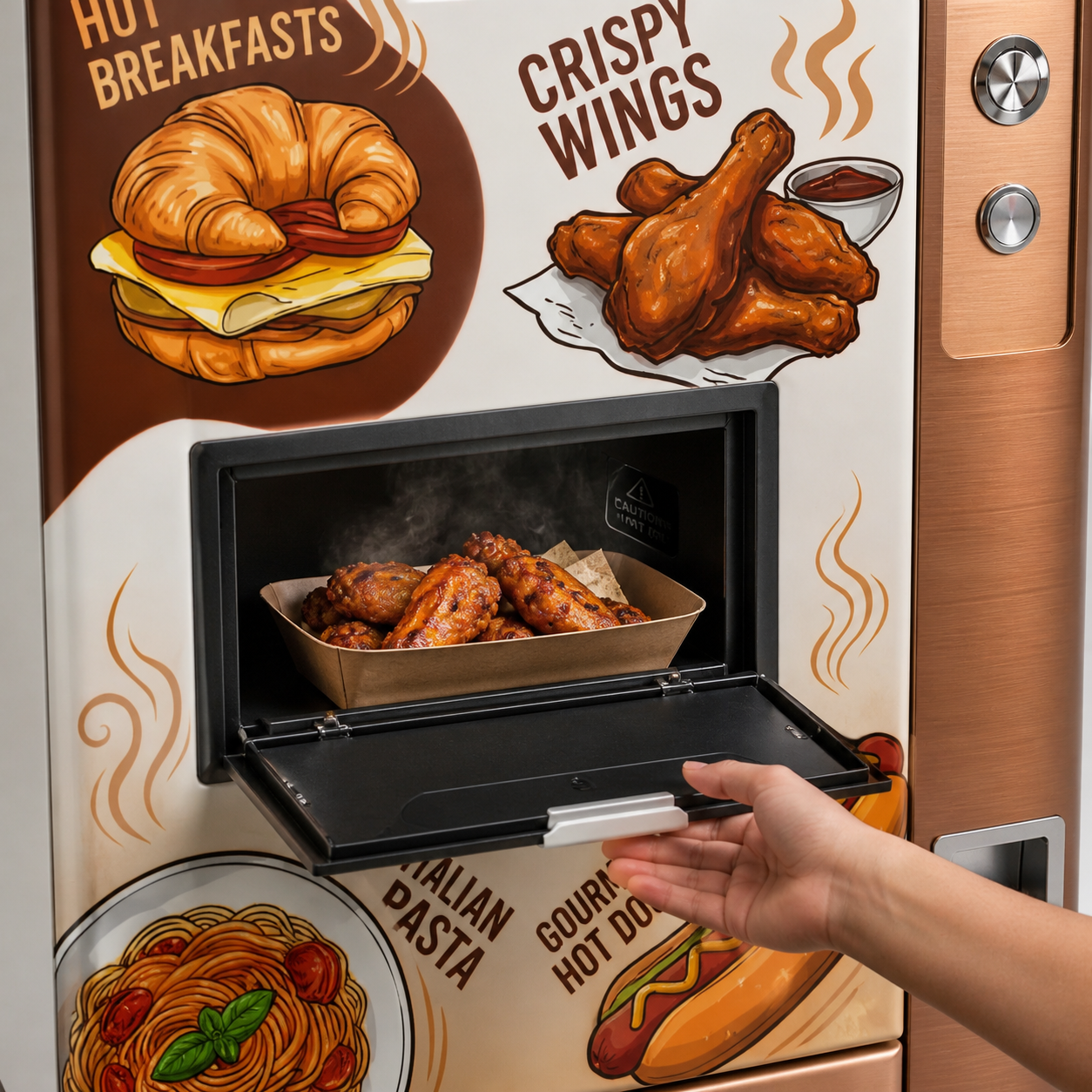
Collectible product doesn't behave like snacks or drinks, and generic vending hardware isn't built for it. The engineering differences matter enough that they've become their own equipment category, with purpose-built units such as a Pokémon card vending machine designed around booster packs, tins, and graded cards:
| Feature | Standard Snack Machine | Trading Card Vending Machine |
|---|---|---|
| Coil sizing | Generic width | Precision-sized to booster packs, tins, and ETBs |
| Product protection | Free-fall drop | Secure/elevator dispensing to protect pack and slab condition |
| Inventory security | Single locked cabinet | Lockable, zoned compartments for high-value singles and graded slabs |
| Payment | Cash + card optional | Cashless-only standard (tap-to-pay, EMV, mobile wallets) |
| Presentation | Utilitarian | Showcase-grade, matched to collector expectations |
Portland, OR · Independent hobby retailer
The Challenge
A small hobby-shop owner wanted a way to capture after-hours card-collector demand without extending staffed hours. The shop's front window already attracted late-night browsing — but those people came back during business hours, if at all.
The Solution
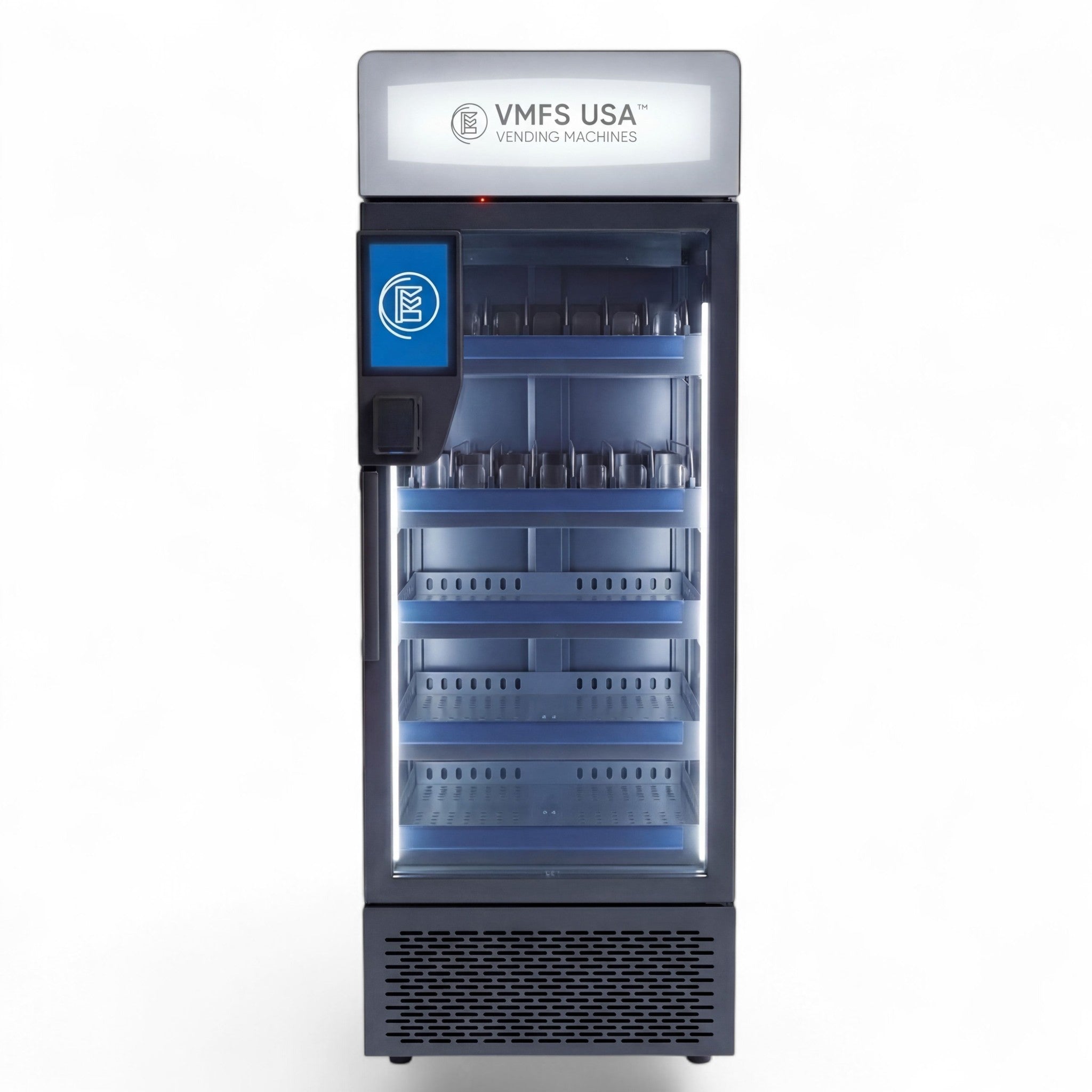
The owner-operator placed a Trading Card Vending Machine in the storefront vestibule, accessible 24/7 with cashless payment. VMFS USA's secure-dispensing hardware kept the high-value singles and sealed packs protected. The machine restocked from existing inventory.
The Result
Foot traffic during business hours rose 2.1× because the after-hours machine became a shop-discovery tool. The operator added a second-unit option to dispense graded slabs by month four. Weekly machine revenue tracks at $640 — pure incremental, with no labor cost.
"I tried to run a Saturday-night card event for years. The machine does it every single night, without me being there. It changed the whole shop."
— Owner-operator
Deployment Detail
| Operator | Owner-operator (single machine) |
| Site type | Independent hobby retail storefront |
| Equipment | 1× Trading Card Vending Machine |
| Add-ons | Secure-dispensing hardware, cashless-only, lockable inventory zones |
| Time to live | Order to operating: 18 days |
Beyond this single-shop case study, industry reporting on independent card vending operators points to a consistent pattern:
| Question | Answer |
|---|---|
| Do operators need a license from the publisher? | No. Under the First Sale Doctrine, genuine product purchased from an authorized distributor can be legally resold without permission. |
| Can machines use official logos or characters? | No, not without a direct licensing agreement. Most operators use neutral branding. |
| Are there pricing restrictions? | MSRP is generally not legally enforceable, but distributors often enforce Minimum Advertised Price (MAP) policies contractually. |
| Is mystery/blind-box vending a legal risk? | It can draw scrutiny in some venues as gambling-adjacent; a mystery-box machine at the Pentagon was reportedly removed within days under scrutiny in 2025. |
2026 marks Pokémon's 30th anniversary, and the product pipeline behind it is being described industry-wide as the strongest in the franchise's 30-year history. With a new 1.27-million-square-foot factory not reaching full production until late 2028, the supply gap that's fueled both the official and independent vending expansion is likely to persist — and widen — through the anniversary window. For an operator-level breakdown of machine pricing, ROI modeling, and launch timelines, see VMFS USA's full 2026 operator guide.
Yes. Under the First Sale Doctrine of U.S. trademark law, an operator who purchases genuine, U.S.-market trading card products from an authorized distributor can legally resell them without permission from the publisher. Operators do need to avoid using trademarked logos or characters on machine branding, and should source exclusively from authorized distributors.
Trading card products are lighter, thinner, and more irregularly sized than snacks, and collectors expect near-mint presentation on every vend. Purpose-built card vending hardware uses coil sizing matched to booster packs, protective dispensing to avoid denting or creasing, and secure, lockable compartments for high-value tins and graded slabs — none of which a generic snack machine is built to handle.
Returns vary heavily by placement and inventory management, but well-placed machines with disciplined restocking have reported payback windows in the range of four to seven months. Location quality and staying stocked around major set releases are consistently the two biggest factors separating strong performers from underperformers.
Demand has consistently outpaced supply since the network's rapid expansion began in 2023, especially in the 48–72 hours following a major set release. Professional resellers have also been documented emptying machines within minutes of a restock, which is part of why independent operators have found room to grow alongside the official network rather than compete directly with it.
See the Trading Card Vending Machine Behind This Case Study
Secure dispensing, cashless payment, and graded-slab compatibility, built for exactly this kind of deployment and sold alongside our full lineup of vending machines for sale.
View the Machine → Build a Custom Pokemon Vending Machine →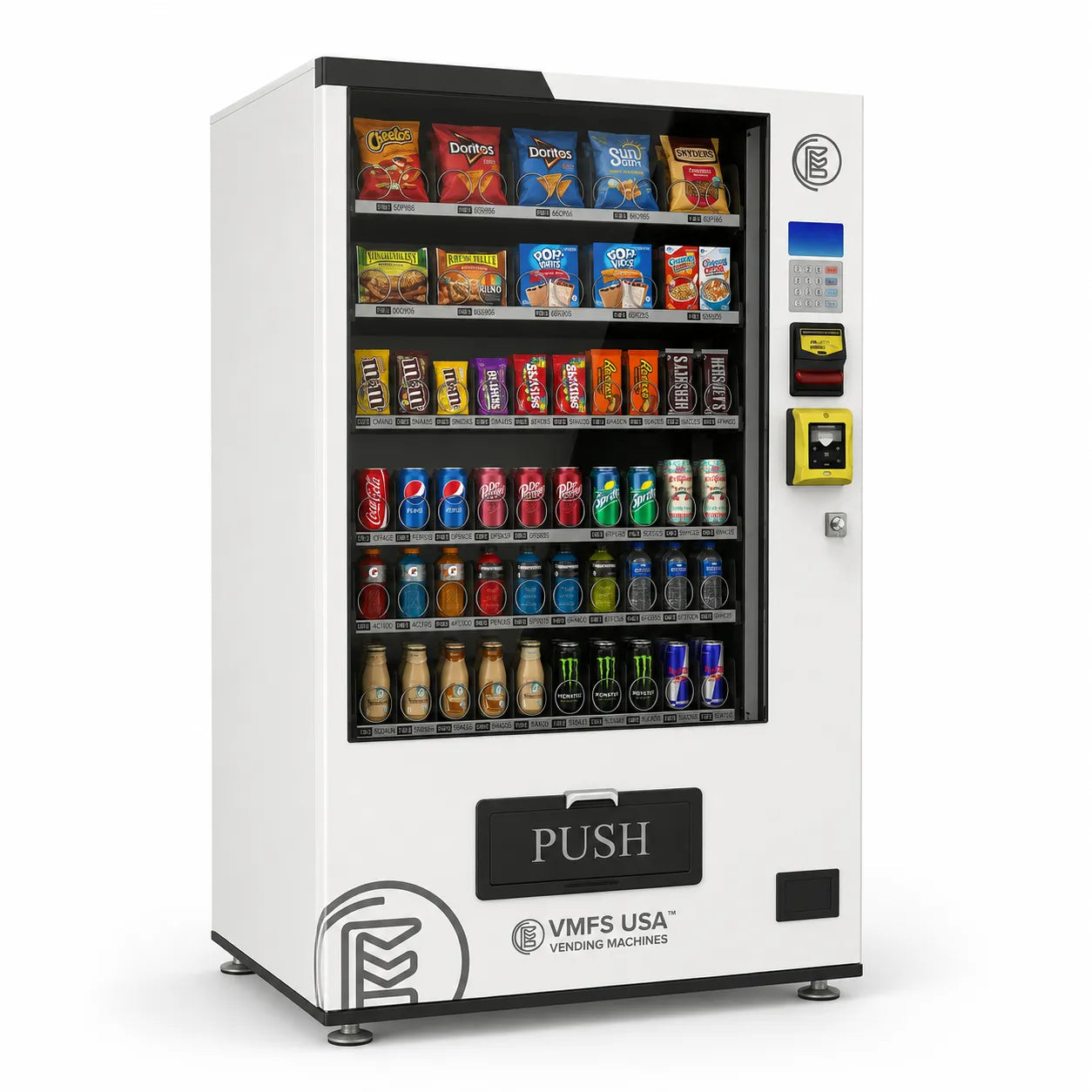
Share:
How Many AI Vending Machines Do You Need to Run a Full-Time Business
Smart Vending Machine vs. AI Vending Machine: What's the Real Difference