




Design the perfect vending solution for your location and customers.

Join the VMFS newsletter and step into a thriving network dedicated to collective success.
One signup. Endless possibilities.
A laundry vending machine earns between $200 and $1,700 gross per month depending on location type, machine size, product mix, and payment hardware. That range is not vague. Every variable that pushes a result toward the low end or the high end is knowable before you commit any capital.
This is the honest financial breakdown. Real revenue benchmarks by location type, the full cost structure behind owning a laundry vending machine, how long payback takes at a confirmed placement, and the three decisions that determine where your result lands inside that range.
A laundry vending machine at a medium-traffic laundromat generates $400 to $900 in gross monthly revenue. At a high-traffic urban laundromat or university facility, that figure reaches $1,200 to $1,700. At a hotel laundry room or apartment complex with 50 to 100 residents, the range is $200 to $500 per month, with higher per-unit margin offsetting lower transaction volume.
These are not theoretical maximums. They reflect transaction math at real locations: daily customers multiplied by average transaction value multiplied by 30, minus cost of goods sold. At a 70% gross margin on laundry vending supplies, a machine generating $800 per month gross produces $560 in gross profit before restocking labor and any financing costs.
The U.S. laundromat industry generates approximately $6.8 billion in annual revenue across roughly 18,375 locations, according to 2025 industry data. Vending revenue represents a consistent ancillary income layer at the majority of those locations. The Coin Laundry Association reports that 90% of laundromats operate at least one vending machine , which confirms that laundry vending machines are not an optional add-on. They are a standard revenue component in the laundry business.
Location type is the single most important variable in laundry vending machine revenue. The same machine, stocked identically, will earn three to four times as much at a high-traffic laundromat as at a small apartment complex. Understanding the realistic range for your specific location type is the first step in any honest ROI calculation.
| Location Type | Est. Daily Laundry Users | Avg. Transaction Value | Est. Monthly Gross Revenue | Est. Monthly Gross Profit (70% margin) |
|---|---|---|---|---|
| High-traffic urban laundromat | 150 to 250 | $1.50 to $2.00 | $1,100 to $1,700 | $770 to $1,190 |
| Mid-size suburban laundromat | 60 to 120 | $1.50 to $1.75 | $400 to $900 | $280 to $630 |
| University or dormitory facility | 80 to 150 | $1.50 to $2.00 | $600 to $1,200 | $420 to $840 |
| Hotel or motel laundry room | 20 to 60 | $2.00 to $3.00 | $200 to $540 | $140 to $378 |
| Apartment complex (50 to 150 units) | 20 to 50 | $1.75 to $2.25 | $175 to $450 | $123 to $315 |
Hotels generate the highest per-transaction value because customers are captive and price-resistant. They are not comparing options. The nearest alternative requires leaving the building. That dynamic supports vend prices 25% to 40% above what the same laundry vending machine supplies earn at a laundromat.
University facilities earn strong revenue on volume. Student populations have predictable laundry habits, high cashless payment adoption, and consistent demand across the academic year. The revenue drop during summer and winter breaks is a real seasonal variable that university placements require planning around before you commit capital to the location.
Revenue numbers without cost context are not useful. Here is the complete cost picture for a laundry vending machine investment across every expense category.
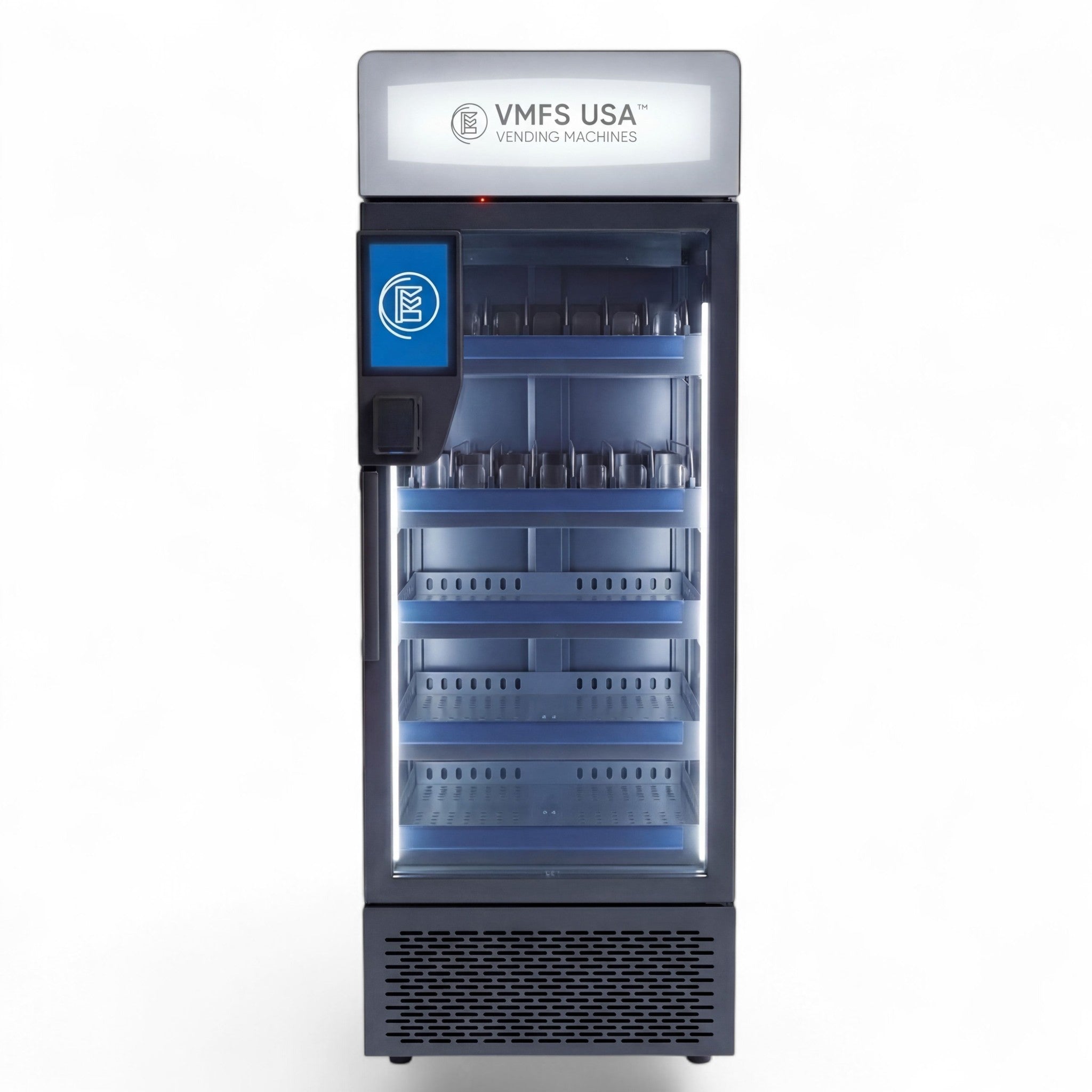
A compact mechanical coin-slide laundry detergent vending machine with 2 to 4 columns costs $300 to $800 new , the standard configuration for hotel and apartment settings. An electronic drop-shelf laundry supply machine with bill acceptor and 20 to 35 selection capacity costs $1,200 to $2,500 new. A full glass-front laundry vending machine with cashless payment hardware and remote telemetry runs $2,500 to $4,500.
Used equipment reduces upfront cost by 30% to 50% but comes without warranty coverage and with an unknown service history. For a first machine at a confirmed location, new equipment with a parts warranty is the lower-risk path. The cost difference between new and used is typically recovered in avoided repair and downtime costs within the first 18 months of operation.
Operators who need flexibility in machine configuration, branded exterior, or non-standard product capability should explore what a custom vending machine setup makes possible before defaulting to a standard catalog unit. Custom configurations are not always more expensive when you account for the additional revenue they unlock at specific location types and the placement advantage that branded equipment creates.
Initial stocking for a 5-column machine with one case of each core laundry vending supply category runs $120 to $200. This covers roughly 2 to 3 weeks of inventory at a medium-traffic location. Budget $150 as a starting figure and adjust after your first restock cycle when you have actual transaction data by column.
Monthly operating costs for a laundry vending machine break down into three categories: product restocking, labor for restock and maintenance visits, and power consumption. At a medium-traffic location generating $600 per month gross:
| Cost Item | Monthly Estimate |
|---|---|
| Product restocking (cost of goods at 30% of gross) | $180 |
| Restock and maintenance labor (owner-operated) | $0 to $50 |
| Power consumption (electronic units) | $5 to $15 |
| Location fee (if applicable) | $0 to $75 |
| Total monthly operating cost | $185 to $320 |
Net monthly profit at this location: $600 gross minus $185 to $320 in operating costs equals $280 to $415 per month. That is before any financing payment if the machine was purchased on credit rather than cash.
Payback period on a laundry vending machine at a confirmed, traffic-validated location runs 3 to 24 months depending on machine cost and monthly net revenue. Here is what that looks like across three realistic scenarios.
| Scenario | Machine Cost | Monthly Net Profit | Payback Period | Annual ROI After Payback |
|---|---|---|---|---|
| Compact mechanical unit, hotel laundry room | $600 | $140 to $220 | 3 to 5 months | 280% to 440% |
| Electronic drop-shelf unit, mid-size laundromat | $1,800 | $260 to $415 | 5 to 8 months | 173% to 277% |
| Glass-front unit with cashless, high-traffic laundromat | $3,500 | $560 to $900 | 4 to 7 months | 192% to 309% |
These returns compare favorably against the 20% to 35% annual ROI benchmark for the laundromat industry overall cited by the Coin Laundry Association. Laundry vending machines as standalone assets consistently outperform that benchmark when placed at validated locations because their cost structure is simpler: no payroll, no perishable inventory risk, no customer service overhead, and they operate 24 hours a day without supervision.
The payback calculation shifts meaningfully when you finance rather than pay cash. A $3,500 machine financed over 36 months at standard equipment rates carries a monthly payment of roughly $105 to $120. At a location generating $560 net monthly profit, the machine is cash-flow positive from month one and generates $440 to $455 after the financing payment clears. Once the machine is paid off, that full $560 goes directly to profit.
For operators who want to understand all available funding paths before committing, the vending machine financing options page covers equipment financing, SBA microloans, and business credit lines with qualification requirements and rate comparisons. Getting the financing structure right before purchase is what keeps the machine cash-flow positive from the first month rather than the fifth.
Every laundry vending machine investment produces a result somewhere between the low and high end of the revenue range for its location type. Three decisions control where that result actually lands.
The most expensive mistake in laundry vending is purchasing a machine for a location that cannot support it financially. A location with fewer than 30 to 40 daily laundry users cannot generate the transaction volume needed for a meaningful return on a $1,800 to $3,500 machine. The payback math breaks down below that threshold regardless of how well everything else is managed.
Validate traffic before you buy. Spend two hours at the target location on a weekday and a weekend. Count actual laundry users. Ask the facility manager for an honest estimate. If you cannot confirm at least 40 daily users with confidence, the investment is premature at that location. A compact mechanical unit at $400 to $600 is the appropriate test at low-traffic locations before committing to larger equipment.
For operators who want help identifying and securing confirmed, high-traffic placements rather than prospecting on their own, VPlaced works with operators to match machines to validated locations.
Cashless payment capability is no longer optional at any location where customers skew under 40. Industry data from 2025 shows that cashless payment availability increases vending transaction values by 18% to 30% and eliminates the most common reason customers walk past a machine: not having exact change. The hardware upgrade costs $200 to $500 and pays for itself within 2 to 3 months at a medium-traffic location.
Hotel and apartment complex placements require cashless as a baseline, not an upgrade. Guests and residents are not carrying quarters. Any laundry vending machine placed in those environments without card and mobile payment capability forfeits a meaningful percentage of potential transactions every day it operates with coin-only hardware.
A machine stocked using column-slot economics earns 40% to 60% more than the same machine stocked by habit. The complete framework for allocating columns by turn rate and margin is covered in the laundry vending machine supplies guide. The short version: run two detergent columns at high-traffic locations before adding a second category, never skip dryer sheets because 80% gross margin justifies every slot they occupy, and treat laundry vending supplies like laundry bags as pure-margin products that earn without any brand competition.
Laundry vending machines are among the most straightforward revenue assets in the broader vending category because the demand is captive and the purchase is functional. Customers at a laundromat who forgot their detergent are not comparing options across three different machines. They are buying what is available. That dynamic makes the category lower-friction and more predictable than discretionary vending categories like snacks or beverages.
For operators already running a snack and beverage route, adding a laundry vending machine at the same laundromat locations is additive revenue with no new fixed cost. The restocking visit is already scheduled. The relationship with the location is already established. The incremental revenue drops directly to profit after product costs.
Operators who want machines placed in laundromats, hotels, apartment complexes, or university facilities without sourcing locations independently can work with VPlaced to handle the placement logistics. For operators building a multi-machine route with custom branding and flexible product configurations, specialty vending machines offer configurations designed specifically for laundry supply applications in multi-location route contexts.
Operators who are new to the category and want a complete picture of machine types, payment configurations, and placement options before making any investment should start with the full laundry vending machine overview on the product page, which covers every machine type with specifications, pricing ranges, and placement fit by location type.
The operators who consistently earn at the top of the revenue range for their location type share four habits that the average operator skips entirely.
They restock on transaction data, not on calendar. They check column-level counts before every restocking visit and fill only what sold, which prevents over-investing in slow-turning columns while under-serving fast-turning ones. They raise vend prices by $0.25 per product annually rather than holding the same price for multiple years. Customers at captive-demand locations accept incremental price increases with near-zero resistance. On a machine turning 10 transactions per day, that $0.25 increase adds $75 per month in revenue at zero additional cost.
They upgrade to cashless hardware as soon as the machine has paid for itself, and they treat the machine's physical condition as a revenue driver. A clean, well-labeled, well-lit machine placed at eye level in the highest-traffic area of the facility turns faster than an identical machine that is dusty, poorly positioned, or missing product signage. None of these are capital investments. They are operational habits available to any operator regardless of machine size or location.
For operators who want to go further with machine configuration, branding, or a fully customized setup for a specific location, a custom vending machine gives you control over every variable from exterior design to internal slot configuration to payment hardware , so every decision that affects revenue is yours to make and yours to optimize.
A laundry vending machine generates $140 to $900 in net monthly profit depending on location type, machine size, and product mix. At a medium-traffic laundromat, net monthly profit after product costs and operating expenses typically runs $280 to $415. At a high-traffic urban laundromat or university facility, net monthly profit reaches $560 to $900. Hotel and apartment placements generate $140 to $315 net, with higher per-unit margin offsetting lower transaction volume.
Payback period on a laundry vending machine at a confirmed, traffic-validated location runs 3 to 8 months depending on machine cost and location type. A compact mechanical unit at $600 placed in a hotel laundry room typically pays back in 3 to 5 months. An electronic unit at $1,800 placed at a mid-size laundromat pays back in 5 to 8 months. After payback, every dollar of net profit is pure return with no remaining asset cost to offset.
A laundry vending machine is one of the stronger small-business investments available at its price point when placed at a traffic-validated location. Annual ROI after payback ranges from 173% to 440% depending on machine type and location, compared to the 20% to 35% annual ROI benchmark for the laundromat industry cited by the Coin Laundry Association. The asset requires no payroll, carries minimal perishable inventory risk, and operates around the clock without supervision. The primary risk is location selection, which is fully controllable with proper traffic validation before purchase.
Location traffic volume is the single largest variable. A machine at a location with 100 daily users earns approximately 3 to 4 times more than the same machine at a location with 30 daily users. Cashless payment hardware is the second-biggest profit driver, increasing transaction rates by 18% to 30% at locations where customers do not carry coins. Product mix optimization is the third variable , a machine stocked using column-slot economics generates 40% to 60% more monthly revenue than one stocked by convenience or habit. All three are covered in detail in the laundry vending supplies guide.
Laundry vending machines work well in apartment buildings with 50 or more units sharing a laundry room. The demand is captive, in-building competition is zero, and the customer base is consistent and predictable. Revenue at apartment placements typically runs $175 to $450 gross per month, supporting a positive ROI on a compact to mid-size machine investment. Cashless payment hardware is essential at apartment placements because most residents do not carry coins for vending.
Annual ROI on a laundry vending machine after the initial payback period ranges from 173% at the low end to 440% at the high end depending on machine type and location. These figures represent net profit as a percentage of the original machine investment in the year following payback, at which point the machine carries no remaining cost to offset. ROI varies significantly by location type, traffic volume, and product mix, which is why location validation is the most consequential step in the entire investment process.
Share:
Laundry Vending Machine Supplies: What to Stock and What Sells
How Do AI Vending Machines Work? A Step by Step Guide and the Best Models