




Design the perfect vending solution for your location and customers.

Join the VMFS newsletter and step into a thriving network dedicated to collective success.
One signup. Endless possibilities.
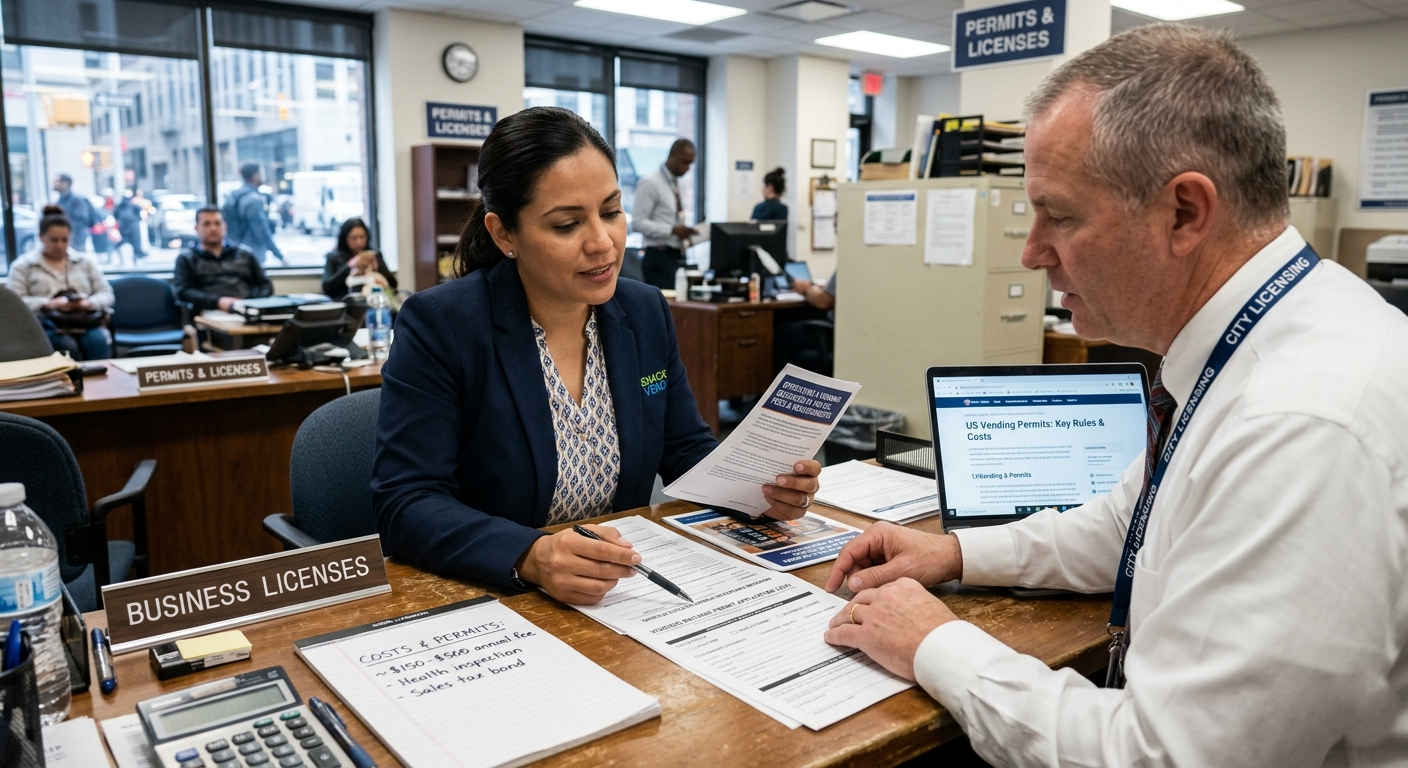
A vending machine permit in the United States is rarely a single license: most operators need a business license, a sales tax registration and, for food or drinks, a health department license, and each state, county or city sets its own fee. Official schedules show how modest the machine-level fees can be: Florida lists $21 a year for a vending machine license, Iowa charges $50 for the first machine and $10 for each additional one, and Wauwatosa, Wisconsin charges $25 per machine plus a one-time $200 pre-inspection.
This guide explains which licenses and permits apply to snack, drink, food and age-restricted machines, how to apply in the right order, which states require decals on each machine, the federal FDA, ADA and Tobacco 21 rules, and where to find VMFS USA's state-by-state permit guides.
Not legal advice: This guide summarizes official government sources for general information. Rules and fees change, and local ordinances differ, so confirm every requirement with the issuing agency or a licensed attorney before you place a machine.
Yes. If you place a machine on someone else's property and collect money from customers, you are running a business, and almost every jurisdiction expects you to be registered, licensed locally and set up to collect sales tax. Owning a machine for personal use in your own home is different, but the moment a machine earns revenue in a workplace, store or public space, you are a vending operator in the eyes of the state and the city.
The U.S. Small Business Administration explains the structure clearly: most small businesses need a combination of licenses and permits from federal and state agencies, many activities are also regulated at the county or city level, and the exact requirements and fees depend on your business activity and the issuing agency. For vending, that translates into layers. A federal layer applies only to certain products and rules, the state layer handles business registration, sales tax and often food safety, and the local layer issues business licenses and, in some places, a per-machine vending license (SBA licenses and permits guide).
The words "license" and "permit" are used loosely. In practice, a license usually authorizes you or your company to operate, while a permit or registration usually covers a specific activity, product or machine. A city might issue you one business license and then a separate vending license for each machine; a health department might license the food operation and inspect each unit. Read the agency's own definitions, because the label matters less than what it covers.
Business registration
Your LLC, corporation or sole proprietorship filing with the state, plus a DBA if you trade under a brand name.
Tax registration
A federal EIN and a state sales tax permit (also called a seller's permit or retail merchant certificate).
Local licenses
A city or county business license and, in some cities, a vending license or tag for every machine.
Product permits
Health department licensing for food and drinks, and separate rules for tobacco, vape, alcohol and cannabis.
What you sell drives most of the paperwork. A machine that only sells sealed chips and canned soda usually needs fewer approvals than one holding sandwiches or milk, and an age-restricted machine needs the most. If you are still choosing a concept, VMFS USA's guide on how to start a vending business covers the business plan side, and this guide covers the legal side.
A vending machine permit usually costs tens of dollars per machine at the state or local level, not hundreds, but the total you pay depends on how many layers your location stacks on top of each other. There is no national fee. Each agency publishes its own schedule, and some charge per operator, some per machine and some per location, often with a one-time inspection fee for new licensees.
The table below uses fee schedules published by the agencies themselves, so you can see how different structures look in practice. Treat them as examples, not as a price for your city: check the issuing agency's current schedule before you apply, because fees are updated and renewal cycles differ.
| Jurisdiction | What is licensed | Published fee | Source |
|---|---|---|---|
| Florida (state) | Food vending machine license, Division of Hotels and Restaurants | $21 full-year fee; $15.50 half-year | Florida DBPR fee schedule |
| Iowa (state) | Food and beverage vending machines | $50 for the first machine, $10 for each additional machine | Iowa Code 137F.6 |
| Wisconsin (state) | Vending machine operator license and vending stickers (retail serving meals) | $125 operator license fee; $9 vending stickers line | Wisconsin DATCP fee schedule |
| Wauwatosa, WI (city) | Machines vending coffee, soda, milk or food | $25 per machine per year, plus a one-time $200 pre-inspection for first-time applicants | City of Wauwatosa |
| Texas (state) | Coin-operated game, music and amusement machines (merchandise vending machines are listed among exclusions) | $60 per machine per year occupation tax | Texas Occupations Code ch. 2153 |
| Federal (IRS) | Employer Identification Number | Free | IRS |
Two lessons come out of these schedules. First, the per-machine food license is often the cheapest line in your budget, while the one-time inspection or plan review can cost more than a year of licensing. Second, the structure scales differently: Iowa's first-machine-plus-additional pricing rewards a growing route, while a per-machine city fee grows in a straight line with every unit you add. Model both the first year, with setup and inspection fees, and the renewal years, with only annual fees, when you price a location.
Entity filing fees, registered agent costs and any city business license sit on top of these machine-level fees and vary by state and city. If you are weighing whether to form an entity first, VMFS USA's guide on whether you need an LLC for a vending machine business walks through the trade-offs, and permit fees are small next to the machine itself, as the vending machine cost guide shows.
To get a vending machine license, register the business, get an EIN, register for state sales tax, apply for the local business license, then add the health permit and any machine or product licenses your location requires. Doing it in this order matters because each office asks for proof from the step before: the city wants your EIN and tax number, and the health department wants your business license.
Choose a structure and file it with your Secretary of State or equivalent office. A sole proprietorship is the simplest, while an LLC or corporation separates business liability from personal assets and looks more established to property managers. If you will trade under a brand name, file a DBA at this stage. VMFS USA's sister site VAdviced handles entity formation, EIN and permit filings for vending operators who prefer to hand off the paperwork.
The IRS issues Employer Identification Numbers online for free and, when the application is approved, issues the number immediately; the IRS also warns that you never have to pay a fee for an EIN (IRS). You will use it for the sales tax application, the business bank account and most permit forms, and many hosts ask for it before signing a placement agreement.
Snacks, soft drinks and most packaged goods sold through a machine are taxable in many states, so register with your state revenue department before your first sale. Some states publish vending-specific sales tax guidance, so read your state's rules for vending sales and keep clean sales records from day one. VMFS USA's overview of vending business taxes covers filing basics.
Your city or county issues the general business license, sometimes called a business tax receipt or occupational license. Expect to list your business name, EIN, address and the type of business. If you place machines in several cities, assume each one may want its own license, because municipal licensing does not usually transfer across city lines.
Some cities license vending machines separately, and food or drink machines often need a health department license and an opening inspection. Wauwatosa, for example, licenses machines that vend coffee, soda, milk or food at $25 per machine with a one-time pre-inspection for new applicants (City of Wauwatosa). Submit the machine count, machine types, products and site addresses at this step.
Tobacco, vape, alcohol and cannabis carry their own federal or state rules, and some require a state license before any local office will process your application. Settle these before you order a specialty machine, not after.
Most licenses renew every year, and late renewals cost more: Texas, for example, adds a $50 late fee to coin-operated machine renewals filed after December 1 and charges 1.5 to 2 times the annual fee once a license has expired. Keep a calendar of renewal dates and a folder of current licenses, inspection reports and insurance certificates for every machine and site.
A health permit is required when your machine dispenses food or beverages that the local food code covers, and the bar is highest for perishable items that need refrigeration or hot holding. Sealed, shelf-stable snacks and canned drinks often fall into a lighter category or outside the food license entirely, depending on the state, while sandwiches, milk, fresh meals and anything prepared inside the machine trigger licensing, inspection and temperature controls.
Florida is a useful reference because its process is published step by step. The Division of Hotels and Restaurants defines a vending machine license as covering a self-service device that dispenses servings of food, generally pre-packaged items such as milk cartons or packaged sandwiches. New licensees create an online account, apply and pay, then must pass a sanitation and safety inspection before opening, and the DBPR license decal goes in a prominent place on the machine. The guide also calls for an accurate ambient air thermometer, an automatic shut-off that stops vending if food is not held at the proper temperature, date marking for bulk or unpackaged food, and it bars food operations in a private residence. Machines that cook, heat, assemble or portion food need a plan review before applying (Florida DBPR vending machine guide).
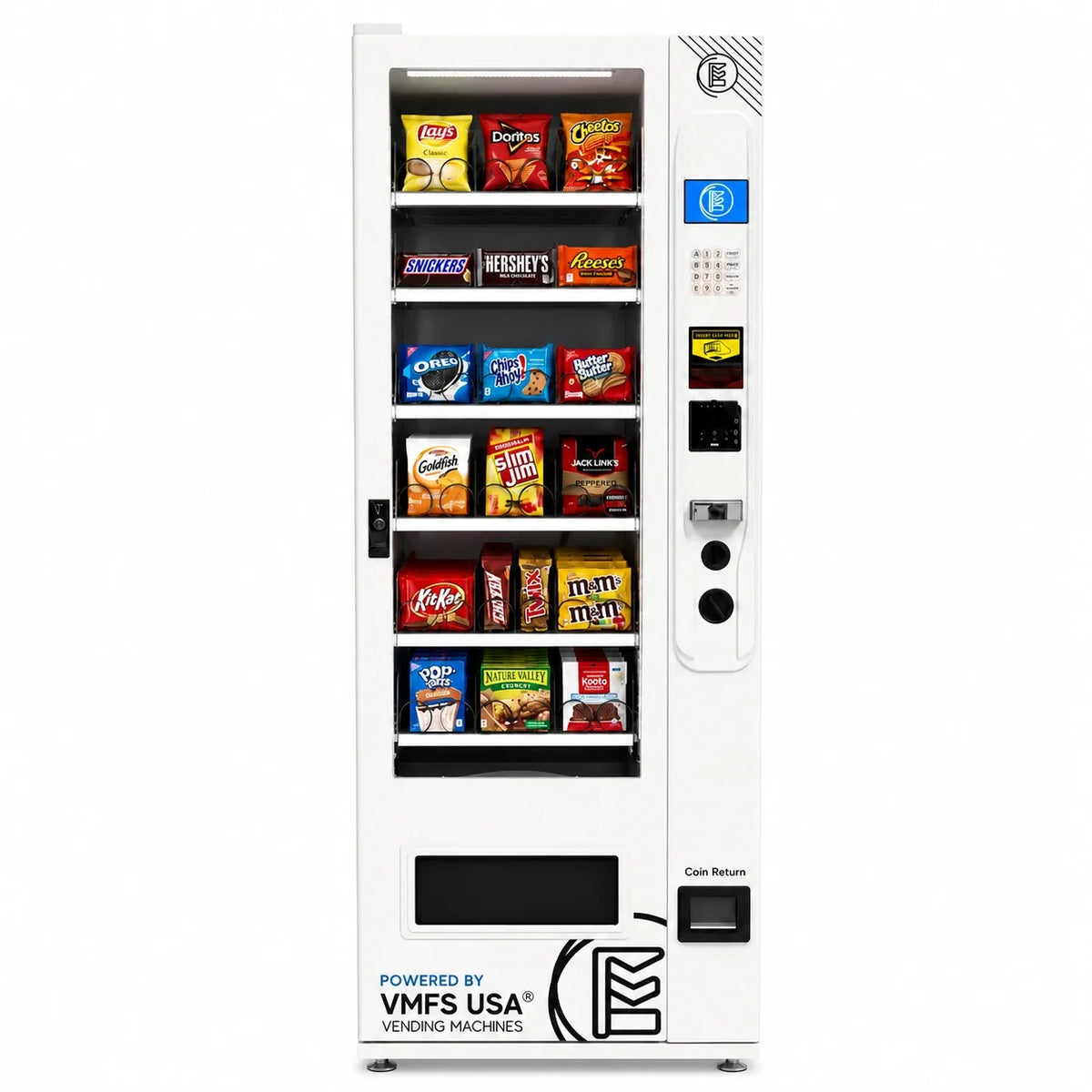
Those requirements shape which hardware you buy. Refrigerated food vending machines should have a temperature display and shut-off logic an inspector can test, while snack vending machines selling shelf-stable items face simpler checks. Concepts that prepare drinks or meals, such as boba or ramen, deserve a call to the health department before purchase; VMFS USA covers one example in its guide to the license to sell boba, and the process for food permits generally is in the food vending license guide.
Packaged, shelf-stable menu
Fresh or perishable menu
Whatever the menu, inspectors look at the same habits: clean cabinets, rotated stock, working refrigeration and written service records. A documented vending machine maintenance routine is the easiest way to show that discipline on inspection day.
Some states require a decal, sticker or tag on each machine that identifies the licensed operator, and the rule usually comes from the food licensing law or a tax law rather than a separate "vending decal" program. Decals let inspectors and tax auditors match a machine to a license without calling you, so a missing sticker is one of the easiest violations for an agency to spot.
| State | Decal or tag rule | Applies to |
|---|---|---|
| Iowa | Each licensed machine must bear a readily visible identification tag or decal with the licensee's business address, phone number and a company license number assigned by the regulator (Iowa Code 137F.6) | Food and beverage vending machines |
| Florida | Affix the DBPR license decal in a prominent place on the machine (DBPR) | Food vending machines licensed by DBPR |
| Wisconsin | State fee schedule lists a separate vending stickers line alongside the vending machine operator license (DATCP) | Vending machine operators under ATCP 75 |
| Texas | The $60 occupation tax applies to coin-operated game, music and amusement machines; merchandise vending machines appear among the chapter's exclusions (Texas Occupations Code) | Amusement machines, not snack or drink vending |
Texas deserves a note because older articles, including earlier versions of this one, describe a Texas tax decal on every vending machine. The Texas coin-operated machine chapter targets game, music and pleasure machines and lists merchandise vending machines among the devices it does not apply to where they are subject to an occupation or gross receipts tax, so a standard snack or drink route in Texas is mainly a sales tax and local licensing question. If you add claw machines, arcade games or jukeboxes to a route, the coin-operated machine licenses and per-machine tax do come into play.
Where a decal is required, keep spares in your service van, record the decal or license number for each machine in your route software, and replace damaged stickers during the next service visit rather than waiting for an inspection to flag them.
Age-restricted products can be sold through a machine only where the law allows it, and for tobacco and vape that means venues where no one under 21 is present or allowed to enter. This is the area where a mistake costs the most, because it can end the placement, trigger penalties for both you and the host, and put the product license at risk.
Federal law sets 21 as the minimum age for every tobacco product, including e-cigarettes. FDA retail guidance tells sellers not to sell tobacco products with the assistance of a vending machine in facilities where people under 21 are present or permitted to enter at any time, and it applies the same restriction to e-cigarettes, e-liquids and other ENDS; the same guidance tells retailers to check the photo ID of everyone under 30 who tries to buy (FDA retail tobacco rules). State and local law can add more on top of the federal rule, such as a tobacco retailer license, so check both levels.
For operators, the practical setup is an adult-only venue plus ID-gated hardware. VMFS USA's age verification vending machines and its explainer on age verification methods show how ID scanning works at the machine, while the guides to whether vape vending machines are legal and the vape vending machine lineup cover hardware choices. Traditional cigarette vending machines follow the same adult-only placement rule.
Alcohol is licensed by each state's alcoholic beverage control agency, and the rules on self-serve or unattended alcohol sales vary widely from state to state. Where self-serve sales are allowed, they typically run under an existing licensee such as a hotel, stadium or bar, with ID checks and supervision. Start with VMFS USA's overview of whether alcohol vending machines are legal, then confirm with your state agency before budgeting for hardware.
Cannabis can only be sold inside a state-licensed program, so a machine is a dispensing tool for a licensed retailer, not a standalone license. Rules on placement, tracking and access control come from the state program. VMFS USA's guide on whether weed vending machines are legal explains the state-by-state picture.
Selling age-restricted products?
Pair an adult-only placement with machines that verify ID at the point of sale.
Shop Age Verification MachinesA handful of federal rules apply no matter which state you operate in: FDA calorie labeling for larger operators, ADA accessibility for the machine controls, the FTC rule on vending business opportunities, and federal tax reporting. None of them requires a federal vending license, but each one affects what you buy and how you set it up.
The FDA's vending rule requires operators who own or operate 20 or more vending machines to disclose calorie information, subject to certain exemptions (FDA menu and vending machine labeling). Count your whole fleet, not one site: the threshold is the number of machines you operate. VMFS USA's guide to healthy vending machine snacks covers how labeling and better-for-you menus fit together.
Under the 2010 ADA Standards for Accessible Design, where vending machines are provided, at least one of each type must comply with the operable-parts requirements. Those parts must sit within the reach range, which for an unobstructed forward or side reach is 15 inches minimum to 48 inches maximum above the floor, must work with one hand without tight grasping, pinching or twisting, and must need no more than 5 pounds of force (2010 ADA Standards, sections 228, 308 and 309). Check the height of the keypad, card reader, bill acceptor and delivery bin, and leave clear floor space in front of the machine.
If a seller promises to provide locations for vending machines as part of the deal, the FTC Business Opportunity Rule treats that as a business opportunity and requires the seller to give you a written disclosure document at least seven calendar days before you sign or pay (16 CFR Part 437). Buying machines from a supplier is not the same thing, but if anyone bundles machines with guaranteed placements or earnings claims, ask for that disclosure and read it before you commit.
Vending income is business income. Sole proprietors report it on Schedule C with their personal return, and entities taxed differently follow their own filing rules. Keep every machine purchase, commission payment and product invoice, because they become deductions and depreciation at year end.
Insurance is not a government license, but in practice it works like one, because most property managers will not approve a placement without a certificate of insurance naming them. General liability is the usual baseline, with property coverage for the machines and commercial auto if you run a service vehicle; VMFS USA's vending machine insurance guide compares coverage types.
The location agreement is the other document every office and host wants to see. It should name the site, the machine, power and access arrangements, commission or rent terms, and who is responsible for permits at that address. For help negotiating these, see VMFS USA's guide to how to scout and pitch a vending location, and if you would rather have a team source compliant sites for you, the location matching service does that.
Records close the loop. Inspectors and auditors ask for service logs, temperature history for refrigerated units and sales records that match your tax returns. VMFS Cloud works with every VMFS machine; plans start at $7.99 per machine per month. It shows each machine's live status, including temperature, last heartbeat and the day's cash and card sales, so you can check a refrigerated unit remotely and pair that with your written service log when an inspector asks how it has been running.
Vending machine laws differ by state, so the reliable approach is to check four offices for every new state: the Secretary of State for registration, the revenue department for sales tax, the state health or agriculture department for food licensing, and the city or county clerk for local licenses. Then check the specific city of each placement, because two towns in the same county can have different vending rules.
VMFS USA keeps state-specific permit guides and age-restricted product guides for a growing list of states. Use the index below as a starting point, then confirm details with the agencies each guide names.
For states without a dedicated guide yet, the official fee examples in this article show what to look for: a state food license with a per-machine fee, like Iowa's, a decal requirement, a city vending license, like Wauwatosa's, and any tax rule that singles out coin-operated equipment. Enterprise and multi-site programs face an extra layer of contracts and approvals, covered in VMFS USA's article on automated retail deployments.
Most licensing problems come from timing and scope, not from complicated law: operators place a machine before the paperwork is done, or assume one license covers every city and every product. Each of the mistakes below is common, cheap to prevent and expensive to fix after an inspector or host finds it.
Buying from a supplier that understands these rules shortens the list. Every VMFS USA machine, from drink vending machines to combo units, works with VMFS Cloud (plans start at $7.99 per machine per month), which shows live sales and temperature status for each unit, so monitoring starts the day you install your vending machines.
Before a machine goes live, every item on this list should be done or confirmed as not applicable for that address. Keep a copy of the completed list with the location file so you can show it to a host or inspector.
Ready to launch a compliant route?
Use VMFS USA's startup guide to plan machines, locations and paperwork in the right order.
Start Your Vending Business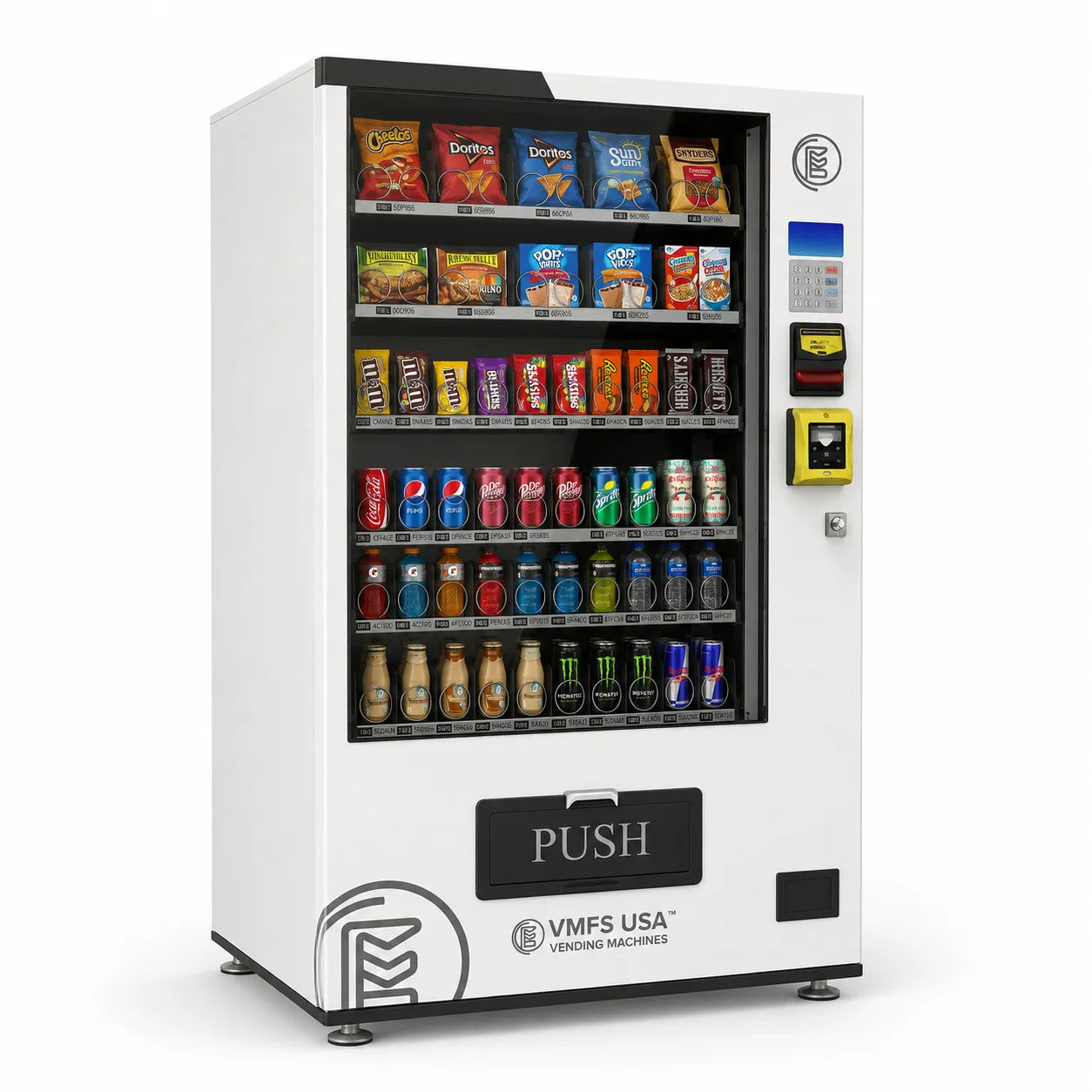
Share:
Case Study: Finding the Sweet Spot for AI Vending Machines
Best Lego Vending Machine Locations To Maximize Sales