


Every coin, tap and card swipe that lands in your machine starts a small tax story. Some of it is good news: the machine itself, the stock inside it, the miles you drive to restock it and the commission you pay the location owner can all work in your favor at filing time. Some of it needs care, because vending sits at the crossroads of income tax, self-employment tax and state sales tax, and each one follows its own rules. Understanding all three before your first restock is one of the smartest moves a new operator can make, and it turns tax season from a scramble into a routine.
This guide walks through how vending machines are taxed in 2026, with real numbers, worked examples and a setup checklist you can act on this week. It reflects federal rules as published by the IRS for the 2026 tax year, including the changes made by the One Big Beautiful Bill Act in 2025. Tax law changes and every business is different, so treat this as a strong starting point and confirm your own plan with a CPA or enrolled agent.
15.3%
Self-employment tax rate on net earnings, per the IRS
$2.56M
2026 Section 179 expensing limit for equipment
72.5¢
IRS 2026 standard mileage rate per business mile
Your Business Structure Sets Your Tax Path
The structure you choose decides which forms you file, how your profit is taxed and how much personal risk you carry. Most operators start in one of four places, and many move up the ladder as their route grows.
| Structure | How Profit Is Taxed | Best Fit |
|---|---|---|
| Sole proprietor | Reported on Schedule C of your personal return. Full profit is subject to income tax and self-employment tax. | Testing the business with one or two machines |
| Single-member LLC | Taxed like a sole proprietor by default, with a liability shield between the business and your personal assets. | Operators placing machines in other people's buildings |
| LLC taxed as an S corporation | You pay yourself a reasonable salary through payroll. Remaining profit passes through without self-employment tax. | Routes with steady profit, often once net income passes the $40,000 to $60,000 range |
| C corporation | Flat 21% federal corporate rate, with a second layer of tax when profits are paid out as dividends. | Larger operations keeping profit in the company to fund growth |
For most first-time operators, a single-member LLC is the sweet spot. It costs little to set up, keeps your filing simple and protects your home and savings if something goes wrong at a location. When you are ready, it is worth taking the time to form an LLC for your vending business properly, with an operating agreement and a separate business bank account from day one. Mixing personal and business money is the fastest way to weaken that liability shield and to make your bookkeeping painful.
Pass-through owners also get a valuable bonus: the qualified business income deduction, which lets eligible sole proprietors, LLC members and S corporation owners deduct up to 20% of their qualified business income. The One Big Beautiful Bill Act made this deduction permanent, so it belongs in every operator's long-term plan.
Self-Employment Tax Works Differently Than Most Operators Expect
If you run your route as a sole proprietor or a default LLC, you pay self-employment tax on top of income tax once your net earnings reach $400 for the year. The rate is 15.3%: 12.4% for Social Security on earnings up to the 2026 wage base of $184,500, and 2.9% for Medicare with no cap. An extra 0.9% Medicare tax applies above $200,000 for single filers.
The detail many guides skip is that the rate does not apply to your full profit. The IRS first reduces net earnings to 92.35%, which mirrors the employer half of payroll tax. Then you can deduct half of the self-employment tax when you calculate your adjusted gross income.
Worked Example: $30,000 Net Vending Profit
- Net profit after expenses: $30,000
- Earnings subject to self-employment tax: $30,000 × 92.35% = $27,705
- Self-employment tax: $27,705 × 15.3% = $4,238.87
- Half deducted from adjusted gross income: $2,119.43
Because no employer withholds tax from your vending income, the IRS expects quarterly estimated payments, due April 15, June 15, September 15 and January 15. Setting aside 25% to 30% of every weekly collection in a separate tax savings account is a simple habit that keeps those payments painless.
Equipment Deductions Are Where Vending Shines
Machines are the biggest purchase in this business, and the tax code treats them generously. Vending machines are depreciable business equipment, and you have three ways to recover the cost.
- Section 179 expensing. Deduct the full cost in the year the machine is placed in service, up to a 2026 limit of $2,560,000, with the phase-out starting at $4,090,000 of equipment purchases. Section 179 cannot create a loss, so the deduction is capped at your business income for the year.
- Bonus depreciation. The One Big Beautiful Bill Act restored 100% bonus depreciation for qualifying property acquired after January 19, 2025, and made it permanent. Unlike Section 179, bonus depreciation can create a loss you carry forward.
- Regular MACRS depreciation. Spread the deduction over several years. Many preparers classify vending machines as 5-year property under the IRS asset class for distributive trades and services, while some software defaults to 7 years, so confirm the class with your preparer.
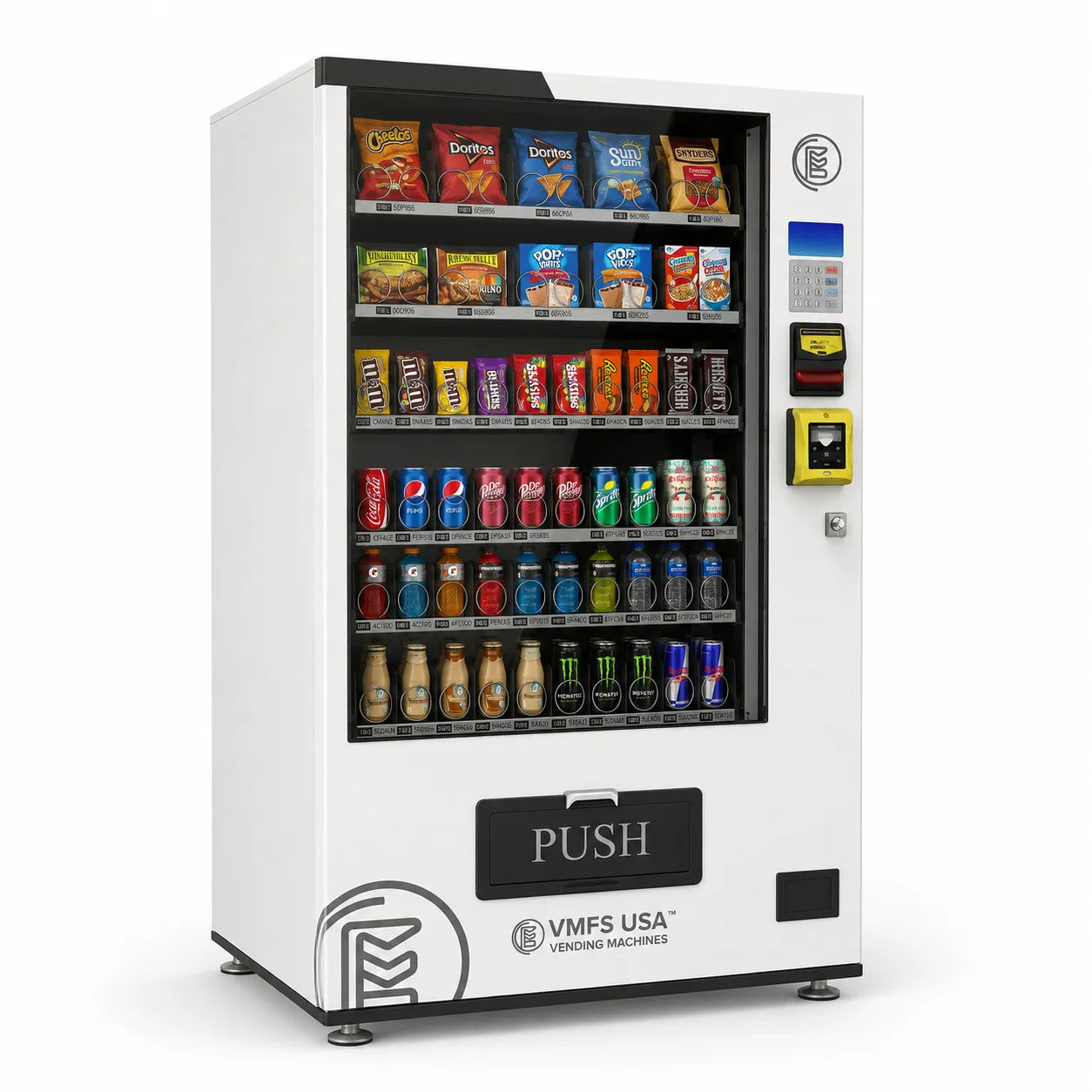
Here is how the choice plays out on a real purchase. Take the Snack & Drink Vending Machine RDS at $6,950, placed in service in 2026.
| Tax Year | Section 179 or 100% Bonus | 5-Year MACRS (Half-Year Convention) |
|---|---|---|
| 2026 | $6,950 | $1,390.00 |
| 2027 | $0 | $2,224.00 |
| 2028 | $0 | $1,334.40 |
| 2029 | $0 | $800.64 |
| 2030 | $0 | $800.64 |
| 2031 | $0 | $400.32 |
Taking the whole deduction up front is attractive in a strong profit year, while spreading it out can make more sense when you expect higher income later. A machine bought with one of our financing options generally qualifies too, since the deduction follows the date the machine is placed in service rather than the date it is paid off. If you are still pricing your first unit, our breakdown of the investment cost of vending machines pairs well with this section, and you can compare current vending machines for sale when you are ready to plan purchases around your tax year.
Everyday Expenses Every Operator Should Track
Beyond the machine itself, a healthy route generates a steady stream of deductible costs. Missing even a few of them each month adds up to real money by April.
| Expense | What Counts |
|---|---|
| Inventory | The cost of snacks, drinks and other products, deducted as cost of goods sold when they sell |
| Location commissions | The percentage of sales or flat fee you pay the host site |
| Vehicle use | 72.5 cents per business mile in 2026, or actual vehicle costs if you track them |
| Payment and software fees | Card processing fees, telemetry and monitoring subscriptions, bookkeeping software |
| Repairs and parts | Replacement coils, bill validators, card reader add-ons and service calls |
| Insurance | General liability and equipment coverage premiums |
| Storage and home office | Rent for a storage unit, or the simplified home office deduction of $5 per square foot up to 300 square feet |
| Marketing and professional fees | Advertising, listings, CPA fees, legal and permit costs |
A few of these deserve a closer look. The commission you agree with a host is fully deductible, and our sister site's vending revenue share guide shows how operators structure those deals. Liability coverage is both deductible and essential, and you can review vending machine operator insurance before you sign your first location agreement. Promotion counts as well, whether that is local signage built from proven vending machine marketing strategies or listing your machines on VendingFinder so nearby customers can find them.
Mileage is the deduction operators most often leave on the table. A route of 120 business miles a week adds up to 6,240 miles a year, which is $4,524 at the 2026 rate. The IRS expects a log with dates, destinations and business purpose, so a mileage app that runs in the background is worth every penny.
Sales Tax Is a State-by-State Puzzle
Income tax is federal and predictable. Sales tax is where vending gets local. Placing a machine in a state gives you a physical presence there, which creates what tax authorities call nexus, and nexus means you must register, collect and remit that state's sales tax. Alaska, Delaware, Montana, New Hampshire and Oregon have no statewide sales tax, though some Alaska cities charge their own.
Vending adds a twist because most machines sell at round prices with the tax already included. Many states let you back the tax out of your gross receipts rather than adding it at the point of sale, and several apply special vending rules, such as taxing only a percentage of receipts or treating candy and soda differently from food. Operators running snack vending machines in particular should check how their state classifies candy, chips and bottled water, because the answer can change the rate on half the coils in the machine.
Before your first machine goes live, you will need a seller's permit and sales tax filing plan in each state where you operate, along with any local vending licenses. Our overview of vending machine regulations and permits covers the licensing side. Most states assign a monthly, quarterly or annual filing schedule based on your sales volume, and late filings bring penalties and interest even when the tax due is small.
Clean Records Make Tax Season Easy
The operators who breeze through tax season are the ones whose numbers are already organized. Good records support every deduction, back up your sales tax returns and give you an answer ready if the IRS or a state auditor ever asks a question.
Cashless sales help a great deal here. Vending machines with card readers create a digital record of every transaction, and processor statements make reconciliation fast. Keep in mind that payment processors issue Form 1099-K once your card sales pass $20,000 and 200 transactions in a year, the threshold restored by the One Big Beautiful Bill Act, so your reported income must match what the processor sends the IRS. Cash still needs a counted, dated log at every collection.
VMFS Cloud, our optional remote monitoring service, adds sales and stock reporting by machine, which makes it easy to see revenue per location and spot gaps between collections and reported sales. Plans start at $7.99 a month, and the subscription itself is a deductible business expense.
As a rule, keep tax records for at least three years after you file, and keep records for each machine until three years after the year you sell or retire it, since those records support every year of depreciation you claimed.
Credits and Incentives Worth Checking
Federal tax credits aimed specifically at vending machines are rare, so be cautious with any claim that a machine purchase earns one automatically. The more reliable savings sit at the state and utility level. Many electric utilities offer rebates for ENERGY STAR certified refrigerated beverage vending machines and LED lighting retrofits, and some states and cities offer incentives for businesses that operate in designated development zones. Ask your utility and your local economic development office before you buy, because some rebates require approval in advance.
Your First-Year Vending Tax Setup Checklist
Work through this list before your first machine is placed and your first tax season will feel calm and controlled.
- Choose your structure and register your LLC with your state
- Get an EIN for your vending business so you can open accounts and hire later
- Open a business checking account and a separate tax savings account
- Register for a seller's permit in every state where a machine will operate
- Save every machine invoice and note the date each machine is placed in service
- Install a mileage tracking app and log every restock trip
- Put location commission terms in writing
- Calendar your quarterly estimated payment dates and state sales tax due dates
- Choose bookkeeping software and reconcile collections weekly
- Book a planning meeting with a CPA before your first year ends, not after
Timing purchases is one of the most useful conversations to have in that meeting. If you plan to add a fully configured combo vending machine next year, placing it in service before December 31 rather than in January can move a large deduction into the current tax year, which can be a smart lever in a high-profit year.
Vending Tax FAQ
Do I need to charge sales tax on vending sales?
In most states, yes. Rules differ by product and by state, and many states allow tax-included pricing, so register with your state revenue department before your machine goes live.
Can I deduct the full cost of a vending machine in year one?
Usually, yes, through Section 179 expensing or 100% bonus depreciation, as long as the machine is placed in service in that tax year. Your CPA can help you decide whether a full first-year deduction or regular depreciation fits your income better.
When does an S corporation election make sense?
Once your vending profit is steady enough that the self-employment tax saved on distributions outweighs the cost of running payroll and filing a separate return. For many operators that point arrives somewhere in the $40,000 to $60,000 net profit range.
Turn Tax Planning Into a Growth Advantage
Taxes are not a side note in vending. They shape which structure you choose, when you buy equipment and how much of every collection you actually keep. Operators who set up their structure early, track every mile and commission, keep sales tax tidy in each state and plan purchases around their tax year consistently keep more of what their machines earn. Start with the checklist above, bring your numbers to a qualified tax professional, and let your route grow on a foundation that is built to last.
This article is general information based on IRS guidance for the 2026 tax year and is not tax or legal advice. Rules change and individual situations differ, so consult a licensed CPA or enrolled agent before acting on it.
Share:
On-the-Go Convenience: Exploring Mobile Apps for Vending Machines
On-the-Go Convenience: Exploring Mobile Apps for Vending Machines