


Automated retail operates at the intersection of:
- Commercial equipment
- Consumer transactions
- Payment systems
- Data collection
- Regulated product categories
Compliance is not optional.
It must be addressed before deployment, not after.
This framework outlines how compliance is structured within VMFS projects.
1. Compliance Responsibility Structure
Compliance is divided into three layers:
Layer 1: Equipment Compliance
Handled by VMFS
- Electrical standards
- Manufacturing specifications
- Hardware safety
- Component certifications, where applicable
Layer 2: Operational Compliance
Handled by Operator or Client
- Local vending permits
- Business registration
- Sales tax compliance
- Health department approvals
- Local zoning restrictions
Layer 3: Product and Category Compliance
Shared Responsibility
- Age restrictions
- Labeling requirements
- Warning disclosures
- Marketing restrictions
- Location-based limitations
VMFS provides compliant infrastructure.
Operator ensures compliant operation.
2. Age-Restricted Product Framework
For nicotine, alcohol, CBD, pharmaceuticals, or restricted goods, compliance may require:
- ID scanning systems
- Government-issued ID validation
- Age verification hardware
- Restricted access logging
- Time-of-sale controls
- Jurisdictional approval
VMFS can integrate age verification technology.
However, operator must confirm local legality before deployment.
3. Payment and Financial Compliance
All payment systems must comply with:
- PCI-DSS standards
- Card network regulations
- Regional banking rules
Payment processing approval is subject to:
- Merchant underwriting
- Product category approval
- Risk classification
VMFS does not guarantee payment processor approval for restricted industries.
4. Data and Privacy Compliance
For machines that:
- Collect user data
- Store transaction data
- Operate AI vision systems
- Use customer accounts
Compliance may include:
- GDPR, EU deployments
- CCPA, California
- Regional data protection laws
- Data retention limits
Operators must ensure:
- Proper data disclosure
- Privacy policy publication
- Legal use of collected data
VMFS provides infrastructure, not legal representation.
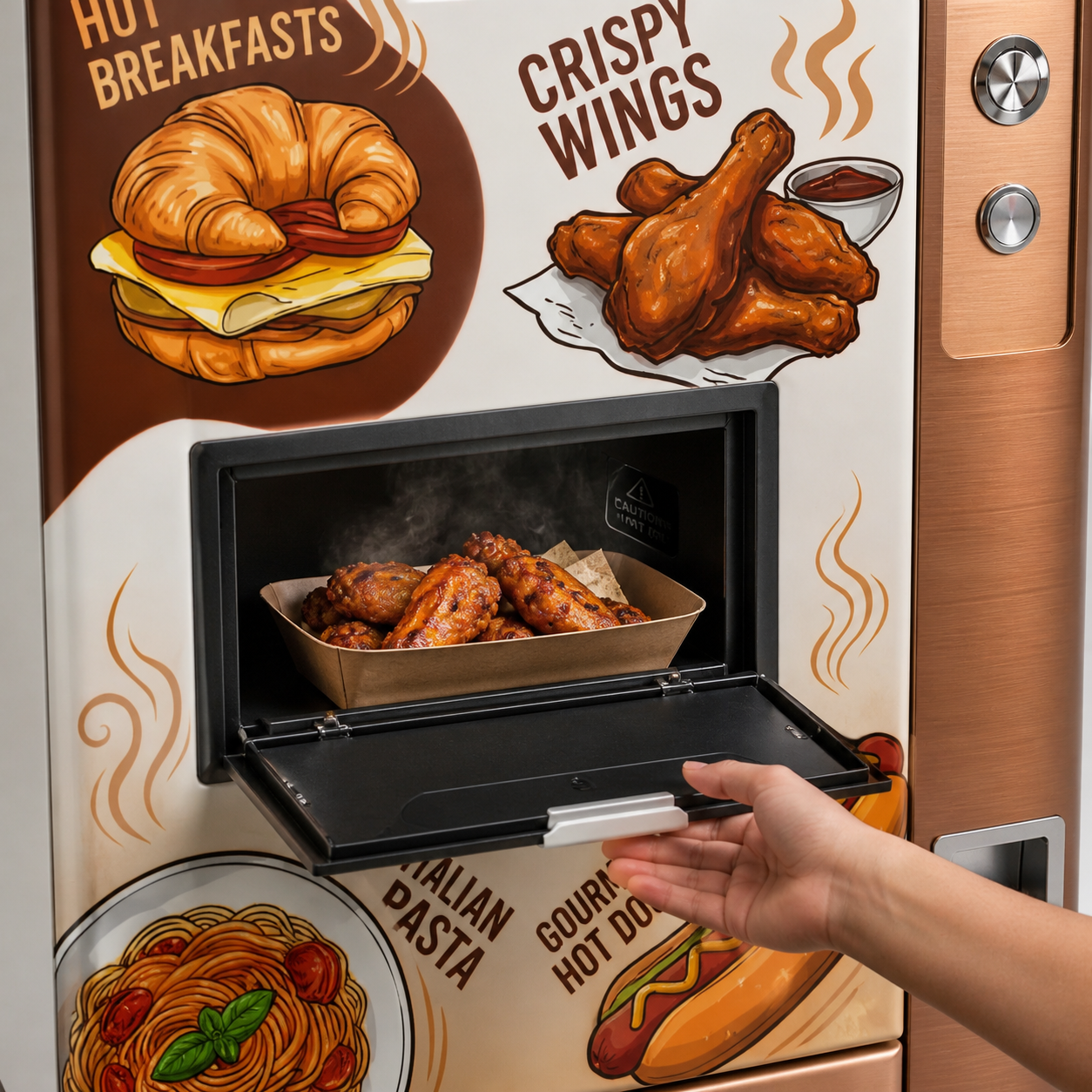
5. Health and Food Safety Compliance
For fresh food, hot food, or beverage systems, operator may need:
- Health department permits
- Temperature logging compliance
- Expiration tracking
- Sanitation procedures
- Food handler certifications
Machine hardware can support compliance.
Operational responsibility remains with operator.
6. Outdoor and Structural Compliance
Outdoor deployments may require:
- Structural anchoring approval
- Local municipal permits
- ADA accessibility compliance
- Electrical code compliance
Site-specific regulations must be verified before installation.
7. Advertising Compliance
If machine displays advertising, compliance may require:
- Age-appropriate messaging
- Health disclaimers
- Local advertising restrictions
- Industry-specific regulations
Client is responsible for ensuring advertising content complies with jurisdictional laws.
8. International Compliance Considerations
International deployments may require:
- Electrical certification, CE, UL equivalent
- Import documentation
- Product-specific import licenses
- Restricted product approval
Regulatory frameworks vary by country.
Pre-deployment review is essential.
9. Compliance Risk Mitigation Process
Enterprise custom projects may include:
- Regulatory consultation
- ID verification integration
- Restricted mode configuration
- Audit logging configuration
- Documentation review
Compliance review should occur during the discovery phase.
Not after production begins.
10. What VMFS Does Not Provide
VMFS does not provide:
- Legal representation
- Government licensing
- Regulatory guarantees
- Market approval assurances
Equipment infrastructure can support compliance.
Operational responsibility remains with the buyer.
11. Consequences of Non-Compliance
Improper deployment may result in:
- Fines
- Machine removal
- Payment processing suspension
- Legal penalties
- Brand damage
Structured compliance planning protects long-term scalability.
12. Compliance Checklist Before Deployment
Before installation, confirm:
- ✔ Product legality in jurisdiction
- ✔ Permit requirements
- ✔ Age verification needs
- ✔ Payment processor approval
- ✔ Data policy published
- ✔ Health regulations met, if applicable
- ✔ Advertising restrictions reviewed
No machine should deploy in regulated category without review.
Final Thought
Compliance is not an obstacle.
It is infrastructure.
Operators who treat compliance seriously:
- Scale more confidently
- Secure enterprise partnerships
- Avoid operational shutdowns
- Protect brand reputation
Enterprise vending requires discipline.
Infrastructure first.
Deployment second.
Share:
How Custom Machine Branding Works
How Age-Restricted Automated Retail Deployments Work