




Design the perfect vending solution for your location and customers.

Join the VMFS newsletter and step into a thriving network dedicated to collective success.
One signup. Endless possibilities.
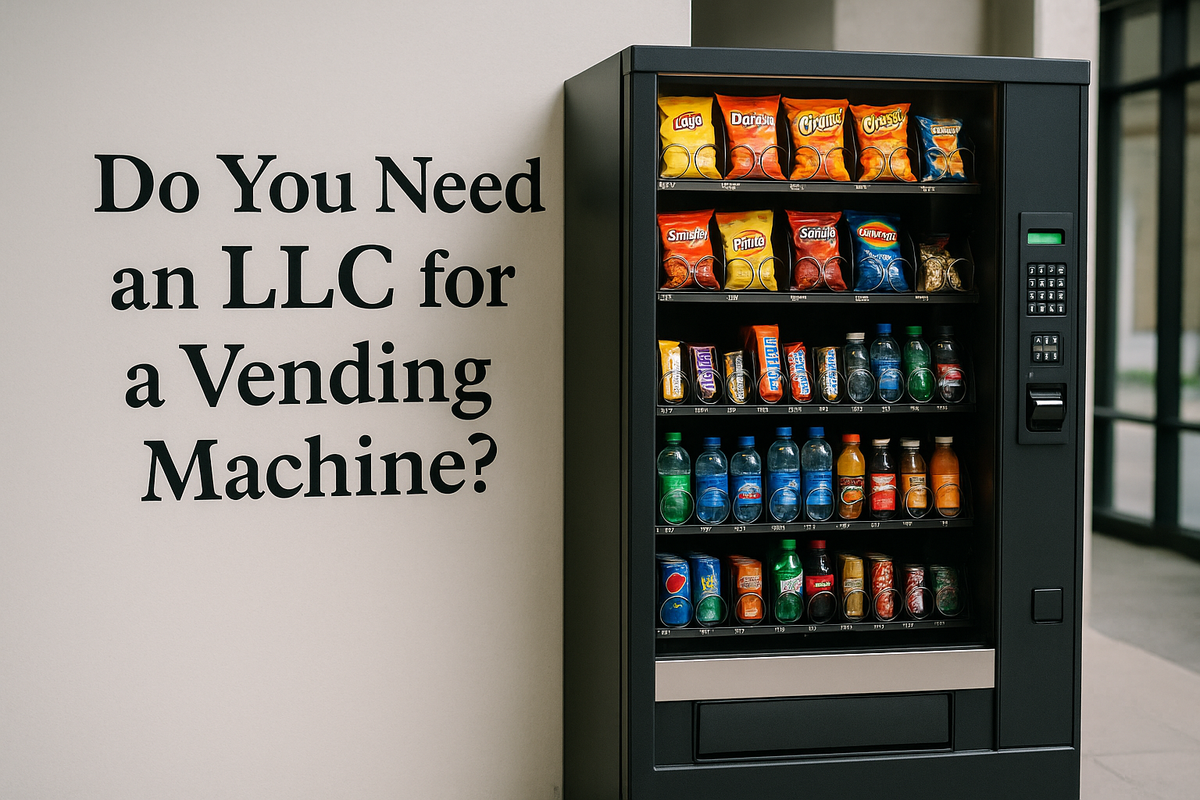
No, you do not legally need an LLC to run a vending machine business. If you start selling without registering an entity, you are automatically a sole proprietor, and that is legal in every state, but it leaves your house, savings and car exposed to the business's debts and lawsuits.
That is why most operators form an LLC once a machine sits on someone else's property, a placement contract needs signing or card payments start flowing. This guide covers sole proprietorship vs LLC vs an S corp election, what an LLC does and does not protect, every formation step from the state filing to the EIN and BOI status, sourced state fees, and how a vending LLC is taxed.
Not legal or tax advice: This guide explains how business structures generally work for US vending operators. State rules, fees and tax outcomes change and depend on your situation, so confirm details with your Secretary of State, the IRS, and a licensed attorney or CPA before you file.
No state requires an LLC to own or operate vending machines, but an LLC is the structure most operators choose once the business carries real risk. The U.S. Small Business Administration explains that you are automatically treated as a sole proprietorship when you do business without registering another structure, and that a sole proprietor can be held personally liable for the debts and obligations of the business. In vending, those obligations show up in predictable places: a machine that tips during delivery, a product a customer says made them sick, a damaged floor at a host site, or a location owner who claims you broke the placement contract.
An LLC, or limited liability company, is a separate legal entity registered with your state. The SBA describes LLC owners as generally not personally liable for the company's debts, which is why the structure is popular with operators who place equipment in offices, gyms, apartment buildings and other third-party properties. The trade-off is modest: a state filing fee, a recurring state report or tax in most states, and a little more bookkeeping discipline.
Treating it as a yes-or-no question hides the real decision, which has three parts: which legal structure owns the machines, how that structure is taxed, and how much insurance sits on top of it. A one-machine side hustle in a friend's shop and a 20-machine route across a metro area can reasonably land on different answers, and the sections below walk through each part.
An LLC becomes worth the cost when a single bad event could reach your personal assets or when partners expect a formal counterparty. For most operators that point arrives earlier than they think. These are the common triggers:
If none of these apply yet, starting as a sole proprietor with good insurance is legal and common. Plan to convert before you sign your first commercial location agreement, because moving contracts, accounts and machines into a new entity later takes more paperwork than starting clean.
A sole proprietorship is the default, an LLC is a legal structure you register with the state, and an S corporation is a federal tax election that an LLC can make later. Mixing these up is the most common source of confusion in vending forums. The LLC decides who is liable; the tax classification decides how profit is taxed. You can form an LLC now and keep the default tax treatment until profit justifies an election.
The SBA's structure comparison summarizes the main differences. A sole proprietorship has one owner and unlimited personal liability. An LLC can have one or more owners who are generally not personally liable, and it can be taxed as a pass-through or, by election, as a corporation. An S corporation must have 100 or fewer shareholders and cannot have partnerships, corporations or non-resident aliens as owners.
| Factor | Sole proprietorship | Single-member LLC | LLC taxed as S corp |
|---|---|---|---|
| How it starts | Automatic when you start selling | Articles of Organization filed with your state | LLC first, then a federal S corporation election |
| Personal liability | Unlimited | Generally limited to the business | Generally limited to the business |
| Default federal tax | Schedule C on your personal return | Disregarded entity, profit on your personal return | Pass-through; owner-operator paid a reasonable salary |
| Self-employment tax | On all net earnings | On all net earnings | On wages via payroll, not on distributions |
| State cost | None beyond local licenses | Filing fee plus annual report or tax in most states | Same as LLC, plus payroll and extra tax prep |
| Best fit | Testing one machine with low exposure | Most new routes placing machines at host sites | Established routes with steady profit |
A traditional C corporation rarely fits a small vending route because profit can be taxed at the corporate level and again when paid out as dividends. It becomes relevant mainly when outside investors are involved. For most operators, the practical path is sole proprietorship to test, LLC once machines go into third-party locations, and an S corp election only once the numbers support it.
VMFS sister company VAdviced forms LLCs for vending operators, including the registered agent, EIN and operating agreement, if you would rather not file it yourself.
An LLC protects your personal assets from the company's debts and from claims against the business, but it does not protect the business's own assets and it does not shield you from your own negligence or personal guarantees. The SBA's insurance guidance puts it plainly: an LLC or corporation can protect your personal property from lawsuits, but that protection has limits.
In vending terms, if a customer sues over an injury caused by a machine owned by your LLC, the claim generally runs against the LLC and its assets, which include the machines, inventory and the business bank account. Your home and personal savings sit outside that pool. If you personally guaranteed an equipment lease or loan, though, the lender can still come after you, and if you personally caused the harm, for example by installing a machine unsafely yourself, you can be named individually.
What an LLC does
What an LLC does not do
Limited liability depends on treating the LLC as a real, separate business. Courts can disregard the entity, often called piercing the corporate veil, when the owner treats company money as personal money or ignores the company's separate existence. The habits that prevent that are simple and also make tax time easier.
Software helps here. Telemetry and sales reporting in VMFS Cloud give you machine-level sales records that reconcile against bank deposits, which is the kind of clean paper trail that supports both the liability shield and an audit.
No. An LLC limits whose assets are exposed, while insurance pays the claim. Without insurance, a judgment against your LLC can still wipe out the company's machines, cash and contracts, even if your house is safe.
The SBA describes general liability insurance as protection against financial loss from bodily injury, property damage and medical expenses, and product liability insurance as protection against loss when a defective product causes injury. Both map directly onto vending risk: a machine that tips, a coil that jams and leads to a customer rocking the cabinet, or a snack recall that reaches your machines. Commercial property coverage, also described by the SBA, protects company equipment against loss or damage, which matters when a single unit can represent thousands of dollars of hardware.
Host sites frequently make the decision for you. Property managers, schools, hospitals and corporate campuses commonly require a certificate of insurance naming them as additional insured before a machine goes in. The SBA also notes that businesses with employees must carry workers' compensation, unemployment and disability insurance as required by federal and state rules. Our vending machine insurance guide explains coverage types and how operators shop for them.
Order of operations: Form the LLC, get the EIN, then buy insurance in the LLC's name. A policy issued to you personally, or to a different business name, can create gaps if a claim is filed against the company.
Getting an LLC for a vending machine business takes seven steps: choose the state and name, appoint a registered agent, file Articles of Organization, get a free EIN from the IRS, sign an operating agreement, open a business bank account, and set up ongoing filings. Most of it happens online, and the state filing and EIN can often be done in the same week.
Form the LLC in the state where your machines operate and where you live, unless you have a specific reason not to; the state section below explains why. Search the Secretary of State's business database to confirm the name is available, and pick one broad enough for future machine types and locations. "Coastal Vending LLC" ages better than a name tied to one product. Check that a matching domain and social handles are available, and avoid names that conflict with existing trademarks.
Every state requires an LLC to name a registered agent with a physical address in that state who can accept legal papers and official notices during business hours. You can serve as your own agent if you have an in-state address and are reliably available, but your address becomes part of the public record. Many operators use a commercial registered agent service for privacy and so that a lawsuit or state notice is never missed while they are out on a route. VAdviced offers a registered agent service for vending businesses.
The Articles of Organization (Texas calls it a Certificate of Formation) is the document that creates the LLC. It typically lists the name, the registered agent, a principal address, and whether the LLC is member-managed or manager-managed. Most states accept it online and return the stamped filing within days. Fees vary widely by state; the cost section below lists verified examples.
An Employer Identification Number is the LLC's federal tax ID, and the IRS issues it free. The IRS warns that you never have to pay a fee for an EIN, so skip third-party sites that charge for one. Through the online application, an approved EIN is issued immediately; the tool requires that the entity be formed in the US, that its principal place of business be in the US, and that the responsible party have an SSN or ITIN, and it limits applicants to one EIN per responsible party per day.
Even a single-member LLC benefits from an EIN. Banks generally ask for one to open a business account, payment processors use it for card reader merchant accounts, and the IRS treats a single-member LLC as a separate entity for employment tax purposes, so you will need it the moment you hire help for restocking or service.
An operating agreement is the internal rulebook of the LLC: who owns what percentage, how profits are split, who can sign contracts, what happens if a member leaves or dies, and how the business can be sold. Only a handful of states require one, but banks sometimes ask for it, and for a single-member LLC it is evidence that the company is separate from you. For partners who split machine purchases or route duties, it prevents the most common vending partnership dispute: who owns which machines and locations when the partnership ends.
Open a checking account in the LLC's name with your filed Articles, EIN confirmation and operating agreement. Route every card payout, cash deposit, supplier invoice and machine payment through it. If your machines accept cards, as any vending machine with card reader does, set the processor's settlement account to the LLC account from day one. Our guide to cashless payment systems covers reader options and fees.
US-formed LLCs currently do not file beneficial ownership information (BOI) reports with FinCEN. FinCEN's interim final rule of March 26, 2025 limited BOI reporting to foreign entities registered to do business in the US, and a final rule issued on August 11, 2026, effective August 14, 2026, made that exemption for US companies permanent. Ignore letters or websites that demand a BOI filing fee from a domestic vending LLC, and check FinCEN's BOI page if the rules change again.
What does still apply is your state's recurring filing, whether an annual report, a biennial statement or an annual tax, plus state and local tax registrations. Put the due dates on a calendar the day the LLC is approved. Missing them is the most common reason a small LLC falls out of good standing.
Before you file
Name search, registered agent choice, principal address, member list and management type.
Filing week
Articles of Organization approved, EIN issued online, operating agreement signed.
Before the first machine
Business bank account, insurance in the LLC's name, sales tax registration and local permits.
Every year
State annual report or tax, sales tax returns, permit renewals and an insurance review.
Set Up the LLC, Then Pick the Machine
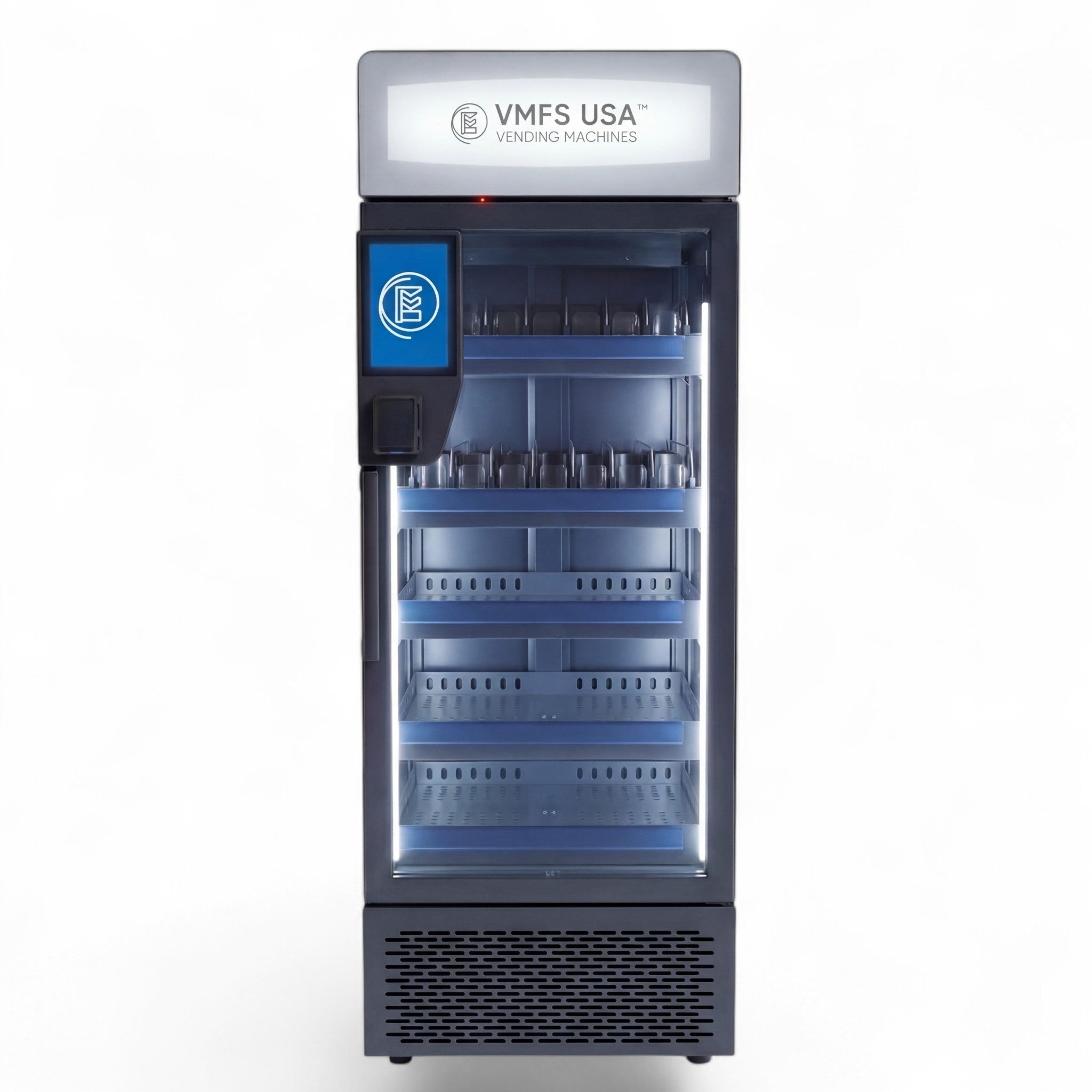
Combo machines sell snacks and cold drinks from one footprint, a common first purchase for new LLCs placing at offices and apartment buildings.
Shop Combo Vending MachinesA vending machine LLC costs a one-time state filing fee plus a recurring state report fee or tax, and both vary more by state than most guides admit. Florida, where VMFS USA is based, charges $125 to form an LLC ($100 for the Articles of Organization plus $25 for the registered agent designation) and $138.75 for each annual report. Wyoming, often pitched as a cheap state, charges $100 to file and a minimum $60 annual report license tax. At the high end, California charges every LLC an $800 annual tax, and Delaware charges LLCs $400 a year.
| State | Formation filing | Recurring state cost | Late or extra charges |
|---|---|---|---|
| Florida | $125 ($100 Articles + $25 registered agent designation) | $138.75 annual report | $400 late fee if filed after May 1 |
| Wyoming | $100 Articles of Organization | Annual report license tax: $60 or two-tenths of a mill on in-state assets, whichever is greater | See Wyoming Secretary of State fee schedule |
| California | Set by the Secretary of State (online filing) | $800 annual LLC tax, owed even with no activity | LLC fee of $900 to $11,790 once California income reaches $250,000 |
| Delaware | Set by the Division of Corporations | $400 annual LLC tax, due June 1 | $200 penalty plus 1.5% monthly interest if late |
Beyond state fees, the optional costs are a commercial registered agent (an annual subscription), a formation service if you do not file yourself, and an attorney-drafted operating agreement for multi-member LLCs. The EIN is free from the IRS. Add insurance, which is a separate operating expense rather than a formation cost.
Put those numbers next to equipment. A single machine is usually the largest line in a startup budget, so the LLC is a small share of what you will spend; our breakdown of how much a vending machine costs and the guide to what it really costs to launch a vending business show the full picture.
Check before you budget: State fees change. The figures above come from each state's official fee page as of October 2026 and are listed in Sources; confirm the current amount on your Secretary of State or revenue department site the day you file.
Form your vending LLC in the state where your machines are placed, which for most operators is also where they live. Vending is a physical, local business, and a state generally treats an LLC that does business within its borders as needing to register there, even if the company was formed somewhere else.
That is why the familiar advice to form in Wyoming, Delaware or Nevada rarely saves a vending operator money. If your machines sit in Florida but the LLC is formed in Wyoming, you pay Wyoming's filing fee and annual license tax, then register the company in Florida as a foreign LLC and pay Florida's fees as well. You also need a registered agent in both states and two sets of annual filings. Delaware's $400 annual LLC tax would be added on top of your home state's costs rather than replacing them.
Out-of-state formation makes sense mainly for holding structures, outside investors or multi-state companies with an attorney's guidance. A route that grows across a state line can keep its home-state LLC and register as a foreign LLC in the new state when the first machine goes in. If you are building in a specific market, our state guides cover local steps for starting a vending business in Miami, starting a vending business in Texas and starting a vending business in California.
By default, a single-member vending LLC is taxed like a sole proprietorship and a multi-member LLC is taxed like a partnership, so the profit flows through to the owners' personal returns. Forming the LLC changes your liability, not your federal tax bill, until you elect a different classification.
The IRS treats a single-member LLC as an entity disregarded as separate from its owner for income tax purposes, and a domestic LLC with at least two members as a partnership, unless the LLC elects otherwise on Form 8832. In practice, a single-member operator reports vending income and expenses on Schedule C, just as a sole proprietor would.
Self-employment tax is the part that surprises new operators. The IRS sets it at 15.3%, made up of 12.4% for Social Security and 2.9% for Medicare, and it applies when net earnings from self-employment are $400 or more. The SBA notes that LLC members are considered self-employed and pay these contributions. You can deduct the employer-equivalent portion when figuring adjusted gross income, but the tax itself applies to net vending profit after expenses such as inventory, commissions, card processing fees, fuel and depreciation on machines.
Those deductions are why clean records matter. Keep machine sales reports, card reader payout statements, supplier invoices and mileage logs, and reconcile bank deposits every month. Our guide to vending machine business taxes covers deductions, depreciation and recordkeeping in more depth.
An S corp election makes sense when your vending profit is steady enough that paying yourself a reasonable salary through payroll, and taking the rest as distributions, saves more in self-employment tax than the payroll and tax preparation costs. The IRS requires S corporations to pay reasonable compensation to a shareholder-employee for services before non-wage distributions are made, so you cannot pay yourself a token salary and take everything else as distributions.
The election is a tax filing, not a new company. Your LLC stays an LLC under state law; it simply asks the IRS to tax it as an S corporation. Because the break-even point depends on your profit, state taxes and what a reasonable salary looks like for your route, run the numbers with a CPA before electing, and revisit the question as your route grows.
Most states tax at least some vending sales, so plan to register with your state revenue department for a sales tax permit before the first machine goes live. Rules differ on whether food, candy and drinks are taxed, how vending machine sales are calculated and who reports them, which is why the LLC and the sales tax account should be set up together. Some states also charge their own entity-level taxes or fees, like California's $800 annual LLC tax noted above. The VAdviced team handles seller's permits and tax filing for vending operators if you want help.
An LLC gives your business a legal structure, but it does not give you permission to operate; you still need the business licenses, vending permits and health permits your state, county and city require. Many first-time operators assume the state LLC approval covers everything, then find out at a site visit that a city business tax receipt or a health permit was also required.
Which permits apply depends on what the machine sells and where it sits. Our national guide to vending machine permits explains the categories and typical costs, and the checklist of what you need before placing a machine puts them in order. The machine type changes the list:
Packaged snacks and drinks
LLC, local business license, sales tax permit and, in many areas, a vending permit or decal per machine.
Fresh, hot or perishable food
Add a health department permit and inspection; see how to get a food vending license before you buy equipment.
Age-restricted products
Vape, tobacco and alcohol add state licensing and access-control rules; start with vape vending machine laws and alcohol vending machine laws.
Card-enabled machines
No extra license, but the merchant account and settlement bank account should be in the LLC's name.
For age-restricted categories, hardware matters as much as paperwork. Age verification vending machines pair ID scanning with the venue's access rules, which is what regulators and host sites look for. Sort out the license list with your city and health department first, then choose a machine that fits those rules.
The most expensive vending LLC mistakes are mixing personal and business money, signing contracts in your own name, and letting state filings lapse. Each one weakens the protection you paid for, and each is easy to prevent once you know it.
Once the structure is in place, the next decisions are where machines go and how they are paid for. VMFS location matching connects operators with host sites, vending machine financing spreads the equipment cost, and our overview of vending machine profitability helps you set realistic targets. A written vending machine business plan ties the LLC, insurance, permits and machines into one timeline, and the guide to starting a vending machine business lays out the full launch sequence.
LLC Filed? Plan Your First Placement
Answer a few quick questions about your space, products and timeline, and the VMFS team will recommend the right machine setup for your new LLC.
Start Your Intake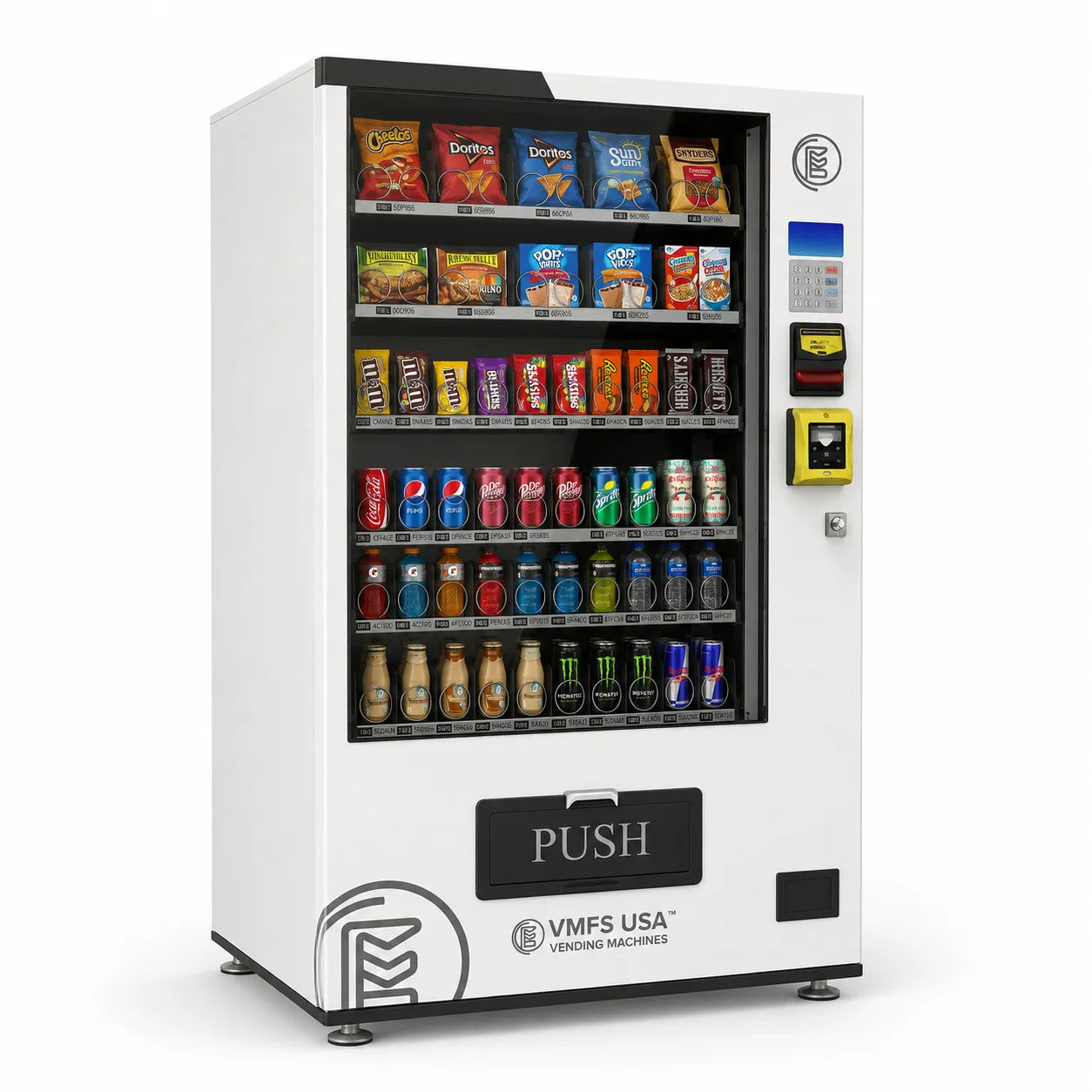
Share:
10 Gyms and Fitness Centers in Miami-Dade County Embracing Vending
How to Build Real Passive Income with Vending Machines