


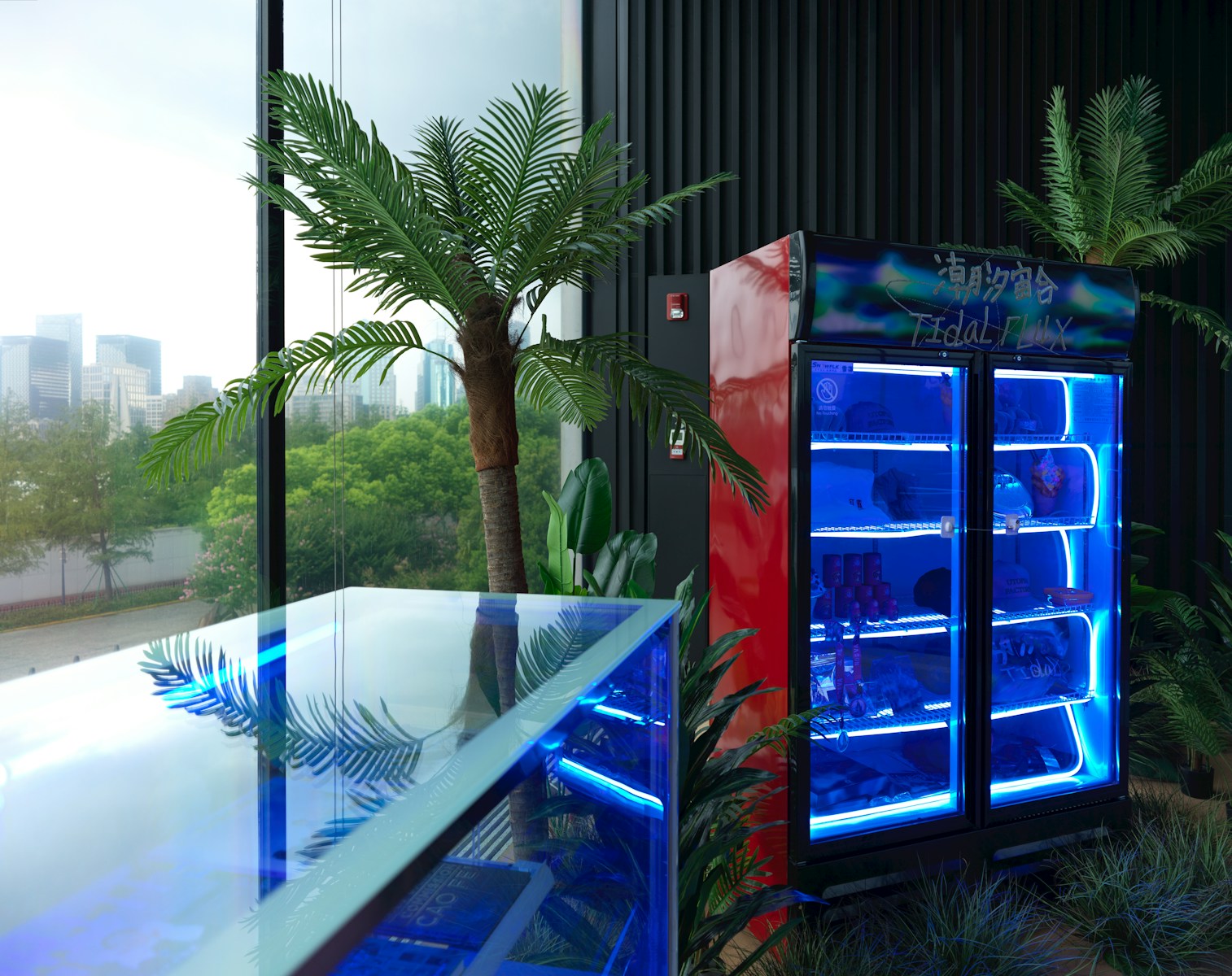


Design the perfect vending solution for your location and customers.

Join the VMFS newsletter and step into a thriving network dedicated to collective success.
One signup. Endless possibilities.
You can start a vending machine business with no money if you understand how the industry works and use the right entry methods. Many new operators believe vending requires a large upfront investment, but several practical strategies allow beginners to launch with limited cash. These approaches focus on location partnerships, property hosting, and flexible financing. When combined with consistent service and smart placement, they give you a path into the vending industry without heavy risk.
This guide explains how each method works, why they are accessible for new operators, and how to use them to build a small vending operation that grows at a steady pace. You will learn the basics of the business, how to secure high performing locations, and how to choose machines that match your budget and skill level. Each step is simple, clear, and designed for beginners who want a realistic way to enter the industry today.
A vending machine business is an automated retail model in which products are sold directly to customers through self-service machines. Operators typically purchase or lease vending machines, stock them with products, place them in high-traffic locations, and earn revenue from each transaction.
Unlike traditional retail businesses, vending machines require relatively little space and can operate for extended hours with limited on-site labor. Common locations include offices, schools, hospitals, apartment buildings, gyms, hotels, transportation hubs, and retail facilities.
The business model generally involves four core activities:
| Business factor | Typical consideration |
|---|---|
| Products | Snacks, drinks, food, bulk items, specialty products |
| Location | Offices, schools, gyms, hospitals, retail spaces |
| Revenue | Product sales and, in some cases, additional service fees |
| Main costs | Machine, inventory, maintenance, payment processing, location commission |
| Operations | Restocking, cleaning, repairs, cashless payment management |
Vending businesses vary considerably depending on the products sold, machine type, target customers, and location. The most common models include traditional snack and beverage vending, bulk vending, and specialty automated retail.
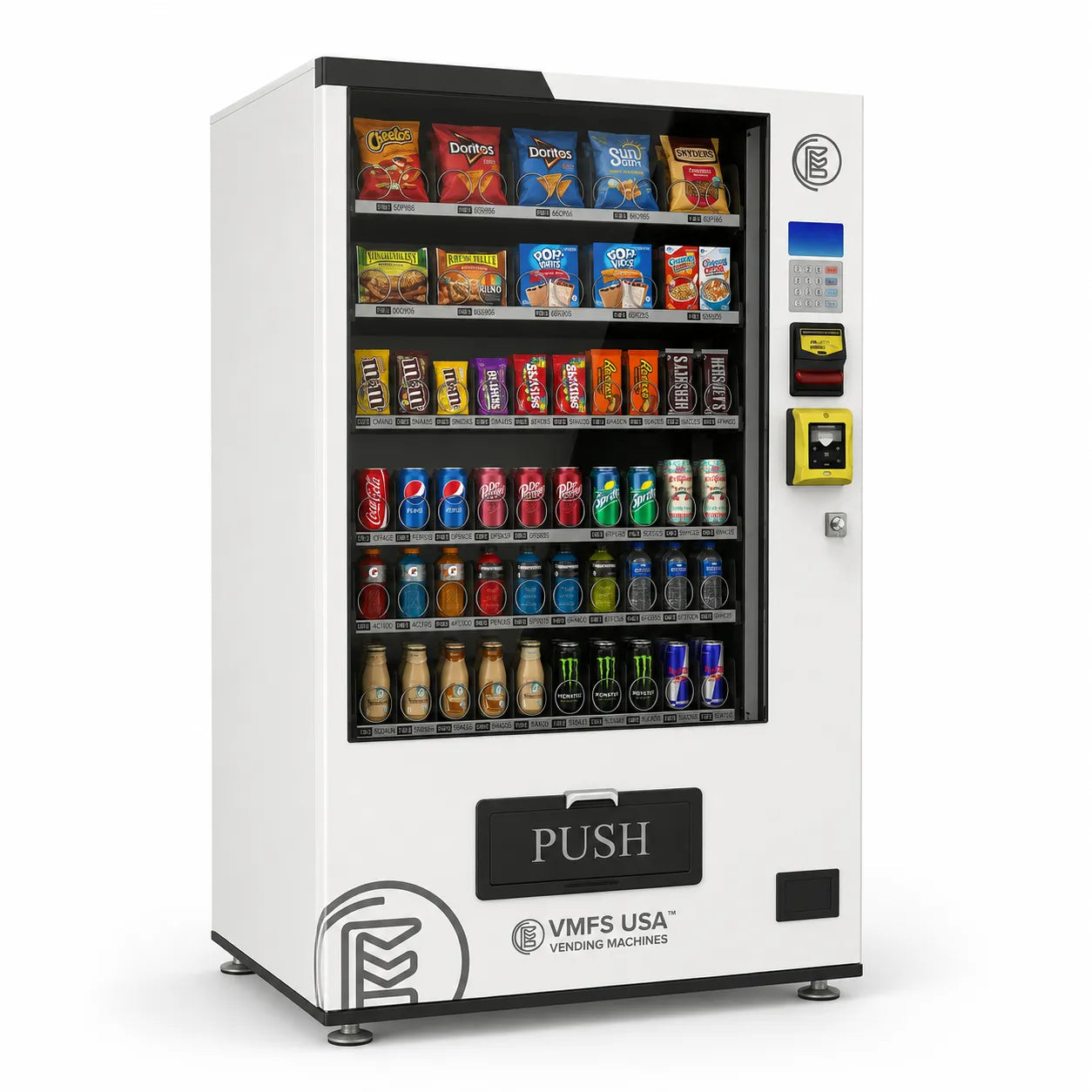
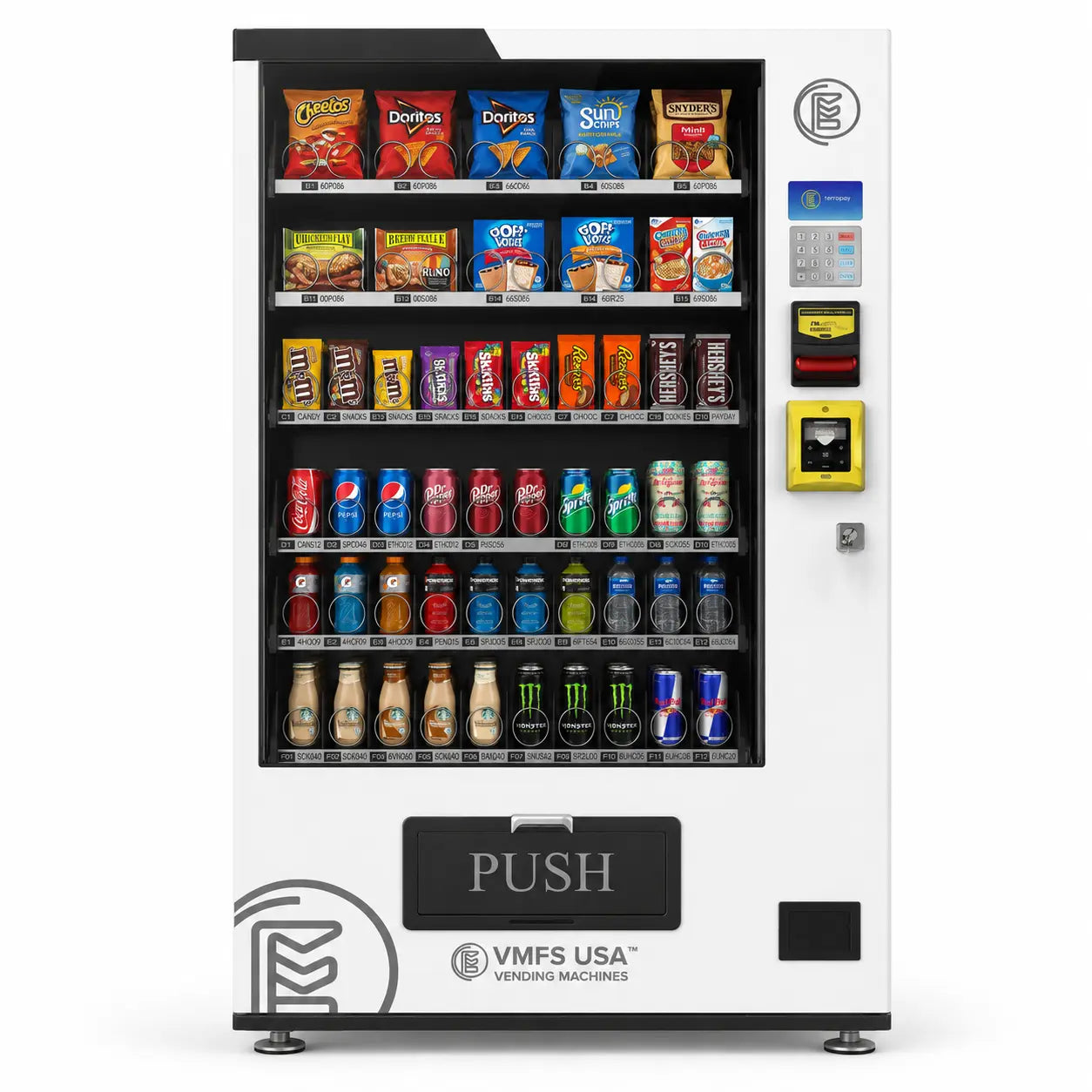
Snack and beverage vending is the most popular vending model. Machines can sell packaged snacks, bottled and canned beverages, refrigerated food, fresh meals, and other convenience products.
These machines work particularly well in locations where customers need quick access to food or drinks without visiting a store or cafeteria. Product selection is usually adjusted to match the audience and location.
Specialty vending focuses on specific products or services rather than general snacks and beverages. Examples include:
Hot drink machines: Coffee, tea, hot chocolate, and other beverages.
Laundry vending: Detergent, dryer sheets, laundry bags, and related supplies.
Retail vending: Electronics accessories, personal care products, cosmetics, or convenience items.
Health and wellness vending: Personal care and selected health-related products.
Specialty machines can serve a specific customer need and may perform well when installed in locations where those products are needed immediately.
The terms vending machine and automated retail machine are sometimes used interchangeably, but automated retail is a broader category.
A traditional vending machine typically dispenses a predefined product after payment. Automated retail machines can offer a wider range of products and may incorporate features such as touchscreen interfaces, inventory tracking, refrigeration, age verification, or more advanced payment systems.
| Vending machines | Automated retail machines |
|---|---|
| Usually product-specific | Can support broader product ranges |
| Simple self-service purchasing | Often uses advanced interfaces |
| Commonly dispenses individual items | May function more like a compact automated store |
| Typically lower operational complexity | Can involve more sophisticated technology |
A vending business earns money by placing machines in locations where people already spend time. The location provides the space, you provide the machine and service, and both sides benefit. Once placed, the machine earns passive income as customers buy products.
Your tasks are simple and repeatable. Most operators spend more time driving to a location than servicing the machine.
Most machines need one service trip every 7 to 14 days, depending on sales. This keeps the business flexible and easy to manage part time.
You can start a vending machine business with no money by using access points that already exist in the industry. Many locations want vending service but do not want to buy machines. Many machine owners have equipment sitting idle because they lack time, staff, or good placements. And many suppliers offer financing that requires no upfront payment. When you understand how these gaps work, you can enter the industry without spending money on equipment.
The three methods below work because they solve real problems for operators and locations. You are not asking for favors. You are providing service, handling equipment, and keeping locations stocked. This creates a win, and every win generates predictable revenue.
Location matching is the strongest no money entry method because it uses resources that already exist. Thousands of machines across the country sit unused in storage. They belong to operators who no longer run full routes, lost locations, upgraded equipment, or do not have time to place older machines. These machines still work and still make money. Owners want them placed, but they do not want to handle new locations themselves.
Your job is simple: find a location that wants a machine and match it with a machine owner who wants passive income. You take over the work, and both sides benefit. This creates a no cost setup for you and practical value for everyone involved.
This method gives beginners something rare in vending: a profitable setup without upfront cost. Many operators started this way and used their first machine to fund additional equipment.
If you control a property with daily traffic, you can get a machine installed for free by an operator who wants the guaranteed placement. This is a zero cost setup because you provide the space, and the vendor provides the machine, service, and inventory. You earn a commission simply because you control the location.
This method works even for small locations. A site with 20 to 40 people per day may not be enough for a new operator to invest money, but it is enough for an established operator to place a machine for free because they already have inventory and equipment ready to deploy.
This method gives you vending income and hands on exposure with no equipment investment. It is one of the safest ways to get started if you want to build confidence before servicing your own machines.
Financing allows you to acquire a machine with no upfront payment, then use the machine’s revenue to cover the loan. This approach becomes very low risk when you secure a location before choosing a machine. With a predictable placement, your monthly payment is covered by sales, even in modest locations.
Once the loan is paid off, the machine becomes a cash producing asset. Many small operators scale to multiple machines by repeating this process a few times, using revenue from the first machine to fund the next one.
Yes, a vending machine business is profitable when machines are placed in locations with consistent customer demand and products are priced correctly. However, profitability varies significantly by location, product mix, sales volume, machine costs, operating expenses, and location commissions.
A machine with strong daily sales can generate attractive returns, while a poorly placed machine may struggle to cover inventory, maintenance, and other operating costs. The key metric is not simply revenue, but net profit after all operating expenses.
Vending machine businesses can often achieve gross product margins of around 40%–60%, depending on the products being sold and their wholesale costs. Net margins are lower after accounting for location commissions, payment processing, fuel, maintenance, spoilage, and other expenses.
For example:
| Metric | Example |
|---|---|
| Monthly sales | $1,500 |
| Product cost | $750 |
| Gross profit | $750 |
| Other operating costs | $300 |
| Estimated net profit | $450 |
| Net margin | 30% |
These figures are illustrative rather than guaranteed. Actual results can vary considerably between machines and locations.
Several factors determine whether a vending machine produces a strong return:
Location: High-traffic locations with a captive customer base generally provide more sales opportunities.
Product selection: Fast-moving products with suitable price points can improve inventory turnover and margins.
Machine type: Refrigerated, smart, specialty, and traditional machines have different purchase and operating costs.
Pricing: Prices must provide sufficient margin while remaining competitive for the location.
Operating costs: Inventory, repairs, electricity, payment processing, transportation, and insurance can reduce net profit.
Location fees: Some property owners require fixed rent or a percentage of sales.
Cashless payments: Card and mobile payment options can increase convenience but introduce transaction fees.
Restocking efficiency: Planning efficient service routes reduces fuel, labor, and travel costs.
Location quality is often the biggest profitability variable. A relatively inexpensive machine in a strong location can outperform a more expensive machine installed where customer demand is weak.
Finding a perfect location is the hardest part of vending business because your entire success depends on it. For this purpose we recommend using VPlaced. They will provide you the best location for your machines.
Finding profitable vending locations does not require money. It requires strategy, consistency, and knowing which types of buildings convert at the highest rate. Most beginners struggle because they approach locations randomly. When you target the right categories and use simple scripts that highlight value, you secure placements even without owning a machine yet.
Below are methods that work for beginners with zero budget and zero equipment. These methods focus on solving location problems, not trying to “sell” vending services. Locations want reliability, convenience, and fast response times, not fancy machines or aggressive pitches.
Places that already have vending issues convert the fastest. You are offering a solution, not a request. Look for:
These locations are “pre qualified,” meaning they already understand the value of vending and are ready for a dependable provider.
Most vending outreach fails because beginners use long sales pitches. Instead, speak to the location’s interests. The best short script for cold calls or walk ins is:
“Do you already have a vending provider? If not, I can place and service a machine at no cost. You choose the snacks and drinks you want, and I handle everything.”
This script works because it removes risk, offers control, and tells them exactly what they get. You are not selling machines. You are offering convenience.
Many beginners forget that their best opportunities are often within their personal circle. Tell friends, coworkers, and family that you provide vending service. You will be surprised how many people know a business owner, property manager, warehouse supervisor, or school administrator who wants a machine.
Personal recommendations also increase trust, which makes placements easier to secure.
Some location types consistently outperform others. When you are starting with no money, target “efficient locations,” meaning buildings with reliable foot traffic and low competition. Top categories include:
Targeting these categories reduces the time needed to find a profitable placement. They also make it easier to justify your service even without advanced equipment.
Locations hesitate when they think a vendor will disappear or provide poor service. Solve this by offering small commitments that reduce perceived risk. Examples:
These commitments set you apart from operators who run routes part time and do not prioritize service. Locations value reliability more than machine features.
The strongest tactic for broke beginners is securing the location before the machine. This makes every method easier. When you tell a machine owner, supplier, or financer that you already have a confirmed location, you instantly gain credibility. Many owners will loan you a machine because you have somewhere to put it. Many suppliers will prioritize your financing. And many locations will give you access because you demonstrate action, not promises.
Finding profitable locations with no money is not about equipment. It is about solving problems, being consistent, and offering service that others are too busy to provide. When you control a good location, you control the foundation of your vending business, even before you buy your first machine.
A vending machine business plan outlines how the business will operate, generate revenue, manage costs, and grow. It does not need to be excessively long. A practical plan should clearly define the target market, machine types, products, locations, startup costs, pricing strategy, and expected financial performance.
A basic vending machine business plan can include:
| Section | What to cover |
|---|---|
| Business overview | Business model, goals, and target market |
| Market analysis | Customer demand, competitors, and potential locations |
| Products | Snacks, beverages, specialty products, or other items |
| Operations | Restocking, maintenance, payment systems, and suppliers |
| Location strategy | How locations will be identified and secured |
| Marketing | Customer acquisition and location-owner outreach |
| Financial plan | Startup costs, sales projections, expenses, and profit |
| Growth strategy | Adding machines, expanding locations, or diversifying products |
Market research helps determine whether there is sufficient demand for vending services in your target area. Start by identifying high-traffic locations, customer demographics, existing vending operators, product demand, and potential gaps in service.
Research competing machines and compare their product selection, pricing, payment options, machine condition, and customer experience. Speaking with potential location owners can also reveal whether they already have vending services and what improvements they would consider.
Your research should answer three basic questions:
Who will buy the products?
Where and when will they buy them?
What products or services are competitors failing to provide?
This information can then be used to select machine types, estimate sales, and build realistic financial projections.
A formal business plan is not always required to start a vending business, particularly when the operator is purchasing a small number of machines with personal funds. However, it becomes more valuable when applying for a business loan, equipment financing, investment, or other external funding.
Lenders and investors generally want to understand how the business will generate enough cash flow to cover operating expenses and repay financing. A strong plan should therefore include realistic startup costs, projected revenue, operating expenses, break-even estimates, and repayment assumptions.
For a self-funded operation, a concise one- to three-page plan may be sufficient for planning purposes. For external financing, a more detailed financial plan supported by market research can strengthen the funding application.
The right vending machine can make your startup easier, reduce your service time, and produce steady sales even in small locations. You do not need the newest or most expensive model. You need a machine that matches the environment, traffic pattern, and buying behavior of the people using it. Below is a detailed breakdown of the most practical vending machines for beginners and why each type works.
Combination vending machines (snack and drink in one unit) are one of the safest starting points because they serve two needs without requiring two machines. These units fit well in places with moderate foot traffic or limited space. They are ideal for offices, gyms, apartment buildings, salons, and small break rooms where people want both snacks and cold drinks but the location cannot justify multiple machines.
Soda vending machines and bottled drink machines remain top performers across almost every location type. Drinks usually outsell snacks because customers buy multiple drinks per day, especially in active environments. These machines are easier to maintain because they have fewer motors, fewer spirals, and predictable product sizes.
Snack vending machines offer steady mid-day and late-night sales in offices, schools, apartments, and waiting areas. They do not require refrigeration, making them cheaper to maintain and easier to repair. When placed in a steady work environment, snack machines create predictable weekly revenue from chips, cookies, bars, and pastries.
AI vending machines are modern units with touchscreens, product recommendations, and remote inventory tracking. They are not necessary for most beginner routes but can outperform traditional machines when placed in premium buildings. Their visual appeal draws customers, and remote monitoring reduces service trips.
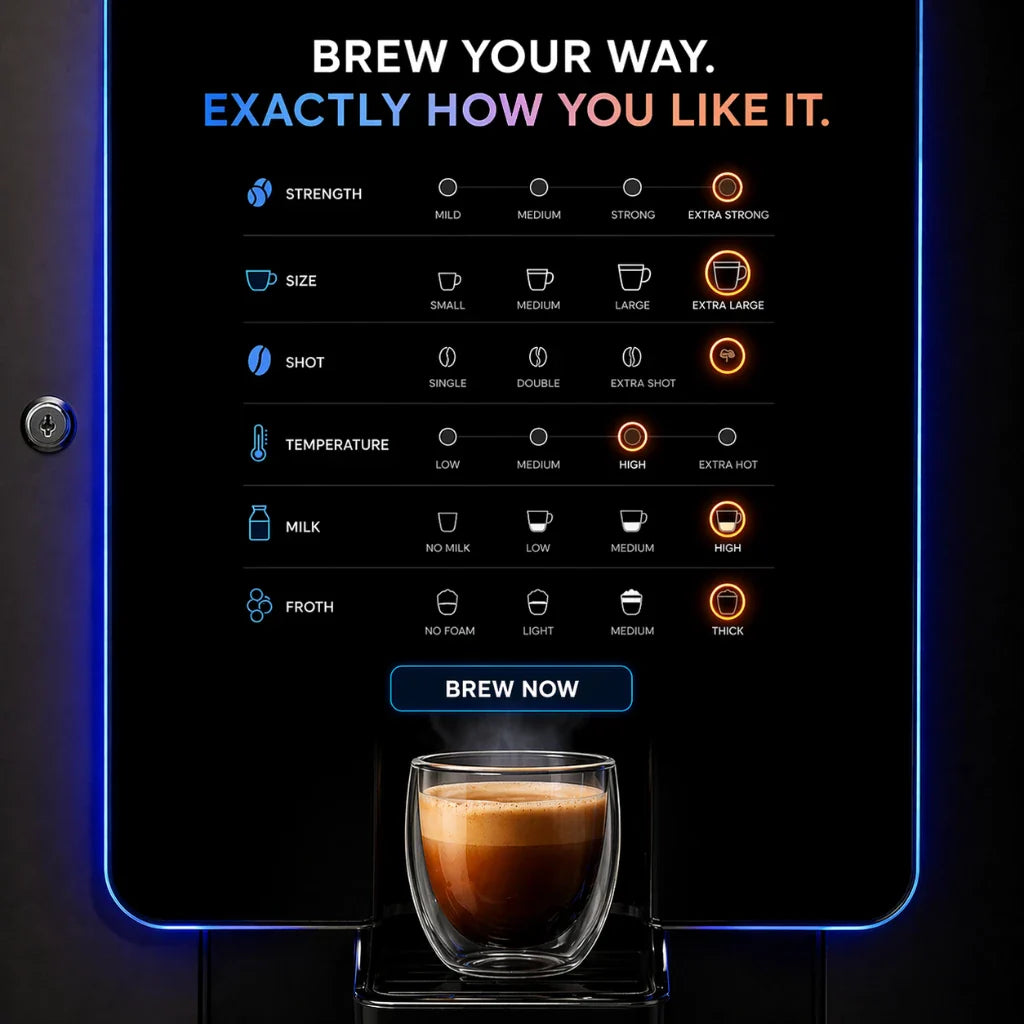
Coffee vending machines perform best in workplaces with early shifts or long sedentary hours. Coffee has one of the highest margins in vending because product cost stays low. These machines do well in offices and waiting areas where customers want hot drinks without leaving the building.
Starting a vending machine business involves more than buying machines and finding good locations. You also need to meet local business, food safety, tax, accessibility, and vending machine licensing requirements. The exact rules depend on your state, city, county, and the type of products you sell.
Before operating, choose a legal structure for your vending business. A sole proprietorship is usually the simplest option and is easy to set up, while a vending business LLC can provide liability protection and separate the business from the owner's personal assets.
Your choice can affect taxes, paperwork, costs, and personal liability. Many vending operators also register a business name and obtain an Employer Identification Number (EIN) when required.
| Business structure | General characteristics |
|---|---|
| Sole proprietorship | Simple setup, owner and business are legally connected |
| LLC | Liability protection with relatively simple administration |
| Partnership | Two or more owners share the business |
| Corporation | More formal structure, generally used by larger businesses |
The best structure depends on your circumstances, so consider discussing the choice with a qualified accountant or business attorney. In order to get legal advice related to your vending business we suggest using VAdviced,
Vending machines may require one or more business licenses, vending permits, sales tax registrations, or food-related permits. Requirements vary widely by location and by what the machine sells.
For example, a machine selling packaged snacks may have different requirements from one selling refrigerated meals or prepared food. Some cities may also require permits for each machine or location.
Before placing a machine, check requirements with your state and local government, health department, and tax authority. Also confirm whether the property owner requires additional documentation or insurance.
Food and beverage vending is subject to food safety requirements. The U.S. Food and Drug Administration (FDA) provides federal food-safety guidance, while state and local authorities generally handle many of the requirements that apply directly to vending operations.
Operators selling food should pay attention to:
Proper food storage and handling
Temperature control for perishable products
Product expiration dates
Clean and sanitary machines
Accurate product labeling
Allergen information where required
Safe handling during transportation and restocking
Requirements can differ depending on the products and jurisdiction. A vending operator should check the applicable rules before selling refrigerated, frozen, fresh, or prepared foods.
The Americans with Disabilities Act (ADA) can affect vending machine placement and accessibility. The machine should be positioned so customers with disabilities can reasonably access and use it, and the surrounding area should not create unnecessary barriers.
Consider factors such as clear floor space, reach ranges, controls, payment interfaces, and accessible placement. Accessibility requirements can depend on the type of property and whether the location is covered by the ADA.
For new installations, it is better to consider accessibility during site selection rather than trying to correct problems after the machine is installed. When requirements are unclear, check the applicable ADA standards or consult an accessibility professional.
Use this checklist to move from idea to your first placed machine as efficiently as possible.
A vending machine business can be a practical way to enter the retail industry without opening a traditional store. However, it is not completely passive. Machines need regular restocking, cleaning, maintenance, and monitoring.
Relatively low startup requirements: You can start with one or a few machines and expand your vending machine business.
Lower overhead: There is no need for a full retail storefront, large staff, or extensive floor space.
Flexible operation: Restocking and servicing can often be scheduled around other work.
Multiple product options: Operators can sell snacks, beverages, fresh food, coffee, personal care items, and specialty products.
Scalable business model: Successful locations can be expanded by adding more machines and service routes.
Cashless payment options: Card and mobile payments make purchasing easier and can help capture more sales.
Location is critical: Finding a right location for vending machine is necessary. A machine in a low-traffic location may generate very little revenue.
Regular maintenance: Machines can experience payment, refrigeration, mechanical, or software problems.
Inventory management: Products must be purchased, transported, stocked, and monitored for expiration.
Location fees: Some property owners charge rent or take a percentage of vending sales.
Travel and servicing costs: Managing machines across multiple locations can increase fuel and labor expenses.
Not completely passive: Although vending machines automate the selling process, the business still requires ongoing management.
Overall, vending can be attractive for operators who can secure profitable locations and manage machines efficiently. The business becomes more demanding as the number of machines and locations grows.
Starting a vending machine business does not require complex systems or large upfront investments. It requires finding the right locations, choosing machines that fit those locations, and serving them consistently. When you focus on solving location problems, not selling equipment, the business becomes simple. Every strong placement builds reliable revenue, and every machine you manage teaches you how to expand. With steady action and clear priorities, you can build a vending operation that grows one location at a time and produces dependable income for years.
Share:
Top Side Hustles to Build Passive Income in 2026
Top Side Hustles to Build Passive Income in 2026