


The vending machine business pros and cons come down to a simple trade: low entry cost, 24/7 sales and easy-to-source products on one side, and location dependence, thin per-sale margins, theft, downtime and hands-on route work on the other. Most vending businesses that fail do so because of a handful of controllable risks, not bad luck.
This guide breaks down each risk a US operator faces, what it costs, the early warning signs and the specific controls that reduce it, with the warranty, telemetry and payment details that apply to VMFS USA machines.
Vending Machine Business Pros and Cons at a Glance
A vending machine business suits someone who wants a small, scalable retail business with low overhead, and it disappoints someone expecting truly passive income. The advantages are real: a single machine costs a few thousand dollars, it sells around the clock without staff, and the products are simple to buy and price. The disadvantages are just as real: revenue depends almost entirely on the location, profit per sale is measured in cents, and every machine needs restocking, cleaning, cash handling and the occasional repair.
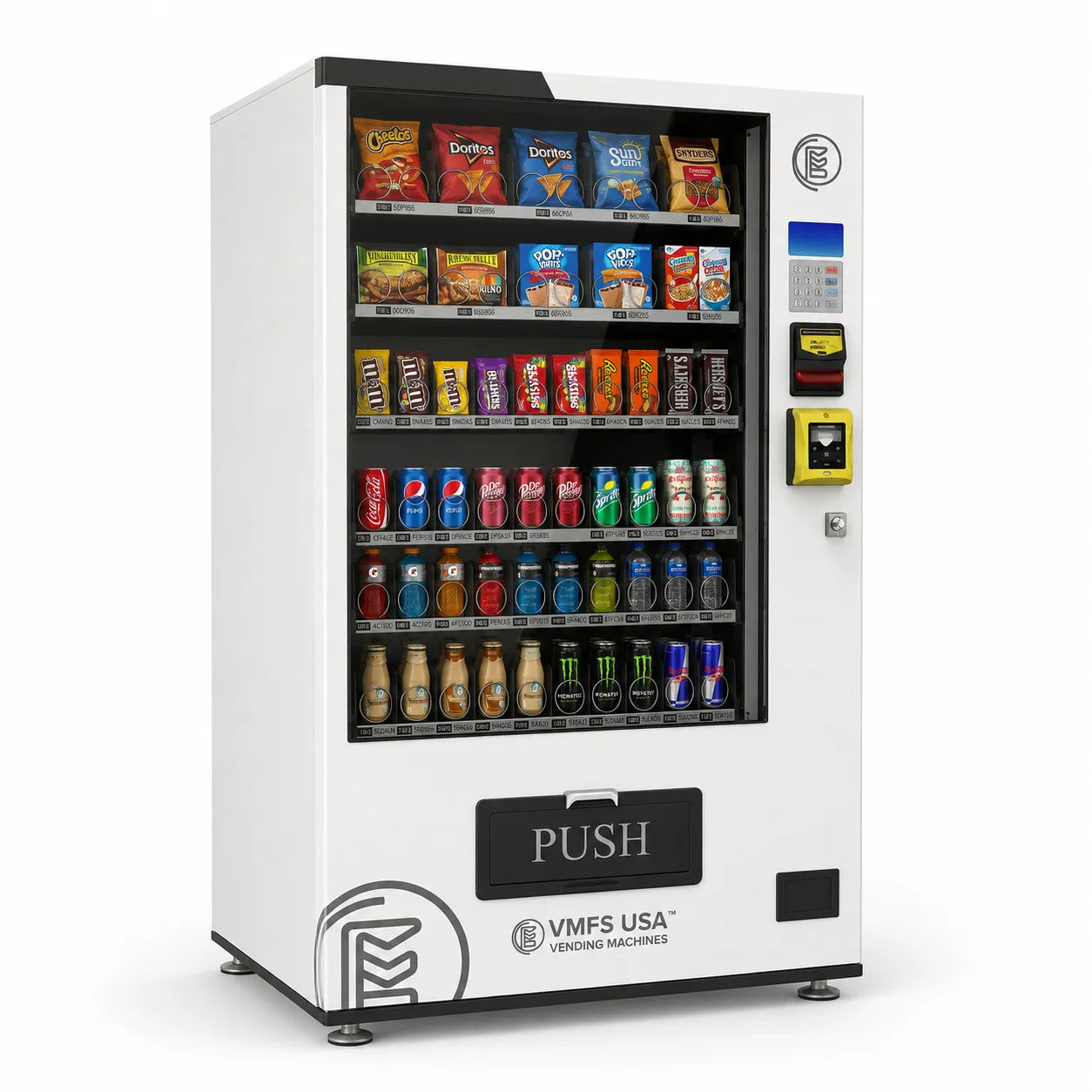
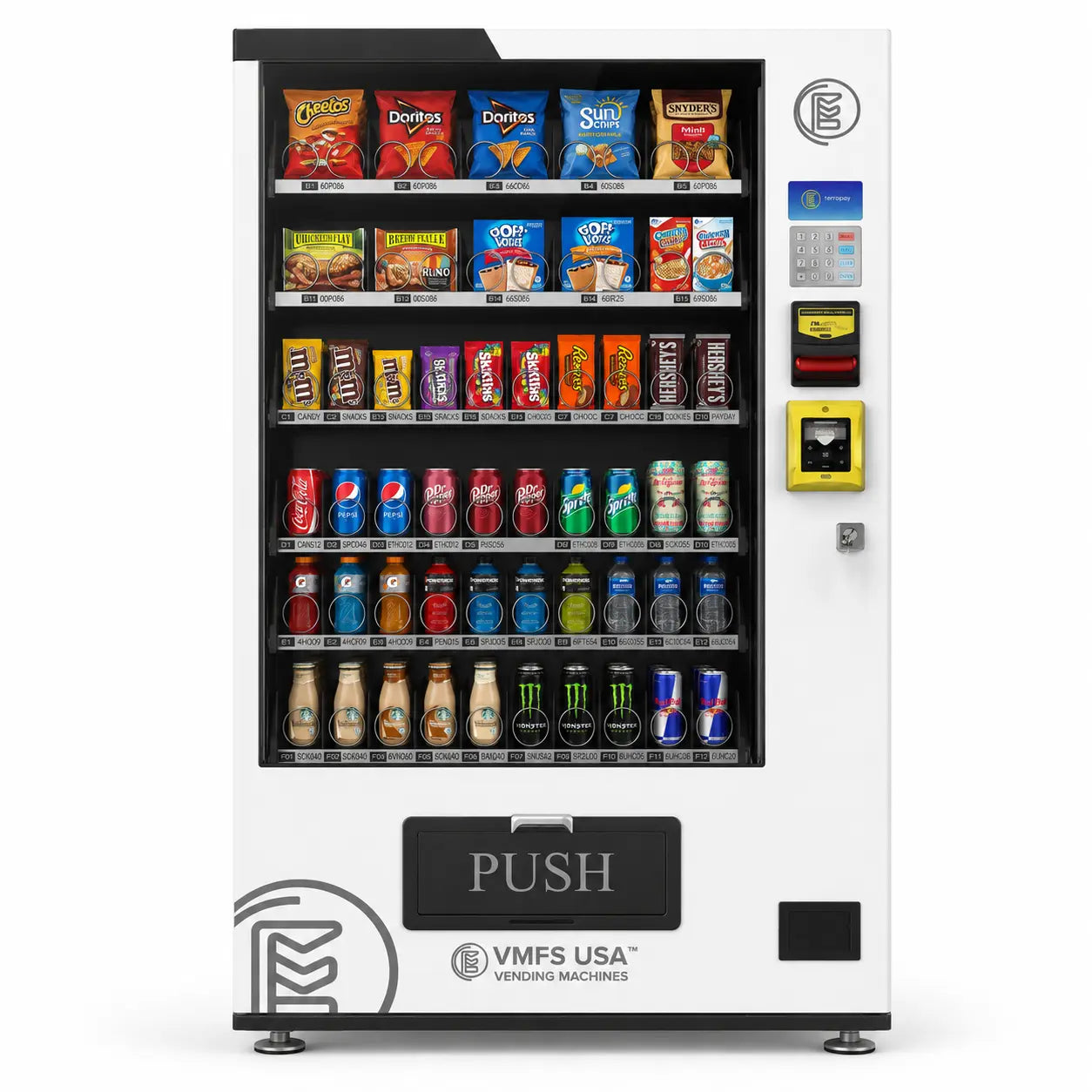
NerdWallet puts used machines at roughly $1,200 to $3,000 and new machines at $3,000 to $10,000. New vending machines from VMFS USA currently run from $1,900 for the Countertop Snack Vending Machine to $19,950 for the Elevator Pro ice cream machine. That spread is itself a risk factor: the cheapest machine is rarely the lowest-risk one, and the most expensive one only pays back in a location busy enough to carry it. For the earnings side of the decision, read our analysis of whether vending machines are profitable.
Advantages
- Low entry cost compared with most retail businesses
- Sells 24 hours a day without staff on site
- Starts with one machine and scales one location at a time
- Cashless buyers spend more per transaction than cash buyers
- Telemetry lets you watch sales and faults remotely
- Equipment can be moved if a site fails
Disadvantages
- The location controls most of the revenue
- Thin margin per sale after product cost, commission and fees
- Not passive: restocking, cleaning, collections and driving
- Exposure to theft, vandalism and card skimming
- A breakdown stops sales until it is fixed
- Insurance, permits, accessibility and labeling rules
- Scam sellers target first-time buyers
Whether the cons outweigh the pros depends on how well each risk is managed. The rest of this guide takes them one at a time, starting with the ones that sink the most new operators.
What Are the Biggest Risks in a Vending Machine Business?
The biggest risks in a vending machine business are a weak location, overspending before the model is proven, equipment downtime, spoiled or stolen stock, and legal or insurance gaps. Each one shows early warning signs if you know what to watch for, and each has a specific control. The table summarizes them; the sections below explain the cause, the cost and the fix.
| Risk | What it costs you | Early warning sign | Main control |
|---|---|---|---|
| Weak location | Sales that never cover commission, fuel and time | Flat sales after 30–60 days with a full machine | Traffic check before install, written exit terms |
| Overextended capital | Cash crunch, missed payments, forced sale of equipment | Buying several machines before one is proven | Start with one or two machines, model break-even first |
| Equipment downtime | Lost sales for every hour the machine is down | Repeated jams, reader errors, refund requests | New or inspected equipment, warranty, fault alerts, spare parts |
| Spoilage and stockouts | Wasted product and empty slots | Expired items at restock, the same slots always empty | Par levels, sales data, temperature alerts |
| Theft, vandalism, skimming | Repairs, stolen cash or stock, card fraud complaints | Pry marks, loose reader parts, cash shortfalls | Supervised indoor placement, cashless-first, inspections, property insurance |
| Legal and insurance gaps | Uncovered claims, removal from a site, fines | A location asks for a certificate of insurance you can't supply | Liability and property coverage, permits, ADA and labeling checks |
| Seller fraud | Lost purchase price, placements that never happen | Guaranteed earnings, pressure to pay quickly | FTC disclosure document, independent references, written warranty |
| Time and labor | A route that consumes the profit it makes | Driving more hours than the machines earn | Route density, data-based restocking, mileage tracking |
Most of these risks compound. A weak location produces low sales, low sales tempt an operator to stretch restock intervals, longer intervals mean more expired product and empty slots, and a half-empty machine sells even less. Breaking that loop early, usually by fixing or leaving the location, is cheaper than trying to out-stock a bad site.
Financial Risk: Overspending Before the Model Is Proven
The most common financial mistake is putting cash into several machines, a large first fill and premium add-ons before one machine has shown that a location works. Overextension drains working capital, and a vending route needs cash on hand for restocking, repairs and slow months. When that cash is tied up in idle equipment, one bad site or one broken unit can stall the entire business.
Start lean. One or two machines in carefully vetted locations produce real sales data within weeks, and that data tells you which machine type, product mix and price point to repeat. Our breakdown of how much a vending machine costs covers the purchase side; the operating side is where new operators most often under-budget, so map out monthly cash flow before you buy.
Financing protects liquidity, but it adds a fixed monthly payment the machine has to earn whether the site performs or not. VMFS USA does not lend in-house; it works with third-party providers listed on its financing options page, including PayPal (financing $49 to $10,000 over 3 to 24 months), Klarna and Clicklease (up to $30,000, with approvals down to a 500 credit score). Read every agreement for total cost, balloon payments, early payoff terms and insurance requirements, because some financing agreements require the equipment to be insured while you pay it off.
Hidden monthly costs to budget for
Hidden costs are the recurring charges that never appear on the machine's price tag but come out of every month's sales. Card processing alone typically takes about 3% to 6% of each cashless sale, and most card readers add a monthly service fee on top. The table lists the costs that catch new operators most often.
| Cost | Typical figure | Notes |
|---|---|---|
| Card processing | About 3%–6% of each cashless sale | VMFS comparison shows ~2.5% + $0.10 or ~5.95% flat, depending on provider |
| Card reader service | $7.95–$18.95 per reader per month | Varies by provider and plan |
| VMFS Cloud | From $7.99 per machine per month | Advertising Cloud $16, AI Cloud $39.99 |
| General liability insurance | Median $37 per month | Insureon median for vending operators, $1M/$2M limits |
| Location commission | Often 5%–25% of sales | Negotiable; small sites often accept little or none |
| Vehicle use | 72.5 cents per business mile | 2026 IRS standard mileage rate, a benchmark for true driving cost |
| Electricity | Refrigerated machine about 3–4.4 kWh per day | Usually paid by the location; confirm it in writing |
Break-even is the point where sales cover these costs, and it is worth calculating before you sign anything. As an illustration with assumed numbers: a $2.00 item that costs you $0.80, with about 6% processing ($0.12) and a 10% commission ($0.20), leaves $0.88 per sale. If the machine's fixed monthly costs are about $55 (reader service, a Basic cloud plan and a share of insurance), it needs roughly 63 sales a month just to break even, before driving time, the machine payment or any pay for your own labor. Run the same math with your real prices and costs in the VMFS ROI calculator before committing to a site.
Location Risk: Traffic That Doesn't Buy and Weak Contracts
Location risk is the chance that a site never produces enough sales, or that you lose a good site because the agreement did not protect you. The location is the single biggest driver of vending revenue, and it fails in two ways: traffic that does not buy, and terms that let the host remove you or squeeze your margin.
Foot traffic is not the same as buyers. A gym where members bring their own protein bars, a salon where the machine sits out of sight of the waiting area, or an office complex where several machines go in at once for a workforce that is rarely on site can all look busy and still sell little. Before installing, check traffic during the hours you expect to sell, the distance to a dedicated outlet, whether the spot is visible and supervised, and whether a store or another operator already serves the same people. Our guide on how to scout and pitch a vending machine location covers site selection in depth.
Commission is the other location lever. NerdWallet reports that property owners typically receive 5% to 25% of a machine's revenue, and VMFS's location matching program publishes ranges of 0% to 5% for small sites, 5% to 15% for standard sites and 15% to 20% for high-volume sites. A high commission at a low-volume site is the fastest way to work for free, so tie the rate to proven sales, or position the machine as a staff or resident amenity at small sites. Our revenue split guide shows how commission interacts with product cost and fees.
Put the terms in writing before any machine is delivered. A sensible first agreement is a one-year term with 30 to 60 days' notice for either side, plus clear language on who pays for electricity, who covers damage or theft, what insurance each party carries, and your right to swap or move a slow machine. Multi-year exclusivity is not standard in a first agreement, so be wary of giving it before the site has proven itself. Our vending machine contract template includes these clauses.
Rule of thumb: Add a second machine at a site only after the first one has a stable sales history there. One proven machine is worth more than five struggling ones, because each extra unit adds commission, restocking time and capital without adding buyers.
Equipment and Downtime Risk
Equipment risk is the revenue lost when a machine cannot sell, and it is highest with old, unsupported or mismatched hardware. A jammed coil, a dead card reader or a failed cooling unit stops sales until it is fixed, and in a refrigerated machine the same failure can spoil everything inside.
Used machines cost less up front but carry more of this risk: older payment hardware that may not accept modern cards or phones, parts that are harder to find, and usually no warranty. That trade can still make sense for a mechanically confident operator, and our used vending machine guide explains how to inspect one. New machines shift more of the risk to the supplier. Every VMFS USA machine includes a 1-year parts warranty, with optional extensions to 2 years for $250 or 3 years for $400 (coverage can vary by model), and covered replacement parts ship free within the continental US during the warranty period.
Read the fine print before relying on any warranty. The VMFS warranty policy covers parts, not labor; it excludes vandalism, misuse, third-party tampering and power surges, and using an indoor model in an outdoor or semi-outdoor spot voids it. If a machine will sit outside, buy one built for it, such as the models in the outdoor vending machines collection, which currently start at $6,450.
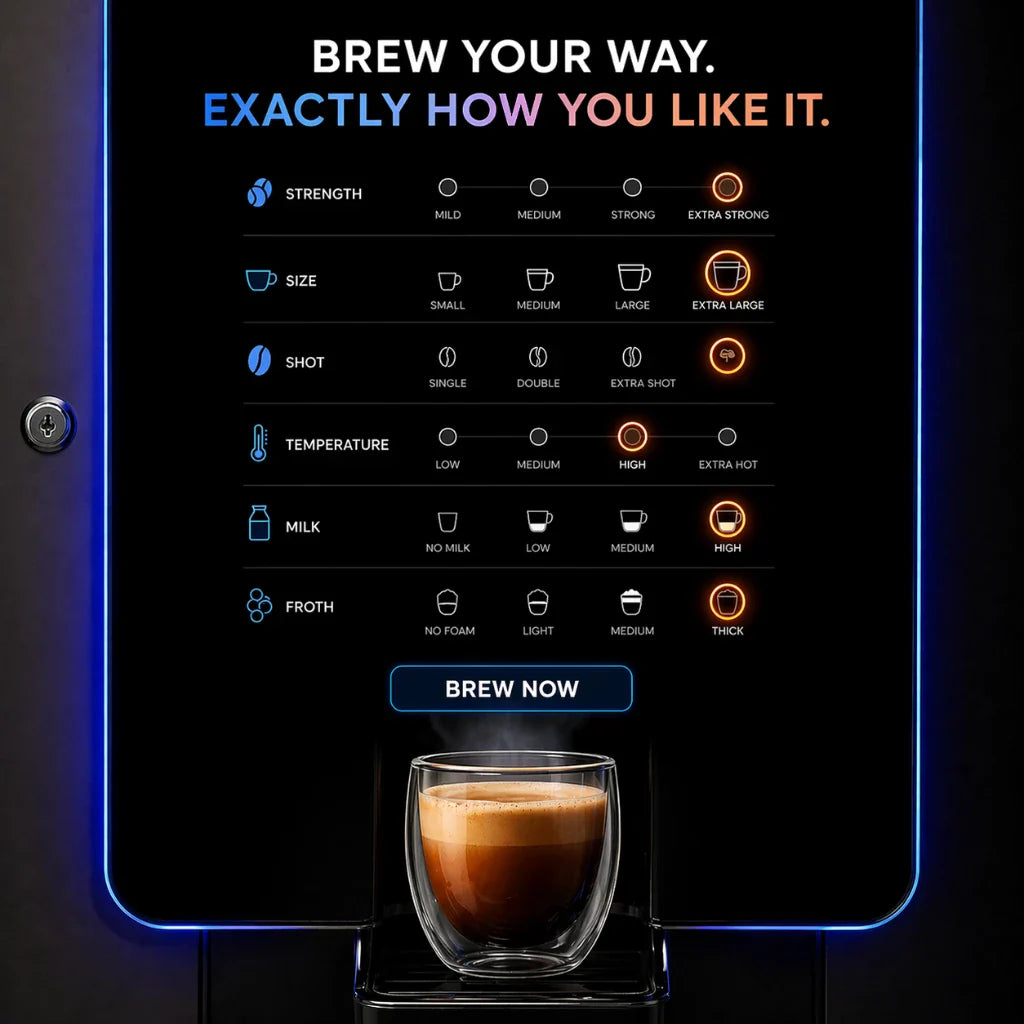
Telemetry turns downtime from a surprise into an alert. VMFS Cloud works with every VMFS machine; plans start at $7.99 per machine per month and send jam, offline, malfunction, temperature, door, payment-reader and low-stock alerts by SMS or email, with thresholds you set. If a machine loses its connection, it keeps vending and syncs its sales when the connection returns. The same data shows which slots sell out first, so restock trips can follow demand instead of a fixed calendar.
Plan for the parts that wear. Keep spare coils, a vend motor and a known-good reader cable for your most common model, clean and inspect machines on a schedule, and follow a written vending machine maintenance routine. Our guide to common vending machine issues and fixes covers the faults you can solve on site without a technician.
See Problems Before Your Customers Do
VMFS Cloud sends jam, offline, temperature and low-stock alerts for every VMFS machine, with plans from $7.99 per machine per month.
Explore VMFS CloudInventory, Spoilage and Supply Risk
Inventory risk is the money lost to empty slots on one side and expired or unsold product on the other. Every empty slot is a missed sale and every expired item is cost with no revenue, so the goal is a tight product mix that turns quickly.
Start with a narrow lineup and let sales data decide what stays. Track every sale and refill for the first 30 days, then remove slow movers, give fast sellers more facings and adjust prices. Plan for seasonality, such as more water at gyms in summer and fewer melt-prone chocolate bars, and test new items in small quantities before committing a full column. Our guide to stocking a vending machine covers par levels and rotation.
Refrigerated and frozen products add a food-safety layer. A cooling failure is both a loss and a liability, because product that has warmed up should not be sold. Temperature alerts, a quick check of the display temperature at every visit and date checks during each restock reduce both risks, and rotating stock so older items sell first keeps write-offs small.
Demand shifts as well. In NAMA's latest census of the convenience services industry, 65% of participants cited client requests for healthier product mixes, and 59% see better-for-you products as a growth opportunity. A route stocked only with candy and soda risks losing contracts to an operator who offers choice, so review our guide to healthy vending machine snacks for proven better-for-you options.
Supply disruption is the third inventory risk: a top seller out of stock at your wholesaler, a sudden price increase or a discontinued item. Keep at least two sources for your best sellers, such as a warehouse club and a distributor, hold a small buffer of the fastest movers, and keep substitutes ready so a shortage does not leave a column empty for a week.
Theft, Vandalism and Payment Fraud
Theft and vandalism are less frequent than many new operators fear, but expensive when they happen: a pried door or broken glass means repair costs, lost stock and a machine out of service. Placement is the main defense, because machines in supervised indoor spaces such as break rooms, apartment lobbies and staffed gyms are far less exposed than unattended outdoor spots.
Going cashless reduces the incentive to break in. Cantaloupe's 2026 Micropayment Trends Report found that 78% of vending sales were cashless in 2025, up from 73% the year before, and that cashless buyers spent an average of $2.45 per transaction versus $1.57 for cash. Less cash in the machine means less to steal and fewer collection trips. Our guide to the cashless payment system for vending machines covers reader options and fees.
Card readers bring their own risk: skimming. The FBI describes skimmers as devices illegally installed on or inside point-of-sale terminals to capture card data, and estimates that skimming costs financial institutions and consumers more than $1 billion a year. Inspect each reader at every service visit for anything loose, crooked, damaged or scratched, and swap it out if anything looks altered. Buy readers from established payment providers so card data is encrypted and handled under their security programs rather than by you.
Plan for the cost of a break-in before it happens. Because vandalism is excluded from the VMFS parts warranty, commercial property insurance is what pays for a damaged or stolen machine, and a camera or a spot in view of staff is often the cheapest deterrent available. Our vending machine security guide covers locks, cameras and site hardening for higher-risk placements.
Legal, Insurance and Compliance Risk
Legal risk in vending comes from four places: injury or illness claims, accessibility rules, product labeling and restricted products, and missing permits. None of them is complicated, but each can cost far more than the machine if it is ignored.
Insurance and business structure
Insurance is the control for claims you cannot prevent. The SBA describes general liability as coverage for bodily injury, property damage and related legal costs, product liability as coverage for harm caused by a defective product, and commercial property as coverage for business property lost or damaged by events such as fire, storms and vandalism. Insureon reports a median of $37 a month for general liability among vending operators who bought through it, with typical limits of $1 million per occurrence and $2 million aggregate, and many locations ask for a certificate of insurance showing $1 million per occurrence before they approve a machine. Forming an LLC helps separate business and personal assets, but the SBA notes that this protection has limits, so it complements insurance rather than replacing it. See our vending machine insurance guide and our answer to whether you need an LLC for a vending machine.
Accessibility and calorie labeling
Accessibility rules apply to the machine itself. Under the 2010 ADA Standards for Accessible Design, where vending machines are provided, at least one of each type must comply with the standard for operable parts: controls within the 15 to 48 inch reach range, usable with one hand without tight grasping, pinching or twisting, and needing no more than 5 pounds of force. Check button, coin slot and card reader heights against your actual installation, especially if you mount a reader on a bracket or place the machine on a base. Separately, the FDA requires operators who own or operate 20 or more vending machines to disclose calorie information for the food items they sell, so a growing route should plan for labeling before it crosses that line.
Permits and restricted products
Licensing rules vary by state, county and city, from sales tax registration to machine decals and health permits for perishable food, and our guide to vending machine permits in the United States breaks them down. Age-restricted products carry the highest legal risk of all: tobacco, vape and nicotine vending is tightly limited under federal rules and banned outright in some states, so read our vape vending machine business guide before stocking anything in that category.
Supplier and Business-Opportunity Scams
Scam risk is the chance of paying for machines or "turnkey" placements that never deliver. The classic pitch pairs overpriced, unreliable machines with promises of high monthly earnings and a "locator" service that supposedly finds profitable sites, backed by references who turn out to be paid shills rather than real buyers. First-time operators are the target because they cannot yet judge what a realistic site or machine produces.
Federal law gives buyers a specific protection. The FTC's Business Opportunity Rule (16 CFR Part 437) covers sellers who say they will provide locations for vending machines, and requires them to hand you a disclosure document at least seven calendar days before you sign a contract or pay. That document must state whether the seller makes earnings claims, with a written earnings claim statement if it does, list certain legal actions from the past 10 years, describe any cancellation or refund policy, and give contact details for recent purchasers you can call yourself.
Guaranteed income
Specific monthly earnings promises with no written earnings claim statement or data behind them.
Locations "included"
Turnkey placement promises with no named sites, no agreement with the location and no disclosure document.
Pressure to pay now
Deposits demanded before you can read the contract, the warranty or the required disclosures.
References you can't verify
"Owners" who won't share sales data or can't be found independently of the seller.
A legitimate supplier publishes the things a scam avoids putting in writing: warranty terms, parts availability, support channels and shipping times. VMFS USA lists its warranty policy, ships in-stock machines in about 7 to 10 days and custom builds in about 45 days according to its published shipping policy, and its location matching program puts commission and terms in writing before delivery. Our guide on where to buy vending machines explains how to vet any supplier, new or used.
Time, Labor and Market Change
The most underestimated disadvantage of owning a vending machine business is time: machines sell by themselves, but they do not restock, clean or repair themselves. Every route needs buying trips, restocking visits, cash collection and bookkeeping, and those hours are a real cost even when you pay yourself nothing.
Driving is where time turns into money. The IRS standard business mileage rate for 2026 is 72.5 cents per mile, a reasonable benchmark for what a vehicle really costs. As an illustration, a weekly 30-mile round trip to service one site costs about $21.75 a trip, or roughly $94 a month, which a low-volume machine may not cover on its own. Clustering machines close together and restocking from telemetry data instead of a fixed calendar are the two most effective ways to cut that cost.
Market change is slower but just as real. Payment habits have moved to cards and phones, buyers expect healthier options, and power use matters to hosts who pay the electric bill. ENERGY STAR certified refrigerated beverage vending machines are on average 9% more efficient than standard models and save about 1,000 kWh a year, which strengthens your pitch when a host questions the cost of hosting a machine. Machines with efficient lighting and a low-power mode are also an easier sell to a facilities manager who tracks utility costs.
Customer experience is part of market risk too. A machine that takes money without vending, offers no simple refund path or looks neglected loses repeat buyers quickly, and in a workplace or apartment building those buyers talk to the property manager who decides whether you stay. A clean machine, a posted support number, quick refunds and occasional promotions protect the account.
What to Do When a Machine Underperforms
When a machine underperforms, diagnose the cause before you move it: the problem is usually the product mix, the price, the placement within the site or the site itself, and sales data from the first 30 to 60 days normally points to which one. Moving too quickly throws away that data; waiting too long burns fuel, commission and time.
Change the mix
Replace the bottom sellers with items that fit the audience, such as healthier snacks at a gym or larger drinks at a warehouse.
Move within the site
Relocate the machine to a more visible spot on the main path, such as beside the break room entrance instead of a back hallway.
Fix the payment experience
Check reader uptime and declined transactions; a reader that fails silently looks like weak demand.
Renegotiate
Adjust the commission to match real sales, or reframe the machine as a staff amenity with a lower rate.
Relocate or exit
Use your notice period to move the machine to a better site, or sell it with or without the placement.
The pattern behind most failed placements is consistent: traffic that does not match the products, low visibility, or too many machines too soon. The fix is consistent too: test with one machine, measure, and expand only what the data supports. If you decide to trim the route or leave vending, a working machine with an active placement is usually worth more than the hardware alone; our guide on selling a single machine location vs an entire route explains the options.
A 90-Day Risk Reduction Plan for New Operators
The fastest way to reduce risk is to sequence decisions so each one is based on evidence from the step before. This plan assumes a start with one or two machines.
- Before buying: set up your business entity and EIN, check state and local permits, and get insurance quotes so you can supply a certificate as soon as a location asks.
- Before signing a site: verify traffic during selling hours, confirm power and placement, and sign a written agreement covering commission, notice period, electricity and damage.
- Before paying a supplier: read the warranty, confirm parts and support, and ask any seller that promises locations for the FTC disclosure document.
- Days 1–30: stock a tight lineup, connect telemetry, set low-stock and fault alerts, and log every restock and refund.
- Days 31–60: cut slow sellers, adjust prices and compare monthly sales with your break-even.
- Days 61–90: decide whether to keep, move or add machines, and expand only at sites that clear break-even with room to spare.
Risk never disappears from vending, but it becomes predictable. Operators who start small, write down their terms, insure the business and watch their data catch problems while they are still cheap to fix. When you are ready to choose hardware, our guide to buying a vending machine is the next step.
Run the Numbers Before You Buy
Plug in your prices, product costs, commission and fees to see how many sales a machine needs to break even.
Open the ROI CalculatorFrequently Asked Questions
Sources
- NerdWallet — How to Start a Vending Machine Business
- Insureon — How Much Does Vending Machine Operator Insurance Cost?
- U.S. Small Business Administration — Get Business Insurance
- Cantaloupe — 5 Numbers From the 2026 Micropayment Trends Report
- FBI — Skimming
- U.S. Department of Justice — 2010 ADA Standards for Accessible Design (sections 228, 308, 309)
- U.S. FDA — Menu and Vending Machine Labeling
- eCFR — 16 CFR Part 437, Business Opportunity Rule
- IRS — 2026 Business Standard Mileage Rate
- ENERGY STAR — Vending Machines
- NAMA — New Census Reveals Shifts in Convenience Services Industry
Share:
Vending Machine Cash Flow: A Financial Planning Guide for Operators
¿Cuánto cuesta una máquina expendedora?