



Design the perfect vending solution for your location and customers.

Sales, inventory and alerts for your whole route, from one machine to a fleet.
Answer a few questions about your location, products and budget and get a shortlist.
Estimate revenue, payback period and margin before you buy.
Sales, setup help, warranty and parts from the VMFS USA team.
Join the VMFS newsletter and step into a thriving network dedicated to collective success.
One signup. Endless possibilities.
A Note from Our Founding Team
We have worked with hundreds of operators at every stage of this business. The ones who stall almost always share one habit: they spend weeks getting everything perfect before they place a single machine. They research, they plan, they compare, and then they wonder why nothing is moving.
Here is what two years of running active routes taught us: revenue is the only thing that makes the rest of your questions answerable. Without real locations generating real sales, every question about ROI, restocking, software, and compliance stays theoretical. One machine in a bar tells you more than one hundred hours of research.
This guide gives you the numbers, the compliance playbook, and the location strategy that operators on active routes actually use. Read it. Then go place your first machine.
The vape vending machine business is one of the fastest-growing segments in automated retail. These machines use secure, cashless, age-verified systems to sell vape products and nicotine pouches automatically, around the clock, with minimal labor. As the U.S. vape market continues its rapid expansion, more entrepreneurs are positioning in this space before foot traffic in adult-only venues gets locked up by early movers.
The U.S. vape market is projected to grow from $11.26 billion in 2025 to $85.85 billion by 2034, a compound annual growth rate of 25.32%, according to a 2026 Renub Research report. While most vending operators are still competing over snack machine margins, operators who move into vape vending now are building routes with dramatically stronger unit economics.
The machine is the easy part. The difference between a profitable vape vending route and a dormant one comes down to location strategy, state compliance, cash flow discipline, and the right infrastructure from day one.
This guide covers the complete picture: real profit breakdowns, the steps to find and close locations, what compliance looks like on the ground in 2026, and how to go from one machine to a scaled route.
Browse Vape Vending Machines ROI Calculator
A vape vending machine business is an automated retail operation in which an independent operator places age-verified, cashless vending machines in adult-only venues, stocks them with licensed vape products and nicotine pouches, and earns revenue from every transaction. The operator owns the machines, controls the pricing, manages the inventory, and splits a percentage of gross revenue with the venue in exchange for the placement. The venue provides a power outlet. The machine handles every sale automatically, 24 hours a day.
Unlike traditional vending, vape machines require age verification before each purchase, operate entirely cashless, and are managed remotely through cloud-based vending software that tracks sales, inventory, and alerts in real time. The result is a low-overhead, high-margin business that suits bar owners adding passive income, side-hustle operators testing the model with one or two units, and full-time route operators scaling to 20 or more machines.
The first question every new operator asks is how much a vape vending machine actually makes. The answer depends entirely on location, but patterns across active routes tell a consistent story: the majority of well-placed machines exceed $1,000 per month in revenue, strong performers push past $4,000, and top-tier locations generate $5,000 to $7,500 or more from a single unit.
Vape vending operates at roughly 270 to 300 percent gross margin on core products. A disposable vape costs approximately $10 to $12 wholesale and vends for $28 to $30. Nicotine pouches run about $4 to $5 wholesale and vend at $10 to $12. These are not typical vending numbers. A snack machine operator sees 30 to 50 percent margins. A vape operator sees 270 to 300 percent.
Here is what the math looks like per unit sold, after cashless payment processing fees and a standard venue revenue share:
| Item | Amount |
|---|---|
| Retail vend price | $30.00 |
| Wholesale product cost | $10.00 |
| Credit card fee per transaction | ~$1.25 |
| Venue revenue share (15%) | ~$4.50 |
| Net profit per unit | ~$14.25 |
Location quality drives revenue more than any other variable. Based on performance patterns across active operator routes, here is how machines typically distribute:
| Tier | Monthly Revenue Range | Typical Venue Type |
|---|---|---|
| High Performers | $7,500+ | High-volume nightclubs, casino floors |
| Strong Performers | $4,000 to $7,499 | Busy bars, late-night venues, entertainment districts |
| Core Performers | $1,000 to $3,999 | Local bars, hookah lounges, private clubs |
| Mid-Low Tier | $600 to $999 | Quieter venues, limited weekend traffic |
| Low Tier | Under $600 | Wrong venue type or poor placement within a venue |
The pattern that holds across every geography: bars and clubs serving a heavy 21-to-40 crowd with late-night hours consistently outperform every other venue type. Location selection is the single highest-leverage decision in this business.
💡 Operator Insight: The Mystery Slot
When you have one or two units left of a flavor that will not fill a complete coil, do not leave the slot empty. Load those units as a mystery or surprise option at full retail price. Customers enjoy the novelty. It moves near-depleted inventory at full margin and keeps every slot actively generating revenue. Zero waste, same ticket size.
At average performance levels, most operators recover their initial machine investment within 4 to 7 months. High-volume locations with consistent late-night traffic can push that closer to 2 to 3 months. This is one of the fastest payback periods in the vending industry.
| Category | Share of Revenue | Notes |
|---|---|---|
| Disposable Vapes | ~75% | Highest turnover. Stock proven, fast-moving SKUs. |
| Nicotine Pouches | ~20% | Growing category. Lower price point, strong repeat purchase rate. |
| Nightlife Essentials | ~5% | Small add-ons that increase basket size at the right venues. |
No consistent seasonal decline has been observed across active routes. Venues with higher seasonal traffic perform better during those months. Notable single-day spikes reported by operators: St. Patrick's Day and the evening before Thanksgiving consistently rank among the highest-volume sales days in the calendar year.
🧮 Use the Interactive ROI Calculator
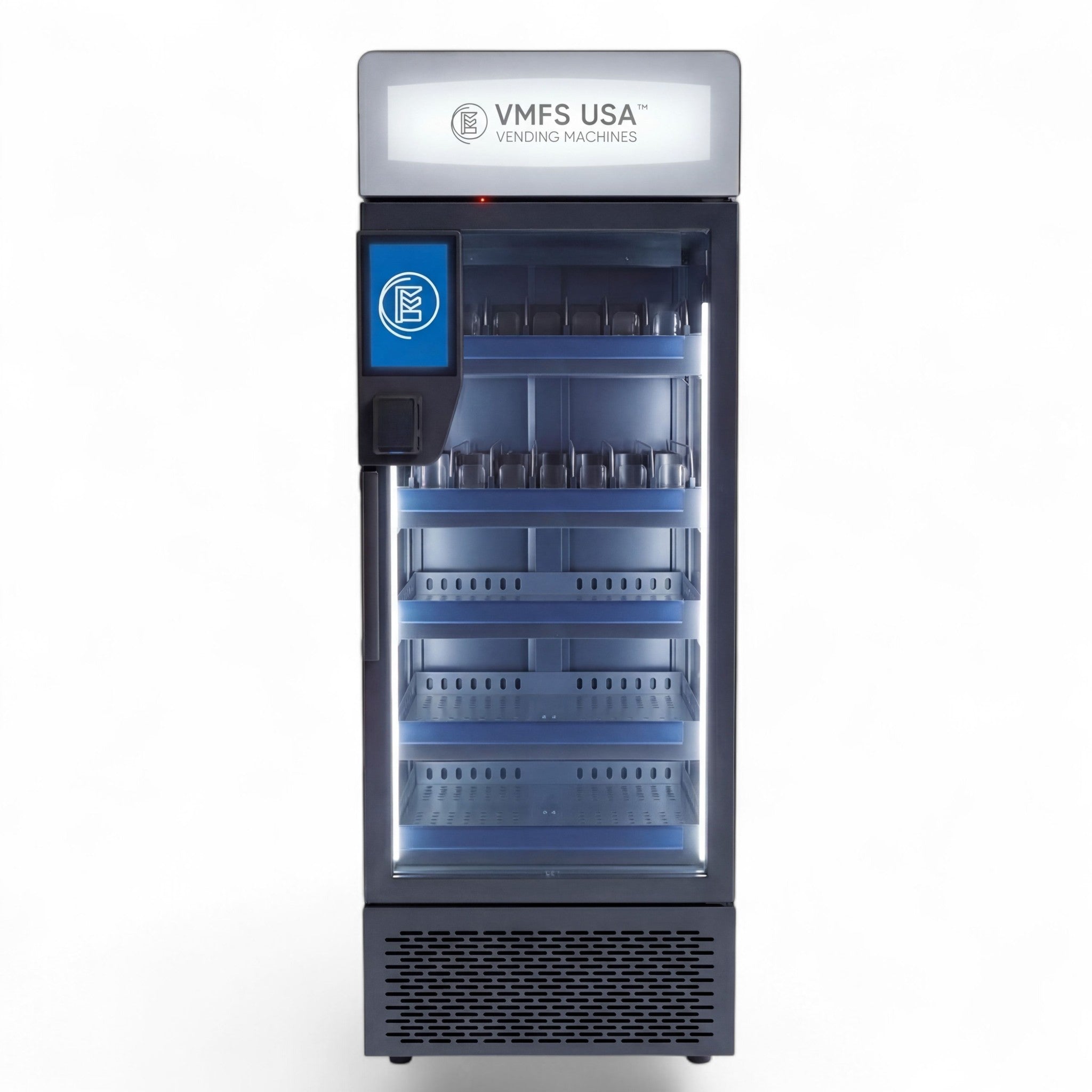
You cannot scale a route if you are constantly dealing with unreliable equipment or outdated software. The right machine is engineered for compliance, built for durability, and connected to the tools you need to manage your business remotely from day one.
Every machine in the VMFS vape vending lineup ships with built-in Wi-Fi, a SIM card for cellular connectivity, a cashless payment reader, and compatibility with our age verification system. No venue Wi-Fi required. Plug it in and it is live.
| Machine | Format | Best For |
|---|---|---|
| WallMount Slim | Wall-mounted, compact | Bars, small lounges, music venues with limited floor space |
| ScreenMount | Digital touchscreen, floor or wall | Modern bars, upscale lounges, venues where brand experience matters |
| TallPro | Full-size floor unit, high SKU capacity | Casinos, high-traffic nightclubs, routes with heavy nightly demand |
| AdScreen | Large-format advertising screen with vending | High-visibility corridors, entertainment complexes, casino floors |
| DualServe | Dual-compartment, handles multiple product categories | Venues stocking both vapes and nicotine pouches in high volume |
| CounterCompact | Countertop or pedestal, small footprint | Hotel bars, private lounges, reception areas |
Every machine can be configured with custom coil sizes to match your exact product mix. This matters because disposable vapes, nicotine pouches, and accessories come in different dimensions, and a coil sized for the wrong product causes jams and lost sales.
| Coil Size | Product Fit |
|---|---|
| 35mm | Nicotine pouches, slim disposables, compact accessories |
| 45mm | Standard-size disposable vapes |
| 55mm | Larger-format disposables and oversized SKUs |
Coil configuration is set at the time of order based on your intended product mix. For operators stocking multiple product sizes, mixed coil layouts can be configured across different rows within the same machine. Use the planogram tool to map your layout before ordering.
Every machine is available with custom branding, wrap designs, and LED lighting to match a venue's aesthetic or your business identity. Custom units act as a visual anchor in the venue, increasing customer notice and reducing the chance of the machine being overlooked. For fully bespoke configurations, see custom vending machine options.
Every machine connects to VMFS Cloud, giving you real-time visibility across your entire route from any device.
All units run entirely cashless. Tap, chip, and mobile wallet payments are supported on every machine. Payment processing is built for nicotine products and operates compliantly. The card reader connects to your business bank account directly through your merchant account, and daily transaction statements are available in the dashboard. No cash handling. No manual reconciliation.
Before buying a machine or pitching a venue, you need a clear picture of vape vending laws in your state and city. Every operator must comply with both federal baseline rules and the additional restrictions their state places on top. Getting compliance right from the start is not optional. It is the foundation your entire operation rests on.
At the federal level, the Tobacco 21 law applies nationwide. Every buyer of a vape product must be 21 or older. Vending machines can only operate in venues where no person under 21 can access the space at any time, including during off hours. This is a venue requirement, not just a machine requirement. Approved venue types include bars, nightclubs, casinos, private lounges, and adult-only entertainment venues. If a venue admits anyone under 21 at any point during the week, it does not qualify.
The FDA also mandates age-verified vending before every transaction. Machines must confirm a buyer's age by scanning a government-issued ID before any sale is completed.
Here is a current overview of key states. Because laws change frequently, verify your state's rules every six to twelve months with your Department of Health or revenue office. For permit and legal guidance, visit vadviced.com.
| State | Vape Vending Status | Notes |
|---|---|---|
| California | ⚠️ Restricted | Strong flavor bans and local restrictions apply |
| Texas | ✅ Allowed in adult-only venues | Must use electronic ID verification |
| Florida | ✅ Allowed with tobacco retail permit | Active compliance inspections by state agencies |
| New York | ❌ Prohibited | Statewide flavor ban and vending restriction |
| Ohio | ✅ Allowed in adult-only venues | Requires retailer license and local compliance |
| Nevada | ✅ Allowed | City or county vending permits may be required |
| Tennessee | ✅ Allowed with product registration | 10% wholesale excise tax added July 2025 |
| Pennsylvania | ✅ Adult-only venues only | Retailer permit and signage rules apply |
🗝️ Quick Compliance Tip
Many states do not ban vending outright. They restrict it to adult-only areas and require specific licensing. Keep a digital folder with copies of all your permits and renew them before expiration. A short call to your local licensing office before each new installation can save you thousands in fines and prevent forced removal. For legal guidance and permit requirements, visit vadviced.com.
To understand how ID scanning technology works and how it satisfies state age-verification requirements, read our dedicated guide: ID Scanners for Business: How They Work and Which One You Need.
The machine you choose shapes your customer experience, your compliance posture, and how efficiently you manage the route. The right unit for a high-volume nightclub is not the right unit for a boutique hookah lounge. Match the machine to the venue before you buy.
For a full breakdown of features, pricing, and how to evaluate options for your specific situation, read the dedicated buying guide: How to Choose the Best Vape Vending Machine.
What you stock determines how fast your machine sells and how healthy your margins stay. Building the right vape vending inventory means balancing high-turnover products with legal compliance and machine storage limits. A well-planned product mix keeps customers returning and keeps regulators satisfied.
Always source from verified, licensed wholesalers. Licensed distributors provide proper invoices, product authenticity documentation, and compliance records. Sourcing from unverified suppliers puts your license and your revenue at risk. Every product in your machine must have a paper trail. Use the planogram tool to visualize how your product mix fits into different machine configurations before you order.
Each state controls which flavors and nicotine concentrations can legally be sold. Many states restrict fruit or dessert flavors, permitting only tobacco or menthol. Before stocking any SKU, verify it is legal in your operating state. A product that is legal in Texas may be restricted in California or Maryland. This check should happen before every new product enters your machine, not after.
When you first launch, limit your inventory to proven, fast-moving products. This keeps cash flow predictable and minimizes deadstock. Once you see which SKUs move fastest through the VMFS Cloud dashboard, you can expand into premium or niche options with real sales data behind the decision.
| Category | Notes | Stocking Strategy |
|---|---|---|
| Disposable Vapes | High turnover, wide flavor variety. Core revenue driver. | Fill 70 to 80% of coils with proven top sellers |
| Nicotine Pouches | Strong repeat purchase rate. Growing fast in bars and clubs. | Dedicate 15 to 20% of slots. Stock multiple strengths. |
| Nightlife Accessories | Small add-ons that increase average transaction value. | Fill remaining slots. Test and rotate by venue. |
Before loading any product, confirm it includes required FDA health warnings and nicotine content labels. Selling unlabeled or improperly labeled vape products can result in fines and license suspension. Proper labeling also builds customer trust at the point of purchase.
No other decision affects your monthly revenue as much as where you place your machine. A great location can generate $5,000 or more per month. A poor one, the same machine might produce $400. Understanding what to look for, how to evaluate a venue, and how to close the placement is the skill that separates operators who scale from those who stall.
The best locations for vape vending machines are adult-only environments where buyers already expect to purchase nicotine products. Bars, nightclubs, casinos, hookah lounges, and music venues offer the right combination of age-controlled access, extended hours, and a customer base actively looking for a quick, convenient purchase.
Target the 21-to-40 demographic specifically. Look for bars with heavy weekend nights and clubs that stay open past midnight. These locations consistently outperform daytime or food-first venues. Avoid places that close early, cater to a demographic not purchasing vapes, or have mixed-age access that puts your compliance at risk.
| Venue Type | Foot Traffic | Sales Potential | Placement Tip |
|---|---|---|---|
| Bars and Pubs | Medium to High | $800 to $1,400/mo | Mount near bar counter or smoking patio |
| Nightclubs | High | $1,400 to $2,200/mo | Place near VIP entrance or coat check |
| Casinos | Very High | $1,800 to $3,000/mo | Install near smoking area or entry gate |
| Music Venues | Seasonal | $700 to $1,200/mo | Position near ticket area or outdoor space |
| Hookah Bars and Private Lounges | Moderate | $600 to $1,000/mo | Wall-mount near reception or bar counter |
When you call a venue cold, you have roughly 15 seconds before they decide to keep listening. Lead with the value to them, not the features of the machine.
Sample Opening
"Hey [Name], I place age-verified vending machines in adult-only venues across the area. I was looking at your spot and think it could be a great fit. The venue earns a percentage of every sale, and there is nothing for you to manage. Who handles vendor decisions?"
Let the conversation move naturally from there. Ask questions before pitching. If they push back, you have a prepared response for every objection.
| Objection | How to Respond |
|---|---|
| "What is my cut?" | 15% of gross revenue, approximately $4 to $5 per vape sold. You cover all fees, taxes, and product costs. Their job is to provide a power outlet. |
| "I do not have the space." | The wall-mounted unit is roughly the size of a jukebox and takes 2 to 3 square feet of wall space. Walk the venue together and find a spot. |
| "Can minors buy from it?" | No. Every unit has a built-in ID scanner that verifies government-issued ID before any purchase is completed. The sale does not go through without a verified adult. |
| "My ATM gives me a 50% split." | An ATM earns $2 to $3 per transaction. A vape machine earns $4 to $5 per unit with a much higher transaction volume at the right location. The total monthly payout for the venue is usually significantly higher. |
| "Now is not a good time." | Offer a 30-day no-obligation trial: "Let us put it in for a month. If it is not pulling its weight or causing any issues, I will remove it. No questions asked." This eliminates almost all remaining hesitation. |
Paying the venue a fixed monthly rent is simpler to explain but less effective at building partnerships. A revenue share model of 10 to 20 percent aligns incentives. When the venue earns more if the machine sells more, the owner becomes your advocate. They keep it plugged in, mention it to regulars, and protect the placement. At just 3 vapes sold per day, a 15 percent share generates approximately $400 to $500 per month for the venue owner from a couple of feet of wall space.
🗝️ The Trial Month Close
When a venue owner is still on the fence, offer a 30-day no-commitment trial. "Let us put it in for a month. If it is not performing or causing any problems, I will remove it the same day you call. No questions." This removes every remaining risk from their perspective. You lose nothing. They have nothing to lose.
For professional location matching and placement support, visit vplaced.com.
Understanding your numbers before you invest is the difference between building a business and funding a hobby. Here is what it actually costs to launch and what you can realistically expect to earn from a single machine in its first year.
| Expense Type | Estimated Range (USD) | Notes |
|---|---|---|
| Machine Purchase | $3,500 to $8,500 | Varies by model. Wall-mount units are on the lower end. |
| Initial Inventory | $800 to $1,500 | Disposables, nicotine pouches, and accessories for first full stock |
| Business Licenses and Permits | $300 to $1,200 | Varies significantly by state. |
| Insurance | $200 to $500 per year | General and product liability coverage |
| Venue Revenue Share | 10 to 20% of monthly revenue | Ongoing. Paid monthly from gross sales. |
| Category | Monthly Amount |
|---|---|
| Gross Sales | $1,800 |
| Product Cost (~37.5%) | -$675 |
| Venue Revenue Share (15%) | -$270 |
| Processing and Connectivity Fees | -$80 |
| Estimated Net Profit | ~$775 per month |
These figures represent a mid-tier performing location. High-volume placements generate significantly more. The key driver is traffic quality, not traffic quantity. A busy bar that serves the right demographic will consistently outperform a higher-footprint venue with a mismatched customer base.
Calculate Your ROI View Financing Options
Once your machines are placed and stocked, operations become the key to keeping revenue steady. A well-run vape vending route depends on routine checks, smart scheduling, and organized records. Consistency reduces downtime, prevents stockouts, and ensures every machine stays compliant. One missed refill at a high-volume location can cost more in lost sales than the restocking run would have taken.
Most operators service each machine once or twice per week, depending on traffic and product turnover. Nightclubs and busy bars may need more frequent restocks. Lounges and private venues often run longer between visits. Group your machines by neighborhood or venue type to minimize driving time. The VMFS Cloud platform shows real-time inventory levels, so you know exactly which machines need a visit before you leave home.
Every machine connects to VMFS Cloud, giving you real-time sales data, inventory levels, low-stock alerts, and transaction logs accessible from any device. You can see which SKUs are moving fastest, which locations are underperforming, and receive automatic alerts before a machine runs out of a top seller. Many operators manage routes of 10 or more machines without staff by using the cloud dashboard as their operational backbone.
Protect your investment with a simple weekly checklist: clean the ID scanner lens, test all payment methods after every refill, check the card reader, inspect the outer panels, and confirm the screen is functioning. Wipe surfaces with a non-abrasive cleaner and keep a small kit with common replacement parts in your service vehicle.
Maintain a digital service log for every machine. Record refill dates, sales totals, and any on-site issues. Store copies of your compliance permits, venue agreements, and age-verification test records in cloud storage. If a state inspector audits your operation, organized digital records prove your standards immediately.
Every business carries risk. Vape vending machines operate in public adult spaces, hold valuable inventory, and process cashless payments. The right insurance coverage protects you from unexpected losses and keeps your business running cleanly when something goes wrong.
General liability insurance covers physical damage or injury that might occur near your machine. Product liability insurance protects you if a customer claims harm from a product sold through your unit. Many operators also add cyber or data protection coverage, particularly because machines process cashless transactions. A strong insurance package reduces personal exposure and signals to venue partners that your operation is professionally managed.
Run a self-audit every quarter. Confirm all machines are in adult-only venues. Test that age verification functions correctly on every unit. Review insurance policy renewal dates. Verify that your state licenses, sales tax certificates, and venue agreements are current. For a refresher on what your state requires, visit vadviced.com for legal guidance.
Once your first machine is earning steady, predictable revenue, the path to scaling is straightforward: repeat what works. Use your sales data to identify which location profile drives the highest returns and target those venues exclusively as you add machines. Avoid expanding into new venue types until you have mastered the one that already works for you.
Many operators use vending machine financing to purchase additional machines while keeping cash flow stable. This allows route growth without draining operating capital. With two to three machines generating steady net profit, financing a fourth or fifth becomes largely self-funding.
As your route grows, standardize everything. Define your restocking schedule, pricing structure, and communication process with venue partners. Clear standard operating procedures save time and reduce errors as machine count increases. Operators running routes of 10 or more machines often bring in part-time help for restocking while managing the operation remotely through the VMFS Cloud dashboard.
Not sure how many machines to start with? Take the operator quiz to get a recommendation based on your budget, time, and target venues.
Monthly revenue depends almost entirely on location quality. Based on performance patterns across active routes, machines in strong locations generate $4,000 to $7,500 or more per month. Mid-tier bar placements typically average $1,000 to $3,500 per month. Underperforming locations with low foot traffic or poor visibility may generate under $600. The machine is not the variable. The location is. Use the ROI calculator to model your specific scenario.
A single-machine launch typically requires $5,000 to $12,000 in total startup capital. This covers the machine itself ($3,500 to $8,500 depending on the model), initial inventory ($800 to $1,500), state permits and licenses ($300 to $1,200), and basic insurance. Revenue share payments to venues are an ongoing operating cost, not an upfront expense. Financing options are available for operators who want to preserve cash while deploying multiple machines.
At average performance levels, most operators recover the full machine cost within 4 to 7 months. High-volume locations with consistent late-night traffic can reach breakeven in 2 to 3 months. This is one of the fastest payback periods in the vending industry, driven by high gross margins on vape products compared to food or beverage vending.
Yes. In most states, operators need a retail tobacco or ENDS license, a sales tax certificate, and in some cases a tobacco distributor permit. Some states also require annual renewal fees and electronic age verification technology as a legal requirement. Federal Tobacco 21 rules apply nationwide. License requirements vary significantly by state. For state-specific legal guidance, visit vadviced.com.
Under federal law, vape vending machines can only be placed in venues where no person under 21 is admitted at any time. This includes bars, nightclubs, casinos, private lounges, hookah bars, and adult-only entertainment venues. If a venue admits anyone under 21 at any point, it does not qualify. State laws may add further restrictions. For location matching and placement support, visit vplaced.com.
Built-in ID scanners read government-issued IDs and verify the buyer's age before any purchase is completed. If the ID scan does not confirm the buyer is 21 or older, the transaction does not proceed. This automated process satisfies FDA requirements and protects operators from underage sale violations. Some states also require video surveillance records of ID scans for compliance audits. Read our full guide: ID Scanners for Business.
Disposable vapes account for approximately 75 percent of revenue across active routes. Nicotine pouches are the strongest secondary category at around 20 percent and growing steadily. The remaining 5 percent comes from nightlife accessories and add-ons that increase average transaction value at the right venues. Stocking 70 to 80 percent proven top-sellers and leaving room for variety tends to generate the strongest consistent revenue. Use the planogram tool to map your product layout before ordering.
It is low-labor, not zero-labor. A single machine requires one to two restocking visits per week, each typically taking 20 to 45 minutes. Remote monitoring through VMFS Cloud eliminates the need for daily on-site checks. Operators managing routes of five or more machines often spend 10 to 15 hours per week on the business total. Revenue continues between visits as long as inventory is stocked and the machine is running, making this significantly more passive than most small businesses of comparable income.
The vape vending machine business combines automated retail, age-verified compliance, and one of the strongest margin structures in the vending industry. Success in this space does not come from luck. It comes from placing machines in the right locations, staying compliant in every state you operate, and managing your route with data rather than guesswork.
Start with one machine. Learn from real performance data. Make every subsequent decision based on what the numbers show, not on what you expect. The operators who scale to routes of 20, 30, or 50 machines are not unusually lucky. They are disciplined about location selection, inventory management, and building venue relationships that last.
Every strong vending operation begins with a single machine, a clear process, and the commitment to execute before everything is perfect.
Browse Machines ROI Calculator Talk to the Team
New to the vending industry? Start with Vending 101 for a complete introduction to the business model before you buy.
Share:
AI Vending Machine Price: Complete Cost Guide for Operators
Are Vending Machines Profitable? Here’s What You Need to Know