


Design the perfect vending solution for your location and customers.

Join the VMFS newsletter and step into a thriving network dedicated to collective success.
One signup. Endless possibilities.
Selling age-restricted products carries real legal risk. A single underage sale can mean fines, license suspension, or worse. An id scanner for business removes the guesswork entirely. It reads any government-issued ID in under two seconds, calculates age automatically, checks for fake or expired documents, and logs every transaction.
But not every scanner fits every business. The right choice depends on your setup, your product, and whether someone is physically present at the point of sale. This guide covers how ID scanners work, the main types available, and which solution fits which environment, including automatic age verification systems built directly into vending machines and micro markets.
An ID scanner reads the encoded data on a government-issued identification document. That data lives in one of three places: the PDF417 2D barcode on the back of a driver's license, the magnetic stripe, or an RFID chip in newer ID formats.
The scan extracts the holder's date of birth, full name, ID number, and expiration date. The system then calculates the customer's exact age, checks whether the ID is still valid, and runs formatting checks against known state ID standards to flag anything that looks tampered or forged.
The whole process takes under two seconds. The result is binary: pass or fail. And every scan generates a timestamped compliance log that serves as your documented proof of due diligence during any regulatory inspection.
The FDA has conducted over 1.5 million retailer compliance checks across the country. When an inspector arrives, the first thing they want is evidence that your age verification system was active and working. A compliance log showing consistent scan activity, including denied transactions, is your legal defense record. Without it, there is nothing to show.
Advanced systems store logs in the cloud. That means an inspector can ask for records and the operator can pull them instantly from any device, without needing to be on-site.
Not all ID scanners are the same. They differ in how they read IDs, how much fraud detection they provide, and how they integrate with the point of sale. Here is a breakdown of each type.
The most common type. It reads the PDF417 barcode on the back of a driver's license and extracts age and expiration data automatically. Verification takes under two seconds. No biometric data is collected. The interface is simple: pass or fail with an alert.
Best for: bars, nightclubs, vape shops, convenience stores, and any staffed retail environment where speed is the priority.
Limitation: it reads what the barcode says. A well-made fake ID with a correctly formatted barcode can pass a basic barcode-only scan.
Same barcode read, but with algorithmic checks layered on top. The system performs over 100 formatting checks against known state ID patterns. It flags barcodes with mismatched data fields, incorrect formatting, or anomalies that suggest the document was altered or fabricated.
This approach catches nearly 50% of fraudulent documents that a basic scanner would pass.
Best for: high-volume retail environments, tobacco shops, vape retailers, liquor stores, and any business where fake ID attempts are a realistic risk.
The scanner reads the ID and a camera captures a live image of the customer. The system compares the two. Both must match before the transaction can proceed.
This closes the borrowed ID gap completely. A minor using an older sibling's ID clears the barcode check but fails the face match.
Best for: casinos, licensed dispensaries, high-security adult venues, and any environment where strict compliance documentation is legally mandated.
Important: states including Illinois and California impose biometric data privacy obligations under BIPA and CCPA. Choose a system that stores only hashed verification outcomes rather than raw biometric images to satisfy most state privacy requirements.
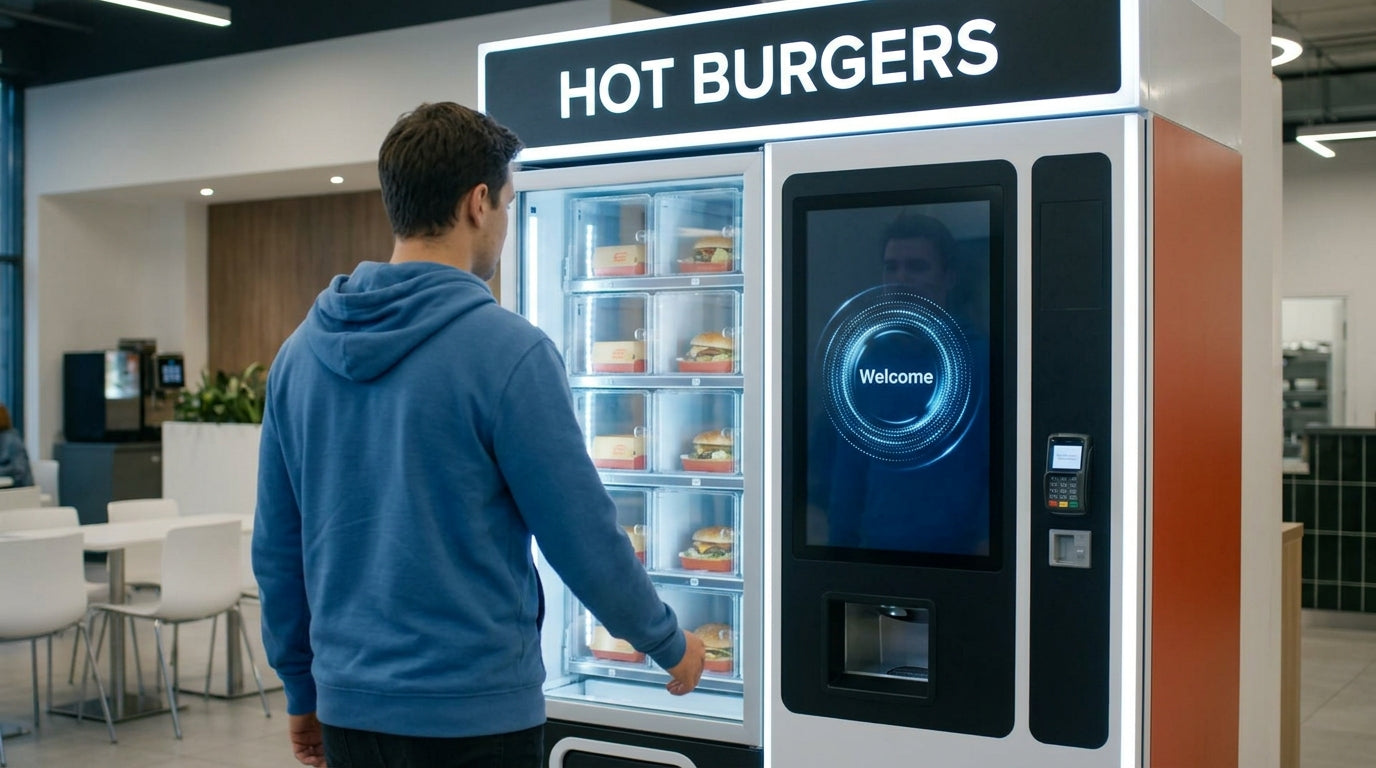
This is the category most relevant to vending operators and unattended retail. Instead of a separate device operated at a counter, the scanner is built directly into the machine itself. It integrates with the machine's MDB Level 3 vend control system.
When a customer selects an age-restricted product, the machine prompts for ID before payment is accepted. The scanner reads the ID automatically. If verification passes, the machine unlocks payment and completes the vend. If it fails, the machine denies the transaction, logs the attempt, and returns to idle. No separate hardware. No separate operator.
Best for: age verification vending machines, automated kiosks, micro markets, and any self-service format dispensing age-restricted products.
| Scanner Type | Fake ID Resistance | Borrowed ID Resistance | Best Environment | Hardware Cost |
|---|---|---|---|---|
| Basic barcode scanner | Low | None | Staffed low-risk retail | $300–$800 |
| Barcode + fake ID detection | High | Low | Bars, vape shops, liquor stores | $500–$1,200 |
| Biometric face match | Very high | Very high | Casinos, dispensaries, licensed venues | $800–$2,500 |
| Built-in automatic scanner | High to very high | High (with biometric option) | Vending machines, micro markets, kiosks | Included in machine |
Automatic ID scanners built into vending machines solve a problem that countertop scanners were never designed to address. In a staffed shop, a person runs the scanner. In a vending machine or micro market, the machine runs itself.
A standard countertop scanner displays a result. In vending, displaying a result is not enough. The machine needs to physically control whether a product can dispense based on that result. That requires the scanner to communicate directly with the machine's vend control system, a connection that only factory-integrated age verification provides.
This is why operators looking to sell vape, nicotine pouches, CBD, or other age-restricted products through a vape vending machine need a machine with built-in age verification from the start. Adding a separate scanner after the fact does not create that hardware connection.
Micro markets carry a higher verification burden than locked vending machines for one specific reason: products sit on open shelves. A customer can physically handle a product before payment. The verification system at the kiosk checkout is the only enforcement point in the entire transaction.
A micro market stocking age-restricted products needs a kiosk-integrated scanner that triggers before payment is accepted for any flagged SKU. Cloud-connected compliance logging is essential here, because a micro market serving a corporate office or campus generates significantly more daily transactions than a single vending machine, and the documentation trail needs to reflect every one of them.
Federal Tobacco 21 law sets the national age floor at 21 for all vapor products, e-cigarettes, nicotine pouches, and tobacco. The FDA's final rule effective January 12, 2026 strengthened enforcement in two ways that directly affect vending operators.
First, retailers must now verify photo ID for any customer appearing under 30, raised from the previous threshold of 27. Second, tobacco and vape vending machines are banned in any facility where individuals under 21 are permitted to enter at any time. The previous restriction applied only to facilities where those under 18 were present.
The maximum civil monetary penalty for a single violation reached $21,903 in 2026. Repeat violations escalate toward no-tobacco-sale orders that shut down an operator's entire route.
An age verification vending machine for sale with a built-in automatic scanner and cloud-connected compliance logging satisfies these requirements directly. It verifies every purchase, generates every log, and creates the documented compliance record that protects the operator during inspections.
Federal law sets the floor. States set their own rules on top of it. Nevada and Utah explicitly mandate electronic ID scanning in licensed settings. Texas now requires electronic verification for alcohol retail sales. Illinois imposes biometric data privacy rules under BIPA. California's CCPA governs how customer verification data is stored and used.
For operators placing id verifying vending machines across multiple states, the scanner configuration, data storage method, and biometric capability all need to match state-specific requirements. The vAdvised compliance advisory service covers state-by-state age verification requirements for vending operators building or reviewing multi-state routes.
The right scanner depends on three factors: your product category, your sales environment, and your compliance exposure.
A barcode scanner with fake ID detection is the practical standard. It handles the vast majority of real-world fraud attempts, generates a clean compliance log, and processes verifications fast enough to keep lines moving. Biometric face-match adds meaningful protection in higher-risk environments.
Factory-integrated age verification is the only complete solution. The scanner must connect to the machine's MDB Level 3 vend control so verification outcomes physically control the dispense mechanism. Buying vending machines with this integration built in eliminates the compatibility risk of aftermarket solutions.
Cloud connectivity is equally important. A cloud vending management platform that stores verification logs remotely gives operators immediate access to compliance documentation from any device during an unannounced inspection.
The kiosk checkout must trigger age verification before accepting payment for any flagged product SKU. Biometric capability is worth considering for higher-volume or higher-risk placements. Cloud logging across all kiosk transactions is mandatory at any meaningful scale.
Start with compliant equipment. Flexible vending machine financing makes it possible to acquire machines with built-in age verification from day one without exhausting working capital on permit fees, surety bonds, and initial inventory at the same time. The cost of retrofitting a non-compliant machine at month six exceeds the financing cost of getting the right machine upfront.
| Product Category | Federal Age Floor | ID Scanner Required? | Notes |
|---|---|---|---|
| Vape and e-cigarettes | 21+ | Yes | Machine must be in 21+ only facility under 2026 FDA rule |
| Nicotine pouches (ZYN, On!) | 21+ | Yes | Same Tobacco 21 framework as vape |
| Tobacco products | 21+ | Yes | Some states prohibit tobacco vending entirely |
| CBD and hemp products | 18+ varies by state | Recommended | State enforcement increasing through 2026 |
| Alcohol | 21+ | Yes where permitted | Most states prohibit alcohol vending outright |
| Snacks and beverages | None | No | Standard vending, no age verification needed |
Operators building a route that mixes age-restricted and standard vending products should review the full range of new vending machines with configurable age verification settings. Some machines allow verification to be enabled or disabled per product SKU, which gives operators flexibility to run a single machine stocking both regulated and general merchandise without gating the entire product selection.
An ID scanner for business is an electronic device that reads government-issued identification documents, extracts the holder's date of birth and ID validity data, and automatically determines whether the customer meets the age requirement for a specific product. It generates a timestamped compliance log of every verification. In vending machines, the scanner integrates directly with the machine's vend control system so the result controls whether the product can dispense.
A factory-integrated automatic scanner with MDB Level 3 vend control connectivity and cloud-connected compliance logging. The scanner must physically control the vend mechanism based on the verification result. A standalone countertop scanner cannot do this. Purpose-built age verifying vending machines have this integration built in from the factory, providing a single warranty and verified hardware connection between the scanner and the dispense system.
A basic barcode scanner that only reads age and expiration can be fooled by a fake ID with a correctly formatted barcode. Scanners with fake ID detection algorithms perform over 100 formatting checks on barcode data and catch nearly 50% of fraudulent documents. Biometric face-match systems add photo comparison and close the borrowed ID gap entirely, since a fake ID with someone else's photo fails the face match regardless of barcode quality.
Yes, if they stock age-restricted products. A micro market stocking vape, nicotine pouches, tobacco, or CBD needs an age verification system at the kiosk checkout that triggers before payment is accepted for any flagged SKU. Because micro market products sit on open shelves and customers handle them before reaching the checkout, the verification system at the kiosk is the only enforcement point in the transaction. Cloud-connected compliance logging is mandatory at any meaningful scale.
The FDA's maximum civil monetary penalty for a single tobacco product violation reached $21,903 in 2026. Repeat violations escalate toward no-tobacco-sale orders that suspend an operator's entire route. State penalties apply on top of federal enforcement in most markets. An active, documented age verification system is the primary affirmative defense available during any regulatory inspection. Operating without one removes that defense entirely.
A vape vending machine needs a scanner with MDB Level 3 vend control integration, fake ID detection, and cloud-connected compliance logging. A vape shop with staff present needs a countertop or handheld scanner with fake ID detection as the minimum standard, with biometric face-match recommended for higher-volume or higher-risk locations.


Share:
What Licenses and Permits Are Required to Sell Vape Products via Vending Machines in Arkansas?
AI Vending Machine Price: Complete Cost Guide for Operators