




Design the perfect vending solution for your location and customers.

Join the VMFS newsletter and step into a thriving network dedicated to collective success.
One signup. Endless possibilities.
The future of vending machines is cashless, connected and more varied: in 2025, 78% of vending sales were cashless, smart coolers made up about a third of the equipment surveyed operators deployed, and NAMA estimates the US convenience services industry reached $31.1 billion.
This guide turns the latest NAMA, Vending Market Watch and payments data into a practical 2026 plan for US operators: which vending industry trends are real, which are still hype, what each one costs, and how to prepare your route.
The future of vending machines is a connected, cashless, data-run business that sells a wider range of products through more formats, from glass-front spirals to AI grab-and-go coolers and full micro markets. The machine itself matters less than the system around it: payments, telemetry, product fit and service discipline.
That shift is visible in the numbers. Payments moved first: Cantaloupe's 2026 Micropayment Trends report found that 78% of food and beverage vending sales were cashless in 2025, up from 73% a year earlier. Equipment followed: in Vending Market Watch's 2026 State of the Industry survey, smart coolers accounted for 33.5% of the equipment respondents had deployed, nearly level with traditional glass-front machines. Demand is changing too, with 65% of operators in NAMA's latest census reporting client requests for healthier product mixes.
The three older trend pieces this guide replaces described the same direction in general terms: automated retail spreading into new spaces, machines complementing traditional stores, contactless payment, personalization and eco-friendly design. Several of their predictions have arrived. Others, such as augmented-reality screens and smart-city Wi-Fi hotspots, have not moved beyond pilots. The table below summarizes the trends that matter to a US operator and what each one changes on your route.
| Trend | Evidence | What it changes for operators |
|---|---|---|
| Cashless by default | 78% of vending sales cashless in 2025; cashless tickets averaged $2.45 vs $1.57 cash (Cantaloupe) | A card reader on every machine; budget for processing fees |
| Smart coolers and AI | 33.5% of deployed equipment among survey respondents (Vending Market Watch) | Wider product range, higher tickets, new shrink controls |
| Connected fleets | 8.1 million of 14 million machines worldwide connected at end of 2025 (Berg Insight, via Nayax) | Restock from data, not habit; fewer wasted visits |
| Micro markets | 20% of the convenience services industry in 2023 (NAMA); growth slowing in 2025 | An upgrade path for larger workplaces and hospitals |
| Better-for-you demand | 65% of operators cite client requests for healthier mixes (NAMA) | Planograms built per location, with fresh and protein items |
| Specialty machines | Operator focus on niche concepts in 2025 and 2026 | Clear concepts win placements; fit beats novelty |
| Tighter rules | Age-restricted vending limits, calorie labeling, biometric privacy laws | Compliance checks before you buy or place a machine |
The US vending industry is a roughly $30 billion-plus business, depending on who measures it: NAMA estimates the wider convenience services industry at $31.1 billion in 2025, while Vending Market Watch's operator survey puts 2025 revenue at an estimated $40.04 billion. The gap comes from definitions and methods, not from one source being wrong.
NAMA's figure comes from the NAMA Foundation's 2024–25 State of Convenience Services census, developed with Technomic and released in March 2026. It covers vending, micro markets and office coffee or pantry service together. The census reports 8.1% average annual growth since 2023, when the industry stood at $26.6 billion, and projects about 6.5% annual growth across business lines. NAMA says the industry supports more than 171,000 employees. Vending Market Watch builds its estimate from a spring operator survey, and its 2025 figure represents an 18.3% increase from $33.85 billion; more than 65% of its respondents reported revenue growth in 2025, and fewer than 20% reported a decline.
| Measure | Figure | Source and scope |
|---|---|---|
| Convenience services revenue, 2025 (estimate) | $31.1 billion | NAMA 2024–25 census: vending, micro markets, coffee and pantry |
| Average annual growth since 2023 | 8.1% | NAMA 2024–25 census |
| Projected annual growth | About 6.5% | NAMA 2024–25 census |
| Industry revenue, 2025 (estimate) | $40.04 billion, up 18.3% | Vending Market Watch 2026 operator survey |
| Vending segment revenue, 2023 | $18.2 billion, about 68% of the industry | NAMA 2022–23 census |
| Machines in use, 2023 | About 2.9 million | NAMA 2022–23 census |
| Vending operators, 2023 | About 10,450 | NAMA 2022–23 census (11,450 across all convenience services) |
| Average sales per machine, 2023 | $6,284 per year | NAMA 2022–23 census |
Two points matter for an operator. First, vending is still the largest business line: NAMA's 2022–23 census put the vending segment at $18.2 billion, about 68% of the industry, from just under 3 million machines averaging $6,284 in annual sales. Second, the field is fragmented: around 10,450 companies run vending routes. That keeps local relationships valuable and leaves room for a well-run independent route, even as the payment and software companies above it consolidate. For what a single machine can realistically earn, see our guide to whether vending machines are profitable.
Cashless payment is no longer an upgrade; it is the normal way people pay at a vending machine. Cantaloupe's 2026 Micropayment Trends report, based on 2025 card reader and kiosk transactions, found that 78% of vending sales were cashless, and contactless taps made up 85% of those cashless sales, up from 78% the year before.
The economics are what make this a trend rather than a convenience. In the same data, the average cashless ticket was $2.45 against $1.57 for cash, and the overall average vend ticket was $2.01. People who tap a card or phone are not limited by the coins in their pocket, so they buy larger items, add a second item and accept premium prices. A machine that still takes only cash is leaving its highest-value buyers at the glass. NAMA's earlier census already showed 75% of machines accepting non-cash payments in 2023, up from 69% in 2018, so the remaining cash-only machines are the exception.
Cashless does add costs. Card processing on vending typically runs about 3% to 6% of the sale, either around 2.5% plus $0.10 per transaction or a flat rate near 5.95%, and reader service plans run about $7.95 to $18.95 per month, according to the VMFS payment system comparison. On a $2.45 average ticket, that is real money, which is why operators raise prices modestly or set a small cash discount rather than absorbing the fee. Every new machine you buy should include a reader, and older machines can usually be retrofitted; read our cashless payment system guide for reader choices and setup.
Operator math: if cashless buyers spend $2.45 per vend and cash buyers $1.57, moving a machine from mostly cash to mostly card can lift revenue per transaction by more than the 3%–6% processing cost. Track it per machine before and after the reader goes in.
Smart coolers, including AI grab-and-go machines, have moved from experiment to standard equipment. In Vending Market Watch's 2026 survey, more than half of respondents operated smart coolers, nearly one-third called them a primary operating format, and smart coolers made up 33.5% of the equipment respondents had deployed, close to the share of traditional glass-front vending machines.
The appeal is simple. A smart cooler unlocks with a card tap, the customer opens the door, takes what they want and closes it, and the system charges for what left the shelf using cameras, weight sensors or both. That format holds sandwiches, salads, bowls and multi-packs that a spiral cannot vend, and it removes the jam-and-refund problem of mechanical delivery. Cantaloupe's data shows where this leads: its "Smart Store" format averaged $4.49 per transaction in 2025, more than double the average vend. For the wider market outlook, our analysis of AI vending machine market size covers forecasts and adoption.
The trade-off is shrink and per-transaction cost. Open-door formats rely on recognition accuracy and on deterrents. In the same survey, nearly two-thirds of respondents reported shrink below 5%, but 12.5% reported shrink above 10%, and cameras connected to monitoring services were the most common deterrent. At VMFS, AI recognition carries a fee of $0.07 per completed transaction, plus $0.03 when weight sensors are enabled, on top of card processing. Those costs are small on a $4 sandwich and noticeable on a $1.50 snack, which is why smart coolers make the most sense for higher-ticket, refrigerated menus.
Why operators are adding smart coolers
What to plan for
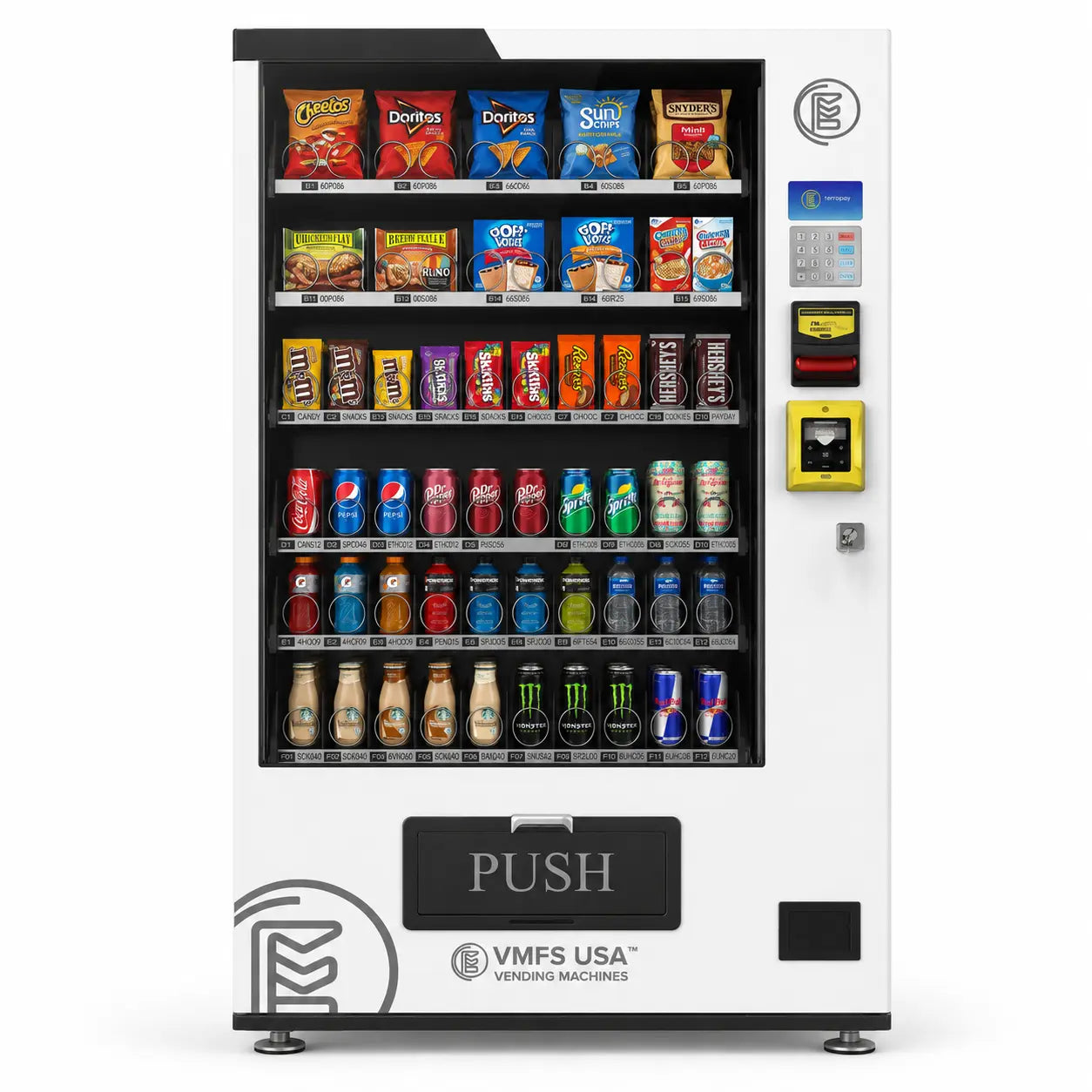
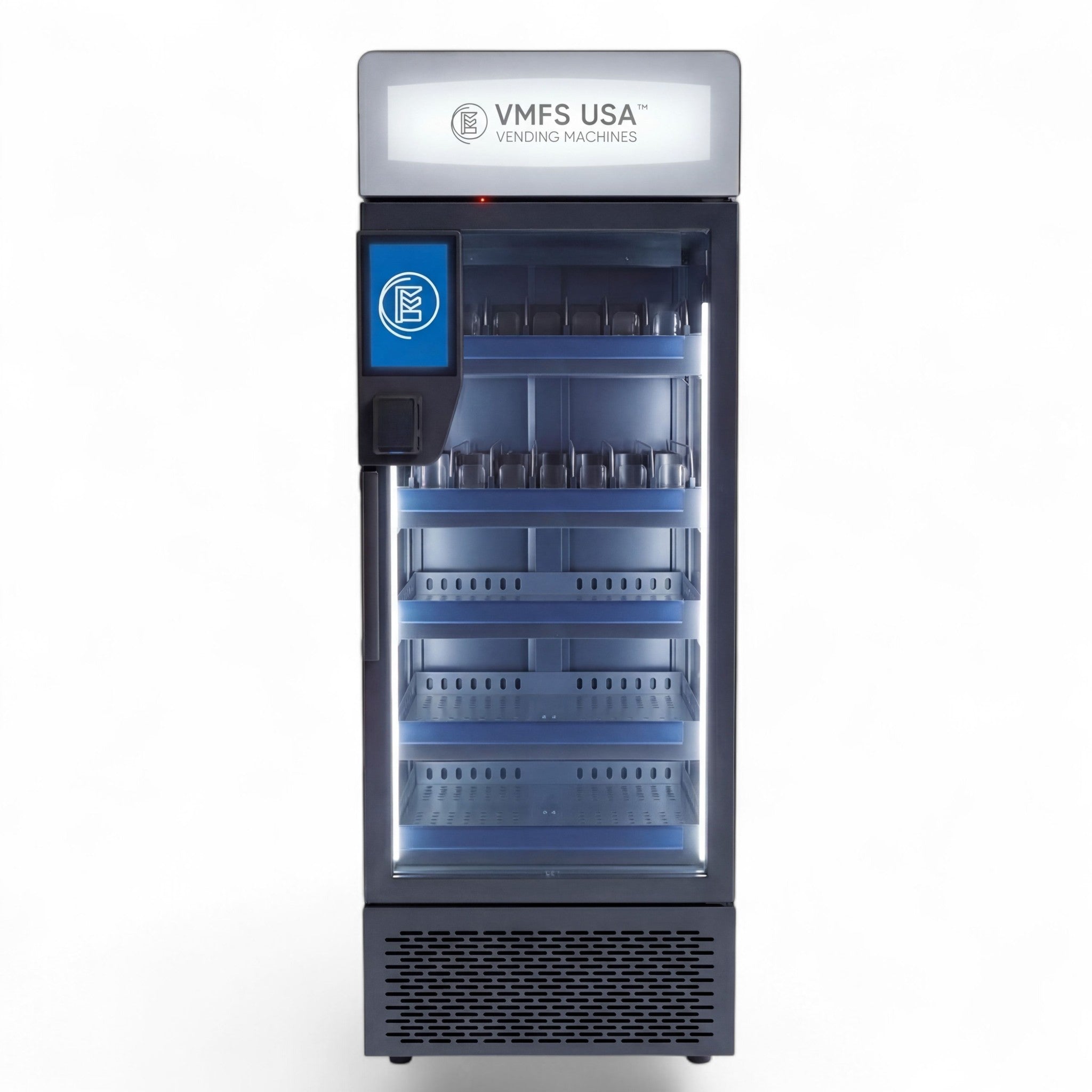
VMFS's current lineup reflects how far entry prices have fallen. The AI Grab & Go Cooler lists at $2,950, the AI Smart Combo at $3,950, the AI Smart Cooler at $4,950 and the larger AI Smart Fridge at $9,950 to $12,650. Compare the full range of AI grab-and-go vending machines, and if you are deciding between formats, our comparison of traditional vs AI vending machines lays out where each one wins.
See the AI Machines Operators Are Adding
Compare AI grab-and-go coolers, smart combos and fridges built for fresh food, higher tickets and cashless checkout.
Shop AI Grab-and-Go MachinesData-driven vending is becoming a requirement rather than an advantage: operators who can see sales, stock and machine status remotely restock with fewer wasted trips and catch problems before a location notices. Connectivity is already past the halfway mark. Berg Insight, as reported by Nayax, counted 8.1 million of the world's 14 million vending machines as connected at the end of 2025, including 2.6 million in North America, and forecasts 11.7 million connected machines and 77.5% penetration by 2030.
Connection matters because of what it replaces. Without telemetry, a driver opens each machine to find out what sold, carries stock that may not be needed and learns about a failed card reader when the location manager calls. With live data, you build a pick list for each machine before leaving the warehouse, skip machines that do not need a visit, and see faults and temperature alerts as they happen. The older posts merged into this guide predicted predictive analytics and AI-driven inventory; today the practical version is slot-level sales history, low-stock alerts and simple forecasting from that history. Our guide to remote monitoring for vending machines walks through the setup.
VMFS Cloud works with every VMFS machine; plans start at $7.99 per machine per month for live inventory, sales with margin, fault and low-stock alerts and a planogram. The $16 Advertising plan adds remote pricing and screen advertising, and the $39.99 AI Cloud plan adds computer-vision stock detection and operator-set dynamic pricing rules for AI coolers. The point is not the software brand; it is that every machine in a 2026 route should report its own sales and status.
The platforms behind these systems are consolidating. 365 Retail Markets announced on May 11, 2026 that it had completed its acquisition of Cantaloupe, adding nearly 40,000 customers, with the combined business operating under the 365 Retail Markets name. For operators, consolidation can mean broader feature sets but also changes in pricing, contracts and support, so read renewal terms carefully and avoid locking a whole fleet into hardware you cannot move to another processor.
Micro markets, small unattended stores with open shelves, coolers and a self-checkout kiosk, are the biggest format change in vending, but they complement machines rather than replace them. NAMA's 2022–23 census put micro markets at 20% of the convenience services industry, and Cantaloupe's 2025 data shows micro market tickets averaging $3.02, above the $2.01 average vend.
Growth is maturing. In Vending Market Watch's 2026 survey, 38% of respondents added micro market locations in 2025 and 52% reported no change, compared with 84% reporting growth in 2023. That pattern fits a format that has captured the large, secure workplaces it suits best and now competes with smart coolers for mid-size sites. Hospitals are a clear example of where it still works: Aramark reported in April 2026 that a 24/7 micro market at Madonna Rehabilitation Hospital in Omaha accounts for roughly a third of total retail sales, and that Houston Methodist operates at least one market in eight of its nine hospitals. Aramark notes that micro markets typically take up less than 200 square feet.
This is what the merged "autonomous stores" and "micro-retail" posts were pointing toward. Unattended retail reaches places where a staffed store is not practical: break rooms, residence halls, hotel lobbies and night-shift areas. For a route operator, the decision is usually format by site size. Small sites stay with a combo machine, mid-size sites with controlled access suit a smart cooler, and large secure sites can support a full market. Our micro markets operator guide covers setup and economics, including when a site is ready to move up from machines.
Healthier and fresher products are one of the clearest demand trends in vending: 65% of operators in NAMA's 2024–25 census cite client requests for healthier product mixes, and 59% see better-for-you products as a growth opportunity. Location owners now ask about menu quality when they choose an operator, not only about commission.
Vending Market Watch's 2026 survey shows which healthier items operators are actually selling. Jerky (27%), protein bars (18%) and fresh food (18%) accounted for 63% of responses on top better-for-you categories. The same report is a useful reality check: traditional indulgent categories such as snacks, candy and sweet baked goods still account for more than one-third of vending and smart cooler sales. The winning planogram is a mix, with healthy rows sized to the location and classics kept where buyers expect them.
Equipment decides how far you can go. Shelf-stable bars, nuts and jerky run in any snack or combo machine. Yogurt, salads and protein shakes need steady refrigeration, which is where refrigerated machines and smart coolers earn their place. For product lists and nutrition standards by location, see our guide to healthy vending machine snacks.
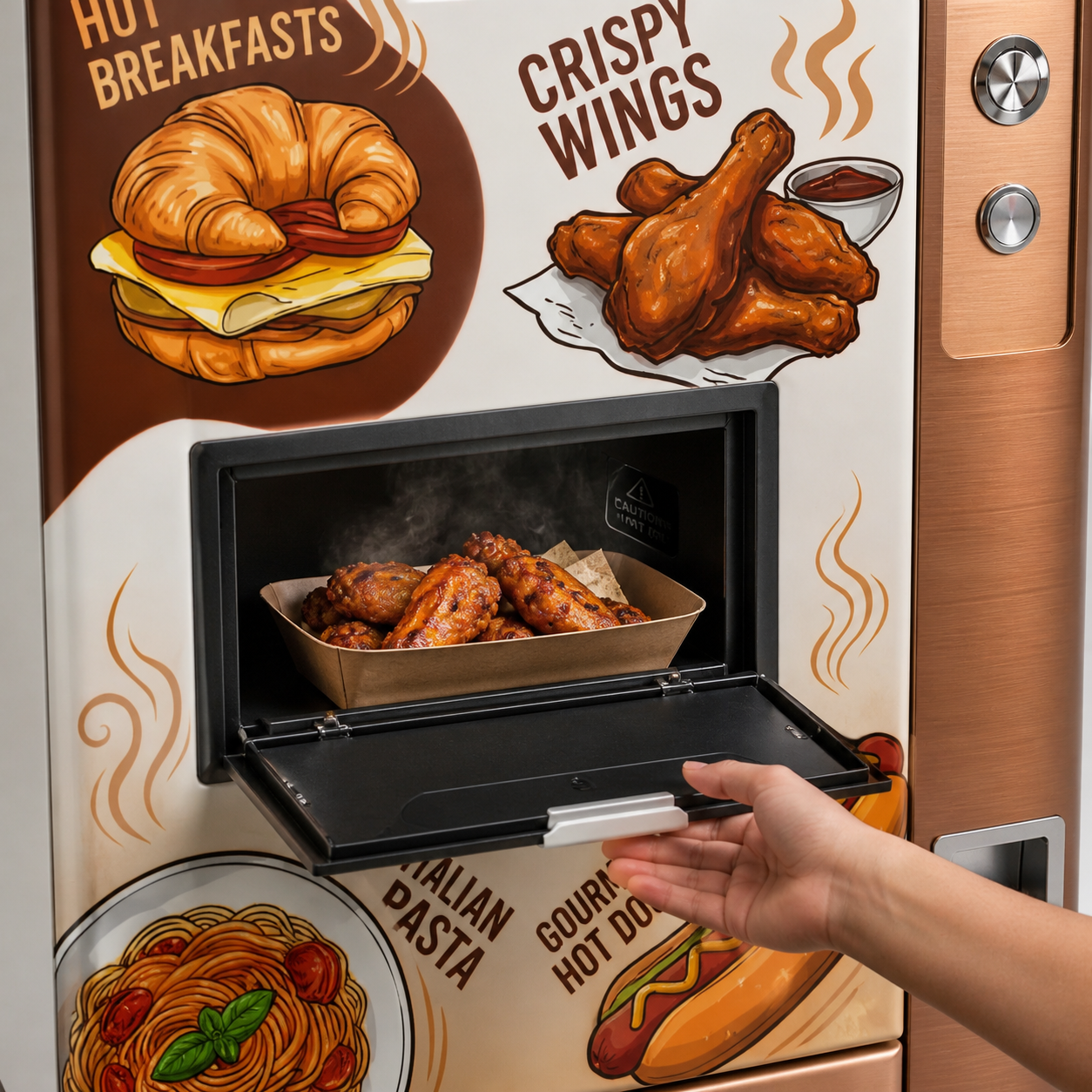
Specialty machines built around one clear concept are a growing part of vending, because a focused machine is easier to place, easier to stock and easier for a customer to understand at a glance. The trend runs from hot food and drinks to electronics, beauty products, trading cards and health supplies.
The 2025 lesson from the original industry report still holds: concept machines succeed when they match what people in that space already want, not because they are new. A boba tea machine near a campus or a hot food machine in a late-night transit area serves existing intent. An electronics machine at an airport sells chargers and earbuds to travelers who forgot theirs. Health and harm-reduction machines, such as naloxone units placed by public health agencies, show that vending now handles items people need urgently and privately. The same logic applies to collectibles, where trading card vending has become its own category.
| VMFS machine | Price | Trend it serves | Best-fit locations |
|---|---|---|---|
| Countertop Snack Vending Machine | $1,900 | Low-cost entry, small sites | Front desks, small offices, boutique gyms |
| Smart Combo Vending Machine | $4,650–$4,950 | Connected, cashless combo | Offices, apartments, gyms |
| Seaga ENV5C Combo Merchandiser | $6,495 | Reliability-first full-size combo | High-traffic break rooms and plants |
| Electronics Vending Machine | $7,950 | Non-food, high-ticket items | Airports, hotels, transit hubs |
| Narcan Vending Machine | $7,694 | Health and harm reduction | Public health sites, campuses, community centers |
| Boba Tea Vending Machine | $14,350 | Concept food and drink | Campuses, malls, youth-focused venues |
| AI Smart Fridge Vending Machine | $9,950–$12,650 | Fresh food, open-door AI | Hospitals, large offices, campuses |
Across the active VMFS catalog, new machines range from $1,900 for the Countertop Snack Vending Machine to $19,950 for the top specialty model, and prices are listed on each product page. Specialty machines carry higher prices and narrower audiences, so test demand before you commit: confirm foot traffic, ask the location what people request, and model the payback with our guide to vending machine costs.
Touchscreens are turning vending machines into small digital storefronts that show ingredients and nutrition, suggest add-ons and earn advertising revenue between sales. This is the part of the "interactive and multimedia machines" prediction that has arrived; the more ambitious versions, such as augmented reality and face-based personalization, remain rare.
A screen changes two things for the operator. It improves conversion, because buyers can read calories, allergens and product details before paying, which helps premium and better-for-you items sell. It also creates a second revenue line. VMFS opened its advertising network to all operators, and VMFS says screen-equipped machines can earn between $50 and $700 per display per month from placed campaigns, depending on traffic and location. Actual ad income depends heavily on footfall, so treat it as a bonus on a strong site, not a reason to place a machine on a weak one. Browse touchscreen smart vending machines to see which models carry a full display.
Personalization is where hype outruns reality. Recommending a drink with a sandwich, showing time-of-day promotions or offering loyalty rewards through a payment app is practical now. Recognizing individual faces to tailor offers raises privacy law issues, covered in the regulation section below, and is not something most US operators should attempt. The cards below separate what is real from what is still mostly talk.
Real today
Contactless and mobile wallet payment, telemetry and low-stock alerts, AI grab-and-go coolers, touchscreen product info, screen advertising, remote price changes.
Emerging
Dynamic pricing rules, computer-vision stock checks, app-based loyalty, pre-ordering from a phone, predictive restocking from sales history.
Still mostly hype
Augmented-reality screens, self-cleaning UV interiors, cryptocurrency payment, vending machines as smart-city Wi-Fi hotspots or EV chargers.
Sustainability in vending is mostly about energy use and refrigerants, and the measurable gains come from certified, efficient refrigerated equipment. According to ENERGY STAR, certified refrigerated beverage vending machines are on average 9% more efficient than standard models and save about 1,000 kWh a year.
Certified machines also offer a low power mode that dims lighting and eases refrigeration during inactive hours, and ENERGY STAR lists lower global-warming-potential refrigerants used in vending, including R-290, R-600a and R-744 (carbon dioxide). For an operator, those savings matter most when the location pays the electricity bill and asks about it, which is common in schools, hospitals and government buildings. Modern machines typically use LED lighting, so the bigger lever is usually replacing very old refrigerated units.
The merged posts also predicted solar-powered machines and recycling incentives as standard. Solar remains a niche option for specific outdoor sites, and recyclable or compostable packaging depends on what brands produce. What operators can control is product choice, efficient equipment and fewer service trips through data-driven routing, which cuts fuel as well as labor. Our guide to eco-friendly vending machines covers equipment and practices in more depth.
Vending rules are tightening around age-restricted products, nutrition disclosure and customer data, so compliance now belongs in the buying decision rather than after installation. None of these rules is new in principle, but more machines with screens, cameras and new product categories bring more operators under them.
Age-restricted products are the sharpest example. Under federal rule 21 CFR 1140.14(b)(3), retailers may not sell covered tobacco products such as e-cigarettes through a vending machine except in facilities where they ensure no one under 21 is present or permitted at any time. States can go further: Alabama has banned all tobacco, vape and nicotine-pouch vending machines since June 1, 2025, when Act 2025-403 amended Code of Alabama §28-11-6.1 so that no tobacco, alternative nicotine product, e-liquid or electronic nicotine delivery system may be distributed by vending machine. Read our breakdown of vape and Zyn vending in Alabama before placing any age-restricted machine.
Nutrition disclosure is the second rule set. FDA's vending labeling rule applies to operators who own or operate 20 or more vending machines and requires them to disclose calorie information for food sold from those machines, subject to certain exemptions. Growing routes cross that line faster than many owners expect, and touchscreens make compliance easier.
Biometric privacy is the newest risk, and it matters because of camera-based machines. Illinois' Biometric Information Privacy Act treats a scan of face geometry as a biometric identifier, requires written notice and a written release before collection, and lets a prevailing party recover, for each violation, $1,000 or actual damages if greater for negligence and $5,000 or actual damages if greater for intentional or reckless violations. If a machine or kiosk uses facial features for age checks or personalization, confirm what it collects and how it is stored. Permits and sales tax still vary by state and city; see vending machine permits in the United States for a state-by-state starting point.
In 2025, operators who focused on fundamentals, meaning strong locations, reliable machines and disciplined service, outperformed those who expanded fast or chased novelty, and those same habits are what 2026 rewards. The industry grew, but growth favored operators who ran vending as a managed business instead of a side project.
Busy locations still matter, but relevance mattered more. Gyms responded to hydration and recovery products, offices to quick meals, premium snacks and drinks, and hospitals and residential buildings to practical, comfort-driven items. Machines placed in busy areas with a random assortment underperformed because customers notice when offerings feel out of place. Choosing sites with repeat demand and predictable usage, then building the planogram for that audience, is the core of our guides on the best vending locations and how to scout and pitch a vending location.
Downtime, failed card readers and unstable temperatures erased the appeal of flashy features quickly. Operators increasingly favored equipment with proven uptime and predictable maintenance, which is why durable platforms such as Seaga vending machines remain popular alongside newer smart units. A machine that works the same way every day protects revenue and the location relationship. Check warranty terms before you buy; VMFS machines include a 1-year parts warranty, and a written maintenance routine keeps uptime high.
Route size alone stopped predicting success. Operators with fewer machines under tight oversight often earned more net income than larger routes that went unchecked for long periods, because they fixed faults faster, restocked consistently and kept machines clean. Location owners are raising expectations too, asking about service schedules, payment reliability and product quality as much as revenue share. Our breakdown of the vending revenue split shows why a strong service record is worth more than a higher commission offer.
If you are planning the next step, our guide to buying a vending machine covers specs and suppliers, vending machine financing spreads the cost of an upgrade, and VMFS location matching connects operators with sites looking for modern vending machines. In-stock VMFS machines usually ship within 7 to 10 days, and custom builds take around 45 days, so plan purchases around your placement dates.
Run Your Route on Live Data
See sales, stock, faults and pricing for every machine from one dashboard, with plans from $7.99 per machine per month.
Explore VMFS Cloud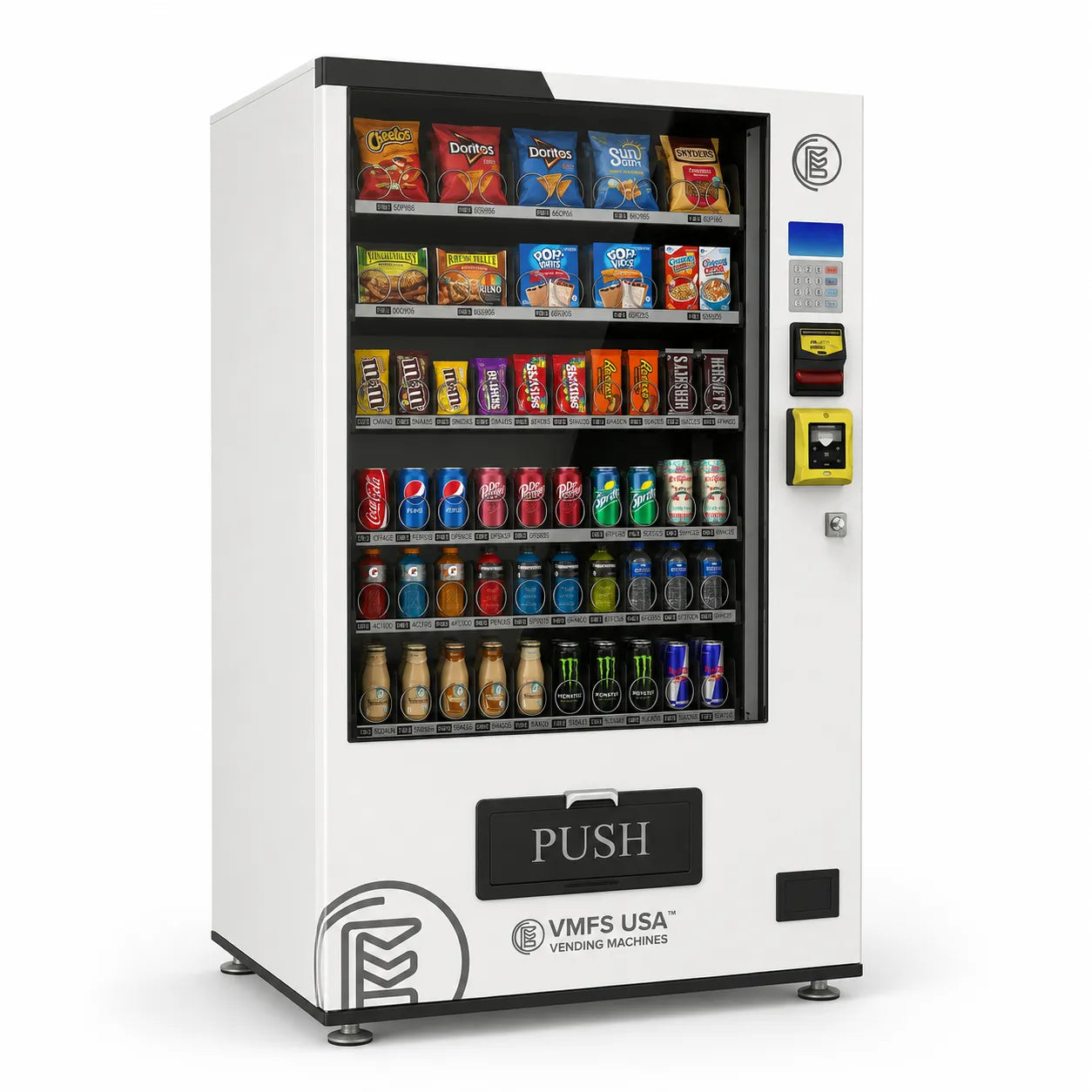
Share:
Is It Legal To Operate Vape or Zyn Vending Machines in Arizona?
What Trading Cards Are Worth Money And How To Sell Them For Profit