





Design the perfect vending solution for your location and customers.

Join the VMFS newsletter and step into a thriving network dedicated to collective success.
One signup. Endless possibilities.
To finance a vending machine, pick the machine first, then pay for it through a supplier's partner plan, an equipment loan, an SBA loan, a lease-to-own agreement or a line of credit. Most single-machine buyers start with a supplier partner plan because the application comes after the quote and the machine serves as the reason for the credit.
This guide compares every route side by side, with the real limits, terms and fees each lender publishes, the payment math on actual VMFS machines, what lenders check, how bad credit changes your options and how a financed machine is treated at tax time.
You finance a vending machine the same way you finance any piece of business equipment: a lender or lessor pays the supplier, and you repay that amount plus a financing cost over a fixed number of months. The machine is usually the collateral, which is why equipment credit is easier to get than an unsecured business loan of the same size.
The right route depends on three numbers: how much you need, how strong your credit and business history are, and how fast you need the machine on location. A first-time operator buying one combo machine has different options than an operator adding ten machines to an established route. A single machine under $10,000 fits a supplier partner plan or a consumer installment loan. A multi-machine route expansion in the tens of thousands usually belongs with a bank equipment loan or an SBA-backed loan, where the paperwork is heavier but the cost of money is lower.
Financing is a cash-flow tool, not a profit generator. It lets the machine start earning before it is paid off, and it keeps your cash free for the first product order, insurance and the location's commission. It only works if the machine's monthly gross profit comfortably covers the payment, which is why the payment math later in this guide matters more than the approval itself.
Supplier partner plans
Apply after you get a quote. Fast decisions, terms built around one machine. VMFS works with PayPal, Klarna and Clicklease.
Equipment loans
Bank, credit union or online lender. The machine secures the loan. Lower rates for strong credit, more documents.
SBA loans
Microloans up to $50,000 through nonprofit lenders, or 7(a) loans up to $5 million through banks. Slow but low cost.
Lease-to-own
Easiest approval and often no down payment, but usually the most expensive total cost. Ownership comes at the end.
You need to finance the machine price plus anything the lender will roll in, and you need cash for everything it won't. New VMFS machines currently range from $1,900 for the Countertop Snack Vending Machine to $19,950 for the top of the catalog, so the amount you borrow can differ by a factor of ten depending on the category you choose.
Most first machines sit in the middle of that range. Full-size snack-and-drink units are the usual starting point because one location visit restocks both categories, and our combo vending machines start in the low thousands. Smart and AI machines cost more upfront but add cashless checkout and remote inventory data, which lenders and location managers both like to see. The table below uses live VMFS prices to show where common first purchases land.
| VMFS machine | Price (new) | Typical financing fit |
|---|---|---|
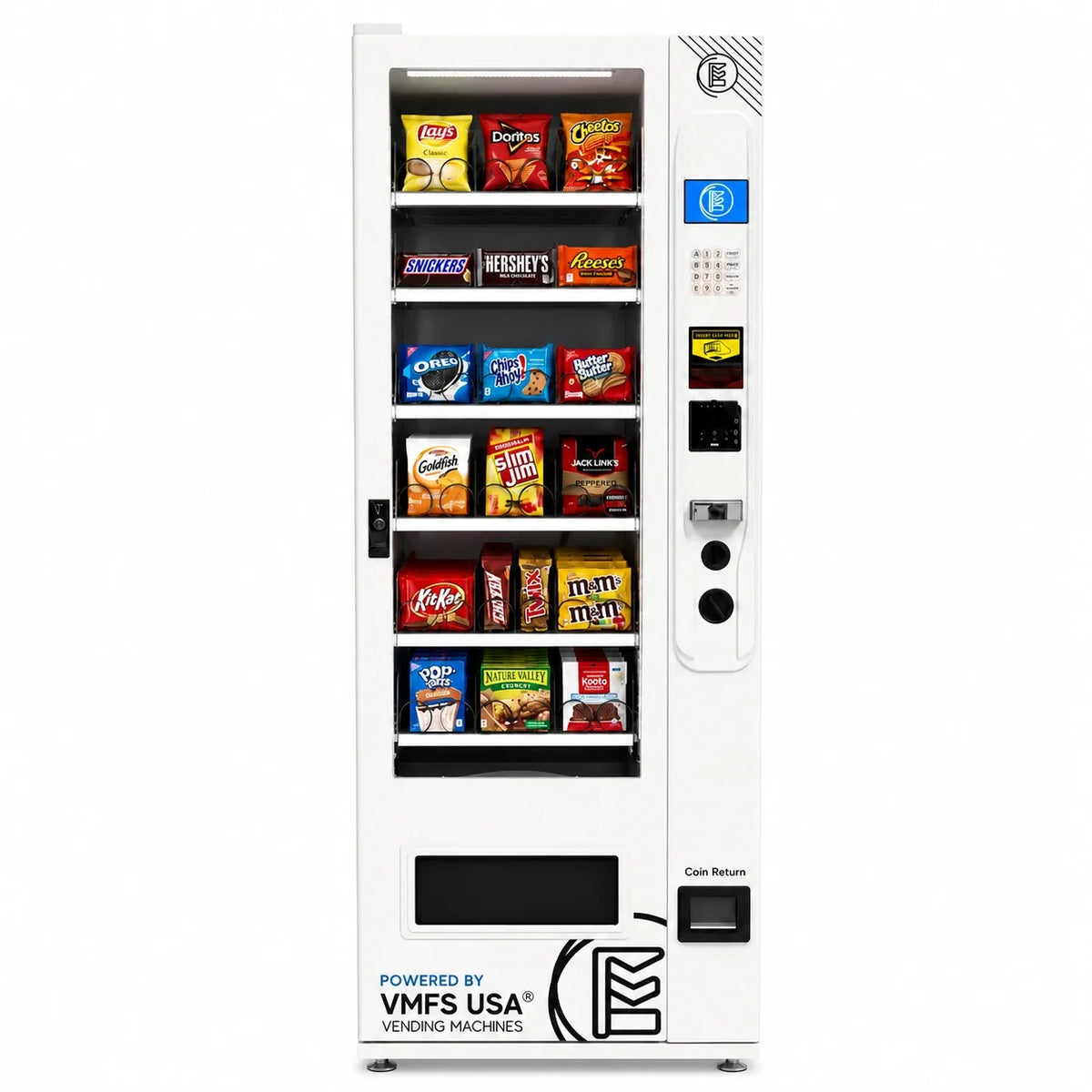
| Countertop Snack Vending Machine | $1,900 | Savings, card, PayPal Pay Monthly |
| Slim Combo Vending Machine | $3,650–$3,950 | Partner plan or microloan |
| Smart Combo Vending Machine | $4,650–$4,950 | Partner plan or microloan |
| Pro Combo Elevator Vending Machine | $8,650–$11,950 | Partner plan, equipment loan, lease-to-own |
| AI Smart Fridge Vending Machine | $9,950–$12,650 | Equipment loan, lease-to-own, Clicklease (up to $30,000) |
| Elevator Pro Ice Cream Vending Machine | $19,950 | Equipment loan or SBA loan |
The machine is rarely the whole bill. Freight, a first product fill, a card reader service plan, telemetry, insurance and any state or city licensing all land in the first month. According to Vending.com, delivery alone can run $200 to $1,000 and a first fill $200 to $800, depending on distance and machine size. Our vending machine cost guide breaks those extras down, and the guide to what it costs to stock a vending machine covers inventory in detail.
Plan to finance the hardware and pay the operating costs from cash. Lenders in equipment finance fund equipment, not inventory or working capital, and a business that borrows its first product order has no buffer if the location starts slowly. A reasonable rule is to hold at least two months of operating costs in reserve after the down payment, so a slow first month never forces you to miss a loan payment.
The main ways to finance a vending machine are supplier partner plans, equipment loans, SBA loans, lease-to-own agreements, lines of credit or cards, and your own savings. They differ mainly in cost, speed and how much paperwork they demand, and the cheapest money is almost always the slowest to arrive.
| Option | Typical amount | Term | Cost and credit | Best for |
|---|---|---|---|---|
| PayPal Pay Monthly (VMFS partner) | $49–$10,000 | 3, 6, 12 or 24 months | Fixed APR 0%–35.99%; consumer loan issued by WebBank | One machine under $10,000 |
| Klarna (VMFS partner) | Varies by approval | Pay in 4, pay in 30 days or monthly | Soft credit check at checkout; no interest when paid on time on interest-free plans | Smaller purchases, fast checkout |
| Clicklease (VMFS partner) | Up to $30,000 | Usually a choice of about three plans | Lease, not loan; fixed surcharge; $79–$499 doc fee; down to 500 FICO | Thin or damaged credit, new businesses |
| Equipment loan | Machine price less down payment | Matched to equipment life | Machine is collateral; 10%–20% down is common | Established buyers with good credit |
| SBA microloan | Up to $50,000 (avg. about $13,000) | Up to 7 years | Generally 8%–13% via nonprofit intermediaries | Startups needing equipment plus inventory |
| SBA 7(a) loan | Up to $5 million | Long-term | Capped rates; must be creditworthy and unable to get credit elsewhere on reasonable terms | Route expansion, multiple machines |
| Line of credit or card | Your available limit | Revolving | Variable, often high APR; interest on what you draw | Short bridges you can repay fast |
| Savings or reinvested profit | What you have | None | No interest, full personal risk | Small first machine, steady scaling |
Supplier partner financing is credit arranged through the machine seller with outside lenders. The supplier does not lend its own money; it sends you to partners that already know its price list and can approve against a specific quote. The advantage is speed and simplicity: you apply once, for one machine, with one decision. The trade-off is that you only use it with that supplier, and the rate depends on your credit, so compare the total payback against an outside quote before signing. Searches for "vending machine seller financing" usually mean this model.
An equipment loan is a term loan used to buy a specific machine, with the machine itself as collateral. Because the lender can repossess the equipment if payments stop, it usually charges less than an unsecured loan and asks fewer questions about future revenue. Banks and credit unions offer the lowest rates to borrowers with good personal credit and some business history; online equipment lenders approve faster at a higher cost. A 10% to 20% down payment is common for equipment loans, according to lender guides such as Biz2Credit. Equipment loans fund hardware only, so your inventory and working capital still have to come from somewhere else.
SBA loans are bank or nonprofit loans partly backed by the U.S. Small Business Administration, which lowers the lender's risk and caps the cost to you. The SBA microloan program is the better fit for one to three machines: loans go up to $50,000, the average is about $13,000, the maximum term is seven years and rates generally run 8% to 13%. Microloans are issued by nonprofit, community-based intermediaries that make their own credit decisions, and they can pay for machinery, equipment, inventory and working capital, but not existing debt or real estate.
The SBA 7(a) program is built for larger needs, up to $5 million, and covers equipment, working capital and refinancing. To qualify, the business must be a for-profit U.S. company that meets SBA size standards, is creditworthy and cannot get the same credit on reasonable terms from non-government sources. That last test, plus the documentation load, makes 7(a) more realistic for an operator with tax returns and a route to show than for a first machine.
A business line of credit or card works as a revolving limit: you draw what you need and pay interest only on the balance. It is the fastest money you can use, because the approval already happened. It is also usually the most expensive if the balance lingers, so treat it as a bridge for a deposit or a small countertop machine that you can clear within a few months, not as the plan for a $9,000 machine. Keep personal and business balances separate; mixing them makes bookkeeping and any later loan application harder.
Paying cash is the cheapest way to own a machine because there is no financing cost and no lender approval. The risk is concentration: if the first location underperforms, the loss is your savings. Many operators split the difference by buying the first machine outright, then using that machine's profit plus a modest loan to add the second. Growing this way is slower, but every expansion is funded by proven sales rather than projections. Our guide on how to grow your vending operation without losing financial control covers when to reinvest and when to borrow.
Grants, crowdfunding and outside investors exist, but they rarely fund a standard vending machine. Small business grants usually target specific industries, places or owner groups, are competitive and take months to award. Crowdfunding platforms work best for a concept with a story, such as a healthy-vending or community project, and often release money only when a campaign hits its goal. Angel investors and venture funds look for fast-scaling businesses and take equity and some control in return. For most operators these are add-ons, not the main way to pay for equipment.
VMFS USA does not offer in-house financing. It connects buyers with three third-party partners, PayPal, Klarna and Clicklease, and the application happens after you choose a machine and request a quote. Full partner details are on the VMFS vending machine financing page.
Each partner fits a different buyer. PayPal offers a quick eligibility check that does not affect your credit score, and its Pay Monthly plans cover $49 to $10,000 over 3, 6, 12 or 24 months, enough for most single machines. Pay Monthly is a consumer loan issued by WebBank with a fixed APR from 0% to 35.99% depending on credit, with no fee for paying early, according to PayPal. PayPal's Pay in 4 splits small purchases into four interest-free payments, which suits parts and accessories more than a full machine. Klarna offers approval at checkout with a soft credit check and a choice of pay-in-four, pay-in-30-days or monthly financing, with zero interest on its interest-free plans when you pay on time.
Clicklease is the option for buyers whose credit or business history would stop a bank. The VMFS page lists it as welcoming all credit, down to a 500 FICO score, with approval in minutes, no credit impact to check, up to $30,000 and no time-in-business requirement. It is structured as a lease rather than a loan: the Clicklease FAQ explains that there is no interest rate but a fixed surcharge spread across the payments, a documentation fee of $79 to $499 at signing, no down payment, and that you handle maintenance. At the end of the term you typically make about three more monthly payments and then own the equipment.
VMFS says its financing team typically returns a decision within 24 to 48 hours, and partner terms typically run from 6 to 48 months. Once approved, you finalize the order and the machine ships on the standard timeline: in-stock machines usually arrive in 7 to 10 days and custom builds take about 45 days, per the VMFS shipping information page.
Compare total payback, not the monthly number: Ask each partner for the full amount you will pay over the term, including fees. A lower monthly payment over a longer term often costs hundreds more in total, and a lease-to-own plan can cost well above the machine's cash price.
Check your financing options
Pick a machine, request a quote and compare PayPal, Klarna and Clicklease plans before you commit.
See Financing PartnersChoose a loan if you want the lowest total cost and ownership from day one, lease-to-own if you need the easiest approval, and rental only if you want to test a location without owning anything. The difference is who holds title and how much you pay for the convenience of a smaller commitment.
With a loan or installment plan, you own the machine and the lender holds a lien until it is paid off. With a lease, the lessor owns the machine and you pay to use it. Many "leases" in equipment finance are really purchases in disguise. Under the Uniform Commercial Code, a lease that you cannot cancel and that ends with an option to buy for nominal consideration is treated as a security interest, in other words a financed sale, according to UCC 1-203. That distinction matters for taxes and for what happens if you stop paying, so read the end-of-term clause before you sign.
Renting a machine month to month is a different product again, usually aimed at businesses that want a machine on site rather than at operators. If you are weighing that route, our guide to what it costs to rent a vending machine compares rental, lease and purchase costs side by side, so this guide does not repeat it.
Why finance instead of paying cash
What financing costs you
Lenders look at your credit, your ability to repay, the equipment and your plan for it. The weighting changes by lender type: a bank leans on credit history and financial statements, while an equipment lessor leans on the machine's resale value and your payment history.
Credit history. Personal credit carries most of the weight for a new business because there is no business history to read. Higher scores get lower rates and smaller down payments. If your score is low, a partner such as Clicklease that approves down to 500 FICO is more realistic than a bank.
Time in business and revenue. SBA 7(a) loans and most bank loans expect operating history and financial statements. Microloan intermediaries and partner plans are more open to startups. If you are new, a written vending machine business plan with your machine, location type, pricing and expected costs fills the gap that tax returns would normally cover.
A location. A signed placement agreement shows the machine has somewhere to earn. It is the single most persuasive document a new operator can bring, because it turns a projection into a contract. Our guide on how to scout and pitch a vending machine location covers how to win one, and VMFS also offers location matching.
Down payment and collateral. Equipment lenders commonly ask for 10% to 20% down, and SBA lenders may ask for additional collateral or a personal guarantee. Partner plans and lease-to-own programs often need no down payment, which is part of why they cost more.
Documents. Expect a government ID, bank statements, the machine quote, and for larger loans, tax returns and business registration. Forming an entity before you apply keeps the equipment and debt in the business's name; our guide on whether you need an LLC for a vending machine business explains the trade-offs.
Yes, you can finance a vending machine with bad credit, but expect fewer choices and a higher total cost. Lenders price risk, so a weaker score usually means a lease-to-own structure, a shorter term or a larger down payment rather than an outright denial.
"No credit check" financing rarely means no check at all. Most programs run a soft inquiry to pre-qualify you, then may run a hard inquiry when you accept terms. The difference matters: the Consumer Financial Protection Bureau explains that hard inquiries happen when you apply for credit and can affect your score, while soft inquiries, such as prescreening or checking your own report, do not. Pre-qualifying with several partners through soft checks lets you compare offers before any hard inquiry lands on your file.
If your credit is thin or damaged, four moves improve the odds. Start with a lower-priced machine so the amount financed is smaller. Bring a signed location agreement. Offer a larger down payment from savings. And consider a microloan intermediary, since those nonprofits often work with borrowers that banks turn away. If you have almost no cash at all, our guide on how to start a vending machine business with no money covers revenue-share and takeover options that avoid borrowing entirely.
A financed machine costs its monthly payment plus its operating costs, and the location has to generate enough gross profit to cover both. The payment depends on three inputs: the amount financed, the rate and the term. Longer terms lower the payment but raise the total paid.
The table below shows standard amortized payments for two VMFS machines at two illustrative APRs. These are not quotes; they show how term and rate move the numbers so you can check any offer you receive. The Smart Combo Vending Machine is priced from $4,650 and the Pro Combo Elevator Vending Machine from $8,650.
| Amount financed | APR (illustrative) | 24 months | 36 months | 48 months |
|---|---|---|---|---|
| $4,650 | 10% | $214.57/mo ($5,150 total) | $150.04/mo ($5,402 total) | $117.94/mo ($5,661 total) |
| $4,650 | 20% | $236.67/mo ($5,680 total) | $172.81/mo ($6,221 total) | $141.50/mo ($6,792 total) |
| $8,650 | 10% | $399.15/mo ($9,580 total) | $279.11/mo ($10,048 total) | $219.39/mo ($10,531 total) |
| $8,650 | 20% | $440.25/mo ($10,566 total) | $321.46/mo ($11,573 total) | $263.22/mo ($12,635 total) |
On the $4,650 machine at 20%, stretching from 24 to 48 months cuts the payment by about $95 a month but adds about $1,100 in total cost. That is the core trade-off of every financing offer. A shorter term is cheaper if the location can carry the higher payment; a longer term is safer for a new location whose sales you don't know yet.
Next, add the costs the machine creates. VMFS Cloud works with every VMFS machine, and plans start at $7.99 per machine per month. Card processing usually runs about 3% to 6% of cashless sales, plus a reader service plan of roughly $7.95 to $18.95 a month, as shown in the VMFS payment system comparison. Many locations also take a commission, typically 5% to 25% of sales according to NerdWallet, and the revenue split between operator and location changes how much of each sale is left for your payment.
To check whether a location can carry the loan, divide the monthly payment plus fixed costs by your expected gross margin after product cost, card fees and commission. With a $172.81 payment and about $20 of fixed software and reader costs, a machine keeping 40 cents of each sales dollar needs roughly $480 a month in sales just to cover the financing; at 30 cents it needs about $640. Everything above that line is profit. The VMFS ROI calculator runs the same math with your own inputs, and our analysis of whether vending machines are profitable shows how sales vary by location type.
A financed vending machine you own is depreciated like a machine you paid cash for, and you can often deduct most or all of its cost in the first year. Interest on the loan is a separate business expense. Financing does not reduce the depreciation; ownership is what counts.
The IRS raised the Section 179 expensing limit to $2,500,000 for property placed in service in tax years beginning after December 31, 2024, reduced dollar for dollar once qualifying purchases exceed $4,000,000 in a year, and made 100% bonus depreciation permanent for qualified property acquired after January 19, 2025, according to the IRS summary of the 2025 tax law changes. Equipment used in retail trade generally falls in a five-year recovery class under IRS Publication 946 if you depreciate it over time instead.
A true lease is different: you deduct the lease payments as rent under IRS Publication 334 rather than depreciating the machine, because you don't own it. A lease-to-own deal with a nominal buyout may be treated as a purchase instead. Ask your accountant which applies to your contract and whether a large first-year deduction fits your income this year; a deduction is worth most in a year you have profit to offset. Our vending business tax guide covers sales tax and record-keeping.
The costliest financing mistakes are borrowing before you have a location, comparing offers by monthly payment alone and financing a machine that can't be serviced. Each one turns a manageable payment into a debt with no income behind it.
Financing before placement. A machine in storage still has a payment. Line up the location first, or at least a short list of interested sites, then apply so the machine ships when the site is ready.
Ignoring the total cost. Balloon payments, early-termination fees, doc fees and end-of-lease buyouts can all hide behind a low monthly number. Ask for the total payback figure in writing and compare it to the cash price.
Buying a machine nobody supports. A cheap used vending machine can make sense with cash, but borrowing against one with no parts source, no warranty and no cashless reader is risky. New VMFS machines carry a 1-year parts warranty, which protects the asset while you're still paying for it.
Skipping insurance. If a financed machine is stolen or vandalized, you still owe the balance. Most locations also ask for a certificate of insurance with $1 million per occurrence in general liability, and some financing agreements require the equipment to be insured. Our vending machine insurance guide explains what each policy covers.
Stacking payments too fast. Adding a second or third financed machine before the first has a few months of sales history multiplies risk. Build a simple cash flow plan and add machines when proven profit covers the next payment.
The fastest path to a financed machine is to settle the location and model first, then apply with a quote in hand. Lenders decide faster when they know exactly what they are funding and where it will earn.
Before you apply, read the guide to buying a vending machine so the model you finance is the right one for the site; a correctly matched machine is the best protection a loan can have.
Find the right machine to finance
Snack-and-drink combos are the most common first purchase. Compare models, prices and cashless options.
Shop Combo Machines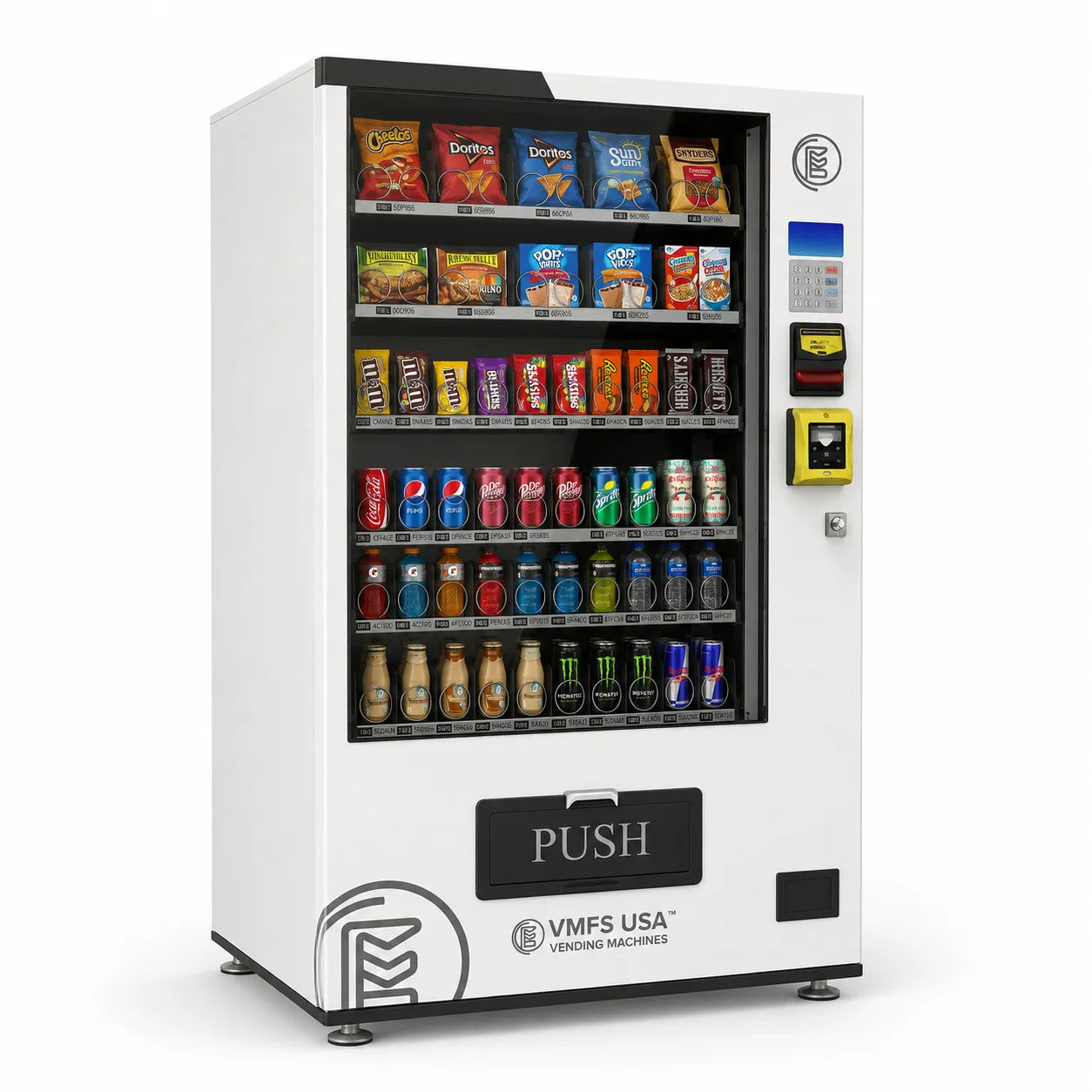
Share:
Vending Machine Size Guide: Choosing the Right Fit for Your Location
Vending Machine Size Guide: Choosing the Right Fit for Your Location