





Design the perfect vending solution for your location and customers.

Join the VMFS newsletter and step into a thriving network dedicated to collective success.
One signup. Endless possibilities.
A vending machine side hustle is worth it if you treat it as a small route business rather than a money printer: one average machine typically nets about $100 to $150 a month after every cost, and a five-machine route can add $500 to $750 a month for roughly three to five hours of work a week.
This guide covers the honest numbers behind vending as part-time or passive income: hours per week by route size, a line-by-line profit example, startup costs with real VMFS machine prices, how to land your first location, the tax and legal basics, and how to automate the work so it fits around a full-time job.
Yes, for people who want a side income they can build slowly and who are willing to spend a few hours a week servicing machines. Vending is one of the few side hustles where the work is not tied to the hours you sell: once a machine is placed, it sells around the clock, and your time goes into restocking, cleaning and finding the next location rather than into each sale.
The useful benchmark is what side hustles usually pay. Bankrate's 2025 side hustle survey of 2,616 US adults found that 27% had a side hustle, and those side hustlers earned an average of $885 a month but a median of only $200. That gap tells you most side hustles produce modest money while a minority earn well. Vending follows the same pattern: a single machine in an average spot lands near the median, while a route of five to ten machines in strong locations moves into the upper tier.
The trade-off is that vending asks for capital up front instead of time up front. A rideshare or freelance gig earns from day one with almost no investment; a vending route needs a few thousand dollars per machine and pays that back over months. What you get in return is an asset that keeps earning when you are at your day job, and a business you can grow, sell or hand to a helper later. If that trade suits you, the rest of this guide shows how to do it with realistic expectations. For the full profit picture across site types, see the vending machine profit guide.
Why vending works as a side hustle
Where it falls short
A vending machine business is semi-passive income, not fully passive. The selling is automated, but someone still has to buy inventory, restock, clean, collect data, handle the occasional jam and keep the location contact happy. The realistic goal is to shrink that work to a few predictable hours a week, then decide whether to do it yourself or pay someone.
It helps to compare vending with the usual passive income options. Dividend stocks and index funds are truly hands-off but need large balances to produce meaningful monthly cash. Rental property can produce more income but ties up much more capital and brings tenants, repairs and vacancies. Digital products need constant marketing. Vending sits in between: modest capital per unit, real products sold to real people with steady foot traffic, and a workload that scales in small steps as you add machines.
What makes vending more passive today than it was a decade ago is technology. Cantaloupe's 2026 Micropayment Trends Report found that 78% of US vending sales were cashless in 2025, up from 73% the year before, and cashless purchases averaged $2.45 against $1.57 for cash. Card sales mean fewer coin and bill collections, and telemetry tells you exactly which slots are empty before you leave home. VMFS Cloud works with every VMFS machine; plans start at $7.99 per machine per month and show live inventory, sales, margin and fault or low-stock alerts on your phone. The work that remains is physical: stocking, cleaning and the occasional repair.
Reality check: any seller promising a fully hands-off vending income with guaranteed locations deserves extra scrutiny. Federal rules require disclosures from sellers who promise locations, covered in the legal section below.
Plan on roughly one to two hours a week for a single machine and about three to five hours a week for a five-machine route. Most of that time is driving and buying stock, not the restock itself. A route-planning case study from Upper, built on an operator's service data, timed a basic restock at 15 minutes and a restock with cleaning at 25 minutes, while a machine needing repair took 45 minutes or more.
The estimates below are VMFS planning figures. They assume one service visit per machine per week at 15 to 25 minutes each, plus travel between stops, one stock-buying run and some bookkeeping. Machines in slower sites can often be serviced every other week, and telemetry lets you skip visits to machines that do not need them, so treat these as an upper planning range.
| Route size | Service time | Driving, buying and admin | Estimated hours per week |
|---|---|---|---|
| 1 machine | 15 to 25 minutes | About 1 hour | 1 to 2 |
| 3 machines | 45 to 75 minutes | 1.25 to 1.75 hours | 2 to 3 |
| 5 machines | 1.25 to 2 hours | 2 to 3 hours | 3 to 5 |
| 10 machines | 2.5 to 4 hours | 3 to 4.5 hours | 6 to 9 |
| 20 machines | 5 to 8 hours | 5 to 8 hours | 10 to 16 (a part-time job) |
The operators who make vending work alongside a job batch everything. Pick one or two fixed service windows, such as an early weekday morning and Saturday, and cluster your machines so one loop covers them all. Buy stock once a week from a warehouse club or distributor rather than topping up between visits. Keep a short list of backup contacts: a local technician for repairs you cannot handle and a second supplier in case your usual source runs out. Clustering matters more than any single location, because a great site 40 minutes away can cost more in drive time than it earns. Our guide to restock scheduling and routes shows how to set visit frequency per machine.
Choose locations whose access hours match your free time. An office that is locked on weekends is awkward if Saturday is your only service day, while a gym, hospital or apartment lobby is usually reachable early in the morning and in the evening. Ask about access when you pitch the site, not after the machine is installed.
A typical machine grosses about $500 a month and nets roughly 20% to 30% of that after product, commission and operating costs, so expect about $100 to $150 a month per average machine. The NAMA Foundation's industry census, produced with Technomic, estimated for 2023 about 2.89 million US vending machines averaging $6,284 in annual sales each, which works out to roughly $524 a month. Other benchmarks agree on the range: Nav, citing 365 Retail Markets, puts a decent machine at $100 to $300 a week in gross sales, and VendSoft reports net margins of around 25% to 35% for well-run machines.
The table below shows where the money goes for a first machine selling about 10 items a day at roughly $2 each. It is an illustration, not a forecast; your product mix, commission and drive distance will move every line.
| Line item | Assumption | Monthly amount |
|---|---|---|
| Gross sales | About 10 vends a day at roughly $2.00 | $600.00 |
| Product cost | About 48% of sales on a snack and drink mix | -$288.00 |
| Location commission | 10% of gross | -$60.00 |
| Card processing | 78% of sales cashless at about 5.95% | -$27.85 |
| Card reader service | Monthly reader plan | -$9.95 |
| VMFS Cloud Basic | $7.99 per machine per month | -$7.99 |
| Mileage | 40 miles at the IRS 2026 rate of 72.5 cents | -$29.00 |
| Insurance | General liability policy | -$37.00 |
| Repairs, shrink and spoilage reserve | Set aside monthly | -$20.00 |
| Net profit before your time | About 20% of sales | $120.21 |
Two lines deserve attention. Insurance and mileage are mostly fixed, so they eat a large share of a single machine's profit but shrink per machine as the route grows; a second machine in the same building adds sales with almost no extra drive or policy cost. Product cost is the line you control most: Nav notes that product cost often runs near half of the selling price, and better pricing and fewer slow movers can lift net margin several points. A busier machine at 25 vends a day and about $2.25 each grosses roughly $1,690 a month, but on the same cost structure it nets closer to $500 than $1,000, which is why per-machine income claims should always be read after costs.
| Machines | Monthly gross (about $500 each) | Monthly net at 20% to 30% | Estimated hours per week |
|---|---|---|---|
| 1 | $500 | $100 to $150 | 1 to 2 |
| 3 | $1,500 | $300 to $450 | 2 to 3 |
| 5 | $2,500 | $500 to $750 | 3 to 5 |
| 10 | $5,000 | $1,000 to $1,500 | 6 to 9 |
| 20 | $10,000 | $2,000 to $3,000 | 10 to 16 |
At five machines the effective pay works out to roughly $23 to $58 for each hour you put in, which compares well with most gig work. The table also answers two common questions. An extra $2,000 a month in profit takes roughly 13 to 20 average machines, or fewer if your sites beat the average. And $100,000 a year in gross sales takes about 16 average machines, while $100,000 in net profit takes roughly 53 to 80, which is a full-time business rather than a side hustle. If you want to test your own numbers, the vending ROI calculator runs the same math with your inputs.
Most first machines cost about $2,500 to $7,000 all in, including the machine, first inventory, delivery and a card reader where one is not built in. New VMFS machines start at $1,900 for the Countertop Snack Vending Machine, and the full active catalog runs up to $19,950 for specialty frozen and food equipment. For a deeper breakdown, see how much a vending machine costs.
| Startup item | Typical cost | Notes |
|---|---|---|
| Machine (new VMFS starter models) | $1,900 to $4,950 | Countertop Snack $1,900, CounterCompact $1,950, Seaga SM2300 combo $3,450, Smart Combo $4,650 to $4,950 |
| Card reader | About $450 if not included | Nayax or Cantaloupe hardware per the VMFS payment comparison; service $7.95 to $18.95 a month |
| First inventory | $200 to $800 | Depends on capacity and product mix |
| Delivery and placement | $150 to $1,000 | Freight distance, liftgate and inside delivery |
| Business setup | $0 to a few hundred dollars | Sole proprietorship costs nothing to form; state LLC filing fees vary |
| Licenses and permits | Varies by state and city | Food vending, sales tax and local machine permits |
| Insurance | About $37 a month median | General liability, per Insureon's vending operator data |
New, used and refurbished machines each have a place. New equipment costs more but arrives with modern payment hardware, telemetry and a warranty; VMFS machines carry a 1-year parts warranty under the written warranty policy, with extended coverage on some models. Used machines cost less but often need a card reader retrofit and more repairs, and refurbished units sit in the middle depending on the seller. Our used vending machine buying guide lists what to inspect before you pay.
You can pay cash, finance, or start with one machine and fund the next from profit. VMFS does not lend directly but works with third-party partners through its vending machine financing options, including PayPal, Klarna and Clicklease, with terms typically between 6 and 48 months. Financing preserves cash for inventory and a second location, but a monthly payment also raises the sales a machine needs before it earns you anything, so model the payment as one more line in the profit table. Reinvesting profit is slower but keeps a side hustle low-risk; the trade-offs are covered in reinvesting profit vs taking income out. In-stock VMFS machines usually ship within 7 to 10 days, while custom builds and wraps take around 45 days, so line up your location before you order.
Find a first machine that fits a side hustle
Compare snack and drink combos that serve the most buyers from one footprint.
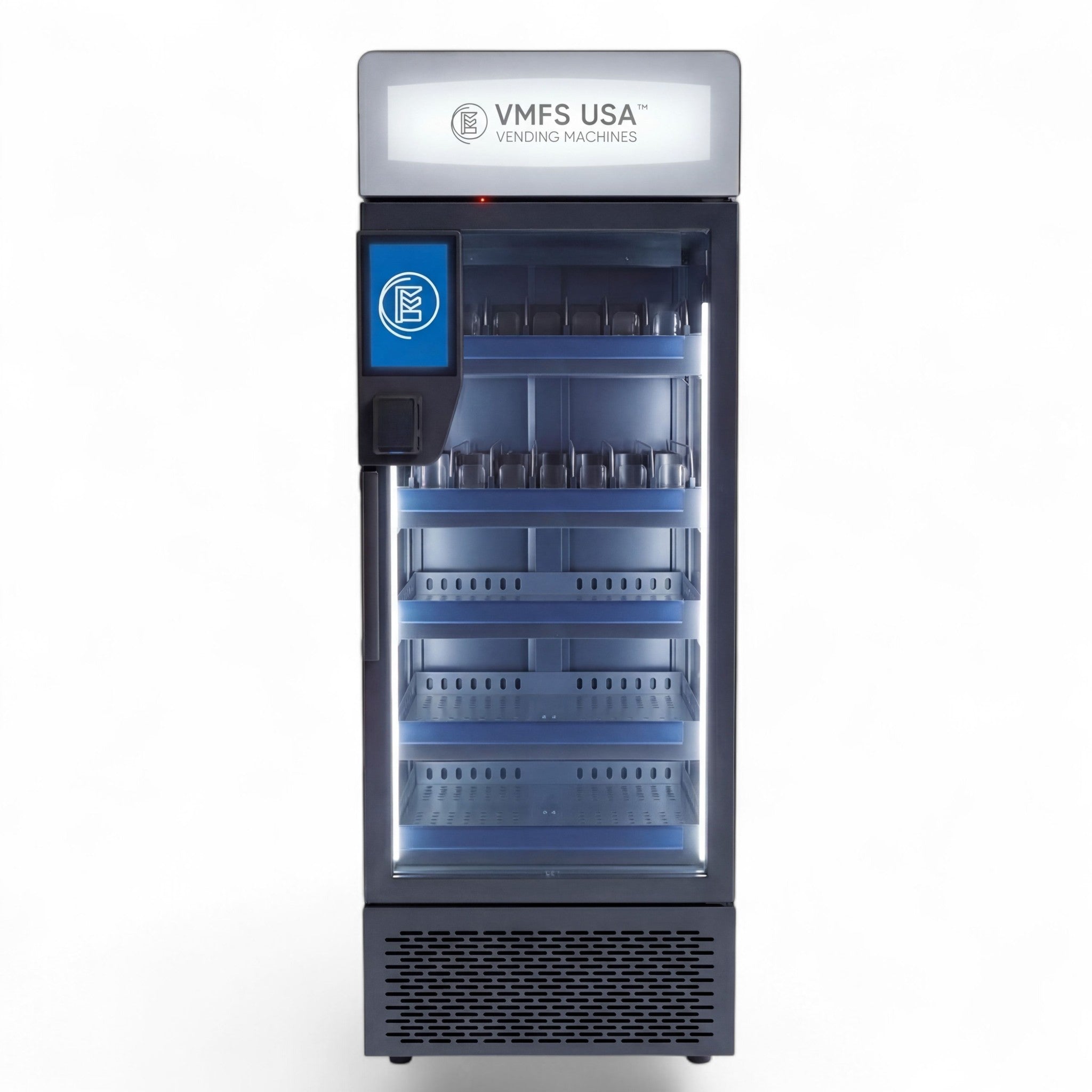
Shop combo machinesFor most side hustlers the best first machine is a combo unit or a compact countertop machine, because both serve a wide range of buyers and fit sites that cannot take two full-size machines. The right choice depends on the location you have lined up, not on the machine with the most features. A small office of 20 people does not need a large glass-front cabinet; a busy hospital break room may justify one immediately.
Countertop and compact
The lowest-cost entry. Fits break rooms, salons, auto shops and small offices where floor space is tight.
Combo snack and drink
Chips, candy and cold drinks in one footprint. The most flexible first machine for offices, gyms and apartments.
Wall-mount
Mounts off the floor for hallways, lobbies and small spaces where a property manager will not give up floor area.
Smart cooler
Open-door, grab-and-go shopping with cashless checkout. Suits sites with trusted, repeat users such as workplaces.
Within those formats, VMFS starter options include the CounterCompact Vending Machine at $1,950, the combo vending machines range including the Slim Combo from $3,650, wall-mount vending machines such as the WallMount Vending Machine from $3,450, and the AI Smart Combo Vending Machine at $3,950. Operators who want proven American hardware with simple servicing often look at Seaga vending machines, which start at $2,489 for the SM1600 countertop model.
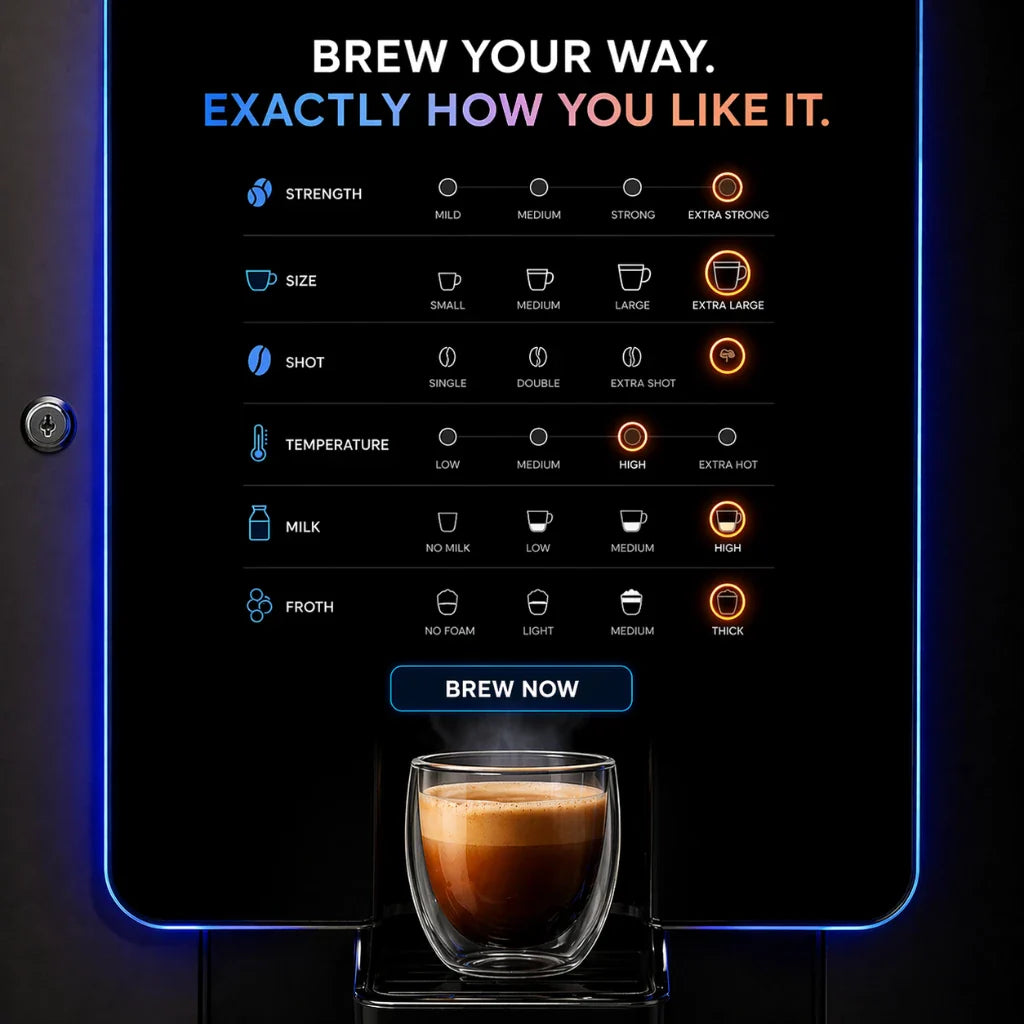
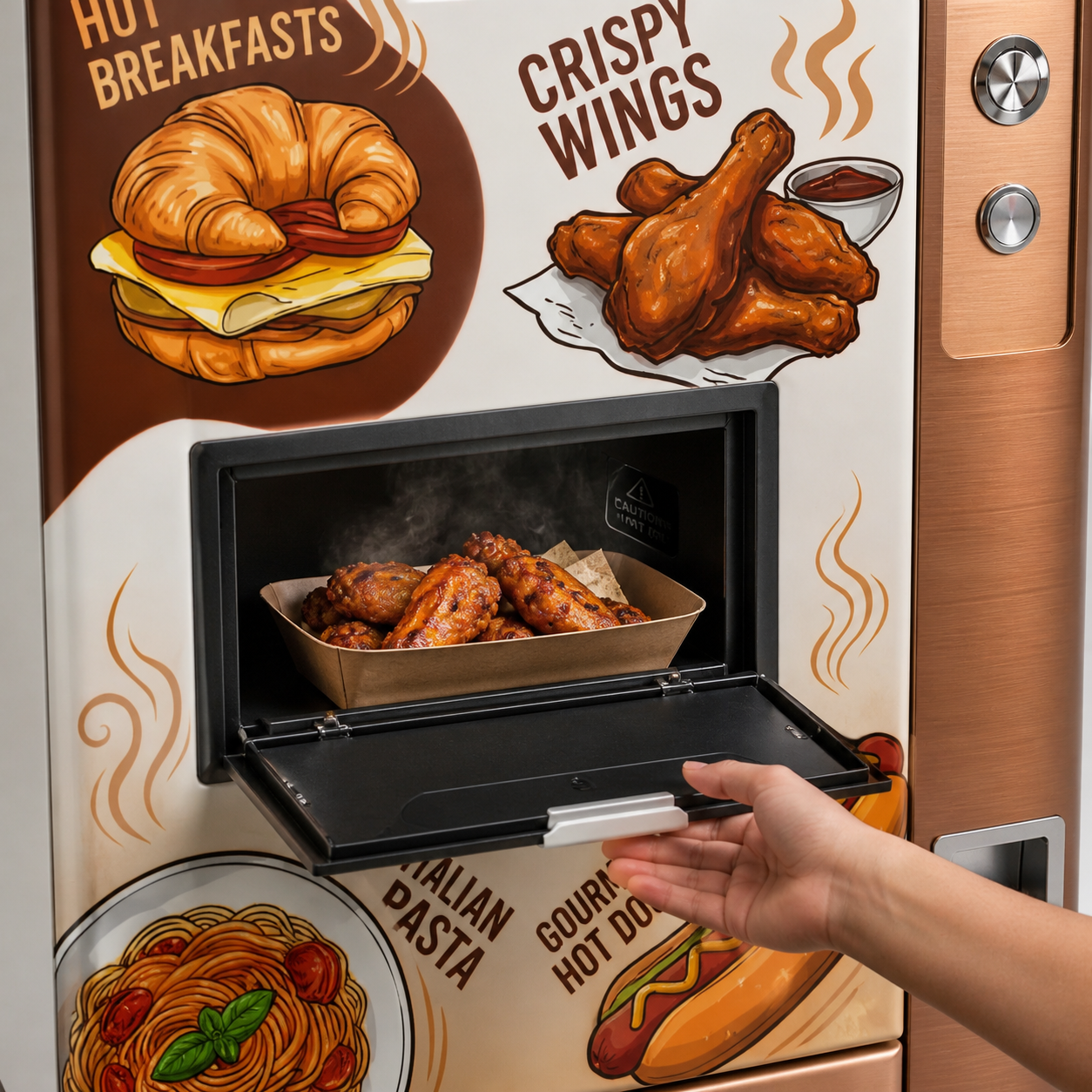
Niche machines such as coffee, frozen food, trading cards or age-restricted products can earn more per sale, but they cost more, need more specific locations and sometimes need permits or ID verification. They make better second or third machines once you know your route. Whatever you buy, three features pay for themselves on a side hustle: a cashless reader, telemetry so you know what to bring before you drive, and a delivery system that suits the products. Match capacity, refrigeration and payment options to the site before you order.
A good location matters more than any other choice you make, because the same machine can sell several times more in one building than in another. Look for sites with steady daily foot traffic, people who wait or take breaks, few nearby alternatives, and access hours that match your service schedule. Offices with a few dozen staff or more, gyms, apartment communities, hotels, hospitals, auto repair shops and training centers are common starting points.
Walk the area at different times and watch when people arrive, gather and leave: morning gym rushes, afternoon office breaks and evening apartment traffic each point to a different product mix. Look at existing machines too. An empty, cash-only or poorly stocked machine is often the easiest opening, because you can offer the property something visibly better.
| Weak competitor sign | Your opening |
|---|---|
| Old equipment, dim lighting, broken slots | Offer a clean, modern machine with a lit display |
| No card or phone payments | Offer tap-to-pay and mobile wallets from day one |
| Empty coils and expired stock | Promise a fixed service schedule and telemetry-based restocks |
| No healthy or local choices | Offer a mix matched to the people in that building |
Keep the pitch short and specific: you place and service a clean, cashless machine at no cost to the business, you handle stocking and repairs, and the property earns a monthly commission while its people get convenient access to snacks and drinks. Location commissions commonly run from about 5% to 25% of sales, according to NerdWallet, with busy or premium sites at the top of the range and small sites often accepting a low percentage or none. Put the commission, term, notice period and who pays for power in writing; a vending machine contract template covers the clauses to include. For scripts and objection handling, read how to scout and pitch a vending location, and match each site to a machine type before you sign.
Many new operators take months to land the first site because they pitch the wrong person or the wrong building. Location sourcing services shorten that search. VMFS location matching pairs businesses that want a machine with vetted operators serving their area, and terms are agreed in writing before any install. VPlaced runs a verified placement network for operators looking for sites.
You usually need a business registration, a sales tax permit and, for food or drinks, a state or local vending license; requirements and fees vary by state and city. Start with your state revenue department for sales tax and your health or agriculture department for food vending, then check the city for local machine permits. Our guide to vending machine permits in the United States covers the rules state by state.
You can start as a sole proprietor and report income on Schedule C of your personal return, which is the simplest setup for one or two machines. An LLC adds liability separation and makes it easier to sign location contracts and open a business bank account, at the cost of state filing and annual fees. Many side hustlers form the LLC once they have a few machines or a contract that asks for one. The pros and cons are laid out in do you need an LLC for a vending machine business.
Vending profit is self-employment income. The IRS requires self-employment tax, currently 15.3% for Social Security and Medicare, once your net earnings from self-employment reach $400 for the year, on top of regular income tax. Keep receipts for inventory, machine purchases, reader fees and insurance, and log business miles: the IRS standard mileage rate for 2026 is 72.5 cents per mile, which adds up quickly on a weekly route. Set aside part of each month's profit for quarterly estimated taxes, and ask a tax professional how equipment depreciation applies to your purchases.
The phrase "passive income" attracts business opportunity schemes that sell overpriced machines bundled with promised locations that never perform. The FTC's Business Opportunity Rule covers sellers who promise to provide locations for vending machines and requires them to give buyers a disclosure document at least seven calendar days before the buyer signs or pays, including information about earnings claims, lawsuits and references. If a seller cannot produce that document, guarantees income, or pressures you to sign fast, walk away. Buying a machine from a supplier and finding or matching your own location is a different, safer transaction.
The first 90 days should take you from one signed location to a machine with a proven product mix and a fixed service routine. Work through these steps in order:
Start with products that sell almost everywhere: chips, candy, cookies, pastries, protein bars, bottled water, sodas and energy drinks, plus a few items matched to the site, such as healthier choices in a gym. Change one or two slow products per cycle and test new items in small quantities so you never fill a coil with something that will not move. Cantaloupe's data shows the average cashless purchase is far larger than the average cash purchase, so do not underprice to compete with a convenience store; price to the convenience. For setting prices, the operator pricing guide explains margin targets by category.
Build simple maintenance into every visit: wipe the glass, keypad and payment area, check the card reader and bill acceptor, confirm coils and shelves are aligned, and test-vend a product or two. Clean, well-lit machines sell more because buyers trust them. A short checklist done every visit prevents most of the jams and payment errors that cost sales, and the vending machine maintenance guide covers the monthly and seasonal tasks.
You make a vending business more passive by cutting unnecessary trips, removing cash handling and eventually paying someone else to do the physical work. Each step trades a little margin or upfront cost for hours back.
Go cashless first. A card reader with tap-to-pay and mobile wallets captures buyers who carry no cash, who spend more per purchase on average, and means fewer collections; see the cashless payment guide and VMFS's payment system comparison for reader costs and fees, which run roughly 3% to 6% per transaction plus a monthly service plan. Next, use telemetry. Remote inventory and sales data let you service only the machines that need it, bring exactly the right stock, and spot a fault before the location calls you. Over time, the data also shows which products and price points earn the most per slot.
Third, pre-kit your stock at home: pack each machine's refill in its own labeled bin so a visit becomes a quick swap rather than sorting stock on site. Fourth, cluster new machines near existing ones; two machines in one building take barely longer to service than one. Finally, once the route covers its costs comfortably, consider paying a part-time helper for restocking while you focus on new locations. The guide to bringing on restocking help shows when the numbers support it. That last step is what turns semi-passive into mostly passive, at the cost of the helper's wage.
Scale when a machine has shown stable sales for two or three months, your service routine is predictable, and the next location is close to your existing loop. Add machines one at a time and let the data decide: a site that clears your target in monthly profit earns a second machine or a bigger one, while a site that stays weak after two rounds of product changes should be relocated. Growth also has a cost to your main job and free time, so decide in advance how many hours you want the side hustle to take and stop adding machines when you reach that limit, or plan for help.
Nurture the relationships that make scaling easier. Property managers who see a clean, full machine and a reliable commission check often refer you to other buildings they manage. Suppliers and distributors can offer case pricing and early access to new products as your volume grows. Other operators in your area can be a source of advice, overflow locations and sometimes whole routes for sale. When you outgrow the side-hustle stage, compare business models such as full-service and micro markets, and read about buying an existing vending route.
Low sales usually mean a mismatch between the products and the people, or a machine placed where buyers do not pass. Fix the mix first, then ask to move the machine to a more visible spot inside the building, and relocate if neither works. Breakdowns are mostly jammed coils, blocked bill validators and loose rows, which regular cleaning and test vends prevent; for the rest, keep a local technician's number handy. Theft and vandalism are rarer in well-lit, supervised indoor spaces, which is one more reason to favor locations with staff on site. And cash flow can tighten when you buy a second machine and its inventory at the same time, so keep a reserve for at least one surprise repair before you expand.
Start your vending side hustle with a plan
Get help choosing the right machine, finding a location and launching your first route.
See how to start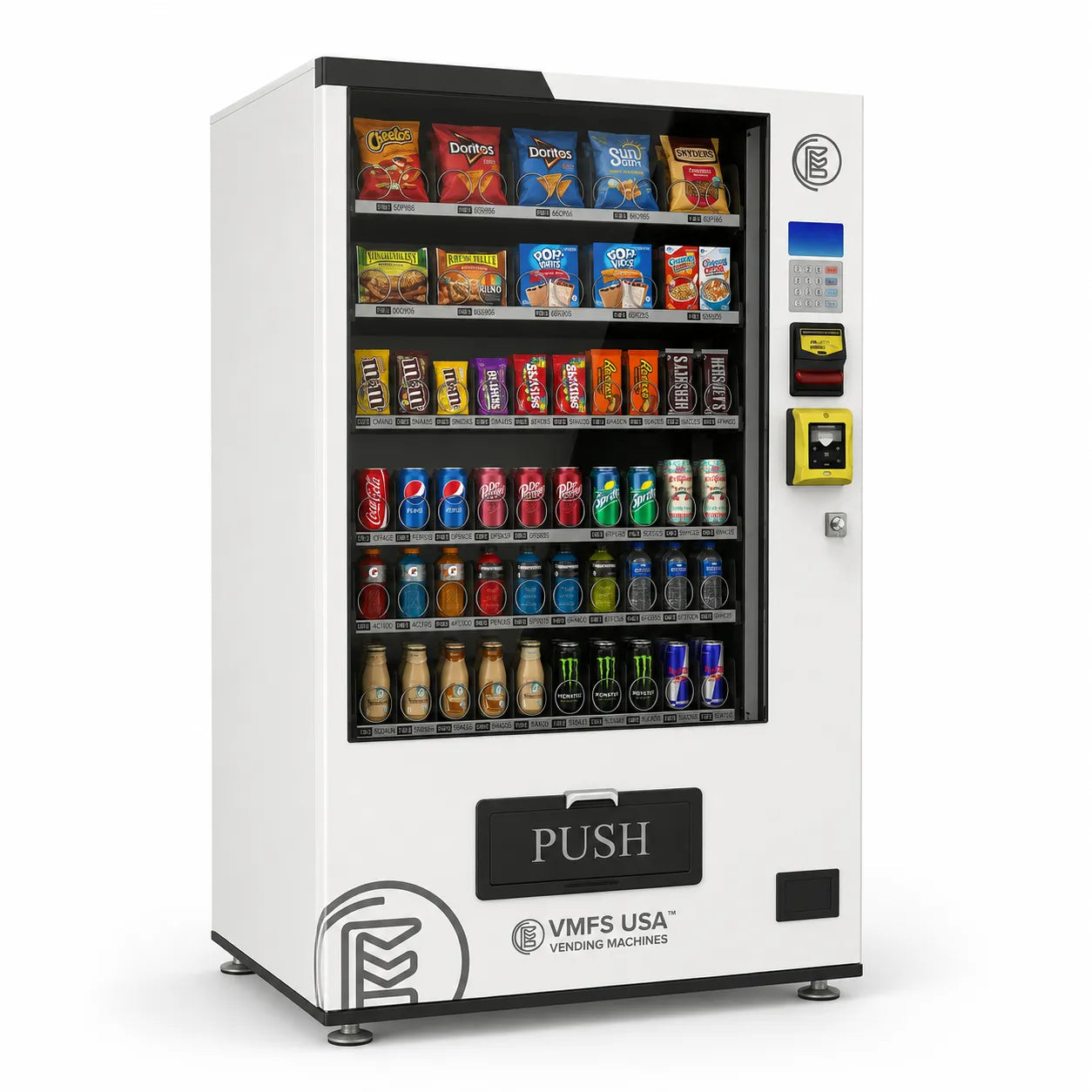
Share:
Beginner Steps to Start Investing In Vending Machines: Costs & ROI
Beginner Steps to Start Investing In Vending Machines: Costs & ROI