


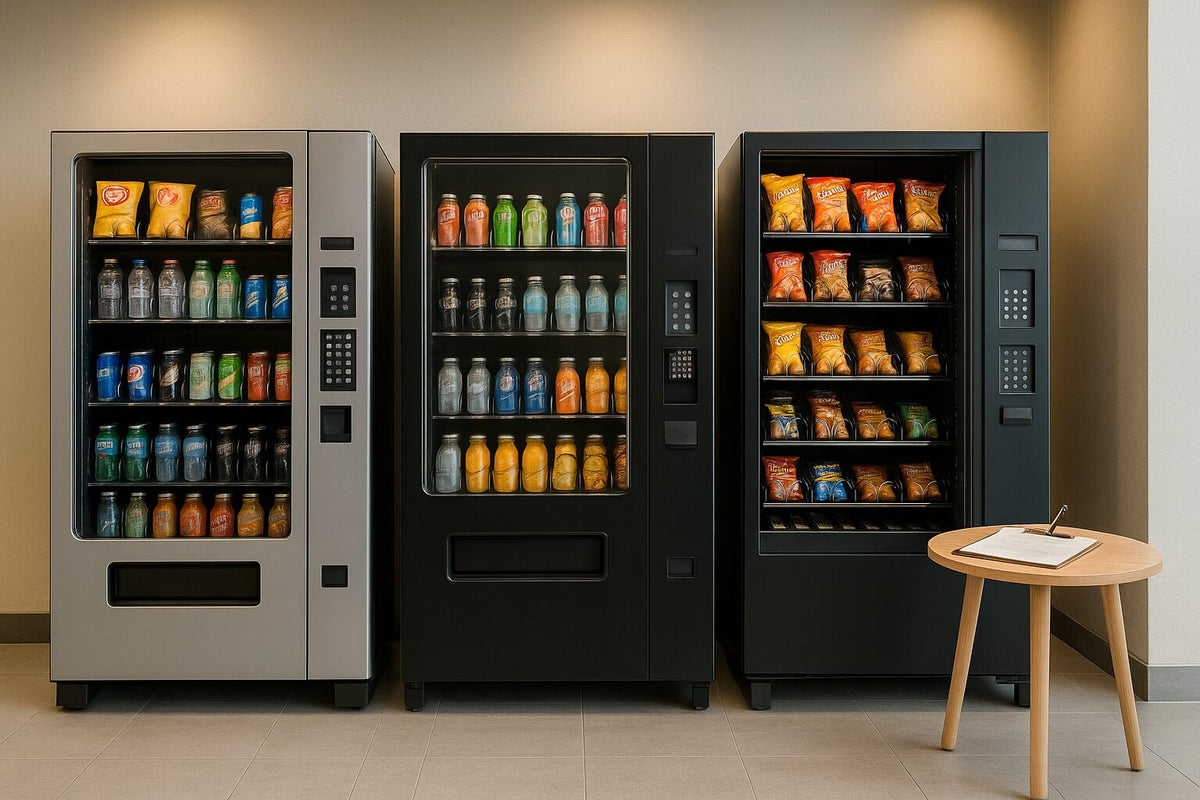


Design the perfect vending solution for your location and customers.

Join the VMFS newsletter and step into a thriving network dedicated to collective success.
One signup. Endless possibilities.
You can buy vending machines from six kinds of sellers: manufacturers and direct sellers, authorized distributors, used and refurbished dealers, online marketplaces, auctions and liquidations, and operators selling an existing route. New machines from a manufacturer or distributor cost more but come with a written warranty, parts and support; used machines cost less and shift the repair risk to you.
This guide to where to buy vending machines compares each source, shows how to tell a reliable vending machine supplier from a risky one, lists the questions to ask before you pay, and explains the federal rule that protects buyers when a seller promises locations or income. VMFS USA is one of those suppliers, so the guide also says plainly when a different channel is the better buy.
The best place to buy a vending machine for most new operators is a manufacturer or an established direct seller, because that is where you get new equipment, a written warranty, replacement parts and someone to call when a machine stops vending. Used dealers, marketplaces and auctions are cheaper, and they suit operators who can diagnose a bill validator or replace a vend motor themselves.
The source matters more than most first-time buyers expect. A vending machine is a payment terminal, a refrigeration unit and a product-delivery mechanism in one cabinet, and it earns money only while all three work. When the seller cannot supply a control board, a compatible card reader or a technician, the cost shows up as downtime at a location you worked hard to win. NerdWallet's guide to starting a vending business notes that manufacturers and wholesale suppliers carry the widest selection, that secondary-market sellers and specialty online retailers let you compare brands, and that consumer-to-consumer platforms such as Craigslist and eBay also list machines.
Manufacturers and direct sellers
New machines, full warranty and parts. The widest range of types, from countertop snack units to AI coolers.
Authorized distributors
Resell one or more brands, sometimes with local delivery, installation and service.
Used and refurbished dealers
Rebuilt machines at a lower price. Quality depends entirely on the shop doing the work.
Online marketplaces
Craigslist, eBay and Facebook Marketplace listings from individuals. Cheapest entry, usually sold as-is.
Auctions and liquidations
Bulk lots from closed businesses and fleet upgrades. Fast and cheap, with little chance to test.
Existing routes
Machines sold together with their locations and contracts by an operator who is exiting.
If you are still deciding what to buy rather than where, start with our guide on how to buy a vending machine, which walks through machine types, features and budgets before you contact any seller.
Each source trades price against risk: the lower the purchase price, the more of the testing, repair and payment setup you take on yourself. The table below summarizes the trade-off, using the typical price ranges NerdWallet and United Capital Source both report, roughly $3,000 to $10,000 for a new full-size machine and $1,200 to $3,000 for a used or refurbished one.
| Source | Condition | Typical price | Warranty and support | Best for |
|---|---|---|---|---|
| Manufacturer or direct seller | New | About $3,000 to $10,000 for full-size; countertop units start lower | Written warranty, parts supply, technical support | First-time operators and anyone buying smart or specialty machines |
| Authorized distributor or dealer | New, sometimes refurbished | Close to the manufacturer's price, sometimes bundled with installation | Manufacturer warranty passes through; local service varies by dealer | Buyers who want local delivery and a service contact |
| Used or refurbished dealer | Rebuilt or inspected | About $1,200 to $3,000 | Short dealer warranty, if any | Operators comfortable with repairs and older payment hardware |
| Craigslist, eBay, Facebook Marketplace | Used, as-is | Lowest, highly variable | Usually none | Technicians who can inspect and fix machines |
| Auctions and liquidations | Used, as-is | Variable, often by the lot | None | Experienced buyers purchasing in bulk |
| Existing route for sale | Used, with locations | Priced on the route's earnings | None on equipment; contracts transfer | Operators who want revenue from day one |
Buying direct gets you the newest hardware and the clearest accountability, because the company that sold the machine is the company that honors the warranty and stocks the parts. Direct sellers also tend to carry the full range of vending machines, so you can buy a snack machine for one site and a refrigerated or coffee unit for the next without starting a new supplier relationship. The trade-off is price: new equipment costs more up front, and freight is usually extra.
Distributors resell machines from one or more manufacturers and often add delivery, installation and local service. They are a good fit when you want someone nearby to set a machine on site. Buyers use vending machine vendor, distributor and provider almost interchangeably, so look past the label to the paperwork. Confirm that the dealer is actually authorized by the brand, because the manufacturer warranty may depend on it, and ask who performs warranty repairs: the dealer, the manufacturer or a third party.
A refurbished machine from a reputable shop can be a sound buy, especially a heavy-duty steel cabinet with years of life left. The risk sits in what you cannot see: worn compressors, outdated control boards and bill validators or coin mechanisms that cannot talk to a modern card reader. Our guide to buying a used vending machine covers the inspection checklist in detail.
Marketplace listings are the cheapest way to get a cabinet, and the least predictable. Most are sold by individuals or businesses clearing space, with no warranty, no testing and no guarantee that keys, manuals or payment hardware are included. Filter by distance so you can see the machine run before paying, and budget for a truck, a liftgate and at least one repair.
Auctions move machines in bulk when a business closes or a fleet upgrades. Prices can be low, but you often cannot plug the machine in, and the buyer handles removal and transport. This route rewards experienced operators who can price repairs on sight.
Some operators sell their machines together with the locations they serve. You pay for revenue history and contracts rather than just equipment, so the due diligence looks more like buying a small business. Read what to check before buying a vending route if you are weighing this option.
A reliable vending machine supplier puts its warranty in writing, keeps replacement parts in stock in the United States, ships machines that are configured and tested for cashless payment, and has a support line you can reach after the sale. Price and photos are easy to compare; these four traits are what separate a supplier you can build a route on from one you replace after the first breakdown.
Payment compatibility comes first because it decides how much your machine sells. Cantaloupe's 2026 Micropayment Trends Report found that 78% of vending sales were cashless in 2025, up from 73% the year before, and that the average cashless purchase was $2.45 against $1.57 in cash. A machine that cannot accept cards and phones is giving up most of its potential sales. Most card readers connect through MDB (Multi-Drop Bus), the interface standard published by the National Automatic Merchandising Association (NAMA); version 4.3, released in 2019, revised the section covering cashless devices. Ask any supplier, and especially a used dealer, whether the controller is MDB-compatible and which readers have been tested with it. Shopping for a vending machine with a card reader already fitted settles the question before delivery, but confirm on each product page whether the reader is included or listed as an upgrade.
Safety listing is the second check that most buyer guides skip. UL 751 is the US safety standard for vending machines that dispense non-refrigerated products, and refrigerated sections are evaluated under UL 541. A listing mark tells a property manager, an insurer or a school district that the electrical design has been independently tested, and some locations ask for it before they approve a placement.
Parts and service close out the list. Ask where parts ship from and how quickly. An inexpensive part that takes three weeks to arrive costs far more than its price in lost sales and a frustrated location manager. Suppliers who stock control boards, vend motors, coils and displays domestically, and who offer remote diagnostics, keep machines earning. Our vending machine maintenance guide shows which parts fail most often, so you know which ones to ask about.
Signs of a reliable supplier
Warning signs
Ask every supplier the same set of questions about warranty, payments, parts, support, costs and earnings claims, then compare the answers side by side. The answers matter less for what they promise than for how specific they are: a reliable supplier names terms, models and timelines, while a weak one answers in generalities.
| Question | A good answer | A red flag |
|---|---|---|
| What does the warranty cover, for how long, and how do I file a claim? | Written terms naming covered parts, length, exclusions and the claim process | Verbal promises only, or "sold as-is" on a new machine |
| Which card readers work with this machine? | Names supported readers, confirms MDB compatibility and tests payment before shipping | "Any reader will work" |
| Where are replacement parts stocked? | US warehouse locations and typical shipping times | Overseas only, no estimated arrival |
| Who do I call when the machine breaks? | A support line with hours, remote diagnostics and help arranging a technician | Only the salesperson's mobile number |
| Is the machine safety listed? | Shows the listing mark or certification for the model | Cannot answer |
| What will I pay after the purchase price? | Discloses freight, liftgate, software subscriptions and card processing | Quote excludes freight and surprises appear at delivery |
| Can I see the machine running? | Showroom visit, live demo or video of the actual unit | Renderings only |
| Will you find me locations, and what will I earn? | Offers guidance and tools; any earnings claim comes with written proof | Guaranteed placements or income with no disclosure document |
Two questions most buyers forget cover specifications and customization. Ask for power requirements, dimensions including door swing, product capacity and the coil or tray sizes for the products you plan to sell. If you want a branded wrap, special product sections or a non-standard build, ask early, because customization changes lead times and sometimes the supplier. A dedicated custom vending machine program is a better fit than asking a used dealer to modify a cabinet.
Finally, ask for references and contact them yourself. Speak to operators who bought the same model at least a year ago, because the first year shows you how the supplier handles warranty claims, not just how it handles a sale.
Run every shortlisted supplier through the same ten checks before you send a deposit. A seller that passes all ten is not guaranteed to be perfect, but one that fails two or more has told you what the relationship will look like after the sale.
If a seller promises to provide locations for your vending machines, federal law treats the deal as a business opportunity and requires the seller to give you a written disclosure document before you sign or pay, plus a separate written statement backing any earnings claim. That rule, the FTC's Business Opportunity Rule (16 CFR Part 437), is one of the most useful vetting tools a vending buyer has, and few buyer guides mention it.
The rule names vending machines directly: it covers sellers who say they will provide locations for vending machines the buyer pays for. Such a seller must give you a single written disclosure document at least seven calendar days before you sign a contract or pay any money. The document must state whether the seller or its key people faced fraud or deceptive-practice actions in the previous 10 years, whether there is a cancellation or refund policy, and the names, cities, states and phone numbers of buyers from the past three years, which the seller may limit to the 10 buyers located nearest to you. Any earnings claim must come with a separate document headed "Earnings Claim Statement Required by Law."
Use the disclosure as a checklist. Get every promise about locations, accounts or territories in writing. Treat "up to" income figures as earnings claims that need written proof. Call buyers from the reference list yourself rather than only the people the salesperson suggests, and ask how long their machines took to place and what they actually earned. Before buying, search the company with your state Attorney General's office and the Better Business Bureau, keeping in mind that a clean record is a starting point rather than a guarantee.
Rule of thumb: a supplier that sells you equipment and helps you evaluate sites is normal. A supplier that guarantees placements or monthly income, and cannot hand you the FTC disclosure document, is a reason to walk away.
Finding your own sites protects you from this whole category of risk. Our guide on how to scout and pitch a vending machine location shows how operators win placements directly.
A local supplier helps most with delivery, installation and hands-on service, but a national supplier with regional parts stock and remote diagnostics can match that for most operators. What you need nearby is fast parts and someone who can get a technician to a down machine, not necessarily a showroom in your own city.
Proximity has real advantages. Freight lanes are shorter, delivery appointments are easier to arrange, and a local dealer may know which products and price points work in your area. If a repair needs a technician, a supplier with people in your region can respond faster than one that only ships parts.
There are several ways to find and judge suppliers beyond a search for vending machine suppliers near me:
Product sourcing is a separate supplier decision. Once you own the machine, you need wholesale stock; see where to buy snacks for vending machines for warehouse clubs, distributors and direct brand programs. Coffee operators should also read our coffee vending machine supplier guide, since ingredients and service needs differ.
Decide what the location needs before you compare suppliers, because foot traffic, product type and payment expectations determine the machine, and the machine determines which suppliers can serve you. Shopping without a site in mind is how operators end up with a full-size combo in a 15-person office or a countertop unit in a busy factory.
A corporate office often wants coffee and healthier snacks, a university campus leans toward affordable snacks and energy drinks, and a hospital or night-shift workplace needs refrigerated meals around the clock. Budget sets the rest: specialty and smart machines sell items a spiral machine cannot, but they cost more, so match the spend to the revenue the site can realistically support.
| Location | Machine type | VMFS example | Starting price |
|---|---|---|---|
| Front desk, small office, boutique gym | Countertop snack | Countertop Snack Vending Machine | $1,900 |
| Break room in a mid-size workplace | Compact combo | Seaga QuickBreak QB4000 | $4,450 |
| Gyms, campuses, apartment lobbies | Smart combo with touchscreen | Smart Combo Vending Machine | From $4,650 |
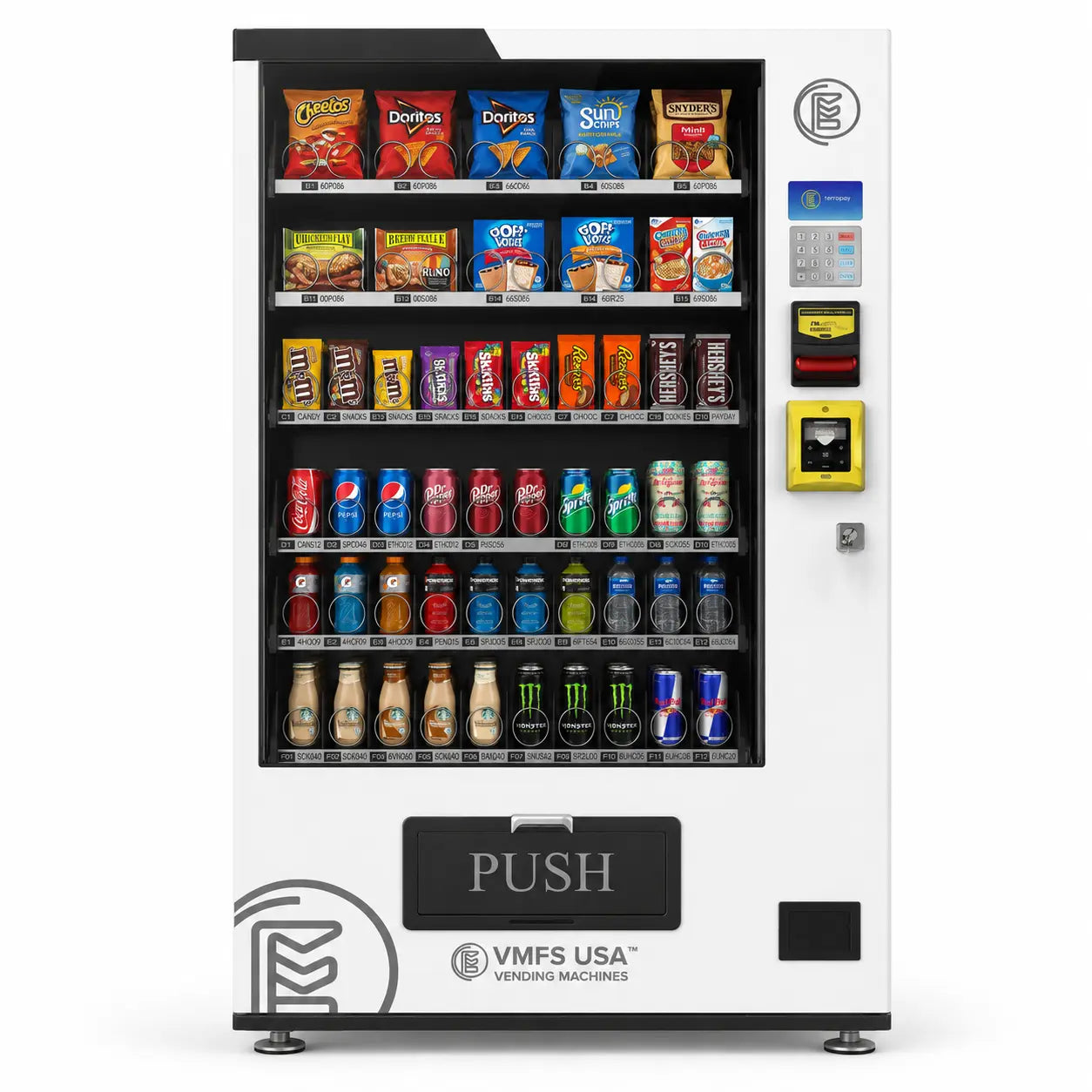
| Factories, schools, high-traffic sites | Full-size snack and drink | Seaga ENV5C Combo Merchandiser | $6,495 |
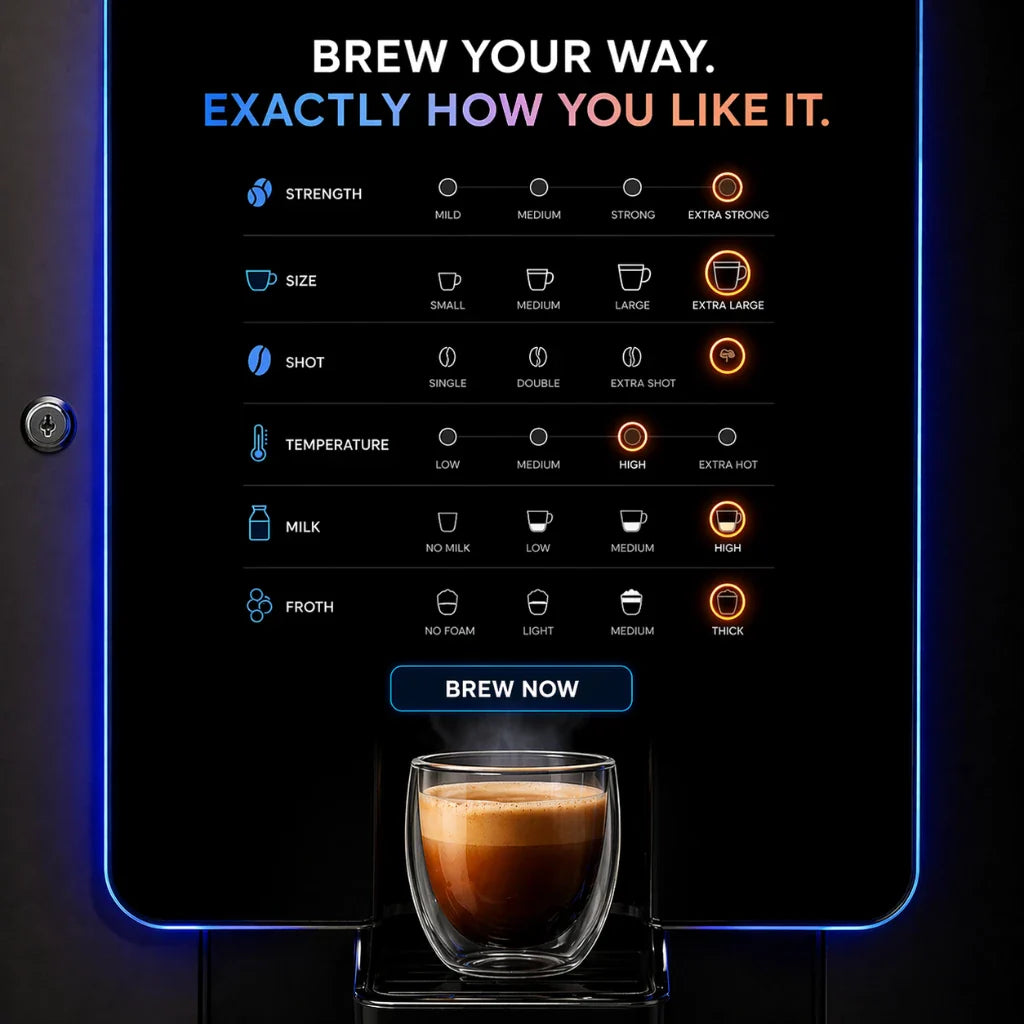
| Offices that want hot drinks | Bean-to-cup coffee | Pro Coffee Vending Machine | $7,450 |
| Fresh food, premium chilled items | Refrigerated elevator | Smart Elevator Vending Machine | From $8,650 |
| Hospitals, large workplaces, grab-and-go meals | AI smart fridge | AI Smart Fridge Vending Machine | From $9,950 |
Most first machines fall into three categories. Snack vending machines fit sites with steady traffic and limited power or space. Combo vending machines put snacks and cold drinks in one cabinet, which suits a single-machine placement. AI grab-and-go vending machines let buyers open the door and take what they want, which works for fresh food and higher ticket items. If you prefer American-built equipment, compare Seaga vending machines.
Check site rules before you order. Public-facing locations may ask that machines meet the 2010 ADA Standards, which require at least one of each type of vending machine provided to comply with the accessibility rules for operable parts, including a reach range between 15 and 48 inches. Some sites also require permits or a sales tax registration; see our overview of vending machine permits in the United States.
Compare New Vending Machines in One Place
Snack, drink, combo, coffee, refrigerated and AI machines with published prices and specs.
Browse All MachinesThe cheapest machine is rarely the cheapest to own, because repairs, payment processing, software, energy and downtime add up over the years you run it. Compare suppliers on what the machine will cost to operate, not just on the invoice.
Used machines cost a fraction of new ones, and they can make sense for a tight budget or a low-risk test site. New machines cost more, but they typically come with current payment hardware, a warranty and a longer working life, and they avoid the hidden expense of retrofitting an old controller for card payments. For a full breakdown by machine type, see how much a vending machine costs.
Several running costs depend on the supplier you choose. Card processing typically runs about 3% to 6% of cashless sales, and card reader service plans commonly cost $7.95 to $18.95 per machine per month; our vending payment system page compares the main options. Remote monitoring software is another line item, and it pays for itself by showing which machines need a visit before you load the van. Energy is the third: ENERGY STAR reports that certified refrigerated beverage vending machines are on average 9% more efficient and save about 1,000 kWh a year, with a low-power mode for idle hours, which is worth weighing when you compare an older refrigerated machine with a new one.
Location commission also comes out of revenue. NerdWallet puts the typical payment to the property owner at 5% to 25% of sales, so a machine that sells well but costs more to run can still lose to a better-built one. Our vending machine profit guide shows how these costs combine.
Financing changes the math when cash is tight. Ask whether the supplier offers financing directly or through partners, whether the agreement is a loan or a lease, and whether you own the machine at the end. Vending machine financing through third-party lenders lets you spread the cost while the machine earns, and our guide to financing a vending machine compares the options.
Buying new
Buying used
Before you pay, confirm the lead time, the freight method, what happens at delivery and who sets the machine up, because a vending machine is heavy freight and most problems happen in the last few feet. Payment terms should also be written down: deposit, balance due date, and any discount or installment plan.
Lead times depend on stock and customization. At VMFS USA, in-stock machines without wraps or major changes usually ship within 7 to 10 days, while custom builds, wraps and special configurations take around 45 days, per our shipping information. Machines travel by freight carrier, so the delivery address, access constraints and liftgate needs all shape the price and the appointment.
Ask whether the machine is plug-and-play or needs professional installation, and who configures the card reader and software. A supplier that configures payment hardware and test-vends before crating saves you troubleshooting in front of a location manager.
VMFS USA sells new vending machines direct from Miami, with a current catalog that runs from $1,900 for the Countertop Snack Vending Machine to $19,950 for the Elevator Pro Ice Cream Vending Machine, plus American-built Seaga machines, coffee, AI and specialty equipment. Here is what the terms look like, so you can compare them with any other supplier using the questions above.
Warranty. The written policy is a 1-year parts warranty covering electrical components, motors, sensors, control boards and payment modules, with replacement parts and shipping covered within the continental US during the warranty period. Extended two-year ($250) and three-year ($400) coverage can be added at purchase. The policy notes that specific product warranties can vary, so check the product page for the model you order. Exclusions such as vandalism, cosmetic wear and using an indoor model outdoors are listed on the VMFS warranty page.
Parts and support. Products and replacement parts are stocked at the Miami campus and at shipping warehouses in Los Angeles and Atlanta, and the support team handles remote diagnostics and helps arrange a technician when a repair needs hands-on service.
Configuration and software. Each unit is configured and checked on the Miami floor before crating, with test vends across slots; card readers, bill acceptors and ID scanners are fitted and tested where they have been ordered. VMFS Cloud works with every VMFS machine; plans start at $7.99 per machine per month for live inventory, sales and alerts, with Advertising at $16 and AI Cloud at $39.99.
Financing. VMFS does not finance in-house; partners including PayPal, Klarna and ClickLease handle applications after you choose a machine and request a quote.
Try before you buy. The Miami showroom runs working machines on the same software and payment hardware used in the field, by appointment. Questions about a specific site or model can go straight to the VMFS team before you order.
When another channel is the better buy. VMFS sells new equipment only, so it is not the cheapest way into vending. If your budget is under $1,900, a tested machine from a reputable used dealer is the realistic option. If you want revenue from the first week, an existing route with transferable contracts can make more sense than a new machine. If you need a technician who lives in your town, an authorized local distributor may serve you better than any national seller. Hold VMFS to the same checklist as everyone else, and buy from whichever supplier answers it best.
Spread the Cost of Your First Machine
Apply through VMFS financing partners after you choose a machine and request a quote.
Explore Financing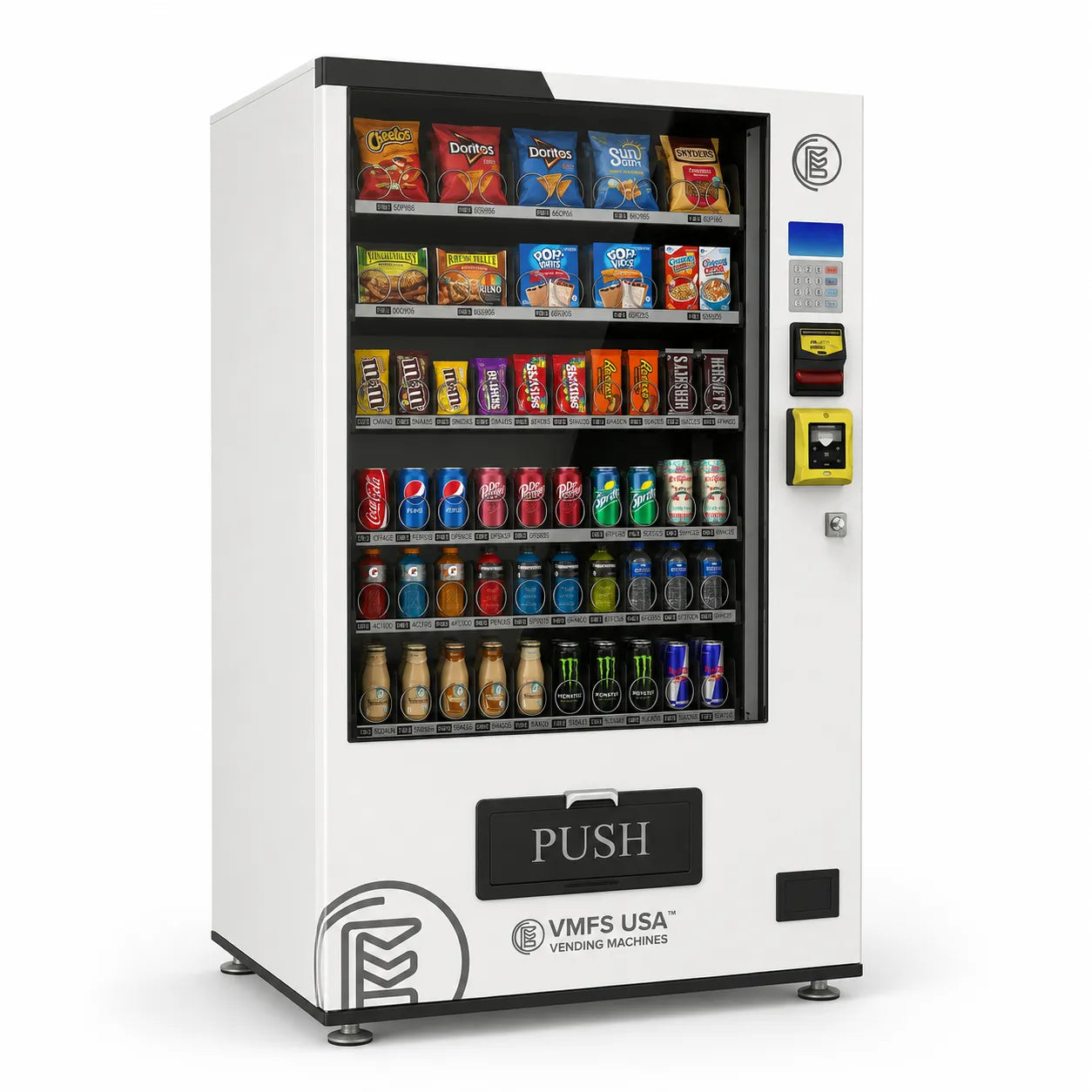
Share:
Automated Vending Kiosks Are Taking Over Retail - Detailed Guide
Vending Machine Financing Model