



Design the perfect vending solution for your location and customers.

Sales, inventory and alerts for your whole route, from one machine to a fleet.
Answer a few questions about your location, products and budget and get a shortlist.
Estimate revenue, payback period and margin before you buy.
Sales, setup help, warranty and parts from the VMFS USA team.
Join the VMFS newsletter and step into a thriving network dedicated to collective success.
One signup. Endless possibilities.
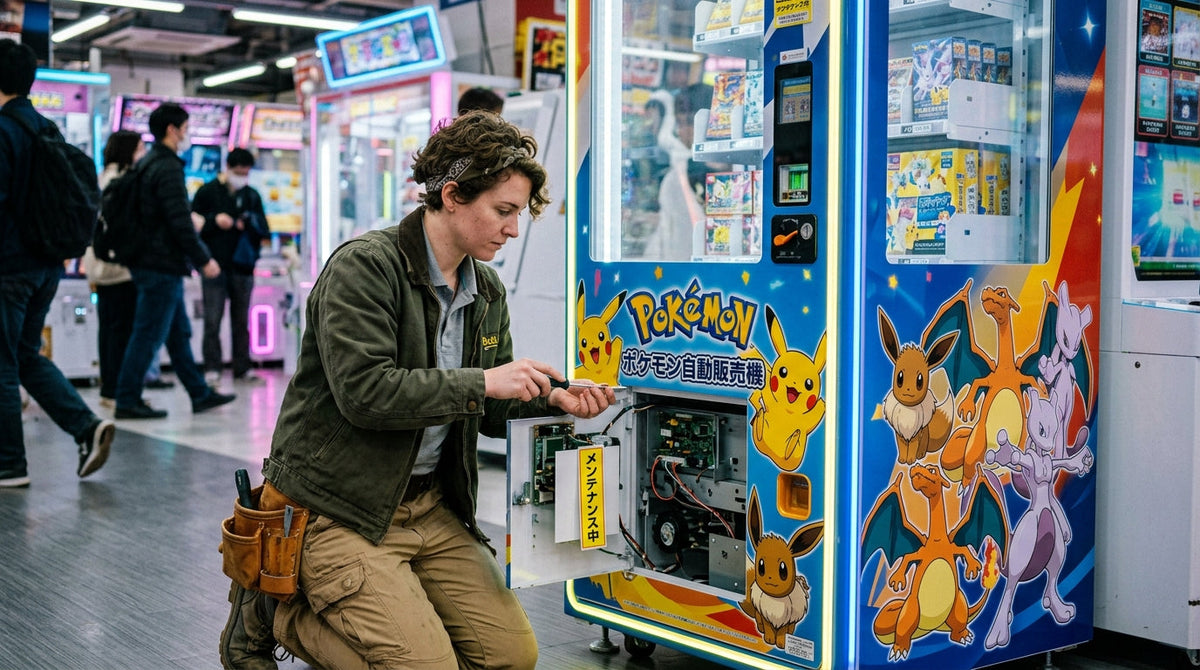
A Pokémon vending machine maintenance schedule breaks into four intervals: daily or per-visit checks, weekly tasks, monthly servicing, and quarterly or annual deeper maintenance, each covering a different set of components that wear or drift out of spec at different rates. Following a structured schedule catches small issues, a sticking dispenser, a slow payment terminal, before they turn into lost sales or a full machine shutdown. This guide breaks down exactly what to check at each interval and how that maintenance routine differs from simple restocking.
Table of Contents
A structured schedule catches wear-related issues while they're still minor and cheap to fix, rather than letting them compound into a full breakdown that takes the machine offline entirely. Operators running a Pokémon vending machine as part of a broader business, covered in more depth in the guide to starting and operating a Pokémon vending machine, benefit most from treating maintenance as a scheduled routine rather than a reactive response to complaints or lost sales.
Tasks at this frequency are quick checks performed whenever an operator is already on-site, typically during a restock visit, rather than requiring a dedicated trip.
| Task | What to Check |
|---|---|
| Visual inspection | Cracked glass, visible damage, or tampering signs |
| Payment terminal test | Confirm tap-to-pay and card reader respond correctly |
| Dispensing test | Run a test selection to confirm smooth product delivery |
| Cash/lockbox check | Confirm locks are secure and undamaged |
Weekly tasks go slightly deeper than the quick per-visit checks, focused on catching wear patterns before they affect a customer transaction.
| Task | What to Check |
|---|---|
| Slot alignment check | Confirm each product slot dispenses without hesitation |
| Screen/interface check | Confirm touchscreen or button response is accurate |
| Exterior cleaning | Wipe down glass, buttons, and payment terminal surface |
Monthly tasks address components that wear more gradually and don't need per-visit attention but should never go unchecked for longer than about four weeks.
| Task | What to Check |
|---|---|
| Internal mechanism inspection | Open the cabinet and inspect dispensing motors and tracks |
| Firmware/software check | Confirm the machine is running current software where applicable |
| Security hardware check | Test locks, hinges, and tamper sensors thoroughly |
Quarterly and annual tasks cover deeper servicing that typically benefits from, or requires, a technician's involvement rather than routine operator-level checks.
Deep-clean internal mechanisms and inspect wiring connections for wear.
Full technician inspection covering control board, payment hardware, and structural integrity.
Restocking refers strictly to refilling sold inventory, while maintenance covers mechanical servicing, payment system checks, and security inspections, and treating the two as identical is a common operator mistake that leaves real maintenance gaps unnoticed. A detailed breakdown of the Pokémon vending machine restock cycle covers how often inventory needs refilling based on location traffic, a schedule that runs independently of, though often overlaps in timing with, the maintenance intervals covered in this guide.
Three components account for most of the maintenance attention a Pokémon vending machine actually needs over its operating life.
The drop or push mechanism responsible for delivering product to the pickup bin sees the most repeated mechanical cycling of any component, making it the most common source of wear-related issues. Understanding how Pokémon vending machines work mechanically helps operators recognize early warning signs, like slight hesitation before a drop, before they escalate into a full jam.
Cashless payment hardware needs periodic connectivity and firmware checks, since a terminal that intermittently fails to authorize transactions costs sales just as directly as a mechanical jam, even though the underlying cause sits in a completely different subsystem.
Locks, hinges, and security glass protect both inventory and cash, and regular inspection catches early tampering attempts or hardware wear before they develop into an actual security breach.
A reset resolves many software-level glitches, a frozen screen, an unresponsive payment terminal, or a machine stuck mid-transaction, without requiring a technician visit. A step-by-step guide to resetting a Pokémon vending machine walks through the correct reset procedure, which matters since an improper reset can sometimes clear transaction logs an operator needs for reconciliation.
Visual inspections and exterior cleaning. Test dispensing and payment checks. Software resets for frozen screens or stuck transactions. Lock and hinge inspection.
Internal control board repair or replacement. Persistent mechanical jams beyond a simple clear. Payment terminal hardware failures. Structural or wiring issues inside the cabinet.
Skipped maintenance compounds quietly: a minor dispensing hesitation left unaddressed becomes a full jam, a payment terminal glitch left unresolved becomes a pattern of lost sales, and both scenarios cost more in lost revenue and eventual repair than the routine maintenance that would have caught them early. Operators who priced out equipment carefully using a Pokémon vending machine pricing guide before purchase should apply that same cost-conscious thinking to ongoing maintenance, since neglect erodes the ROI that careful upfront budgeting was meant to protect.
Logging every check, even quick per-visit ones, creates a record that helps distinguish a one-time glitch from a recurring pattern worth escalating to a technician. This log also proves valuable for warranty claims and for spotting whether a specific machine consistently needs more attention than others in a multi-unit operation, information that's easy to lose track of without a written record.
New machines typically need lighter maintenance in their first year, mostly software checks and routine cleaning, since mechanical components haven't accumulated significant wear yet. Used machines, covered in the context of purchase decisions in the guide to buying a Pokémon vending machine, often need more frequent mechanical inspection from day one, since prior usage history and maintenance quality under previous ownership directly affect how soon issues start appearing under new ownership.
Maintenance is one part of a broader operational picture that also includes restocking, sourcing, and compliance, each covered in more depth in the complete 2026 operator guide for readers building out a full operating routine rather than addressing maintenance in isolation.
Built for reliable, low-maintenance operation from day one.
Pokémon Card Vending MachineCompare additional options for dispensing trading card products.
Maintenance follows four intervals: quick checks during every restock visit, deeper weekly checks, monthly internal inspections, and quarterly or annual technician-level servicing.
Restocking refers strictly to refilling sold inventory, while maintenance covers mechanical servicing, payment system checks, and security inspections, and both should be tracked separately.
A visual inspection for damage, a payment terminal test, a dispensing test, and confirming locks and the cash or lockbox are secure all belong in a quick per-visit check.
A reset typically resolves software-level glitches like a frozen screen, unresponsive payment terminal, or a machine stuck mid-transaction, without needing a technician visit.
Internal control board repair, persistent mechanical jams beyond a simple clear, payment terminal hardware failures, and structural or wiring issues all typically need a certified technician.
Small issues compound over time, since a minor dispensing hesitation left unaddressed can become a full jam, and neglected issues typically cost more in lost sales and eventual repair than routine maintenance would have.
Generally yes, since used machines often carry prior wear from previous ownership, meaning they need more frequent mechanical inspection from day one compared to a new unit.
Yes, logging every check helps distinguish a one-time glitch from a recurring pattern worth escalating, and it's useful for warranty claims and spotting which machines need extra attention across a multi-unit operation.
The dispensing mechanism sees the most repeated mechanical cycling of any component, making it the most common source of wear-related issues over a machine's operating life.
Consistent maintenance protects the return on investment an operator budgeted for at purchase, since neglect directly erodes profitability through lost sales and larger, more expensive repairs down the line.

Compartir:
How Much Is a Drink Vending Machine? Complete Pricing Guide
Pokémon Vending Machine Components: What's Inside and How Each Part Works