



Design the perfect vending solution for your location and customers.

Sales, inventory and alerts for your whole route, from one machine to a fleet.
Answer a few questions about your location, products and budget and get a shortlist.
Estimate revenue, payback period and margin before you buy.
Sales, setup help, warranty and parts from the VMFS USA team.
Join the VMFS newsletter and step into a thriving network dedicated to collective success.
One signup. Endless possibilities.
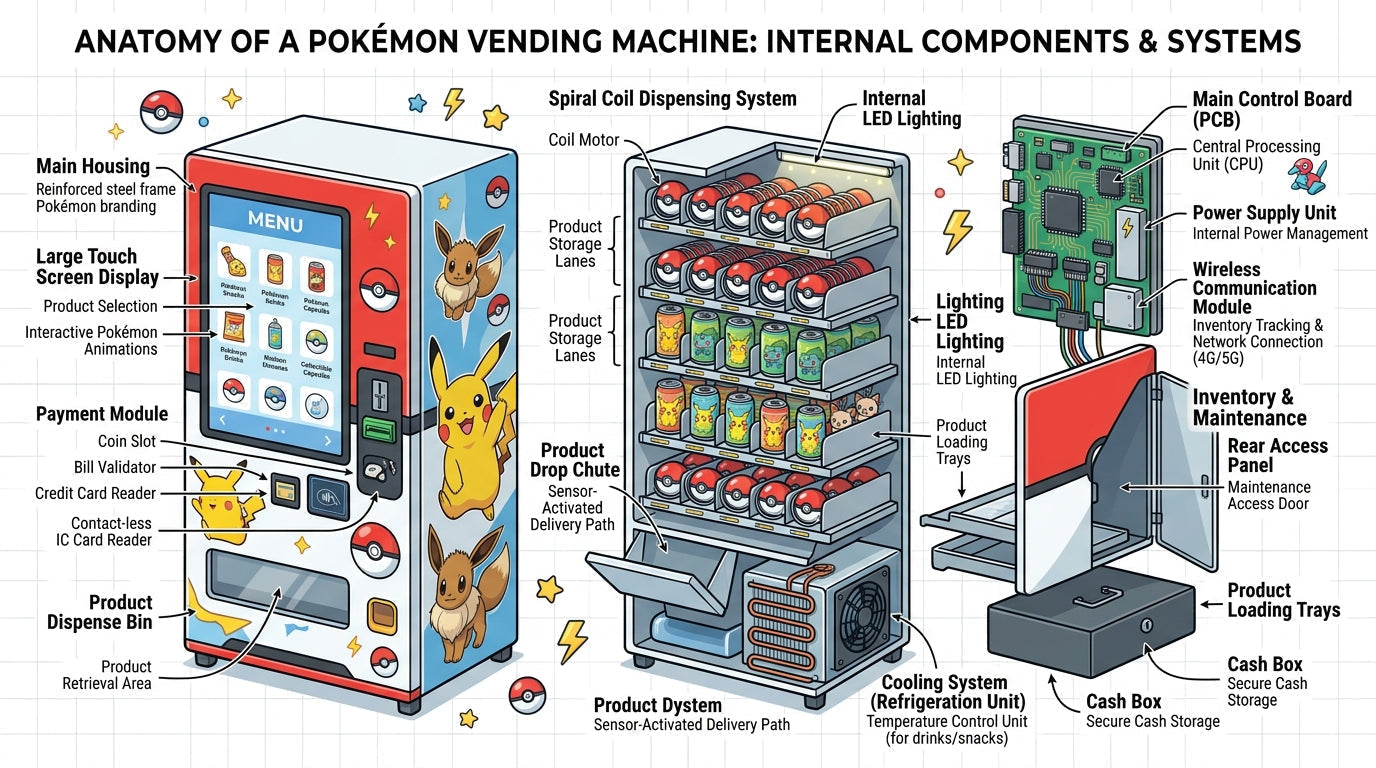
A Pokémon vending machine is built from five core component groups: structural components like the cabinet and security glass, dispensing components that move product to the buyer, payment and control components that process transactions, interface components like screens or keypads, and connectivity components that report data back to the operator. Each group serves a distinct function, and understanding how they work together explains both why these machines cost what they do and where maintenance attention typically needs to go. This guide breaks down every major component and what role it plays in getting a sealed booster pack from storage into a buyer's hands.
Table of Contents
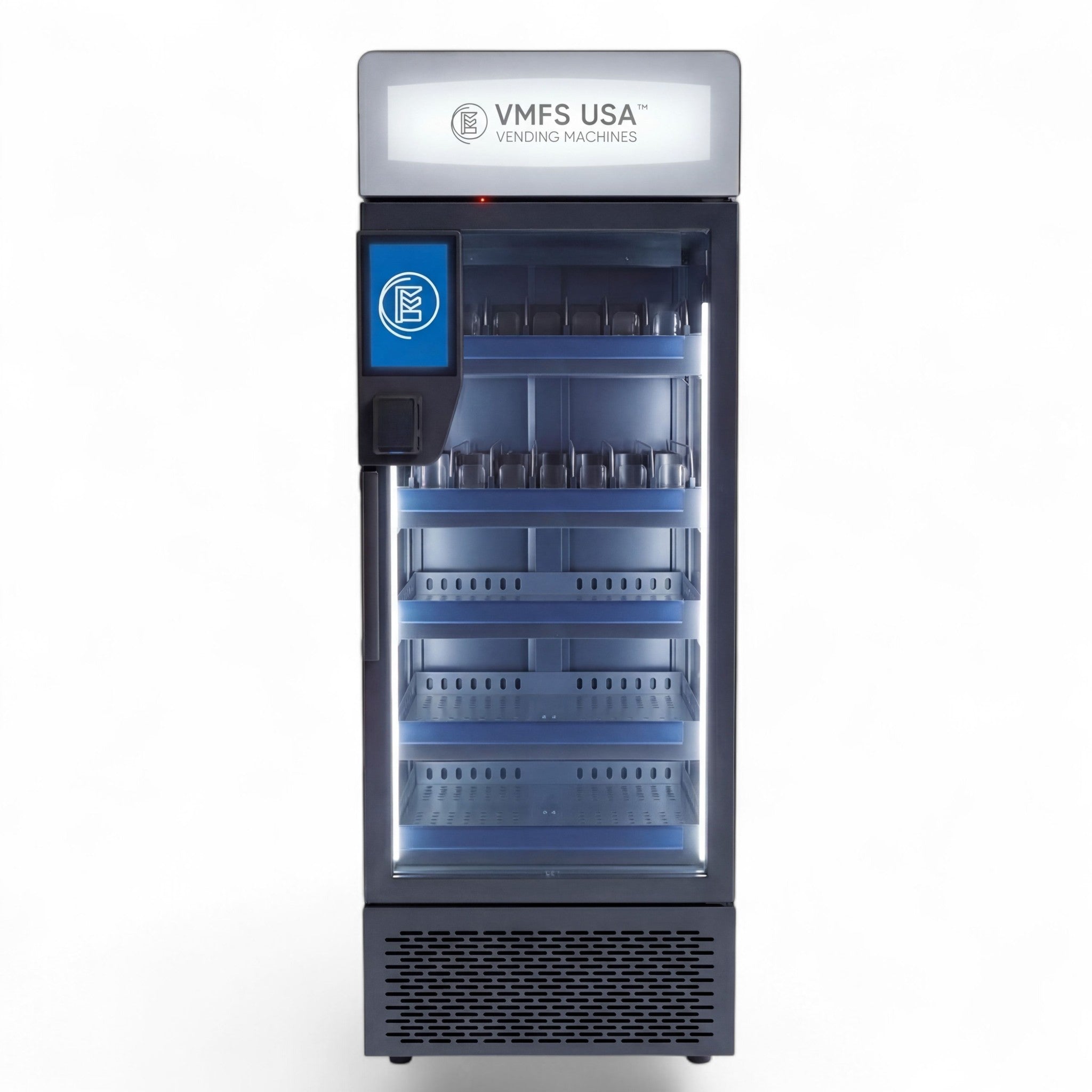
Structural components form the machine's physical shell and directly determine both its security and its ability to protect inventory from tampering or damage. Understanding what Pokémon vending machines are as a product category starts here, since the cabinet's build quality is what separates a purpose-built commercial unit from a repurposed general merchandise machine.
The steel cabinet and internal frame provide structural rigidity and mounting points for every other component, and gauge thickness directly affects both durability and resistance to forced-entry attempts targeting the inventory or cash inside.
Reinforced glass panels give buyers visibility into available product while resisting impact, and high-security locks on both the main access door and any internal cash compartment protect against the theft risk that comes with storing high-resale-value inventory in an unattended location.
Dispensing components handle the physical movement of product from storage to the pickup bin, and this subsystem sees more repeated mechanical cycling than any other part of the machine.
Individual slots hold sealed packs or bundles in a configuration designed to prevent product from shifting or jamming during the dispensing cycle, with slot dimensions varying based on whether the machine is configured for booster packs, elite trainer boxes, or a mixed product range.
A motorized drop or push mechanism delivers the selected item to the pickup bin, and this component's reliability depends heavily on how well slot dimensions match actual product packaging, since a mismatch here is the leading cause of dispensing jams. Understanding how Pokémon vending machines work mechanically ties directly back to this component, since it's the physical link between a customer's selection and an actual completed sale.
Payment and control components coordinate everything happening behind the scenes of a transaction, from authorization to inventory logging.
The payment terminal processes tap-to-pay, mobile wallet, or card transactions through a standard EMV-compliant flow, communicating authorization results to the control board before any dispense command gets triggered. A practical understanding of how to use a Pokémon vending machine from the buyer's side makes clear just how much of the transaction experience depends on this single component functioning quickly and reliably.
The control board acts as the machine's central coordinator, receiving the customer's selection, confirming payment authorization, triggering the correct dispensing mechanism, and logging the completed transaction. Software issues at this level are usually resolved through a reset rather than a hardware repair; a step-by-step guide to resetting a Pokémon vending machine covers the correct procedure when this component needs a software-level fix.
The selection interface, whether a touchscreen or physical keypad grid, translates customer intent into a specific slot request sent to the control board, and interface responsiveness directly affects perceived transaction speed even when the underlying mechanical dispensing takes the same amount of time regardless of interface type.
Some machines include a secondary screen for branding or advertising content, running independently of the core selection interface so that display functionality never interferes with the actual purchase flow.
The telemetry module transmits inventory levels and machine health data to an operator's dashboard over a cellular or Wi-Fi connection, enabling remote monitoring without requiring a physical site visit just to check stock levels.
Delivery confirmation sensors verify a product actually dropped successfully before closing out a transaction, while temperature or diagnostic sensors, where equipped, monitor overall machine health and flag anomalies before they become customer-facing problems.
| Component | Primary Function | Typical Failure Point |
|---|---|---|
| Cabinet/frame | Structural security and mounting | Rare; mainly cosmetic wear over time |
| Dispensing mechanism | Physical product delivery | Most common source of jams |
| Payment terminal | Transaction authorization | Connectivity or firmware issues |
| Control board | Central transaction coordination | Software glitches, usually reset-fixable |
| Telemetry module | Remote inventory/health reporting | Connectivity drops, rarely hardware failure |
Larger machines don't simply scale existing components proportionally; they typically add more parallel dispensing mechanisms and slot columns rather than making a single mechanism larger, since dispensing reliability depends on keeping each individual mechanism's mechanical complexity manageable regardless of overall machine capacity.
Remote monitoring reduces wasted service visits. Ad display adds secondary revenue potential. Faster, more reliable cashless payment processing.
Lower upfront cost. Fewer potential points of failure. Simpler troubleshooting without specialized technical knowledge.
Each component group adds cost independently, and a machine bundling advanced telemetry, an ad display, and premium security hardware costs meaningfully more than a mechanically similar unit with more basic components in each category. A detailed Pokémon vending machine pricing guide breaks down how these component-level differences translate into the final price across different configurations, useful context for buyers reviewing options through a guide to buying a Pokémon vending machine for the first time.
Cabinet gauge and security glass affect both durability and theft resistance.
Dispensing reliability depends on precise slot-to-product fit.
Control board, payment terminal, and telemetry work together for every sale.
Different components require different maintenance attention: the dispensing mechanism needs the most frequent inspection given its constant mechanical cycling, while the control board and telemetry module mostly need software-level checks rather than physical servicing. A full Pokémon vending machine maintenance schedule maps specific components to recommended check intervals, turning this component-by-component understanding into an actionable routine.
Understanding components in detail supports better decisions across sourcing, maintenance, and troubleshooting; operators building a complete operating routine should review the complete 2026 operator guide and the practical steps in starting and operating a Pokémon vending machine for how this component knowledge fits into the broader operational picture.
Built with reliable, purpose-engineered components from the ground up.
Pokémon Card Vending MachineCompare additional options for dispensing trading card products.
The five core component groups are structural components like the cabinet and glass, dispensing components, payment and control components, interface components like screens, and connectivity components for remote monitoring.
A mismatch between slot dimensions and actual product packaging is the leading cause of dispensing jams, since the dispensing mechanism sees more mechanical cycling than any other component.
The control board acts as the machine's central coordinator, receiving selections, confirming payment authorization, triggering the correct dispensing mechanism, and logging each completed transaction.
The telemetry module transmits inventory levels and machine health data to an operator's dashboard over a cellular or Wi-Fi connection, enabling remote monitoring without a physical site visit.
Each component group, structural, mechanical, payment, and connectivity, adds cost independently, so a machine bundling telemetry, an ad display, and premium security hardware costs more than a simpler configuration.
Yes, delivery confirmation sensors verify successful product drop before a transaction closes out, which is what allows the system to flag a failed dispense for operator review.
No, the ad display runs independently of the core selection interface, so branding or advertising functionality never interferes with the actual purchase flow.
No, larger machines typically add more parallel dispensing mechanisms and slot columns rather than scaling a single mechanism up, since that keeps each mechanism's mechanical complexity manageable.
The dispensing mechanism needs the most frequent inspection given its constant mechanical cycling, while the control board and telemetry module mostly need software-level checks instead.
Often yes, since a standard reset resolves many control board software glitches without requiring a technician visit or hardware repair.
Share:
Pokémon Vending Machine Maintenance Schedule: What to Check and When
Pokémon Vending Machine Stocking Schedule: How to Plan and Manage Restocks