




Design the perfect vending solution for your location and customers.

Join the VMFS newsletter and step into a thriving network dedicated to collective success.
One signup. Endless possibilities.
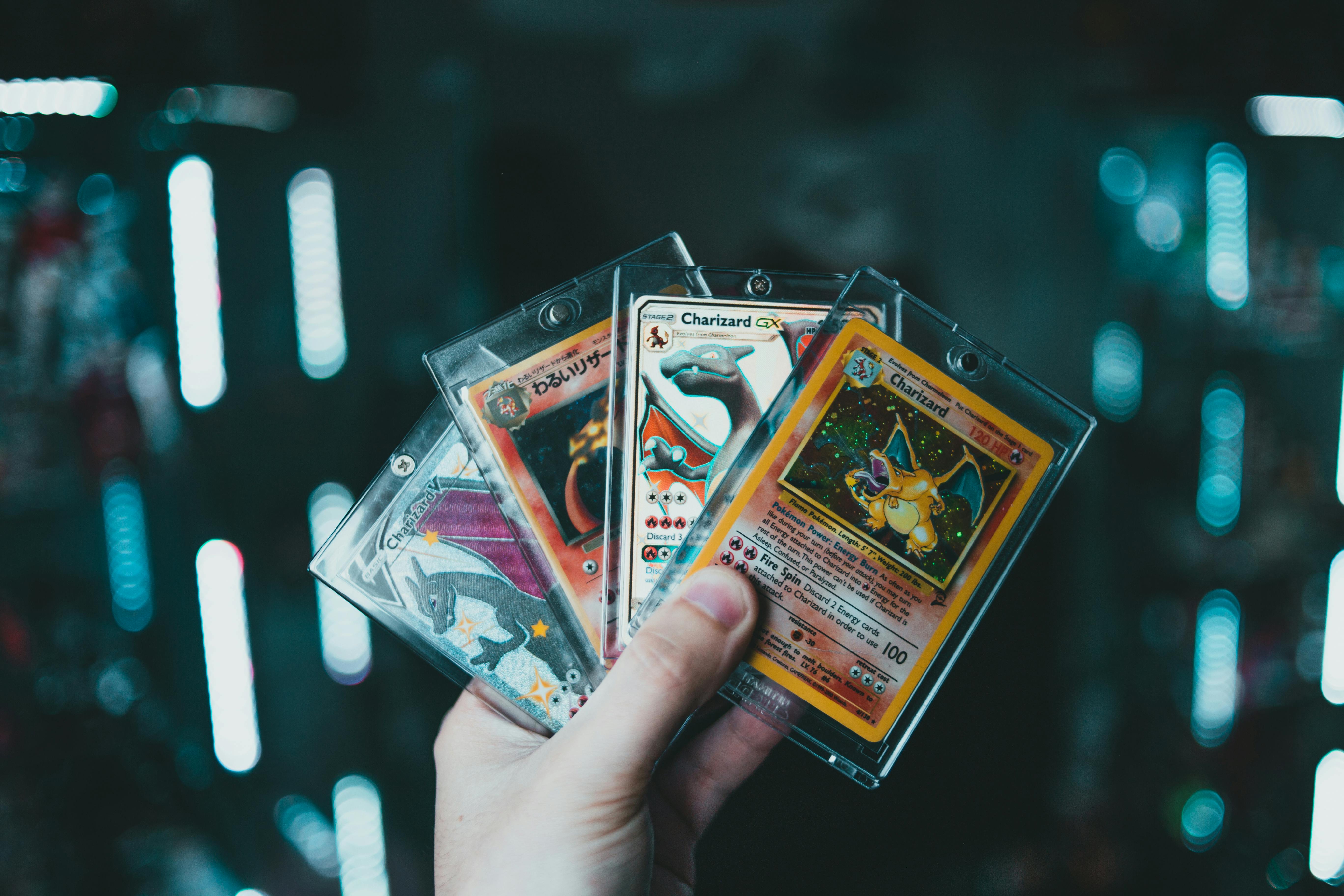
Pokemon vending machine prices for independent operators start at $2,850 for a compact wall-mounted unit and reach $15,000 or more for a traditional elevator-based kiosk. The official machines operated by The Pokemon Company International are not available for purchase at any price. Every independently operated Pokemon card vending machine on the market is sourced from commercial vending manufacturers, not from TPCi.
The hardware purchase is only the starting point. Inventory restocking, location commissions of 10 to 20 percent, payment processing fees, and remote management software all contribute to what running a profitable machine actually costs per month. Operators who calculate hardware price alone consistently underestimate their real break-even timeline.
This guide breaks down every cost category involved in buying and operating a Pokemon card vending machine, so you can build an accurate investment model before committing capital.
No. The Pokemon Company International owns all 1,400-plus official Automated Retail Vending Machines operating across more than 25 U.S. states and has confirmed in its public FAQ that there are no plans to sell or franchise them. Official machines are placed in grocery chains including Safeway, Kroger, Albertsons, H-E-B, and Jewel-Osco under a direct TPCi operational model with no third-party involvement.
What independent operators can purchase is a commercial-grade card vending unit built specifically for selling sealed TCG products. These machines are entirely legal to operate. Any retailer can sell Pokemon cards, and vending them through a purpose-built machine is treated identically to selling them off a store shelf. The unit cannot be branded or presented as an official TPCi product, but the product sold inside it is genuine.
Independent operators source their inventory through wholesale distributors like GTS Distribution and Southern Hobby, or through retail purchasing channels during high-demand set releases. If you are evaluating the Pokemon card vending machine for your business, every unit available to you comes from the commercial market, not from The Pokemon Company.
The commercial market for card vending hardware splits into two technology categories. The price gap between them is significant, and understanding what drives it is the most consequential decision an operator makes before buying.
Entry-level Pokemon card vending machines start at $2,850 for wall-mounted units and run to approximately $5,000 for compact free-standing floor models. These machines use precision coil-based dispensing systems engineered for trading card pack dimensions, holding between 150 and 300 individual packs depending on tray configuration. They ship with an integrated cashless payment reader, touchscreen display, and cloud connectivity for remote inventory monitoring.
For operators entering the market with one or two locations, this price tier delivers the fastest path to positive ROI. A machine purchased at $3,000 generating net monthly profit of $750 to $1,000 from a mid-traffic venue recovers the hardware cost within three to four months. The coil mechanism has fewer moving parts than elevator-based systems, which directly reduces maintenance costs and machine downtime over the operating life of the unit.
Operators running Pokemon card vending machines at this price point can manage inventory, track sales per slot, and receive low-stock alerts without visiting the machine by connecting to a remote management platform included in the unit configuration.
Mid-range machines priced between $5,000 and $8,000 support higher product capacity, typically 300 to 650 individual item slots, and are suited to high-traffic placements like shopping malls, entertainment centers, and large card shops. These units carry a broader product mix simultaneously, allowing operators to stock current-set booster packs, tins, Elite Trainer Boxes, and graded slabs across separate configured trays in one machine.
Venues generating 500 or more daily visitors benefit most from mid-range capacity. A smaller unit in a high-traffic location sells out faster between service visits, creating revenue gaps that a higher-capacity machine eliminates. The incremental cost from entry-level to mid-range typically pays back within the first two months through avoided stockout losses alone.
The broader sports card and collectible vending machine market that mid-range units serve has expanded sharply since 2022. According to the Professional Sports Authenticator, Pokemon cards represented 43 percent of all professionally graded card submissions in 2023, confirming the demand floor that makes mid-capacity machines a viable investment in well-chosen locations.
Traditional elevator-based card vending machines from legacy manufacturers cost $10,000 to $15,000 or more per unit. These machines use a robotic arm system to lift products from storage shelves to the dispensing tray, a design developed before coil systems engineered for card pack dimensions existed. The elevator mechanism was the original solution to prevent card packs from bending or getting stuck in standard snack vending coils that were too wide for trading cards.
The elevator solves the coil problem but creates its own. At $15,000 per machine with a net monthly profit of $750, an operator is 20 months from hardware break-even before generating any return. Elevator systems contain motors, sensors, belts, and a robotic lift assembly that each represent a potential failure point. Maintenance calls are significantly more frequent on elevator-based units than on purpose-built coil machines, adding operational cost that the sticker price does not reflect.
For most independent Pokemon card vending operators, the elevator-based price point does not produce better business outcomes than a coil-based unit at one-quarter the cost. Operators evaluating a trading card vending machine consistently find that coil-based engineering delivers the same card protection at a fraction of the hardware cost.
The single largest driver of price variation is the dispensing mechanism. An elevator assembly requires motors, sensors, belts, and a robotic lift system that is expensive to manufacture, install, and service. A precision coil sized for trading card pack dimensions achieves the same dispensing outcome with a fraction of the component count and manufacturing cost.
Secondary price factors include machine capacity, touchscreen specification, cabinet construction material, payment terminal quality, and whether cloud management software is bundled into the purchase price or sold as a separate ongoing subscription. A machine that ships pre-configured with a payment reader and remote management access built in delivers meaningfully better total value than a lower-priced unit requiring separate hardware and software purchases before it can operate.
Operators comparing costs across the sports card and trading card vending machine segment consistently show that total cost of ownership over 12 months is a more useful metric than purchase price alone. A $3,000 coil machine with $100 annually in maintenance costs outperforms a $12,000 elevator machine requiring $600 annually in service calls, even before accounting for the difference in initial capital outlay.
Four recurring cost categories determine the real monthly cost of running a Pokemon card vending machine. Each one affects net profit directly and must be factored into any ROI calculation before purchase.
Inventory is the largest recurring expense for any card vending operator. Booster packs sourced through wholesale distributors like GTS Distribution and Southern Hobby typically cost $3.50 to $6.00 per pack depending on the set and order volume. Sold at standard retail pricing of $5.00 to $9.99 per pack, gross margin per transaction runs 50 to 60 percent. Operators sourcing through retail channels during peak demand periods pay slightly above wholesale but still maintain strong per-transaction margins due to the convenience premium vending locations support.
Inventory discipline matters as much as inventory cost. Matching restocking volume to actual sales velocity prevents two types of loss: stockouts that cost revenue and over-ordering that ties up working capital in slow-moving SKUs. Machines connected to a real-time remote inventory tracking system give operators the sales data to make that judgment accurately rather than estimating from memory during route visits.
Venue owners typically charge a location commission of 10 to 20 percent of gross sales in exchange for hosting the machine. Premium placements in malls and entertainment centers can push commissions to 25 percent. A machine producing $2,000 per month in gross sales at a 15 percent commission rate generates a $300 monthly venue fee before any other costs are deducted.
Operators who want to bypass commission negotiation entirely and secure pre-vetted high-traffic locations can work with a vending placement and location sourcing specialist who handles venue identification, agreement structuring, and placement logistics on behalf of the operator. This approach is particularly effective for operators entering markets where the official TPCi network has no presence, including Florida, New York, and large portions of the Southeast.
Cashless payment processors charge 2 to 3 percent per transaction. On a $6.00 booster pack sale, processing costs approximately $0.15 to $0.18 per transaction. A machine processing 400 transactions per month at an average sale of $7.00 pays $56 to $84 in monthly processing fees. These fees are unavoidable on cashless-only machines but are offset by the substantially higher sales volume that cashless payment acceptance generates versus cash-only units, particularly among younger collector demographics who carry no cash.
Remote management software that delivers real-time inventory visibility, sales reporting by SKU, and low-stock alerts is either bundled into the machine purchase or charged as a monthly subscription. Cellular data plans for machines without fixed WiFi run approximately $8 to $10 per month per unit. For operators running five or more machines across different venues, cloud monitoring consistently reduces route costs by eliminating unnecessary service trips, with most multi-machine operators reporting that the software pays for itself within the first month of operation.
For a single entry-level coil-based machine in a mid-traffic venue, realistic year-one costs break down as follows. Hardware at $3,000. Initial inventory load at $300 to $500. Location commission at 15 percent of 12 months of gross sales. Payment processing at 2.5 percent of gross sales. Cloud software or cellular data at $100 to $120 for the year. Total year-one cost including hardware runs $4,500 to $6,000 depending on sales volume and commission terms.
A machine generating $1,500 in monthly gross sales at 55 percent gross margin produces $825 monthly gross profit. After deducting a 15 percent location commission of $225 and 2.5 percent processing fees of approximately $37, net monthly profit lands at around $563. At that rate the $3,000 hardware cost is recovered in approximately five to six months. Year-two economics improve significantly because hardware costs drop out of the calculation entirely.
High-traffic placements generating $2,500 or more in monthly gross sales can recover hardware cost in under three months. The Pokemon card vending machine category benefits from one of the strongest demand bases in collectible retail, with global searches for Pokemon vending machine tripling between 2023 and 2025 according to web search trend data.
At the $2,850 to $5,000 entry price, a Pokemon card vending machine is among the lowest-barrier automated retail investments available. Cards carry no expiration date, require no refrigeration, and generate maintenance costs far below food and beverage machines. The 50 to 60 percent gross margin structure on booster packs compares favorably against traditional snack vending at 30 to 40 percent and represents one of the strongest margin profiles in the vending category.
The investment performs best when three conditions are met. The placement venue has genuine TCG audience interest. The operator monitors inventory remotely and restocks before slots empty. The machine is priced at or near standard retail to maximise repeat purchase frequency from collectors who know market pricing. A machine that satisfies all three conditions in a market where official TPCi units have no presence is operating with existing demand and zero automated retail competition.
The investment underperforms when placement quality is low or inventory management is reactive rather than data-driven. Machines that sit empty between infrequent service visits lose revenue permanently. Operators scaling to multiple locations across specialty vending machine categories consistently report that location selection and restocking discipline generate more revenue variance than any difference in machine hardware at the same price tier.
Pokemon card vending machines for independent operators start at approximately $2,850 for a wall-mounted coil-based unit. Mid-range high-capacity machines run $5,000 to $8,000. Traditional elevator-based machines cost $10,000 to $15,000 or more. The official TPCi machines are not available for purchase at any price point.
No. The Pokemon Company International owns all official machines and has confirmed no plans to sell or franchise them. Independent operators can legally purchase commercial card vending machines and stock them with authentic Pokemon TCG products sourced through wholesale or retail channels, as long as the machine is not presented as an official TPCi unit.
The four main recurring costs are inventory restocking, location commissions of 10 to 20 percent of gross sales, payment processing fees of 2 to 3 percent per transaction, and cloud software or cellular data at approximately $8 to $10 per month. Total monthly operating costs for a single machine typically run $400 to $700 depending on sales volume and placement agreement terms.
Most operators with entry-level coil-based machines in mid-traffic venues recover hardware cost within three to six months. High-traffic placements during major TCG set releases like Prismatic Evolutions can accelerate payback to under three months. Traditional elevator-based machines at $15,000 typically require 18 to 24 months to break even at standard sales volumes.
Gross margins on booster packs sold through vending machines run 50 to 60 percent above wholesale cost. After location commissions and payment processing fees, net margins typically land between 35 and 45 percent per transaction. Operators in venues supporting a convenience premium above MSRP can push effective gross margins higher than 60 percent on individual transactions.
Pokemon card vending machines and sports card vending machines draw from the same commercial hardware market and carry identical price ranges: $2,850 to $5,000 for entry-level coil-based units and $10,000 to $15,000 for elevator-based machines. The machines are functionally the same hardware configured for different TCG product mixes. Operators stocking both Pokemon and sports cards in the same unit use the same tray configuration system without any additional hardware cost.
Share:
How Do Pokemon Vending Machines Work? Complete 2026 Guide
Laundry Vending Machine Supplies: What to Stock and What Sells