


Pokemon vending machines are automated retail kiosks that sell sealed Pokemon TCG products through a touchscreen and cashless payment system. You select a product on the screen, pay by card or mobile wallet, and the machine delivers your item in seconds. No staff involvement, no checkout line, and no shelf competition with other buyers.
There are two types in operation across the U.S. The first is the official Automated Retail Vending Machine (ARVM) owned and operated exclusively by The Pokemon Company International (TPCi). The second is the independently operated machine purchased by private operators and placed in venues like malls, arcades, and card shops.
This guide explains how both systems work, what they sell, how pricing is set, where to find one, and what operators need to know before placing a machine.
What Is a Pokemon Vending Machine?
A Pokemon vending machine is a freestanding self service retail unit built to sell Pokemon Trading Card Game products without a cashier or store associate. TPCi launched the first official U.S. units in 2017 to give fans access to authentic cards at retail prices, cutting out scalpers who had been clearing store shelves and inflating resale prices.
As of mid 2026, more than 1,800 official machines operate across 28 U.S. states, based on a May 2026 audit of the official locator. These are placed inside grocery chains including Safeway, Kroger, Albertsons, Jewel-Osco, H-E-B, Fred Meyer, and King Soopers.
Independent operators run a separate and growing category. These are Pokemon vending machines bought outright through commercial vending suppliers, legal to operate, stocked with genuine TCG product sourced through wholesale channels, and placed in the venues the official network does not reach. Because the operator owns the hardware, the slot layout, product mix, and pricing are all set by the operator rather than by TPCi.
How Do Pokemon Vending Machines Work for Buyers?
Using a Pokemon TCG vending machine takes under two minutes. The process is consistent across all official and independently operated units in the U.S.
Browse the Touchscreen Display
The machine shows all available products on a digital touchscreen. Each listing displays the product image, name, pack count, and price. Sold out slots are marked clearly so you know what is available before you tap anything.
Select Your Product
Tap the item you want. The screen confirms your selection and shows the final price before any payment is processed. You are buying a specific product, not entering a lottery. The randomness comes from opening the pack, not from the purchase itself.
Pay Without Cash
Official TPCi machines and most independently operated units in the U.S. are fully cashless. Accepted payment methods include credit cards, debit cards, Apple Pay, Google Pay, and contactless NFC. Cash slots are not present on U.S. machines. If you only have cash, buying a prepaid Visa from the host store is the simplest workaround before approaching the machine.
Collect Your Item
The machine dispenses your product through a secure delivery mechanism that protects packaging during dispensing. Booster packs, tins, and boxed products arrive in the collection tray undamaged. If a machine takes payment but does not deliver your item, do not ask store staff. They have no access to the machine system. Call TPCi support at 866-872-4790 for official machines, or the operator contact number printed on the unit for independently managed machines.
Common Issues in Pokémon Vending Machines
Like any vending machine, a Pokémon vending machine can experience technical, product, or payment-related problems. Most issues can be reduced with regular maintenance and proper stocking.
Payment Problems
Card readers, mobile payment systems, or cash acceptors may stop working or fail to process a transaction. Regularly checking payment equipment and keeping software updated can help prevent these problems.
Product Jams
Products can sometimes get stuck if they are incorrectly loaded or if the wrong product size is used. Make sure products are placed correctly and match the machine's specifications.
Machine Not Dispensing Products
A machine may accept payment but fail to release the selected product. This can happen because of a mechanical problem, an empty selection, or a product getting stuck in the dispensing mechanism.
Stock and Inventory Issues
Popular Pokémon products can sell out quickly, while slower-moving items may remain in the machine for longer periods. Regular inventory checks help operators keep popular products available and avoid unnecessary overstock.
Vandalism or Tampering
Machines placed in busy public areas can be exposed to vandalism or attempted tampering. Secure installation, good lighting, CCTV, and regular inspections can help reduce these risks.
Connectivity or Software Issues
Smart vending machines may depend on an internet connection for cashless payments, remote monitoring, and inventory management. Connectivity problems can temporarily affect these features, so operators should check network connections and system alerts regularly.
How Do Pokemon Vending Machines Work for Operators?
From the operator side, a Pokemon vending machine is a managed automated retail system. It runs on payment hardware, remote inventory software, and a restocking model that makes multi location management scalable without daily on site visits.
Everything below is configured before the machine ships rather than assembled afterwards, which is why the specification stage matters more than the purchase itself. You can set slot layout, payment acceptance, capacity, and product mix when you configure a Pokemon vending machine system, and the decisions you make there determine most of what follows.
Payment System and Transaction Processing
Operator grade Pokemon vending machines run on MDB ready payment controllers, the industry standard protocol for vending hardware. These connect to cashless payment processors that accept Visa, Mastercard, American Express, Apple Pay, Google Pay, and contactless NFC payments.
Transactions settle directly into the operator's linked bank account. There is no cash to collect, no manual counting, and no end of day reconciliation at the machine. For operators running multiple locations, this infrastructure is what makes the model scalable without hiring route staff for cash handling.
Acceptance is set per placement through the payment system configuration, and the Pokemon card vending machine ships with MDB ready integration already in place, so processing is live on day one without sourcing additional hardware.
Remote Inventory Tracking and Sales Monitoring
Modern Pokemon TCG vending machines connect to cloud based management dashboards via WiFi or cellular data. Operators view real time sales per product slot, receive low stock alerts before items run out, and track which SKUs are generating the highest transaction volume, all from a phone or desktop without visiting the machine.
The VMFS Cloud platform provides this remote access layer. Operators managing a fleet across multiple venues can monitor sales activity, update pricing, and check machine health from a single dashboard. This is the most important operational feature for anyone running more than one location.
Without remote monitoring, operators run fixed schedule routes and visit machines on a calendar regardless of stock levels. With cloud inventory tracking, restocking trips are triggered by actual demand data, cutting unnecessary visits and reducing operational hours per machine significantly.
Restocking and Physical Service Visits
Restocking is the core recurring task in operating a Pokemon card vending machine. High traffic machines during major TCG set launches can clear popular booster pack slots in three to five days. Machines in lower traffic venues typically need restocking every seven to fourteen days based on community reported patterns across r/PokemonTCG and collector forums.
The physical restock process is straightforward. The operator accesses the cabinet through a secured panel, refills product slots according to the current layout, verifies the touchscreen reflects updated inventory, and secures the unit. A standard service visit runs 30 to 60 minutes depending on machine size and the number of product SKUs being refreshed.
Operators who use real time inventory alerts reduce service visits to demand driven trips only. This cuts operational hours and fuel costs across a multi machine route without ever risking a sold out machine sitting empty for days. If a component ever does need attention, support and replacement parts are handled directly rather than through a third party.
Location Placement and Venue Selection
Location quality drives the majority of a machine's monthly revenue. Pokemon card vending machines perform best in venues where the audience already has an interest in TCG products, including card shops, comic book stores, arcades, gaming lounges, and malls anchored by entertainment or gaming tenants.
A machine in a 500 visitor per day card shop outperforms one in a 2,000 visitor per day airport terminal where most foot traffic has no interest in Pokemon. Audience match matters more than raw volume.
For operators who need help identifying and securing the right venues, VPlaced connects machine owners with vetted high traffic locations across the U.S. Their guides to Pokemon vending machine locations and finding vending locations cover the outbound side, which is the part of the process most new operators find difficult. Our own location matching service assesses a specific site before you commit, and multi site routes are handled through commercial accounts. As the route grows, VMarketed helps operators approach new venues and build a brand around the operation.
Product Mix and Margin Structure
Independent operators source inventory through retail and wholesale purchasing channels. A well configured machine typically carries current set single booster packs as the primary SKU for transaction frequency, booster bundles and tins for higher per sale margin, and at least one Elite Trainer Box slot where cabinet capacity allows.
Booster packs purchased through wholesale and sold at standard retail pricing generate margins of 30 to 50 percent per transaction. Tins and ETBs carry higher margin per unit but sell at lower frequency. Operators refine this mix over time using cloud dashboard sales data, phasing out slow moving SKUs and adding facings to the products driving the most repeat purchases. The planogram tool maps that layout per site rather than copying one configuration across a whole route.
The broader specialty vending machine category that Pokemon card units sit within has grown sharply because the margin structure is strong and the overhead is low compared to food and beverage machines. Cards do not expire, require no refrigeration, and generate minimal maintenance costs. Operators planning a first placement can follow our step by step Pokemon card vending machine operator guide for model comparisons and revenue math, and the ROI calculator will model a specific site before you commit to it.
What Do Pokemon Vending Machines Sell?
Official TPCi machines carry a rotating selection of sealed products tied to current and recent Pokemon TCG set releases. Common stock includes single booster packs from recent sets such as the Mega Evolution era releases and the Pokemon Legends: Z-A tie ins, along with booster bundles, themed tins with promo cards, Elite Trainer Boxes, and collection boxes. Every product is sourced directly from TPCi at manufacturer's suggested retail price with a sealed authenticity guarantee.
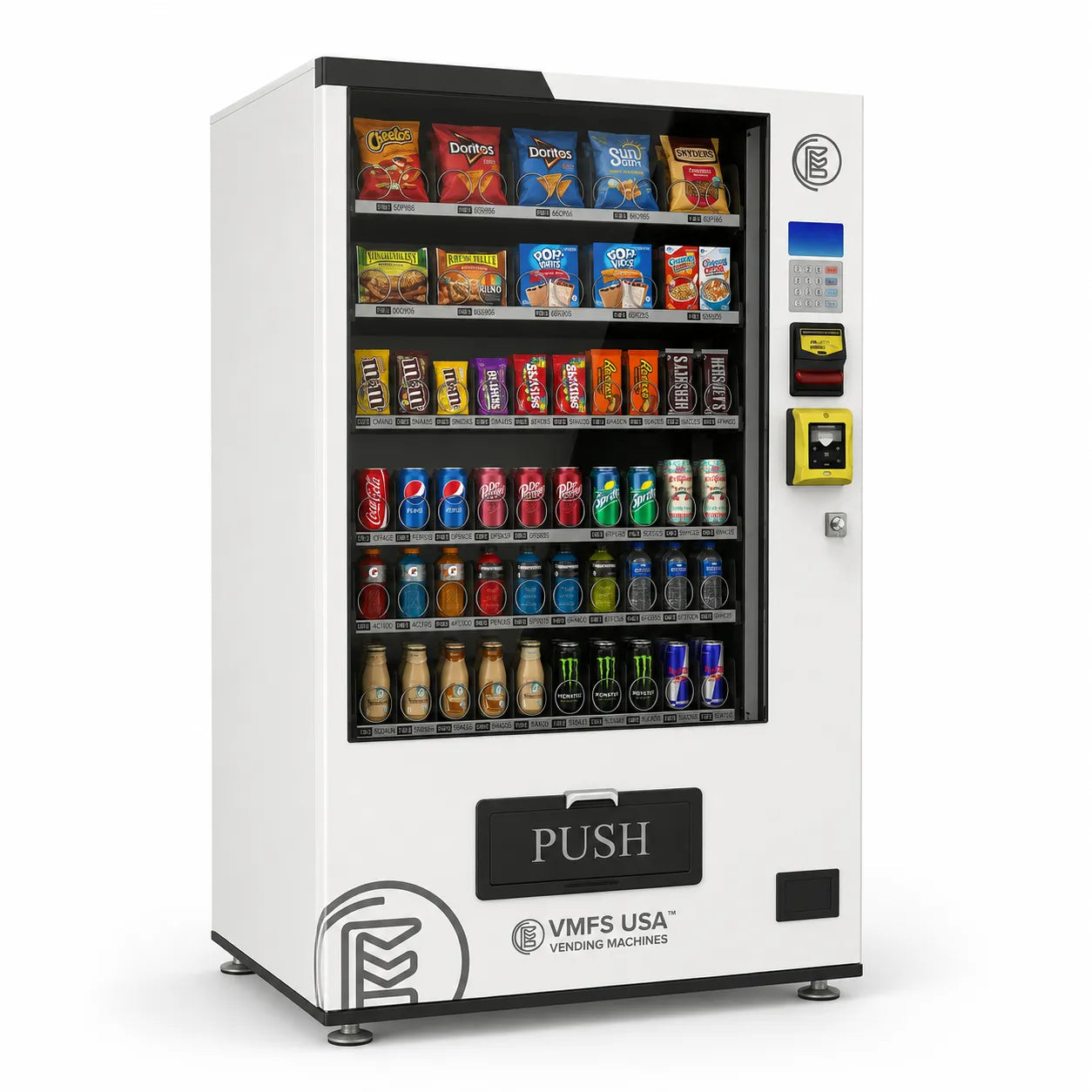
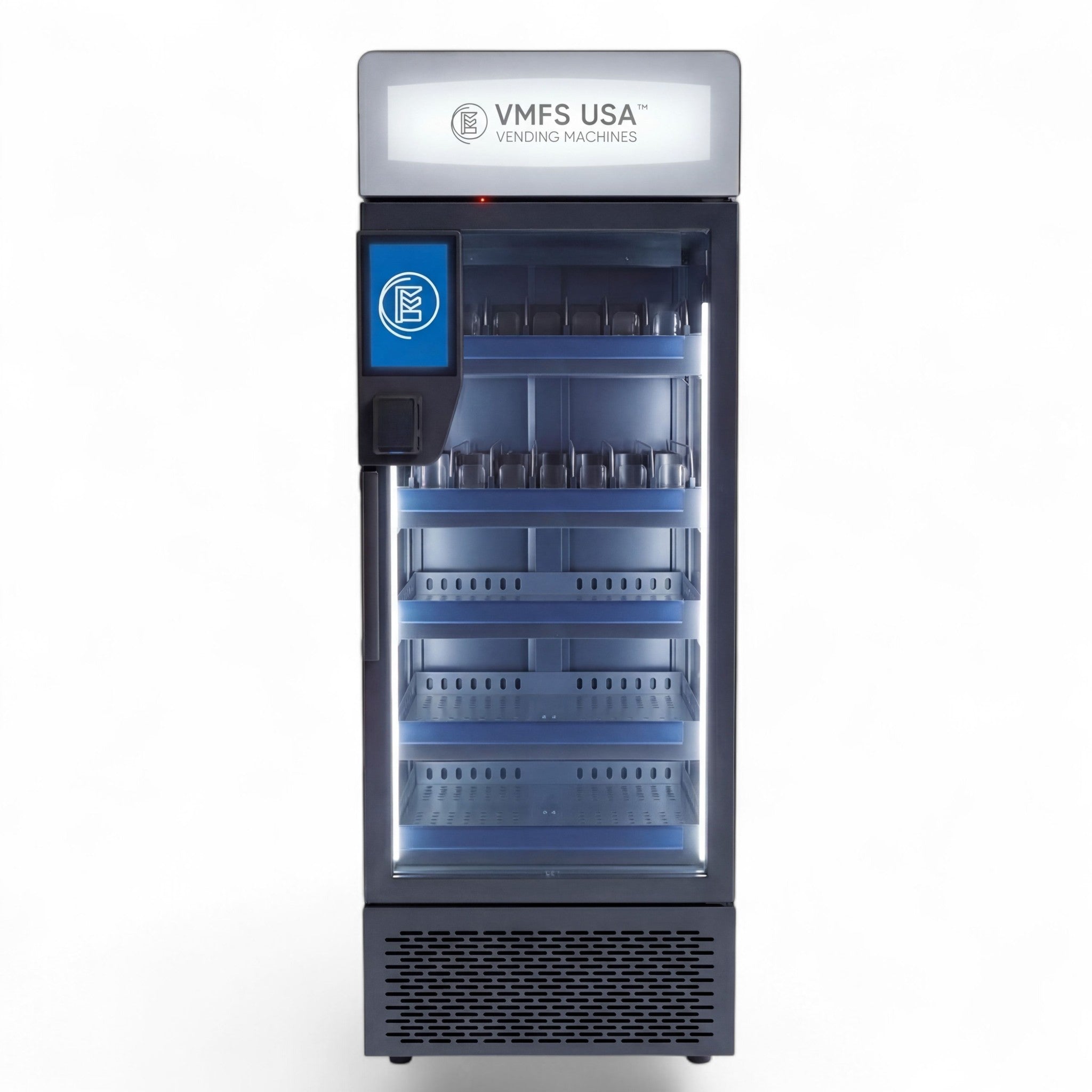
Independently operated machines offer a wider configuration. Beyond standard booster packs, operators can stock graded card slabs in protective cases, single cards, card sleeves, and toploaders as accessory add ons. The trading card vending machine built for independent operators uses adjustable tray configurations, so the product layout can be reconfigured as inventory mix changes without replacing any machine hardware. Both units sit within our elevator vending machines range, where the delivery arm lowers each item rather than dropping it, which is what makes graded slabs and tins viable to vend at all.
Pokemon Vending Machine Prices
Official TPCi machines price every product at MSRP with no markup. Based on current retail pricing, single booster packs run between $4.49 and $6.99 depending on the set. Booster bundles of six packs are typically priced at $24.99 to $29.99. Tins range from $14.99 to $19.99, and Elite Trainer Boxes sell between $44.99 and $59.99.
Buyers pay the same price they would at Target or Walmart, but with a sealed product guarantee and without competing with shelf clearers. For collectors in areas without a dedicated card shop, the machine is often the most reliable source of authentic product at retail pricing.
For operators setting prices on independently run machines, standard retail pricing with a modest operator margin of 20 to 30 percent above wholesale cost is the most common structure. Pricing above MSRP reduces repeat purchase rates significantly, particularly among experienced collectors who know market pricing well.
On the equipment side, configured units start at around $3,800 when you build a Pokemon vending machine to your own specification, with capacity, slot layout, payment options, and branding all set before it ships. Financing is available if you would rather preserve working capital for inventory, and units that are ready to ship are worth checking if timing matters more than configuration.
Where to Find a Pokemon Vending Machine
Official TPCi ARVMs are confirmed in grocery stores across 28 states. The densest networks are in Texas, California, Washington, Illinois, Oregon, Pennsylvania, and Colorado. The official Pokemon Vending Machine Locator at vending.pokemon.com is the only real time tool for finding a specific machine by location. Store employees cannot confirm machine availability or inventory status and are not authorised to assist with machine issues.
Independently operated machines appear in card shops, arcades, comic stores, entertainment centers, and some mall locations. They are not tracked on a single public platform. Local TCG communities on Reddit, Discord, and Facebook are the most reliable source for sighting and restock information on independently operated machines.
Operators looking to place new machines should focus on markets where the official TPCi network is absent. More than 20 states still have no confirmed official machines, including Florida and New York, leaving a large collector audience with no automated retail access to Pokemon TCG products at retail pricing. That is the clearest opening in the category right now, and it is the reason most new operators start with a single unit in an underserved metro rather than a multi machine route. Because TPCi regularly adds and relocates machines, the official locator is the only reliable way to confirm current coverage.
Frequently Asked Questions
How do Pokemon vending machines work?
Pokemon vending machines work like standard vending units stocked with sealed Pokemon TCG products. Buyers select a product on a touchscreen, pay by card or mobile wallet, and the machine delivers the item through a secure dispensing system. Operators manage inventory, pricing, and sales data remotely through a cloud dashboard without visiting the machine daily.
Do Pokemon vending machines take cash?
No. All official TPCi machines and most independently operated machines in the U.S. are cashless. They accept credit cards, debit cards, Apple Pay, Google Pay, and contactless NFC payments. Cash is not an option in any standard U.S. configuration.
What do Pokemon vending machines sell?
Official machines sell single booster packs, booster bundles, Elite Trainer Boxes, tins, and collection boxes from current Pokemon TCG sets at MSRP. Independent operator machines can also carry graded card slabs, single cards, and accessories depending on the operator's product mix.
How do operators restock Pokemon vending machines?
Operators access the cabinet through a secured panel and refill product slots manually. Cloud connected machines send real time low stock alerts to the operator's phone or dashboard. Restocking trips are triggered by actual inventory data rather than fixed calendar schedules, and a typical service visit runs 30 to 60 minutes per machine.
Can anyone buy and operate a Pokemon vending machine?
Yes. Official TPCi machines are not for sale and are operated exclusively by The Pokemon Company International. Independent units are commercially available, and our Pokemon vending machine system is built and configured for exactly this use. Any operator can legally sell Pokemon cards through a vending machine as long as the unit is not branded or presented as an official TPCi machine. VAdviced can structure the placement agreement and confirm local paperwork, with state level roadmaps including Ohio and North Carolina.
What is the difference between official and independent Pokemon vending machines?
Official TPCi machines are owned by The Pokemon Company International, placed in grocery chains, and sell at MSRP with no third party purchase option. Independent machines are purchased by operators, placed in a wider range of venues, and can be configured with a flexible product mix beyond the TPCi standard.
How much does a Pokemon vending machine cost to buy?
Configured units start at around $3,800 depending on capacity, slot count, and payment configuration. The specification is set before shipping, so capacity and layout are matched to the venue rather than adjusted afterwards. If you are unsure which build suits your site, the machine finder quiz narrows it down, and the guide to starting a vending business covers the setup sequence around it.

Share:
Custom Vending Machine Branding Strategy: Full Guide (2026)
Pokemon Vending Machine Prices: Cost Guide