


Protein vending machines in gyms sell a shake at the moment members want one, usually right after a workout, with nobody behind a counter. For a gym owner, that means a member amenity and a revenue line that runs 24/7 with no staff. For a vending operator, a busy gym is one of the few locations where every customer walking past is already in the market for protein. This guide covers both sides: why gyms add these machines, how they compare with a smoothie bar, what an owner should expect and negotiate, and how operators win gym placements.
At a glance
- Two ways to sell protein from a machine: a protein shake vending machine that mixes shakes fresh from powder, or a refrigerated machine or AI cooler stocked with ready-to-drink shakes.
- Space and power: our fresh-mix machine stands 74.8 in tall on a footprint of 27.6 in wide by 29.1 in deep (under 6 sq ft) and runs on a standard 110–120V plug at 1,600 W.
- Labor: about 10 minutes of service every 2–3 days at a busy site, with roughly 90–100 cups between restocks.
- Three ownership models: the gym buys the machine, an operator places it and pays a commission, or the gym buys and pays an operator to service it.
- Best fit: 24/7 clubs, mid-size gyms without a café, strength and CrossFit-style boxes, and college rec centers.
Why gyms have vending machines, and why protein matters most
Gyms have vending machines for a simple reason: members need something to drink or eat before, during and after training, and if the gym doesn't sell it, they buy it somewhere else. A machine captures that spend inside the building. It also covers the hours when no one is at the front desk, which in a 24/7 club is most of the night.
Healthy vending matters more in a gym than anywhere else. A gym that sells candy bars next to the squat racks undercuts its own message. A machine stocked with water, electrolytes, protein and better snacks does the opposite: it tells members the gym takes their results seriously. That brand fit is the main reason gyms should have healthy vending machines rather than standard snack machines.
Protein is the category that makes a gym machine worth having. Many members who train regularly have a protein habit, and the shake after a session is part of it. That gives a protein machine a predictable demand peak that office or apartment machines don't have. Our guide to what to stock in a gym vending machine covers the full product mix around it.
Does Planet Fitness have vending machines?
Planet Fitness lists a drink station among its club amenities, and its Black Card membership includes discounted drinks, so many clubs sell drinks on site. Whether a specific club has vending machines, and what they sell, varies by location. Most Planet Fitness clubs are run by franchisees, so on-site sales are usually governed by the franchise agreement, which can require brand approval for vendors, rather than decided by the club manager. For operators, that means a pitch to a franchised gym often has to go to the franchise owner, and sometimes to the brand, rather than to the front desk.
The post-workout window: why demand peaks after training
Members buy protein after a workout because that is when they think about it. The science is less strict than gym folklore suggests. The NIH Office of Dietary Supplements notes that athletes generally need about 1.2 to 2.0 grams of protein per kilogram of body weight a day, and that whether protein before or after exercise better supports muscle building is still unclear. Total daily intake matters most.
For a gym, the habit matters more than the physiology. People finish a session, feel they've earned a shake, and look for one on the way to the locker room or the exit. Three practical things follow:
- Place the machine on the exit path. Next to the locker rooms or the exit catches post-workout buyers. A gym lobby vending machine by reception mostly sells water to people walking in.
- Stock for the evening peak. Early-morning, lunchtime and after-work sessions drive sales. An empty canister at 6 pm loses the best hour of the day.
- Offer a size step-up. A standard shake and a larger, higher-protein option let serious lifters spend more without a second transaction.
Gym smoothie bar vs protein vending machine
Many gym owners first think of a gym smoothie bar or a gym juice bar, sometimes run as a protein shake bar or gym snack bar at the front desk. It's a good amenity in the right club, but it's a small restaurant: it needs staff, a food permit, fresh produce and a counter. Here is how the three main options compare.
| Staffed smoothie or juice bar | Fresh-mix protein shake machine | Ready-to-drink shakes in a cooler | |
|---|---|---|---|
| Upfront cost | High: counter build-out, blenders, refrigeration, POS, smallwares | $14,000 for our machine | From $2,950 for a NEO GO AI cooler |
| Staff | Needed for every open hour | None to serve; about 10 minutes of service every 2–3 days | None to serve; restock visits |
| Hours | Staffed hours only | 24/7 | 24/7 |
| Menu | Widest: fruit, smoothies, food | Up to 9 powders and 50+ stored recipes, hot or cold | Whatever brands you stock |
| Food safety | Food establishment permit, trained handlers, fresh produce | Automatic rinse after every cup; powders stay in closed canisters | Packaged products; cold-holding where required |
| Floor space | A counter plus prep and storage area | Under 6 sq ft | Similar to a standard drinks fridge |
| Best for | Large clubs with a café culture and all-day traffic | 24/7 clubs and busy mid-size gyms with proven shake demand | Smaller gyms, or testing demand before investing |
The two aren't mutually exclusive. Some clubs run a staffed bar during the day and a protein machine for early mornings, late nights and weekends when the bar is closed. If you are comparing fruit smoothies as well, our guide to smoothie vending machines covers that format.
For gym owners: what a protein vending machine means for your gym
Three ways to get one
| Model | How it works | Upside | Trade-off |
|---|---|---|---|
| Gym buys and runs it | You buy the machine and powders, restock and clean it yourself | You keep the full margin and control the menu and prices | Upfront cost, staff time, and you carry the risk |
| Operator places it | A vending operator owns, stocks and services the machine and pays you a commission | No upfront cost, no labor | Smaller share of sales, less control over products and pricing |
| Hybrid | You own the machine; an operator restocks and services it for a fee | Most of the margin without the daily work | Service fee; you still need a clear service agreement |
What a machine can earn
Revenue depends on member count, traffic and price, so work it out for your own club with this simple formula:
Monthly gross profit = shakes per day × days open × (price − cost per shake)
For example, at 15 shakes a day, 30 days a month, a $6.00 price and a $2.00 cost for powder and cup, the machine makes $1,800 a month in gross profit before card fees and software. If an operator runs it instead and pays the gym 15% of gross sales, the same 450 shakes at $6.00 earn the gym $405 a month with no work at all.
These are example numbers, not a forecast. Your volume, price and powder cost will differ. Our protein shake vending machine price guide breaks down running costs and payback in detail.
Space, power and water
- Footprint: 27.6 in wide, 29.1 in deep, 74.8 in tall, about 342 lb. Check doorways and the route from the loading door before delivery.
- Power: 1,600 W on a standard 110–120V plug. Make sure the circuit can carry the load, especially if it shares with treadmills or a drinks fridge.
- Water: either two internal reservoirs you refill by hand, or a direct connection to a purified water line. A plumbed connection needs backflow protection under the FDA Food Code (section 5-203.14) and local plumbing rules, so use a licensed plumber.
- Connectivity: 4G or Wi-Fi for card payments and remote monitoring.
- Exits and walkways: keep the machine out of exit routes and corridors that fire rules require to stay clear.
- Accessibility: under the 2010 ADA Standards, if a facility has vending machines, at least one of each type must meet the operable-parts rules. Per the U.S. Access Board, that means controls within an unobstructed reach range of 15 to 48 inches above the floor, usable with one hand without tight grasping or twisting, and needing no more than 5 pounds of force. Leave clear floor space in front of the screen.
Hygiene and allergens
The first question most owners ask is whether a shake machine stays clean. Ours mixes each drink inside the cup, with no shared pipe for the shake to travel through, and runs an automatic high-temperature, high-pressure rinse after every cup. Powders stay in closed canisters until dispensed. Your side is a cleaning log, wiping down the dispensing area and the screen, and keeping powders dry. Most protein powders contain milk or soy, so carry at least one plant-based option and list allergens on the menu screen or machine signage. The full cleaning routine is in our guide to how a protein shake vending machine works.
Questions to ask before you sign with an operator
- Term and exit. How long is the agreement, and how can either side end it? Who removes the machine, and when?
- Commission basis. Is the percentage on gross or net sales? Are card fees, refunds and software deducted first? How often are you paid, and with what report?
- Ownership. Who owns the machine, and who insures it? Ask for a certificate of insurance naming the gym.
- Service levels. How often is it restocked, and how fast are jams, outages and refunds handled?
- Product approval. Can you veto products and brands, set a caffeine limit or ban sugary items?
- Pricing. Who sets prices, and can members get a discount?
- Utilities. Who pays for power and water, and does the operator need a plumbed line?
- Data. Will you see sales by product and hour?
- Exclusivity. Does the contract stop you from adding other machines or a smoothie bar later?
- Franchise approval. If your gym is franchised, does the franchise agreement allow this machine and this supplier?
For operators: how to win protein vending placements in gyms
Which gyms to target
- 24/7 clubs: long unstaffed hours, so a machine is the only way to sell after the desk closes.
- Mid-size independent gyms without a café: the owner decides, and nothing on site competes with you.
- Strength and CrossFit-style boxes: heavy protein users, though member counts are smaller. Ready-to-drink shakes in a compact cooler may fit better than a full machine.
- College rec centers and corporate fitness centers: high traffic and a built-in audience, with procurement rules to work through.
- Apartment and hotel gyms: usually better served by a small cooler of ready-to-drink shakes than a fresh-mix machine.
Be cautious with gyms that already run a profitable smoothie bar during all open hours, and with very small studios where a countertop machine fits better.
How to pitch a gym owner
- Lead with the member, not the commission. Owners care about retention and reviews. A 24/7 shake option, clean and staff-free, is the hook.
- Answer hygiene before they ask. Explain the rinse cycle, closed canisters and your cleaning log.
- Bring a proposed menu. Flavors, a plant-based option, prices, and a caffeine policy if you add pre-workout.
- Bring paperwork. A sample agreement, a certificate of insurance and references from other sites.
- Offer a trial period and a branded wrap. A 60- or 90-day trial lowers the owner's risk; the gym's logo on the machine makes it feel like their amenity.
- Find the real decision-maker. Independent owner, general manager, franchisee or regional facilities manager, depending on the gym.
For finding and qualifying gym locations in general, our sister site V Placed has a gym vending placement guide. For the legal side of placements and permits, see V Adviced's vending machine legal requirements guide.
Commission structures you'll see
- Percentage of gross sales: common, and the easiest to verify from machine reports.
- Percentage of net sales: after card fees and refunds. Define "net" precisely in the contract.
- Flat monthly fee: predictable for the gym, riskier for you in a slow month.
- No commission: some gyms treat the machine purely as a member amenity, especially early on.
Whatever the model, share sales reports. Remote monitoring makes this easy: VMFS Cloud shows live sales, stock levels and alerts, so you can send the owner a monthly report and restock before the evening peak.
Running the account well
- Restock before the after-work rush, not after it.
- Rotate one flavor every few months and drop the slowest.
- Review results with the owner every quarter; it's the easiest way to keep the placement.
- Look at the full gym mix. A protein machine pairs well with a cooler of water, electrolytes and protein bars.
Fresh-mix machine or ready-to-drink shakes: which to start with
When choosing a protein shake machine for a gym, start with demand. If you don't know yet how many shakes a gym will sell, start with ready-to-drink shakes in a refrigerated machine or an AI cooler such as the NEO GO or NEO PRO. The investment is lower and the cooler also sells water, bars and gear. Once shake demand is proven, or in a large club from day one, a fresh-mix protein shake vending machine lowers the cost per shake and lets members pick flavor and size. Large clubs often run both. For the business side, see how to start a protein shake vending machine business, and our gym vending machine guide covers placement and machine types across the whole gym.
Gyms in our home market are a good example of where this is heading: our roundup of gyms in Miami-Dade embracing vending shows how clubs are adding on-site nutrition.
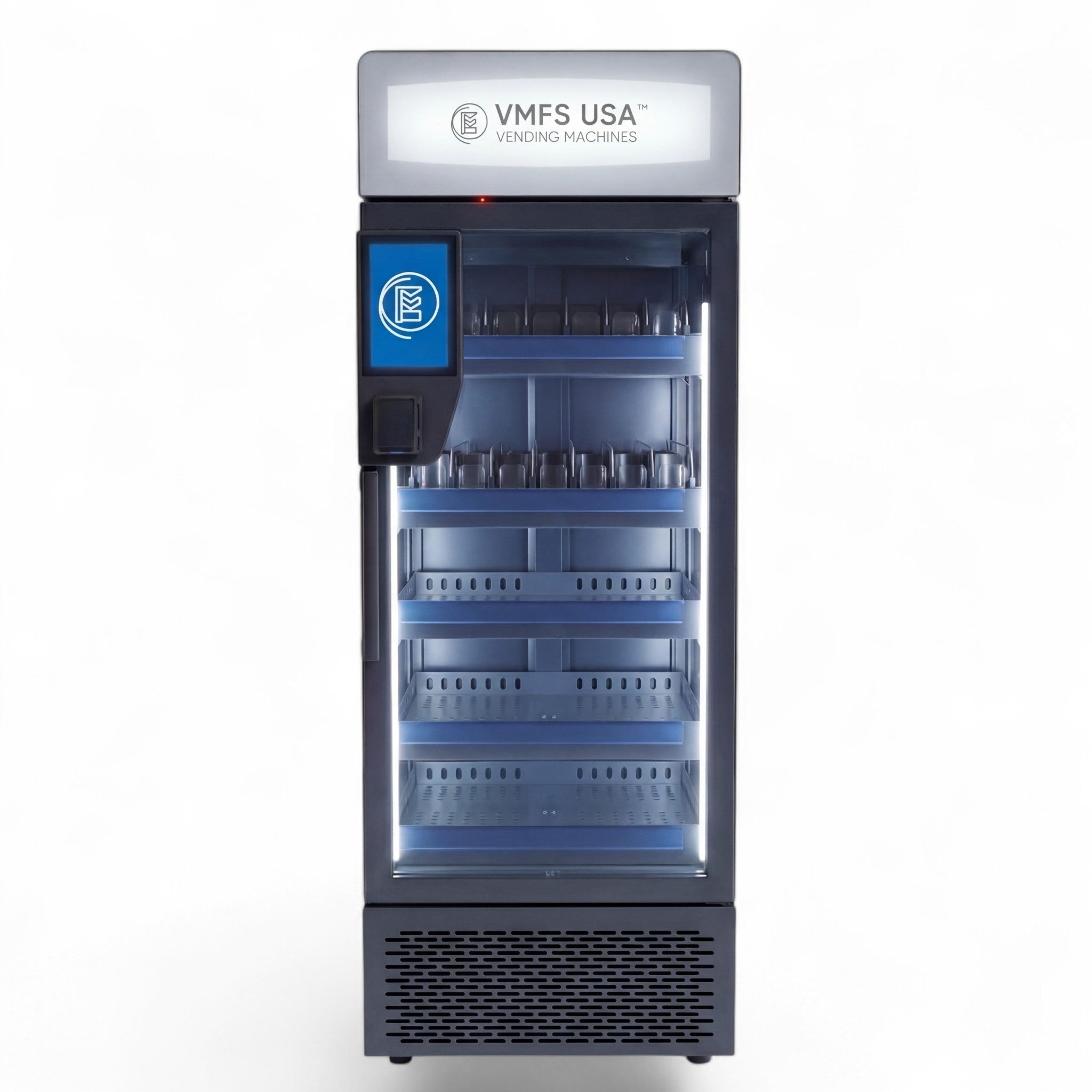
Bring fresh-mixed protein shakes to your gym. Nine powders, hot or cold, an automatic rinse after every cup, and no staff behind a counter.
See the protein shake vending machine →Frequently asked questions
Do gyms make money from vending machines?
Yes. A gym that owns its machine keeps the full margin after product costs. A gym that lets an operator place a machine earns a commission with no work. How much depends on member traffic, prices and the agreement.
Does Planet Fitness have vending machines?
Many Planet Fitness clubs sell drinks on site, and the brand lists a drink station as an amenity. Whether a club has vending machines varies by location. Most clubs are franchised, so on-site sales usually follow the franchise agreement.
Why should gyms have healthy vending machines?
Members need fuel and hydration around their workouts, and healthy products match what the gym stands for. A machine with water, electrolytes, protein and better snacks keeps that spend in the building and supports the gym's brand, while candy and soda undercut it.
Is a protein shake vending machine better than a smoothie bar?
It depends on the club. A smoothie bar offers the widest menu but needs staff, a food permit and more space. A protein shake machine runs 24/7 with no staff in under 6 sq ft. Many clubs pick the machine first, and some run both.
How much space and power does a protein shake vending machine need?
Our machine is 27.6 in wide, 29.1 in deep and 74.8 in tall, and runs on a standard 110–120V plug at 1,600 W. It uses internal water reservoirs or a plumbed purified water line, and 4G or Wi-Fi for payments.
How do I get a vending machine into a gym?
Target gyms without a café, lead your pitch with member convenience and hygiene, bring a proposed menu, insurance and a sample agreement, and offer a trial period. In franchised gyms, the franchise owner usually decides.
What commission do gyms get from vending machines?
It's negotiated. The common structures are a percentage of gross sales, a percentage of net sales, a flat monthly fee, or no commission when the gym treats the machine as an amenity. Agree in writing what's deducted before the commission is calculated.
Is it better to drink a protein shake right after a workout?
Research hasn't settled whether protein before or after training is better. The NIH Office of Dietary Supplements notes total daily protein intake matters most. Many members still prefer a shake right after a session, which is why gym machines sell most at that time.
Compartir:
What to Stock in a Gym Vending Machine: Protein Bars, Supplements, Pre-Workout & Recovery Drinks
Best Protein Shake Vending Machines Compared (2026): Shaker, One Touch, PowerPod, Protein Point & VMFS