


A gym vending machine should sell what members need right before or after a workout, especially the things they forgot to bring: water and electrolytes, ready-to-drink protein, protein bars, pre-workout, and a few pieces of kit like earbuds and hair ties. Candy and chips are the wrong fit. This guide covers every category worth stocking, what each one earns, the rules that apply to supplements and pre-workout, and which type of machine handles which items.
Quick answer: the core gym vending list
- Bottled water and still or sparkling flavored water
- Electrolyte and sports drinks, plus single-serve electrolyte stick packs
- Ready-to-drink protein shakes (or fresh-mixed shakes from a protein shake machine)
- Protein bars and other high-protein snacks such as jerky and protein chips
- Pre-workout: canned pre-workout drinks and single-serve sachets
- Recovery drinks: protein milk drinks, coconut water, BCAA or EAA drinks
- Healthy snacks: nuts, trail mix, rice cakes, fruit cups
- Forgotten-item gear: earbuds, hair ties, socks, padlocks, wrist wraps, lifting straps
- Locker-room essentials: deodorant, wipes, menstrual products, travel toiletries
- Caffeine for early sessions: canned cold brew or energy drinks (sold to adults)
Start with 1–6. Add 7–10 once you know who your members are and when they train.
Gym vending machine items at a glance
Every category of gym vending machine products below does a different job. Some sell on volume, some on margin, some because nobody else in the building sells them. The refrigeration and shelf-life columns decide which machine you need.
| Category | Examples | When members buy | Needs refrigeration? | Shelf life to watch | Margin profile |
|---|---|---|---|---|---|
| Water | Still, sparkling, flavored | Any time | Sells best cold | Long | High margin, high volume |
| Electrolytes and sports drinks | Sports drinks, electrolyte waters, stick packs | During and after | Drinks sell best cold; sticks don't | Long | Medium to high |
| Ready-to-drink protein | Protein shakes, protein milk drinks | After | Many are shelf-stable until opened; all sell better cold | Medium | Medium, high ticket |
| Protein bars and snacks | Protein bars, jerky, protein chips | Before and after | No, but heat softens coatings | Medium | Medium |
| Pre-workout | Canned pre-workout, single-serve sachets | Before | Cans sell best cold | Medium to long | Medium to high |
| Recovery drinks | Coconut water, BCAA/EAA drinks, chocolate milk | After | Yes for fresh dairy | Short for dairy | Medium |
| Healthy snacks | Nuts, trail mix, rice cakes, fruit cups | Before, or on the way out | Depends on item | Medium | Medium |
| Gear and essentials | Earbuds, hair ties, locks, wraps, deodorant | When something's forgotten | No | None | High |
Protein: shakes, bars and high-protein snacks
Protein is the category that sets a gym machine apart from an office one. Members are trying to hit a daily target, and the hour after a session is when most of them think about it. For context, the NIH Office of Dietary Supplements notes that athletes generally need about 1.2 to 2.0 grams of protein per kilogram of body weight a day, which is hard to reach without a shake or bar somewhere in the day.
Ready-to-drink protein shakes
Ready-to-drink shakes are the easiest protein product to sell: no mixing, no mess, and a higher price per sale than a bar. Stock two or three flavors you know sell (chocolate and vanilla first), at least one plant-based or lactose-free option, and one recognizable brand members already buy. Many shakes are shelf-stable until opened, so check each label, but almost everyone prefers them cold. That makes a refrigerated machine the better home for them.
Fresh-mixed protein shakes
A second route is a machine that mixes shakes fresh from powder at the point of sale. The protein shake vending machine we sell takes the order on a touchscreen, drops a cup (or the member uses their own shaker) and mixes powder with water at the ratio you set. Powder costs less per serving than a bottled shake, and members can choose their flavor and add-ons. It is the bigger investment, so it suits busy clubs where shake demand is already proven. If you are weighing it up, our guide on how a protein shake vending machine works covers formats, hygiene and placement, and the protein shake vending machine price guide covers costs and payback. For the gym owner's side, including placement deals and what members expect, see protein vending machines in gyms.
Protein bars: which ones work in a vending machine
Whether you run a dedicated protein bar vending machine or give bars six slots in a combo machine, the best protein bars for vending machines share a few traits, regardless of brand:
- Protein on the front of the pack. Members choose through the glass in a few seconds. A big protein number on the wrapper sells.
- Lower sugar. Gym members read labels. Bars that look like candy bars with a protein claim sell slower here than in an office.
- A mix of coatings. Chocolate-coated bars soften in warm rooms. Carry at least one uncoated or baked option, and keep machines away from saunas, windows and heaters.
- One nut-free and one dairy-free choice. Most protein bars contain milk, soy or tree nuts. A shopper with an allergy needs an obvious option.
- Brands members recognize. A familiar brand sells at a higher price than an unknown one with better macros.
Rotate one slot every few weeks to test new bars, and drop anything that hasn't moved by its second restock.
Other high-protein snacks
Jerky and meat sticks, protein chips, roasted chickpeas and high-protein puffs give members a savory option and fill spiral slots that bars leave empty. Greek yogurt and cottage cheese cups sell well where you have a refrigerated machine, but they are perishable and need the cold-holding rules covered further down.
Supplements and pre-workout: what you can sell unattended
Supplements earn well in a gym, whether from a dedicated supplement vending machine or a few slots in your main machine, but they need more care than snacks. In the U.S., the FDA does not approve dietary supplements for safety or effectiveness before they are sold. The company that makes them is responsible. That makes what you choose to stock your responsibility too.
The formats that fit a machine
- Canned pre-workout drinks. The simplest format. Caffeine content is printed on the can and the serving is fixed.
- Single-serve pre-workout sachets or stick packs. Small, light, long shelf life, good for spiral slots or a countertop machine.
- BCAA and EAA drinks or sticks. Popular with members who train fasted or do long sessions.
- Electrolyte sticks. Low cost, high margin, no refrigeration.
- Single-serve creatine. Sells to strength-focused members. In some places it now comes with age rules (see below).
You don't need a dedicated pre-workout vending machine; these formats fit standard spiral, combo and AI cooler machines. Skip tubs and large containers. They tie up slots, have a high price that rarely sells on impulse, and invite the age and labeling problems below.
Rules to check before you stock supplements
Buy sealed retail packs from established distributors. Every product should carry a Supplement Facts panel and identify itself as a dietary supplement, as FDA requires. Never repack powder into your own containers.
Stay away from banned stimulants. FDA says products containing DMAA are illegal to market as dietary supplements and has also acted against DMHA. Check the ingredient list of every pre-workout you buy, especially imports.
Know your caffeine numbers. FDA puts 400 mg a day as an amount not generally linked to negative effects for healthy adults. The NIH notes that performance effects are usually seen at 2–6 mg per kilogram of body weight, roughly 210–420 mg for a 70 kg adult, so a single strong pre-workout can use up most of a day's allowance. Avoid products that pack more than one serving into a single can or sachet. Never sell loose or highly concentrated caffeine powder, which FDA has warned consumers about.
Check age rules in your state. New York's General Business Law §391-oo bans selling dietary supplements marketed for weight loss or muscle building to anyone under 18, with ID checks. Protein powders, drinks and foods are excluded unless they contain another qualifying ingredient, and creatine is one of the factors courts consider. An unattended machine can't check ID unless it has age verification. In New York, either keep those products out of machines that teens can reach or use a machine with ID scanning. VMFS Cloud supports optional ID-scan age verification that can be scheduled per location. Rules like this are new and vary by state, so check yours before you stock.
Don't make health claims on the machine. A wrap or screen that says a product "treats" or "prevents" a condition can turn it into a drug claim under FDA rules. Keep machine graphics to brand, flavor and price.
Energy drinks and teenage members
Many gyms admit teenage members. There is no federal age limit on energy drinks, but FDA notes that medical experts advise against energy drinks for children and teens. If your gym has a youth program, agree a policy with the owner first. Options include placing high-caffeine products in an adults-only area, limiting caffeine per item, or leaving them out.
Water, sports drinks and recovery drinks
Drinks do the volume. Almost every member needs a drink at some point in a session, and a forgotten water bottle is the most common reason someone walks up to a machine.
- Water: stock still water in two sizes and one sparkling or flavored option. It's the cheapest item to buy and usually your best-margin drink.
- Sports and electrolyte drinks: carry a sugar version and a zero-sugar version of the same flavor. Members split clearly between the two.
- Recovery drinks: coconut water, BCAA/EAA drinks and protein milk drinks. Chocolate milk and other fresh dairy need a refrigerated machine that holds them cold (see the food-safety section).
- Caffeine: canned cold brew and energy drinks for early-morning members, sold under the policy above.
Healthy gym vending machine snacks
Not every member wants protein. Nuts, trail mix, rice cakes, dried fruit, fruit cups and bars made with whole-food ingredients round out the machine. They also sell to the people who don't train at all: staff, parents waiting for kids, members heading straight to work. Our list of healthy vending machine snacks goes deeper on this category.
What doesn't sell in most gyms: standard candy bars, regular chips and sugary soft drinks. One or two treat items can stay if the owner wants them, but they shouldn't take prime eye-level slots.
Gear and forgotten items
The highest-margin products in a gym machine usually aren't food. They are what members realize they've left at home after they've already arrived.
- Wired and wireless earbuds, phone charging cables
- Hair ties, headbands, grip socks for studios
- Padlocks for lockers
- Wrist wraps, lifting straps, liquid chalk, athletic tape
- Small towels and disposable wipes
- Deodorant, dry shampoo, menstrual products, travel toiletries
Gear has no expiry date and costs little to store, so a few slots go a long way. Odd-shaped items are hard to sell from spiral machines, which is one reason AI grab-and-go coolers work well in gyms (more on machines below). Busy clubs with large locker rooms can also run a separate personal care vending machine for toiletries.
Gym vending machine ideas by type of gym
The right mix depends on how people train and how long they stay. Use these as starting points, then let your sales data take over.
| Gym type | Core items | Add when proven | Usually skip | Machine that fits |
|---|---|---|---|---|
| 24/7 big-box club | Water, sports drinks, ready-to-drink protein, protein bars, pre-workout cans | Fresh-mixed shakes, electrolyte sticks, earbuds, padlocks | Bulk supplements, candy | Refrigerated combo or AI cooler, plus a protein shake machine |
| Boutique studio (HIIT, cycling, yoga, pilates) | Water, electrolyte drinks, coconut water, lighter protein snacks | Grip socks, hair ties, wipes | Big pre-workout range, heavy snacks | Countertop machine or compact AI cooler |
| Strength and CrossFit-style box | Ready-to-drink protein, pre-workout, electrolytes, jerky | Single-serve creatine (check state rules), chalk, wraps, tape | Sugary snacks | AI cooler (holds drinks and gear) |
| Apartment or hotel gym | Water, sports drinks, protein bars, a few healthy snacks | Earbuds, ready-to-drink protein | Wide supplement range | Slim combo or countertop machine |
| College rec center | Water, sports drinks, ready-to-drink protein, bars at student prices | Pre-workout cans, gear | Anything restricted to adults unless you can verify age | Refrigerated combo or AI cooler |
When members buy, and why it matters for restocking
Gym sales cluster around training times: early morning, lunchtime and after work. Pre-workout, caffeine and quick snacks sell before a session. Water and electrolytes sell during. Protein and recovery drinks sell after. Two things follow:
- Restock before the evening peak. An empty protein slot at 6 pm loses the day's best selling window.
- Put post-workout items where members finish. A machine next to the exit or the locker rooms catches the after-session buyer. A machine by reception catches the forgot-my-water buyer on the way in.
For placement, power and commission questions, see our gym vending machine guide.
How to price gym vending items
Start from the nearest convenience store and price slightly above it. Members pay for convenience, but they notice when a bottle of water costs double what it does down the street. A few more rules:
- Price for cashless. Most gym purchases are by card or phone, so you don't need round numbers for coins. $3.75 works as well as $4.00.
- Charge for brands. Recognizable protein brands carry a higher price than unknown ones, and members accept it.
- Bundle the post-workout sale. A shake plus a bar at a small discount raises the average ticket. Touchscreen and app-based machines make this easy.
- Review prices every quarter. Wholesale costs on protein products move, so your margins drift if your prices don't.
Example margins by category
| Item | Example cost | Example price | Gross margin |
|---|---|---|---|
| Bottled water (16.9 oz) | $0.35 | $2.00 | 83% |
| Electrolyte stick pack | $0.60 | $2.00 | 70% |
| Wired earbuds | $3.00 | $12.00 | 75% |
| Canned pre-workout | $1.80 | $3.75 | 52% |
| Protein bar | $1.90 | $3.75 | 49% |
| Ready-to-drink protein shake | $2.60 | $5.00 | 48% |
Example numbers only. Replace them with your own supplier costs and local prices. Gross margin here is before the gym's commission, card processing fees and spoilage. Water and gear carry the margin; protein carries the ticket size. A good machine needs both.
Which machine for which items
The product mix decides the machine, not the other way round.
| Machine type | Best for | Limits | Examples |
|---|---|---|---|
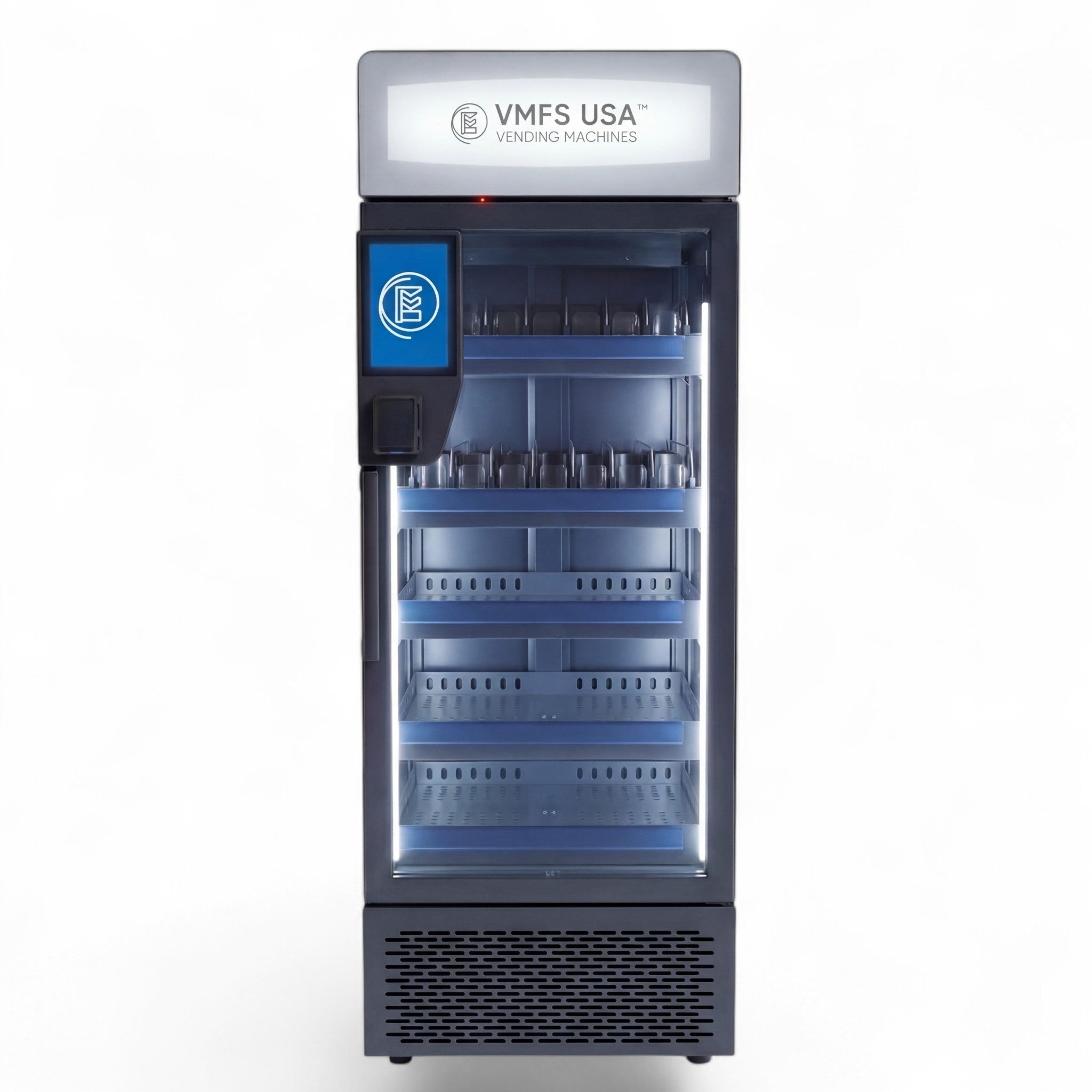
| AI grab-and-go cooler | Everything in one unit: cold drinks, shakes, bars, yogurt, gear. Members open the door, pick, and can read labels before they buy. | Higher upfront cost than a spiral machine | NEO GO AI cooler, NEO PRO AI cooler, AI smart cooler, AI smart fridge |
| Combo snack and drink machine | Bars, snacks and drinks in one footprint | Odd-shaped gear doesn't vend well from spirals | Smart combo, slim combo for tight spaces |
| Refrigerated drink machine | Water, sports drinks, ready-to-drink protein at volume | Drinks only | Water bottle vending machine |
| Protein shake machine | Fresh-mixed shakes from powder | One product category; best where shake demand is proven | Protein shake vending machine |
| Countertop snack machine | Boutique studios and front desks: sachets, sticks, bars | Small capacity, no refrigeration | Countertop snack machine |
| Frozen grab-and-go | Protein ice cream, frozen smoothie bowls | Niche; add once the core machine is proven | NEO Freezer |
Many clubs end up with two units: an AI cooler or refrigerated combo for drinks, protein and gear, plus a protein shake machine once demand is clear.
Not sure which machine fits your gym? Browse the 13 machines we recommend for gyms, from protein shake and AI cooler machines to water, combo and coffee machines, or ask us for a recommendation based on your floor space and member count.
See gym vending machines →Food safety, labeling and the rules that apply
Most gym vending items are packaged and shelf-stable, but a few rules still apply. Check each one before your first fill.
- Keep perishable items cold, and make sure the machine shuts itself off. Fresh dairy, yogurt and similar time/temperature control for safety (TCS) foods must be held at 41°F (5°C) or below. The FDA Food Code, which most states adopt in some version, requires machines that sell TCS food to stop vending automatically if the temperature goes out of range (section 4-204.111).
- Allergens. U.S. labels must declare the nine major food allergens: milk, eggs, fish, crustacean shellfish, tree nuts, peanuts, wheat, soybeans and sesame. Members can't read a back label through glass, so offer clear allergen-friendly options. An AI cooler that lets them pick up a pack before buying is a real advantage here.
- Calorie labeling. Under FDA's vending labeling rules, operators who own or operate 20 or more machines must make calorie information visible for the foods they sell. A gym that owns one or two machines isn't covered, but a larger route operator may be.
- Permits. Food vending usually needs a local or state permit, and rules vary by state and county. Our guide to getting a food vending license covers the basics, and V Adviced has a vending operator license compliance guide.
- Supplements. Follow the sourcing, caffeine and age rules in the supplements section above.
Keeping the machine fresh and profitable
- Rotate stock first in, first out. Move older product to the front on every visit and check dates on protein drinks and bars, which expire sooner than water.
- Watch the heat. In summer, chocolate-coated bars in an unrefrigerated machine near a window soften and look bad through the glass. Move them to the cooler or swap to uncoated bars.
- Keep powders dry. Sachets and powders clump in humid spaces. Keep machines away from showers and saunas.
- Use the sales data. Remote monitoring shows what sells at which hour and which slots are empty before you drive out. VMFS Cloud gives you live sales analytics, slot-level stock and alerts when a machine jams or goes offline.
- Cut slow movers fast. Give a new product two restock cycles. If it hasn't sold through, replace it.
- Ask the members. A short poll at the front desk or in the gym app costs nothing and tells you which brands to carry.
Frequently asked questions
What sells best in a gym vending machine?
Water, electrolyte and sports drinks, ready-to-drink protein shakes and protein bars are the core sellers at most gyms. Pre-workout drinks, recovery drinks and forgotten-item gear such as earbuds and hair ties add sales and margin once the basics are in place.
Can you sell supplements in a vending machine?
Yes, if they are sealed retail products from reputable suppliers with proper Supplement Facts labels. Choose single-serve formats, avoid banned ingredients such as DMAA, and check state rules. New York, for example, bans sales of weight-loss and muscle-building supplements to under-18s.
Can a vending machine sell pre-workout?
Yes. Canned pre-workout drinks and single-serve sachets are the formats that work best. Check caffeine per serving and decide with the gym owner whether teenage members should be able to buy them.
Do protein bars melt in vending machines?
Chocolate-coated bars can soften in a warm room or a machine near a window or heater. Keep machines out of direct sun, stock some uncoated bars, or move bars to a refrigerated machine in summer.
How much should a protein bar cost in a gym vending machine?
Price slightly above the nearest convenience store. Recognizable brands support a higher price. Work back from your wholesale cost so the margin still holds after the gym's commission and card fees.
Does a gym vending machine need to be refrigerated?
Not for bars, sachets and gear, but drinks and protein shakes sell far better cold, and fresh dairy or yogurt must be kept at 41°F or below in a machine with automatic shutoff. Most gyms do best with at least one refrigerated unit.
What is the best vending machine for a gym?
For most gyms, an AI grab-and-go cooler or a refrigerated combo machine, because it handles cold drinks, protein, snacks and gear in one footprint. Busy clubs often add a protein shake machine. Small studios can start with a countertop machine.
Compartir:
Estadísticas del mercado de máquinas expendedoras de alimentos para 2026: tamaño, segmentos y crecimiento
Protein Shake Vending Machines in Gyms: Guide for Gym Owners & Operators