




Design the perfect vending solution for your location and customers.

Join the VMFS newsletter and step into a thriving network dedicated to collective success.
One signup. Endless possibilities.
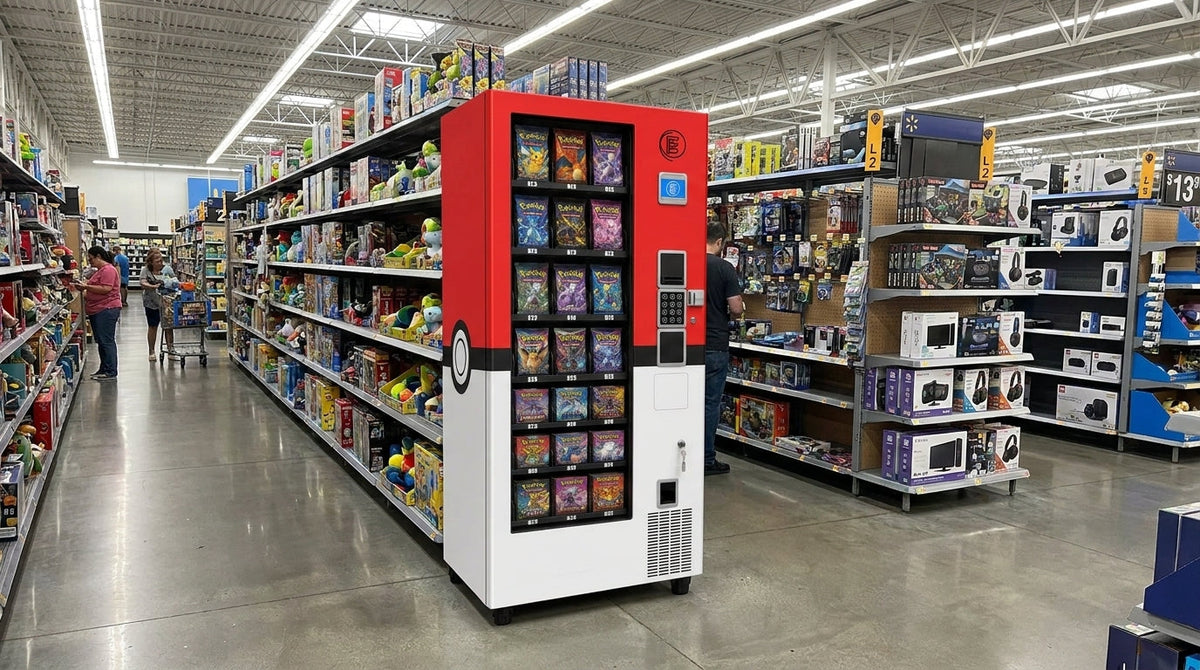
The quickest way to find a Pokemon vending machine near you is the official Pokémon Vending Machine Locator at vending.pokemon.com, run by The Pokémon Company International (TPCi), which owns and operates every official machine. Most official machines sit inside grocery stores, with published reports naming Kroger-family banners such as Fry's, Smith's, Ralphs and Food 4 Less and Albertsons-family banners such as Safeway, Vons and Shaw's.
This guide shows how to use the locator, which stores and states have machines according to dated sources, how to tell an official machine from an independent one, and what to check before you drive. It also covers what to do when there is no machine near you, including how a local business can host a trading card machine of its own.
To find a Pokemon vending machine near you, search your area on the official TPCi locator first, then confirm the store's hours and only then drive. That order matters because the official network changes constantly: Wargamer, citing PokéBeach counts, reported in May 2026 that 562 machines had been added and 207 removed since May 2025, so roughly one in seven kiosks had been uninstalled or relocated in a year. A store a friend mentioned last spring may no longer have one.
The search also depends on what kind of machine you want. Official machines are owned by The Pokémon Company International, sell sealed Pokémon Trading Card Game products at retail pricing and appear on the official locator. Independent trading card machines are owned by private operators, carry whatever the operator chooses (including singles and graded cards) and never appear on TPCi's map. If you want MSRP booster packs, you are looking for an official machine. If you want a late-night pack at the mall or a graded card, you are looking for an independent one. Our explainer on how Pokemon vending machines work covers the difference in detail.
1. Official locator
Search vending.pokemon.com for TPCi machines. It is the only authoritative list of official kiosks.
2. Store confirmation
Check the host store's hours and, if unsure, ask the service desk whether the machine is still on site.
3. Community maps
Local Discord servers, Reddit threads and fan-built maps report sightings, including independent machines.
4. Local venues
Card shops, malls, arcades and airports host independent machines that no official map tracks.

The official Pokémon Vending Machine Locator is TPCi's own map of the machines it owns, and it is the only source that can confirm a machine is official. TPCi's support FAQ, last updated in January 2026, sends customers to the locator to see if there is a machine nearby and again for news about new placements, because the company says it cannot comment on future machine locations.
Search by your city or ZIP code, then look at the host store in each result rather than just the pin. Official machines live inside retail buildings, so the store's opening hours decide when you can actually buy. A pin also says nothing about stock: TPCi states that it has no set restock schedule and cannot alert customers when a restock has happened or will happen, because restocks are decided case by case based on product levels and each machine's needs. Treat the locator as proof that a machine exists, not that it is full.
Two habits make the locator more useful. First, check it on the day you plan to go, since machines are removed and relocated throughout the year. Second, if a machine you find in a store is missing from the locator, assume it is independently operated: check its prices against retail and use the operator's contact details on the cabinet if anything goes wrong.
What the locator cannot tell you: current stock, restock timing or future locations. TPCi says it cannot share any of these, and it asks shoppers not to question store employees or vending merchandisers about restocks or inventory.
Official Pokemon vending machines are mostly in supermarkets, especially stores run by Kroger and Albertsons under their regional banners. Grocery stores suit an automated card kiosk because they have long opening hours, steady daily traffic and a front-end area where a cabinet can sit in view of staff and cameras without taking aisle space.
No single public list names every host chain, so the table below only includes banners named in a dated published source. Kroger-family banners have appeared in coverage since the earliest trials: Bulbapedia's history of the program records Fred Meyer stores in Washington as the first test sites in late 2017, and Nintendo Wire and Vending Times reported Kroger, Fry's, Smith's, Ralphs and Food 4 Less as hosts during the October 2024 expansion. Albertsons-family stores followed the same path, with Safeway listed in 2020, Albertsons and Vons in 2024 and Shaw's Supermarkets introducing machines across Massachusetts in March 2025.
| Store banner | Parent company | Where it was reported | Reported by |
|---|---|---|---|
| Fred Meyer | Kroger | Washington trial stores from late 2017 | Bulbapedia |
| King Soopers | Kroger | Colorado (2020 store list) | Bulbapedia |
| Kroger | Kroger | 2024 grocery expansion | Nintendo Wire (Oct 2024) |
| Fry's, Smith's, Food 4 Less | Kroger | 2024 grocery expansion | Vending Times (Oct 2024) |
| Ralphs | Kroger | 2024 grocery expansion | Nintendo Wire (Oct 2024) |
| Safeway | Albertsons | 2020 store list; Los Altos, CA in 2025 | Bulbapedia; Los Altos Town Crier |
| Albertsons, Vons | Albertsons | 2024 grocery expansion | Vending Times; Nintendo Wire |
| Shaw's Supermarkets | Albertsons | Massachusetts, March 2025 | Vending Times (Mar 2025) |
| H Mart | H Mart | 2020 store list | Bulbapedia |
| Seattle-area malls | Pokémon Center machines | Westfield Southcenter, Tacoma Mall, South Hill Mall (2020) | Bulbapedia |
Other banners in the same grocery families, along with chains such as H-E-B, often appear on fan-made lists, but we could not find a dated published source confirming them, so treat any store not on the locator as unconfirmed. Nintendo Wire described its 2024 list as covering only some hosts "among many others," which is another reason to search the locator rather than rely on a chain name.
The Seattle-area mall machines are a separate, older program. Bulbapedia describes them as Pokémon Center vending machines that TPCi placed near its Bellevue, Washington headquarters, selling plush, figures, video games and charms as well as card products. They predate the grocery card kiosks, and their 2020 status is the latest we could confirm, so check the locator before making a trip.

Official Pokemon vending machines were in 28 US states as of May 2026, according to PokéBeach counts reported by Wargamer, which leaves 22 states without an official machine. Wargamer did not publish the full state list, so the locator remains the way to confirm your state.
The network grew in stages. After the Washington trial, Bulbapedia's snapshot from April 2020 shows machines at 68 stores in four states: Colorado, Idaho, Oregon and Washington. By October 2024, coverage of the grocery rollout listed 14 states: Arizona, California, Colorado, Georgia, Illinois, Indiana, Kentucky, Michigan, Nevada, Ohio, Oregon, Texas, Utah and Washington. Massachusetts followed in March 2025 through Shaw's. SNKRDUNK reported 1,473 machines in 25 states plus Washington, DC in May 2025, and Wargamer put the count at 1,871 a year later, a 27% increase.
| Date | Official network | Source |
|---|---|---|
| Late 2017 | Trial machines at Fred Meyer stores in Washington | Bulbapedia |
| April 2020 | 68 stores in 4 states (CO, ID, OR, WA) | Bulbapedia |
| 2024 | About 200 machines; 14 states listed by October | Wargamer; Nintendo Wire |
| March 2025 | Shaw's adds machines in Massachusetts | Vending Times |
| May 2025 | 1,473 machines in 25 states plus DC | SNKRDUNK |
| May 2026 | 1,871 machines in 28 states; 562 added and 207 removed in 12 months | Wargamer, citing PokéBeach |
Removals matter as much as additions when you plan a trip. Wargamer reported a Reddit post in which a support employee said kiosks were being gradually removed from select retail locations to improve stock consistency, and the publication noted it could not verify that source. Whatever the reason, a state appearing on an older list is no guarantee that your local store still has a machine.
Inside a host store, start at the front end: entrance vestibules, the customer service desk and the area between the checkouts and the doors. Those are the spots where a store can give a freestanding cabinet power, keep it in view of staff and cameras and let shoppers reach it without walking the aisles.
If you do not see it within a minute or two, ask the service desk where the Pokémon machine is. Staff can usually point you to it, even though TPCi says employees and merchandisers cannot help with machine faults or answer questions about restocks and inventory. Asking where the cabinet stands is fine; asking when it will be refilled puts staff in an awkward position and will not get you an answer.
Once you find it, check three things before you queue. Look for TPCi branding and support details on the cabinet: TPCi's vending support line is 866-872-4790, so a cabinet that lists a different company's contact is independent. Check the screen for sold-out items so you know whether the trip was worth it. And note that official machines carry cameras that, according to TPCi, count people passing by but do not store or transmit video, so a camera on the cabinet is normal and not a sign of a problem.

Want a card machine in your own store?
TPCi does not sell its kiosks, but you can configure a trading card vending machine for your shop, mall or venue.
Build Your Card MachineWalmart, Target and GameStop do not appear in any of the published host lists for official Pokemon vending machines; they sell Pokémon cards from shelves and counters instead. Every host chain named in coverage of the program is a supermarket, and TPCi's own FAQ describes the machines as a TPCi-owned channel rather than equipment retailers buy or run.
That difference changes how you shop. A machine in a grocery store sells at the price TPCi sets and applies its own purchase limits. Big-box shelves follow store rules. Walmart, for example, introduced a five-package limit per visit on November 5, 2025, according to Kotaku's report of an internal announcement that framed the limit as a response to reselling and unprecedented demand.

If you see a card machine near a Walmart or Target, it is either in the shopping center rather than the store or it belongs to an independent operator. Check whether it appears on the locator before you assume it sells at retail prices.
An official machine is listed on the TPCi locator, sits in a host retailer and shows TPCi's support line; anything else is independent. Independent machines are legitimate businesses, but their owners set their own prices and product mix, so the rules that apply to official kiosks do not carry over.
Price is the clearest signal. OriginalPricing's 2026 review lists official retail ranges of about $4.49 to $6.99 for a booster pack and $44.99 to $59.99 for an Elite Trainer Box, and notes that official US machines are primarily cashless. Independent machines can charge far more. Wargamer reported in January 2026 that a Topps-run "The Fan Stand" machine in Terminal 3 at Harry Reid Airport in Las Vegas priced a Black Bolt Elite Trainer Box at $179.95 and Japanese booster boxes at $230 and $240. Airport card machines you hear about are usually this kind of independent unit, not TPCi kiosks.
| Check | Official TPCi machine | Independent card machine |
|---|---|---|
| Owner | The Pokémon Company International | Private operator or venue |
| On the official locator | Yes | No |
| Typical hosts | Grocery stores; a few Seattle-area malls | Card shops, malls, arcades, airports, entertainment venues |
| Products | Sealed TCG products such as packs, bundles, tins and Elite Trainer Boxes | Operator's choice: sealed product, singles, graded cards, imports |
| Pricing | Retail pricing set by TPCi | Set by the operator, often above retail |
| Payment | Primarily cashless (cards and mobile wallets) | Operator's choice; some accept cash |
| Support and returns | TPCi line 866-872-4790; no returns | Operator contact on the cabinet; operator's policy |
If a machine is not official, compare its prices with retail before you tap your card. Our Pokemon vending machine price guide breaks down what packs and machines cost, and the first-timer walkthrough on how to use a Pokemon vending machine explains the screen, limits and payment steps.
Before you drive, confirm the machine on the locator the same day, check the host store's hours and set your expectations about stock. Those three steps prevent most wasted trips, because the commonest disappointments are a machine that has moved, a store that has closed and a cabinet that has sold out.
Stock is the hardest part to plan. TPCi publishes no restock schedule and will not send alerts, so any timing you read online comes from collectors comparing notes. Our guide to Pokemon vending machine drop times explains which restock signals are worth watching and which are myths, and the Pokemon vending machine restock guide shows what a restock involves from the operator's side.
Hours are simpler. A machine can only sell while its host building is open, so a 24-hour supermarket may let you buy late at night while a mall machine closes with the mall. Our article on whether Pokemon vending machines stop selling at night covers the edge cases.
Purchase limits are the last surprise. SNKRDUNK reported in May 2025 that TPCi imposed purchase limits on its machines, and the Los Altos Town Crier reported that about 400 machines were taken offline in 2025 until software updates adding those limits were installed. If your card stops working after a few items, you have probably reached a limit rather than found a fault. All sales are final: TPCi does not accept returns from any vending machine.
Community trackers can help, with limits. Search results for this topic include fan-built maps on Reddit and ArcGIS and local Discord groups, and these often list independent machines and recent sightings that the official map does not. They are run by volunteers, so treat them as leads to verify.
Community trackers: strengths
Community trackers: limits
Machine not working? For an official machine, call TPCi's vending support line at 866-872-4790 or submit a request through Pokémon Center Support; store staff cannot open or service the cabinet. Operators troubleshooting their own units can start with our Pokemon vending machine common issues guide.
If the locator shows no official machine near you, you can still buy at retail through stores and Pokémon Center, use an independent machine nearby or encourage a local business to host one. With 22 states lacking an official machine as of May 2026, plenty of collectors are in this position.
For sealed product at retail, store shelves and Pokémon Center remain the main channels. For convenience, an independent machine at a local game store or mall may be the closest option, as long as you accept operator pricing. The longer-term fix is local: card shops, arcades, family entertainment centers and similar venues can add an independent trading card machine, and many collectors first discover a machine because a business they already visit decided to host one. Our history of Pokemon vending machines shows how quickly the category has grown since the first trials.
A business cannot get an official TPCi kiosk on request, but it can buy or host an independent trading card vending machine. TPCi's FAQ states that all of its machines are owned and operated by the company and that there are no plans to sell them, and it gives the same answer to stores asking to have one placed.
Independent machines follow the same placement logic that makes grocery stores work for TPCi: steady foot traffic, staff or camera supervision and an audience that already buys cards. Card shops, malls, arcades and entertainment centers fit that profile. Our guides to the best vending locations and scouting and pitching a location walk through foot-traffic checks, commission terms and the pitch itself, and VPlaced lists the best places for Pokemon vending machine placement.
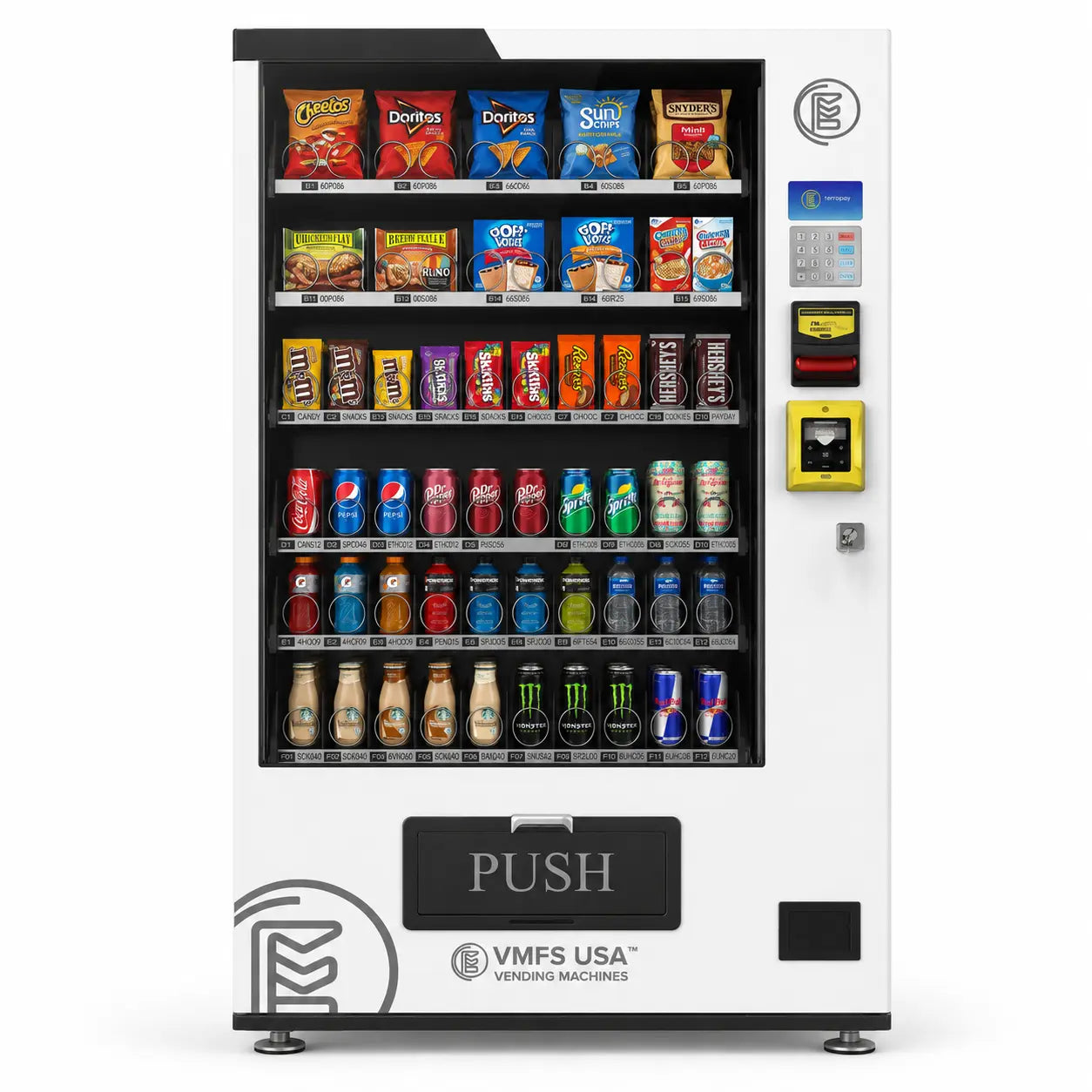
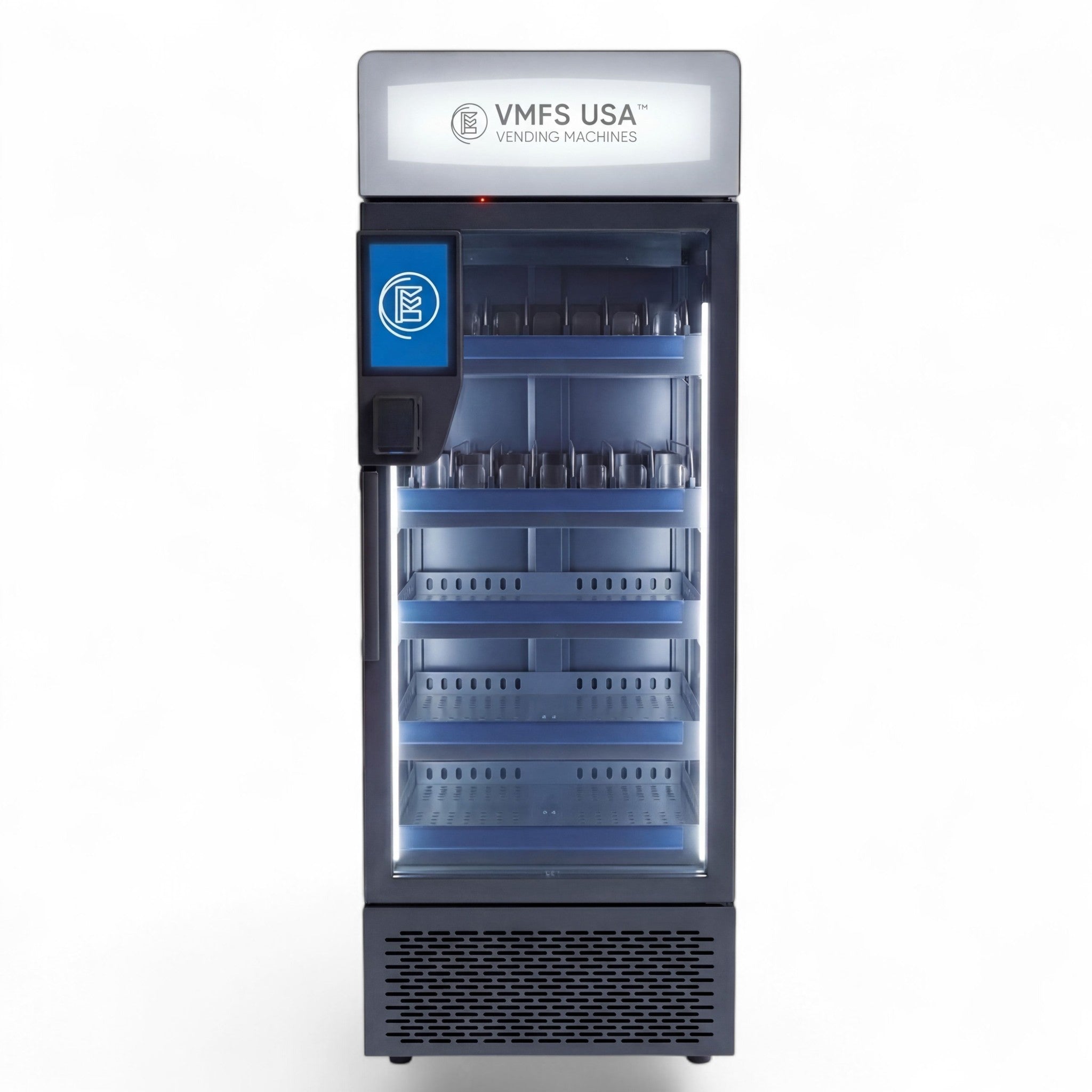
VMFS USA builds trading card machines for independent operators. Prices below come from the active product listings as of October 2026.
| VMFS machine | Starting price | Best fit |
|---|---|---|
| Build Your Trading Card Vending Machine | From $3,800 | Configured to your products and space |
| Trading Card Vending Machine | $9,395 | Card shops and mall placements |
| PRO XL Trading Card Vending Machine | $10,995 | High-traffic venues needing more capacity |
| TCG Vending Machine | $13,275 | Flagship placements with a large product mix |
Every machine needs stock, monitoring and a plan for the brand. VMFS supplies factory-sealed Pokémon booster boxes and bundles for operators, and VMFS Cloud works with every VMFS machine; plans start at $7.99 per machine per month and show sales and stock remotely. On branding, Pokémon names and artwork are protected trademarks, so read VAdviced's guide on using the Pokémon logo on a TCG vending machine before you wrap a cabinet. For the full business case, see how to buy a Pokemon vending machine, whether a Pokemon vending machine business is profitable and the Pokemon card vending machine operator guide, or browse all our vending machines.
Find a location for your card machine
Our location matching service connects operators with venues that want a trading card machine.
Get Location Matching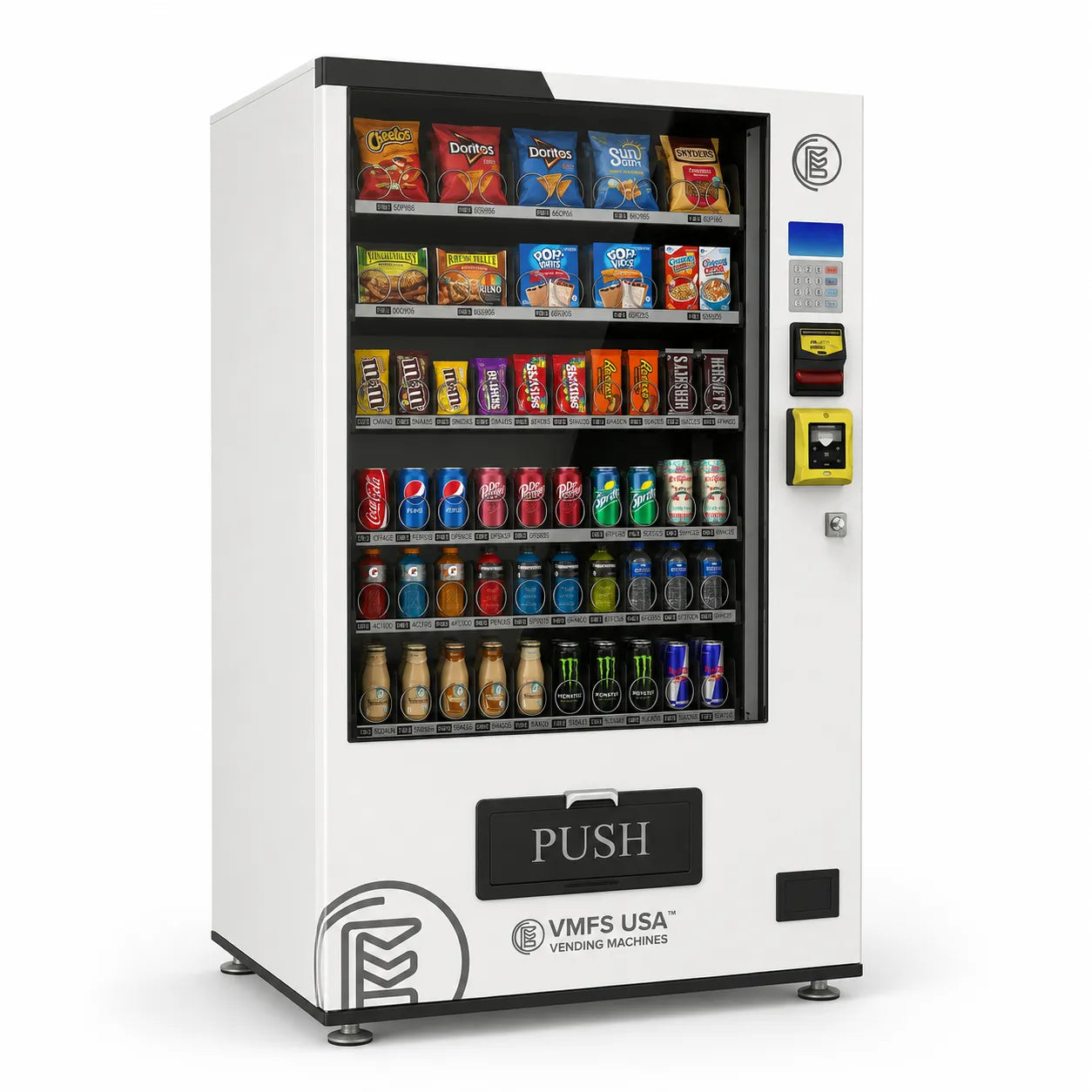
Share:
How to Clean Office Coffee Machine: Complete Maintenance & Descaling Guide
Pokémon Vending Machine Glitches and Their Fix - Comprehensive Operator Manual