




Design the perfect vending solution for your location and customers.

Join the VMFS newsletter and step into a thriving network dedicated to collective success.
One signup. Endless possibilities.
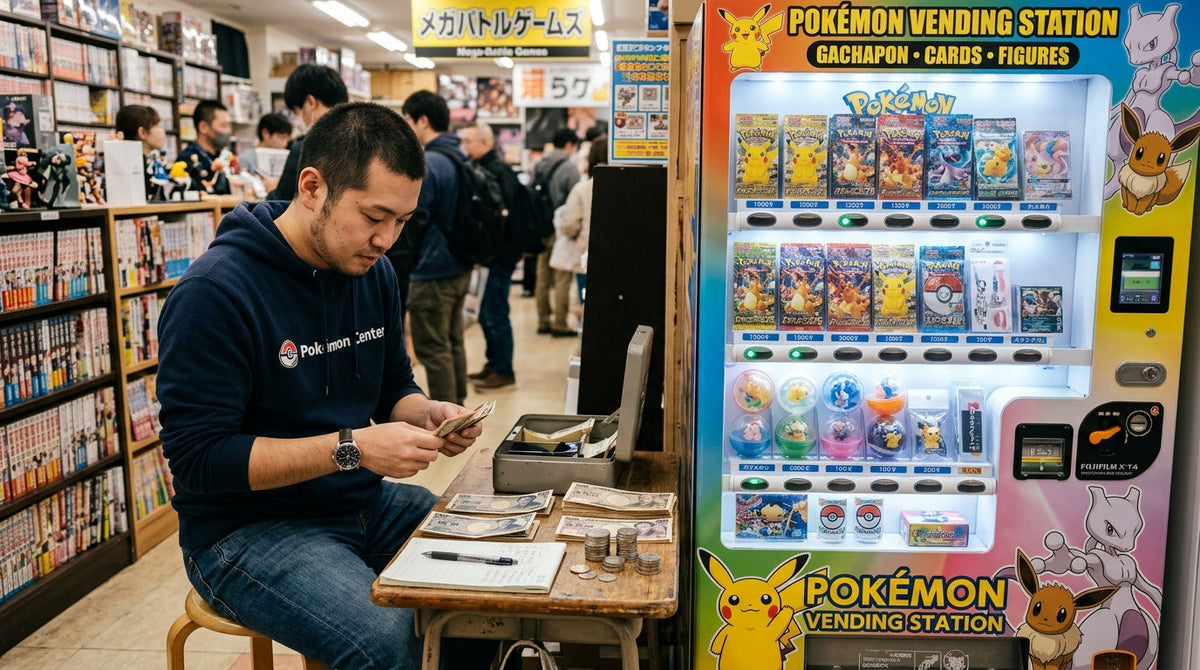
A Pokemon vending machine business is profitable when it consistently pulls $600 to $2,500 in monthly revenue per unit against a cost base of roughly $200 to $700 in restocked product, giving most well-placed machines a net margin between 35% and 55%. Profitability isn't automatic, though. It's a direct function of location foot traffic, restock discipline, and how the operator sources trading card inventory, and machines placed without regard for these three variables routinely underperform or lose money.
This guide breaks down the real numbers behind the Pokemon card vending machine business: startup costs, revenue ranges, margin math, the variables that separate a profitable route from a stalled one, and the legal groundwork that protects the business as it scales.
Table of Contents
A Pokemon vending machine business involves placing self-serve kiosks stocked with sealed Pokemon trading card packs, booster boxes, or mystery packs in high-traffic retail locations, then collecting revenue each time a customer completes a purchase. The operator owns or leases the hardware, negotiates placement with the venue, and restocks inventory on a set schedule. Anyone evaluating the model first needs a clear picture of what Pokemon vending machines actually are and how the hardware differs from a standard snack or drink unit before estimating returns.
The mechanism is simple on the surface: card and coin acceptors process payment, a dispensing mechanism drops the selected pack, and the machine reports sales data back to the operator. The full mechanics of how Pokemon vending machines work matter because jam rates, dispensing accuracy, and payment reliability all directly affect revenue capture — a machine that jams loses sales even in a high-traffic spot.
Startup cost is the first variable in any profitability calculation. Hardware price varies by capacity, payment tech, and build quality, and inventory cost scales with how many card products the machine holds at full stock.
| Cost Item | Typical Range | Notes |
|---|---|---|
| Compact vending machine | $2,000 – $4,500 | Lower capacity, faster placement approval |
| Standard vending machine | $4,500 – $8,500 | Balanced capacity and footprint |
| Large-capacity machine | $8,500 – $15,000+ | Higher upfront cost, fewer restock trips |
| Initial card inventory | $300 – $1,200 | Depends on pack mix and set popularity |
| Location placement fee / rev share | 0% – 20% of sales | Negotiated per venue |
| Delivery and setup | $100 – $400 | One-time |
A detailed Pokemon vending machine price and cost guide is worth reviewing before committing capital, since machine price directly sets the break-even timeline — a $3,000 compact unit and a $12,000 large-capacity unit require very different sales volumes to recover the initial investment.
Ready to see actual machine specs and pricing before you commit capital?
Shop the Pokemon Card Vending MachineA single well-placed Pokemon vending machine generates $600 to $2,500 in monthly revenue, with high-traffic locations like large retail entrances or entertainment venues clustering toward the top of that range. Revenue is a direct function of daily foot traffic multiplied by conversion rate and average pack price, so a machine in a 500-visitor-per-day location will consistently outperform one in a 50-visitor location, regardless of hardware quality.
Net margin on Pokemon vending sales typically lands between 35% and 55% after product cost, placement fees, and restocking labor. Margin compresses when placement fees run high or when restock trips are frequent enough to eat into labor efficiency, and it expands when an operator runs multiple machines on one restocking route.
| Metric | Low-Traffic Location | High-Traffic Location |
|---|---|---|
| Monthly revenue | $400 – $800 | $1,500 – $2,500 |
| Product cost | $200 – $350 | $700 – $1,100 |
| Placement fee | 0% – 10% | 10% – 20% |
| Net monthly profit | $120 – $350 | $500 – $1,200 |
Location drives profitability because foot traffic caps the maximum number of transactions a machine can complete in a day. Grocery entrances, big-box retail lobbies, and family entertainment venues outperform low-traffic office corridors because they combine high volume with a customer base that already includes card collectors and parents buying for kids. Operators evaluating sites should reference proven Pokemon vending machine placement locations before signing a venue agreement, since placement quality is the single largest lever on monthly revenue.
Empty or partially empty machines stop generating revenue immediately, which makes restock discipline a direct profit variable rather than a background task. A machine that sits empty for three days in a 30-day month has already lost 10% of its potential sales window. Following a structured Pokemon vending machine restock schedule keeps sell-through consistent and protects the location relationship, since venues expect a fully stocked machine as a condition of continued placement.
Margin depends on buying card packs at wholesale or bulk distributor pricing rather than retail, since retail-sourced inventory compresses margin below the point of profitability in most cases. Popular, currently-relevant sets sell through faster than older or oversaturated sets, so inventory selection functions as a demand-forecasting exercise as much as a purchasing one.
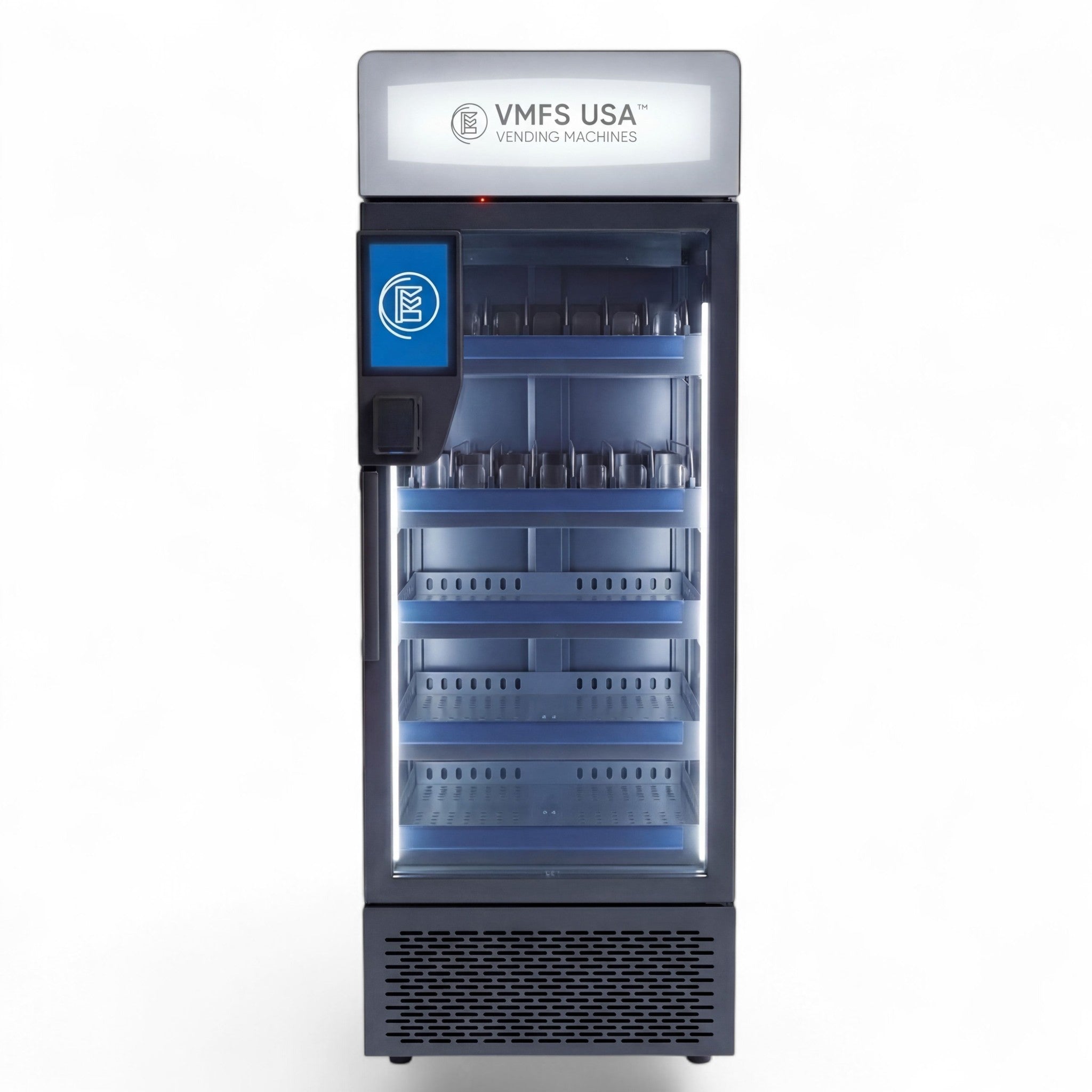
Capacity determines how long a machine can run between restocks and how many SKUs it can offer at once, both of which affect sales ceiling. Understanding the individual components of a Pokemon vending machine — the dispensing mechanism, payment terminal, and inventory trays — helps operators match machine specification to expected location volume instead of over- or under-buying capacity.
Pokemon vending machines and traditional snack or drink vending machines both run on the location-plus-foot-traffic model, but they diverge sharply on margin structure and product volatility.
| Category | Pokemon Vending Machine | Traditional Snack/Drink Vending |
|---|---|---|
| Typical net margin | 35% – 55% | 15% – 30% |
| Product shelf life | Indefinite (sealed packs) | Limited, requires rotation |
| Price volatility | Moderate to high (collector demand) | Low, stable pricing |
| Restock frequency | Weekly to bi-weekly | 2 – 3x per week |
| Startup cost | $2,000 – $15,000+ | $3,000 – $10,000 |
Machine selection should match expected location volume rather than defaulting to the largest available unit. A step-by-step walkthrough of how to buy a Pokemon vending machine covers the specification questions — capacity, payment hardware, and warranty terms — that determine long-term reliability, and reviewing where to buy a Pokemon vending machine helps compare supplier reliability before purchase.
Best for smaller retail counters and lower-traffic pilot locations testing the model.
The most common choice for grocery and retail entrances with steady daily traffic.
Suited to high-volume venues where fewer restock trips justify the higher upfront cost.
Location scouting should prioritize verified foot traffic data over assumptions about a venue's popularity. Property owners considering hosting a unit can review how the process works for listing a location for a vending placement — sharing space details, getting matched with qualified operators, and comparing interested operators before choosing the best fit for hassle-free setup.
Every operator running more than a single machine benefits from formal business registration before scaling, since it separates personal and business liability and simplifies tax reporting as revenue grows across multiple locations.
Consistent uptime protects revenue more than any single marketing decision. A documented Pokemon vending machine maintenance schedule reduces downtime from mechanical faults, and knowing how to reset a Pokemon vending machine lets an operator resolve minor jams on-site without a service call, which directly protects monthly uptime. New operators should also review a full guide to starting and operating a Pokemon vending machine business and a walkthrough of how to use a Pokemon vending machine so location staff can assist customers if the operator isn't on-site.
Selling Pokemon products through a vending machine is legal in the United States when the operator sells genuine, properly licensed sealed product and avoids unauthorized use of Pokemon branding on the machine itself. Operators should confirm whether it's legal to sell Pokemon products in a vending machine in their specific jurisdiction, since resale of authentic sealed product is generally permitted while counterfeit or repackaged product is not.
Trademark exposure is the second legal variable operators frequently overlook. Machine wraps, signage, and marketing materials that use the Pokemon logo without a licensing agreement can create trademark issues, so reviewing whether the Pokemon logo can be used on a TCG vending machine before ordering custom branding avoids a costly reprint or takedown request later.
The Pokemon vending machine business is profitable for operators who treat location selection, restocking discipline, and inventory sourcing as the three controllable levers of the model rather than fixed costs of doing business. Margins of 35% to 55% per machine make the format more efficient than most traditional vending categories, and the model scales cleanly by adding machines to an existing restock route rather than rebuilding operations from scratch. The businesses that underperform are almost always the ones that placed a machine first and evaluated traffic second.
Businesses researching the space, including established vending machine companies in the USA, generally point to the same conclusion: profitability is achievable and repeatable, but it rewards operators who run the numbers before every placement decision rather than after.
Browse commercial-grade trading card vending machines built for reliable uptime and fast restocking.
Need the full 2026 operator playbook first? Read the complete Pokemon card vending machine operator guide.
Share:
Where Can I Buy a Pokémon Vending Machine?
How to Use a Drink Vending Machine: The Complete Guide