



Design the perfect vending solution for your location and customers.

Sales, inventory and alerts for your whole route, from one machine to a fleet.
Answer a few questions about your location, products and budget and get a shortlist.
Estimate revenue, payback period and margin before you buy.
Sales, setup help, warranty and parts from the VMFS USA team.
Join the VMFS newsletter and step into a thriving network dedicated to collective success.
One signup. Endless possibilities.
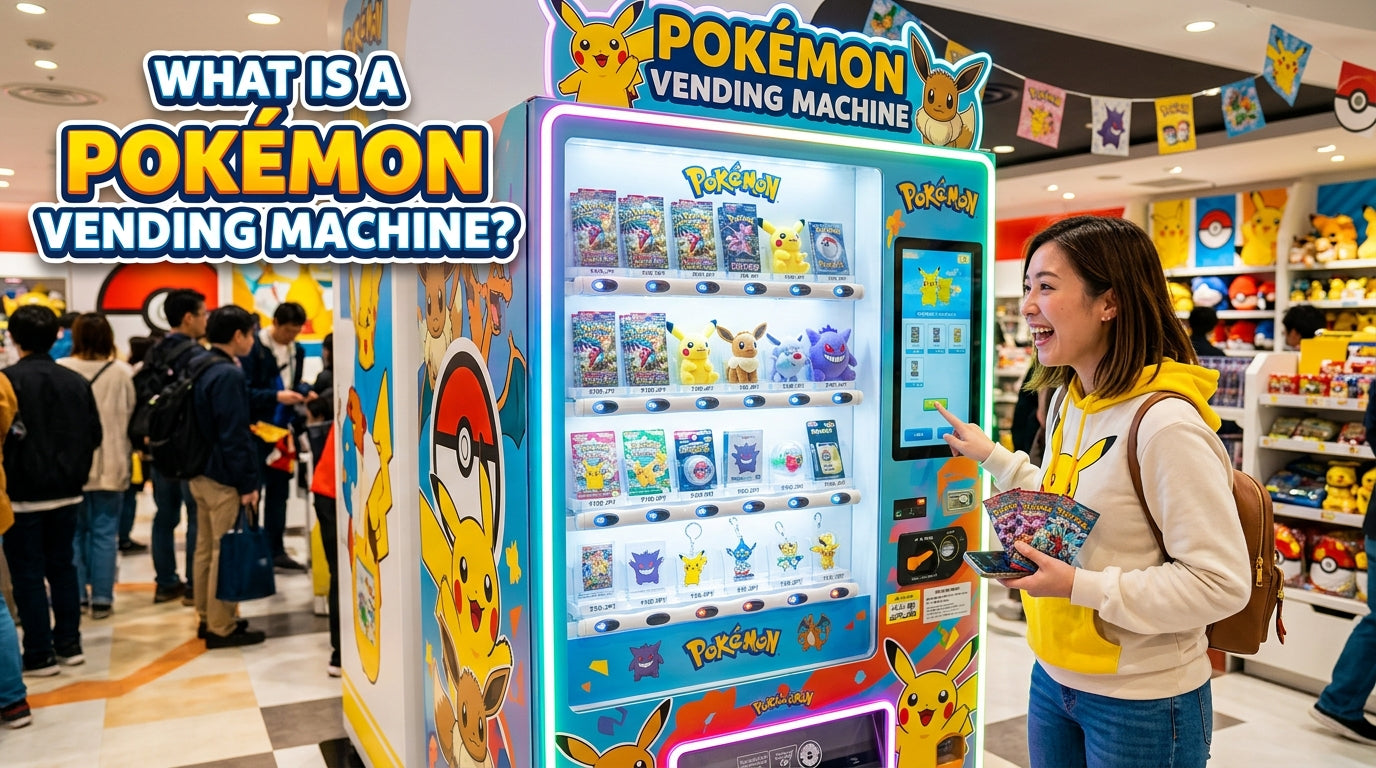
A kid feeds two dollars into a machine, hits a button, and walks away with a fresh pack of Pokémon cards — no cashier, no line, no sold-out shelf. That's the whole pitch behind Pokémon vending machines, and it's why they've gone from novelty to must-have fixture in game stores, malls, and laundromats across the country.
A Pokémon vending machine is a specialized retail dispenser built to sell Pokémon Trading Card Game (TCG) products — booster packs, single cards, or sealed collector items — without a human behind the counter. Instead of chips or soda, the internal trays hold trading card inventory, and the machine handles selection, payment, and dispensing automatically.
These aren't repurposed snack machines with a sticker slapped on. A real trading card vending machine is engineered differently:
If you're comparing machine types, a dedicated pokemon card vending machine is purpose-built for this exact product category — it's not a generalist unit trying to do double duty.

| Feature | Snack Vending Machine | Pokémon/Trading Card Vending Machine |
|---|---|---|
| Dispensing method | Spiral coil (crushes fragile items) | Gentle drop or push mechanism |
| Product value per item | $1–$5 | $5–$500+ per slot |
| Security level | Basic lock | Reinforced glass, tamper alerts, high-security locks |
| Inventory visibility | Products lined up in coils | Often showcased individually, angled for visibility |
| Restocking frequency | Weekly | Often daily or every few days (high turnover) |
| Payment options | Coin/cash, basic card reader | Tap-to-pay, mobile wallet, app integration |
Anyone who's tried to buy a booster box at a big-box retailer in the last two years knows the problem: shelves get wiped out within hours, sometimes by resellers running bots or bulk-buying in person. Vending machines solve a real supply-and-access issue.
A few forces are driving the trend:
Pokémon vending machines have shown up in comic shops, arcades, laundromats, movie theaters, bowling alleys, and dedicated hobby stores. If you're trying to track down a physical unit near you rather than buy your own, this location directory tracks where Pokémon vending machines are currently placed across the country — useful whether you're scouting for a purchase or just hunting for packs.
The mechanics are simpler than people expect, but the engineering behind them is what separates a good unit from a cheap knockoff.
1. Card loading. An operator stocks individual trays or slots with sealed packs, booster boxes, or single cards (often in protective sleeves or toploaders).
2. Selection. The customer chooses a product via a touchscreen, keypad, or button grid — some machines display live inventory counts so buyers know what's actually left.
3. Payment processing. Most modern units run on cashless systems: tap-to-pay, Apple Pay, Google Pay, or an integrated card reader. Some newer machines are testing app-based purchases with pickup codes.
4. Dispensing. A motorized arm, drop mechanism, or spiral (calibrated for lighter loads) delivers the product to the pickup bin without damaging packaging.
5. Restocking and monitoring. Because card inventory turns over fast and carries real resale value, most commercial units include remote inventory tracking so operators know when to refill before a machine goes empty.
Not every machine is built the same, and picking the wrong format is one of the most common (and expensive) mistakes new operators make.
| Machine Type | Best For | Typical Capacity | Footprint |
|---|---|---|---|
| Standard trading card vending machine | Small shops, laundromats, low-traffic spots | 20–60 product slots | Compact, fits tight retail corners |
| Large trading card vending machine | High-traffic malls, arcades, dedicated card shops | 100+ product slots | Requires more floor space, higher throughput |
| Custom/branded configuration | Retailers wanting a signature look or specific product mix (singles, sealed product, mixed TCGs) | Variable | Built to spec |
If you're weighing footprint against sales volume, a standard trading card vending machine works well for lower-traffic locations, while a large trading card vending machine makes more sense when you're placing a unit somewhere with consistent foot traffic and want to minimize restocking trips.
The buyer pool is broader than most people assume:
Pricing depends heavily on capacity, build quality, and payment tech. Here's a general breakdown — treat these as ballpark ranges, not fixed quotes, since pricing varies by manufacturer and configuration.
| Cost Factor | Entry-Level Machine | Mid-Range Machine | High-Capacity/Custom Machine |
|---|---|---|---|
| Upfront unit cost | Lower | Moderate | Higher |
| Payment tech included | Basic card reader | Tap-to-pay + card | Full cashless + app integration |
| Security features | Standard lock | Reinforced glass, tamper alerts | Commercial-grade security suite |
| Inventory tracking | Manual | Semi-automated | Remote/real-time monitoring |
| Ideal placement | Low-traffic spot | Moderate-traffic retail | High-traffic, high-turnover venues |
Beyond the machine itself, factor in ongoing costs: card inventory (which fluctuates with TCG market pricing), location rent or revenue-share agreements with venue owners, and periodic maintenance.
Before buying, walk through these questions honestly:

If you're not ready to buy and just want to find a machine to shop from, location-tracking directories are the fastest route — this Pokémon vending machine locator keeps an updated list by region so you can check what's near you before making a trip.
If you're on the buying side instead, working directly with a commercial vending manufacturer means you can compare configurations side-by-side rather than guessing from photos — start with a pokemon card vending machine built specifically for this product category rather than adapting general merchandise units.
Pokémon vending machines exist to solve a real problem: too much demand, not enough reliable shelf access. Whether you're evaluating one as a business investment or just trying to find a machine to buy from, the format only works if the hardware, security, and payment tech actually match how collectors buy today. If you're ready to move from research to sourcing, compare configurations directly with a manufacturer that builds specifically for trading card retail rather than adapting a general vending unit — start with the trading card vending machine lineup to see which capacity fits your location.
A Pokemon vending machine is a specialized retail dispenser built to sell Pokemon TCG products such as booster packs, single cards, and sealed collector items without a cashier. It handles selection, payment, and dispensing automatically through trays engineered specifically for card products.
A snack machine uses a spiral coil that would crush card packaging, while a trading card unit uses a gentle drop or push mechanism. Card machines also carry reinforced glass and higher-security locks, since inventory per slot can run into the hundreds of dollars.
Cost depends on capacity, build quality, and payment technology, with entry-level units priced lowest and high-capacity or custom-configured machines costing the most. Beyond the unit itself, budget for card inventory, location rent or revenue share, and ongoing maintenance.
Most modern units run on cashless systems, including tap-to-pay, Apple Pay, Google Pay, and integrated card readers. Cash-only machines see noticeably lower conversion, since younger collectors overwhelmingly prefer tapping over carrying exact change.
Card inventory turns over faster than snacks, often needing a refill daily or every few days at high-traffic locations versus the roughly weekly cycle typical of snack machines. Most commercial units include remote inventory tracking so operators can refill before a machine sells out.
A standard machine holds roughly 20 to 60 product slots and fits compact retail corners, suited to lower-traffic spots like laundromats. A large machine holds 100 or more slots and needs more floor space, better suited to malls, arcades, and dedicated card shops with consistent foot traffic.
Common placements include comic shops, arcades, laundromats, movie theaters, bowling alleys, and dedicated hobby stores. These locations offer steady foot traffic and let a venue add a self-service card retail channel without hiring staff or dedicating counter space.
Buyers range from game and hobby shop owners to vending route operators diversifying beyond snacks, entertainment venue owners looking for passive income, and collectors-turned-entrepreneurs who understand the TCG market. Some retail chains also pilot card vending alongside staffed counters.
Look for anti-theft glass, locking cash and inventory compartments, and tamper alerts, since card products carry high resale value per cubic inch and are a real theft target. Skipping security features to save money is one of the most common and costly mistakes new operators make.
The most common mistakes are buying more capacity than the location's foot traffic supports, cutting security to save money, ignoring restocking logistics, choosing cash-only payment, and not vetting the manufacturer's ongoing service support before committing to a machine.

Share:
Coffee Vending Business ROI: How to Calculate Realistic Returns
Pokémon Vending Machines Restock Guide: How Often to Refill & How to Track Inventory