



Design the perfect vending solution for your location and customers.

Sales, inventory and alerts for your whole route, from one machine to a fleet.
Answer a few questions about your location, products and budget and get a shortlist.
Estimate revenue, payback period and margin before you buy.
Sales, setup help, warranty and parts from the VMFS USA team.
Join the VMFS newsletter and step into a thriving network dedicated to collective success.
One signup. Endless possibilities.
Regular cleaning of commercial coffee equipment eliminates toxic bacterial biofilm, removes rancid coffee oil buildup, and halts mineral scale accumulation. Unmaintained office coffee hardware experiences a 45% higher rate of heating element failure and produces degraded, bitter beverages due to oxidized lipids (cafestol and kahweol) trapped inside brewing chambers.
Proper maintenance requires daily sanitization, weekly chemical degreasing, and monthly mineral descaling. Adhering to structured maintenance protocols preserves equipment hydraulics, maintains consistent extraction temperature and ensures compliance with OSHA and local workplace health standards.
Cleaning an office coffee machine prevents mineral scale buildup, eliminates bacterial growth, and extends machine operational lifespan by up to 50%. Commercial brewing units process dozens to hundreds of cups daily, causing rapid organic material buildup inside fluid lines, brew groups, and delivery spouts.
Coffee beans contain organic lipids that deposit onto stainless steel and rubber seals during extraction. When exposed to heat and oxygen, these oils rancidify, transferring harsh, metallic tastes to subsequent brews. Implementing a strict clean-down routine protects long-term equipment value, directly aligning with strategies outlined in the coffee vending machine cleaning and maintenance guide.
Untreated water supplies deposit calcium carbonate ($CaCO_3$) and magnesium ions onto internal heating elements, boiler walls, and solenoid valves. Limescale acts as a thermal insulator, forcing heating elements to consume up to 30% more energy to reach standard brewing temperatures. Over time, scale restricts fluid passageways, triggering pressure spikes and pump motor burnout.
Dirty equipment presents severe health risks. Warm, damp internal environments encourage fungal spores, mold, and pathogenic bacteria such as Pseudomonas and Enterococcus. Maintaining clean breakroom amenities improves workplace hygiene and employee satisfaction, which positively impacts workforce retention as detailed in how coffee machine helps in retaining employees.
Commercial coffee equipment cleaning requires specialized alkaline detergent, food-safe acid descalers, milk line sanitizers, and non-abrasive mechanical brushes. Using domestic dish soaps or unapproved chemicals damages internal silicone gaskets, corrodes brass boilers, and voids manufacturer warranties.
| Cleaning Solution / Tool | Target Residue | Active Chemical / Material | Recommended Cadence | Safety Level |
| Alkaline Espresso Powder/Tablets | Coffee oils, lipids, polymerized tannins | Sodium Percarbonate, Sodium Metasilicate | Daily / Weekly | Wear gloves; rinse thoroughly |
| Acidic Descaling Agent | Limescale, calcium, magnesium scale | Citric Acid, Sulfamic Acid, Lactic Acid | Monthly / Quarterly | Avoid skin contact; eye protection |
| Milk System Cleaner | Milk proteins, butterfat, lactose scale | Anionic/Non-ionic Surfactants, Organic Acids | Daily | Food-safe after 2-step rinse |
| Group Head Elbow Brush | Coffee grounds, spent puck residue | Heavy-duty Nylon Bristles | Daily | Safe for all metals |
| Blind Filter Basket | Internal solenoid valve residue | Food-grade Stainless Steel | Daily / Weekly | Safe for backflushing |
| Microfiber Cloths | Surface smudges, milk wand crust | Ultra-fine Synthetic Fiber | Continual / Daily | Non-abrasive, scratch-free |
Selecting targeted chemical formulations guarantees efficient residue removal without degrading internal seals or brass fittings. Stocking appropriate maintenance items alongside standard inventory ensures seamless execution, as highlighted in the coffee vending machine supplies overview.

Using genuine replacement parts during routine maintenance prevents mechanical failure caused by chemical wear. Sourcing certified replacement seals, shower screens, and valves is covered in depth within the guide on coffee vending machine parts.
Structured maintenance schedules prevent unexpected system downtime by categorizing tasks into daily operational flushes, weekly deep component sanitization, and monthly chemical descaling. Executing these tasks according to workload volume protects internal hydraulics and ensures compliance with sanitary standards.
Daily routines focus on high-touch surfaces and areas in contact with fresh milk, liquid coffee, and wet coffee grounds. Neglecting daily care leads to instant bacterial growth and clogged dispensation channels.
Purge Steam Wands: Wipe and purge steam wands immediately after every milk frothing cycle using a damp, dedicated microfiber cloth.
Rinse Drip Trays: Remove, empty, and wash drip trays, grill plates, and waste ground containers with hot water and food-safe detergent.
Flush Brew Groups: Perform a 10-second hot water flush through brew groups or dispensation spouts at the end of each workday.
Empty Spent Grounds: Clear bean-to-cup waste bins to prevent mold spores from spreading into internal bean hoppers.
Refer to operational best practices in how to use a coffee machine in office to train office staff on basic daily hygiene.

Weekly procedures require deeper intervention to scrub non-visible internal pathways, degrease filter baskets, and soak removable components in active detergent solutions.
Chemical Backflush: Run an automated or manual backflush cycle using alkaline cleaning tablets to scrub internal 3-way solenoid valves.
Soak Portafilters & Baskets: Submerge stainless steel portafilters, shower screens, and basket inserts in hot water mixed with 10g of espresso cleaning powder for 20 minutes.
Clean Bean Hoppers: Wipe down bean hoppers with dry microfiber cloths to remove accumulated surface coffee oils; avoid water contact with grinding burrs.
Inspect Water Lines: Check flexible intake lines for kinking, debris, or early signs of mineral precipitation.
Proactive weekly care reduces emergency repair calls. For diagnostic procedures on failing valves or pumps, consult the reference on how to troubleshoot coffee vending machine issues.
Different commercial coffee hardware configurations require specific cleaning methods based on internal hydraulics, bean delivery systems, and milk circuit engineering.
Bean-to-cup machines feature integrated grinders, automated brewing blocks, and complex internal tubing. Modern units often include automated software-guided cleaning routines.
Initiate Software Clean Cycle: Access the technician menu on the touchscreen interface and select the designated cleaning program.
Insert Cleaning Tablet: Place one commercial cleaning tablet directly into the machine's manual bypass chute as prompted by the interface.
Run Milk Line Auto-Rinse: Attach the suction hose to a container with 500ml of diluted milk system cleaning liquid and run the automated cycle.
Remove and Scrub Brew Block: Open the side access panel, unlock the central brew group, rinse under $120^\circ\text{F}$ warm water, brush off dry grounds, and re-grease piston tracks with food-grade lubricant.
Sanitize Spouts: Detach the dispensing spout assembly, soak in warm sanitizer solution, brush interior spouts, and snap back into place.
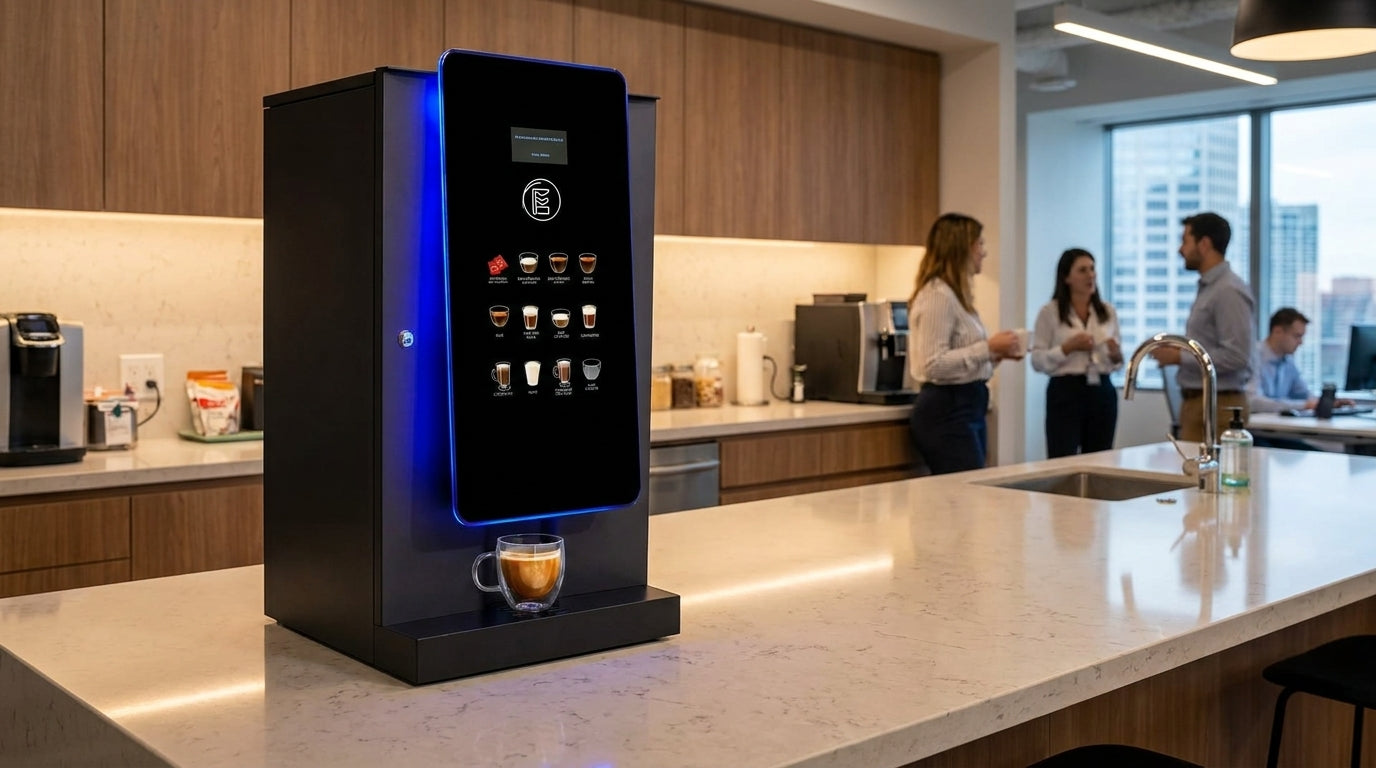
For offices requiring reliable bean-to-cup technology with simplified cleaning routines, the Premium Countertop Touch Screen Coffee Machine offers automated self-rinsing programs tailored for small-to-medium workplaces.
Commercial batch brewers rely on gravity-fed water delivery over large brew baskets into thermal carafes or vacuum servers.
Discard Filter & Coffee Bed: Immediately drop used paper filters and grounds into waste bins after brewing completes.
Scrub Sprayhead & Basket: Unscrew the multi-hole sprayhead disk from the upper housing, scrub mineral crust off jet ports using a stiff nylon brush, and wash the stainless steel filter basket.
Degrease Thermal Carafes: Fill carafes with hot water ($190^\circ\text{F}$), add 1 tablespoon of espresso equipment cleaning powder, let sit for 15 minutes, scrub internal glass/steel walls with a carafe brush, and rinse thoroughly.
Wipe Hotplates & Casing: Clean external housing with a warm cloth to eliminate dried coffee splashes.
High-throughput espresso machines and commercial vending dispensers feature pressurized group heads and high-pressure solenoid valves that demand precise chemical backflushing.
Insert Blind Basket: Replace the standard perforated basket in one portafilter with a solid stainless steel blind rubber/metal disk.
Add Cleaner: Place 3 grams of commercial backflush powder into the blind basket and insert the portafilter into the group head.
Execute Backflush Pulses: Engage the pump for 10 seconds, pause for 10 seconds to allow the detergent to foam up into the group head, and repeat 5 times.
Scrub Group Gaskets: Remove the portafilter, run the group head pump, and scrub internal brass threads and rubber gaskets using an angled group elbow brush.
Flush with Clean Water: Repeat the pulse process with an empty blind basket 5 times to rinse away all chemical detergent residue.
Understanding underlying operational mechanics ensures correct assembly during maintenance; learn more about internal hydraulics in how do coffee vending machines work.

Proper machine placement within breakrooms simplifies access to dedicated water lines and drainage systems. Learn ideal structural configurations in best location to place office coffee machine and review buying criteria in guide to purchase office coffee machine.
Descaling dissolves calcium carbonate and magnesium mineral scale accumulated inside boilers, heating elements, and internal hydraulic tubing. Water hardness exceeding 4 grains per gallon (70 ppm CaCO_3) requires active water softening and regular descaling routines.
Mix Solution: Dissolve 50 grams of food-grade citric acid powder per 1 liter of lukewarm water (or dilute commercial liquid descaler according to manufacturer instructions).
Fill Water Reservoir: Pour the descaling solution directly into the machine's water tank or siphon reservoir.
Run Solution Through System: Dispense 200ml of solution through the main brew group and 200ml through the hot water/steam spout. Turn off the machine power and let the acidic solution soak inside internal boilers for 20 minutes.
Flush Remaining Fluid: Turn on the machine and cycle the remaining descaling liquid through all spouts until the tank empties.
Perform Neutralizing Rinse: Refill the tank with pure, filtered water and flush at least 2 full water reservoirs through all channels to purge all residual acid.
Correctly installing water filtration during setup reduces descaling frequency; refer to the guide on coffee vending machine installation guide. Machine dimensions and boiler accessibility also dictate maintenance ease; check office coffee machine dimensions before positioning units in tight breakroom spaces.
Milk system cleaning eliminates Listeria monocytogenes, Escherichia coli, and Salmonella bacteria harbored inside automated steam circuits and frothing wands. Milk contains lipids and proteins that congeal at temperatures above $140^\circ\text{F}$, creating dense deposits inside narrow tubes.
Automated milk systems draw milk through intake lines into an internal venturi chamber where steam mixes with air and milk. If not flushed, residual milk sours inside internal valves within 2 hours at room temperature.
Immediate Purge: Open steam valves for 2 seconds after each use to clear internal milk droplets from the tip orifice.
Daily Acidic Milk Flush: Run a dedicated acidic milk line cleaner through automated tubes daily to strip congealed calcium-protein complexes.
Weekly Disassembly: Take apart air intake regulators, silicone suction tubes, and frothing nozzles. Soak all components in warm sanitizer solution for 30 minutes, scrub internal orifices with micro-pipe brushes, and reassemble.
High-capacity office environments require commercial coffee equipment engineered with automated cleaning software, quick-detachable brew groups, and high-volume waste management. Investing in industrial-grade hardware drastically cuts down manual labor costs and maintenance overhead.
| Worksite Scale | Daily Cup Volume | Recommended Machine Model | Key Maintenance Features | Direct Product Link |
| Small Office (1–15 Employees) | 10–30 Cups | Premium Countertop Touch Screen | Auto-rinse, removable drip tray, touch interface | View Product |
| Medium Office (15–50 Employees) | 30–100 Cups | Pro Coffee Vending Machine | High-capacity grounds bin, commercial grinder, auto milk rinse | View Product |
| Large Corporate / Industrial (50+ Employees) | 100–300+ Cups | CorePro Coffee Vending Machine | Dual boilers, direct water line hookup, automated deep clean cycles | View Product |
Selecting the right commercial unit simplifies breakroom logistics. Browse full commercial lineups via the complete coffee vending machines collection.
High-volume operations requiring versatile beverage menus can explore hybrid systems such as the coffee vending machine system or combined units like the coffee snack vending machine.
Workplaces catering to modern beverage preferences can review cold options via the iced coffee vending machine or all-in-one hot beverage dispensers like the coffee and hot beverage vending machine.
To evaluate broad market options, read the comprehensive industry buyer's review on best office coffee machines alongside the detailed commercial breakdown in what is the best coffee machine for an office commercial buying guide. Establishing clear workplace rules using an official office coffee machine policy template keeps team members accountable for daily machine upkeep.
Selecting appropriate cleaning agents balances chemical efficacy against component preservation and labor expense.
Pros: Formulated specifically to remove coffee oils ($cafestol$); non-corrosive to food-grade metal; precise dosage controls.
Cons: Higher ongoing operational cost; requires thorough multi-stage rinsing to eliminate chemical flavor residues.
Pros: Highly cost-effective; readily accessible; non-toxic and environmentally safe.
Cons: Vinegar leaves lingering acetic acid smells that contaminate flavor profiles; less effective against heavy industrial scale than synthetic sulfamic formulations.
Pros: Drastically reduces manual staff labor; guarantees consistent execution of cleaning cycles; logs sanitization records digitally.
Cons: Requires higher initial machine acquisition costs; relies on specialized chemical cartridge consumables.
No, white vinegar contains acetic acid, which can corrode internal copper boilers, degrade rubber seals, and leave a lingering taste in future brews. Always use food-grade citric acid or commercial descaling solutions formulated for commercial coffee equipment.
An office coffee machine should be descaled every 1 to 3 months, depending on local water hardness and daily usage volume. Workplaces using hard water or unfiltered tap water require monthly descaling cycles to prevent heating element failure.
Failing to clean an office coffee machine leads to rancid coffee oil buildup, mineral scale blockages, bacterial growth, and eventual equipment failure. Unmaintained machines consume more electricity and produce bitter, sub-standard coffee.
Clean milk lines daily by flushing them with warm water and a specialized acidic milk line cleaner. Weekly, disassemble frothing nozzles, suction tubes, and air intake valves to soak them in sanitizing liquid and scrub with micro-brushes.
Cleaning removes organic coffee oils, tannins, spent grounds, and milk proteins from surface components and brew groups. Descaling dissolves inorganic mineral deposits like calcium carbonate and magnesium scale from internal boilers and water heating channels.
Use 3 to 5 grams of commercial espresso cleaning powder (or 1 designated backflush tablet) per group head cycle. Always insert the powder into a blind basket and execute short, pulsed pressure cycles to backflush solenoid valves.
Yes, commercial coffee cleaning chemicals are food-safe when used according to manufacturer instructions and rinsed thoroughly with clean water. Alkaline backflushing powders and citric descalers rinse away cleanly without leaving harmful toxic residues.
Coffee tastes bitter from a dirty machine because old coffee oils (cafestol and kahweol) remain stuck to shower screens and portafilters. Heat oxidizes these trapped lipids over time, leaching bitter, metallic off-flavors into freshly brewed espresso.
Sanitize a bean hopper by wiping interior plastic walls with a dry microfiber cloth or a cloth dampened with mild, food-safe dish soap. Ensure the hopper is completely dry before refilling it with coffee beans to prevent moisture from damaging grinding burrs.
A deep clean cycle on a commercial bean-to-cup machine typically takes 15 to 25 minutes. This includes automated chemical backflushing, milk circuit sanitization, and manual washing of removable drip trays and spent grounds bins.

Share:
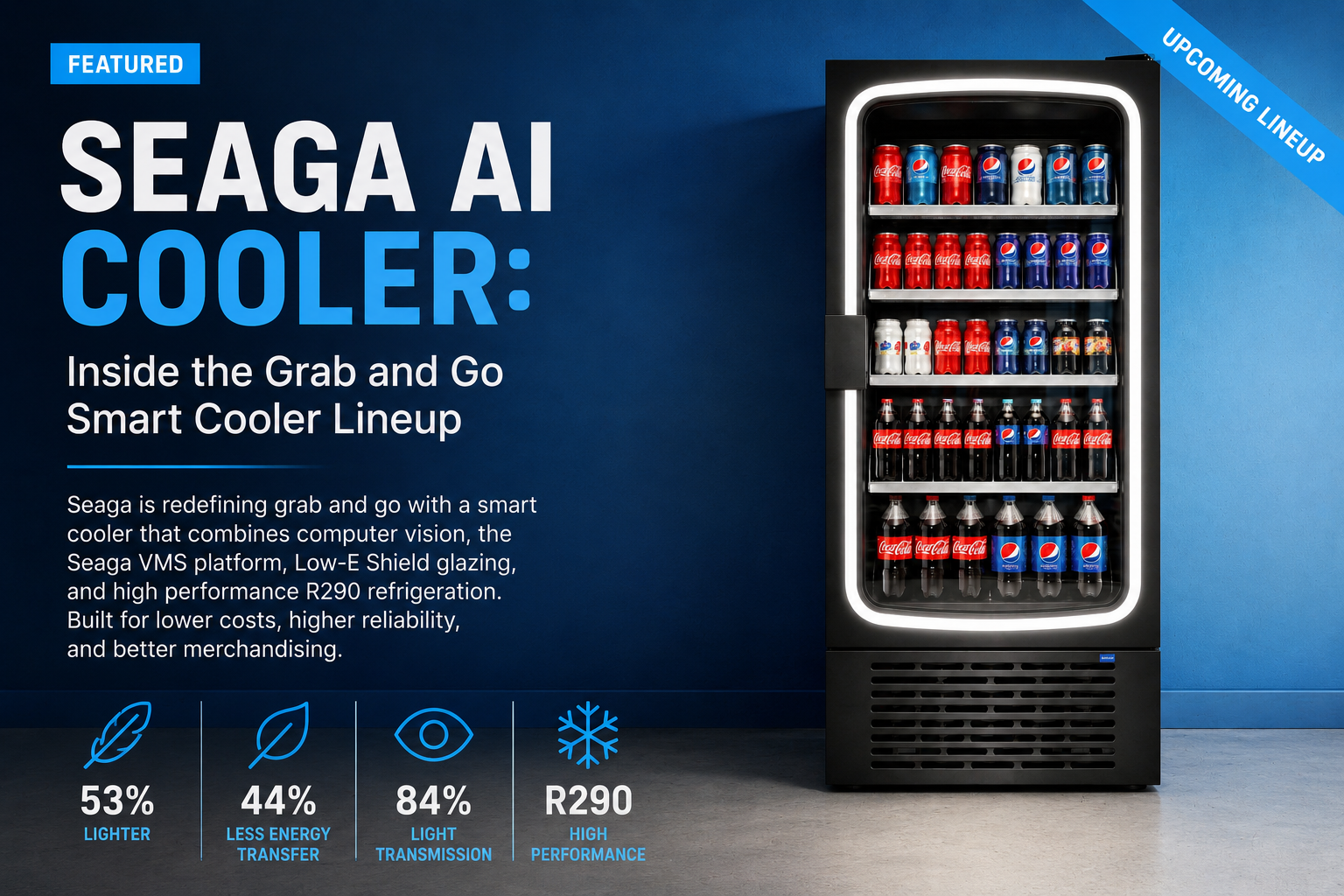
Seaga AI Cooler: Grab and Go Smart Cooler Lineup