




Design the perfect vending solution for your location and customers.

Join the VMFS newsletter and step into a thriving network dedicated to collective success.
One signup. Endless possibilities.
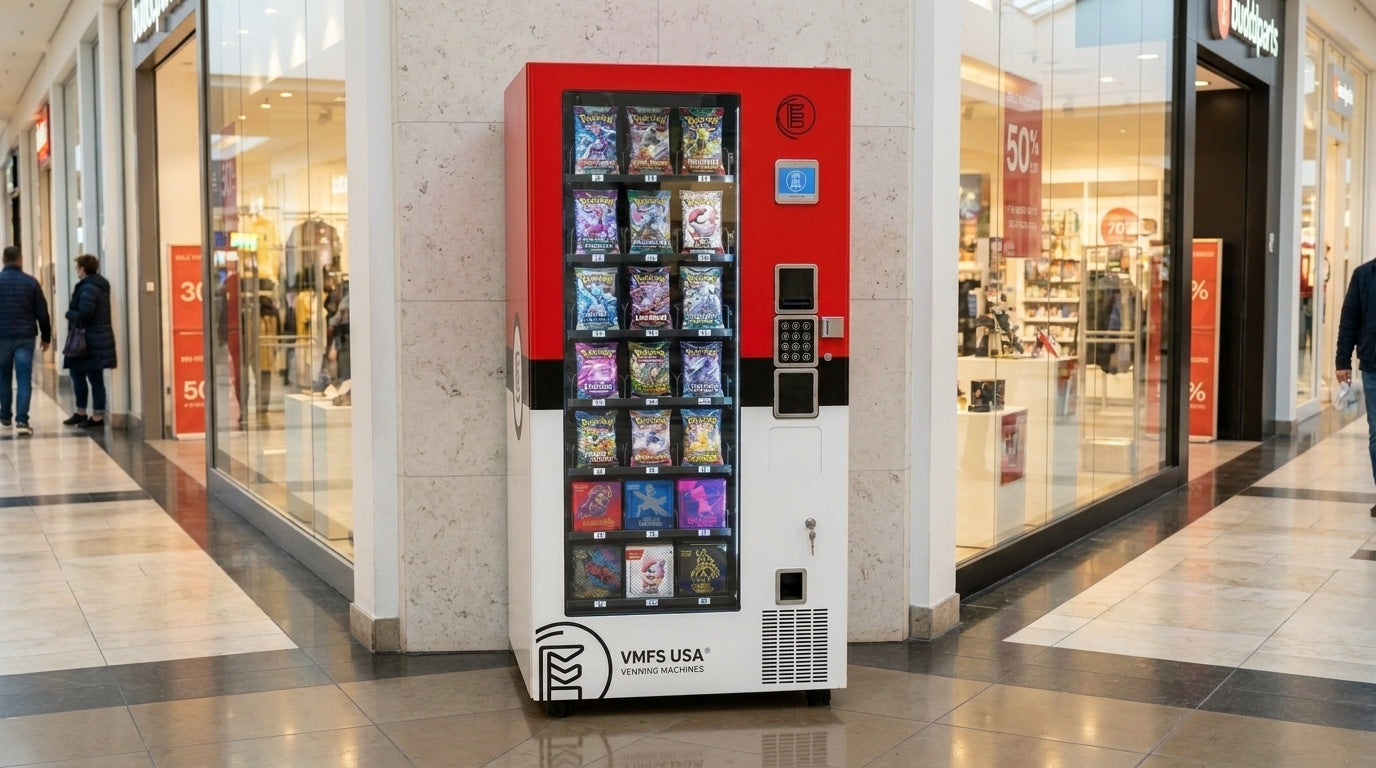
Official Pokémon Center Automated Retail Kiosks are installed exclusively in high-foot-traffic corporate grocery chains and regional transportation hubs. The Pokémon Company International (TPCi) deploys these touch-screen automated retail units to give collectors direct access to sealed booster packs, Elite Trainer Boxes (ETBs), and specialty boxes at exact Manufacturer Suggested Retail Price (MSRP).
Knowing what are Pokemon vending machines requires examining where TPCi chooses to position its hardware. TPCi focuses heavily on regional supermarket conglomerates that provide 18-to-24-hour interior security, climate control, and steady daily customer foot traffic.
| Retail Chain / Venue Type | Parent Corporation | Machine Availability | Common Placement Area |
| Kroger | Kroger Co. | High (Select States) | Front Vestibule / Customer Service |
| Fred Meyer | Kroger Co. | High (Pacific Northwest) | Main Entrance / Home Electronics |
| King Soopers | Kroger Co. | High (Colorado) | Foyer / Pharmacy Entrance |
| Safeway | Albertsons Companies | High (West Coast & Mid-Atlantic) | Front Foyer / Checkout Perimeter |
| Albertsons | Albertsons Companies | Medium (Southwest & West) | Customer Service Corridor |
| H-E-B | H-E-B Grocery Co. | Very High (Texas) | Main Store Entrance / Produce Foyer |
| Tom Thumb / Randalls | Albertsons Companies | High (Texas Metros) | Front Entry Vestibule |
| Sea-Tac Airport (SEA) | Port of Seattle | Active | Concourse Central Terminals |
| Target & Walmart | Independent Corporations | None (Not Hosted) | N/A |
The Kroger Company represents the largest retail partner hosting official Pokémon Center automated retail kiosks in North America. Kiosks are situated near store front entrances, customer service desks, or high-visibility produce corridors to maximize security and foot traffic.
To locate a specific machine within this retail group, collectors can find a Kroger Pokemon vending machine across its various regional operating banners. The active Kroger regional store banners include:
Kroger Supermarkets: Texas, Ohio, Georgia, Indiana, Kentucky, Michigan, Tennessee, and Virginia.
Fred Meyer: Oregon, Washington, Idaho, and Alaska.
King Soopers & City Market: Colorado and Wyoming.
Fry’s Food Stores: Arizona.
Ralphs & Food 4 Less: Southern California.
Smith’s Food and Drug: Utah, Nevada, Idaho, and New Mexico.
Harris Teeter: North Carolina, South Carolina, and Virginia.
Pick 'n Save & Metro Market: Wisconsin.

Albertsons Companies operates the second-largest corporate footprint for official Pokémon TCG kiosks. Machines are positioned inside climate-controlled foyers to protect sensitive cardboard packaging from environmental humidity and thermal damage.
Checking verified Pokemon vending machine locations reveals heavy kiosk concentration across these primary Albertsons regional banners:
Safeway: Washington, Oregon, Northern California, Maryland, Virginia, and Colorado.
Albertsons: Idaho, Texas, Arizona, and Southern California.
Vons & Pavilions: Southern California and Southern Nevada.
Jewel-Osco: Illinois and Indiana.
Shaw’s & Star Market: Massachusetts, Maine, and New Hampshire.
Tom Thumb & Randalls: Dallas-Fort Worth, Houston, and Austin metropolitan areas.
H-E-B Grocery Company maintains one of the dense state-level installations of Pokémon Center vending machines, operating hundreds of active units throughout Texas. Kiosks are placed inside main entrance foyers adjacent to floral departments or customer service centers.
Midwestern and East Coast expansion has added select Meijer locations in Michigan and Ohio, along with Harris Teeter stores across North and South Carolina. These regional expansions allow TPCi to capture high-density suburban demographic markets without opening standalone brick-and-mortar storefronts.
Official Pokémon vending machines operate inside select high-traffic international airport terminals to serve traveling collectors and impulse buyers. These kiosks feature touchscreens optimized for rapid contactless payments and instant dispensing.
Verified airport installations include post-security concourses at Seattle-Tacoma International Airport (SEA) and Harry Reid International Airport in Las Vegas (LAS). Airport locations carry higher operational lease fees, which can occasionally result in localized price adjustments compared to standard grocery store MSRPs.
TPCi operates a select number of standalone automated retail kiosks inside premier regional shopping malls. These units are located near central concourses, food courts, or anchor department store walkways to capitalize on pedestrian foot traffic.
Westfield Southcenter: Tukwila, Washington.
Tacoma Mall: Tacoma, Washington.
South Hill Mall: Puyallup, Washington.
International Locations: Select transit centers and shopping hubs in Tokyo (Japan), Madrid (Spain), and Seoul (South Korea).
Target, Walmart, and GameStop do not host official Pokémon Center vending machines because they maintain legacy vendor distribution contracts with third-party trading card distributors. Companies like MJ Holding Company and Excellence Marketing handle aisle stocking, shelf management, and inventory fulfillment for these big-box retailers.
Because big-box stores lease floor space directly to distributor partners who manually stock front-end trading card displays, introducing TPCi-owned automated kiosks would create direct channel conflict with existing retail suppliers.

Grocery stores prefer automated retail hardware over open shelving because trading cards represent high-value, high-shrinkage inventory prone to shoplifting and theft. Enclosing booster packs and ETBs inside reinforced steel cabinet kiosks eliminates retail shrinkage entirely.
Big-box retailers address theft by keeping high-demand trading card products behind customer service counters or using locking plastic security cases on open shelves. Automated vending machines solve this security challenge natively without requiring store staff intervention.
Official Pokémon Center kiosks are built, owned, and serviced directly by The Pokémon Company International. Independent automated card machines are operated by private vending entrepreneurs who purchase commercial hardware from a Vending Machine Company in USA to deploy in local businesses.

Understanding the operational differences between official TPCi kiosks and private TCG hardware helps collectors and operators identify machine capabilities and inventory types.
| Feature Category | Official TPCi Kiosk | Independent TCG Vending Machine |
| Operator Model | Corporate (The Pokémon Company Intl) | Private Vending Business Operator |
| Primary Retail Venues | Supermarket Chains, Airports, Malls | Arcades, Card Shops, Malls, Bowling Alleys |
| Product Lineup | Sealed Booster Packs, ETBs, Tins | Single Cards, Graded Slabs, Mystery Packs |
| Graphics & Wrapping | Official Trademarked Pokémon Artworks | Generic Custom TCG Brand Wraps |
| Pricing Policy | Strict MSRP ($4.49 - $49.99) | Market-Adjusted Secondary Pricing |
| Hardware Source | Proprietary Internal Distribution | Purchasable Commercial Kiosk Equipment |
For entrepreneurs looking to launch a private route, buying a dedicated Pokemon Card Vending Machine provides the necessary conveyer and coil infrastructure to dispense raw or slabbed cards reliably.
Official TPCi machines strictly enforce manufacturer retail pricing, selling single booster packs for $4.49 to $6.99 and Elite Trainer Boxes for $49.99. This provides collectors with protection against secondary market markups during major set releases.
Independent machine owners purchase inventory on secondary markets or through wholesale distributors, adjusting retail prices based on current market demand, card rarity, and condition grades. Private machines often stock high-value single cards encased in protective top-loaders or acrylic slabs.
Texas contains the largest population of official Pokémon vending machines in North America, driven by extensive placement across H-E-B, Kroger, Tom Thumb, and Randalls stores. Washington State ranks second in density due to proximity to TPCi’s North American headquarters in Bellevue, Washington.
California maintains high kiosk density across Ralphs, Vons, and Safeway locations in major metropolitan regions including Los Angeles, San Diego, San Jose, and Sacramento.
TPCi has expanded kiosk placements across the Midwest and Eastern Seaboard by partnering with regional supermarket banners. Recent state additions include Wisconsin (via Pick 'n Save and Metro Market), North Carolina, and South Carolina (via Harris Teeter).
Analyzing regional market growth requires understanding how do Pokemon vending machines work, as cellular telemetry modules allow corporate managers in Washington State to monitor inventory levels and sales velocity nationwide in real time.
The most accurate method for finding an official machine is visiting the official Pokémon Automated Retail Locator portal at The Pokémon Company International Support FAQ. Entering a postal ZIP code displays active interactive map pins for confirmed TPCi units.
To locate non-corporate or community-verified units, collectors can review guides on how to find Pokemon vending machines near you across local business directories.
Local collector communities maintain dedicated Discord servers, Reddit threads, and community apps to track stocking cycles. Members share real-time updates when field merchandisers arrive to refill machines.
Because machines sell out quickly during new set releases, understanding Pokemon vending machine restock patterns is essential. Tracking specific Pokemon vending machine drop times or utilizing a digital Pokemon vending machine restock tracker helps collectors arrive before inventory is cleared.
First-time buyers should review a guide on how to use a Pokemon vending machine to navigate screen limits and cashless payment steps efficiently.
Private vending operators looking to place custom TCG equipment inside independent retail venues must establish formal legal location contracts. Property owners typically receive a monthly flat commission or a 10% to 15% net revenue split in exchange for floor space and power access.
Retail property owners interested in hosting equipment can list your retail space for vending placement to match with qualified local operators. Operators should review the best places for Pokemon vending machine placement and complete a checklist before placing a Pokemon vending machine to assess electrical outlets, Wi-Fi telemetry signals, and camera coverage.
Executing a standardized vending machine placement agreement protects both parties by detailing liability coverage, maintenance obligations, and revenue payout terms. Once installed, implementing local strategies on how to market a Pokemon vending machine helps drive regional foot traffic.
Operating an independent vending route requires formal business entity registration to secure operating licenses and insulate personal assets. Entrepreneurs must establish appropriate legal structures to manage sales tax collection and vendor supply contracts.
To set up a vending company properly, operators can form an LLC for a vending machine business to ensure corporate liability protection. Reviewing an industry Pokemon card vending machine operator guide and learning how to start and operate a Pokemon vending machine provides a foundational operational roadmap.
Before purchasing hardware, operators should evaluate a Pokemon vending machine price guide to understand equipment expenses. When evaluating equipment acquisition options, research how to buy a Pokemon vending machine or identify where can I buy a Pokemon vending machine from reputable hardware manufacturers.
To verify long-term business viability, analyze whether is the Pokemon vending machine business profitable under current wholesale inventory costs.
Selecting commercial hardware requires understanding internal Pokemon vending machine components to ensure dispensing reliability. Operators should enforce a strict Pokemon vending machine maintenance schedule and perform routine Pokemon vending machine maintenance to prevent mechanical jams.
When custom wrapping independent equipment, operators must verify can you use the Pokemon logo on a TCG vending machine to avoid trademark infringement. Additionally, review whether can you legally sell Pokemon in a vending machine under the First Sale Doctrine.
All commercial vending hardware deployed in North America must comply with national electrical standards, such as UL 751 Standard for Safety for Vending Machines.
Automated TCG vending machines provide high revenue density per square foot while operating unattended.
High Floor Area Efficiency: Units occupy 8 to 12 square feet of floor space while producing recurring passive income.
Shrinkage Elimination: Enclosing high-value card packs inside steel cabinets prevents theft.
Low Labor Overhead: Automated touchscreens handle payment processing and product dispensing without store staff intervention.
Increased Store Foot Traffic: Machine listings bring dedicated collectors and buyers directly into host retail stores.
Understanding equipment and inventory constraints helps operators manage risks effectively.
Inventory Supply Limits: Securing wholesale booster stock during high-demand set releases requires distributor relationships.
Capital Hardware Expense: Commercial automated retail equipment requires upfront capital investment.
Technical Maintenance: Touchscreens, bill acceptors, and belt actuators require periodic cleaning and firmware updates.
Official Pokémon Center vending machines are located primarily inside grocery store chains owned by Kroger (Kroger, Fred Meyer, King Soopers, Fry’s, Ralphs, Smith’s) and Albertsons (Safeway, Albertsons, Vons, Jewel-Osco, Tom Thumb), as well as H-E-B stores in Texas.
No, official Pokémon Center vending machines are not located inside Target, Walmart, or GameStop stores. These big-box retailers distribute trading cards through third-party distributor contracts using traditional store shelves.
You can search for nearby official machines using the interactive locator tool on the official Pokémon Center Support portal or by referencing community-maintained tracking maps.
Official kiosks sell current Pokémon TCG booster packs, booster bundles, mini tins, collection boxes, and Elite Trainer Boxes at standard MSRP.
Restocks occur during weekday morning hours, though exact drop times vary based on distributor routing and local inventory demand.
No, The Pokémon Company International owns and operates all official Pokémon Center kiosks directly and does not sell its proprietary hardware to the public. Private operators must purchase commercial custom TCG machines.
Official and commercial TCG vending machines accept major credit cards, debit cards, Apple Pay, Google Pay, and contactless NFC payments.
Supermarket foyers offer 18-to-24-hour interior security camera coverage, climate control, stable electrical power, and steady daily customer foot traffic.
For official TPCi machines, call the toll-free customer support line displayed directly on the kiosk glass, as store employees cannot open or service the hardware.
No, store employees do not manage or restock official TPCi vending machines and do not have access to restock schedules or inventory delivery times.
Share:
Pokemon Vending Machine Restock Tracker: How to Track Online
Seaga AI Cooler: Grab and Go Smart Cooler Lineup