




Diseñe la solución de vending perfecta para su ubicación y clientes.

Únete al boletín de VMFS y forma parte de una red próspera dedicada al éxito colectivo.
Un registro. Posibilidades infinitas.
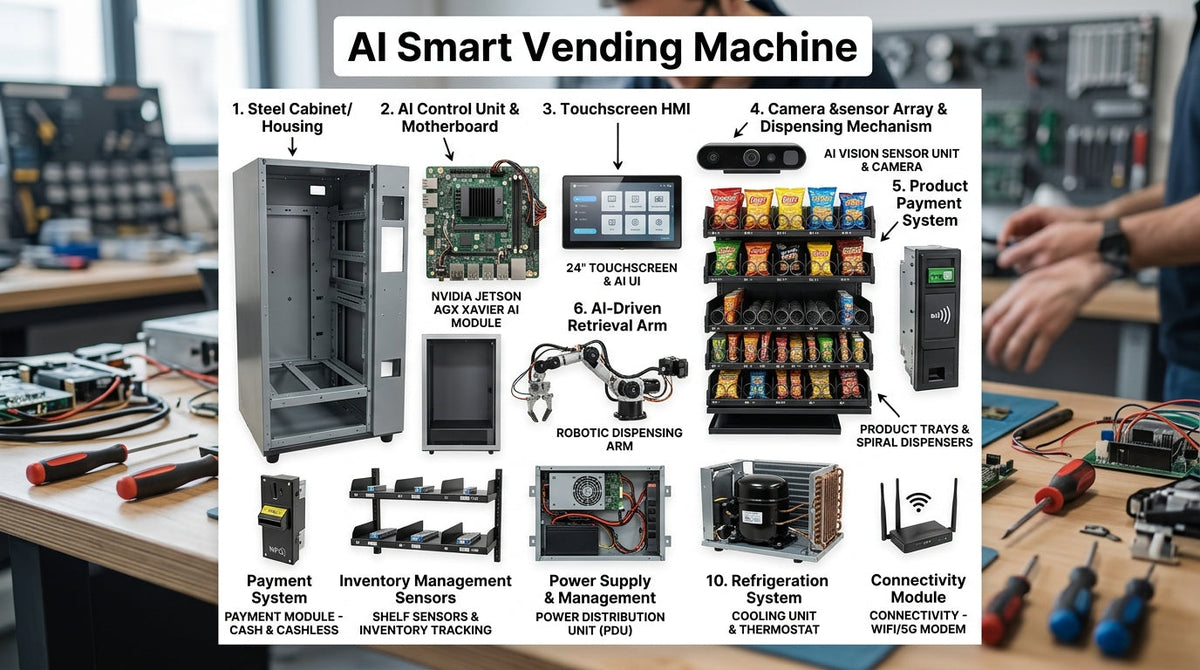
Una máquina expendedora con IA se compone de seis sistemas principales que trabajan en conjunto: la matriz de visión o de sensores de peso, el tablero de control y la computadora integrada, la terminal de pago, la unidad de refrigeración o climatización, el mecanismo de bloqueo y acceso, y el módulo de conectividad que sincroniza los datos con la nube. Cada sistema realiza una función distinta y un fallo en cualquiera de ellos —una cámara mal calibrada, un compresor que falla, una señal celular que se pierde— degrada la propuesta de valor principal de la máquina: el comercio minorista desatendido y de autorreporte. Entender qué hace cada parte y dónde suele fallar primero es fundamental para cualquiera que adquiera, mantenga o repare una máquina en el campo.
Este desglose cubre todas las categorías principales de componentes, cómo difiere el hardware específico de IA de las piezas de las máquinas expendedoras tradicionales y qué componentes conllevan el mayor riesgo de fallo durante la vida operativa de la máquina.
Tabla de contenidos
El desglose de piezas de cualquier máquina expendedora con IA comienza con las mismas seis categorías funcionales, independientemente del fabricante o el formato de la máquina. La siguiente tabla mapea cada sistema con sus componentes principales y la función que desempeña, proporcionando una referencia rápida antes del desglose detallado que sigue.
| Sistema | Componentes principales | Función principal |
|---|---|---|
| Visión / sensores | Cámaras, sensores de peso, lectores RFID | Identificar los productos retirados del estante |
| Tablero de control | Placa base, computadora integrada, pantalla táctil | Ejecutar modelos de reconocimiento, gestionar transacciones |
| Pago | Lector de tarjetas, módulo NFC, escáner QR | Procesar pagos sin efectivo |
| Refrigeración | Compresor, evaporador, termostato | Mantener la temperatura adecuada para productos perecederos |
| Acceso / bloqueo | Cerradura electromagnética, sensor de puerta, actuador | Controlar el acceso tras la confirmación del pago |
| Conectividad | Módulo Wi-Fi/celular, cliente de sincronización en la nube | Sincronizar datos de ventas e inventario en tiempo real |
Las cámaras de visión artificial identifican los productos comparando lo que el cliente retira con un modelo de imagen entrenado creado a partir del catálogo de productos de esa máquina específica. Estas cámaras se ubican en la parte superior, montadas en los estantes o en ambas posiciones, dependiendo de la arquitectura de detección del fabricante. Las matrices de cámaras de múltiples ángulos reducen las falsas lecturas causadas por la oclusión —cuando un producto bloquea la visión de la cámara sobre otro durante su retiro—, razón por la cual las máquinas de IA de gama alta utilizan tres o más posiciones de cámara en lugar de una sola unidad superior.
Los estantes con sensores de peso miden el cambio exacto de masa cuando un artículo se retira y comparan esa diferencia con una tabla de pesos conocidos para cada SKU almacenado en esa ubicación, lo que funciona como una alternativa de menor costo a la visión artificial completa que aún admite el acceso a estantes abiertos. Los sensores de peso tienen dificultades con productos de peso casi idéntico almacenados en la misma zona, razón por la cual muchos sistemas combinados utilizan sensores de peso junto con visión como una capa de verificación en lugar de depender únicamente de un tipo de sensor.
Las etiquetas RFID adheridas a productos o empaques individuales permiten que una antena lectora confirme el retiro sin depender del reconocimiento visual, lo que ofrece una gran precisión pero añade un costo de etiquetado por unidad que aumenta con el volumen de inventario. Este enfoque se adapta mucho mejor a categorías de mayor valor y menor rotación, como la electrónica, que a las SKU de snacks y bebidas de alta frecuencia; una distinción explorada en Electronics Vending Machines Driving AI Smart Cities & Sustainability. Los mecanismos completos de cómo estos sistemas de detección trabajan juntos se cubren en How AI Vending Machines Work y What Is an AI Vending Machine.
El tablero de control ejecuta los modelos de reconocimiento de la máquina, gestiona el estado de la transacción y coordina todos los periféricos —cámara, cerradura, terminal de pago— a través de una única unidad de procesamiento, ya sea un sistema embebido en chip (SoC) o una pequeña PC industrial, dependiendo del nivel de la máquina. Las máquinas de gama alta procesan el reconocimiento visual en el propio dispositivo para reducir la latencia en el proceso de pago, mientras que las unidades económicas delegan el cálculo más pesado a la nube y aceptan un paso de confirmación ligeramente más lento a cambio de un costo de hardware interno menor. La interfaz de pantalla táctil, cuando está presente, se conecta directamente a esta placa y gestiona la selección manual de productos como respaldo cuando la confirmación por visión es ambigua.
La terminal de pago gestiona las transacciones con tarjeta presente a través de un lector de chip y sin contacto, típicamente emparejado con un módulo NFC para billeteras móviles y un escáner QR para flujos de pago basados en aplicaciones, comunes en formatos de estantes abiertos. Debido a que las máquinas expendedoras con IA procesan transacciones desatendidas de alta frecuencia y bajo valor, las redes de tarjetas a menudo las clasifican de manera diferente a las terminales minoristas estándar, lo que cambia la tasa de procesamiento que paga un operador por transacción; los detalles se tratan en How Card Processing Works and Why AI Machines Have Different Rates. La terminal de pago también se comunica directamente con el tablero de control para activar la liberación del mecanismo de bloqueo una vez que se completa la transacción.
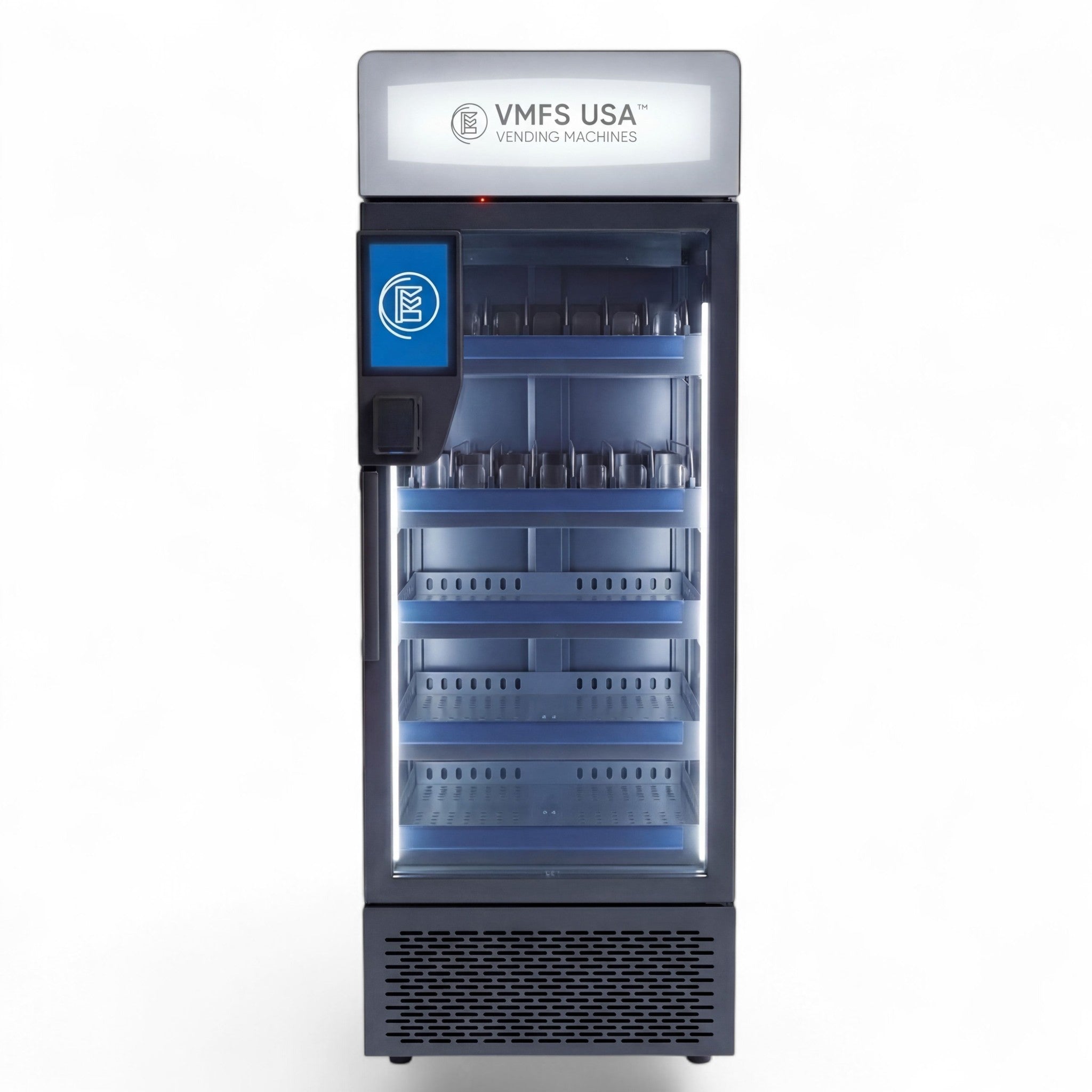
Las máquinas expendedoras con IA refrigeradas utilizan un circuito de enfriamiento impulsado por compresor, idéntico en principio al de un refrigerador comercial, emparejado con un termostato que informa los datos de temperatura al tablero de control en la nube, para que los operadores puedan detectar una falla en el enfriamiento antes de que el inventario estropeado llegue al cliente. La bobina del evaporador y el ventilador distribuyen el aire frío uniformemente por los estantes; el enfriamiento desigual —a menudo causado por el flujo de aire bloqueado debido al exceso de inventario— es uno de los problemas de campo más comunes reportados en refrigeradores inteligentes y unidades combinadas. Las máquinas construidas alrededor de este sistema incluyen la AI Smart Cooler Vending Machine, la Smart Fridge Vending Machine y la AI Smart Cooler Combo Vending Machine, que combina una zona refrigerada con estantes de temperatura ambiente en un solo espacio.
Las máquinas de IA de estantes abiertos utilizan una cerradura electromagnética en la puerta principal que se libera solo después de la confirmación del pago, combinada con un sensor de puerta que reporta los eventos de apertura y cierre al sistema de visión para que este sepa exactamente cuándo comenzar a monitorear el retiro de productos. Esto difiere fundamentalmente de una máquina de bobina tradicional, donde el mecanismo de bloqueo es en realidad solo el gabinete sellado y la liberación del producto ocurre mediante un dispensador de espiral motorizado, en lugar del acceso abierto al cliente. La señal de temporización del sensor de la puerta es lo que activa la cámara o el sistema de peso para iniciar y detener su ventana de detección, convirtiéndolo en una pieza pequeña pero funcionalmente crítica de la secuencia de pago.
Toda máquina expendedora con IA incluye una radio Wi-Fi, un módulo de datos celulares, o ambos, porque el valor principal de la máquina —la visibilidad del inventario en tiempo real y el monitoreo remoto— depende completamente de una conexión persistente al tablero de control en la nube del operador. Los módulos celulares cuestan más de operar, pero eliminan la dependencia de la fiabilidad del Wi-Fi del edificio, lo cual es importante en ubicaciones donde la TI de las instalaciones restringe el acceso a la red de invitados o donde la intensidad de la señal es inconsistente. Cuando la conectividad falla, la mayoría de las máquinas ponen en cola los datos de transacciones localmente y se sincronizan una vez que se restablece la conexión, aunque las interrupciones prolongadas retrasan las alertas de reabastecimiento que hacen posible la ventaja operativa de la IA en primer lugar — vea How AI-Powered Vending Machines Optimize Sales para conocer cómo funciona ese ciclo de datos día a día.
La forma más clara de ver lo que la IA añade a una máquina expendedora es comparar su lista de piezas directamente con la de una unidad tradicional de bobinas, ya que la diferencia no es cosmética, es un enfoque fundamentalmente diferente para identificar y liberar productos. Una comparación operativa completa más allá del hardware está disponible en Traditional vs. AI Vending Machines y Is the Upgrade Worth It.
| Componente | Máquina tradicional | Máquina con IA |
|---|---|---|
| Liberación de producto | Bobina motorizada o mecanismo de caída | Estante abierto con confirmación de visión/peso |
| Seguimiento de inventario | Conteo de dispensación por ranura | Reconocimiento en tiempo real a nivel de artículo |
| Prevención de pérdidas | Solo mecanismo físico | Monitoreo activo y verificación posterior |
| Hardware de computación | Microcontrolador básico | SoC o PC integrada ejecutando modelos |
| Alertas de reabastecimiento | Basadas en umbrales, si es que existen | Predictivas, basadas en la velocidad de ventas |
Ventajas
Permite el acceso a estantes abiertos sin necesidad de un dispensador mecánico.
El seguimiento a nivel de artículo permite un reabastecimiento predictivo, no reactivo.
Los diagnósticos remotos detectan problemas de hardware antes de que causen inactividad.
Desventajas
Más componentes significan más puntos potenciales de fallo.
La calibración de cámaras y sensores requiere atención periódica de mantenimiento.
El hardware de conectividad añade un costo operativo continuo más allá de la máquina en sí.
Las cámaras pueden perder precisión en el reconocimiento con el tiempo a medida que cambian las condiciones de iluminación, se acumula polvo en las lentes o cambian las disposiciones de los estantes sin una actualización del modelo correspondiente, lo que provoca lecturas falsas que frustran a los clientes y generan tickets de soporte. Programar una revisión trimestral de calibración detecta esta desviación antes de que afecte a una parte significativa de las transacciones.
El compresor es el componente individual de mayor costo en una unidad refrigerada y el que tiene más probabilidades de requerir servicio profesional en lugar de una reparación interna; por lo tanto, monitorear los registros de temperatura del panel de control en la nube para detectar una deriva gradual hacia el aumento —en lugar de esperar a que ocurra una falla crítica— protege tanto el inventario como la vida útil restante del compresor.
Una máquina que depende de la red Wi-Fi de un edificio es tan fiable como el tiempo de actividad de dicha red, y las desconexiones repetidas retrasan las alertas de reabastecimiento y los datos de ventas que justifican, en primer lugar, la prima de la IA. Los operadores que colocan máquinas en ubicaciones con una fiabilidad de red incierta optan cada vez más por una unidad con conexión celular precisamente para eliminar esta dependencia, un factor que vale la pena considerar junto con la calidad general del sitio cubierta en Datos de ubicación de máquinas expendedoras con IA y Estudio de caso: Encontrar el lugar ideal. La calidad de los componentes también influye directamente en el costo total de propiedad, tratado en Máquinas expendedoras con IA: Costo y Retorno de inversión: Pre-fabricadas vs. Construcción personalizada.
Entender el panorama completo de las piezas también ayuda a los operadores a evaluar el caso de negocio más amplio antes de realizar la compra; la fiabilidad de la máquina afecta directamente el cronograma de retorno y la economía de las rutas cubiertos en ROI de las máquinas expendedoras con IA y Cuántas máquinas expendedoras con IA necesitas para gestionar un negocio a tiempo completo. Para obtener un marco de compra completo que sopesa los componentes frente al precio, consulta la Guía completa del comprador 2026, y para aclarar la terminología sobre qué califica como hardware de "IA" frente a la conectividad básica, consulta Máquina expendedora inteligente vs. Máquina expendedora con IA. El contexto más amplio de la categoría, incluida la forma en que ha crecido la conciencia pública sobre el comercio minorista gestionado por IA, se cubre en El experimento de la máquina expendedora con IA: Cómo está cambiando el comercio minorista inteligente y Tamaño del mercado de máquinas expendedoras con IA.
Explora máquinas construidas con estos componentes
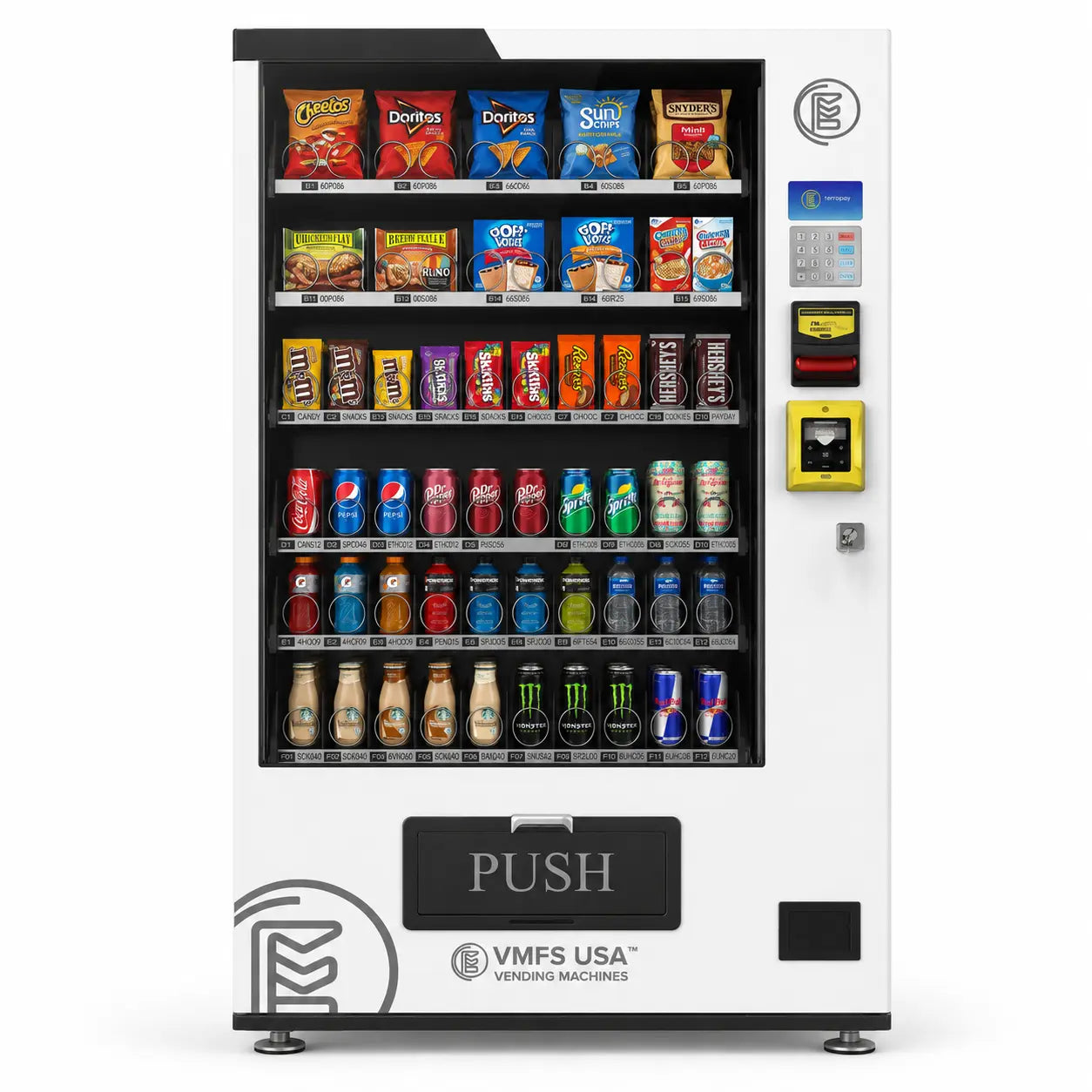
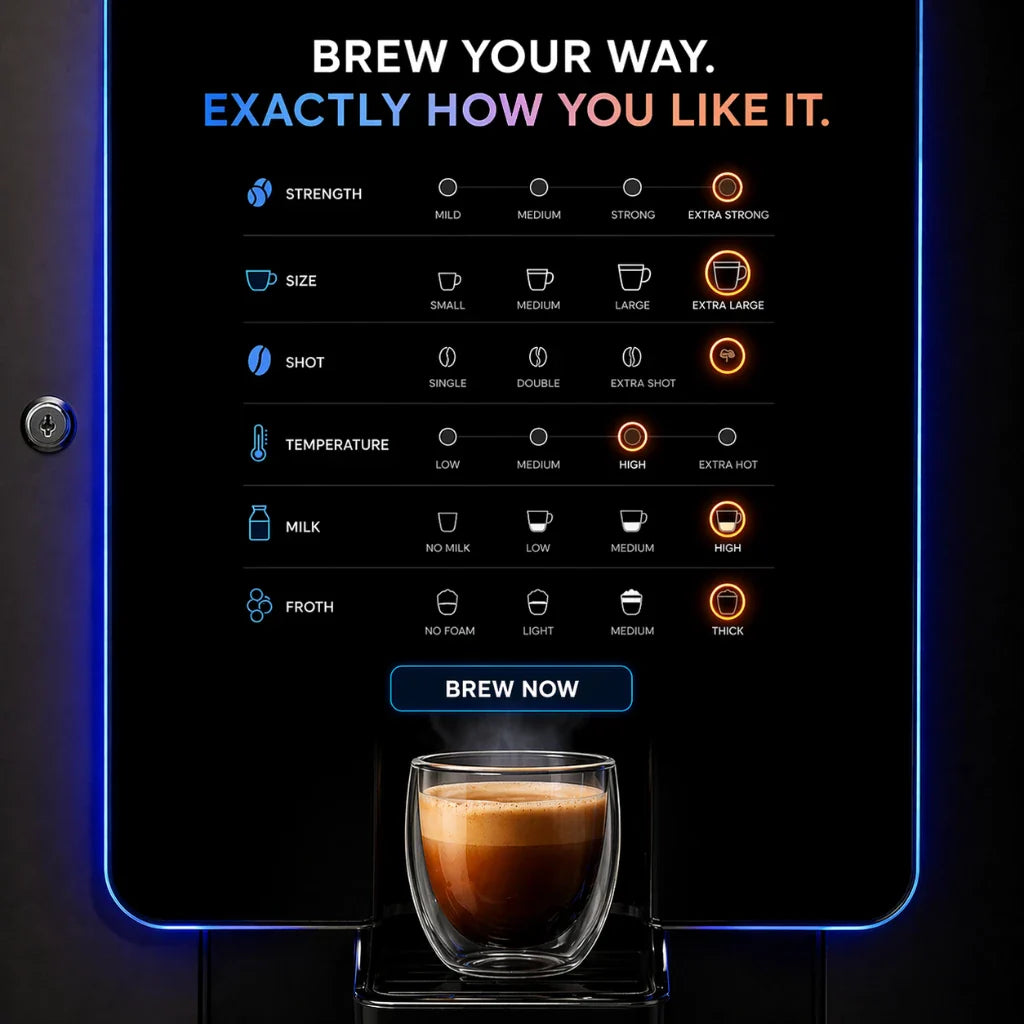
Mira cómo el hardware de visión, refrigeración y conectividad se combinan en una máquina expendedora con IA completa.
Explora máquinas expendedoras con IA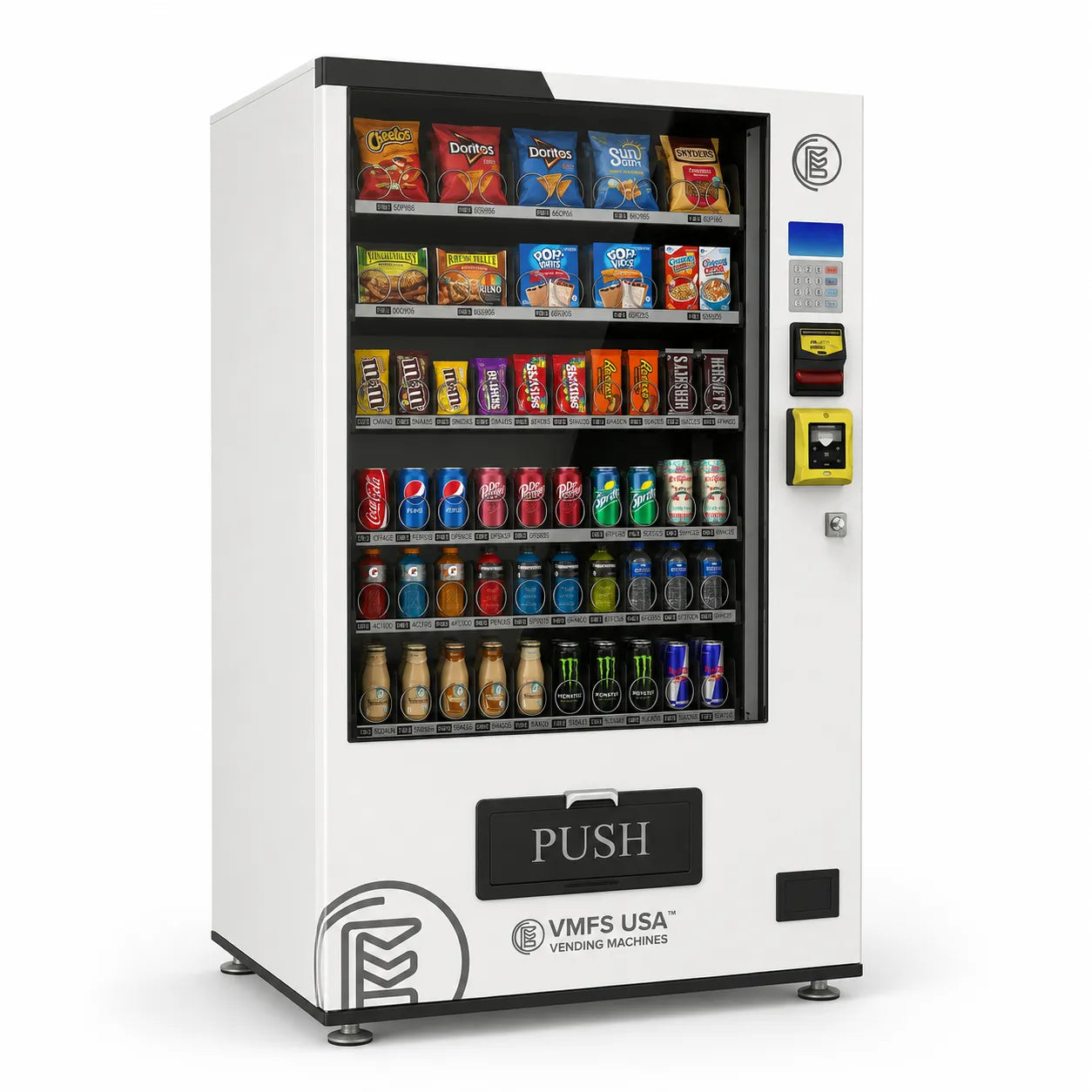

Compartir:
Tamaño del mercado de máquinas expendedoras con IA: datos y previsión de crecimiento para 2026
Software para máquinas expendedoras con IA: cómo funciona y qué buscar