




Diseñe la solución de vending perfecta para su ubicación y clientes.

Únete al boletín de VMFS y forma parte de una red próspera dedicada al éxito colectivo.
Un registro. Posibilidades infinitas.
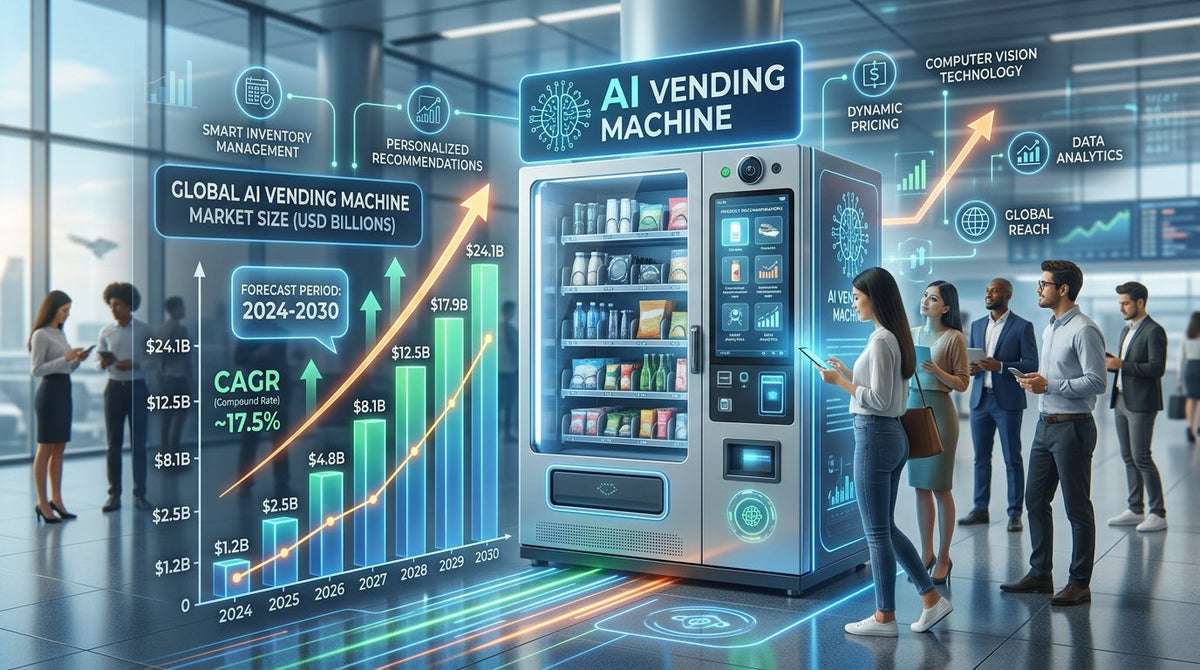
El mercado global de máquinas expendedoras inteligentes está valorado en aproximadamente 17.700 millones de dólares en 2026 y se prevé que alcance los 53.200 millones de dólares para 2036, creciendo a una tasa de crecimiento anual compuesta del 11,6%. Ese crecimiento está impulsado por las mismas fuerzas que están remodelando el comercio minorista sin atención en general: la conectividad IoT, el reconocimiento de productos basado en visión artificial y una infraestructura de pago sin efectivo que ha madurado hasta el punto en que las máquinas expendedoras con IA ahora compiten directamente con los formatos de micro-venta minorista con personal en términos de costo y conveniencia. Las bebidas tienen la mayor cuota de categoría de producto, con aproximadamente un 32%, y los aeropuertos y centros de tránsito lideran por aplicación, lo que refleja dónde convergen con mayor fuerza el tiempo de estancia y el comportamiento de compra impulsiva.
Las firmas de investigación de mercado varían en cuanto a cómo definen exactamente la venta "inteligente" o con "IA", razón por la cual las estimaciones en los informes varían desde unos pocos miles de millones de un solo dígito hasta más de 30.000 millones para 2026, dependiendo de si se incluyen las máquinas básicas conectadas a IoT junto con las unidades de visión con IA real. Esta guía utiliza la categoría más amplia de máquinas expendedoras inteligentes, la base de referencia más citada, y desglosa qué está impulsando realmente el crecimiento, qué regiones y segmentos se están expandiendo más rápido y qué significan los datos para cualquiera que evalúe entrar en este espacio.
Tabla de contenidos
La tasa de crecimiento anual compuesta (CAGR) del 11,6% del mercado de máquinas expendedoras inteligentes supera el crecimiento minorista general por un margen amplio, una brecha que refleja la demanda a nivel de categoría más que un pico temporal, porque los impulsores subyacentes —presión de los costos laborales, eficiencia inmobiliaria y expectativas de acceso 24/7— son estructurales en lugar de cíclicos. Las máquinas independientes dominan la mezcla de formatos con aproximadamente un 58% de participación, mientras que las unidades montadas en pared y modulares conforman el resto, en gran parte porque las unidades independientes ofrecen la flexibilidad de reubicarse a medida que llegan los datos de rendimiento de la ubicación.
| Métrica | Valor en 2026 | Pronóstico |
|---|---|---|
| Valor de mercado global | 17.700 millones de $ | 53.200 millones de $ para 2036 |
| CAGR (2026–2036) | 11,6% | — |
| Categoría de producto líder | Bebidas | ~32% de cuota |
| Aplicación líder | Aeropuertos y estaciones de tren | ~34,7% de cuota |
| Formato de máquina dominante | Independiente | ~58% de cuota |
Diferentes firmas de investigación definen la categoría de "venta inteligente" de manera distinta; algunas incluyen cada máquina conectada a IoT con telemetría básica, mientras que otras restringen la categoría a unidades reales de visión por IA o basadas en sensores capaces de reconocer artículos. Esa diferencia de alcance es la razón por la que las cifras publicadas para 2026 oscilan entre aproximadamente 2.000 millones y más de 37.000 millones de dólares en varios informes que cubren definiciones de mercado superpuestas pero no idénticas. Los operadores que evalúan el espacio deberían considerar la tendencia de la CAGR —consistentemente en el rango del 9% al 15% en casi todas las metodologías— como una señal más confiable que cualquier cifra única en dólares, ya que la tasa de crecimiento es mucho menos sensible a las decisiones de alcance de categoría que el valor base.
La adopción de pagos sin efectivo en la venta automática ha superado el umbral de la mayoría, con más de la mitad de las nuevas instalaciones admitiendo pagos NFC, códigos QR y billeteras móviles, porque la infraestructura sin contacto en el punto de venta elimina el mayor punto de fricción histórico en la venta automática: la necesidad de cambio exacto. Este cambio ocurre porque los procesadores de pagos y los fabricantes de máquinas estandarizaron la integración en torno a los mismos protocolos que los consumidores ya utilizan en otros lugares para pagar, eliminando una barrera de compatibilidad que frenó la adopción durante años.
El aumento de los salarios mínimos y la escasez de personal en el servicio de alimentos y el comercio minorista de conveniencia empujan a los propietarios de inmuebles y gerentes de instalaciones hacia formatos automatizados que no requieren personal en el sitio, lo que beneficia directamente a las máquinas expendedoras con IA sobre los minimercados con personal o las despensas de descanso. Una explicación completa de cómo la tecnología de detección subyacente permite esta sustitución de mano de obra se trata en Qué es una máquina expendedora con IA y Cómo funcionan las máquinas expendedoras con IA.
La familiaridad del público con los conceptos de venta minorista gestionados por IA aumentó drásticamente tras experimentos ampliamente difundidos en operaciones de venta automática autónomas gestionadas por IA, lo que normalizó la idea de que una máquina, en lugar de una persona, maneje las decisiones de inventario y la interacción con el cliente. Esa conciencia reduce la fricción de adopción tanto para los consumidores como para los administradores de propiedades que evalúan una primera instalación de máquinas expendedoras con IA, un cambio explorado en El experimento de la máquina expendedora con IA: cómo está cambiando el comercio minorista inteligente.
América del Norte posee la mayor participación actual en los ingresos de la categoría más amplia de venta inteligente, respaldada por ecosistemas de pago digital maduros y una alta densidad de máquinas expendedoras existentes que hace que las actualizaciones con IA sean un siguiente paso natural en lugar de una construcción de infraestructura desde cero. Asia-Pacífico, liderada por China y, cada vez más, por India y Japón, es la región de más rápido crecimiento, impulsada por programas de inversión en ciudades inteligentes y la rápida proliferación de pagos móviles que permiten a los mercados saltar directamente a formatos habilitados para IA sin necesidad de desplazar primero una base instalada de máquinas de monedas.
| Región | Posición en el mercado | Principal impulsor del crecimiento |
|---|---|---|
| América del Norte | Mayor cuota de ingresos actual | Reducción de costos laborales, madurez de pagos digitales |
| Asia-Pacífico | Región de más rápido crecimiento | Programas de ciudades inteligentes, adopción de pagos móviles |
| Europa | Adopción fuerte y constante | Regulación de sostenibilidad, mandatos de pago sin efectivo |
| Japón | Enfoque en alta densidad e innovación en servicios | Cultura de venta automática existente, tecnología de personalización |
Las bebidas siguen siendo la categoría ancla porque se adaptan a la gama más amplia de ubicaciones y tienen el ciclo de decisión de compra más rápido, pero los alimentos, la electrónica y las categorías especiales, incluidos los productos de cuidado de la salud y belleza, son los segmentos de más rápido crecimiento a medida que el reconocimiento de productos mediante IA hace que el inventario de mayor valor y menor rotación sea viable en un formato sin atención por primera vez. La venta de electrónica en particular se beneficia de la prevención de pérdidas a nivel de IA de una manera que las categorías de snacks de menor valor no requieren, una dinámica cubierta en Máquinas expendedoras de electrónica impulsando ciudades inteligentes con IA y sostenibilidad.
Por aplicación, las oficinas, gimnasios y edificios residenciales están creciendo más rápido que el segmento históricamente dominante de aeropuertos y tránsito, en gran parte porque el monitoreo remoto y el reabastecimiento predictivo de la venta con IA hacen que las ubicaciones más pequeñas y distribuidas sean económicamente viables de una manera que requería un flujo de personas mucho mayor bajo el modelo de venta tradicional. Ese cambio hacia una estrategia de ubicación diversificada se discute más a fondo en Datos de ubicación de máquinas expendedoras con IA y Caso de estudio: encontrar el lugar ideal.
El panorama competitivo abarca a fabricantes de equipos de venta automática establecidos que se expanden hacia líneas de productos habilitados para IA y nuevos participantes que construyen hardware nativo de IA desde cero. Los actores tradicionales, incluidos Fuji Electric, Crane Merchandising Systems, Sanden y Azkoyen Group, poseen importantes ventajas de base instalada, mientras que una ola de fabricantes más nuevos compite principalmente en la precisión de la visión por computadora, el diseño de estante abierto y la calidad del software en la nube, en lugar de en la fiabilidad del dispensado mecánico. Esa división competitiva es importante para los compradores que comparan máquinas preconfiguradas frente a las construidas a medida, una decisión cubierta en Retorno de inversión de máquinas expendedoras con IA: prefabricadas frente a construcción a medida.
Pros de entrar ahora
La CAGR de dos dígitos señala una demanda sostenida y estructural en lugar de a corto plazo.
El hardware y el software en la nube han madurado, reduciendo el riesgo técnico para los nuevos operadores.
La conciencia y comodidad del consumidor con el comercio minorista gestionado por IA ya está establecida.
Contras de entrar ahora
El mercado en crecimiento atrae más competencia por las mejores ubicaciones.
El costo inicial del hardware sigue siendo más alto que el equipo de venta automática tradicional.
El éxito todavía depende en gran medida de la calidad de la ubicación individual, no solo del crecimiento de la categoría.
El crecimiento de la venta automática tradicional de monedas se ha ralentizado a dígitos bajos en mercados maduros porque no ofrece ninguna de las ventajas de visibilidad remota o prevención de pérdidas que ahora definen las expectativas de los compradores, mientras que los segmentos habilitados para IA y de venta inteligente en general están absorbiendo una parte creciente de las nuevas instalaciones. Esta divergencia es la razón por la cual casi todos los operadores que adquieren equipos nuevos en 2026 optan por una máquina conectada o habilitada para IA, incluso para colocaciones sencillas de snacks y bebidas, un cambio examinado directamente en Máquinas expendedoras tradicionales frente a las de IA e ¿Vale la pena la actualización?.
Una CAGR del 11,6% describe el mercado en agregado, no el resultado de ningún operador individual, porque el rendimiento de cada máquina sigue dependiendo de la calidad de la ubicación, el ajuste al mercado del producto y la disciplina de reabastecimiento, mucho más que de los vientos de cola de toda la categoría. Los operadores deben tratar los datos de crecimiento del mercado como una validación de que la categoría es duradera, no como un sustituto de la investigación de ubicación y economía de unidad cubierta en ROI de máquinas expendedoras con IA y Cuántas máquinas expendedoras con IA necesitas para manejar un negocio a tiempo completo.
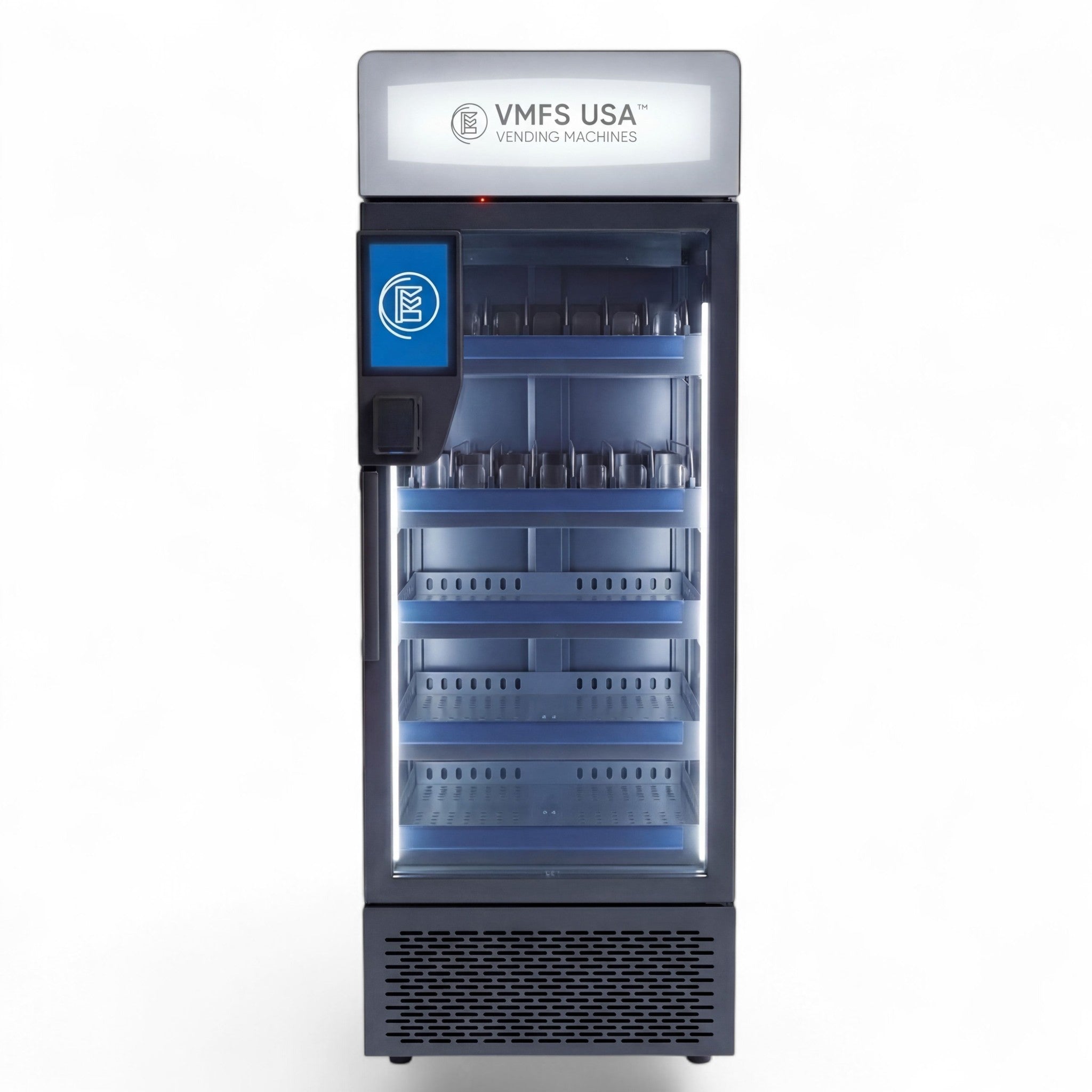
Dado que las bebidas y las aplicaciones diversificadas en oficinas y zonas residenciales están impulsando el crecimiento más fuerte del segmento, los operadores que adquieren equipos ahora se benefician de formatos diseñados para esa demanda en lugar de los diseños tradicionales exclusivos para snacks. La colección de máquinas expendedoras AI Grab-and-Go, la máquina expendedora AI Smart Cooler, la máquina expendedora Smart Fridge y la máquina expendedora combinada AI Smart Cooler de VMFS USA cubren los formatos alineados con esos segmentos de más rápido crecimiento. Una comparación completa de especificaciones está disponible en la Guía completa del comprador 2026, y las consideraciones de infraestructura de pago específicas para las máquinas con IA se tratan en Cómo funciona el procesamiento de tarjetas y por qué las máquinas con IA tienen tarifas diferentes. Para obtener una visión completa de los costos antes de comenzar, consulte Máquinas expendedoras con IA: Costos y Cómo optimizan las ventas las máquinas expendedoras con IA, y para la distinción de terminología, Máquina expendedora inteligente vs. Máquina expendedora con IA.
Entre en el mercado con la máquina adecuada
Explore las máquinas expendedoras con IA creadas para los segmentos de más rápido crecimiento del mercado.
Explorar máquinas expendedoras con IA
Compartir:
Máquina expendedora inteligente vs. máquina expendedora con IA: ¿cuál es la diferencia real?
Desglose de piezas de la máquina expendedora con IA: explicación de cada componente