




Diseñe la solución de vending perfecta para su ubicación y clientes.

Únete al boletín de VMFS y forma parte de una red próspera dedicada al éxito colectivo.
Un registro. Posibilidades infinitas.
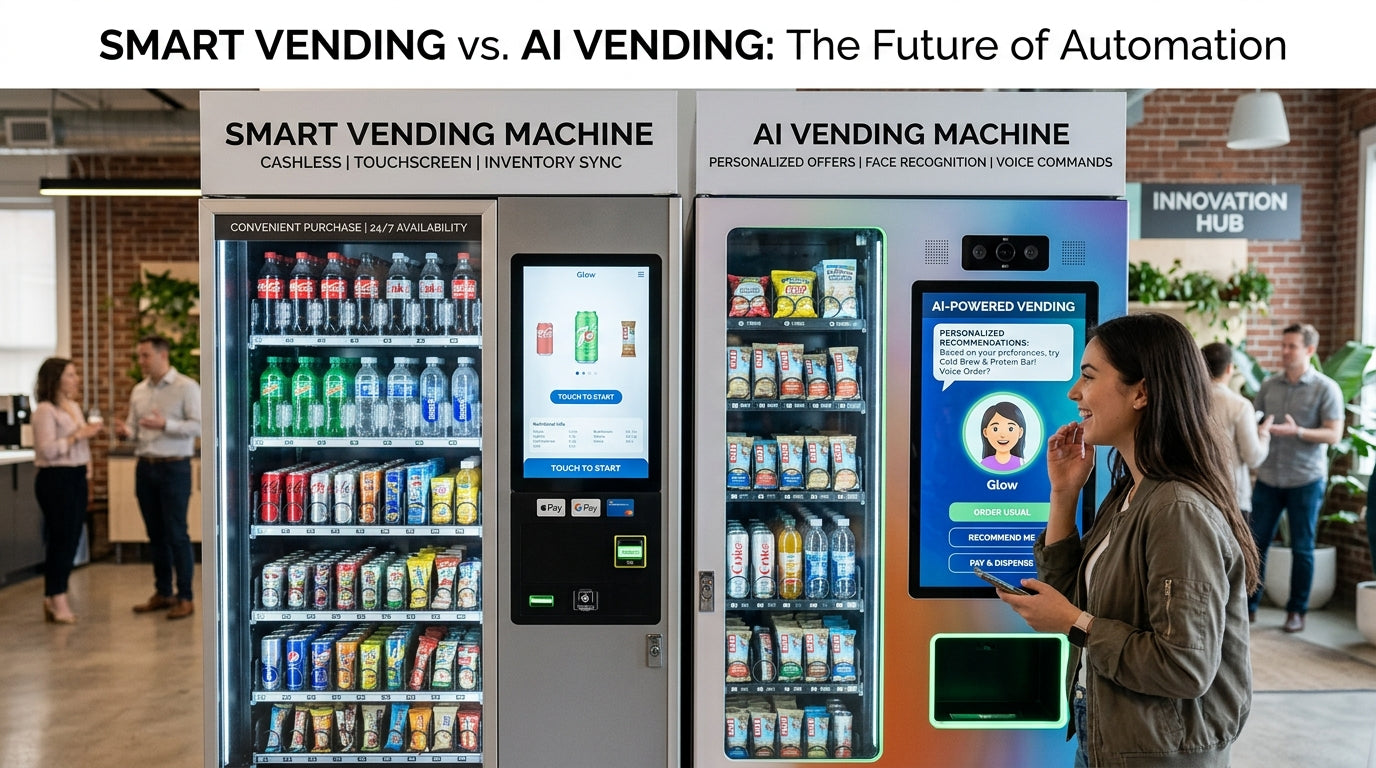
Una máquina expendedora inteligente es cualquier unidad conectada a internet con pago sin efectivo, monitoreo remoto o telemetría, mientras que una máquina expendedora con IA es un subconjunto de la venta inteligente que añade visión artificial, sensores de peso o aprendizaje automático para identificar productos, prevenir robos y predecir necesidades de reabastecimiento sin necesidad de escanear códigos de barras. Toda máquina expendedora con IA es una máquina expendedora inteligente, pero no toda máquina expendedora inteligente cuenta con IA; la distinción es importante porque lo "inteligente" solo requiere conectividad, mientras que la "IA" requiere que la máquina realmente perciba e interprete lo que ocurre en su interior. Los operadores que confunden ambos términos a menudo pagan de más por telemetría básica esperando automatización de nivel IA, o pagan de menos por una unidad con IA y pierden funciones que justifican el sobreprecio.
Esta guía analiza las diferencias técnicas, dónde encaja cada categoría a nivel operativo y cómo decidir cuál se adapta mejor al tráfico y la mezcla de productos de una ubicación determinada.
Tabla de contenidos
Una máquina expendedora inteligente se conecta a internet para informar de telemetría básica (recuento de ventas, temperatura, estado de la puerta y procesamiento de pagos sin efectivo) al panel de control del operador. El término describe la conectividad y la visibilidad remota, no la inteligencia a nivel de producto; por lo tanto, una máquina inteligente puede detectar que un espacio se ha quedado sin existencias sin saber qué artículo específico tomó un cliente si varios productos comparten estante.
Una máquina expendedora con IA añade una capa de percepción sobre la conectividad inteligente, utilizando cámaras de visión artificial, sensores de peso o etiquetas RFID para identificar exactamente qué producto retiró el cliente, en qué cantidad y si realmente fue pagado. Esta capa de percepción es la que permite formatos de estantería abierta (grab-and-go), donde los clientes toman los artículos directamente en lugar de recibirlos mediante un mecanismo de espiral o caída. Puede encontrar una explicación técnica completa en Qué es una máquina expendedora con IA y Cómo funcionan las máquinas expendedoras con IA.
Las máquinas inteligentes realizan un seguimiento del inventario a nivel de ranura, lo que significa que el sistema sabe que una espiral se vació, pero depende del propio mecanismo de dispensación para confirmar la venta, no de una confirmación visual o mediante sensores del artículo real. Las máquinas con IA realizan el seguimiento a nivel de producto porque la visión artificial o los sensores de peso identifican el SKU específico retirado, razón por la cual las unidades con IA pueden soportar estanterías abiertas sin un sistema de dispensación mecánica.
Las máquinas inteligentes previenen las pérdidas principalmente a través del propio mecanismo físico de dispensación: un sistema de espiral o caída que solo libera el producto después de que se confirma el pago. Las máquinas con IA previenen las pérdidas mediante monitoreo activo, donde el sistema de visión verifica que el artículo retirado de un estante abierto coincida con lo cobrado a la tarjeta del cliente, cerrando el ciclo de compra después del hecho en lugar de antes de la dispensación.
Las máquinas inteligentes avisan al operador cuando una ranura está vacía, lo cual sucede porque el conteo de dispensación llega a cero. Las máquinas con IA van más allá y pueden marcar una ranura que está a punto de vaciarse antes de que se quede sin existencias, porque el sistema rastrea la velocidad de venta a nivel de artículo y puede proyectar cuándo se agotará un SKU específico basándose en patrones de venta recientes. Esa capa predictiva se cubre con más detalle en Cómo las máquinas expendedoras con IA optimizan las ventas.
La siguiente tabla aísla las diferencias funcionales que más importan al evaluar la compra de una máquina.
| Característica | Máquina expendedora inteligente | Máquina expendedora con IA |
|---|---|---|
| Conectividad a internet | Sí | Sí |
| Reconocimiento a nivel de producto | No | Sí (visión, peso o RFID) |
| Soporte para estanterías abiertas | Raro | Estándar |
| Alertas de reabastecimiento predictivas | Limitado (basado en umbrales) | Sí (basado en velocidad) |
| Costo inicial típico | Menor | Mayor |
| Ideal para | Presupuestos ajustados, sitios de bajo tráfico | Oficinas, gimnasios y zonas residenciales de alto tráfico |
Las máquinas con IA de visión artificial utilizan cámaras montadas en la parte superior y en los estantes, entrenadas con el catálogo específico de productos almacenados en esa máquina, haciendo coincidir lo que el cliente toma con un conjunto de imágenes de referencia en tiempo real. Los sistemas de detección por peso miden el cambio en el peso del estante cuando se retira un artículo y comparan esa diferencia con el peso conocido de cada SKU para inferir qué fue lo que se tomó. Ambos enfoques cierran la transacción solo después de que la máquina confirma qué salió del estante, razón por la cual las máquinas expendedoras con IA pueden soportar un diseño abierto de autoservicio que sería vulnerable a robos en una unidad conectada puramente "inteligente". Este mecanismo es también la razón por la cual los conceptos de venta minorista gestionados por IA captaron la atención general tras experimentos bien documentados en comercio autónomo con IA; la tecnología de detección subyacente es la misma categoría de sistema, simplemente aplicada a diferentes productos, como se analiza en El experimento de la máquina expendedora con IA: Cómo está cambiando el retail inteligente.
Las máquinas expendedoras con IA cuestan más inicialmente que las máquinas inteligentes básicas debido a los arreglos de cámaras, el hardware de sensores y la capacidad de cómputo necesaria para ejecutar modelos de reconocimiento en el dispositivo o mediante procesamiento en la nube. Esa prima disminuye cuanto más depende la ubicación de la máquina de la conveniencia de la estantería abierta, ya que la alternativa (un mecanismo de espiral tradicional adaptado con conectividad) no puede replicar la experiencia grab-and-go, independientemente del precio. Un desglose completo de costos por categorías de máquinas está disponible en Máquinas expendedoras con IA: Costo, y el equilibrio entre unidades preconfiguradas y construidas a medida se trata en Retorno: Pre-hechas vs. Construcción a medida.
Máquina expendedora inteligente
Menor costo inicial y perfil de mantenimiento más sencillo.
Fiable para productos estándar dispensados por espiral o caída.
No puede soportar estanterías abiertas ni análisis a nivel de artículo.
Máquina expendedora con IA
Permite una experiencia de cliente de estantería abierta (grab-and-go).
El reabastecimiento predictivo reduce las roturas de stock y el desperdicio.
Mayor costo inicial y hardware más complejo de mantener.
Las ubicaciones de menor tráfico con una mezcla de productos estable y limitada (una pequeña sala de descanso o un vestíbulo residencial de baja rotación) a menudo no generan suficiente volumen de transacciones para justificar el costo adicional del hardware de IA. Una máquina inteligente básica con pago sin efectivo y alertas remotas cubre la necesidad operativa sin capacidades no utilizadas.
Las oficinas, gimnasios y edificios residenciales de alto tráfico se benefician más del vending con IA, ya que el formato de estantería abierta acelera las transacciones durante las horas pico, y el reabastecimiento predictivo protege directamente los ingresos que de otro modo se perderían por roturas de stock. Las opciones de máquinas diseñadas para este nivel incluyen la colección de máquinas expendedoras AI Grab-and-Go, la máquina expendedora AI Smart Cooler, la máquina expendedora Smart Fridge y la máquina expendedora combinada AI Smart Cooler para existencias mixtas ambientales y refrigeradas. Un marco completo de compra especificación por especificación está disponible en la Guía completa para el comprador 2026.
La venta de productos electrónicos, donde los artículos individuales tienen un valor significativamente mayor que los snacks o las bebidas, casi siempre requiere verificación de producto a nivel de IA porque los riesgos de pérdida son demasiado altos para el seguimiento basado solo en ranuras. Esta dinámica se explora más a fondo en Máquinas expendedoras de electrónica impulsando ciudades inteligentes y sostenibilidad con IA.
Las máquinas expendedoras con IA generalmente registran un beneficio neto por unidad más sólido que las máquinas solo inteligentes en ubicaciones de alto tráfico, porque la reducción de roturas de stock y una mayor velocidad de transacciones aumentan directamente los ingresos captados, incluso después de considerar el mayor costo inicial del hardware. Los operadores que construyen el tamaño de su flota en torno a objetivos de ingresos deben factorizar esta diferencia de beneficio por máquina directamente en sus cálculos; el cálculo se detalla en Cuántas máquinas expendedoras con IA necesitas para manejar un negocio a tiempo completo y la mecánica del ROI subyacente se encuentra en ROI de las máquinas expendedoras con IA. La calidad de la ubicación sigue siendo más importante que la categoría de la máquina por sí sola; véase Datos de ubicación para máquinas expendedoras con IA y Estudio de caso: Encontrando el punto óptimo.
El lenguaje de marketing suele utilizar "inteligente" de manera vaga, y los compradores a veces asumen que una máquina conectada y controlada por una aplicación incluye un reconocimiento de productos que no tiene. Verificar si una máquina utiliza visión artificial, detección de peso o RFID (en lugar de una simple telemetría de conteo de ranuras) evita una costosa falta de coincidencia entre las capacidades esperadas y las reales.
Colocar una máquina con IA visual completa en una ubicación con tráfico diario mínimo retrasa el retorno de la inversión innecesariamente, ya que el costo del hardware premium no se ve compensado por suficiente volumen de transacciones para justificarlo. Ajustar el nivel de la máquina al volumen de tráfico, en lugar de optar por la opción más avanzada en todas partes, protege el ROI general de la ruta.
Las tasas de procesamiento de tarjetas para el retail desatendido difieren según la clasificación de la máquina, y las unidades equipadas con IA a veces son categorizadas de manera diferente que las máquinas de espiral heredadas por los procesadores. Revisar los términos del comerciante antes de la compra evita un costo oculto que erosiona la ventaja de ROI de la máquina con IA; véase Cómo funciona el procesamiento de tarjetas y por qué las máquinas con IA tienen tarifas diferentes y la comparación directa en Vending tradicional vs. Máquinas con IA y ¿Vale la pena la actualización?
Compare máquinas expendedoras con IA para su ubicación
Vea qué formato de máquina se adapta mejor a su tráfico, variedad de productos y presupuesto.
Explorar máquinas expendedoras con IA
Compartir:
Por qué las máquinas expendedoras de tarjetas coleccionables están en auge
Tamaño del mercado de máquinas expendedoras con IA: datos y previsión de crecimiento para 2026