


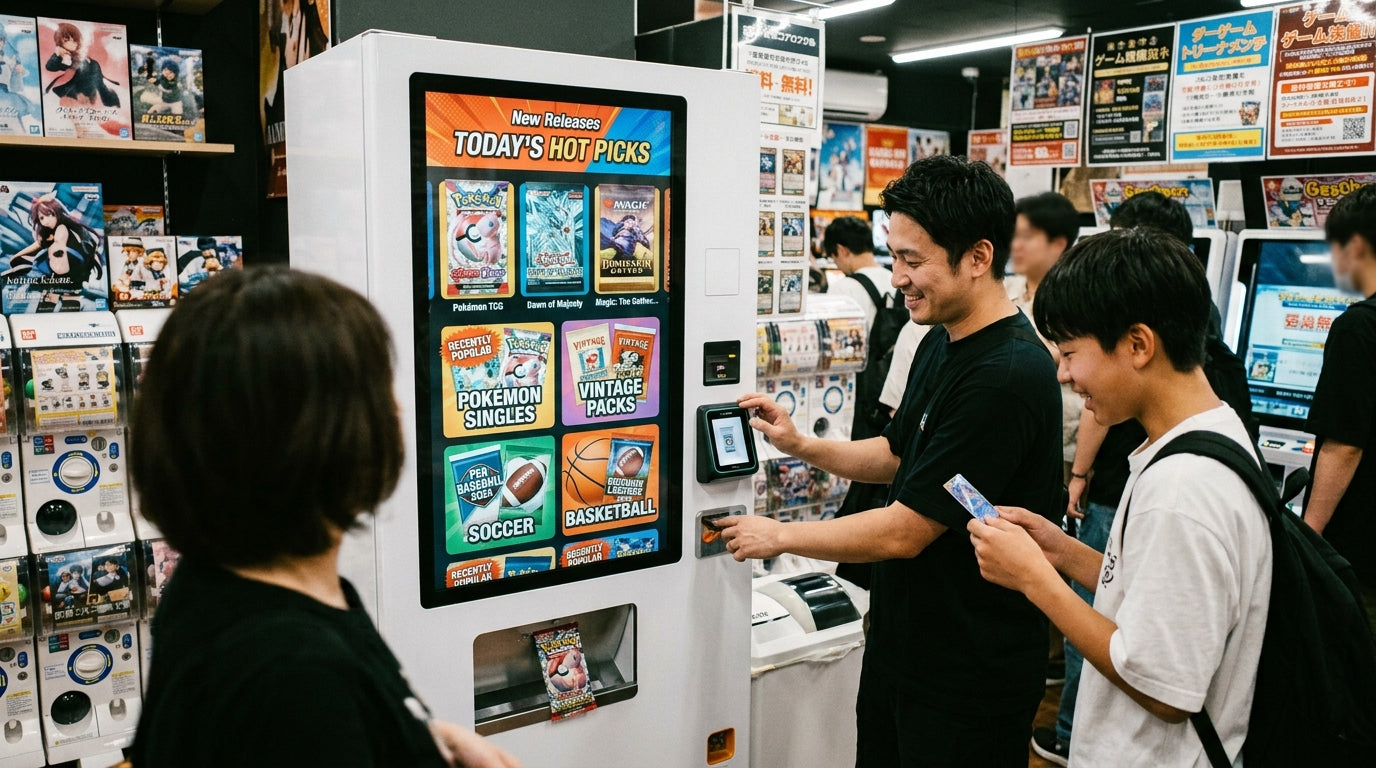


Diseñe la solución de vending perfecta para su ubicación y clientes.

Únete al boletín de VMFS y forma parte de una red próspera dedicada al éxito colectivo.
Un registro. Posibilidades infinitas.
En febrero de 2026, una sola carta de Pikachu graduada se vendió en subasta por 16 492 000 $, estableciendo un Récord Mundial Guinness para cualquier tarjeta coleccionable jamás vendida. Tres meses antes, The Pokémon Company International cerró un año fiscal con 3340 millones de dólares en ventas netas, un aumento del 29,3 % interanual, cuadruplicando sus ingresos en cinco años. Y en el comercio minorista de EE. UU., el número de máquinas expendedoras oficiales de tarjetas ha pasado de 65 en 2023 a casi 1900 en la actualidad.
Nada de esto es coincidencia. Las cartas coleccionables han pasado de ser un pasatiempo de estantería de tienda a una clase de activo invertible más rápido que casi cualquier otra categoría de coleccionables en la historia moderna del comercio minorista, y la infraestructura construida para venderlas —específicamente las máquinas expendedoras— ha tenido que escalar igual de rápido para mantenerse al día. Esta guía desglosa los datos detrás de ese cambio: las finanzas, la expansión oficial de las expendedoras, el problema de seguridad que impulsa la demanda hacia el comercio automatizado y un estudio de caso real, respaldado por cifras, de lo que sucede cuando un pequeño minorista coloca una sola máquina expendedora de cartas en su escaparate.
Los propios informes financieros de The Pokémon Company International, publicados anualmente a través de la gaceta corporativa oficial de Japón, muestran un negocio que crece más rápido con cada año fiscal:
| Año fiscal (termina en feb.) | Ventas netas | Crecimiento interanual | Fuente |
|---|---|---|---|
| AF2024 | 1900 M$ | +15 % | PocketGamer.biz |
| AF2025 | 2900 M$ | +38,1 % | Automaton West |
| AF2026 | 3340 M$ | +29,3 % | Yahoo Sports / informe de la empresa |
Tan recientemente como en 2021, los ingresos anuales de la empresa se situaban en torno a los 750 millones de dólares. Cinco años después, se han más que cuadruplicado y, notablemente, el salto del AF2025 ocurrió en un año sin un gran lanzamiento de videojuego principal, impulsado casi en su totalidad por las ventas de cartas físicas y el lanzamiento en octubre de 2024 de la aplicación móvil Pokémon TCG Pocket, que superó los 1000 millones de dólares en gasto de los jugadores en los siete meses posteriores a su lanzamiento.
El lado físico del negocio está siendo impulsado con la misma fuerza. La compañía produjo 10 200 millones de cartas solo en el año fiscal 2024–2025, elevando la producción total a más de 75 000 millones de cartas. Para seguir el ritmo de la demanda, la empresa está construyendo una planta de impresión de 118 000 metros cuadrados (la producción completa no se espera hasta finales de 2028) y adquirió al distribuidor estadounidense Excell Brands para ajustar el control sobre la asignación y los precios.
Las estimaciones del tamaño del mercado para la industria global de juegos de cartas coleccionables varían significativamente según la firma de investigación, en gran parte porque las definiciones difieren: algunas incluyen el gasto digital/móvil y los ingresos por licencias, otras solo cuentan las ventas de cartas físicas. Para fines editoriales, aquí hay un rango de estimaciones recientes de terceros:
| Firma de investigación | Estimación 2026 | Previsión | CAGR |
|---|---|---|---|
| Global Market Insights | 9200 M$ | 16 900 M$ para 2035 | 6,9 % |
| Mordor Intelligence | 15 110 M$ | 24 360 M$ para 2031 | 10,03 % |
| MarkWide Research | 14 700 M$ | 30 890 M$ para 2035 | 8,6 % |
| Segmento de cartas deportivas (Athlon Sports) | 1300 M$ | 2990 M$ para 2035 | ~9 % |
Las cifras son estimaciones de analistas externos citadas por contexto; las metodologías difieren entre firmas y no son directamente comparables. Lo que es consistente en todas las estimaciones: un crecimiento de CAGR de un solo dígito medio-alto o de dos dígitos hasta principios de la década de 2030, identificando a América del Norte y Asia-Pacífico como los dos mercados regionales más grandes.
La evidencia más clara y concreta del cambio hacia el comercio minorista automatizado es el crecimiento de la propia red de máquinas expendedoras de The Pokémon Company International, rastreada independientemente por el medio especializado PokeBeach:
| Periodo | Máquinas oficiales | Estados cubiertos |
|---|---|---|
| 2017–2023 | Nunca superó las 65 | Proyecto piloto limitado |
| Mayo 2025 | 1473 | 25 |
| Mayo 2026 | 1871 (+27 % interanual) | 28 |
Estas unidades oficiales —ubicadas dentro de cadenas como Kroger, Safeway, Albertsons y H-E-B— venden productos sellados al precio de venta sugerido por el fabricante (MSRP) garantizado con pago exclusivamente sin efectivo. Pero incluso a esta escala, la rotación es alta: el seguimiento de PokeBeach muestra que aproximadamente 1 de cada 7 máquinas fue retirada o reubicada solo en el último año, y la demanda supera constantemente a la oferta, particularmente en las 48–72 horas posteriores al lanzamiento de un set importante.
Esta combinación —demanda real, escasez crónica y un coste de seguridad creciente para el comercio minorista con personal— es precisamente el hueco en el que se han introducido los equipos expendedores independientes construidos específicamente para este propósito.
Los productos coleccionables no se comportan como aperitivos o bebidas, y los equipos expendedores genéricos no están construidos para ellos. Las diferencias de ingeniería importan lo suficiente como para haberse convertido en su propia categoría de equipo:
| Característica | Máquina de aperitivos estándar | Máquina expendedora de cartas |
|---|---|---|
| Tamaño de espiral | Ancho genérico | Tamaño de precisión para paquetes de refuerzo, latas y ETB |
| Protección del producto | Caída libre | Dispensación segura/con elevador para proteger el estado del paquete y la carta graduada |
| Seguridad del inventario | Gabinete con cerradura única | Compartimentos con llave y zonificados para cartas individuales de alto valor y graduadas |
| Pago | Efectivo + tarjeta opcional | Solo sin efectivo (pago sin contacto, EMV, monederos móviles) |
| Presentación | Utilitaria | Grado de vitrina, acorde a las expectativas del coleccionista |
Portland, Oregón · Minorista independiente de pasatiempos
El desafío
El dueño de una pequeña tienda de pasatiempos buscaba una forma de captar la demanda de los coleccionistas de cartas fuera del horario comercial sin necesidad de ampliar el personal. El escaparate de la tienda ya atraía a clientes nocturnos, pero esos clientes regresaban durante el horario de atención al público, si es que lo hacían.
La Solución
El propietario instaló una máquina expendedora de cartas coleccionables en el vestíbulo de la entrada, accesible las 24 horas, los 7 días de la semana, con pago sin efectivo. El hardware de dispensación segura de VMFS USA mantuvo protegidas las cartas individuales de alto valor y los paquetes sellados. La máquina se reabasteció con el inventario existente.
El Resultado
El tráfico peatonal durante el horario comercial aumentó 2.1 veces, ya que la máquina fuera de horario se convirtió en una herramienta de descubrimiento de la tienda. Al cuarto mes, el operador añadió una segunda unidad para dispensar cartas graduadas (slabs). Los ingresos semanales de la máquina se sitúan en $640: una ganancia incremental pura, sin costes laborales.
"Intenté organizar eventos de cartas los sábados por la noche durante años. La máquina lo hace todas las noches, sin que yo tenga que estar allí. Cambió toda la tienda".
— Propietario-operador
Detalles de la Implementación
| Operador | Propietario-operador (una sola máquina) |
| Tipo de local | Local comercial independiente de pasatiempos |
| Equipo | 1× Máquina expendedora de cartas coleccionables |
| Adicionales | Hardware de dispensación segura, solo pago sin efectivo, zonas de inventario con cerradura |
| Tiempo de puesta en marcha | Del pedido a la operación: 18 días |
Más allá de este estudio de caso de una sola tienda, los informes del sector sobre operadores independientes de máquinas expendedoras de cartas señalan un patrón constante:
| Pregunta | Respuesta |
|---|---|
| ¿Necesitan los operadores una licencia del editor? | No. Bajo la doctrina de la "primera venta" (First Sale Doctrine), los productos auténticos comprados a un distribuidor autorizado pueden ser revendidos legalmente sin permiso. |
| ¿Pueden las máquinas usar logotipos o personajes oficiales? | No, no sin un acuerdo de licencia directo. La mayoría de los operadores utilizan una imagen de marca neutra. |
| ¿Existen restricciones de precios? | El precio de venta sugerido al público (MSRP) generalmente no es legalmente vinculante, pero los distribuidores a menudo aplican políticas de Precio Mínimo Anunciado (MAP) por contrato. |
| ¿Es el vending de cajas sorpresa un riesgo legal? | Puede atraer escrutinio en algunos lugares por considerarse una actividad cercana al juego de azar; se informó que una máquina de cajas sorpresa en el Pentágono fue retirada en cuestión de días bajo escrutinio en 2025. |
2026 marca el 30 aniversario de Pokémon, y la línea de productos detrás de este evento se describe en todo el sector como la más sólida en los 30 años de historia de la franquicia. Dado que una nueva fábrica de 1.27 millones de pies cuadrados no alcanzará su plena producción hasta finales de 2028, es probable que la brecha de oferta que ha impulsado la expansión del vending, tanto oficial como independiente, persista (y se amplíe) durante el periodo del aniversario. Para obtener un desglose a nivel de operador sobre precios de máquinas, modelos de retorno de inversión y plazos de lanzamiento, consulte la guía completa para operadores de 2026 de VMFS USA.
Sí. Bajo la doctrina de la "primera venta" de la ley de marcas de EE. UU., un operador que compra productos originales de cartas coleccionables del mercado estadounidense a un distribuidor autorizado puede revenderlos legalmente sin permiso del editor. Los operadores deben evitar el uso de logotipos o personajes protegidos por derechos de marca en la imagen de la máquina y deben abastecerse exclusivamente a través de distribuidores autorizados.
Los productos de cartas coleccionables son más ligeros, delgados y tienen tamaños más irregulares que los snacks, y los coleccionistas esperan una presentación en estado casi perfecto en cada compra. El hardware de vending construido específicamente para cartas utiliza espirales adaptadas al tamaño de los sobres, dispensación protectora para evitar abolladuras o arrugas, y compartimentos seguros y bloqueables para latas de alto valor y cartas graduadas; ninguna de estas características está presente en una máquina de snacks genérica.
Los retornos varían significativamente según la ubicación y la gestión del inventario, pero las máquinas bien ubicadas con reabastecimiento disciplinado han reportado plazos de recuperación de inversión de cuatro a siete meses. La calidad de la ubicación y mantener el stock durante los lanzamientos de colecciones importantes son constantemente los dos factores más importantes que distinguen a las máquinas de alto rendimiento de las de bajo rendimiento.
La demanda ha superado constantemente a la oferta desde que comenzó la rápida expansión de la red en 2023, especialmente en las 48-72 horas posteriores a un lanzamiento importante. También se ha documentado que revendedores profesionales vacían las máquinas minutos después de su reabastecimiento, lo que explica en parte por qué los operadores independientes han encontrado espacio para crecer junto a la red oficial en lugar de competir directamente con ella.
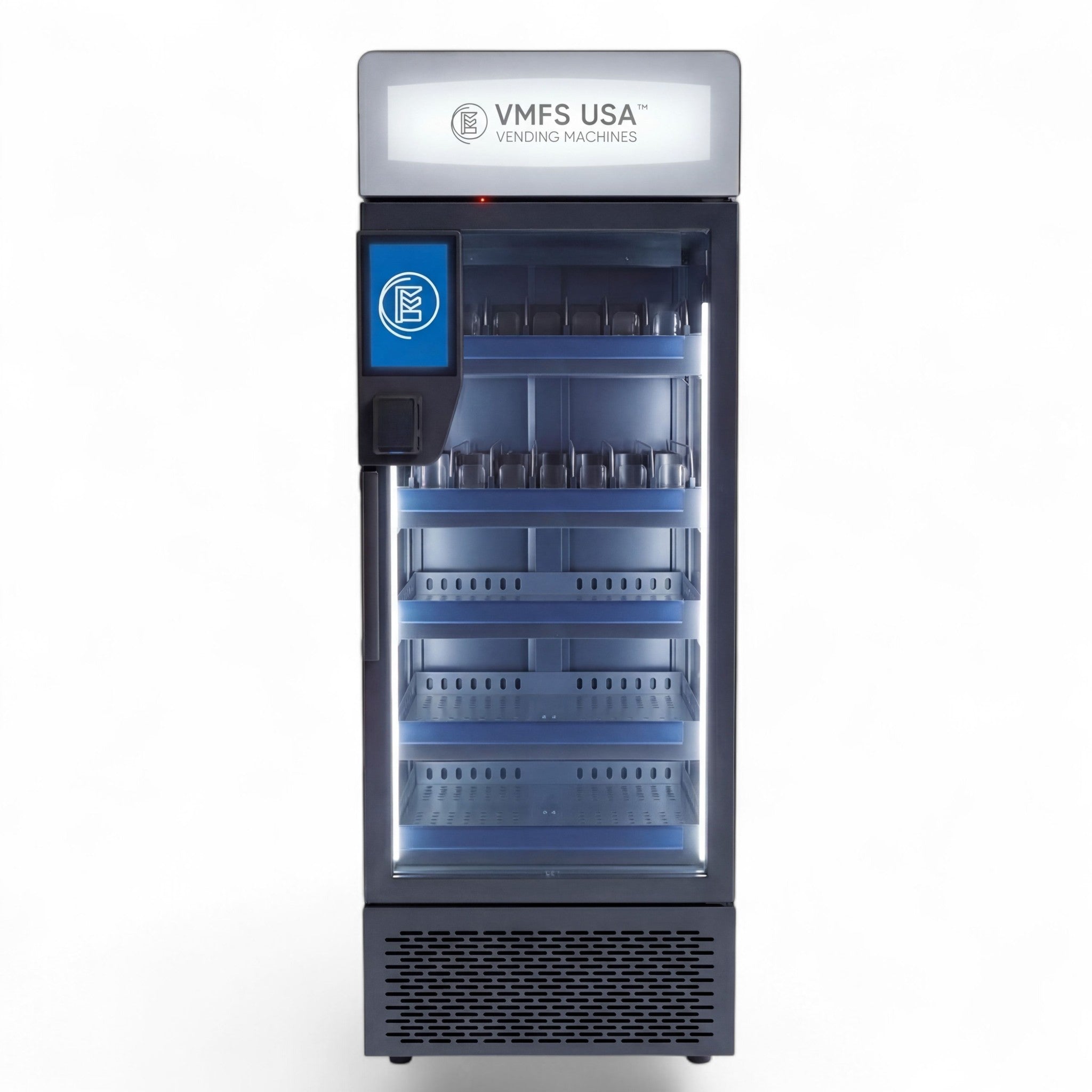
Vea la máquina expendedora de cartas coleccionables detrás de este estudio de caso
Dispensación segura, pago sin efectivo y compatibilidad con cartas graduadas: construida exactamente para este tipo de implementación.
Ver la máquina →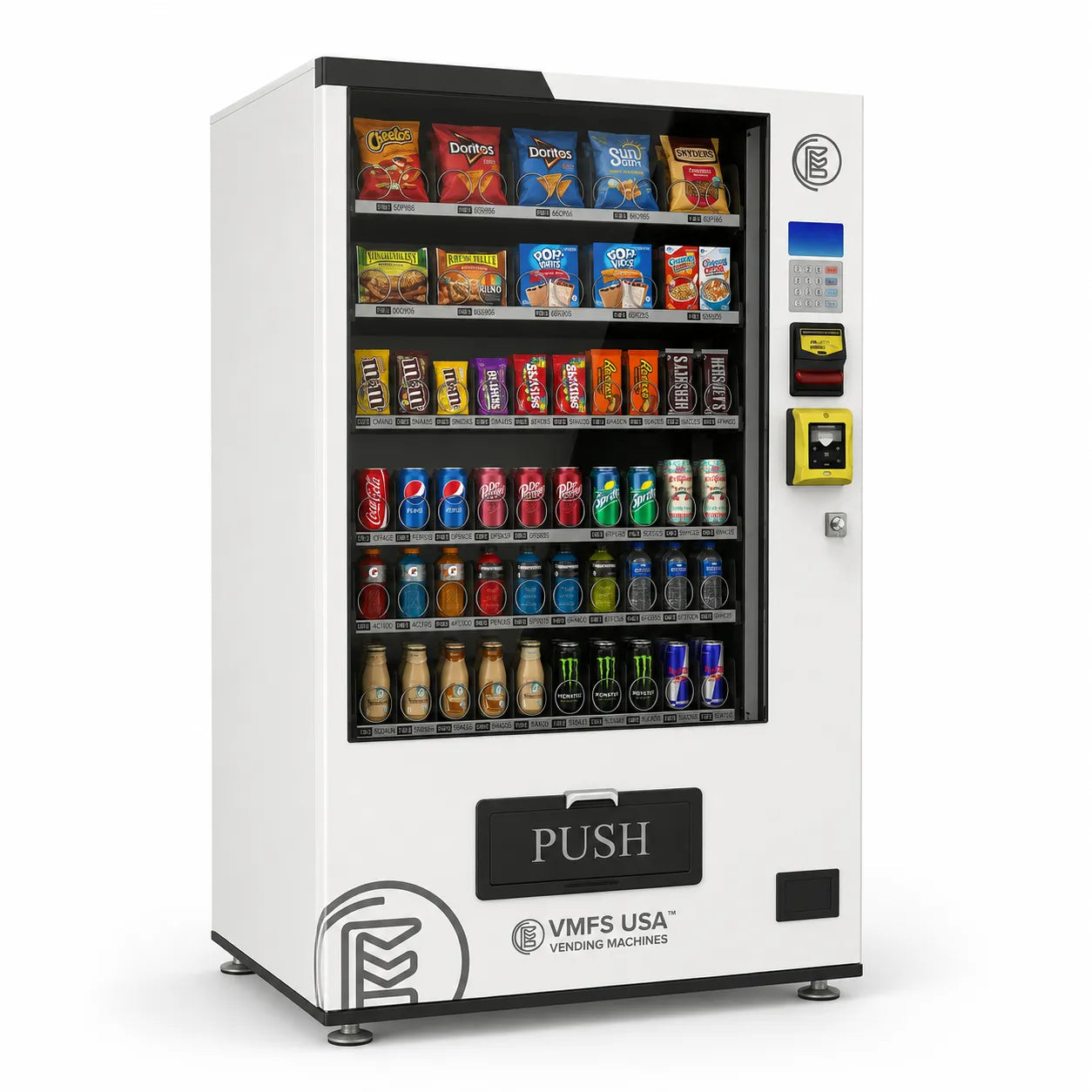
Compartir:
¿Cuántas máquinas expendedoras con IA necesitas para gestionar un negocio a tiempo completo?
Máquina expendedora inteligente vs. máquina expendedora con IA: ¿cuál es la diferencia real?