


Por qué las pequeñas empresas necesitan una máquina expendedora de café
Una máquina expendedora de café para una pequeña empresa cumple dos propósitos distintos según el entorno: ser un servicio para el cliente que mejora el tiempo de permanencia y la satisfacción en comercios, salones de belleza o talleres mecánicos, o bien ser una modesta fuente de ingresos en salas de espera y vestíbulos con un flujo constante de personas. Esta guía detalla cómo los propietarios de pequeñas empresas deben dimensionar la inversión, evaluar la opción de servicio gratuito frente a la compra de equipos, y determinar si una máquina se amortiza a través de la experiencia del cliente, ventas directas o ambas.
Tabla de contenidos
- Por qué el contexto de la pequeña empresa difiere del uso en oficinas
- Experiencia del cliente frente a objetivos de ingresos directos
- Dimensionamiento consciente del presupuesto para pequeñas empresas
- Tipos de máquinas más adecuadas para espacios de pequeñas empresas
- Programas de servicio gratuito frente a equipos propios
- Tabla comparativa de máquinas para pequeñas empresas
- Industrias que más se benefician
- Presupuesto y expectativas realistas de retorno de inversión (ROI)
- Mantenimiento con personal limitado
- Preguntas frecuentes
Por qué el contexto de la pequeña empresa difiere del uso en oficinas
La venta de café en pequeñas empresas difiere de su colocación en oficinas internas porque la máquina suele servir a clientes en lugar de a empleados, lo que cambia la prioridad de la comodidad interna hacia la impresión orientada al cliente y, en algunos casos, hacia ingresos directos. Un salón de belleza, un taller mecánico o una boutique evalúan una máquina de café bajo criterios distintos a los de una oficina corporativa.
Este enfoque orientado al cliente se diferencia del planteamiento de beneficio para el empleado que se trata en la guía de máquinas de café para oficinas, ya que los dueños de pequeñas empresas suelen evaluar la máquina por su efecto en la satisfacción del cliente, la percepción del tiempo de espera o como un ingreso secundario modesto, más que solo por la moral laboral.
Impresión del cliente
Una máquina de café bien surtida demuestra atención en salas de espera y espacios comerciales.
Sensibilidad presupuestaria
Las pequeñas empresas suelen tener restricciones de capital más ajustadas que los compradores medianos o empresariales.
Potencial de ingresos secundarios
Las pequeñas empresas con gran afluencia pueden generar ingresos extra modestos mediante la venta de café.
Tiempo limitado del personal
Los equipos pequeños necesitan maquinaria de bajo mantenimiento que no requiera horas dedicadas a su cuidado.
Experiencia del cliente frente a objetivos de ingresos directos
Los propietarios de pequeñas empresas deben decidir desde el principio si el objetivo principal de la máquina es mejorar la experiencia del cliente o generar ingresos directos, ya que esta decisión define todas las elecciones posteriores, desde el tipo de máquina hasta la configuración de pago. Una máquina gratuita para el cliente en una sala de espera cumple una función totalmente distinta a la de una máquina de pago en un pasillo comercial de alto tráfico.
Las empresas que se inclinen por la opción de ingresos deben estudiar el marco de rentabilidad más amplio en ¿son rentables las máquinas expendedoras de café?, ya que el volumen de transacciones realista en la ubicación de una pequeña empresa suele ser menor que en una ruta comercial dedicada, lo que afecta el plazo de recuperación de la inversión.
Dimensionamiento consciente del presupuesto para pequeñas empresas
El dimensionamiento consciente del presupuesto significa adaptar la capacidad de la máquina al flujo de personas real en lugar de elegir por defecto la opción más barata o la que tiene más funciones, ya que las pequeñas empresas rara vez necesitan las tolvas de alta capacidad diseñadas para un ciclo comercial continuo. Una unidad de sobremesa modesta casi siempre supera a una máquina comercial de gran tamaño en términos de costo por taza para el volumen típico de una pequeña empresa.
- Bajo flujo de personas (menos de 30 visitantes/día): Una unidad compacta de sobremesa cubre la demanda sin tener capacidad excedente sin usar.
- Flujo de personas moderado (30–80 visitantes/día): Una unidad estándar de capacidad media equilibra el costo frente a una demanda constante pero no continua.
- Alto flujo de personas (más de 80 visitantes/día): El equipo comercial de mayor capacidad se justifica a medida que el volumen de transacciones aumenta.
Consejo presupuestario: Consulte la guía de precios completa antes de comprometerse, ya que el presupuesto total de una pequeña empresa debe considerar la instalación y los suministros iniciales además del costo del equipo en sí.
Tipos de máquinas más adecuadas para espacios de pequeñas empresas
Los tipos de máquinas más adecuados para entornos de pequeñas empresas priorizan un tamaño compacto y una operación sencilla por encima de la variedad de bebidas que necesitan los lugares comerciales más grandes, ya que la mayoría de los clientes de pequeñas empresas esperan un servicio rápido y directo, no un menú de especialidades.
Unidades compactas de sobremesa
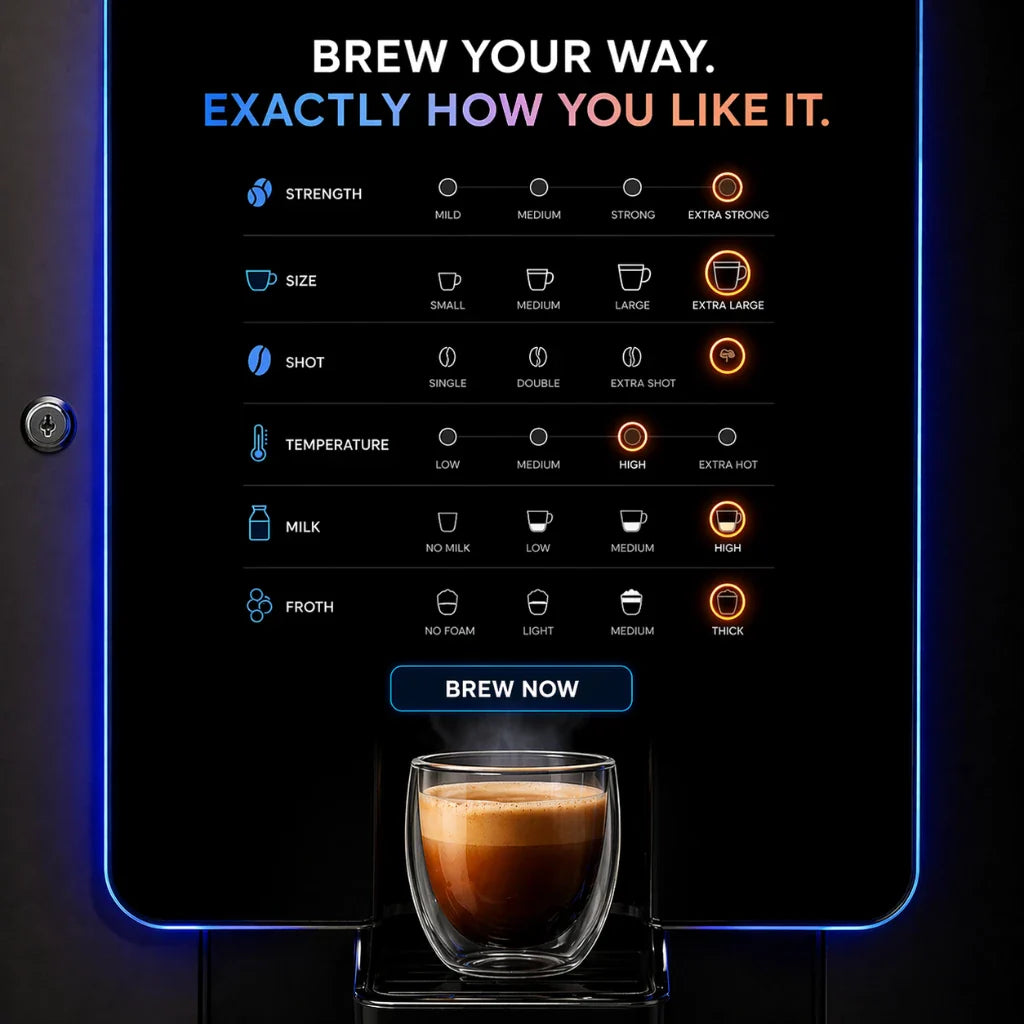
Las unidades compactas como la máquina de café premium de sobremesa con pantalla táctil se integran naturalmente en salones de belleza, pequeños espacios comerciales y salas de espera sin necesidad de requerir un espacio dedicado en el suelo o una instalación compleja.
Unidades comerciales pequeñas estándar
Las empresas con un flujo de clientes más constante —talleres mecánicos, consultorios médicos o dentales, tiendas minoristas más grandes— suelen optar por una unidad como la máquina expendedora de café CorePro, que equilibra la capacidad con un tamaño reducido que la mayoría de las ubicaciones de pequeñas empresas pueden acomodar.
Programas de servicio gratuito frente a equipos propios
Elegir entre un programa de colocación con servicio gratuito y la compra de equipo propio afecta tanto al costo inicial como al control a largo plazo para los propietarios de pequeñas empresas. Los programas de servicio gratuito eliminan el riesgo de capital por completo, pero transfieren el control de los precios y los suministros al proveedor.
Programas de servicio gratuito — Ventajas
- No se requiere capital inicial
- El proveedor generalmente se encarga del reabastecimiento y mantenimiento básico
Programas de servicio gratuito — Limitaciones
- Control reducido sobre precios, marca de suministros y modelo de máquina
- El proveedor retiene la mayor parte o la totalidad de los ingresos de las transacciones
Equipos propios — Ventajas
- Control total sobre precios, marca y adquisición de suministros
- Todos los ingresos por transacciones son para el propietario del negocio
Equipos propios — Limitaciones
- Requiere capital inicial y responsabilidad de mantenimiento continuo
Los propietarios que evalúen esta decisión también deben compararla con la estructura de costos mensuales en la guía de costos de alquiler, que ofrece un punto medio entre la colocación de servicio gratuito y la propiedad total para las empresas que aún no están listas para comprometerse con una compra directa.
Tabla comparativa de máquinas para pequeñas empresas
Esta comparación resume la adecuación de la máquina según el tipo de pequeña empresa y el patrón típico de flujo de clientes.
| Tipo de negocio | Tráfico diario típico | Clase de máquina recomendada |
|---|---|---|
| Sala de espera de salón o spa | Bajo a moderado | Unidad de sobremesa |
| Taller mecánico | Moderado | Máquina comercial CorePro |
| Consultorio médico o dental | Moderado a alto | Máquina comercial CorePro |
| Tienda minorista de alto tráfico | Alto | Máquina de café y bebidas calientes |
Industrias que más se benefician
Ciertas categorías de pequeñas empresas obtienen un valor desproporcionadamente mayor de una máquina expendedora de café porque sus clientes pasan tiempo esperando en el lugar, lo que hace que el servicio sea directamente relevante para la calidad percibida. Los talleres mecánicos, salones de belleza, salas de espera médicas y gimnasios encajan bien en este patrón.
Las empresas en categorías de rápida rotación, donde los clientes rara vez esperan más de unos pocos minutos, generalmente ven menos valor en la inversión en comparación con categorías con tiempo de permanencia incorporado —un factor que vale la pena evaluar honestamente antes de comprometer el presupuesto en equipos que podrían tener poco uso.
Presupuesto y expectativas realistas de retorno de inversión (ROI)
Las expectativas realistas de ROI para una máquina de café en una pequeña empresa deben considerar que las colocaciones orientadas al cliente rara vez igualan el volumen de transacciones de una parada de ruta comercial dedicada, lo que significa que los cálculos del periodo de recuperación necesitan suposiciones de tráfico conservadoras en lugar de optimistas. Un modelo de servicio gratuito mide el ROI en satisfacción y retención del cliente en lugar de en ventas directas.
Los propietarios que exploren esto como una fuente de ingresos adicional genuina, en lugar de un servicio puramente para el cliente, deben revisar cómo iniciar un negocio de máquinas expendedoras de café para entender lo que separa una colocación casual en una tienda de una operación expendedora real que genera ingresos.
Mantenimiento con personal limitado
El mantenimiento con personal limitado requiere elegir un equipo y un modelo de servicio que no exija horas de trabajo dedicadas, algo que una pequeña empresa a menudo no puede permitirse. Las tareas diarias y semanales cubiertas en la guía de limpieza y mantenimiento deben poder ser asignadas al personal de recepción existente sin interrumpir las operaciones principales del negocio.
Las pequeñas empresas que no tengan capacidad de personal para el mantenimiento deben evaluar con más fuerza un modelo de alquiler con servicio incluido o un modelo de colocación gratuita, ya que la carga de mantenimiento de la propiedad puede superar sus ventajas de costo cuando el tiempo del personal es el recurso más escaso.
¿Listo para encontrar la máquina expendedora de café adecuada para su negocio?
Explore la línea de máquinas expendedoras de café comerciales de VMFS USA y encuentre la que mejor se adapte a su espacio y presupuesto.
Comprar máquinas expendedoras de café
Compartir:
Máquina de café para oficinas: La guía completa
Máquina expendedora de café espresso: Guía de compra de modelos de grano a taza