


Una máquina expendedora de café espresso extrae café concentrado bajo alta presión a través de granos finamente molidos, ofreciendo esa crema rica y sabor intenso que las máquinas de café instantáneo en polvo no pueden replicar. Esta guía compara los modelos de espresso «bean-to-cup» (del grano a la taza) según la calidad de extracción, el menú de bebidas y el rendimiento, ayudando a los compradores a elegir el equipo de café fresco adecuado según el volumen de su ubicación y las expectativas de los clientes.
Tabla de contenidos
- ¿Qué es una máquina expendedora de café espresso?
- Tecnología «bean-to-cup» explicada
- Características clave que debe buscar
- Máquinas de espresso vs. máquinas de café instantáneo
- Tabla comparativa de modelos
- Capacidad del menú de bebidas
- ¿Quién debería comprar una máquina expendedora de espresso?
- Mantenimiento de máquinas «bean-to-cup»
- Consideraciones de precio y valor
- Preguntas frecuentes
¿Qué es una máquina expendedora de café espresso?
Una máquina expendedora de café espresso es una unidad que muele granos enteros y fuerza agua caliente a través del café molido bajo una presión de 9 bares o más, produciendo el shot concentrado y la crema que definen a un verdadero espresso. Este proceso mecánico es fundamentalmente distinto al de las máquinas de café instantáneo, que simplemente disuelven polvo preprocesado en agua caliente sin utilizar presión de extracción.
Esta distinción sitúa a las máquinas de espresso firmemente en la categoría de máquinas expendedoras de café «bean-to-cup», tratada más ampliamente en cómo funcionan las máquinas expendedoras de café, pero con la complejidad mecánica añadida de la extracción presurizada que los sistemas de café instantáneo no requieren.
Extracción presurizada
El agua caliente forzada a través del café molido a 9+ bares produce la auténtica crema y cuerpo del espresso.
Molienda de grano fresco
Los granos se muelen segundos antes de la preparación, preservando aceites aromáticos que el café premolido pierde al ponerse rancio.
Menú de bebidas más amplio
Las plataformas basadas en espresso suelen permitir la elaboración de lattes, cappuccinos y macchiatos a partir de una base de espresso.
Mayor valor percibido
Los clientes asocian las bebidas con calidad de espresso con precios premium y una mejor fidelización.
Tecnología «bean-to-cup» explicada
La tecnología «bean-to-cup» (del grano a la taza) muele granos de café enteros inmediatamente antes de cada ciclo de preparación, siendo este el mecanismo central que diferencia a una máquina expendedora de café fresco de cualquier alternativa basada en polvo. La molienda bajo demanda preserva compuestos aromáticos volátiles que comienzan a degradarse a los pocos minutos de ser molidos, lo que se traduce directamente en una taza notablemente mejor que en los formatos premolidos o instantáneos.
El proceso de molienda y dosificación
Un molinillo de muelas interno procesa los granos enteros a un tamaño de partícula constante, calibrado para la extracción de espresso, y luego un mecanismo de dosificación mide el peso exacto del café molido para cada shot. La consistencia en este punto afecta directamente la calidad de la extracción: una molienda demasiado fina provoca una sobreextracción y amargor, mientras que una demasiado gruesa genera una subextracción, resultando en un shot débil y ácido.
Preparación presurizada
Una vez dosificada, la máquina compacta el café molido y fuerza agua caliente a través de él a alta presión en cuestión de segundos, extrayendo los aceites y solubles que definen el cuerpo característico y la capa de crema del espresso. Este paso de presurización es la diferencia mecánica definitoria respecto a los métodos de preparación de filtro o instantáneos.
Características clave que debe buscar
Las características de una máquina expendedora de café espresso determinan tanto la calidad de la bebida como la fiabilidad diaria, y los compradores deben evaluar estas especificaciones antes de comparar solo el precio. El conjunto de funciones adecuado depende del volumen de transacciones esperado y de las ambiciones del menú de bebidas.
- Calidad del molinillo: Los molinillos de muelas de cerámica o acero mantienen un tamaño de partícula consistente durante más tiempo que las alternativas de menor calidad, lo que afecta directamente la consistencia de los shots a lo largo del tiempo.
- Integración del sistema de leche: El espumado automático de leche permite preparar lattes y cappuccinos sin pasos manuales, ampliando significativamente las capacidades del menú.
- Capacidad de la tolva de granos: Las tolvas más grandes reducen la frecuencia de recarga en lugares de alto volumen, un factor cubierto más a fondo en la guía de insumos.
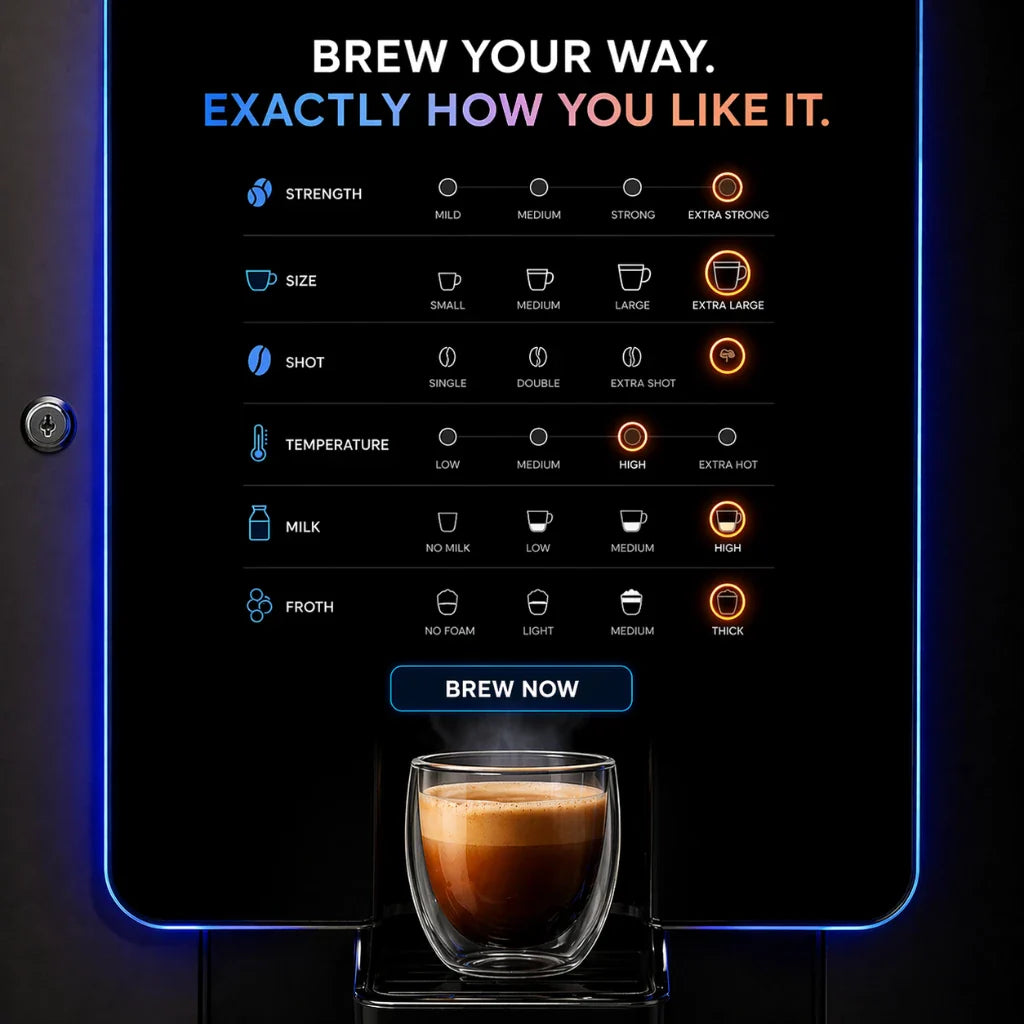
- Personalización mediante pantalla táctil: Las interfaces digitales permiten a los clientes ajustar la intensidad del shot, la proporción de leche y el tamaño de la bebida, mejorando la satisfacción en puntos de autoservicio.
Nota para el comprador: La máquina de café premium de sobremesa con pantalla táctil combina la molienda de grano fresco con una personalización completa mediante pantalla táctil, con un tamaño adecuado para oficinas y pequeños espacios comerciales.
Máquinas de espresso vs. máquinas de café instantáneo
Elegir entre una máquina de espresso «bean-to-cup» y una unidad basada en polvo instantáneo afecta la calidad de la bebida, la velocidad de procesamiento y la complejidad del mantenimiento de manera distinta según las prioridades del negocio. Las máquinas de espresso son más costosas y requieren más mantenimiento, pero ofrecen una calidad de bebida notablemente superior.
Espresso «bean-to-cup» — Ventajas
- Sabor de café recién molido similar al de una cafetería
- Menú de bebidas más amplio a partir de una única extracción base
- Mayor valor percibido que permite precios premium
Espresso «bean-to-cup» — Limitaciones
- Costo del equipo más elevado que las máquinas de café en polvo
- Requiere limpieza más frecuente del molinillo y del grupo de preparación
Máquinas de café instantáneo — Ventajas
- Menor costo del equipo
- Tiempo de preparación por taza más rápido, operación mecánica más simple
Máquinas de café instantáneo — Limitaciones
- Calidad de sabor notablemente inferior a la del espresso recién molido
- Menú de bebidas menos diferenciado en general
Los compradores que evalúen esta decisión junto con el presupuesto general de equipos deben consultar la guía de precios de máquinas expendedoras de café y la guía de precios de dispensadores de café para comparar los costos actuales en ambas categorías.
Tabla comparativa de modelos
Esta comparación resume los modelos de espresso y aquellos con capacidad «bean-to-cup» disponibles para colocación en entornos comerciales y de oficina.
| Modelo | Tipo de preparación | Mejor uso |
|---|---|---|
| Máquina premium de sobremesa con pantalla táctil | Espresso «bean-to-cup», personalización táctil | Oficinas, espacios comerciales pequeños |
| Máquina expendedora de café CorePro | «Bean-to-cup» con menú estándar | Ubicaciones comerciales estándar |
| Máquina de café y bebidas calientes | Multibebida, alta capacidad | Ubicaciones comerciales de alto tráfico |
| Máquina expendedora de café Pro | Servicio completo, gran capacidad | Rutas de alto volumen y servicio completo |
| Sistema de máquina expendedora de café | Equipo y sistema de insumos integrado | Operadores que estandarizan múltiples ubicaciones |
Capacidad del menú de bebidas
La capacidad del menú en una máquina expendedora de espresso se extiende mucho más allá de un simple café solo, ya que la misma extracción presurizada que produce un espresso puro también sirve como base para lattes, cappuccinos, macchiatos y americanos cuando se combina con un sistema de leche y una línea de agua caliente. Esta versatilidad es lo que separa a las plataformas «bean-to-cup» de las máquinas de bebida única instantánea.
Las ubicaciones que se dirigen a una base de clientes más amplia suelen combinar esta variedad con opciones frías; máquinas como la máquina expendedora de café helado extienden la misma calidad de café recién preparado a formatos con hielo y «cold-brew», capturando una demanda que una plataforma exclusiva de café caliente perdería por completo.
¿Quién debería comprar una máquina expendedora de espresso?
Las máquinas expendedoras de espresso se adaptan a lugares donde la calidad de la bebida impulsa directamente la repetición del uso: oficinas, comercios de alta gama, entornos de hospitalidad y cualquier ubicación que compita con cafeterías cercanas por el sabor y no solo por la conveniencia. El posicionamiento premium tratado en las mejores máquinas de café para oficina refleja exactamente este perfil de comprador.
Los operadores que construyen una ruta de máquinas expendedoras de café en diversos tipos de ubicación suelen reservar las unidades de espresso «bean-to-cup» para los puntos de mayor visibilidad, mientras utilizan máquinas de café instantáneo en sitios de menor tráfico donde la eficiencia de costos importa más que la sofisticación de la bebida.
Mantenimiento de máquinas «bean-to-cup»
El mantenimiento de las máquinas de espresso «bean-to-cup» es más frecuente que el de las unidades instantáneas porque el molinillo, el grupo de preparación y el sistema de leche acumulan residuos que afectan tanto al sabor como a la fiabilidad mecánica si se descuidan. El enjuague diario del grupo de preparación y la limpieza profunda semanal son el estándar, siguiendo el cronograma detallado en la guía de limpieza y mantenimiento.
Los compradores también deben familiarizarse con los componentes del molinillo, el pistón de preparación y el espumador de leche cubiertos en la guía de repuestos, ya que estos se desgastan más rápido en las máquinas de espresso que los componentes equivalentes en las unidades de café instantáneo en polvo.
Consideraciones de precio y valor
El precio de las máquinas expendedoras de espresso es más alto que el de las alternativas instantáneas debido al hardware añadido del molinillo, el pistón de preparación y el sistema de leche, pero el valor se sustenta en una mayor calidad percibida de la bebida, lo que favorece una mayor fidelización del cliente y, donde sea aplicable, precios por taza más altos. Vale la pena sopesar este compromiso frente al marco de rentabilidad en ¿son rentables las máquinas expendedoras de café? antes de comprometerse con la mayor inversión inicial.
¿Listo para comprar máquinas expendedoras de café espresso y «bean-to-cup»?
Explore la línea completa de máquinas expendedoras de café fresco de VMFS USA diseñadas para una extracción con calidad de espresso.
Comprar máquinas expendedoras de café
Compartir:
Máquina de café expendedora para pequeñas empresas: la guía completa
Arrendamiento de máquinas expendedoras de café: cómo funciona el arrendamiento y cuánto cuesta