


Máquina expendedora de café para oficinas: Por qué es indispensable
Una máquina expendedora de café para uso en oficinas debe adaptarse al número de empleados, las expectativas sobre la variedad de bebidas y el espacio disponible con mayor precisión que una instalación comercial de alto volumen, ya que las oficinas experimentan una demanda concentrada en horas específicas en lugar de un flujo constante durante todo el día. Esta guía detalla cómo dimensionar una máquina para su equipo, comparar opciones de pago y de bebidas, y evitar los desajustes comunes que dejan a las oficinas con equipos poco potentes o innecesariamente complejos.
Tabla de contenidos
- Por qué las necesidades de café en la oficina son distintas
- Dimensionamiento de la máquina según su plantilla
- Tipos de máquinas adecuadas para oficinas
- Consideraciones sobre variedad de bebidas y preferencias de los empleados
- Opciones de pago para oficinas
- Tabla comparativa de máquinas para oficinas
- Comprar frente a alquilar para una oficina
- Espacio y ubicación dentro de la oficina
- Expectativas de mantenimiento para máquinas de oficina
- Preguntas frecuentes
Por qué las necesidades de café en la oficina son distintas
Las necesidades de café en las oficinas difieren de las instalaciones minoristas o industriales porque la demanda se concentra en ventanas de tiempo predecibles por la mañana y después del almuerzo, en lugar de distribuirse uniformemente a lo largo del día. Esto significa que la velocidad de procesamiento durante esos minutos pico es más importante que la capacidad diaria bruta. Una máquina de oficina que prepara el café lentamente creará una fila visible a las 9 a. m., incluso si su producción diaria total fuera más que suficiente.
Esto distingue la estrategia de instalación en oficinas de los requisitos de ciclo continuo y mayor volumen cubiertos en la guía de máquinas expendedoras de café comerciales y la guía de máquinas expendedoras de café industriales, ambas priorizando un rendimiento sostenido en múltiples turnos sobre la concentración en horas pico característica de las oficinas.
Velocidad en horas pico
Los ciclos de preparación rápidos importan más que la capacidad diaria total durante las horas punta de la mañana.
Tamaño adecuado
Las salas de descanso de las oficinas suelen ser más pequeñas que los espacios comerciales o industriales, lo que limita el tamaño de la máquina.
Satisfacción de los empleados
La calidad y variedad de las bebidas afectan directamente la percepción de los beneficios laborales y la moral diaria.
Operación sencilla
El personal de oficina necesita una interfaz intuitiva sin necesidad de una gestión de rutas de venta especializada.
Dimensionamiento de la máquina según su plantilla
El dimensionamiento de una máquina expendedora de café según la plantilla comienza por estimar la demanda diaria de tazas; una base razonable es de 1.5 a 2 tazas por empleado por jornada laboral, ajustada al alza para oficinas con una fuerte cultura cafetera o jornadas laborales largas. Un tamaño insuficiente crea los cuellos de botella en horas pico descritos anteriormente, mientras que un tamaño excesivo desperdicia tanto el presupuesto como el espacio de la sala de descanso.
- Menos de 15 empleados: Una unidad compacta de sobremesa suele cubrir la demanda cómodamente.
- 15–50 empleados: Una máquina comercial estándar de capacidad media maneja los picos de mañana y tarde sin recargas frecuentes.
- Más de 50 empleados: Las unidades de mayor capacidad, o varias máquinas distribuidas en diferentes pisos, evitan cuellos de botella durante los periodos de descanso concentrados.
Consejo de dimensionamiento: Tenga en cuenta el tráfico de visitantes y clientes por separado del número de empleados; las oficinas con reuniones frecuentes o visitas de clientes deben optar por un tamaño superior a la base solo para empleados para evitar quedarse cortos durante momentos de alta visibilidad.
Tipos de máquinas adecuadas para oficinas
La selección del tipo de máquina para uso en oficinas equilibra la calidad de la bebida con el tamaño y la simplicidad del mantenimiento, ya que la mayoría de las oficinas carecen de personal especializado para gestionar sistemas complejos de múltiples tolvas. El tipo correcto depende en gran medida del tamaño de la empresa y de cuán central sea la calidad del café para la cultura laboral.
Unidades compactas de grano a taza
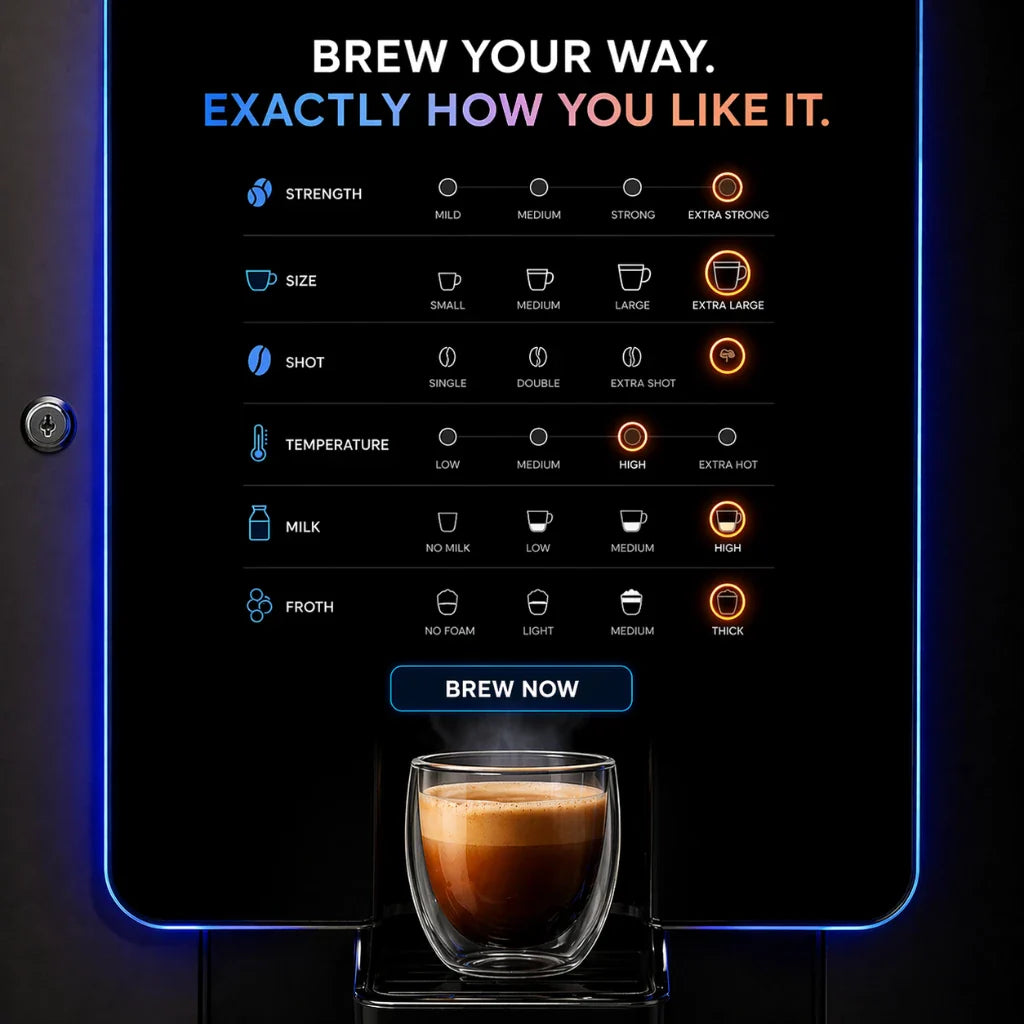
Las máquinas compactas de grano a taza, como la máquina de café de sobremesa premium con pantalla táctil, ofrecen una calidad de café recién molido en un espacio adecuado para las salas de descanso estándar de las oficinas, siendo ideales para equipos pequeños y medianos que valoran la calidad.
Máquinas de oficina comerciales estándar
Las unidades comerciales de capacidad media como la máquina expendedora de café CorePro equilibran la variedad de bebidas, el rendimiento y el tamaño para oficinas de entre 15 y 50 empleados sin la complejidad de los equipos de grado industrial.
Sistemas de múltiples bebidas para oficinas grandes
Las oficinas más grandes se benefician de menús más amplios y un mayor rendimiento en máquinas como la máquina expendedora de café y bebidas calientes, que maneja un mayor volumen de transacciones sin sacrificar la velocidad durante los periodos pico.
Consideraciones sobre variedad de bebidas y preferencias de los empleados
La variedad de bebidas afecta directamente cuánto utilizan los empleados la máquina de café frente a la opción de ir a una cafetería externa, ya que una máquina limitada solo a café negro básico descuida a la parte de la oficina que prefiere lattes, capuchinos o té. Equilibrar la variedad con la complejidad del mantenimiento es el principal dilema en esta decisión.
Las oficinas que evalúan este equilibrio pueden consultar la comparación general en las mejores máquinas de café para oficinas y la guía de operación práctica en cómo usar una máquina de café en la oficina, donde se aborda la variedad frente a la simplicidad desde la perspectiva de la experiencia del empleado.
Opciones de pago para oficinas
Las opciones de pago para máquinas de café en oficinas van desde totalmente gratuitas (subvencionadas por la empresa) hasta pago por taza con integración de tarjeta sin contacto o credencial, y el modelo correcto depende de la cultura empresarial y la filosofía presupuestaria respecto a los beneficios laborales. Los modelos gratuitos eliminan la fricción por completo, pero trasladan el costo recurrente totalmente al empleador.
Los modelos de pago con transacciones rápidas sin contacto reducen el tiempo de espera en comparación con las configuraciones que solo aceptan efectivo, un factor importante durante la hora punta de la mañana mencionada anteriormente en esta guía. Las oficinas que evalúan modelos subvencionados frente a los de pago deben considerar esta decisión dentro de la planificación de precios general para el equipo en sí.
Tabla comparativa de máquinas para oficinas
Esta comparación resume los tipos de máquinas según el tamaño de la oficina y la complejidad de las bebidas, ayudando a reducir la selección antes de evaluar modelos específicos.
| Tipo de máquina | Mejor tamaño de oficina | Complejidad de bebidas |
|---|---|---|
| Unidad de sobremesa de grano a taza | Menos de 15 empleados | Moderada a alta (molido fresco) |
| Máquina comercial CorePro | 15–50 empleados | Moderada, menú estándar |
| Máquina de café y bebidas calientes | Más de 50 empleados | Alta, gran variedad |
| Sistema de máquina expendedora | Oficinas con varios pisos | Estandarizado en varias unidades |
Comprar frente a alquilar para una oficina
Elegir entre comprar o alquilar una máquina expendedora de café afecta el costo inicial, la flexibilidad y el presupuesto a largo plazo de manera diferente que en las instalaciones comerciales o industriales, ya que las decisiones de oficina a menudo ponderan el valor del beneficio laboral junto con el análisis de costos puro.
Comprar — Ventajas
- Menor costo total si la oficina planea conservar la máquina varios años
- Control total sobre el modelo de máquina y la configuración de bebidas
Comprar — Limitaciones
- Requiere capital inicial y responsabilidad de mantenimiento interno
Alquilar — Ventajas
- Menor costo inicial, a menudo combinado con servicio y suministros
- Más fácil de actualizar o cambiar de máquina a medida que cambia el tamaño del equipo
Alquilar — Limitaciones
- Costo mayor durante un periodo de varios años en comparación con la compra
El desglose completo de las tarifas mensuales y las consideraciones contractuales se detallan en la guía de costos de alquiler, mientras que los precios de compra actuales de los modelos se detallan en la guía de precios de dispensadores de café para las oficinas listas para comparar ambos caminos directamente.
Espacio y ubicación dentro de la oficina
La ubicación dentro de la oficina afecta tanto la tasa de uso como la interrupción del flujo de trabajo; una máquina escondida en una esquina poco conveniente se utiliza menos que una situada a lo largo de una ruta natural cerca de escritorios o salas de reuniones. Las salas de descanso siguen siendo la ubicación estándar, pero las áreas comunes centrales pueden superar a las cocinas aisladas en número de transacciones diarias.
Los requisitos de instalación (energía y agua si corresponde) deben confirmarse respecto al espacio antes de finalizar la ubicación, siguiendo los estándares cubiertos en la guía de instalación adaptada específicamente a la infraestructura eléctrica de la oficina.
Expectativas de mantenimiento para máquinas de oficina
Las expectativas de mantenimiento para las máquinas de oficina son menores que para las instalaciones comerciales o industriales, pero aún requieren una rutina constante, ya que incluso las máquinas de bajo volumen acumulan residuos de aceites de café y cal con el tiempo. Designar a un miembro del personal o un contacto de instalaciones para encargarse de las tareas semanales básicas evita la degradación gradual del sabor tratada en la guía de limpieza y mantenimiento.
Las oficinas sin personal de mantenimiento interno deben confirmar qué soporte técnico se incluye con una garantía de compra o contrato de alquiler antes de comprometerse, ya que la carga de mantenimiento inesperada es una fuente común de insatisfacción con los programas de café de oficina después de la instalación inicial.
¿Listo para encontrar la máquina expendedora de café adecuada para su oficina?
Explore la línea de máquinas expendedoras de café comerciales de VMFS USA y encuentre la opción perfecta para el tamaño y espacio de su equipo.
Comprar máquinas de café
Compartir:
Los mejores productos para vender en una máquina expendedora con IA: Guía detallada para operadores
Máquina de café expendedora para pequeñas empresas: la guía completa