


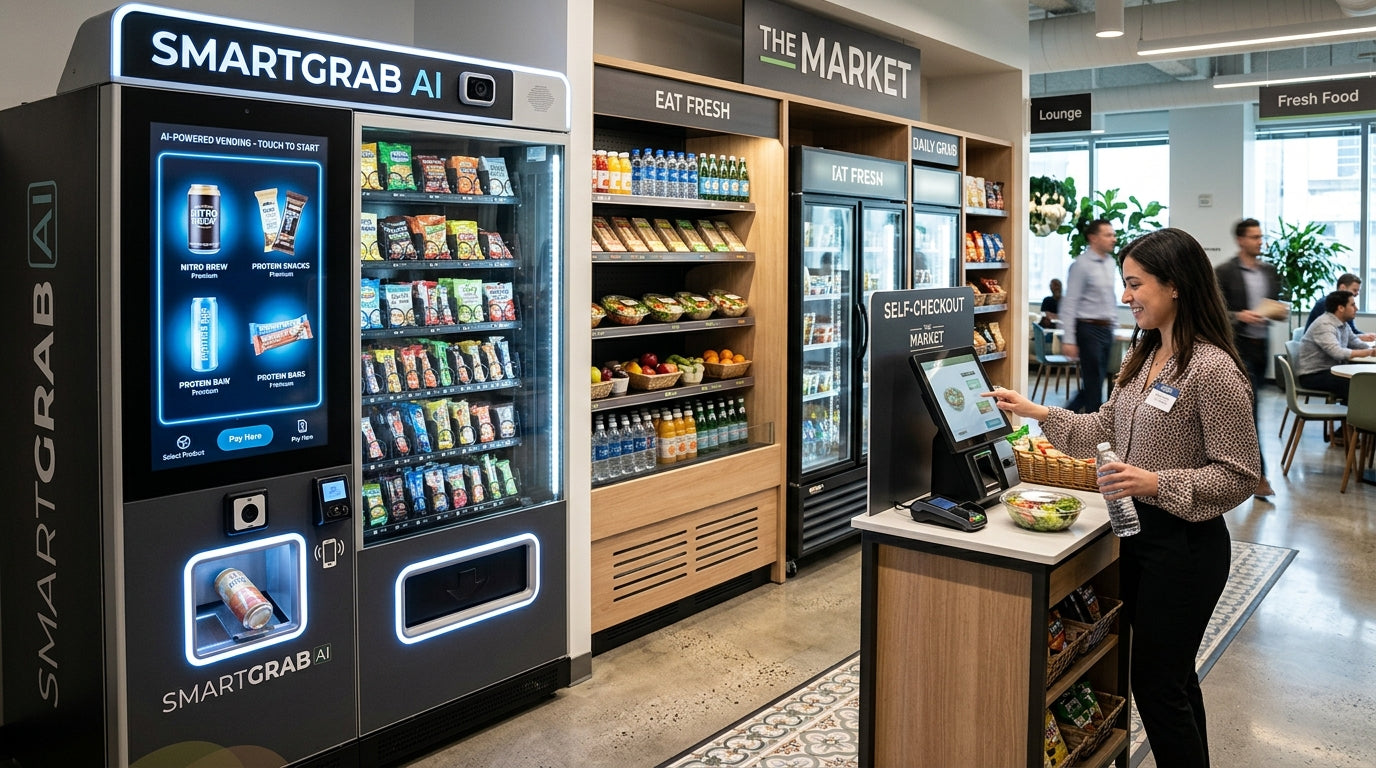


Diseñe la solución de vending perfecta para su ubicación y clientes.

Únete al boletín de VMFS y forma parte de una red próspera dedicada al éxito colectivo.
Un registro. Posibilidades infinitas.
El futuro de las máquinas expendedoras con IA apunta hacia una personalización más profunda, la expansión a categorías de productos de mayor valor y una integración más estrecha entre el hardware de reconocimiento y el software predictivo, construyendo directamente sobre la tecnología de reconocimiento e inventario que ya es estándar en las máquinas actuales. Ninguna de estas direcciones son saltos especulativos; extienden tendencias ya visibles en los despliegues actuales, desde las mejoras en la precisión de la visión artificial hasta el cambio hacia mezclas de productos dinámicas y basadas en datos, temas tratados en Cómo las máquinas expendedoras con IA optimizan las ventas. Lo que cambia en los próximos años no es tanto el concepto subyacente, sino la sofisticación de lo que hace el software con los datos que el hardware ya recopila.
Esta guía abarca las tendencias tecnológicas y de mercado con más probabilidades de dar forma a la próxima fase de las expendedoras con IA, presentadas como proyecciones informadas basadas en la trayectoria actual en lugar de certezas, junto con lo que los operadores de hoy pueden preparar razonablemente ahora.
Tabla de contenidos
La tasa de crecimiento de dos dígitos del mercado de máquinas expendedoras inteligentes, combinada con la rápida maduración de la visión artificial y la infraestructura de pagos sin efectivo, establece la trayectoria base sobre la que se construye el futuro de la categoría en lugar de apartarse de ella; datos y factores cubiertos en Tamaño del mercado de máquinas expendedoras con IA. La familiaridad del público con el comercio gestionado por IA también ha crecido rápidamente tras experimentos ampliamente cubiertos en comercio autónomo, lo que reduce la fricción de adopción para nuevos formatos y categorías que habrían parecido inusuales hace solo unos años, un cambio discutido en El experimento de las máquinas expendedoras con IA: cómo está cambiando el comercio minorista inteligente.
Los sistemas de reconocimiento que ya identifican lo que un cliente retira de un estante son una base natural para funciones de recomendación y lealtad, ya que la misma infraestructura de cámaras y sensores podría extenderse de manera plausible para reconocer a los clientes recurrentes y mostrar sugerencias de productos personalizadas en la pantalla táctil de la máquina. Los precios dinámicos —ajustar el precio según la hora del día, los niveles de inventario o los patrones de demanda— son técnicamente sencillos dados los datos de ventas en tiempo real que ya generan las máquinas de IA, aunque la adopción generalizada dependerá probablemente tanto de la aceptación del consumidor y las normas de transparencia de precios como de la tecnología subyacente en sí.
La ventaja principal de las expendedoras con IA —prevención precisa de pérdidas a nivel de artículo en un estante abierto— es lo que ya hace que la electrónica y otras categorías de mayor valor sean viables de una manera que una máquina expendedora de espiral nunca podría, un cambio que ya está en marcha y cubierto en Las máquinas expendedoras de electrónica impulsan la IA en ciudades inteligentes y la sostenibilidad. A medida que la precisión del reconocimiento mejora aún más, las categorías que requieren una identificación aún más estricta —cosméticos, productos farmacéuticos especializados con los marcos regulatorios adecuados, accesorios de ropa de alta gama— se convierten en candidatos más plausibles para el comercio minorista desatendido, extendiendo la categoría mucho más allá de sus orígenes de snacks y bebidas.
Combinar visión artificial, sensores de peso y RFID dentro de una sola máquina —en lugar de depender únicamente de un método de detección— es una dirección clara a corto plazo, ya que cada método compensa las debilidades de los otros, y los sistemas multimodales ya reducen las lecturas falsas en comparación con las configuraciones solo de visión cubiertas en Desglose de las piezas de las máquinas expendedoras con IA. Las mejoras en la computación de borde (edge computing) probablemente seguirán trasladando más procesamiento de reconocimiento a la propia máquina en lugar de a la nube, reduciendo la latencia de pago y mejorando la confiabilidad durante las interrupciones de conectividad, una compensación explicada en Software de máquinas expendedoras con IA.
Las alertas predictivas de reabastecimiento ya reducen las conjeturas en la gestión de rutas, y el siguiente paso lógico —sistemas de reabastecimiento robóticos o semiautomatizados que reducen la mano de obra por visita— es un área que varios fabricantes y empresas de logística están explorando activamente, aunque el despliegue comercial generalizado probablemente tarde más que las mejoras en el lado del software. A corto plazo, el cambio más inmediato es el software de optimización de rutas que secuencia las visitas de reabastecimiento basándose en datos de inventario en tiempo real en toda una flota, extendiendo los cálculos de cantidad de máquinas y eficiencia de ruta cubiertos en Cuántas máquinas expendedoras con IA necesitas para administrar un negocio a tiempo completo.
Las máquinas expendedoras con IA ya reducen el desperdicio de alimentos y el uso de energía en comparación con los equipos heredados mediante una mejor rotación de inventario y ciclos de refrigeración más inteligentes, y este ángulo de eficiencia probablemente se convierta en un argumento de venta más explícito a medida que los municipios y los grandes propietarios de inmuebles ponderen las credenciales de sostenibilidad en las decisiones de selección de proveedores. La integración con una infraestructura de ciudades inteligentes más amplia —redes eléctricas compartidas, datos de transporte público en tiempo real que informan las decisiones de ubicación, informes de sostenibilidad municipal— representa una expansión a más largo plazo, pero direccionalmente clara, del papel de la categoría más allá de las transacciones minoristas individuales.
No todas las tendencias cubiertas en esta guía se mueven al mismo ritmo, y separar los cambios operativos a corto plazo de las apuestas tecnológicas a más largo plazo ayuda a los operadores a planificar de manera realista en lugar de perseguir capacidades especulativas demasiado pronto.
| Tendencia | Marco temporal esperado |
|---|---|
| Reconocimiento multimodal (visión + peso + RFID) | Corto plazo, ya está surgiendo |
| Software de optimización de rutas para toda la flota | Corto plazo |
| Precios dinámicos basados en la demanda | Corto a mediano plazo |
| Expansión hacia categorías de mayor valor | Mediano plazo, depende de la categoría |
| Reabastecimiento robótico o automatizado | Largo plazo, etapa inicial de exploración |
Adopción temprana de nuevas capacidades
Posicionamiento de pionero en una categoría o conjunto de funciones emergente.
Diferenciación potencial de los competidores que siguen operando con configuraciones básicas.
Mayor riesgo de invertir en tecnología que cambia antes de madurar.
Mantenerse con tecnología probada
Menor riesgo, dado que el hardware actual de las expendedoras con IA ya tiene un historial probado.
Más fácil de modelar el retorno de inversión (ROI) frente a puntos de referencia de rendimiento establecidos.
Más lento en capturar ventajas una vez que las funciones emergentes se vuelven estándar.
Seleccionar un fabricante cuya plataforma de software reciba actualizaciones periódicas posiciona al operador para beneficiarse de las mejoras en la personalización y la optimización de rutas a medida que se implementan, sin necesidad de reemplazar el hardware; un factor que vale la pena evaluar directamente frente a la calidad del soporte del fabricante cubierto en Fabricantes de máquinas expendedoras con IA en EE. UU..
Los datos de ventas e inventario consistentes y bien organizados recopilados hoy se convierten en la base de entrenamiento para funciones más sofisticadas de personalización y precios más adelante, por lo que los operadores que priorizan la higiene de datos ahora están mejor posicionados para adoptar estas capacidades a medida que maduran.
La expansión hacia categorías de productos de mayor valor o novedosas debe seguir primero el éxito demostrado con formatos probados, en lugar de saltarse pasos basados en el crecimiento especulativo de la categoría, un enfoque de secuenciación que conecta con los fundamentos de ubicación y formato en la Guía completa del comprador 2026 y Datos de ubicación de máquinas expendedoras con IA.
Empiece con tecnología que ya ha sido probada
Explore las máquinas de vending con IA construidas sobre la base de reconocimiento y software en la que se está extendiendo el futuro de la categoría.
Explorar máquinas de vending con IA
Compartir:
Cómo comprar una máquina expendedora de IA: debe seguir estas pautas
Máquina expendedora con IA frente a micro mercado: ¿cuál se adapta mejor a su ubicación?