




Diseñe la solución de vending perfecta para su ubicación y clientes.

Únete al boletín de VMFS y forma parte de una red próspera dedicada al éxito colectivo.
Un registro. Posibilidades infinitas.
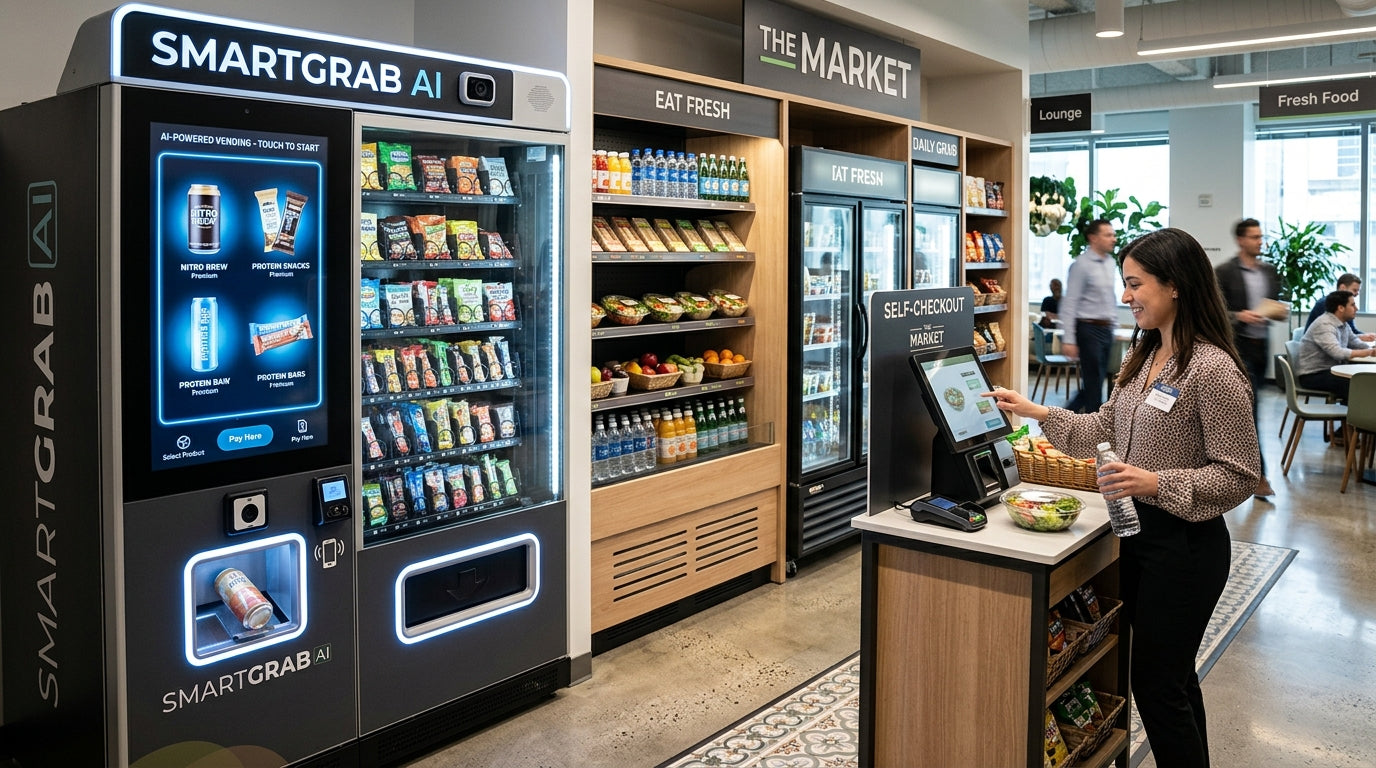
Una máquina expendedora con IA es una unidad autónoma única que utiliza visión por computadora o sensores de peso para identificar productos en un estante abierto, mientras que un micro mercado es una mini tienda abierta de autopago construida con múltiples instalaciones (refrigeradores, estanterías, un quiosco) que ocupa una sala o área de piso dedicada. La diferencia fundamental es la escala: un micro mercado suele tener de 150 a 300 unidades de mantenimiento de existencias (SKU) en una superficie mucho mayor, mientras que una máquina expendedora con IA almacena de 20 a 60 SKU en una sola unidad compacta, lo que hace que la elección entre ellas dependa en gran medida del espacio disponible y del número diario de personas previsto en el lugar, en lugar de ser una comparación sencilla de cuál es mejor o peor.
Esta guía analiza las diferencias prácticas en cuanto a espacio, costo, variedad de productos y experiencia de pago, así como qué tipo de ubicación se ajusta realmente a cada formato.
Tabla de contenidos
Una máquina expendedora con IA es una unidad única, cerrada o de estantes abiertos, que utiliza cámaras, sensores de peso o RFID para identificar los productos que un cliente retira, cobrando automáticamente al método de pago vinculado sin necesidad de un cajero o personal en el punto de pago. La mecánica técnica detrás de esta detección se trata en Qué es una máquina expendedora con IA y Cómo funcionan las máquinas expendedoras con IA.
Un micro mercado es un espacio minorista abierto que combina múltiples instalaciones refrigeradas y ambientales con un quiosco de autopago, funcionando como una pequeña tienda de conveniencia sin personal en lugar de una sola máquina. Los clientes recorren el espacio, seleccionan artículos libremente de estantes abiertos y escanean o realizan el pago en un quiosco central, lo que admite un surtido de productos mucho más amplio que cualquier unidad expendedora individual, pero requiere una sala dedicada o un área compartimentada para su instalación.
Una máquina expendedora con IA ocupa aproximadamente la misma superficie que un refrigerador grande, cabiendo en un nicho de pasillo o en un rincón de la sala de descanso, mientras que un micro mercado requiere una sala dedicada, generalmente de 150 a 400 pies cuadrados, ya que se ensambla a partir de múltiples instalaciones separadas en lugar de ser una sola unidad cerrada. Este requisito de espacio por sí solo descarta los micro mercados para muchas oficinas pequeñas y edificios residenciales que simplemente no tienen una sala para dedicar a este formato.
Los estantes abiertos de un micro mercado admiten una gama de productos drásticamente mayor —comidas frescas, múltiples marcas de bebidas, bocadillos y, a menudo, artículos no alimentarios— porque no está limitado por la capacidad de estante de una sola máquina, mientras que el número de SKU de una máquina expendedora con IA está limitado por su espacio físico, incluso en una configuración combinada. Esta ventaja de variedad es la razón principal por la que las oficinas más grandes con diversas preferencias de los empleados suelen preferir un micro mercado una vez que el número de personas justifica el espacio.
Los micro mercados generalmente requieren un mayor número de personas diarias para justificar su mayor inversión inicial y la mano de obra de reabastecimiento continua —normalmente 200 o más personas con acceso regular—, mientras que las máquinas expendedoras con IA pueden operar de manera rentable con niveles de tráfico mucho más bajos, lo que las convierte en la opción más flexible para ubicaciones más pequeñas o secundarias. Los umbrales de puntuación de ubicación para ambos formatos se cubren en Datos de ubicación de máquinas expendedoras con IA y Estudio de caso: Encontrar el punto óptimo.
La siguiente tabla aísla los factores prácticos que más influyen en qué formato se adapta a una ubicación determinada.
| Factor | Máquina expendedora con IA | Micro mercado |
|---|---|---|
| Huella (espacio) | Unidad única, nicho pequeño | Sala dedicada de 150-400 pies cuadrados |
| Número típico de SKU | 20–60 | 150–300+ |
| Umbral mínimo de tráfico | Más bajo, flexible | Más alto, normalmente 200+ personas |
| Inversión inicial | Más baja | Más alta |
| Complejidad de instalación | Baja, entrega y configuración única | Más alta, construcción de múltiples instalaciones |
Una máquina expendedora con IA suele costar entre $3,500 y $16,000 dependiendo del formato y la refrigeración, completamente instalada y lista para operar, mientras que la construcción total de un micro mercado —refrigeradores, estanterías, hardware de quiosco e instalación— generalmente oscila entre $15,000 y $40,000 o más dependiendo del tamaño de la sala y la cantidad de instalaciones. Esta brecha de costos es la razón principal por la que los micro mercados permanecen concentrados en oficinas más grandes donde el mayor número de personas puede justificar la inversión dentro de un plazo de recuperación razonable, un cálculo cubierto en Máquinas expendedoras con IA: Costo y ROI de las máquinas expendedoras con IA.
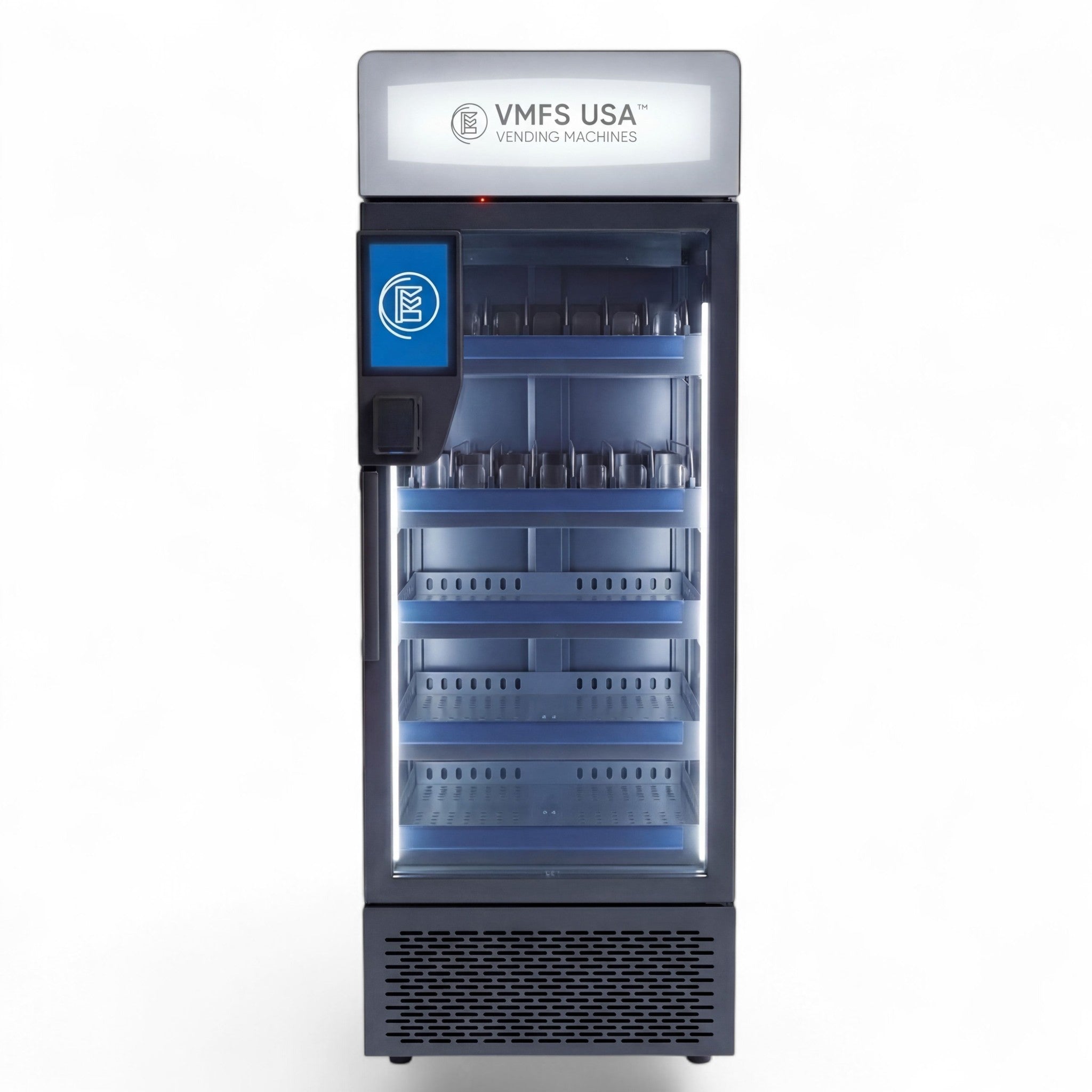
Las oficinas más pequeñas, gimnasios, edificios residenciales y salas de descanso secundarias con menos de 150 usuarios diarios regulares suelen estar mejor atendidas por una o más máquinas expendedoras con IA, ya que el menor costo inicial y la ubicación flexible no requieren dedicar una sala entera al formato. Los campus corporativos más grandes y las oficinas con 200 o más empleados, donde la variedad y una experiencia similar a una tienda mejoran significativamente la satisfacción de los empleados, son donde los micro mercados justifican su mayor inversión: la colección de máquinas expendedoras con IA para llevar, la máquina expendedora con refrigerador inteligente con IA, la máquina expendedora con refrigerador inteligente y la máquina expendedora combinada con refrigerador inteligente con IA de VMFS USA cubren los formatos de vending que vale la pena comparar con la construcción de un micro mercado, específicamente para ubicaciones de tamaño mediano.
Máquina expendedora con IA
Menor costo inicial e instalación rápida y en una sola visita.
Ubicación flexible en espacios pequeños sin necesidad de una sala dedicada.
Número de SKU limitado en comparación con un micro mercado completo.
Micro mercado
Variedad de productos mucho más amplia, similar a una tienda de conveniencia real.
Mejor opción para grandes oficinas con diversas preferencias de empleados.
Mayor costo inicial y requiere una sala dedicada para su instalación.
Colocar dos o tres máquinas expendedoras con IA especializadas —un refrigerador inteligente, una máquina de bocadillos para llevar— en una oficina grande puede aproximarse a la variedad de un micro mercado a un costo total sustancialmente menor y sin requerir una única sala dedicada, distribuyendo las unidades en las áreas de descanso existentes. Este enfoque también diversifica el riesgo, ya que si una sola máquina queda fuera de servicio, no se interrumpe todo el servicio de comida como ocurriría con una falla en el quiosco central de un micro mercado. La contrapartida es una experiencia menos unificada y similar a una tienda, además de requerir una coordinación de reabastecimiento ligeramente mayor en varias ubicaciones dentro del mismo edificio, una consideración vinculada a los cálculos de planificación de rutas en Cuántas máquinas expendedoras con IA necesitas para administrar un negocio de tiempo completo.
Los micro mercados requieren visitas de reabastecimiento más frecuentes debido a su mayor número de SKU y surtido de productos perecederos, y generalmente necesitan un control de prevención de pérdidas más cuidadoso, ya que los clientes recorren los estantes abiertos antes del autopago en lugar de interactuar con una sola unidad sellada. Las máquinas expendedoras con IA, por el contrario, cierran el ciclo de transacción directamente en el punto de retiro del artículo mediante la confirmación por visión o sensores de peso, lo cual es una razón por la que escalan más fácilmente a través de una ruta distribuida de múltiples ubicaciones que un número equivalente de micro mercados; una diferencia estructural explorada más a fondo en Máquinas expendedoras tradicionales vs. con IA y Máquina expendedora inteligente vs. máquina expendedora con IA.
Compare los formatos de máquinas expendedoras con IA para su espacio
Explore las máquinas diseñadas para ubicaciones que no necesitan la construcción de un micro mercado completo.
Explorar máquinas expendedoras con IA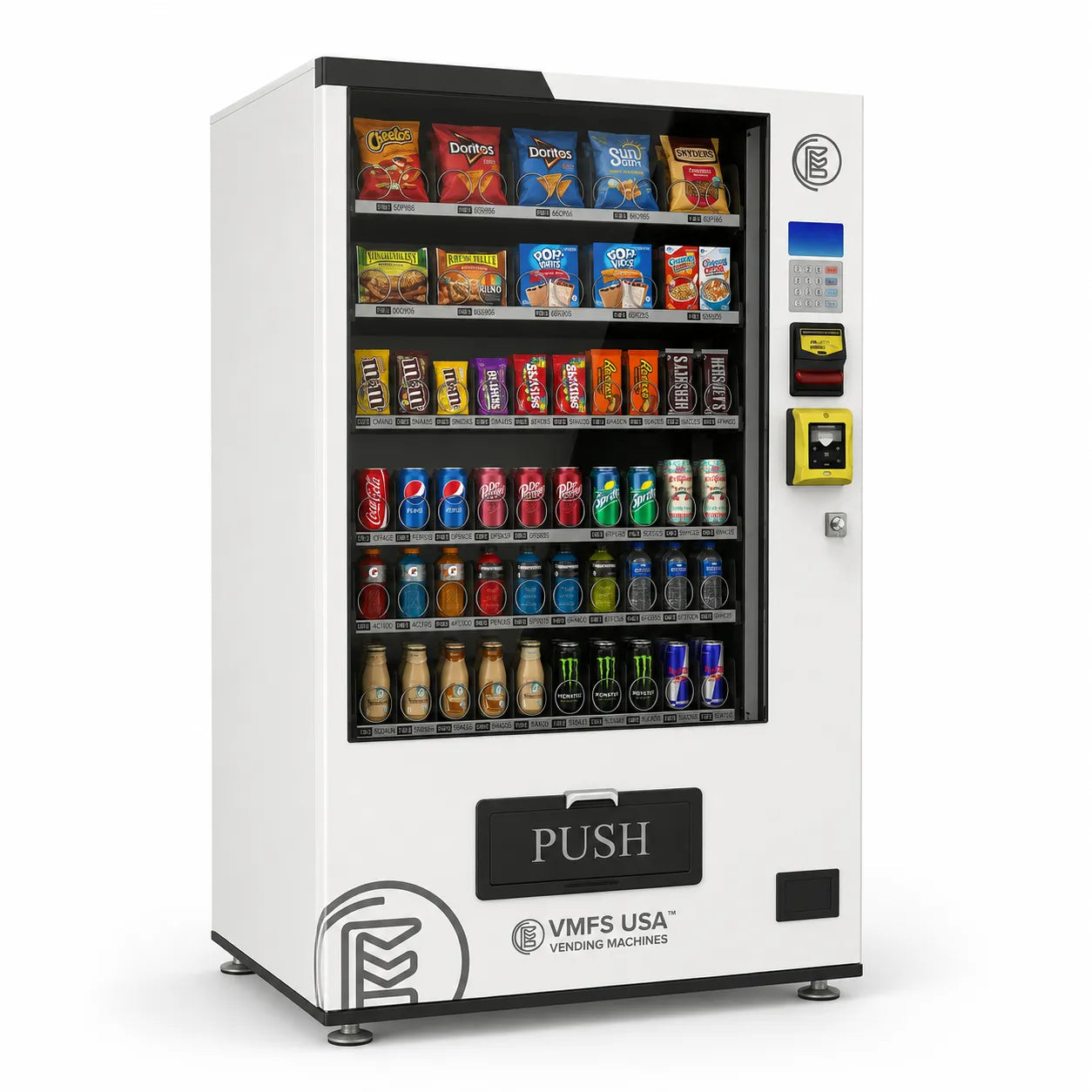
Compartir:
El futuro de las máquinas expendedoras con IA: hacia dónde se dirige la categoría
Servicios de reparación de máquinas expendedoras con IA: qué saber antes de que algo se averíe