




Diseñe la solución de vending perfecta para su ubicación y clientes.

Únete al boletín de VMFS y forma parte de una red próspera dedicada al éxito colectivo.
Un registro. Posibilidades infinitas.
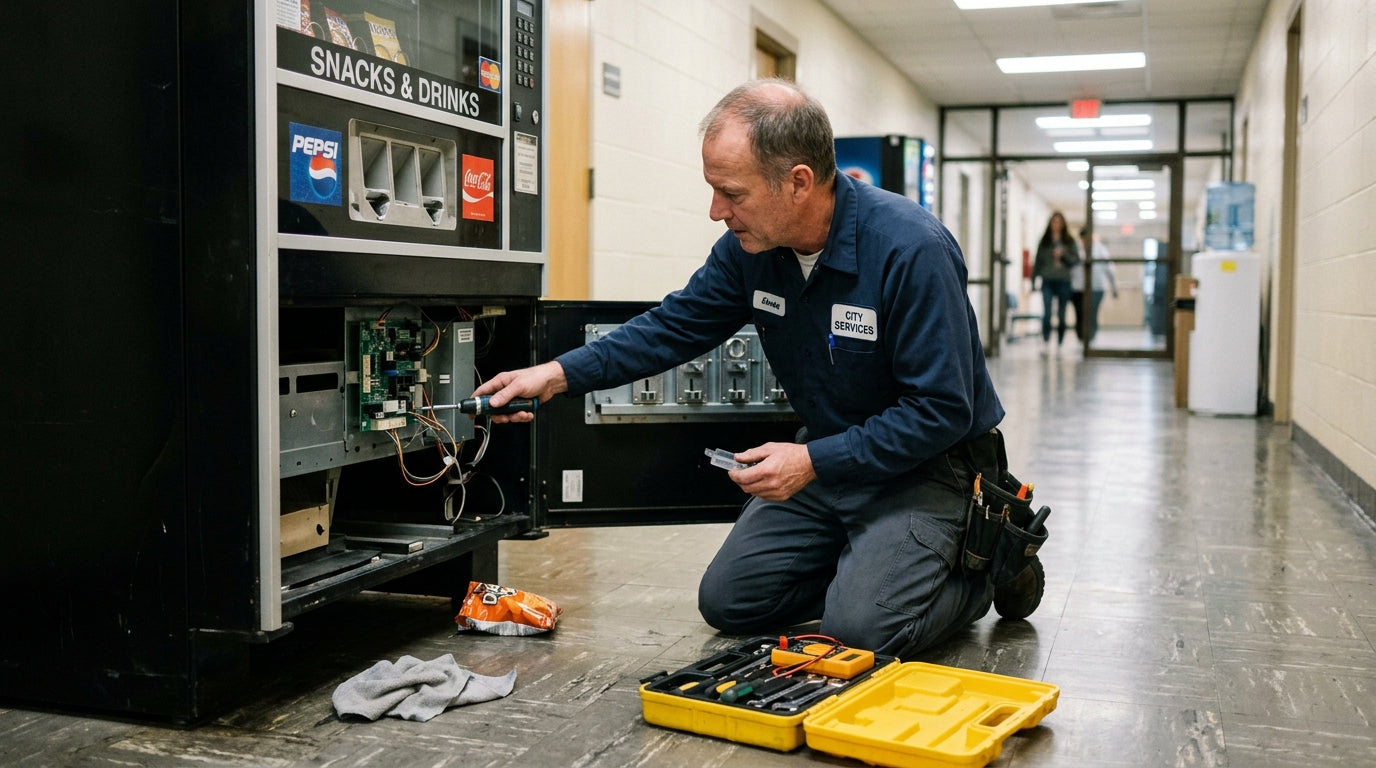
Los servicios de reparación de máquinas expendedoras con IA cubren el diagnóstico y la corrección de fallos de hardware y software (mal funcionamiento de cámaras o sensores, fallos del compresor de refrigeración, errores en terminales de pago y pérdida de conectividad) que impiden que una máquina procese las transacciones correctamente. La mayoría de las reparaciones se dividen en dos categorías: servicio en garantía gestionado directamente por el fabricante sin coste adicional más allá del envío, y reparación fuera de garantía pagada por incidente, ya sea a través del fabricante original o de un técnico independiente de equipos de vending. Entender en qué categoría cae un fallo determinado y con qué rapidez suele responder un fabricante es más importante para los resultados financieros de un operador que cualquier otro factor, ya que el tiempo de inactividad de la máquina elimina directamente los ingresos por cada día que una unidad permanece fuera de servicio.
Esta guía cubre las categorías de reparación más comunes, qué esperar del servicio en garantía frente al servicio de pago, los costes típicos de reparación y cómo decidir cuándo una reparación sigue teniendo sentido financiero frente a cuándo es mejor opción el reemplazo.
Tabla de contenidos
Cinco categorías representan la mayoría de las llamadas de servicio de máquinas expendedoras con IA: deriva en la calibración de cámaras o sensores, fallo del compresor de refrigeración, mal funcionamiento del terminal de pago, fallo del módulo de conectividad y fallos en el mecanismo de cierre. Cada una tiene una causa típica, complejidad de reparación e impacto en el tiempo de inactividad diferentes, razón por la cual entender la categoría antes de que ocurra un fallo ayuda al operador a responder más rápido cuando ocurre; el detalle a nivel de componentes de cada sistema se trata en Desglose de piezas de máquinas expendedoras con IA.
| Categoría de fallo | Causa típica | Complejidad de reparación |
|---|---|---|
| Deriva de cámara/sensor | Cambio de iluminación, polvo, cambio en el diseño | Baja, a menudo recalibración remota |
| Fallo del compresor | Antigüedad, sobrecarga, fuga de refrigerante | Alta, requiere servicio profesional |
| Error del terminal de pago | Error de firmware, desgaste del lector de tarjetas | Baja a moderada |
| Pérdida de conectividad | Inestabilidad de Wi-Fi, fallo del módulo | Baja a moderada |
| Fallo del mecanismo de cierre | Desgaste, interrupción de energía | Moderada |
La mayoría de las garantías de los fabricantes cubren piezas y mano de obra por defectos en materiales o mano de obra durante un período definido, comúnmente de uno a dos años, aunque la cobertura suele excluir daños por mal uso, modificaciones no autorizadas o elementos de desgaste normal como sellos de puertas. Confirmar exactamente qué activa una reclamación válida y con qué rapidez se compromete a responder el fabricante importa más que la duración anunciada de la garantía; una distinción tratada en Fabricantes de máquinas expendedoras con IA en EE. UU..
Una vez que una máquina queda fuera de garantía, las reparaciones pasan a un modelo de pago por incidente, ya sea a través del departamento de servicio del fabricante original o de un técnico de reparación independiente de equipos de vending, y el coste varía significativamente según el fallo específico y si las piezas están fácilmente disponibles en el mercado nacional o requieren un mayor tiempo de espera para su pedido.
Los componentes fiables reducen la frecuencia de reparaciones
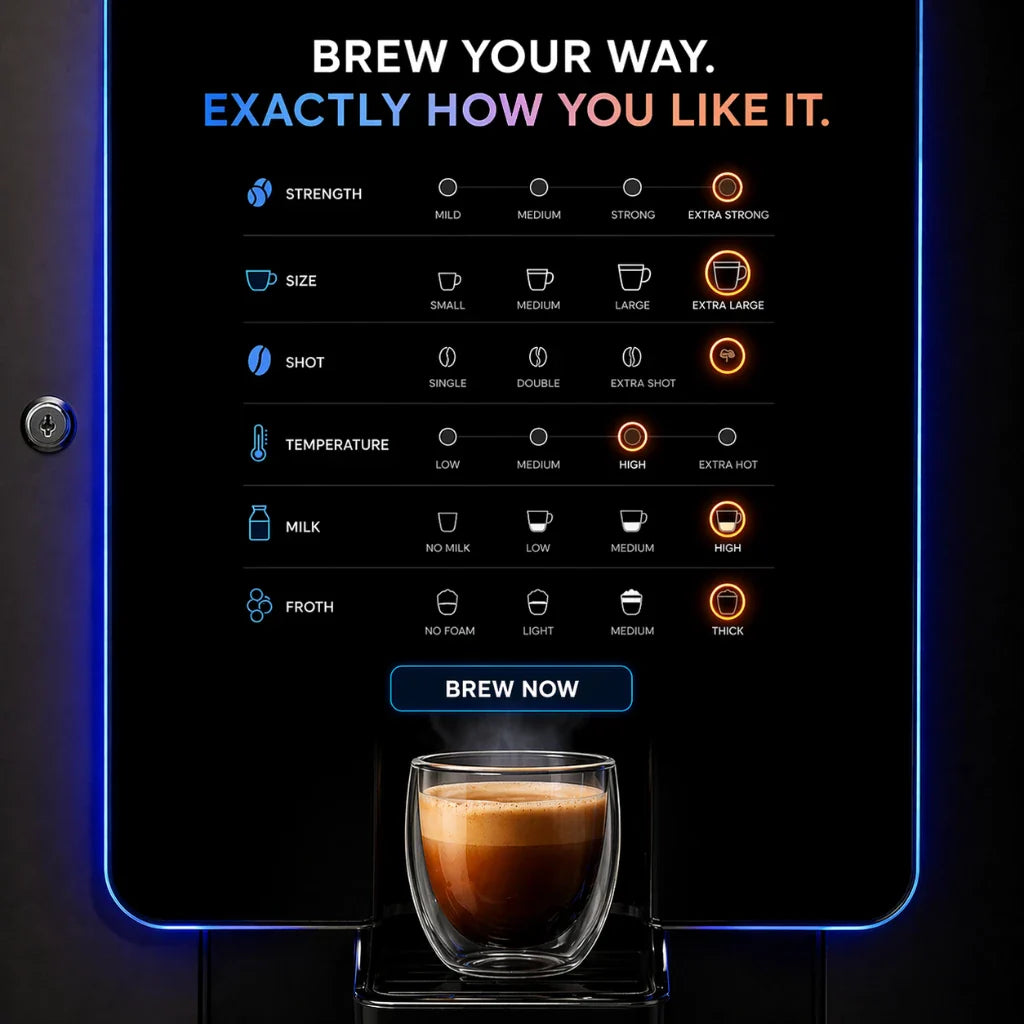
Las máquinas expendedoras de café construidas con hardware de elaboración y control duradero generan menos llamadas de servicio durante su vida útil.
Explorar máquinas expendedoras de caféLos costes de reparación fuera de garantía varían mucho según el tipo de fallo, con problemas de software como la recalibración de cámaras a menudo resueltos de forma remota a bajo coste o sin coste, mientras que los reemplazos de hardware (especialmente los compresores de refrigeración) representan la categoría de reparación de mayor coste a la que es probable que se enfrente una máquina durante su vida útil.
| Tipo de reparación | Rango de coste típico (fuera de garantía) |
|---|---|
| Recalibración remota de cámara/software | $0 – $150 |
| Reemplazo del terminal de pago | $150 – $500 |
| Reemplazo del módulo de conectividad | $100 – $400 |
| Reparación del mecanismo de cierre | $150 – $450 |
| Reemplazo del compresor | $500 – $1,800 |
El departamento de servicio del propio fabricante suele ser la primera y mejor opción, ya que tienen acceso directo a piezas patentadas y a la arquitectura de software específica de la máquina, pero los técnicos independientes de equipos de vending pueden reparar hardware más general (refrigeración, mecanismos de cierre, desgaste físico), a menudo más rápido y a menor coste una vez que la máquina está fuera de garantía. Al evaluar a un técnico independiente, confirme su experiencia específica con componentes de IA como sistemas de visión y software de reconocimiento, no solo experiencia general en refrigeración comercial o reparación de monederos, ya que estos conjuntos de habilidades no siempre coinciden.
Las comprobaciones trimestrales de calibración de cámaras y sensores detectan la deriva en el reconocimiento antes de que provoque un aumento significativo en las lecturas falsas de productos, mientras que monitorear los registros de temperatura del panel de control en la nube para detectar una deriva ascendente gradual en las unidades refrigeradas identifica un compresor defectuoso antes de que falle por completo en lugar de después; ambas prácticas se tratan con más detalle operativo en Cómo las máquinas expendedoras con IA optimizan las ventas. Mantener el software de la máquina actualizado a la última versión del fabricante también evita una categoría de errores de conectividad y reconocimiento que se resuelven en versiones posteriores pero persisten en máquinas con firmware desactualizado.
Una reparación generalmente tiene sentido financiero cuando el coste cae por debajo de aproximadamente el 25% al 30% del precio de una máquina comparable nueva o reacondicionada y a la unidad le quedan más de dos o tres años de vida útil. Una vez que una máquina requiere una segunda reparación mayor en un corto período, o el coste de la reparación específica se acerca a ese umbral del 25% al 30% en una unidad que ya está envejeciendo, el reemplazo generalmente produce una mejor economía a largo plazo que seguir invirtiendo en un activo envejecido; una comparación que se conecta directamente con los cálculos de amortización y coste total en Amortización de máquinas expendedoras con IA: prefabricadas frente a personalizadas y Máquinas expendedoras con IA: coste.
¿Considerando un reemplazo?
Compare las especificaciones y precios actuales de las máquinas expendedoras de café si una unidad antigua se acerca al umbral de reemplazo.
Explorar máquinas expendedoras de caféServicio del fabricante
Acceso directo a piezas patentadas y arquitectura de software.
Las reparaciones suelen conservar la cobertura de garantía restante.
Puede implicar tiempos de espera más largos durante períodos de alta demanda de servicio.
Técnico independiente
A menudo respuesta más rápida para problemas generales de hardware una vez fuera de garantía.
Puede ser menos costoso para reparaciones de componentes no patentados.
Puede carecer de experiencia específica con sistemas de visión y reconocimiento de IA.
Una máquina fuera de servicio para reparación genera cero ingresos por cada día que permanece inactiva, y esos ingresos perdidos a menudo superan el coste de la reparación misma para una ubicación de alto rendimiento; una reparación de $300 en una máquina que genera $40 al día en beneficio neto cuesta $210 adicionales en ingresos perdidos durante una semana de retraso en la reparación. Es por esto que el tiempo de respuesta y la disponibilidad de piezas, tratados en Fabricantes de máquinas expendedoras con IA en EE. UU., importan tanto como el precio de reparación anunciado al evaluar a un proveedor de servicios. Los operadores que gestionan una flota creciente también deben tener en cuenta el tiempo de respuesta de las reparaciones en la planificación del número de máquinas y la densidad de rutas tratada en Cuántas máquinas expendedoras con IA necesitas para administrar un negocio a tiempo completo.
Elija equipos respaldados por un soporte técnico rápido
Descubra máquinas expendedoras con IA diseñadas pensando en la fiabilidad y la rapidez de respuesta del servicio técnico.
Explore máquinas expendedoras con IA
Compartir:
Máquina expendedora con IA frente a micro mercado: ¿cuál se adapta mejor a su ubicación?
ROI del negocio de máquinas expendedoras de café: Cómo calcular rendimientos realistas