




Design the perfect vending solution for your location and customers.

Join the VMFS newsletter and step into a thriving network dedicated to collective success.
One signup. Endless possibilities.
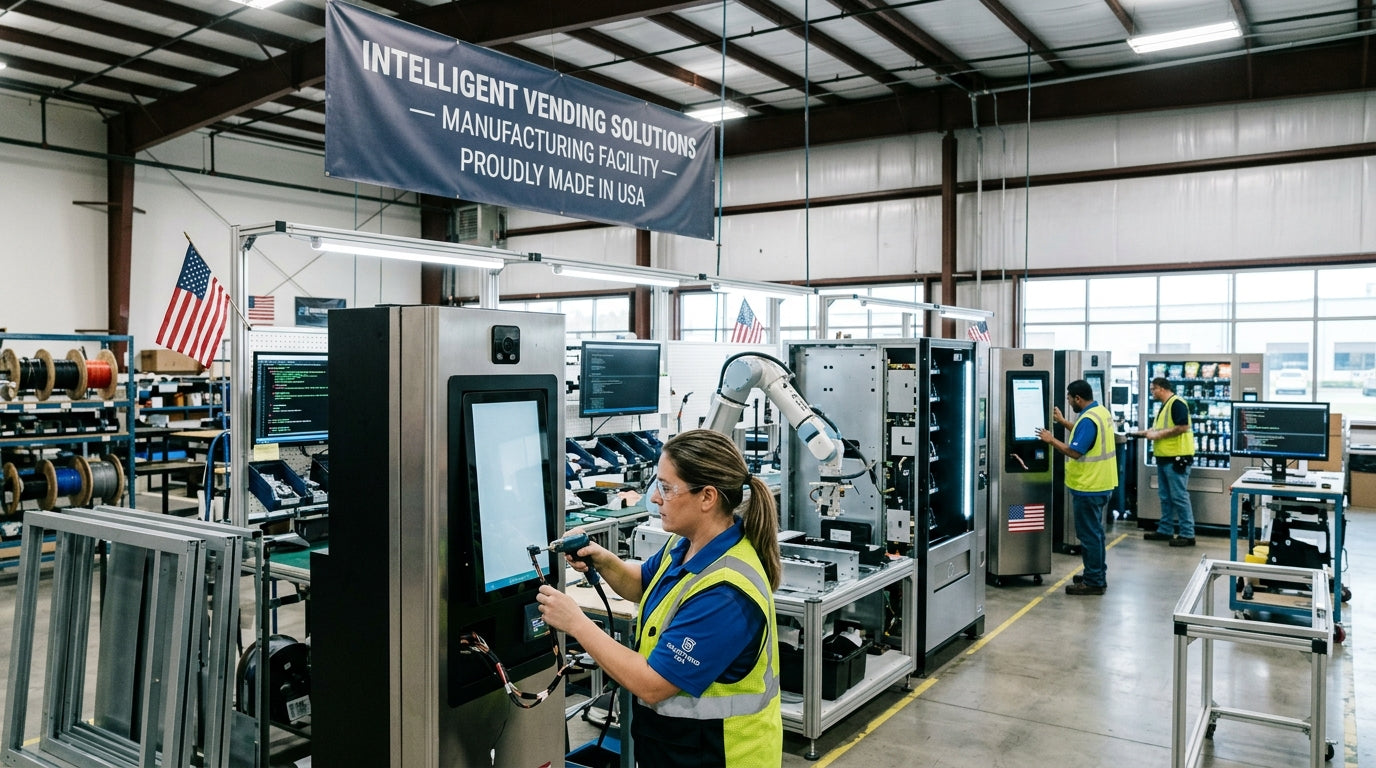
AI vending machine manufacturers in the USA range from domestic companies that design, assemble, and support equipment locally to importers and resellers of overseas-built hardware sold under a US-facing brand, and the difference between the two matters far more than most first-time buyers realize. A domestic manufacturer typically offers faster parts replacement, English-language technical support in a compatible time zone, and warranty service that doesn't require shipping a failed component overseas — advantages that directly affect machine uptime once a unit is deployed in the field. This guide breaks down what actually separates manufacturers in this category, the criteria worth checking before buying, and the trade-offs between domestic and overseas sourcing.
Rather than ranking specific companies, which changes constantly as manufacturers enter and exit the category, this guide focuses on the evaluation framework that holds up regardless of which specific machine you're comparing.
Table of Contents
Most AI vending hardware sold in the US market is either manufactured domestically with US-based assembly and support, or imported from overseas factories and sold through a US-facing distributor or reseller. The distinction shows up most clearly after the sale, not before it — during initial purchase, both categories can look similar on a spec sheet, but parts availability, service response time, and warranty enforcement diverge sharply once a machine develops a fault in the field. A domestic manufacturer can typically ship a replacement compressor, sensor board, or payment module within days, while an overseas-sourced machine may require weeks for a part to clear customs and arrive, during which the machine sits offline and generates zero revenue.
Five factors determine whether a manufacturer will be a reliable long-term partner rather than just a one-time equipment vendor: parts availability and lead time, warranty terms and enforcement, software platform maturity, customization flexibility, and the manufacturer's own track record of units actually deployed and running in the field. A manufacturer strong on hardware specs but weak on any one of these five factors creates ongoing operational risk that doesn't show up until months after the purchase.
| Criterion | What to Verify |
|---|---|
| Parts availability | Domestic stock vs. overseas order lead time |
| Warranty terms | Coverage length, what's excluded, claim process |
| Software maturity | Dashboard features, update frequency, uptime record |
| Customization | Format, branding, and configuration flexibility |
| Field track record | Number of units actually deployed and operating |
Warranty length matters less than warranty enforcement — a manufacturer offering a two-year warranty that's difficult to actually claim provides less real protection than one offering one year with a straightforward, documented claims process. Ask specifically how a warranty claim is initiated, what response time is guaranteed, and whether the manufacturer covers shipping costs for defective parts, since these operational details determine how much downtime a machine actually experiences when something fails. A manufacturer's support model should also address the software side directly, since a hardware warranty alone doesn't cover a recognition engine misfiring or a dashboard outage — factors covered in more depth in AI Vending Machine Software.
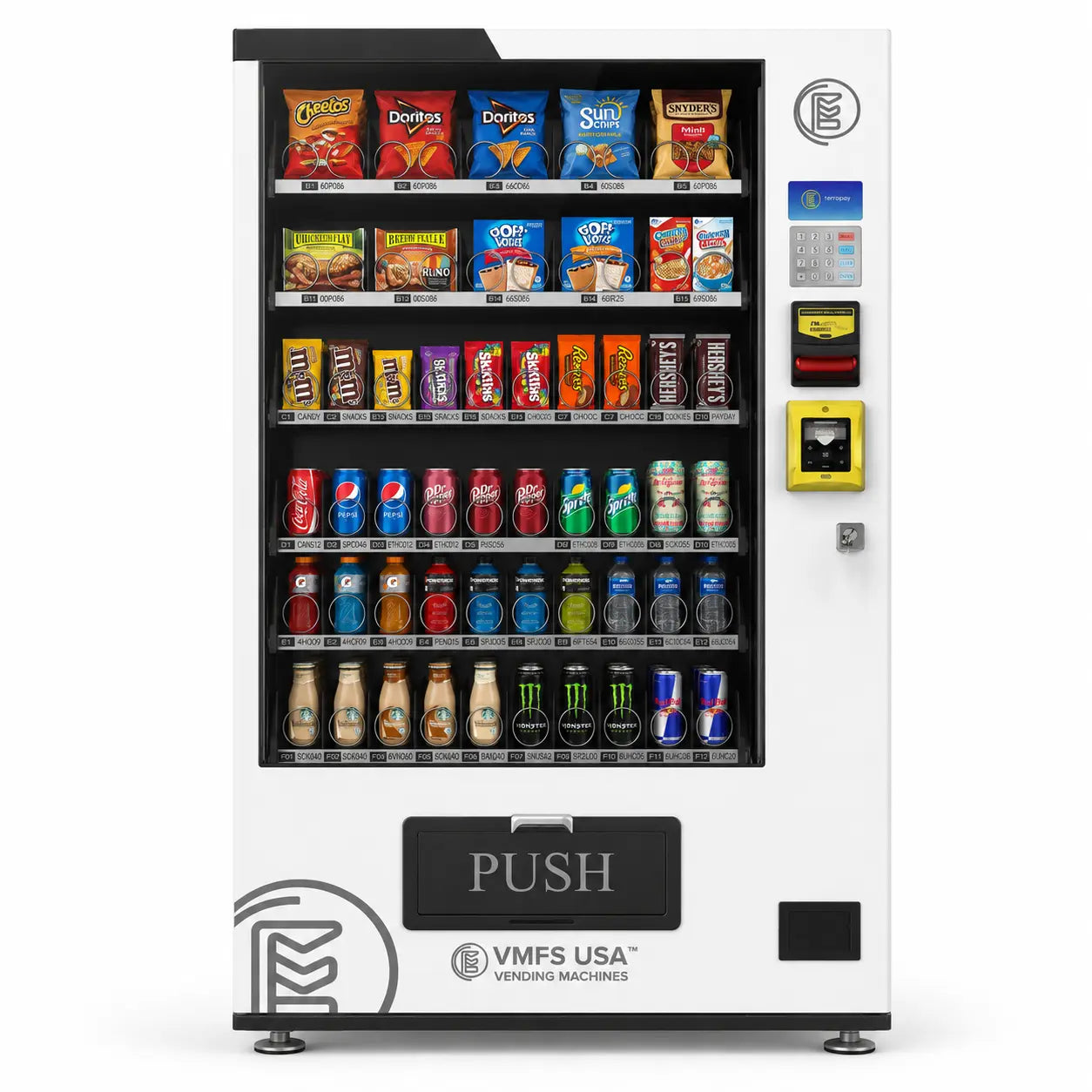
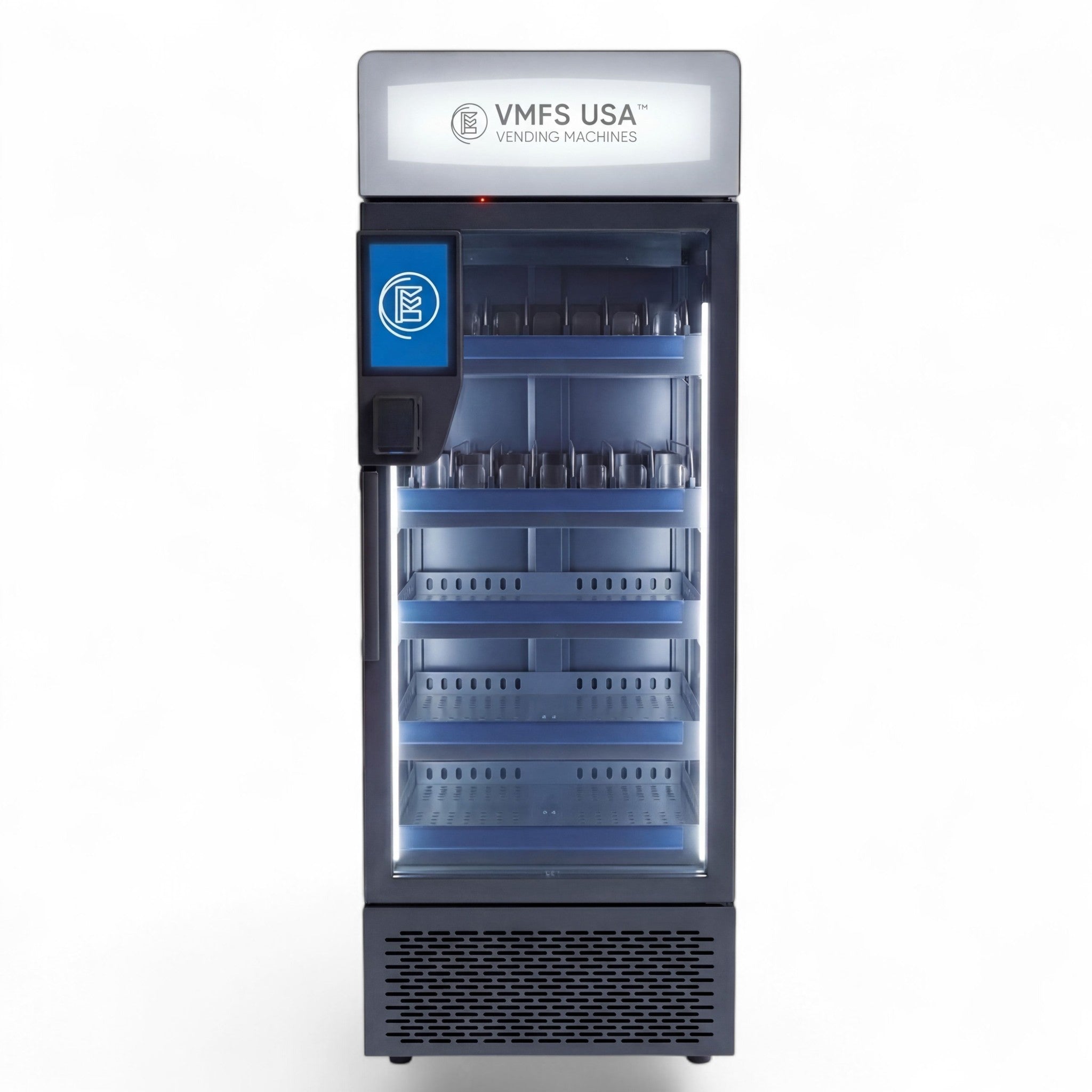
A manufacturer offering multiple machine formats — grab-and-go, refrigerated smart cooler, combo units — under one support relationship simplifies fleet management for an operator planning to mix formats across different location types. VMFS USA's AI Grab-and-Go Vending Machine collection, AI Smart Cooler Vending Machine, Smart Fridge Vending Machine, and AI Smart Cooler Combo Vending Machine illustrate the kind of format range worth looking for from a single manufacturer relationship. Branding customization — wrapping a machine in a location's own visual identity — is also worth confirming upfront if that matters for a specific placement, since not every manufacturer supports it without a minimum order quantity.
A manufacturer's hardware is only as useful as the software running it, since the recognition engine, inventory analytics, and alerting system are what actually generate the operational advantage AI vending is purchased for in the first place. Request a live dashboard demo before purchasing more than one machine, and confirm specifically whether recognition processing happens at the edge or in the cloud, since that architectural choice affects both transaction speed and behavior during a connectivity outage — details covered in AI Vending Machine Software and the physical sensor hardware it interprets in AI Vending Machine Parts Breakdown.
The table below isolates the practical differences that show up after purchase, once a machine is deployed and generating revenue.
| Factor | Domestic Manufacturer | Overseas-Sourced |
|---|---|---|
| Parts replacement time | Days | Weeks, subject to customs |
| Support time zone | Aligned with US business hours | Often significant time difference |
| Warranty enforcement | Direct, domestic legal recourse | More complex, cross-border process |
| Upfront hardware cost | Often higher | Often lower |
| Customization flexibility | Typically higher for small orders | Often requires minimum order quantity |
Pros
Faster parts replacement minimizes machine downtime and lost revenue.
Support in a compatible time zone speeds issue resolution.
Warranty claims are easier to enforce through domestic legal channels.
Cons
Upfront hardware cost is often higher than overseas alternatives.
Fewer ultra-low-cost options at the very bottom of the price range.
Domestic supply may have longer lead times during high demand periods.
A manufacturer unable to provide references or examples of machines actually operating in the field, as opposed to prototype or trade-show units, is a meaningful warning sign, since hardware that performs well in a controlled demo doesn't always hold up under real-world restocking cycles and continuous operation.
Warranty terms that reference coverage without specifying claim timelines, shipping responsibility, or excluded components should prompt direct clarifying questions before purchase, since ambiguity in warranty language tends to resolve in the manufacturer's favor once an actual claim is filed.
Some manufacturers market basic connected telemetry as "AI-powered" without true computer vision or sensor-based product recognition, a distinction worth confirming directly rather than taking marketing language at face value — covered in Smart Vending Machine vs. AI Vending Machine and What Is an AI Vending Machine. A full spec-by-spec framework for comparing manufacturers on machine format and price point is available in the Complete Buyer's Guide 2026, and total cost comparisons across sourcing options are covered in AI Vending Machines: Cost.
See Domestically Supported Machines
Explore AI vending machine formats backed by US-based parts and support.
Explore AI Vending Machines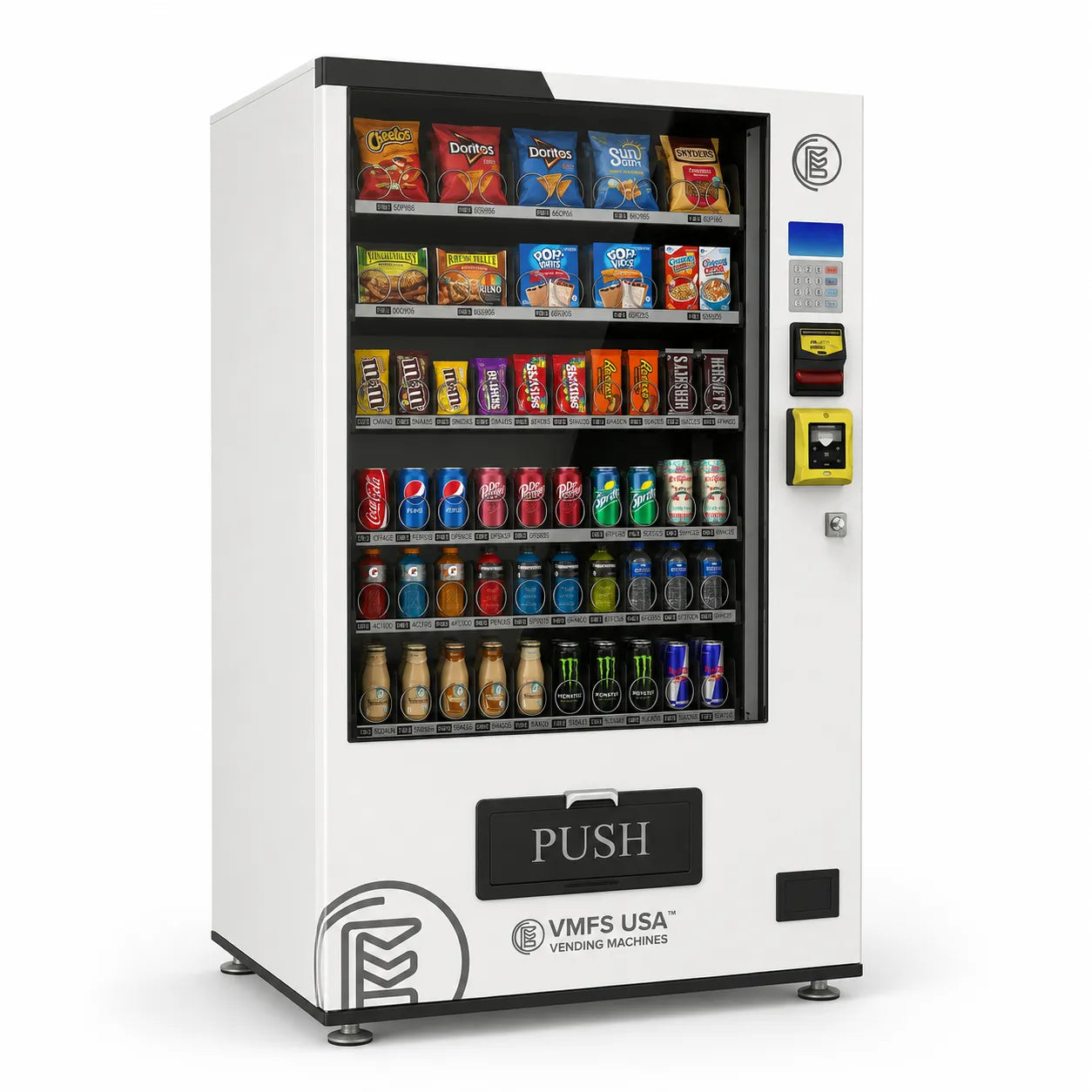
Share:
AI Vending Machine Exit Strategy - How to Sell a Vending Route
How to Buy an AI Vending Machine - Must Follow these Guidelines