


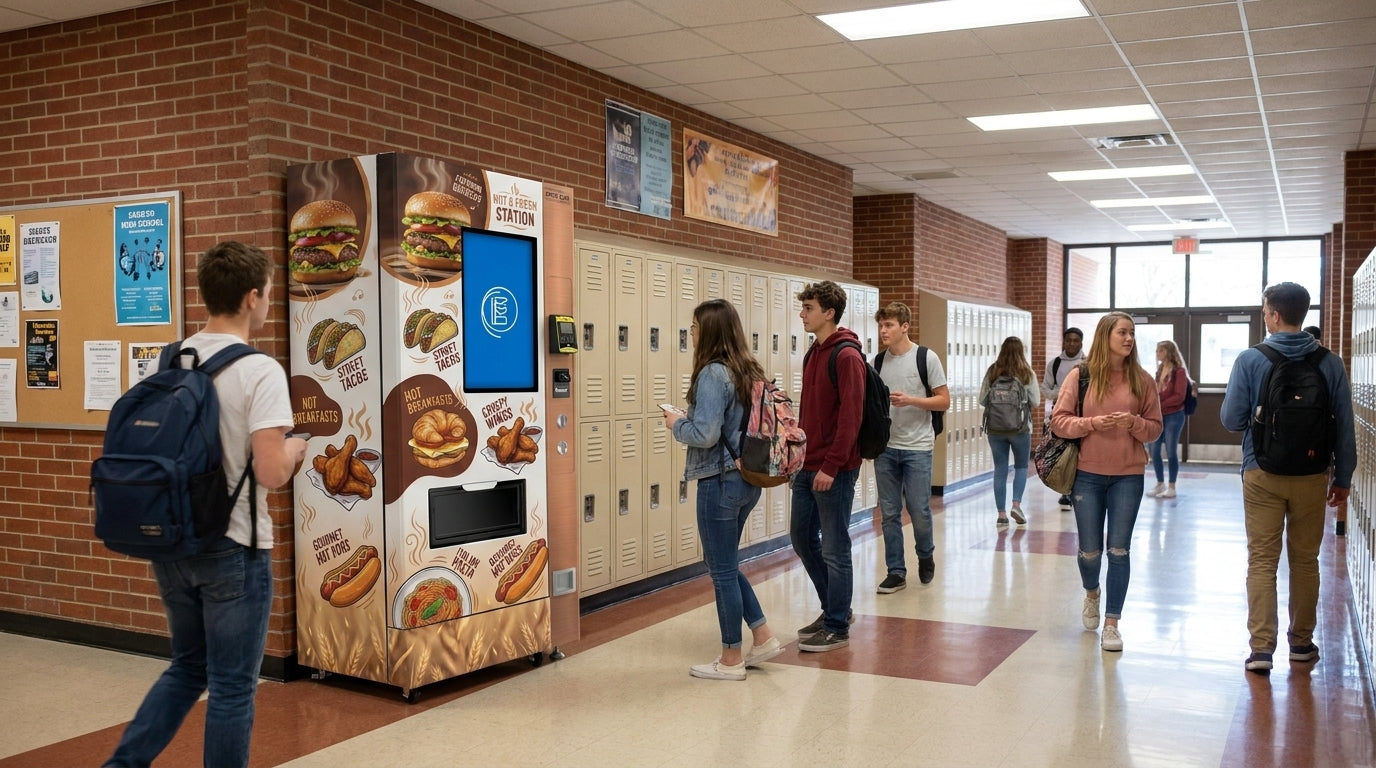


Diseñe la solución de vending perfecta para su ubicación y clientes.

Únete al boletín de VMFS y forma parte de una red próspera dedicada al éxito colectivo.
Un registro. Posibilidades infinitas.
La venta automática de alimentos es un sistema automatizado de entrega minorista que utiliza hardware con control climático, mecanismos robóticos de dispensación y software de telemetría para almacenar, preparar y servir comidas listas para consumir, productos frescos perecederos, aperitivos y bebidas frías o calientes sin intervención humana.
La venta automática moderna de alimentos opera en la intersección del servicio comercial de alimentos y la automatización de autoservicio. A diferencia de las máquinas tradicionales de aperitivos que dependen de sencillas bobinas por gravedad para artículos de larga conservación, las unidades de venta de alimentos utilizan refrigeración interna, elementos calefactores de precisión, sensores ópticos de caída y software de gestión de inventario conectado a la nube. Esta tecnología permite a empresas, hospitales, universidades y centros de transporte ofrecer ensaladas frescas, platos calientes, sándwiches y sopas calientes las 24 horas del día.
Los datos de la National Automatic Merchandising Association (NAMA) demuestran que los ingresos por servicios de conveniencia en EE. UU. alcanzaron los 31.100 millones de dólares. Además, el análisis del mercado global realizado por Grand View Research informa que el tamaño del mercado mundial de venta minorista alcanzó los 77.700 millones de dólares en 2026, con los sistemas de pago sin efectivo representando el 75,8 % de los ingresos totales por transacciones. Los altos costes de los bienes inmuebles comerciales y el aumento de los gastos laborales en restaurantes están acelerando la demanda de los operadores por máquinas de alta capacidad suministradas por una destacada empresa de máquinas expendedoras en EE. UU..
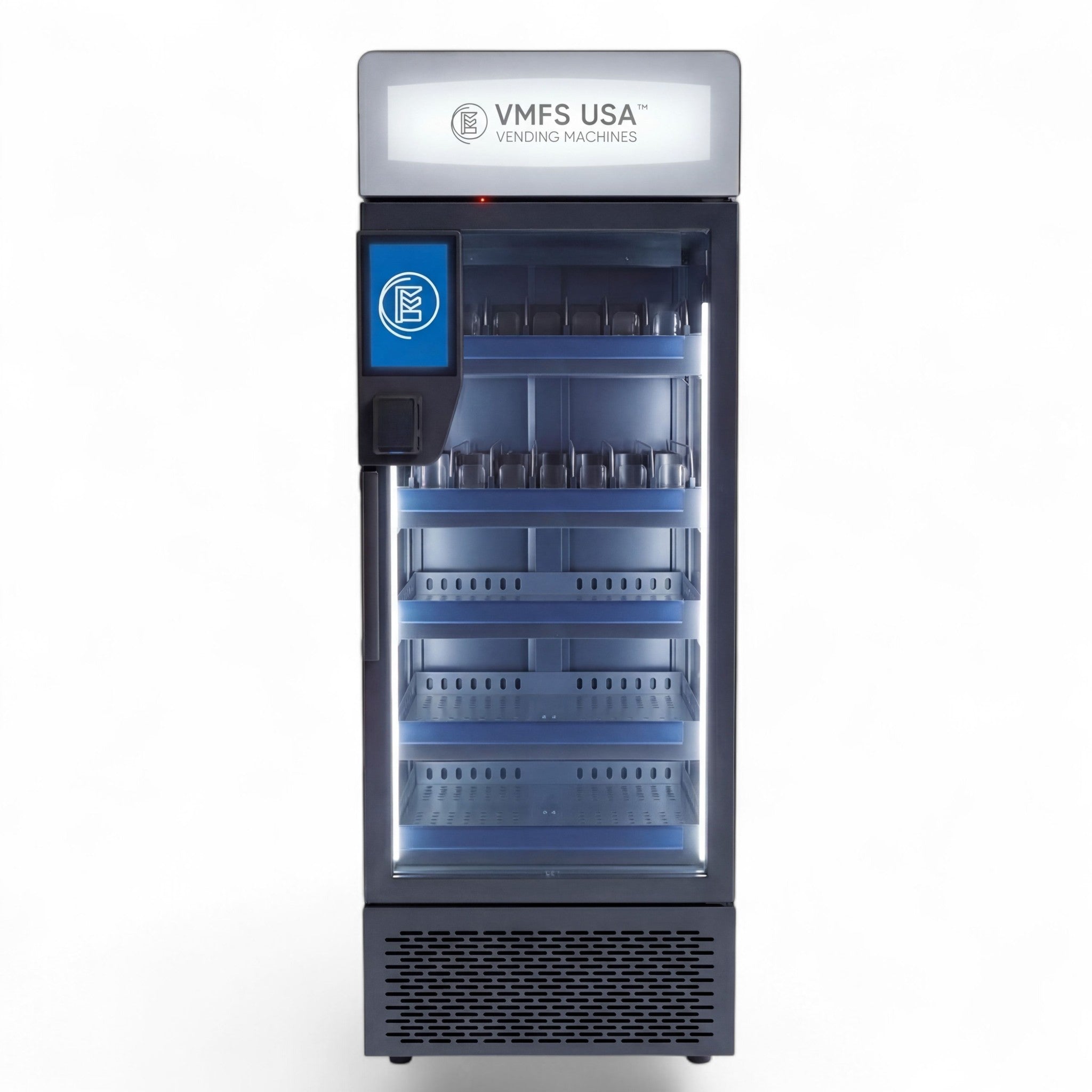
Los sistemas de venta automática de alimentos fríos mantienen temperaturas internas iguales o inferiores a 41°F (5°C) para conservar de forma segura productos perecederos preenvasados como sándwiches, wraps, ensaladas, yogur y boles de fruta fresca.
Estas unidades utilizan plataformas elevadoras internas o carruseles de barra de empuje en lugar de las espirales tradicionales, ya que los envases delicados requieren un transporte suave para evitar daños. Un elevador automatizado se desplaza hasta el estante del producto, recibe el artículo y lo baja suavemente hasta la trampilla de entrega. Para explorar las operaciones mecánicas en detalle, consulte el resumen sobre el proceso de trabajo de las máquinas expendedoras de alimentos fríos.
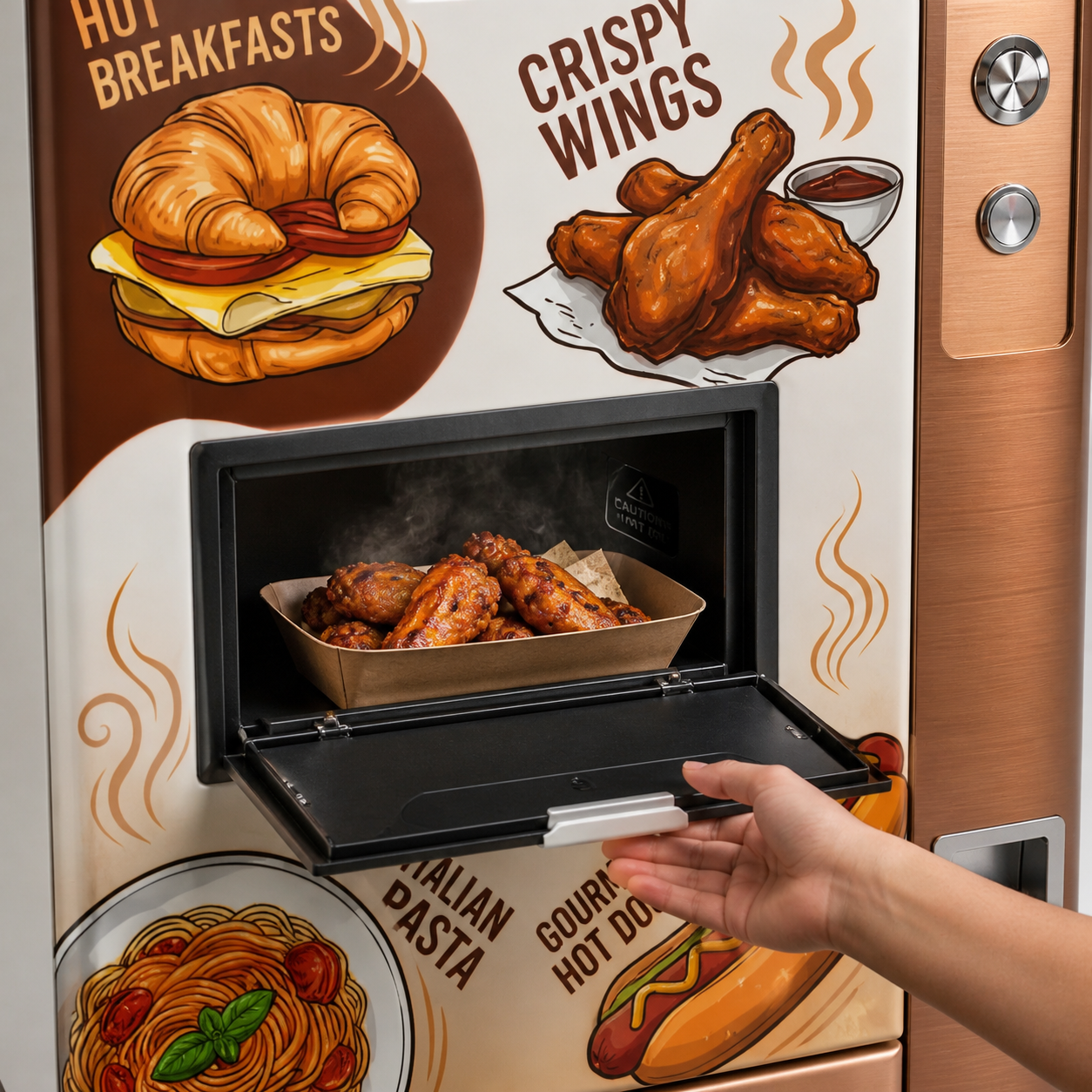
La tecnología de venta automática de alimentos calientes integra almacenamiento en frío de alta densidad con módulos internos de calentamiento rápido, como hornos de convección comerciales o matrices de microondas, para cocinar o recalentar comidas congeladas y refrigeradas bajo demanda.
Cuando un consumidor selecciona un plato, un brazo robótico interno transfiere la bandeja sellada desde el compartimento refrigerado hacia la cámara de calentamiento. El sistema calienta el artículo a temperaturas de servicio seguras para el consumo en un plazo de 45 a 90 segundos antes de dispensarlo al cliente. Los operadores interesados en entrar en este sector pueden inspeccionar nuestras máquinas expendedoras de alimentos calientes para evaluar la capacidad y las opciones de calentamiento, o leer una guía comercial detallada sobre cómo iniciar un negocio de máquinas expendedoras de alimentos calientes en 2026.
Las máquinas de venta automática especializada de alimentos gourmet preparan comidas frescas y complejas, como pizzas personales, hamburguesas gourmet y sopas de fideos calientes, directamente dentro de la unidad utilizando robótica especializada.
Venta automática de pizza: Almacena bases de pizza frescas o precocidas e ingredientes en un compartimento refrigerado. Tras la confirmación del pedido, el mecanismo interno transfiere la pizza a un horno de alta temperatura que hornea y empaqueta una porción caliente en menos de tres minutos. Conozca más sobre las tendencias del mercado en las máquinas expendedoras de pizza ya están aquí y explore cómo funcionan las máquinas expendedoras de pizza. Los inversores pueden revisar los precios del hardware a través de nuestra máquina expendedora de pizza, analizar los factores de coste de la máquina expendedora de pizza y conseguir ingredientes a través de nuestra guía sobre dónde comprar pizza para máquinas expendedoras, y evaluar los márgenes de beneficio a través de nuestra información sobre qué tan rentable es una máquina expendedora de pizza y los beneficios de la venta automática de pizza. Estos sistemas ofrecen márgenes superiores a los modelos tradicionales de aperitivos, lo que los hace atractivos para ubicaciones comerciales con alto flujo de personas, como se detalla en nuestra guía sobre las franquicias de pizza con mayores ingresos.
Máquinas robóticas de hamburguesas: Almacenan hamburguesas preensambladas en cámaras refrigeradas y las pasan a través de tubos de calentamiento por infrarrojos o inducción para cocinar la carne mientras calientan el pan. Revise los parámetros de configuración completos en la guía de máquinas expendedoras de hamburguesas.
Dispensadores de Ramen y Fideos: Utilizan sistemas de agua de ebullición rápida para preparar tazas de fideos instantáneos automáticamente. Las máquinas modernas dispensan agua hirviendo con precisión directamente en los recipientes sellados, tal como se vio en ferias de la industria que exhibían una máquina expendedora de Cup Noodles que dispensa agua caliente automáticamente. Los operadores pueden instalar una máquina expendedora de fideos ramen, examinar cómo funcionan las máquinas expendedoras de ramen, y estudiar la economía de las unidades mediante si las máquinas expendedoras de ramen son rentables.
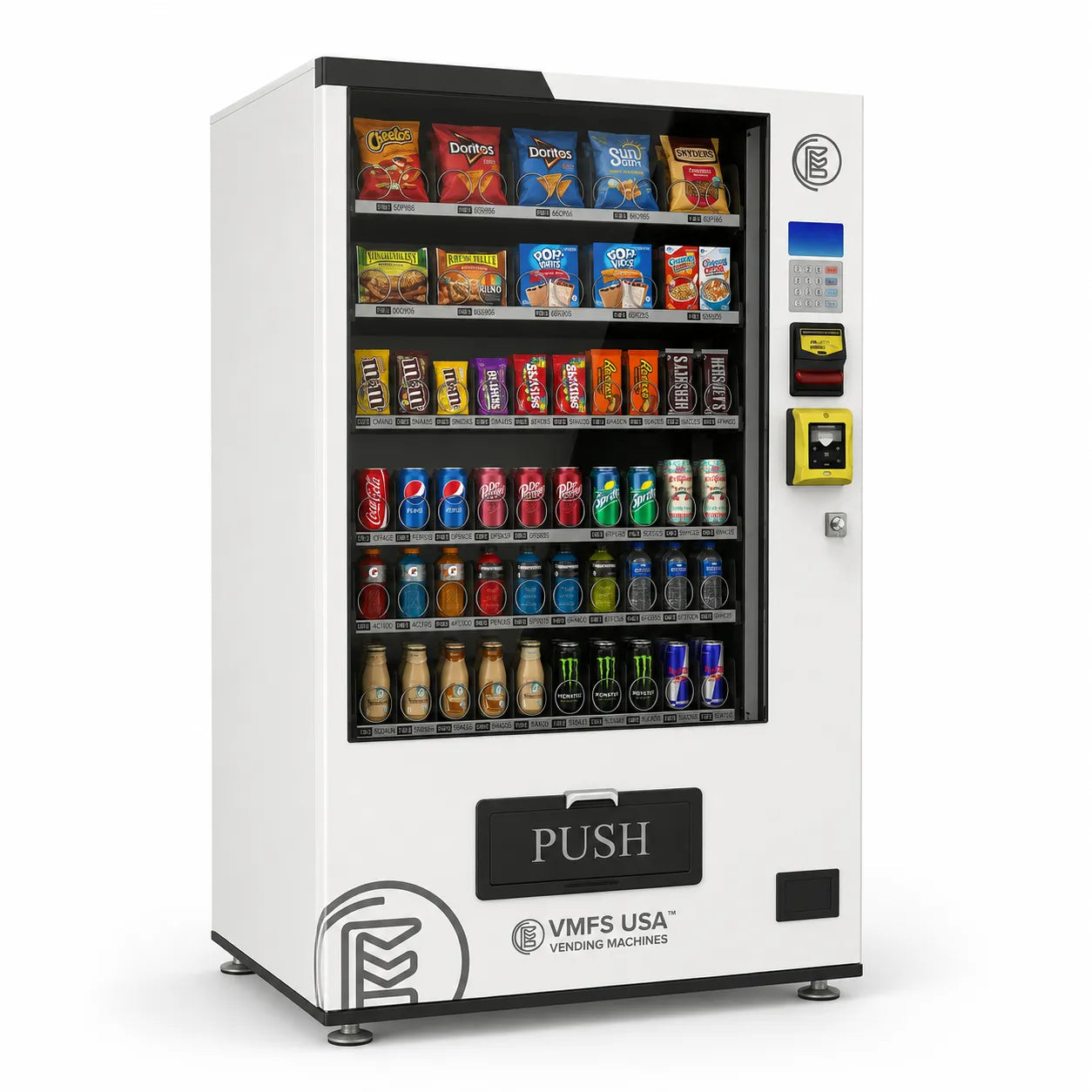
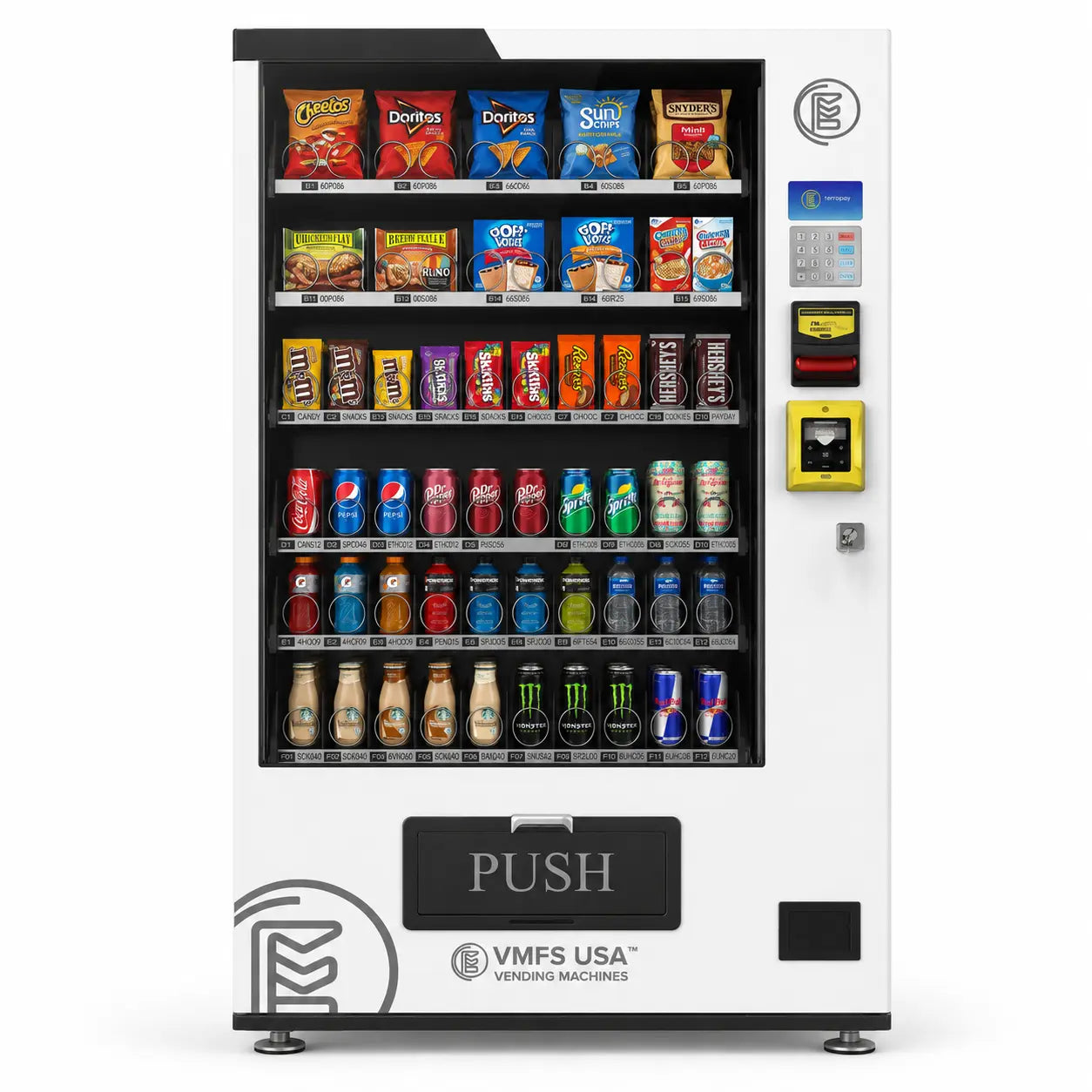
Las máquinas expendedoras de alimentos a temperatura ambiente ofrecen productos de larga duración, incluyendo mezclas de frutos secos, barritas de granola, fruta deshidratada y chips horneados, utilizando controles de cabina con climatización asistida para evitar el deterioro del producto debido al calor externo.
La demanda de los consumidores modernos se ha desplazado considerablemente hacia selecciones más saludables. Según los datos del censo de NAMA, el 65% de los operadores de vending reportan solicitudes de clientes de mezclas de productos saludables, mientras que el 59% identifica los snacks saludables como su principal motor de crecimiento de ingresos. Los operadores que buscan optimizar la selección de productos pueden analizar listas curadas de comida saludable para máquinas expendedoras y pautas estratégicas sobre cómo combinar una máquina expendedora y snacks saludables para mantener altas tasas de rotación.
Las máquinas expendedoras de alimentos mantienen una estricta seguridad térmica y la integridad estructural de los productos al vincular los monitores de temperatura de seguridad internos directamente con el hardware de dispensación automatizado.
Según la Sección 3-501.16 del Código Alimentario de la FDA, los alimentos con control de tiempo/temperatura para su seguridad (TCS) deben mantenerse a 41°F (5°C) o menos para el almacenamiento en frío, y a 135°F (57°C) o más para el mantenimiento en caliente. El rango de temperatura entre 41°F y 135°F representa la "zona de peligro", donde los patógenos transmitidos por los alimentos se multiplican rápidamente.
Para cumplir con los estándares de seguridad pública, las máquinas expendedoras de alimentos certificadas cuentan con un bloqueo electrónico de salud automatizado. Si falla la energía o las temperaturas internas superan los 41°F por más de 30 minutos durante el mantenimiento en frío, el tablero de control de la máquina bloquea automáticamente la compuerta de dispensación y deshabilita las transacciones. Este bloqueo evita que los consumidores compren alimentos en mal estado.
Los mecanismos de dispensación varían según el diseño del empaque:
Plataformas de ascensor de caída suave: Una bandeja motorizada asciende verticalmente hasta el estante objetivo, recibe el artículo mediante un brazo empujador o una cinta transportadora y lo baja suavemente al puerto de entrega.
Conjuntos de accionamiento por cinta transportadora: Cintas planas de goma empujan las comidas en caja o bandejas de almuerzo hacia adelante para eliminar caídas o aplastamientos.
Espirales con sensores ópticos: Utilizados para snacks estructurales, combinados con sensores de haz infrarrojo en la zona de caída para asegurar que el artículo caiga completamente antes de cargar la tarjeta del cliente.
Entender cómo deben dispensarse los alimentos en las máquinas expendedoras ayuda a los operadores a minimizar los atascos de productos y las llamadas de mantenimiento del equipo. Los compradores primerizos también pueden revisar los protocolos para el consumidor sobre cómo obtener comida de una máquina expendedora para evaluar la ergonomía de la interfaz de usuario.
Los operadores que buscan opciones de despliegue de comidas compactas pueden utilizar una máquina expendedora de loncheras o una mini máquina expendedora de comida caliente. Para ubicaciones institucionales que requieren el máximo volumen, instalar una máquina expendedora grande de comida caliente garantiza suficiente capacidad de inventario durante las horas pico de almuerzo.
Elegir entre vending de alimentos automatizado, micromercados abiertos y operaciones de restaurantes de servicio rápido (QSR) depende del tráfico peatonal, el presupuesto laboral, la seguridad del lugar y el gasto de capital.
| Atributo operativo | Vending de alimentos fríos y calientes | Micromercados (neveras abiertas) | Restaurantes de servicio rápido (QSR) |
| Gasto de capital (CapEx) | Moderado ($5,000 – $20,000/unidad) | Bajo-Moderado ($4,000 – $12,000) | Muy alto ($250,000 – $1,500,000+) |
| Costos laborales continuos | Mínimos (solo reabastecimiento y mantenimiento) | Mínimos (reabastecimiento y limpieza) | Altos (cocineros, cajeros, gerencia) |
| Seguridad del lugar | Alta (asegurado tras acero/vidrio con cerradura) | Baja (sujeto a mermas y robos) | Alta (acceso controlado por personal) |
| Automatización de bloqueo de seguridad FDA | Sí (corte térmico automático integrado) | No (requiere bloqueos de quiosco externos) | Supervisión manual por personal de cocina |
| Requisitos de espacio | Muy pequeño (0.7 a 1.4 m²) | Medio (4.6 a 18.5 m²) | Grande (111 a 325 m²) |
| Horario de funcionamiento | 24/7/365 sin atención | 24/7 sin atención (semi-restringido) | Limitado por turnos del personal |
Un negocio de vending de alimentos genera ingresos comprando productos alimenticios al por mayor y vendiéndolos con márgenes de beneficio minorista que oscilan entre el 150% y el 300% en ubicaciones de alta densidad.
Los márgenes de beneficio bruto dependen en gran medida de la gestión de residuos de productos y la eficiencia de la ruta. Los artículos de comida fría tienen una vida útil más corta (generalmente de 3 a 7 días), lo que hace que la telemetría en tiempo real sea crucial. Las plataformas de gestión en la nube rastrean la velocidad de ventas por SKU, permitiendo a los operadores ajustar los horarios de reabastecimiento y eliminar el inventario estropeado no vendido.
La ubicación del lugar dicta directamente el volumen de ventas diario. Colocar máquinas de alta capacidad en instalaciones de fabricación, salas de descanso de hospitales, centros de distribución y dormitorios universitarios garantiza una demanda constante de clientes cautivos.
Evaluar las ventajas operativas y los factores de riesgo del vending de alimentos automatizado garantiza una asignación de capital sólida antes de adquirir el hardware.
Generación de ingresos 24/7 sin atención: Las máquinas operan continuamente sin descansos, pago de horas extras ni requisitos directos de personal.
Huella inmobiliaria mínima: El tamaño físico compacto permite la colocación en ubicaciones de alta densidad donde las cocinas completas son imposibles.
Bajos costos generales: Elimina la mano de obra de servicio en el área de atención al cliente y reduce los costos de servicios públicos en comparación con los locales físicos.
Seguimiento de inventario automatizado: La telemetría moderna transmite niveles de existencias en tiempo real, registros de temperatura interna y diagnósticos de ventas a tableros remotos.
Riesgo de inventario perecedero: Los alimentos frescos requieren ciclos de reabastecimiento estrictos; el producto no vendido después de su fecha de vencimiento representa una pérdida directa por deterioro.
Inversión inicial en hardware de capital: Las máquinas de comida caliente de grado comercial y las unidades robóticas inteligentes requieren una mayor inversión de capital inicial que las máquinas de snacks básicas.
Mantenimiento preventivo del equipo: Los compresores de refrigeración, los elementos calefactores y los elevadores robóticos requieren servicio rutinario para mantener el tiempo de actividad operativo.
Operar un negocio comercial de máquinas expendedoras de alimentos requiere cumplir con las normas de salud municipales locales, los registros comerciales estatales y los contratos formales de arrendamiento de ubicación.
Los operadores deben obtener un permiso local de salud ambiental y asegurarse de que el personal de reabastecimiento posea certificaciones válidas de manipulador de alimentos. Es esencial comprender los requisitos municipales exactos; revise la guía completa sobre cómo obtener una licencia para máquinas expendedoras de alimentos antes de comprar el equipo.
Elegir la entidad legal corporativa correcta aísla la responsabilidad personal del riesgo comercial del negocio:
Sociedad de Responsabilidad Limitada (LLC): Proporciona protección de activos personales y una fiscalidad simplificada de transferencia para operadores pequeños y medianos. Aprenda cómo formar una LLC para un negocio de máquinas expendedoras y asignar un agente registrado para un negocio de máquinas expendedoras que cumpla con los requisitos.
Propietario único: Fácil de establecer, pero deja los activos personales expuestos a las responsabilidades del negocio. Revise los detalles estructurales para un negocio de propietario único.
Sociedades: Adecuado para operadores con múltiples dueños. Revise los requisitos para una sociedad para un negocio de máquinas expendedoras, una sociedad limitada para un negocio de máquinas expendedoras, o la formación de una LLP.
Entidades corporativas: Los operadores de máquinas expendedoras de alto crecimiento que buscan capital institucional pueden establecer una Corporación S o una Corporación C, mientras que las rutas de distribución de alimentos para caridad pueden utilizar una corporación sin fines de lucro.
Asegurar una ubicación rentable requiere contratos de ubicación vinculantes que definan el uso de servicios públicos de electricidad, el alquiler del espacio en el piso y las estructuras de comisiones. Los administradores de propiedades comerciales pueden registrar los detalles y requisitos de su propiedad para conectar con operadores en VPlaced para propietarios de ubicaciones.
Para escalar una ruta empresarial, los operadores deben obtener el hardware explorando listados verificados para encontrar máquinas expendedoras en Vending Finder e impulsar el tráfico de consumidores localizados utilizando servicios automatizados de marketing para máquinas expendedoras en VMarketed.
Las máquinas de snacks dispensan artículos no perecederos y estables a temperatura ambiente utilizando espirales de gravedad básicas. Las máquinas de alimentos cuentan con cámaras de enfriamiento o calentamiento con clima controlado, bloqueos de seguridad electrónicos y elevadores delicados diseñados para almacenar y servir comidas frescas, sándwiches y platos calientes.
Según la Sección 3-501.16 del Código de Alimentos de la FDA, las máquinas de alimentos fríos que transportan artículos perecederos deben mantener las temperaturas internas a 41°F (5°C) o menos en todo momento.
Si la energía cae o las temperaturas internas entran en la zona de peligro (41°F a 135°F) durante un período prolongado, se activa inmediatamente un bloqueo electrónico de seguridad. Este bloqueo desactiva el mecanismo de dispensación de la máquina para evitar que los clientes compren alimentos en mal estado.
Las máquinas de alimentos calientes utilizan hornos de convección internos de alta eficiencia, elementos de calentamiento infrarrojo o módulos de microondas comerciales. Cuando se selecciona una opción, un mecanismo robótico interno mueve la comida desde la zona de almacenamiento en frío al compartimento de calentamiento, cocinándola o recalentándola en 45 a 90 segundos.
Sí, las máquinas expendedoras de alimentos generan altos márgenes de beneficio cuando se colocan en ubicaciones de alto tráfico como hospitales, fábricas y universidades. Los platos preparados se venden con márgenes típicos de entre el 150% y el 300% sobre el costo mayorista.
Los operadores generalmente requieren una licencia comercial general, un permiso estatal de impuestos sobre las ventas y un permiso especializado para establecimientos de venta minorista de alimentos emitido por el departamento de salud del condado o del estado.
La vida útil depende del tipo de empaque y la composición de los alimentos. Los sándwiches y ensaladas frías recién preparados duran de 3 a 7 días, mientras que las comidas selladas con nitrógeno o congeladas calentadas bajo demanda pueden permanecer seguras durante varias semanas dentro de compartimentos de almacenamiento con clima controlado.
Un sensor óptico de caída utiliza un haz de luz infrarroja cerca de la bandeja de entrega inferior para verificar que un producto seleccionado haya caído. Si el haz no se interrumpe, la máquina intenta dispensar nuevamente o reembolsa el pago del cliente de inmediato.
Los operadores utilizan software de telemetría remota para monitorear la velocidad de ventas en tiempo real y las fechas de vencimiento. El análisis de las tendencias de movimiento de productos permite a los operadores reabastecer cantidades exactas de SKU, eliminando el exceso de existencias y reduciendo el deterioro del producto.
Las máquinas modernas utilizan lectores de tarjetas sin efectivo compatibles con MDB, billeteras móviles de pago por contacto (Apple Pay, Google Pay) y escáneres de códigos QR junto con los aceptadores de billetes tradicionales. Los canales sin efectivo generan más del 75% de las ventas minoristas automatizadas actuales.


Compartir:
¿Cuál es la forma más eficiente de preparar café en la oficina? Guía completa
Máquinas expendedoras japonesas: por qué nunca llegaron a Estados Unidos