




Design the perfect vending solution for your location and customers.

Join the VMFS newsletter and step into a thriving network dedicated to collective success.
One signup. Endless possibilities.
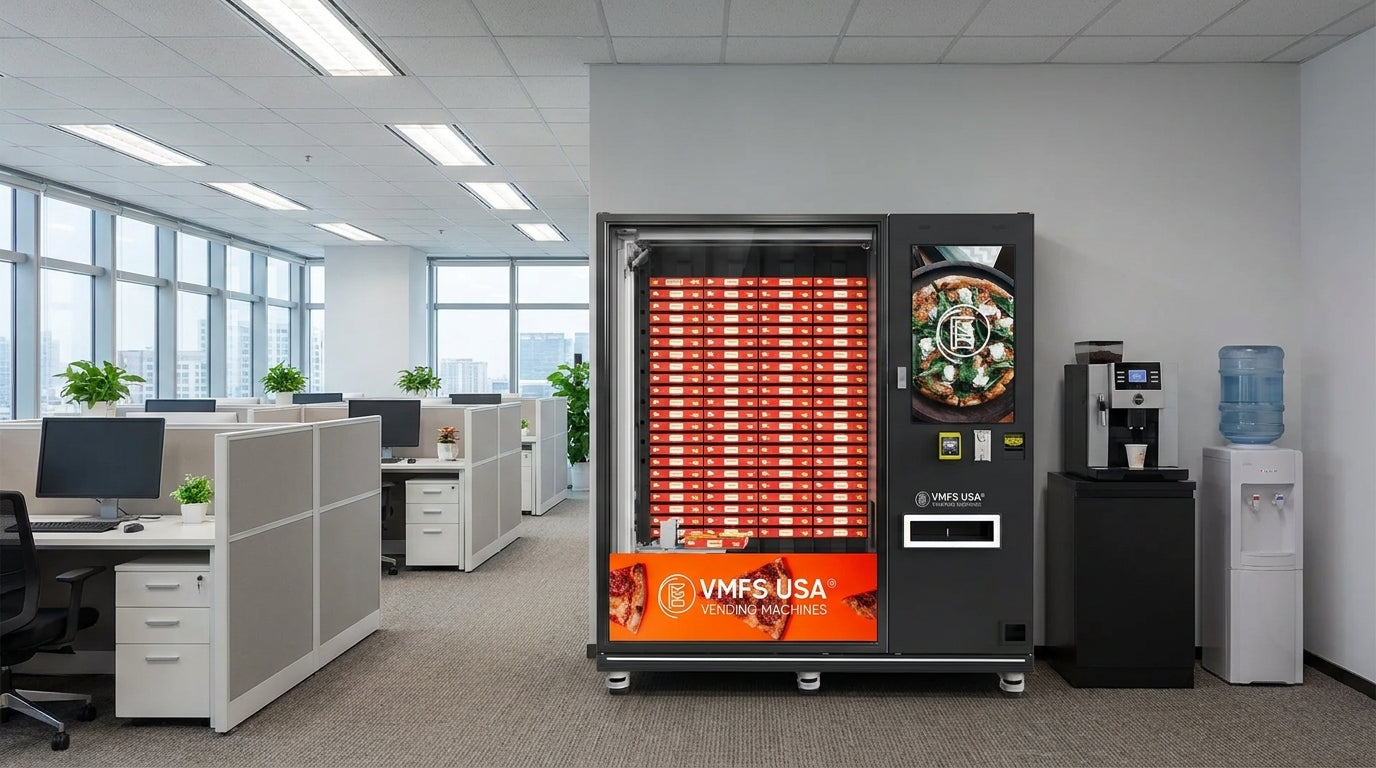
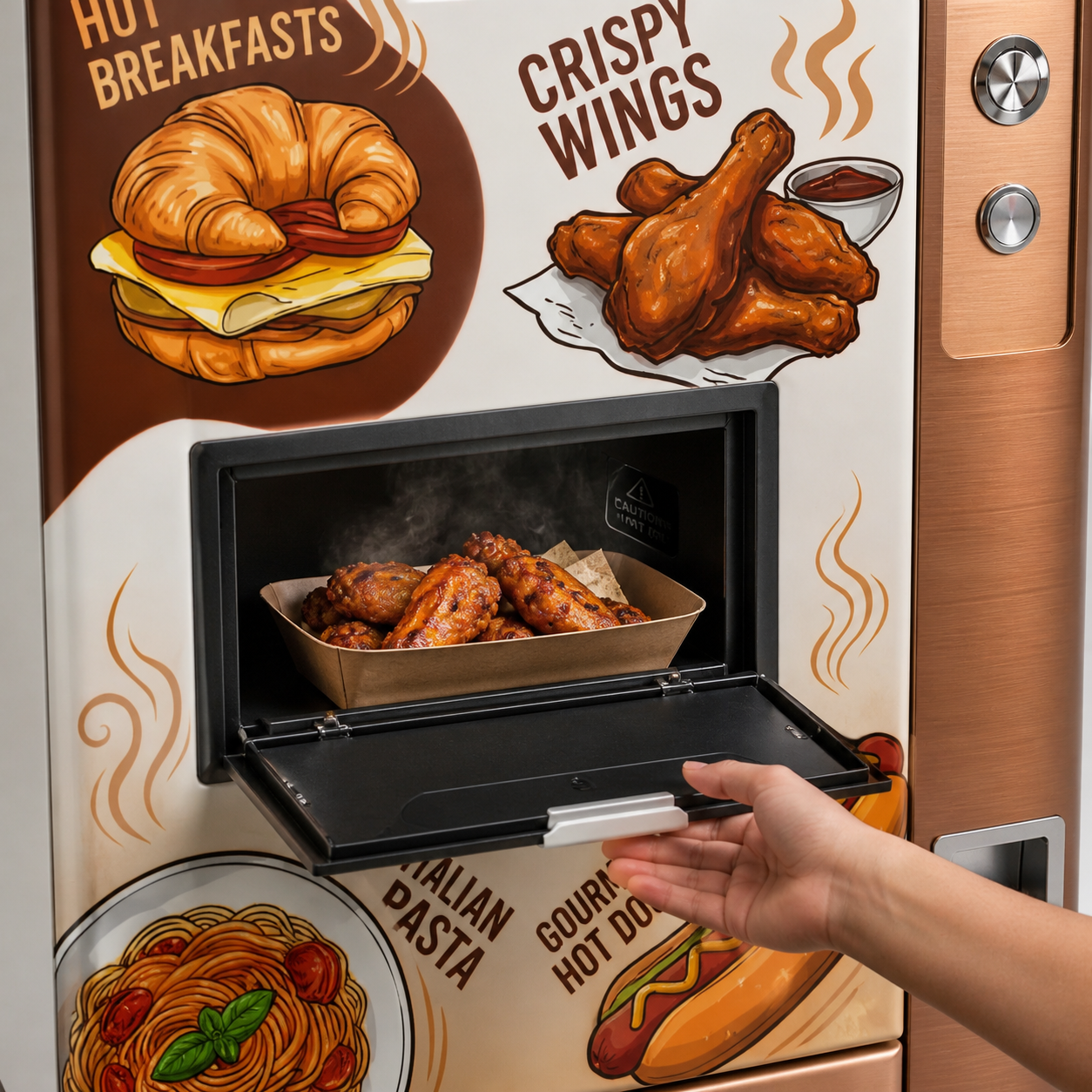
Understanding what are the benefits of pizza vending centers on evaluating how automated hot food dispensing yields 60% to 75% gross profit margins while completely eliminating brick-and-mortar labor costs. According to industry reports from Dataintelo Market Research, the global pizza vending machine market reached $0.82 billion in 2025 and is projected to expand to $1.98 billion by 2034 at a compound annual growth rate (CAGR) of 10.3%. Automated pizza machines integrate high-temperature 350°C (662°F) convection ovens with refrigerated storage cabinets, delivering fresh, restaurant-quality 10-inch to 12-inch pizzas in under 3 to 5 minutes without staff intervention.
Modern operators leverage commercial automated hardware from VMFS USA, a leading Vending Machine Company in USA, to deploy 24/7 automated pizzerias in high-traffic commercial hubs. With food service labor wages rising by over 18% in recent years, automated food dispensing offers a high-yield alternative to traditional dining models. Analyzing the benefits requires assessing market growth data, labor savings, rapid inventory turn, equipment engineering, legal structuring, and location placement strategies. Consumers learning how to get food from a vending machine benefit directly from these seamless, hygienic ordering experiences.
Financial advantages drive entrepreneurship in automated food retail because pizza maintains high profit margins combined with strong consumer demand across all demographics. Industry evaluation from Fortune Business Insights shows the global pizza market exceeded $282 billion in 2025, confirming that pizza remains one of the highest-volume QSR food categories globally. Transitioning pizza delivery into an automated vending architecture drastically lowers the cost of goods sold (COGS) while maximizing output.
High profit margins emerge because ingredient costs for a 10-inch or 12-inch pizza typically average $2.50 to $3.50, while retail selling prices range from $10.00 to $13.00 per unit. Analyzing how profitable is a pizza vending machine shows that selling 40 pizzas daily generates approximately $12,000 in monthly gross revenue, yielding net operating margins around 30% to 50%. Comparing these metrics against initial pizza vending machine cost benchmarks indicates that most operators reach full capital payback within 12 to 18 months of deployment.

Labor cost elimination occurs because automated machines replace kitchen cooks, cashiers, counter attendants, and cleaning staff with programmable robotics. Food service sector hourly wages grew by 18% between 2022 and 2025, severely compressing traditional restaurant profit margins. Operating an automated unit eliminates payroll taxes, workers' compensation insurance, employee scheduling conflicts, and training expenses, protecting operating cash flow.
Continuous 24/7 sales capture generates revenue during late-night and early-morning hours when traditional pizzerias and QSR locations are closed. Research from Dataintelo indicates that 42% of global consumers regularly consume meals outside traditional dining hours. Automated pizzerias installed in university dormitories, hospital break rooms, airport terminals, and apartment complexes convert late-night consumer demand into high-margin sales.
Advanced robotics and precision heating technologies determine what are the benefits of pizza vending from an operational standpoint. These machines bridge the gap between long-term cold inventory preservation and rapid hot meal dispensing.

Precision high-temperature convection ovens bake pizzas at temperatures up to 350°C (662°F) to replicate traditional stone-deck pizzeria quality. Reviewing how pizza vending machine works mechanically reveals that concentrated infrared tube arrays flash-bake dough crusts to ideal crispness in 180 to 300 seconds. Standardized digital baking timers eliminate human culinary errors, ensuring consistent quality across every transaction cycle.
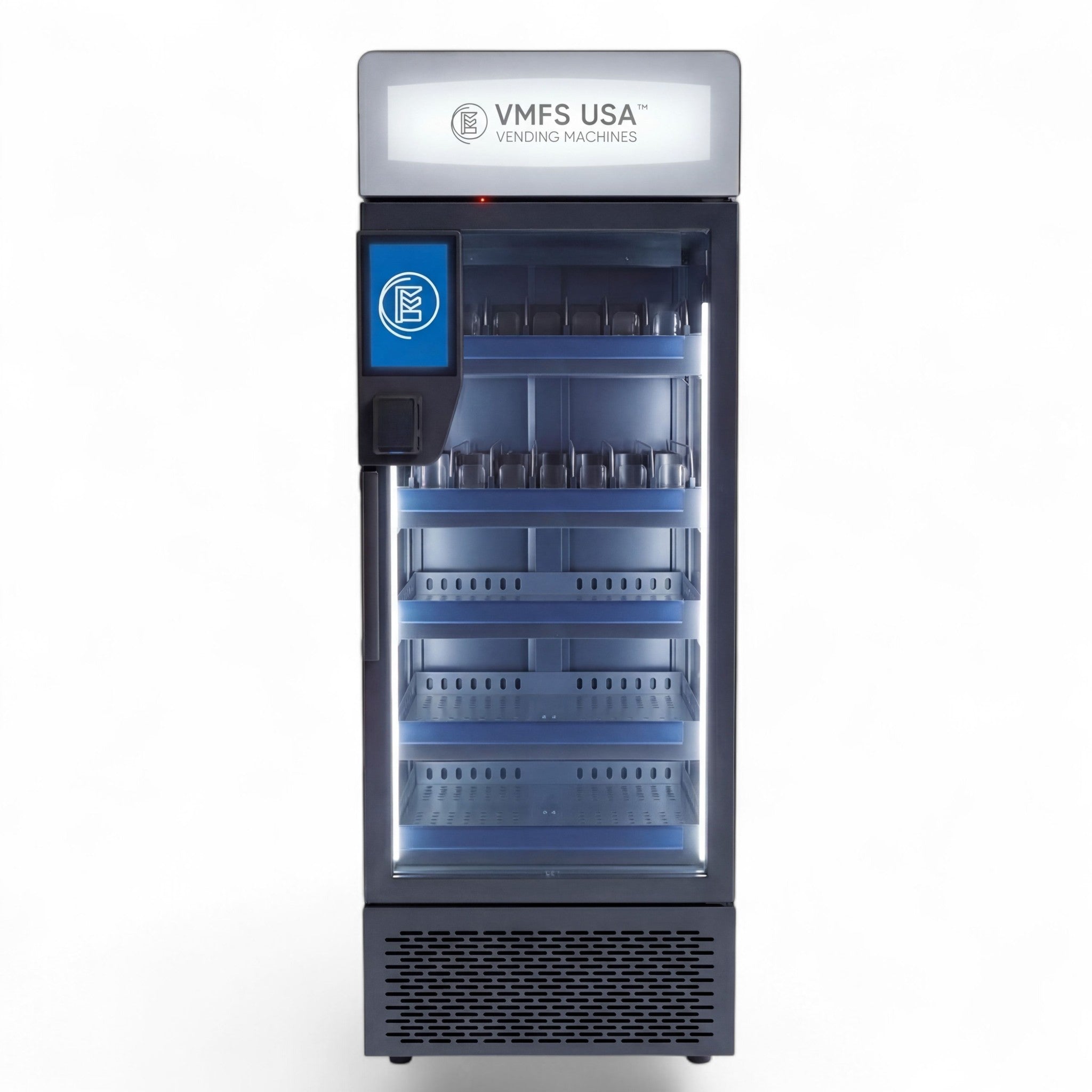
Internal refrigerated cabinets hold between 70 and 150 pre-assembled pizzas at safe storage temperatures of 0°C to 4°C (32°F to 39°F) or -18°C (0°F) frozen. Adhering to federal rules on how should food in vending machines be dispensed requires integrated safety sensors that continuously monitor ambient air temperature. If power losses cause cabinet temperatures to exceed the FDA Food Code Section 4-204.111 limit of 41°F (5°C) for over 30 minutes, an automatic health shutoff lock engages to prevent sales of compromised product.
A compact commercial physical footprint requires only 20 to 35 square feet of floor space, enabling installation in high-density locations unsuitable for retail kitchens. Sourcing wholesale crusts and toppings through specialized suppliers detailed in where to buy pizza for vending machines simplifies inventory replenishment. Operators restock inventory in 15 to 20 minutes per site, optimizing route logistics across multi-machine routes.
| Metric | Automated Pizza Vending Machine | Traditional Pizza QSR Franchise | Ghost Kitchen / Delivery Only |
| Initial Capital Expenditure | $30,000 – $55,000 | $250,000 – $750,000 | $100,000 – $200,000 |
| Required Real Estate Space | 20 – 35 Sq. Ft. | 1,200 – 2,500 Sq. Ft. | 400 – 800 Sq. Ft. |
| On-Site Staffing Requirements | 0 FTE (Unattended) | 4 – 12 FTE per Shift | 2 – 5 FTE per Shift |
| Average Bake / Serve Time | 3 – 5 Minutes | 12 – 20 Minutes | 15 – 30 Minutes |
| Operating Hours Capacity | 24 Hours / 365 Days | 10 – 14 Hours Daily | 10 – 14 Hours Daily |
| Gross Profit Margin | 60% – 75% | 15% – 25% | 20% – 30% |
| Break-Even Payback Period | 12 – 18 Months | 36 – 60 Months | 24 – 36 Months |
Evaluating these financial metrics explains why entrepreneurs exploring highest earning pizza food franchises smarter investments with vending machine growth increasingly select automated route models. Lower entry capital reduces financial risk, while low operating costs yield strong net cash flow performance. Exploring technological trends detailed in the slice of the future pizza vending machines are here highlights how automated retail represents a structural evolution in fast-food delivery.

Evaluating what are the benefits of pizza vending requires an objective analysis of operational trade-offs:
Negligible Labor Costs: Automated dispensing eliminates hourly payroll, employee turnover, and training expenses.
Rapid Customer Throughput: Customers receive hot, freshly baked pizzas in 3 to 5 minutes, reducing wait times compared to traditional pizzerias.
High Margin Potential: Low overhead allows operators to maintain 60% to 75% gross profit margins per pizza sold.
Flexible Location Scaling: Compact machine dimensions allow deployment across universities, hospitals, manufacturing plants, and transit centers.
Capacity Limits: Storage capacity (70 to 150 units) requires scheduled restock visits during high-volume sales periods.
Electrical Utilities: High-temperature baking ovens demand dedicated 208V–240V single-phase power connections rated for 20 to 30 amps.
Preventative Maintenance: Mechanical components, elevator tracks, and optical sensors require routine cleaning and preventative servicing.
Comparing pizza machines with alternative automated hot food formats highlights unique operational advantages across different product categories.
Pizza machines bake raw or precooked dough bases using high-temperature convection ovens, producing crispy crusts and melted toppings. In contrast, examining a comprehensive burger vending machine guide indicates that burger machines rely on internal microwave or radio-frequency heating elements to warm pre-assembled buns and patties. Pizza vending yields higher perceived artisan food quality, enabling higher retail prices and stronger unit margins.
Automated ramen machines deliver hot meals by injecting boiling water into pre-packaged noodle cups. Understanding how ramen vending machines work fast hot and hassle free illustrates how precise water delivery modules prepare soup meals in 45 to 60 seconds.
Analysis of market performance in are ramen vending machines profitable shows strong performance in high-density student housing. Innovations highlighted when industry leaders visited Venditalia 2026 and saw a cup noodles vending machine that dispenses hot water into the cup automatically confirm that automated hot water delivery systems expand product versatility.
Operators building full-line vending installations can review the cold food vending machine work process to combine hot pizza hardware with cold meal options. Adding product lines from healthy food for vending machines and popular items from vending machine and healthy snacks captures diverse consumer preferences across host locations.
Setting up an automated pizza vending business requires establishing formal legal entities to protect personal assets and maintain statutory tax compliance. Reviewing a step-by-step guide on how to start a hot food vending machine business in 2026 highlights the necessity of proper corporate registration before signing location leases.
Choosing the correct legal structure protects business owners against personal liability claims stemming from property damage or foodborne illness. Operators can evaluate several entity options:
Limited Liability Company: Choose to form an LLC for a vending machine business to secure asset protection combined with pass-through tax treatment.
Corporate Tax Structures: Evaluate a C-Corporation setup for institutional capital raising or an S-Corporation tax structure to minimize self-employment taxes on distribution profits.
Partnerships and Sole Ownership: Form a multi-partner business by choosing to form an LLP for a vending machine business, establishing a general partnership for a vending machine business, or establishing a limited partnership for a vending machine business. Simplified single-owner setups can utilize a sole proprietorship setup model, while institutional placements may leverage a nonprofit corporation for vending structure.
Operating legally requires securing a Federal Employer Identification Number (EIN) and state sales tax authorization permits. Appointing a dedicated registered agent for a vending machine business ensures that state annual reports, tax notices, and compliance documents are handled without delay.
Executing legally sound location agreements with commercial property hosts establishes clear guidelines for electrical power utility usage, monthly rental terms, revenue sharing percentages, and liability protection. Formal contracts protect machine assets and guarantee long-term site access.
Finding profitable host locations determines overall revenue success for automated pizza vending routes. Commercial property owners seeking to monetize underutilized floor space can partner with professional vending operators to offer automated hot dining services.
Property managers can streamline equipment acquisition and placement by utilizing specialized location matching services. Property owners can visit VPlaced for location owners to list space details, find matched operators, compare proposals, and secure hassle-free machine installations:
List Space Details: Property hosts share location footprint dimensions, foot traffic profiles, and electrical utility availability.
Match Operators: Qualified regional operators with high-capacity pizza and hot food equipment review and apply for placement.
Compare Proposals: Property owners compare operator commission structures, menu offerings, and service schedules.
Hassle-Free Setup: The selected vending operator manages equipment delivery, permits, stocking, and ongoing maintenance.
Pizza vending eliminates on-site labor expenses, reduces real estate requirements to 30 square feet, operates 24/7, and generates 60% to 75% gross profit margins with lower initial capital investment.
High-temperature convection and infrared ovens operating at 350°C (662°F) bake fresh or refrigerated 10-inch to 12-inch pizzas in 3 to 5 minutes.
Gross profit margins range from 60% to 75% per unit. Average ingredient costs equal $2.50 to $3.50, while retail selling prices range from $10.00 to $13.00 per pizza.
Internal refrigerated storage cabinets hold between 70 and 150 pre-assembled pizzas at safe temperatures between 0°C and 4°C (32°F to 39°F).
Automated health shutoff locks trigger if internal cabinet temperatures rise above 41°F (5°C) for over 30 minutes, locking the delivery door to prevent the sale of unsafe items.
Pizza vending machines require dedicated 208V–240V single-phase electrical supply lines rated for 20 to 30 amps to power high-temperature oven modules.
With daily sales volumes averaging 30 to 50 pizzas, most operators achieve complete break-even ROI within 12 to 18 months of deployment.
Most modern machines hold pizzas in a refrigerated, un-frozen state (38°F / 3°C) to accelerate baking times and maintain fresh crust texture.
High-performing sites include university campus dormitories, hospital break areas, apartment complexes, airport terminals, and manufacturing plants with 24/7 worker shifts.
Restocking frequency depends on sales volume; mid-traffic locations selling 30 to 40 pizzas daily typically require restocking visits every two to three days.
Share:
How Should Food in Vending Machines Be Dispensed? Standards & Automated Mechanics
How Do Hot Fast Food Vending Machines Work? The Complete Technical Guide