


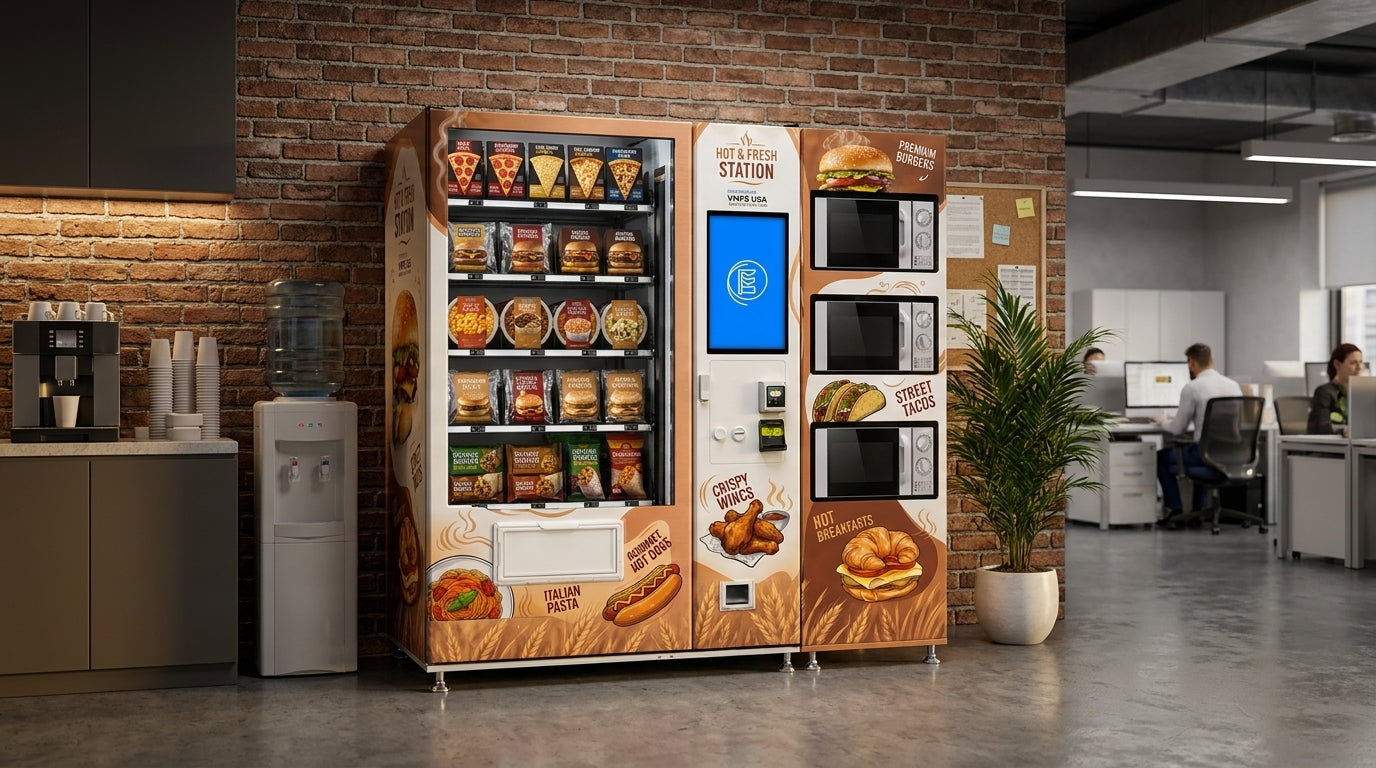


Design the perfect vending solution for your location and customers.

Join the VMFS newsletter and step into a thriving network dedicated to collective success.
One signup. Endless possibilities.
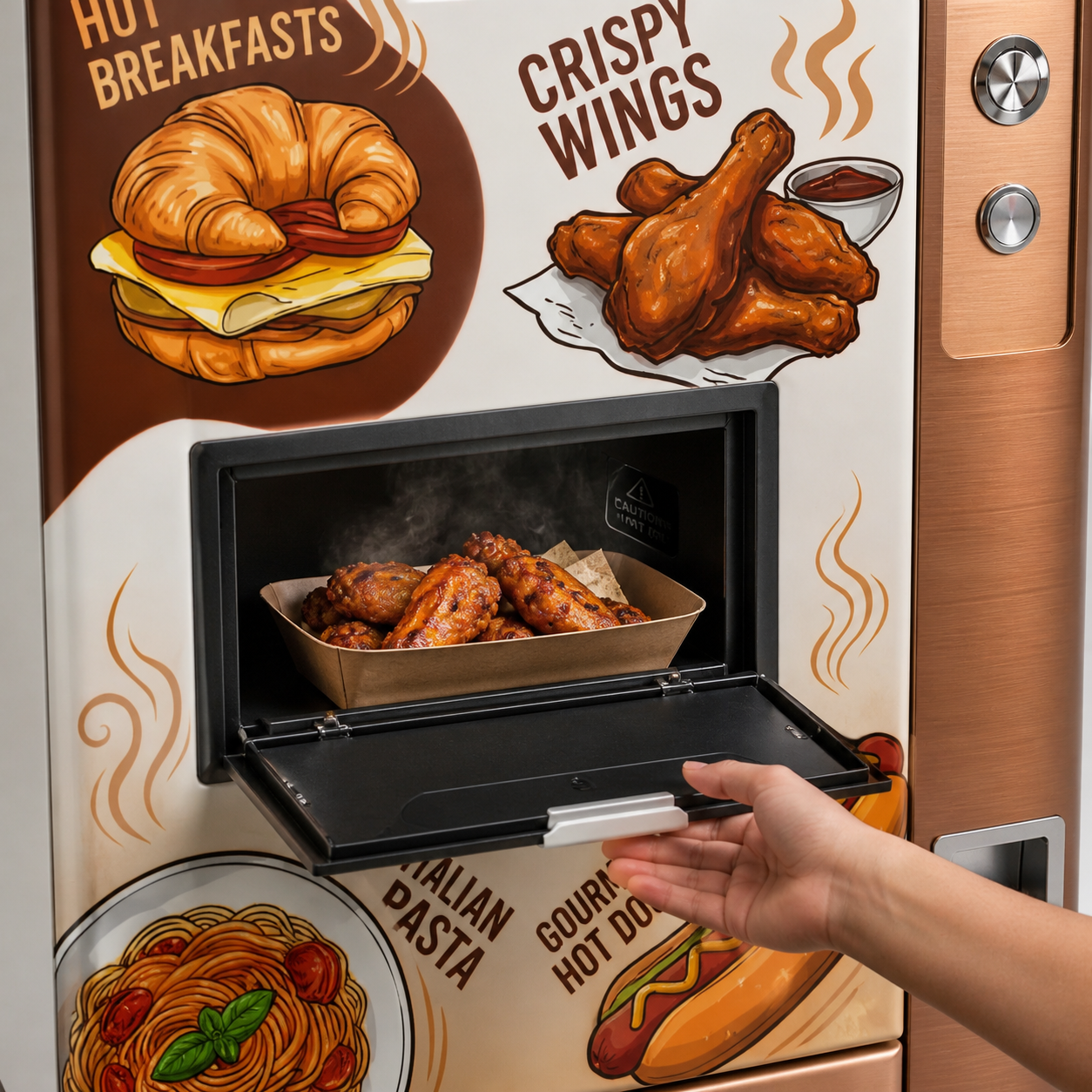
Hot fast food vending machines operate through an integrated dual-zone mechanical system that stores pre-packaged meals in a temperature-controlled refrigerated compartment before transferring them to an internal heating chamber via a robotic transport mechanism. Once payment is authorized, the machine transports the chosen meal into a high-powered microwave, impinger, or induction oven, heats it to a safe internal temperature of 165°F (74°C) within 45 to 90 seconds, and dispenses it hot to the consumer.
Hot fast food vending machines rely on isolated thermal zones, precision robotics, and electronic food safety controls to store and heat meals safely in a single cabinet. Commercial operators sourcing commercial inventory from a Vending Machine Company in USA depend on these automated subsystems to minimize labor costs while providing hot meals around the clock.
Dual-zone thermal control isolates cold inventory storage from the internal heating module using heavy insulation and active air barriers. The storage bay maintains a constant temperature below 41°F (5°C) to prevent bacterial growth in alignment with commercial food safety codes. When a customer orders a meal, the internal heating oven activates without raising the ambient temperature inside the adjacent cold inventory chamber.

Automated robotic delivery mechanisms transfer packaged food trays from internal storage shelves into the heating oven without human intervention. Standard gravity drop coils cannot be used for hot meals because physical impact damages fragile food containers and alters meal presentation. Modern systems utilize 3-axis Cartesian gantry arms, vacuum suction grippers, or elevator platforms to maintain horizontal stability during internal transit. Operators seeking to understand traditional temperature-controlled mechanics can explore the underlying cold food vending machine work process to compare basic refrigeration setups.
Electronic health lockout sensors continuously monitor cabinet storage temperatures and automatically disable sales if environmental conditions exceed safe parameters. If power fails or internal temperatures remain above 41°F for more than 30 minutes, an automated physical bar seals the delivery chute to stop spoiled items from dispensing. These safety systems meet national sanitation guidelines established by NSF International and local public health codes.
Internal heating modules in automated food kiosks convert electrical power into thermal energy using targeted electromagnetic waves, forced convection, or direct infrared radiation. Selecting the correct thermal technology depends on food moisture content, crust crispness requirements, and target cook time.

High-speed combination ovens use 1200W to 2000W industrial magnetrons coupled with high-velocity air impingement fans to heat chilled meals in under 60 seconds. Microwave energy rapidly heats internal moisture molecules throughout the core of the food, while focused hot air currents caramelize surfaces and prevent soggy packaging. This dual approach ensures protein items, such as burgers or pasta trays, achieve safe, uniform internal temperatures.
Infrared baking ovens deploy quartz heating elements that reach operational temperatures exceeding 500°F (260°C) within seconds of activation. Radiant energy penetrates outer crusts directly, crisping dough and melting cheese without overcooking internal ingredients. This compact oven structure makes infrared modules the preferred choice for automated baking kiosks.
Automated hot water hydration systems store water in an internal reservoir, rapidly heat it using inline commercial boilers, and meter exact volumetric doses directly into soup containers. Internal pumps maintain fluid pressure to ensure fast fill cycles, while automated lid piercing needles deliver boiling water cleanly. The machine then holds the cup inside a insulated chamber until the steeping period concludes.
The complete dispensing cycle converts a digital user input into a fully heated meal through an automated four-stage process. Customers curious about basic interaction steps can review general guidelines on how to get food from a vending machine before interacting with specialized hot food units.
Meals remain stored inside sealed trays organized along internal rack structures maintained strictly below 41°F. Compressor units circulate chilled air through high-efficiency filtration networks to eliminate internal humidity buildup and prevent frost formation on food containers.
When payment processes via cashless readers or cash bill acceptors, the machine controller activates the robotic gantry arm. The arm moves along vertical and horizontal linear guide rails, aligns with the targeted product tray, and secures the package using soft-touch grippers or vacuum suction plates. To ensure food remains level and undamaged, operators implement standardized rules governing proper food dispensing methods in vending machines.
The robotic arm inserts the retrieved meal package into the heating oven compartment and seals the motorized oven door. Microprocessors calculate the required cooking duration based on pre-programmed barcode tags on the package, activating the microwave or convection elements. Heating continues until the meal core reaches 165°F (74°C) to ensure full thermal pasteurization.
Once the cooking timer expires, the motorized oven door opens, and the transport arm moves the hot container to the delivery port. The external flap door unlocks for customer retrieval while thermal insulation guards protect consumers from contacting internal hot surfaces. If internal sensors detect temperature anomalies during cooking, the item is redirected to a waste bin, and funds are refunded.
Different food categories require tailored internal mechanics to handle unique cooking profiles, hydration needs, and dough rising requirements.
| MACHINE CATEGORY | STORAGE TEMP | HEATING METHOD | COOK TIME | TYPICAL MENU ITEMS |
| Pizza Kiosks | 38°F or Frozen | Infrared / Deck Oven | 90 - 180 sec | Fresh/Frozen Pizza Slices & Whole Pies |
| Ramen & Noodle | Ambient / Chilled | Hot Water Injector | 60 - 120 sec | Ramen Bowls, Cup Noodles, Instant Soups |
| Burger & Lunch Box | 36°F - 40°F | Microwave + Air Jet | 45 - 75 sec | Burgers, Breakfast Sandwiches, Rice Bowls |
| Confectionary/Snack | 55°F - 65°F | Hot Holding Fan | Instant | Warm Pastries, Hot Pretzels, Popcorn |
Automated pizza kiosks store pre-assembled pizzas in refrigerated racks or construct them on demand from raw dough disks, sauce, and toppings stored in separate cold compartments. When selected, a robotic plate moves the pizza into a high-temperature infrared baking oven operating between 500°F and 700°F. The crust bakes, toppings brown, and the finished pizza slides automatically into an integrated cardboard box prior to dispensing.
Investors evaluating automated pizzerias often analyze the future of pizza vending machines alongside general pizza vending machine cost analysis models to determine capital outlay requirements. Operators must also understand exact mechanical operations by studying how a pizza vending machine works before sourcing pizza inventory for vending machines. Reviewing financial metrics on pizza vending machine profitability highlights the distinct key benefits of pizza vending compared to traditional pizzerias, which is why commercial operators explore highest earning pizza franchises and automated expansion strategies.
Ramen vending machines store sealed noodle cups in vertical drop stacks or rotating carousel compartments. Once selected, internal mechanics unseal the top foil layer, position the container beneath a sanitary hot water dispenser, and inject water heated to 205°F. Automated stir mechanisms or steam jets assist flavor distribution, dispensing a fork alongside the hot noodle container.
Detailed technical specs on water filtration and steam venting are covered in guides explaining how ramen vending machines work fast and hot. Operators assessing market demand can also review the overall profitability of ramen noodle vending machines. Industry tradeshows frequently showcase innovations in this space; for instance, experts reporting from international events documented automatic hot water dispensing cup noodle machines featuring automated lid-handling technology.
Burger and lunch box machines store pre-cooked, chilled sandwiches and rice meals inside a multi-tier carousel or shelf matrix. The machine uses a combination of targeted microwave pulse bursts to heat protein patties and bread buns evenly without toughening dough structures. Reading a dedicated burger vending machine guide helps operators select optimal packaging materials that vent excess steam while retaining sandwich moisture during rapid heating cycles.
Hot food vending machines require significantly higher power capacities, complex robotic transfer arms, and specialized thermal venting systems compared to standard refrigerated units.
| OPERATIONAL FEATURE | COLD FOOD VENDING MACHINES | HOT FAST FOOD VENDING MACHINES |
| Storage Temperature | 34°F to 41°F (1°C to 5°C) | 34°F to 41°F (Storage) / 165°F (Dispensed) |
| Peak Power Consumption | 300W - 600W (Compressor only) | 1800W - 3500W (Compressor + Oven) |
| Dispensing Mechanism | Elevator tray, drop coil, or pusher arm | 3-Axis Robotic Arm + Oven Shutter |
| Internal Cooking Unit | None | Microwave, Infrared, or Hot Water Boiler |
| Average Service Time | 10 - 15 seconds | 45 - 120 seconds |
| Sanitation Complexity | Standard shelf wipe-down | Daily oven, water line, & trap cleaning |
Cold vending machines rely solely on continuous vapor-compression refrigeration cycles to keep pre-packaged foods fresh until consumption. Hot fast food vending machines combine this continuous refrigeration cycle with high-power heating elements that draw up to 3000W during cooking cycles. This requires dedicated 20-amp electrical circuits and specialized power transformers inside the cabinet.
Standard cold vending units feature few moving parts beyond basic shelf motors and delivery elevators. Hot food machines incorporate motorized oven doors, steam exhaust filters, water pumps, and thermal sensors that require frequent routine maintenance. Preventive service schedules must account for daily residue cleaning inside heating chambers to avoid carbon buildup and smoke sensor tripping.
Automated hot food preparation requires strict compliance with federal guidelines to ensure public safety and prevent foodborne illnesses.
The FDA Food Code Guidelines mandate that time/temperature control for safety (TCS) foods must be maintained below 41°F during cold storage or above 135°F during hot holding. Hot fast food machines that heat chilled items on demand must pass food through the 41°F to 135°F danger zone rapidly during the heating cycle. Reheated meats and dairy items must hit an internal core threshold of 165°F to kill pathogenic bacteria before dispensing.

Commercial hot food vending equipment must achieve certification under NSF/ANSI Standard 25, which regulates automatic merchandising machines for food and beverages. The National Automatic Merchandising Association (NAMA) inspects equipment designs to confirm smooth, non-porous internal food contact surfaces that resist corrosion and facilitate easy sanitation. Machine cabinets must also meet UL-751 safety standards for electrical insulation around high-temperature heating chambers.
Integrated telemetry boards continuously log internal temperatures every 60 seconds and upload data logs to cloud management portals. If storage temperatures rise above 41°F due to cooling system failure, the automatic health lock engages instantly. Operators stocking nutritional lines should review lists of compliant healthy food options for vending machines and approved vending machines and healthy snacks to maintain compliance with health regulations.
Operating hot fast food vending machines involves distinct legal structures, electrical infrastructure requirements, and commercial property contracts. Beginners learning how to start a hot food vending machine business must establish proper corporate foundations before deploying hardware on site.
Setting up a separate business entity shields personal assets from operational liabilities, food safety claims, and commercial equipment leases. Entrepreneurs can pursue Forming an LLC for your vending business to secure limited liability protection while maintaining simplified tax filing structures. Businesses operating across multiple states should appoint professional registered agent services to handle compliance notices and state filings reliably.
Larger commercial operations or venture-backed vending networks may opt for C-Corporation tax structuring to facilitate equity investment, or elect S-Corporation tax status for pass-through tax efficiency. Multi-owner startups can formalize internal operations through a structured partnership agreement setup, whereas single-operator businesses might initially evaluate a simple sole proprietorship registration.
Hot food machines perform best in high-foot-traffic environments where hot meals are needed 24/7, such as hospital breakrooms, college dormitories, manufacturing plants, and airport terminals. Location placement contracts must define revenue-sharing percentages, electrical utility allocations (208V-240V lines), and daily maintenance access rights. Property managers interested in hosting automated food equipment can list your location space for vending placement to connect directly with certified machine operators.
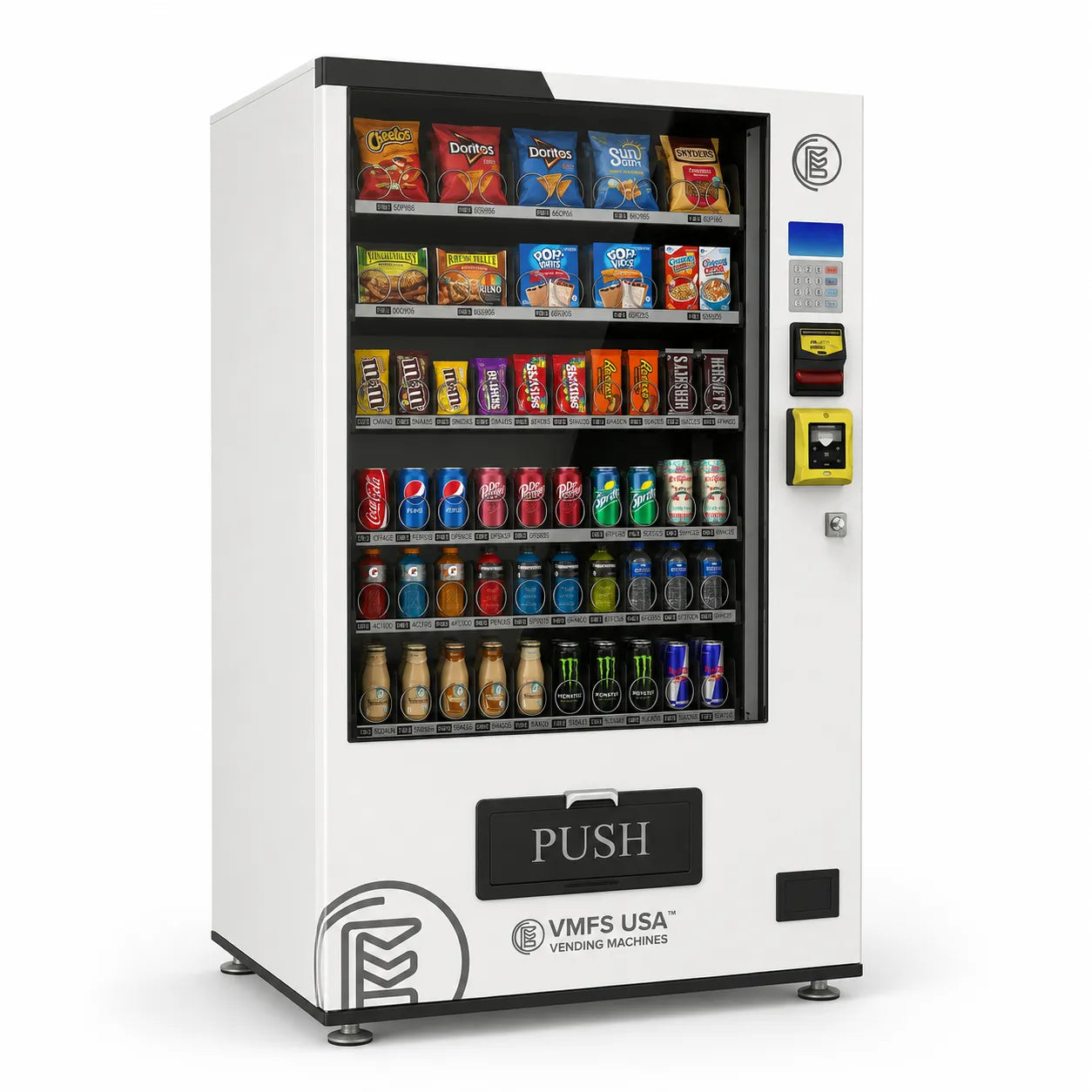
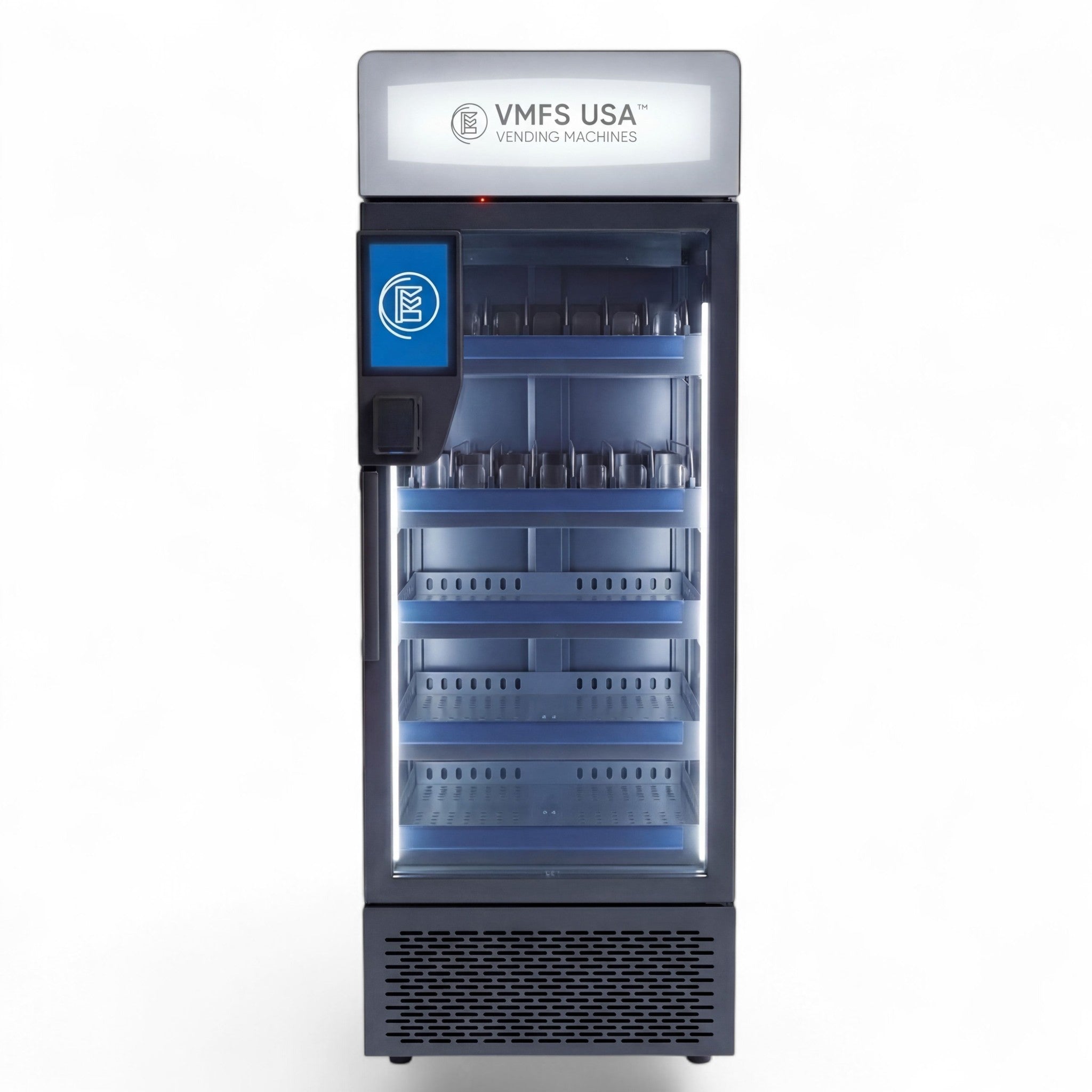
Selecting proper equipment requires matching machine capacity, heating systems, and physical dimensions to target menu items and daily sales volumes. Equipment inventory supplied by VMFS USA offers various options tailored for specific commercial food service environments.
Explore Hot Food Vending Machines: Full series of automated hot meal solutions engineered for high-volume commercial installations.
Mini Hot Food Vending Machine: Space-saving automated heating kiosk built for tight office breakrooms and micro-markets.
Large Hot Food Vending Machine: High-capacity commercial machine featuring dual high-speed microwave ovens for busy transport hubs.
Lunch Box Vending Machine: Specialized container dispenser tailored for packaged bento boxes, pasta meals, and rice entrees.
Pizza Vending Machine: Kiosk featuring a high-temperature internal baking oven that cooks fresh pizzas in under 3 minutes.
Ramen Noodle Vending Machine: Fully automated cup noodle system with integrated hot water dispensing and steeping controls.
Most hot food vending machines heat chilled meals in 45 to 90 seconds using commercial combination microwave-convection ovens. Fresh pizza baking kiosks take 120 to 180 seconds to fully cook raw or par-baked crusts.
Hot fast food vending machines maintain an isolated refrigeration compartment kept below 41°F (5°C) using industrial compressor systems. The internal heating oven operates in a separate insulated chamber, preventing heat transfer to stored inventory.
When power drops, internal battery backups trigger safety sensors that monitor refrigeration degradation. If internal temperatures rise above 41°F for over 30 minutes, automatic health locks disable the delivery chute to block sales of spoiled items.
In accordance with FDA Food Code safety standards, reheated proteins and TCS meals must reach an internal core temperature of at least 165°F (74°C) before dispensing to consumers.
Ramen and soup vending machines utilize 3-axis gantry platforms or smooth elevator trays that move food containers horizontally without tipping. Hot water injectors deliver fluids through precise volumetric pumps into stationary cups inside sealed heating bays.
Pizza vending machines utilize high-power quartz infrared heating elements or impinger convection decks running between 500°F and 700°F. This intense radiant heat bakes thin dough and melts cheese in 2 to 3 minutes.
Hot food vending machines typically require a dedicated 208V-240V AC single-phase electrical outlet on a 20-amp or 30-amp circuit. High power draws occur when internal microwave magnetrons or heating elements operate during cooking cycles.
Operators must sanitize internal heating bays, robotic grippers, and tray slides daily to prevent carbon residue, grease accumulation, and food particle buildup. Automated hot water lines in noodle machines perform auto-flushing cycles periodically.
Commercial hot food vending machines must obtain NSF/ANSI Standard 25 sanitation certification and pass NAMA design reviews to operate legally in public venues. Electrical components must also carry UL-751 safety listings.
Certain specialized vending machines, such as pizza kiosks or automated noodle stations, can bake raw dough or boil dehydrated noodles directly inside internal oven units. Standard sandwich and meal machines utilize pre-cooked, chilled items that are rapidly reheated on demand.
Share:
What Are the Benefits of Pizza Vending? Financial, Operational & Market Insights
Pokemon Vending Machine Restock Tracker: How to Track Online